Holidaymakers from Singapore can now easily access Redang Island in just 80 minutes, thanks to a new service offered by Berjaya Air.
The flight connects Singapore’s Seletar Airport with Malaysia’s Redang Airport, and is the only direct air link between the two destinations.
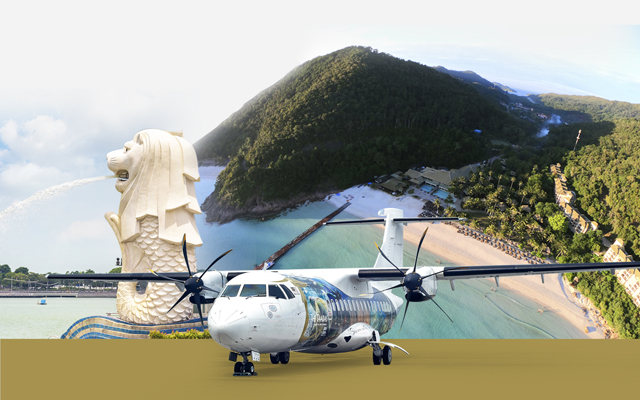
Travellers can now easily access Redang Island from Singapore with Berjaya Air
Travellers can purchase the Enchanting Redang Escapade package for a complete holiday experience, which includes a Berjaya Air flight from Singapore to Redang Island, a four-day/three-night accommodation at The Taaras Beach & Spa Resort, daily meals, welcome evening cocktail, recreational activities, and more. Priced from S$2,096 (RM 6,288) nett per person, the package also includes access to the Seletar Business Aviation Centre, a 15kg check-in luggage allowance per person, express boarding and refreshments on board.
Berjaya Air welcomes private charters to Redang Island.
Having reopened to international tourists over two months ago, the Philippines is discovering that fewer travel restrictions in the west are helping to bring in the first wave of tourists.
Rajah Tour president Jojo Clemente has seen arrivals coming from the US, Canada, the Netherlands, Belgium and other longhaul markets.
Clemente: Asia’s cautious border restrictions are holding back potential visitation to the Philippines
“It’s easier for them to leave (for overseas trips) and return home,” he told TTG Asia.
In comparison, Asian markets “have been more conservative in terms of health and safety protocols compared to the west”, hence the reluctance to travel, he added.
While the Philippines used to benefit from top tourism source markets South Korea and Japan, both countries are still battling Covid surges, causing residents to be hesitant about travelling. China, the Philippines’ fastest growing and biggest source market, also has a tough zero Covid-19 policy that requires long quarantine period when citizens return from abroad, pointed out Arfel Travel and Tours’ president Fe Abling-Yu.
Abling-Yu and Clemente predicted that arrivals from South-east Asia and the rest of Asia will follow as travel requirements in their respective countries loosen up.
In better times, arrivals from Asia used to comprise at least 60 per cent of total foreign arrivals in the Philippines. That has declined to just 55.67 per cent in 2020.
Abling-Yu said that while the US is coming up, many of them are balikbayans or returning Filipinos while tourists from the UK, France and other parts of EU are trickling in.
The Philippines can look to other source markets like India, Israel, the Middle East, and Taiwan where travel freedom has returned.
Clemente revealed that there has been a “steady stream” of enquiries from India ever since the Philippines permitted visa-required nationalities to enter April 1.
“So, I see some pick up from that sooner than later.”
“Israel has also started to send enquiries, along with GCC countries like the UAE and Qatar,” Clemente added.
Horticultural attraction Gardens by the Bay will become the first in Singapore to embark on the EarthCheck Sustainable Destinations programme accredited by the Global Sustainable Tourism Council (GSTC), joining others such as Nuuk in Greenland, Rottnest Island in Australia, and Sierra Gorda in Mexico in committing to sustainable destination stewardship and place management.
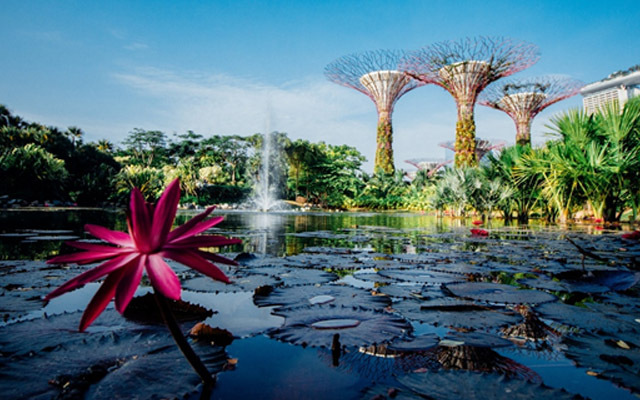
Gardens by the Bay will become the first in Singapore to embark on the EarthCheck Sustainable Destinations programme
The EarthCheck Sustainable Destinations programme works with tourism destinations and precincts to facilitate and foster responsible environmental and social planning and management practices. A leading scientific programme for responsible tourism, it provides operators with a holistic framework to benchmark and certify their environmental and social performance, in an effort to address some of the challenges facing the planet such as climate change and biodiversity loss.
Sustainability has remained at the core of Gardens by the Bay’s operations since it opened in 2012, and its participation in the EarthCheck Sustainable Destinations programme is in line with its sustainability roadmap.
Felix Loh, CEO of Gardens by the Bay, said in a statement: “We aim to achieve best practices in sustainable tourism, by benchmarking against GSTC-recognised international standards through the EarthCheck Sustainable Destinations programme. This also demonstrates our support for the Singapore Green Plan 2030, as we further our efforts to embed sustainability in our DNA – through our business, day to day operations, and corporate culture.”
Fans of Norwegian Cruise Line (NCL) and global travellers will now have a chance to own a piece of the cruise liner’s newest vessels, Norwegian Prima and Norwegian Viva – a piece of six unique NFTs that showcase the art and inspiration behind the hull art of the two ships, that is.
The collection, created by Manuel Di Rita, the Italian artist who designed the hull art on Norwegian Prima and Norwegian Viva, can be found at the NCL NFT marketplace.
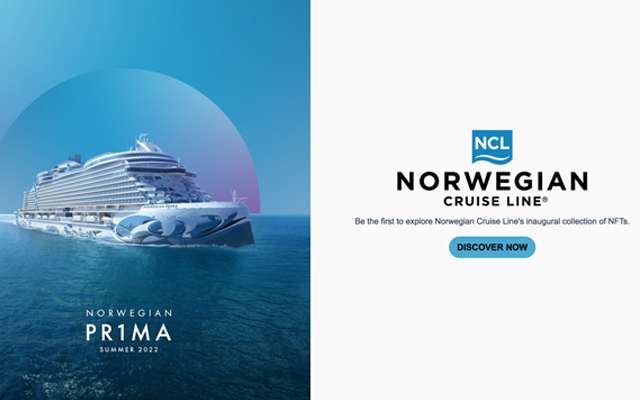
The NCL NFT marketplace will sell six art pieces and channel proceeds to Teach For America
The NCL NFT marketplace is said to be the first in the cruise industry.
One of the art pieces will be auctioned at a starting rate of US$2,500, with the remaining NFTs to be sold for prices beginning at US$250. The winner of the auction will also be awarded a balcony stateroom on one of Norwegian Prima’s inaugural voyages in the US, setting sail from Miami.
All proceeds from the NFT auction and sales will be donated to Teach For America, an organisation that finds, develops, and supports a network of leaders who expand opportunity for children.
In a bid to rebuild its global network to meet growing travel demand, Emirates will restart operations to Bali, London Stansted, Rio de Janeiro and Buenos Aires progressively from May 1, as well as boost the frequency of flights to Nigeria, Mauritius and Singapore.
Starting from May 1, Emirates will operate five weekly flights to Bali, utilising a two-class Boeing 777-300ER aircraft, and further scale that up to a weekly service.
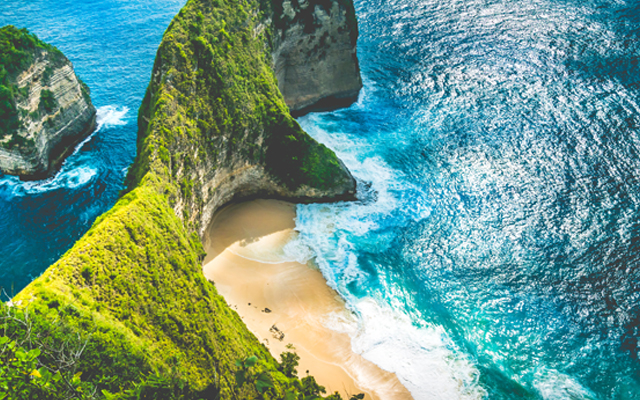
Emirates is progressively scaling up its global operations; Nusa Penida Island, Bali pictured
From August 1, the airline will resume operations to London Stansted with five weekly flights, utilising a Boeing 777-300ER aircraft that will come with First Class cabins. The route will be served daily from September 1.
Emirates will serve the UK with 110 weekly flights by October this year, to hubs such as London Heathrow, Gatwick, Manchester, Birmingham, Newcastle and Glasgow.
Come November 2, Emirates will operate four weekly flights to Buenos Aires via Rio de Janeiro on the Boeing 777-300ER aircraft and scale that up to a daily service.
Meanwhile, to cater to rising demand, services to Nigeria’s Lagos will be ramped up to 11 weekly flights from July 1 and double daily from September 1. Services to Nigeria’s capital city, Abuja, will be operated five times weekly from May 1 and then daily from September 1.
Services to Mauritius will go from daily to nine weekly flights between April 9 and end-June, and then scaled up further to double daily from July.
The airline will also increase passenger services to Singapore from seven weekly flights, to 14 weekly flights, starting from June 23.
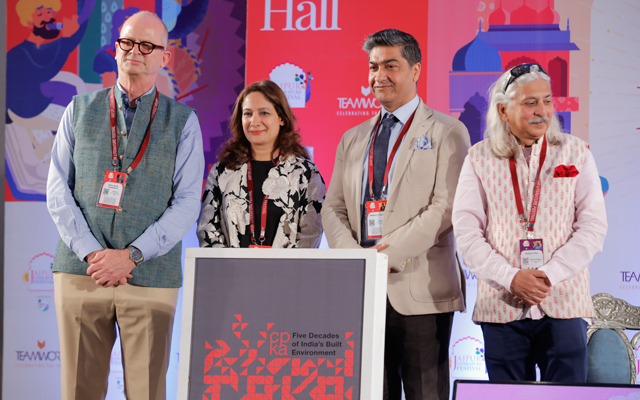
An arts and literary festival will debut at the luxury Soneva Fushi resort in the Baa Atoll UNESCO Biosphere Reserve from May 13 to 22, 2022.
The event is a collaboration between Teamwork Arts, producer of the annual India-based Jaipur Literature Festival (JLF), and resorts operator Soneva.
Jaipur Literature Festival will add Maldives to its international circuit this May
JLF Soneva Fushi will feature a line-up of world-renowned authors, workshops, and music and art activities. At press time, 30 speakers and authors are confirmed, such as British-Turkish novelist Elif Shafak and diplomat and author Vikas Swarup.
A spectrum of topics will be tackled, from nation-building and scientific discovery to poetry and filmmaking.
The Maldives edition is one of many international extensions of the iconic festival, which has yearly events in London, Belfast, New York, Colorado, Houston, Adelaide, Toronto and Doha.
Soneva is offering an exclusive package to guests attending JLF Soneva Fushi. Priced from US$2,310 nett per night, per villa, it includes full access to festival activities, daily full board at selected restaurants, return shared seaplane transfers between Malé and Soneva Fushi, and complimentary full board stays for up to two children under seven when staying with two paying adults.
Australia’s Victoria state has earned hosting rights to 2026 Commonwealth Games (Victoria 2026) as well as the 2028 and 2040 Presidents Cup, all of which will bring hefty local economic benefits and positive legacy for its people.
Victoria 2026 is estimated to contribute more than A$3 billion (US$2.2 billion) to the state’s economy, and create more than 600 full-time-equivalent jobs before the games, 3,900 jobs during the games, and 3,000 jobs beyond the Closing Ceremony.
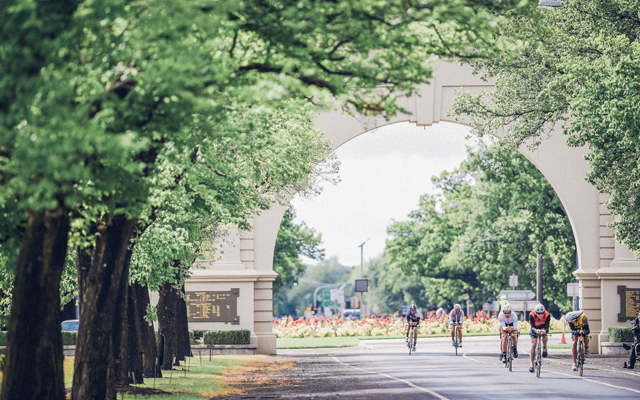
Geelong, Bendigo, Ballarat (pictured) and Gippsland across Victoria will be regional hubs for the 2026 Commonwealth Games
To be held across multiple regions, Victoria 2026 will create a new multi-city model for the Commonwealth Games, with four regional hubs to be established in Geelong, Bendigo, Ballarat and Gippsland – each with its own athletes’ village and sport programme. The opening ceremony will be hosted at Melbourne Cricket Ground.
The games will also see significant investment in community infrastructure, including housing and world-class sports facilities. These will leave a legacy of affordable housing for the regions and modern sports infrastructure to encourage Victorians to get active and attract future major events.
Premier Daniel Andrews shared: “It’s a great honour to have Victoria chosen as the host venue for the 2026 Commonwealth Games – we can’t wait to welcome the world to all of our state. The Commonwealth Games in regional Victoria is great for jobs, hospitality and our economy.”
“Hosting the Commonwealth Games in four years’ time will deliver major benefits, particularly the regions, and leave a lasting legacy for the growth and development of sport throughout Victoria,” said Martin Pakula, minister for tourism, sport and major events.
Meanwhile, Melbourne’s iconic Sandbelt will play host to the Presidents Cup in 2028 and 2040, bringing the prestigious global golf event back to Victoria.
Previous Presidents Cups were held in Melbourne in 1998, 2011 and 2019. The biennial event generated a combined economic impact of more than A$121 million, thousands of hours in broadcasts globally, and more than 315,000 spectators, including 47,000 visitors to Victoria.
The 2028 Presidents Cup will also help deliver on Victoria’s Golf Tourism Strategy 2018-23, as the state vies to be recognised as one of the top five golf destinations in the world.
Pakula said: “Securing two more Presidents Cups is a real coup for Melbourne, promoting our city to the world and providing a boost for tourism and jobs. The PGA TOUR joins the likes of the Australian Open, Formula One, T20 Cricket World Cup and Super Rugby in choosing our world-class facilities for their international events.”
Radisson Resort Phan Thiet, Vietnam
On Vietnam’s serene south-east coast stands Radisson Resort Phan Thiet. A short drive from Ho Chi Minh City and Tan Son Nhat International Airport, this 76-key Mediterranean-style resort is nestled on a secluded stretch of sandy beach close to the coastal town of Phan Thiet.
Accommodation choices range from contemporary rooms, suites and bungalows, to family units for larger groups – all integrated with modern amenities, including complimentary Wi-Fi.
Savour fresh seafood and indulge in global and local flavours at ULIVO, the elegant all-day dining restaurant with indoor and alfresco seating. Or simply chill by the pool bar Citrino where there are poolside loungers, seafront seats and cabañas.
Guests can work out at the fitness centre, restore balance to the body and mind at the yoga pavilion, or relax at The Spa at Radisson which offers soothing Asian-inspired therapies.
Bicycle hire is available for exploring the local countryside, coasts and fishing communities. Attractions like the ancient Po Sah Inu Cham Tower, Ta Cu Mountain cable bar, and the iconic Red and White Sand Dunes are just a short drive away.
Māua Nusa Penida, Indonesia
Swiss-Belhotel International’s Māua Nusa Penida is located on a small island south-east of Bali and features 25 villas with sitting rooms, large windows and direct access to the private swimming pool. All villas boast a view of the Gamat Bay.
The eco-friendly resort contains recycled ironwood furniture and rooftop gardens that provide a habitat for birds and insects.
Kōwhai Restaurant and Aroha Bar serves organic food and drinks. Guest recreational options include snorkelling and diving, cooking class, yoga and spa.
Hyatt Centric Janakpuri New Delhi, India
Located adjacent to the Janakpuri West Metro and the District Center, Hyatt Centric Janakpuri New Delhi provides a launchpad for leisure and business guests to explore popular hotspots, with direct metro connectivity to the airport.
Featuring 224 newly refurbished rooms, Hyatt Centric Janakpuri New Delhi features designs and collaborations based on a shared vision of sustainable living and the advancement of local artisans. Each guestroom includes The Maati care products which are locally-made and organic.
The all-day dining restaurant, Kitchen District, serves gourmet dishes with a unique twist on cuisines from the Indian subcontinent. Guests can also relax in the café with a book, snack, or enjoy a cup of chai. The hotel has flexible meeting spaces for any event.
Hotel guests can tour the city with Unzip Delhi – the hotel’s guided walking vendor. Walks with Unzip Delhi will allow guests to discover the beauty of the city while providing a deeper insight into life in Delhi.
voco Doha West Bay Suites, Qatar
Qatar’s first voco hotel is situated in Doha’s most popular spot, West Bay.
The rebranded voco Doha West Bay Suites has 396 spacious rooms and suites, with popular restaurants and lounges like The Social, Serenitea, Sky Lounge on the 35th floor. There’s even an exclusive helipad.
Onsite facilities include a pool deck, a 24-hour gym with steam, sauna and jacuzzi, a spa and a kids’ wading pool and five meeting rooms.
There is a selection of studios, one, two, and three-bedroom fully serviced suites spread over 46 floors. All suites come with complimentary Wi-Fi, 24/7 reception, and concierge services.
voco Doha West Bay Suites is minutes away from Doha Exhibition and Convention Centre, as well as luxury malls and cultural attractions.
Go City is planning a strategic expansion into new Asia-Pacific markets and has appointed Baidi Li as its new senior vice president of commercial, APAC.
She will focus on expanding Go City’s product footprint, building regional customer acquisition capabilities, and deepening localisation efforts.
Bringing deep industry experience to the Go City team, Li plans to build upon the existing success of Sydney, Singapore and Bangkok products, and grow the product offering in other key destinations, including Seoul, Tokyo and Hong Kong.
Prior to joining Go City, Li held leadership positions with Viator, Tripadvisor, Magpie Travel and Intrepid Travel.




 The online news bulletin will resume on Monday, April 18.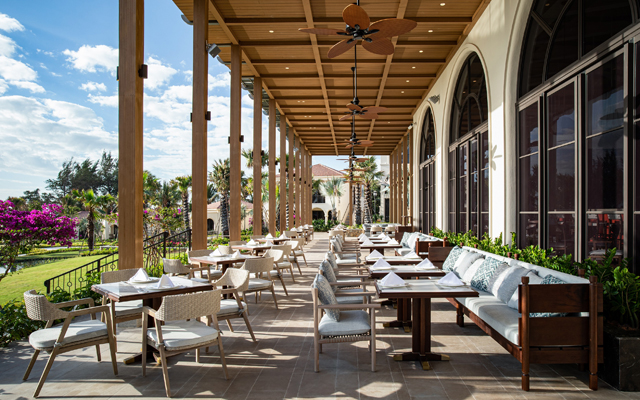

 Bringing deep industry experience to the Go City team, Li plans to build upon the existing success of Sydney, Singapore and Bangkok products, and grow the product offering in other key destinations, including Seoul, Tokyo and Hong Kong.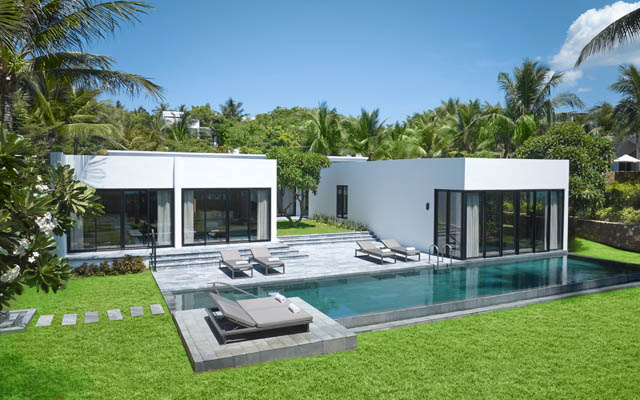






Having reopened to international tourists over two months ago, the Philippines is discovering that fewer travel restrictions in the west are helping to bring in the first wave of tourists.
Rajah Tour president Jojo Clemente has seen arrivals coming from the US, Canada, the Netherlands, Belgium and other longhaul markets.
“It’s easier for them to leave (for overseas trips) and return home,” he told TTG Asia.
In comparison, Asian markets “have been more conservative in terms of health and safety protocols compared to the west”, hence the reluctance to travel, he added.
While the Philippines used to benefit from top tourism source markets South Korea and Japan, both countries are still battling Covid surges, causing residents to be hesitant about travelling. China, the Philippines’ fastest growing and biggest source market, also has a tough zero Covid-19 policy that requires long quarantine period when citizens return from abroad, pointed out Arfel Travel and Tours’ president Fe Abling-Yu.
Abling-Yu and Clemente predicted that arrivals from South-east Asia and the rest of Asia will follow as travel requirements in their respective countries loosen up.
In better times, arrivals from Asia used to comprise at least 60 per cent of total foreign arrivals in the Philippines. That has declined to just 55.67 per cent in 2020.
Abling-Yu said that while the US is coming up, many of them are balikbayans or returning Filipinos while tourists from the UK, France and other parts of EU are trickling in.
The Philippines can look to other source markets like India, Israel, the Middle East, and Taiwan where travel freedom has returned.
Clemente revealed that there has been a “steady stream” of enquiries from India ever since the Philippines permitted visa-required nationalities to enter April 1.
“So, I see some pick up from that sooner than later.”
“Israel has also started to send enquiries, along with GCC countries like the UAE and Qatar,” Clemente added.