Qantas’ next-generation distribution platform unlocks capabilities for agents globally to offer more personalised customer service and access new revenue opportunities.
Built using IATA’s New Distribution Capability (NDC) standards, the Qantas Distribution Platform will be available in the UK, the US and South Africa – it will be progressively rolled out to other markets in the coming months.
The Qantas Distribution Platform supports agency partners in delivering a better and more personalised experience for customers
Currently available in Australia and New Zealand, the platform was designed to enhance the service that agents provide to customers with a wider range of products, including special offers for Qantas Frequent Flyers, ancillary products and dynamic commission opportunities. The same benefits will apply to international agents once available in their country.
Travel agents around the world will also have access to more automated processes and improved functionality across Qantas bookings, including automated refunds and ticket revalidation.
The content and features of the platform can be accessed via Qantas’ growing network of technology partners, and agents who have registered in the Qantas Channel can connect to the Qantas Distribution Platform via an approved technology partner, or by developing a direct connection to Qantas’ NDC XML Application Programme Interface (API).
Igor Kwiatkowski, Qantas’ executive manager, global sales and distribution, stated that the international rollout of the platform would help agents around the world to better service customers with Qantas bookings, as the airline’s international network ramps up.
He said: “Despite the significant impact of Covid over the past two years, we have continued to invest in our new distribution capabilities and are pleased to be able to offer these to our international trade partners.
“The Qantas Distribution Platform is a key part of our strategy to support agency partners with richer content, new features and revenue opportunities that help them deliver a better and more bespoke experience for customers.”
As customers expect an increasingly personalised, flexible and seamless experience, Qantas is committed to providing travel agents around the world with the right tools.
“We will continue to roll out new capabilities and features for our agency partners as the industry continues to evolve the service it offers travellers,” he added.
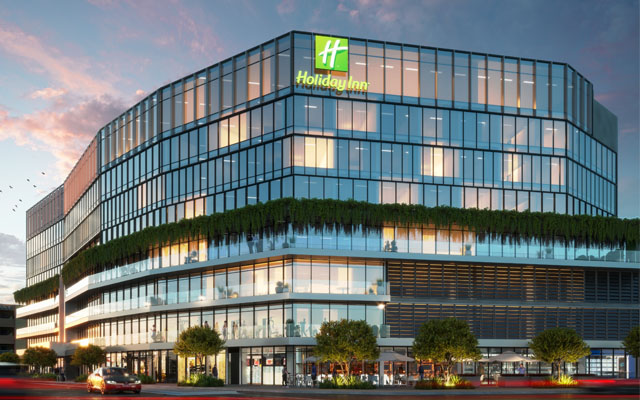
IHG Hotels & Resorts and the Pelligra Group have announced their new partnership, Holiday Inn & Suites Mawson Lakes, slated to open in 2024. It will be IHG’s fifth hotel in Adelaide, Australia.
Located in Adelaide’s northern suburbs, just 20 minutes from the central business district, the 130-room hotel will feature all the Holiday Inn brand hallmarks, including an open lobby, as well as an all-day dining restaurant and lobby bar, conferencing facilities and gymnasium.
Holiday Inn & Suites Mawson Lakes will open in 2024
Nearby the hotel is the University of South Australia Mawson Lakes campus, with Mawson Central Shopping Centre, Parafield Airport, Edinburgh RAAF Base and Lyell McEwin Hospital all within close proximity.
The Pelligra Group is one of IHG’s largest partners in Australasia, with six hotels now open or signed – the brand-new Holiday Inn Werribee in 2021; the 2019 lease to refurbish Holiday Inn Melbourne Airport; and the upcoming Holiday Inn Melbourne Richmond, Crowne Plaza Melbourne Carlton and Holiday Inn Dandenong to open in 2023.
Ross Pelligra, CEO of Pelligra Group, stated the deal signing was just the start of a string of new hotel developments the Group plans to announce with IHG. “We are so proud to be growing with IHG Hotels & Resorts – in fact in just five years we signed six amazing hotels, with two already open. And I don’t see it stopping there. We would love to add another 20 to 30 hotels across IHG’s brand portfolio in the future, so I can only say: get ready for more to come.”
Leanne Harwood, IHG’s SVP managing director, Japan, Australasia and Pacific, commented: “Holiday Inn & Suites Mawson Lakes will perfectly complement our existing hotels: InterContinental Adelaide, Crowne Plaza Adelaide, Hotel Indigo Adelaide and Holiday Inn Express Adelaide City Centre. We look forward to continuing to work with the local community and see the hotel take shape in the coming months.”
OMO7 Osaka by Hoshino Resorts, Japan
OMO7 Osaka by Hoshino Resorts is positioned in front of Shin-Imamiya Station, and adjacent to Shinsekai area, making the hotel easily accessible to Osaka’s tourist attractions.
With a total of 436 rooms, guests can choose the perfect room for their journey – there is also a room with a kitchen and walk-in closet for those who want to stay in Osaka as if living like a local. For dining, the OMO Café and Bar serves up food and beverages from morning to night.
Connecting to the hotel tower on the second floor is a gentle hill leading to the entrance of a garden area featuring flat grasslands, hilly sides and terrace areas where guests can lounge around in the open air. There is also a bathhouse here that is open to hotel guests.
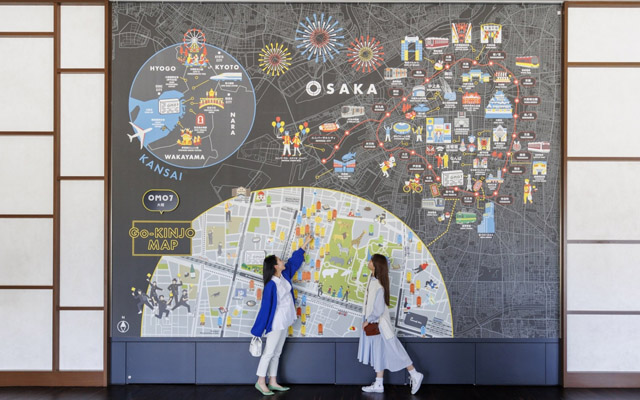
The Go-KINJO Map and local guide tours of nearby attractions by OMO Rangers encourage travellers to explore Osaka, including going on food tours and neighbourhood tours.
Jumeirah Bali
Jumeirah Bali, Indonesia
Jumeirah Bali welcomes guests to experience a sanctuary of tranquillity and relaxation amid lush greenery and Indian Ocean vistas.
The all-villa luxury resort sits on the beach area of Uluwatu with 123 villas in one- and two-bedroom configurations, as well as a four-bedroom Royal Water Palace – each villa has its own private pool and outdoor living area with an open pavilion. The resort also provides guests with exclusive access to a private beach framed by the natural landscape offering a secluded enclave to relax.
Guests can indulge in three signature restaurants and bars overseen by Master Chef Vincent Leroux, relax with wellness treatments at Talise Spa, or participate in guided meditation and Yoga classes by Jumeirah Bali’s resident Master Yogi.
Committed to sustainable practices, Jumeirah Bali houses the most advanced desalination system in the world, and also supports the local community through the Jumeirah Uluwatu Foundation, dedicated to the well-being of the Balinese people.
Adiwana Jelita Sejuba Natuna
Adiwana Jelita Sejuba Natuna, Indonesia
Adiwana Jelita Sejuba Natuna on Natuna Island – Riau is perfect for travellers looking for an island hideaway.
Just a 15-minute drive from Raden Sadjad Airport, the resort has 33 units of rooms and villas, an infinity pool offering spectacular views of the ocean, two dining outlets and a romantic dining spot by the ocean.
Other facilities include a spa, gym, and floating function space. There is also a variety of family and wellness activities available.
The Allure Villas
The Allure Villas, Indonesia
Sahid Hotels & Resorts’ The Allure Villas is situated on the southern coast of West Java, a three-hours’ drive away from Bandung.
The resort boasts 68 villas comprising of one- to three-bedroom villas. With a 24-hour check-in, The Allure Villas features a bar, restaurant, café, business services and pool bar to chill out by the swimming pool.
Eat well
As the saying goes, you are what you eat. At Ovolo Hotels, guests can dine with peace of mind, knowing that a vegetarian-led offering is guaranteed across all dining venues.
Launched on February 14, Ovolo’s Plant’d initiative is the company’s ongoing pledge to ethical eating and conscious cuisine, and is an extension of its Year of the Veg campaign that was launched in October 2020 to transition menus to plant-based dishes for an initial 365 days.
Weightless therapy in action at the new Banyan Tree Veya Phuket
Ovolo’s group creative culinary partner, Ian Curley, worked with restaurants across Ovolo Hotels to take the Plant’d veg pledge and to revamp all their menus.
While the initiative is not executed at Ovolo Collective properties, dining menus still carry a variety of vegetarian and plant-based options.
Ovolo said the move was inspired by a growing consumer interest in the many benefits of a plant-based diet. The move not only promotes an ‘eating good to feel good’ mentality, it also supports sustainability goals by sourcing from suppliers who offer nutritious, delicious and sustainable food solutions.
Ovolo Group’s founder and executive chairman, Girish Jhunjhnuwala, told TTG Asia: “Plant-based and vegetarian dining was always in the back of our minds. but it wasn’t until the pandemic that we saw the trends really shift, and there was a real opportunity to be a first-mover in a market that was starting to pick up globally.”
He added: “Ovolo prides itself on being an industry leader. We believe that the world changes, therefore we continue to evolve – we want to ensure we are doing our bit to help preserve our environment, promote healthy eating, and enhance the image of vegetarian and plant-based dining.”
Curley said Ovolo’s move to vegetarian dining “has been even more successful than we anticipated, and we now find ourselves part of a new wave of plant-based pioneers”.
He said: “A key focus for us has been ensuring we are creating something that still appeals to everyone – from vegans to flexitarians, and those who are simply keen on expanding their palette.”
Indeed, Ovolo’s plant-based menu is anything but solemn and bland. Healthy, plant-based ingredients are played up with creativity. Imagine: chargrilled okra seasoned with mushroom XO sauce from the kitchen of Alibi at Ovolo Woolloomooloo, Sydney; an escabeche made of marinated paneer and grilled maitake florets on makhani curry from Veda at Ovolo Central Hong Kong; oyster mushroom ceviche with coconut, fermented poblano and pineapple from Lona Misa at Ovolo South Yarra, Melbourne.
When asked if the initiative would carry on beyond a year, exceeding the lifespan of the Year of the Veg campaign, Jhunjhnuwala said the progamme has a “flexible timeline” but the company is keen to stick to it and evolve the initiative as time passes.
Ovolo’s Plant’d initiative answers the call for healthy and responsible consumption
Stay well
Banyan Tree Veya is the latest addition to Banyan Tree Group’s multi-brand ecosystem, and one that is positioned as a resort offering bespoke wellness programmes and knowledge that will continue to benefit guests beyond their stay.
While the group is already known for its well-being offerings through the restful Banyan Tree resorts and Banyan Tree Spa sanctuaries, Lee Woon Hoe, the group’s senior assistant vice president and executive director of well-being, said Veya was a necessary addition.
“With our hyper-stimulated modern life, chronic stress erodes our natural immunity and regenerative capacity. Our nervous systems cannot truly relax and therefore, rest. At Banyan Tree Veya, our ethos #OwnYourPresence guides our mission of inspiring individuals to travel inwards and become conscious of how their daily actions, thoughts and emotions interact with their physical being,” said Lee.
Defining the difference between Banyan Tree Spa, which is an established wellness brand, and the new Banyan Tree Veya, Lee said the Veya experience is led by certified multidisciplinary well-being hosts around a three-step protocol of Awareness, Discovery, and Sustenance.
“During their stay, guests will gain a greater awareness on their state of well-being through Banyan Tree’s proprietary eight pillars of well-being. They can discover new tools and knowledge through mindfulness practices, somatic movements and lifestyle learning workshops, so that they are empowered to continue to improve their own well-being when they return home,” he explained.
The first Banyan Tree Veya is set in Phuket, within the existing Banyan Tree Phuket resort. Luxury accommodation is offered, and guests can pursue well-being practices in the privacy of their room. Amenities including a well-being minibar, yoga mats, sound therapy bowls, exercise stretch bands and more.
Attention is paid to healthy meals, with Veya offering plant-forward cuisine that weaves together Asian and Mediterranean influences in a creative, flexitarian approach that respects ingredient provenance.
Menu signatures include bowls, broths and reinterpreted local dishes around a Fuel-Balance-Repair daily sequence. Resident nutrition sommeliers will help guests curate a menu that fulfils dietary needs and preferences during their stay.
Banyan Tree Veya at Vabbinfaru, Maldives will follow in 4Q2022.
Langham’s Sleep Matters by Chuan takes snoozes seriously
Sleep well
Determined to help guests rest better, Langham Hospitality Group (LHG) has created the Sleep Matters by Chuan, a comprehensive programme developed with the World Sleep Society.
Launched across all properties of The Langham Hotels and Resorts and Cordis Hotels and Resorts in March, the programme is crafted on the basis of sleep medicine and scientific expertise.
“Sleep is one of the essential connections between our hotels and our guests,” said Bob van den Oord, regional vice president – operations for North America, Europe and the Middle East of Langham Hospitality Group. “There is a direct link to guest sleep quality and their happiness with their hotel. Sleep Matters by Chuan is deliberately designed to enhance the wellness of our guests with new rituals and habits that they can take home and use long after they have stayed with us.”
All Langham and Cordis properties have embraced Sleep Matters by Chuan, and each have curated their own packages to take guests on a more fruitful sleep journey.
The Langham, Shanghai Xintiandi, for example, has designed a sleep package that includes healthy meals, spa baths, yoga classes, consultation with a sleep doctor, and more; while The Langham, Melbourne brings in a Traditional Chinese Medicine consultant as part of its Sleep Matters by Chuan package.
At the same time, a broad selection of sleep programmes is made available across all properties. They include the Sleep Matters Turndown Kit, which comprises sleep-promoting items like herbal tea and cushioned sleep mask; Sleep Matters Menu, which offers wellness-related items, such as a fitness ball for pre-sleep stretching and white noise sleep machines; a curated Spotify playlist of relaxing tunes; and bedtime reading materials.
All Chuan Spa locations offer Ear Auricular Therapy for Sleep.
According to a spokesperson of LHG, Sleep Matters by Chuan has been well received, with guests saying that they are now more aware of their own sleep habits. Sleep tips offered through the programme have continued to benefit them at home.
As an indication of LHG’s long-term commitment to sleep, it is collaborating with StimScience, a start-up team of neuroscientists and inventors, to launch Somnee, an electronic headband that mimics and enhances the brain’s natural sleep patterns for improved sleep. Somnee will be available exclusively to LHG properties.
Sporting events with live spectators and festivities are returning this year
Tourism and hospitality players will benefit from the high consumption nature of such events
Singapore’s pursuit of more sporting events aligns with the destination’s goal to be positioned as an urban wellness haven
Singapore’s sporting scene is heating up this year. The HSBC World Rugby Singapore Sevens returned in April with live spectators and bustling off-pitch festivities, while the Formula 1 Singapore Airlines Singapore Grand Prix is waiting in the wings with promise of a race week of entertainment when it revs up on September 30.
Singapore’s sporting scene was never completely frozen throughout the past two years of Covid-19, but it had to plot a careful way back to a live audience. In 2020, some team sports were held in digital formats, such as eSingaCup 2020 and the Singapore Floorball Open Digital.
The HSBC World Rugby Singapore Sevens returned in April 2021
The move back to spectator presence started with a pilot event. ONE: Reign of Dynasties on October 9, 2020 was the first international sports production involving international professional fighters to be allowed to resume behind closed doors.
Following its success, ONE: Inside the Matrix on October 30, 2020 became the first sporting event post-lockdown to welcome a live audience of 250 spectators, and among the first to pilot the use of Covid-19 ARTs.
As economic activities resumed in 3Q2020, Singapore Tourism Board (STB) worked with sports events organisers to develop and implement rigorous protocols to ensure the safe resumption of such activities. Measures included strict testing protocols for foreign-based participants and crew, management of crowd density and group size throughout the event, and frequent sanitisation and cleaning of event premises.
The live sports calendar for 2021 kicked off with ONE: Unbreakable! on January 22. Many others followed, such as the ATP Tour 250 tournament in February, the HSBC Women’s World Championship golf tournament in April, as well as JSSL Singapore FA Cup, SingaCup 2021 and SG Floorball Open in December.
Reviving sporting events for an in-person audience is critical for Singapore as a destination, said Ong Ling Lee, STB’s executive director of sports and wellness, as they are an integral part of the destination’s strategy to bring in quality visitors.
“As more visitors return to Singapore, it is crucial to continue creating and delivering innovative and exceptional sports experiences for athletes and fans. This will help to build visitor arrivals and drive tourism receipts in the long-term,” said Ong.
For years, Singapore has seen how major sporting events contribute to tourism earnings and destination presence.
According to STB records, the Singapore F1 races were attended by more than 550,000 unique international visitors between 2008 and 2019; foreign visitors made up more than 40 per cent of total race-goers. The 2019 edition saw the second highest attendance since the first race in 2008, with 268,000 spectators.
The races generated a global television audience of more than 930 million viewers, and presented the city-state with more than S$1.5 billion (US$1.1 billion) in incremental tourist receipts.
The annual HSBC Women’s World Championship drew more than 30,000 attendees on average every year pre-pandemic, with 30 per cent of spectators coming from overseas. International media value for the 2021 tournament peaked at S$372 million.
In 2019, the match between Manchester United and Inter during the International Champions Cup attracted almost 53,000 spectators. Total attendance at the event was 103,340, of which 25 per cent were foreign visitors. Overall broadcast of the event in Asia-Pacific acquired close to 25 million viewers.
Another regular event, the Standard Chartered Singapore Marathon, saw almost 50,000 participants in 2019, of which 20 per cent were international visitors.
Beyond the pitch
In taking its editions around the world, HSBC World Rugby Sevens has found that the games attract a following of people who will come to the host country to support their favourite teams and enjoy the party atmosphere.
“When they travel to the country to join the Sevens Series, they also take a long weekend to enjoy all the activities beyond the stadium,” stated Doug Langley, HSBC World Rugby Sevens, series director, who spoke to TTG Asia ahead of the Singapore Sevens earlier in April.
Langley: we look at the interest of the city… to get the support needed to create a robust event
Both the Sevens Series and the host city enjoy a win-win partnership, as a supportive host destination will build excitement around the games.
The Singapore Sevens opened just as the city-state eased social restrictions, permitting F&B consumption in the stands and a range of entertainment lined up for spectators.
The return of the festival vibe propelled ticket sales, with 60 per cent of tickets snapped up within days of sale issue, shared Steven Rodaway, general manager of HSBC Singapore Rugby Sevens. Ticket sales only opened on April 3, just days before the event kicked off on April 9. The Greenyards Club hospitality booths were also swiftly wiped off the shelves.
Langley said that while action on the pitch was important, it was just as critical to engage the fans during and around the games. The level of entertainment varies across host cities. Some focus mainly on interactions in the stands – through music, performances and games – while others take engagement beyond the stadium. Citing an example, he said the Dubai Sevens had invitational events happening in various locations.
For the 2022 season ending August, games are played in Dubai in the UAE; Malaga and Seville in Spain; Singapore; Vancouver and Langford in Canada; Toulouse in France; London in the UK; and Los Angeles in the US.
When asked what shapes the decision on host cities, Langley pointed to a supportive local rugby union, reputation of the city, and the level of support from the city authorities.
“We obviously want iconic venues that will get a high level of excitement around the Sevens Series and bring onboard partners that want to be in those stunning destinations,” Langley said.
“They must also be relevant places that are conducive for the sport. More often than not, we look at the interest of the city to be part of the Sevens Series, to get the support needed to create a robust event. Such support could be financial or in kind, like venue allocation.”
Valuable tourism partnerships
Sporting events are high consumption operations, requiring transportation, accommodation and F&B supplies for teams, support crew and fans. These bring business opportunities to hospitality companies in the host city.
When the HSBC Women’s World Championship was in town, Hilton Singapore Orchard accommodated all players and their entourage, giving the new hotel a strong start in the marketplace.
For the Singapore Sevens, Pan Pacific Hotels Group (PPHG) – as the official hotel partner – hosted 16 teams at its Pan Pacific Singapore hotel.
Langley said the Seven Series has partnerships with various tourism players, such as airlines and transport companies. However, hotels form a “big part of our tourism partnership… because we have to house so many teams”.
Underscoring the value of high-profile sporting events, Marc Handl, vice president, operations, PPHG, said they “generate immediate demand for the hotel sector, and in the long run, they boost the country’s destination visibility and appeal in the global market”.
“This translates into benefits for hotels here, as we are able to enjoy the exposure on the world stage and capture the opportunity to showcase our properties to clients and guests across the globe,” he added.
Recalling the business impact of the Singapore F1 races pre-pandemic, Handl said Pan Pacific Singapore, as a track-side hotel, would enjoy an average of 80 to 90 per cent occupancy during the race weekends. Most of the hotel’s function spaces on level 22, which offer great vantage points of the track, were booked during the pre-Covid race periods. Track-side guestrooms and suites were also a hit with incentive groups.
For the 2022 Singapore F1, PPHG will field another track-side hotel for race fans. Parkroyal Collection Marina Bay, which joined the PPHG portfolio last year, offers track-facing rooms with balconies.
Handl noted that even hotels far from the action have stood to benefit from leisure and corporate demand. With off-track properties escaping the government levy on F1 track-side hotels, rooms rates were more attractive.
Rivero Delgado, Marriott’s area vice president for Singapore, Malaysia and the Maldives, said the return of high-profile sporting events is especially important now as Singapore strives to rebuild international travel demand.
Recognising the power of sports, Marriott Bonvoy Moments platform – Marriott International’s travel programme – has been offering exclusive member-only experiences at important sporting events around the world. Some of the packages include VIP access to an exclusive gala dinner with the Mumbai Indians, tennis clinics hosted by tennis legends as part of Marriott Bonvoy’s multi-year collaboration with Tennis Australia, and the opportunity to watch the race from the pit wall canopy at the Formula 1 Heineken Australian Grand Prix, shared Delgado.
At the upcoming Singapore F1, Marriott Bonvoy will bring back the Silver Arrows Lounge at The Ritz-Carlton, Millenia Singapore.
Bulking up the sports and wellness calendar
Singapore tourism players can expect to benefit more from sports tourism in the coming years, as STB is pressing on with its courtship of additional sporting events for the city-state.
The tourism bureau recently won the bid to host the Women’s World Floorball Championship in 2023, and placed a joint bid to stage the World Athletics Championships in 2025, shared Ong, adding that efforts to engage sports events organisers and game publishers to cultivate a pipeline of world-class sports and esports events will only continue.
Ong: reviving sporting events for an in-person audience is critical for Singapore as a destination
Ong said Singapore’s sports tourism ambitions align with Singapore’s positioning as an urban wellness haven – a goal that was emphasised at the STB’s Tourism Industry Conference in April.
In the space of wellness tourism, which is projected to grow in the next five years to reach US$1.1 trillion by 2025, STB has a vision for Singapore to be a destination with a wide range of holistic wellness experiences.
To that end, Singapore will launch the Wellness Festival Singapore this June, featuring a line-up of activities such as wellness masterclasses at Gardens by the Bay, an inaugural Livewell Festival at Sentosa, and a series of art, wellness and mindfulness programmes at the National Gallery Singapore.
More activities will be announced in time to come.
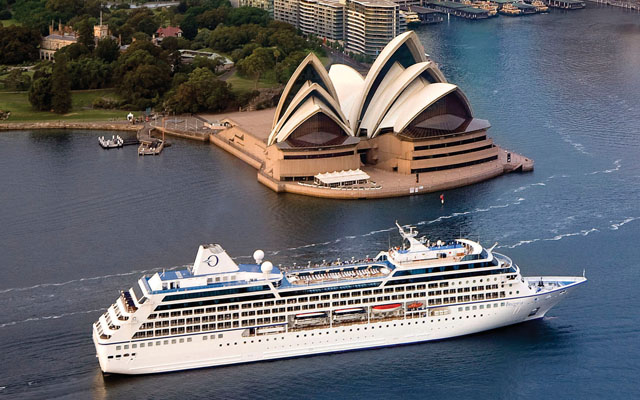
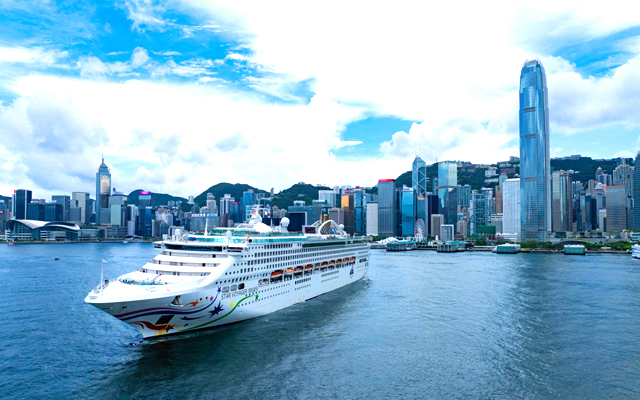
Oceania Cruises recently unveiled its largest itinerary of voyages to Europe, Alaska, Canada, Asia, Australia, New Zealand, Africa, South America, the South Pacific, and the Caribbean.
The cruise line’s 2024 Collection comprises more than 350 itineraries including over 130 Grand Voyages across seven ships and all seven continents, and will open for reservations from May 5.
Oceania Cruises’ 2024 Collection features over 350 itineraries
New ports of call in Asia include Beppu and Kumamoto, Japan and Coron, Philippines. Itinerary lengths range from 7 to 82 days, with hundreds of overnight and extended port stays.
Oceania Cruises is also greatly expanding its offering by having two ships in the region – Regatta and Nautica.
Regatta presents a renewed focus on New Zealand and Australia, including a 35-day holiday circumnavigation of the continent. Nautica will explore the Far East while also serving up a delightful array of voyages that showcase South Africa, Mozambique, Mayotte, and the Seychelles.
Riviera‘s inaugural season in the region will see her sailing from Arabia to India, to South-east Asia, the Philippines, Vietnam, China, South Korea and Japan.
Opportunities are also aplenty to explore singular countries or regions with in-depth immersions of Japan, Arabia, and Indochina.
Howard Sherman, president and CEO of Oceania Cruises said: “With our 2024 Collection, we have set a whole new standard for destination innovation with an astounding mix of marquee destinations and exotic new locales, blended together in creatively crafted voyage offerings.”
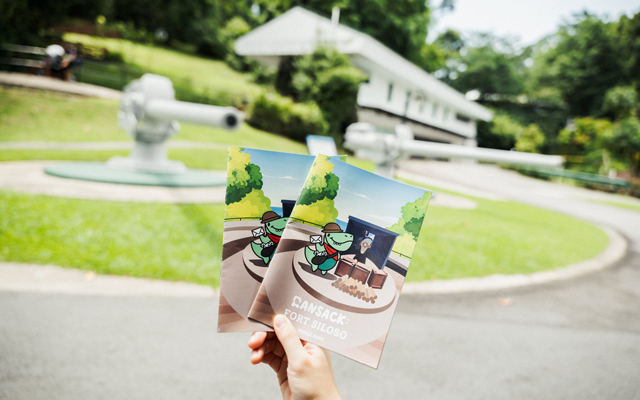
To commemorate its Golden Jubilee year, Sentosa has collaborated with Monster Day Tours to present two unique tours just in time for the June school holidays.
The first is the Puzzle Hunt: Ransack @ Fort Siloso, which is the biggest outdoor escape room experience requiring strategic and creative thinking, all in the name of encouraging team bonding and forging new friendships.
Puzzle Hunt: Ransack @ Fort Siloso is the biggest outdoor escape room experience
This once-in-a-lifetime experience takes guests on an immersive tour around the different monuments located in Fort Siloso, Sentosa – providing an insight into historical moments during the war as adventurers uncover the secrets behind the war and solve the mysteries by retrieving the puzzle pieces.
The second tour, Sentosa Island Walk: Magical Discovery Sentosa, is one-of-its-kind and perfect for all ages. Infusing magic storytelling, acts and tricks, participants will learn about Sentosa’s connection to Singapore’s history as they follow magician mastermind Mr Bottle around the island.
Explore Sentosa, including the lesser-known sites of the island, and discover interesting facts while being entertained by magic tricks and learning how they work.
Further East by This is Beyond, the creators of PURE Life Experiences in Marrakech, will return for its third edition in Bali this November, signalling the reawakening of the luxury travel community in Asia.
The first Further East was held in Seminyak Bali in November 2018 and aimed to disrupt the traditional travel trade marketplace by offering a fully immersive and festival-style experience outside of the meeting room, which proved to be a success.
The third edition of Further East returns to Bali
“We’re delighted to bring Further East back after a pandemic-induced hiatus, for a whirlwind four days of enlightenment, inspiration and a whole new world of networking,” said Serge Dive, founder of This is Beyond.
“The response has been great so far, and we’re expecting many of the coolest people in the luxury travel space in Asia, and top buyers from around the world, to join us in Bali in November. It’s going to be epic.”
Over 70 per cent of the exhibitor capacity has been confirmed, with a list of global travel buyers and top tier regional and international travel media already planning to attend.
Originally created to spotlight Asia, Further East has now expanded its scope to include the wider Asia-Pacific region. Besides a programme of matchmade one-to-one appointments, Further East will feature fun social events and enlightening experiences throughout.
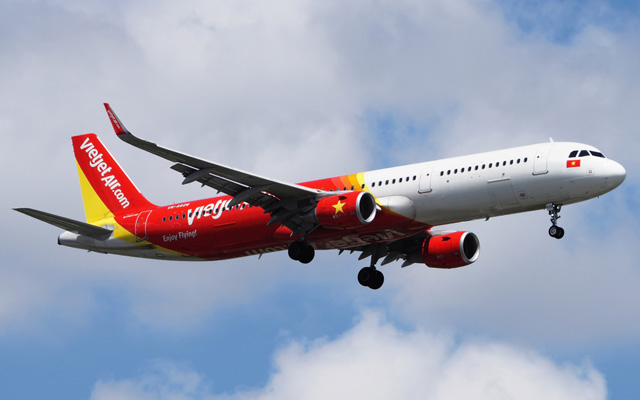
Vietjet has resumed international flights from Vietnam to New Delhi, Bali and Seoul, with the Ho Chi Minh City – New Delhi flight departing from Tan Son Nhat International Airport on April 29.
This was followed by the Hanoi – New Delhi service on April 30. The two services from Ho Chi Minh City and Hanoi to New Delhi now operate three times a week, and will steadily increase to daily flights from June.
Vietjet reopens flights to New Delhi, Bali and Seoul
Vietjet’s other international flights include connections from Ho Chi Minh City to Bali, and Da Nang to Seoul, both having returned to the air on April 28 and 29 respectively. Vietjet has also reconnected Vietnam’s major cities like Hanoi, Ho Chi Minh City and Da Nang with key destinations such as Bangkok, Singapore, Kuala Lumpur, Bali, New Delhi, Tokyo and Seoul.
Vietjet’s managing director Dinh Viet Phuong said: “Our relaunch of direct routes from Vietnam to India, a country of 1.4 billion people, shortly after the pandemic and other international services to South Korea, Thailand, Singapore, Malaysia, Japan, Indonesia among others reaffirm Vietjet’s efforts and commitments to offer flying opportunities for everyone, working as a bridge for cultural, economic and social exchanges among the countries while leading the wave of strong post-pandemic recovery.”
Return to Koh Samui and soak up the sun at Anantara Bophut Koh Samui Resort’s brand-new pool suites.
A tropical playground of untouched islands, secret coves made for picnics, and underwater wonders, the resort is nestled in Samui’s iconic Fisherman’s Village. Activities range from water sports and Muay Thai to spa rituals for two at the Anantara Spa.
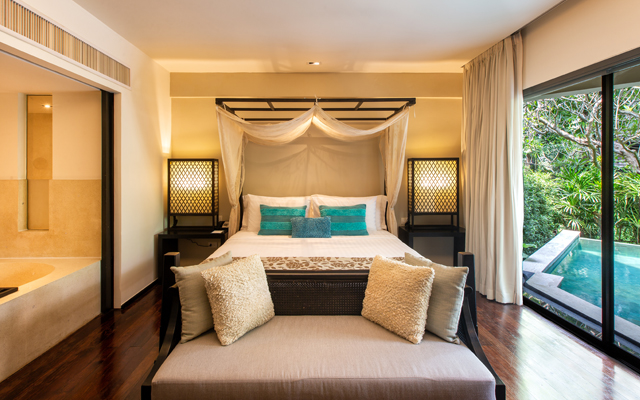
Anantara Bophut Koh Samui Resort’s new garden pool suites
With pockets of private space for relaxation and calm, the new garden pool suites offer 74m² of tropical indoor and outdoor living space and a plunge pool with a shaded sundeck in a landscaped native garden. All suites include a built-in bar with wine fridge.
Rates start from US$363++ per night including breakfast for up to two guests.