From June 7 to 12, Koh Samui will host the Samui Summer Jazz 2022 – a six-night programme at the island’s top resorts and clubs to showcase international jazz and world music artists from Thailand, the Netherlands and the US.
Presented by SKÅL International Koh Samui and sponsored by Imagine Samui in collaboration with Sisters on Samui foundation, the festival returns to Koh Samui after eight years.
Samui Summer Jazz festival returns to Koh Samui after eight years
Organised in collaboration with the Amersfoort Jazz Festival (Netherlands) and linked to JazzNL of the Netherlands and the World Jazz Network, the concerts will be held over six nights at various venues: Centara Reserve Samui, U Samui, SEEN Beach Club Samui, SALA Samui Chaweng Beach, Santiburi Koh Samui, and Melia Koh Samui.
Each concert will feature two 50-minute sets, with the hosting venue providing cocktails, or cocktails and dinner as a package for ticketholders. Hotel-stay packages are also available.
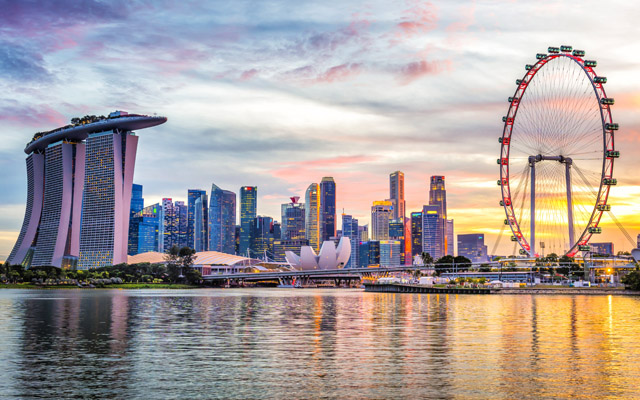
Travellers fully vaccinated against Covid-19 will no longer need to take any Covid-19 tests to enter Singapore from April 26, as the country lowers her Disease Outbreak Response System Condition (DORSCON) alert levels.
This decision by the Ministry of Health follows on from the launch of the new Vaccinated Travel Framework, which has allowed all fully vaccinated travellers to enter Singapore without serving a Stay-Home Notice (SHN) or applying for entry approvals.
Singapore drops pre-departure tests for fully-vaccinated visitors entering the country
Entry requirements for non-fully vaccinated travellers remain unchanged, with the exception for non-fully vaccinated children aged 12 and below. Non-fully vaccinated travellers must clear a pre-departure test two days before departure for Singapore, undergo a seven-day SHN, and take a PCR test at the end of their SHN period.
Singapore’s move to lower her DORSCON level from orange to yellow is a reflection of the improving local Covid-19 situation. The orange level – the second highest alert – was triggered on February 7, 2020.
The DORSCON yellow level comes with the removal of several restrictions, including group size limits at private gatherings, safe distancing measures, and capacity limits for large-scale events of more than 1,000 people, with effect from April 26.
Check-in at venues and facilities using Safe Entry and TraceTogether tokens will also no longer be required from April 26.
Tourism Australia has roped in critical travel trade partners to rebuild Singapore travel demand through its third Discover A Great Deal More virtual travel fair.
The virtual travel fair dangles a wide array of travel offers to Down Under, including offers on flights, hotels, tour packages, car rentals and exciting experiences in Australia.
Tourism Australia teams up with Singapore partners to rebuild demand
These are available for booking from now to May 15, 2022, with travel validity up to March 2023.
Flight offers are made possible through the NTO’s partnership with five major airlines – Singapore Airlines, Qantas, Scoot, Jetstar and Malaysia Airlines.
Other travel partners like CheapTickets.sg, Klook, Pelago, and Hertz are also on the bandwagon to extend discounts on car rentals, hotels and experiences through online bookings.
The virtual travel fair comes alongside Tourism Australia’s ongoing Yours to Explore campaign, which aims to remind travellers of all the experiences and destinations in Australia, inviting them to return and rediscover the country.
Brent Anderson, regional general manager of South & South-east Asia, Tourism Australia said: “Since reopening our doors, we have seen an incredible surge of demand from Singapore travellers, for whom Australia has always been a familiar and beloved destination. While the things they love about Australia have remained the same, namely our wide open spaces and welcoming people, in recent years everything from our food to accommodation has had an exciting and creative new makeover.
“We are proud to collaborate with our longstanding partners and the Australian tourism industry to bring both iconic and fresh experiences to travellers and re-introduce them to the amazing diversity of Australia.”
Singapore was Australia’s sixth largest source market for international visitation and seventh most valuable for spend before the pandemic.
According to data by ForwardKeys, Singapore has been demonstrating strong recovery in international travel to Australia with forward bookings currently at 207 per cent of 2019 volumes, and 67 per cent of bookings being made for travel within the next three months.
Tourism Malaysia is intensifying destination promotions in India, starting with a series of roadshows across the country this month.
The series kicked off in New Delhi on April 18, and followed through at Ahmedabad, Mumbai, Hyderabad, Bangalore and Chennai.
Periasamy: Malaysia is shortlisting Indian travel agents to undergo joint promotions
Apart from senior officials of Tourism Malaysia, the roadshows also featured three Malaysia-based airlines, 22 travel agents, four hoteliers, and four product owners.
Manoharan Periasamy, senior director of the international promotion division, Asia/Africa, said Tourism Malaysia is eager to let Indian trade partners know that Malaysia is ready to welcome back tourists.
“We are already seeing strong demand from the Indian market, with a 500 pax wedding group showing interest in travelling to Malaysia and a 150 pax incentive group considering Malaysia for their trip,” shared Periasamy.
The NTO is now shortlisting Indian travel agents to undergo joint promotions, and is planning a number of fam trips for travel agents, media, and corporate buyers between June and August.
“Apart from already popular destinations like Kuala Lumpur and Genting Highlands, we are looking to promote other destinations like Sabah and Desaru in India. We expect demand to be on track beginning May to June when a number of airlines will increase flight frequencies between the two countries,” said Mohd Amirul Rizal Abdul Rahim, senior deputy director, international promotion division, Asia/Africa.
Periasamy added that Malaysia is also keen on promoting eco-tourism and wellness travel to Indian travellers.
Malaysia has recorded more than 2,700 Indian tourists since reopening her borders on April 1. India is among Malaysia’s top four international source markets.
UNWTO has flagged off the second edition of its Awake Tourism Challenge, calling on innovators who can help with tourism recovery and contribute to the achievement of the Sustainable Development Goals (SDGs).
The 2022 challenge will focus on six areas: community involvement, green and blue economies, ecological and sustainable capital creation, tourism technology, tourism education, and women empowerment.
UNWTO kicks off second Awake Tourism Challenge
UNWTO secretary-general Zurab Pololikashviki said: “UNWTO is calling on start-ups everywhere to put forward their ideas for meeting the biggest challenges our sector is facing and for making tourism a champion of the Sustainable Development Goals.”
From now till June 31, 2022, start-ups are encouraged to apply to one of six challenges and showcase their SDGs – the criteria includes scalability, being sustainability-driven, innovative and provide value-added solutions, among other considerations.
The 12 most disruptive start-ups (two for each of the challenges) will be given support to scale-up. UNWTO will present the best ideas to its Member States, Affiliate Members and investors, providing them with a unique networking opportunity.
Participants will also have the opportunity to pitch at a special UNWTO Demo Day and access technological support and the UNWTO Innovation network, as well as a curated mentorship programme.
Accor has signed on the management of Mercure Hida Takayama – the brand’s entry into the scenic Japanese region.
The hotel, slated to open in November 2022, is located a four-minute walk from Takayama JR Station. It will take in 161 rooms, two dining concepts, as well as indoor and outdoor onsens on the top floor.
Mercure Hida Takayama is the first of its brand in the scenic region
“Accor remains positive in Japan’s strong tourism potential and we are delighted to expand our network in the country to offer unique and authentic hotel experiences for local and international travellers,” said Garth Simmons, chief executive officer, Accor South-east Asia, Japan and South Korea.
“Mercure Hida Takayama will be a great showcase for a locally-inspired hotel, where the decorative design is rooted in authentic values… (and) will offer travellers yet another breath-taking base to explore the beautiful experiences the city has to offer.”
A city in the mountainous Hida region of Gifu Prefecture, Takayama is home to the Sanmachi Historic District which will transport travellers back to the Edo Period with its preserved wooden merchant houses and small museums. The famous Historic Villages of Shirakawa-go, a UNESCO World Heritage site, are within convenient access by bus.
As the official hotel partner for the third L’Étape Thailand by Tour de France Phang Nga this May 2022, Avani+ Khao Lak Resort is welcoming guests with the L’Étape Thailand 2022 VIP Edition package, which features everything from kit delivery, start line transfers, and nutritious breakfast boxes.
The package comes with accommodation and daily breakfast for two, airport transfer, early check-in and late checkout, and hotel discounts.
Avani+ Khao Lak Resort is offering L’Étape Thailand deals to cyclists
For race participants, the hotel will provide a VIP ticket with race kit and jersey, a special breakfast box on race day, and transport to the event venue.
Package prices start from 9,800 baht (US$296) per room and is available for reservation until May 15 for all stays from May 11 to 16, 2022. Fans and supporters can also benefit from an exclusive rate of 3,000 baht per room per night if they book by April 30, 2022.
Foreigners who are non-residents of Hong Kong will finally be allowed to enter the special administrative region of China from next month.
They will be subject to the same arrival procedure as residents, which calls for a quarantine of seven days.
Hong Kong will allow non-residents in, but with a seven-day quarantine condition attached
The government also said in a statement on April 22 that airlines carrying infected Covid-19 patients will face a shorter suspension of five days, down from the current seven.
Hong Kong’s borders have been tightly shut since the pandemic hit in 2020, and her reopening stance has remained cautious even as the rest of Asia moved to resume international travel.
The latest revisions are part of Hong Kong’s progressive reopening which started on April 1, 2022.
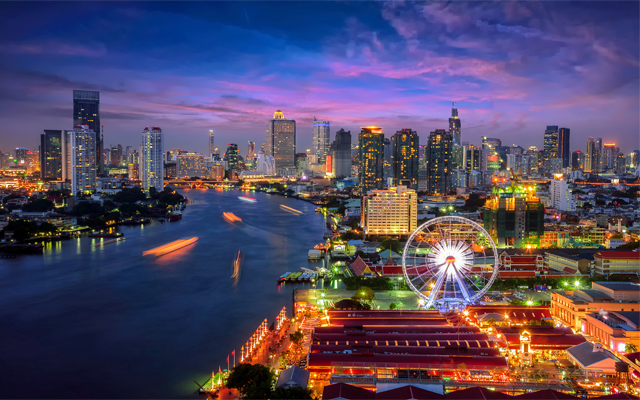
Bangkok cityscape. Bangkok night view in the business district. at twilight
Thailand is further lowering entry barriers for international travellers, with on-arrival PCR tests being scrapped and minimum Covid insurance coverage being cut from US$20,000 to US$10,000.
The latest round of changes will come into effect on May 1.
Thailand to remove on-arrival PCR test and proof of negative pre-arrival PCR test for vaccinated travellers from May 1
However, international travellers will still be required to register for a Thailand Pass with a Certificate of Covid-19 Vaccination and proof of insurance coverage. With this, they will be allowed entry and are free to go anywhere in the Kingdom.
International travellers who are unvaccinated or are not fully vaccinated will also no longer need to show proof of a pre-arrival negative PCR test nor undergo an arrival test.
They are required to register for a Thailand Pass with a five-day hotel booking and an insurance policy with coverage of no less than US$10,000
– reduced from US$20,000.
Upon arrival in Thailand, they must be quarantined for five days and take a PCR test on the fifth day of their stay.
Exception is made for unvaccinated travellers who are able to upload proof of a negative PCR test within 72 hours of travel via the Thailand Pass system. With this, they will be allowed entry and are free to go anywhere in Thailand.
The latest measures follow the removal in March of a pre-departure test requirement.
Japan’s tourism suppliers are gearing up for what is expected to be their busiest Golden Week since the onset of the pandemic, but the ailing industry continues to struggle, with domestic travel yet to return to pre-pandemic levels and international arrivals still locked out.
Some 16 million people are expected to travel domestically in Japan between April 25 and May 5 this year – the Golden Week period that includes a series of national holidays, according to a survey carried out in March by JTB Corporation.
Japan’s domestic travel has yet to return to pre-pandemic levels while international arrivals are still locked out
The figure marks a 168 per cent increase year-on-year, largely due to last year’s national state of emergency that encouraged people in Tokyo, Osaka, Hyogo and Kyoto prefectures to stay home over the holiday period.
In fact, Japan had two bleak years of Golden Week, as the holiday period in 2020 was also disrupted by a nationwide state of emergency.
The industry welcomes the expected uptick in travellers, even noting that the volume could be larger as the survey was carried out in March when 36 prefectures were under special measures to curb the spread of Omicron, which have since been lifted. Even so, visitorship is down 33 per cent on Golden Week 2019 data.
Among those respondents who will travel, the trend will be for trips that are longer, with a four per cent rise in two-night stays, and further afield.
Last year, most travel was made within prefectures or to neighbouring prefectures but now rural regions as well as Tokyo and Osaka are very popular.
Private car use and rental is down year-on-year, while Shinkansen and air travel are expected to rise.
As of April 14, the Japan Railways Group has reported 1.34 million reservations on Shinkansen and other trains over the April 28 to May 8 period, up from 66 per cent year-on-year.
Japan Airlines has scheduled 98 extra flights in its domestic network over April 28 to May 9, despite having culled 1,745 domestic flights over the rest of April and 619 flights for the rest of May.
Respondents reported no change in planned travel spending, but 37 per cent said they want to reduce their travel expenditure over the next 12 months amid economic uncertainty, in another possible blow to domestic tourism.


















Thailand is further lowering entry barriers for international travellers, with on-arrival PCR tests being scrapped and minimum Covid insurance coverage being cut from US$20,000 to US$10,000.
The latest round of changes will come into effect on May 1.
However, international travellers will still be required to register for a Thailand Pass with a Certificate of Covid-19 Vaccination and proof of insurance coverage. With this, they will be allowed entry and are free to go anywhere in the Kingdom.
International travellers who are unvaccinated or are not fully vaccinated will also no longer need to show proof of a pre-arrival negative PCR test nor undergo an arrival test.
They are required to register for a Thailand Pass with a five-day hotel booking and an insurance policy with coverage of no less than US$10,000
– reduced from US$20,000.
Upon arrival in Thailand, they must be quarantined for five days and take a PCR test on the fifth day of their stay.
Exception is made for unvaccinated travellers who are able to upload proof of a negative PCR test within 72 hours of travel via the Thailand Pass system. With this, they will be allowed entry and are free to go anywhere in Thailand.
The latest measures follow the removal in March of a pre-departure test requirement.