Ovolo Hotels has appointed two new general managers for its two Australian properties, Ovolo Woolloomooloo and Ovolo Nishi.
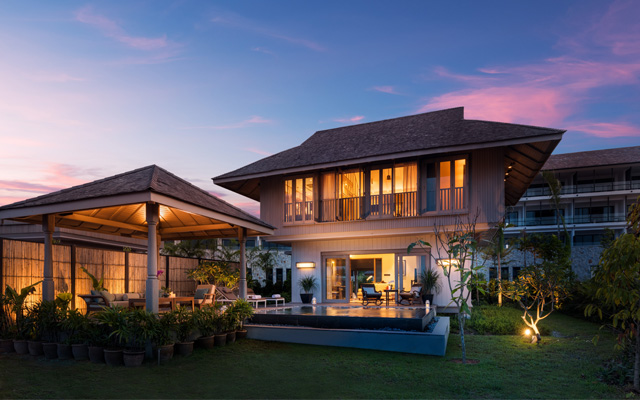
Ovolo Woolloomooloo bridges heritage and modern luxury, allowing guests to indulge in the rich history of the Woolloomooloo wharf complemented by contemporary designs and tech-savvy inclusions.
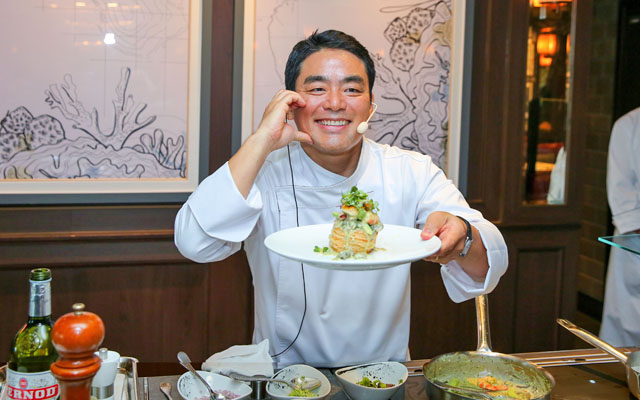
From left: Kieron Hunt; Gabriel Polias
Kieron Hunt has been appointed the general manager of Ovolo Woolloomooloo. Over two decades, Hunt has worked in locations around the world such as London, Dubai, China, and Japan, for hospitality brands such as The Murray, Peninsula Hotels, InterContinental Hotels, Hilton Hotels and Chelsea Football Club.
Down south in Ovolo Nishi, Gabriel Polias joins the property as general manager. His prevoiusly held positions such as hotel manager at luxury brands like the Sofitel, as well as director of operations at the Marriott.
A survey of 9,074 consumers across France, Germany, India, Spain, Russia, Singapore, the UAE, the UK, and the US shows the appetite to travel is high.
At the same time, it reveals that greater clarity on restrictions and guidelines will be key to unlocking increased traveller confidence. Over a third (35%) of travellers said the current international guidelines around where and how to travel are confusing, making them less likely to book business and/or leisure travel. In Asia-Pacific, 37% of travellers in India and 40% of those in Singapore shared the same sentiment.
Travellers are willing to share personal health data, and welcome technologies that will bring travel convenience
At the same time, travellers are exhibiting increased openness to embrace technology and a willingness to share health data so they can start traveling again.
When asked about the receptiveness to share personal health data, the survey results show:
93% of travellers globally would be willing to provide personal data for the effective use of digital health passports or certificates, a slight increase from 91% in February 2021. In both India and Singapore, the figure was slightly higher than the global average at 95%.
Almost half (48%) of business travellers worldwide would be willing to provide their health data to visit a conference or event, compared to 53% in India and 54% in Singapore. Meanwhile, 36% of leisure travellers would be willing to share such information for an excursion or activity at destination, versus 35% and 38% of Indian and Singaporean leisure travellers respectively.
When asked which technology would increase confidence to travel in the next 12 months, mobile solutions continue to be the most popular, with the top technologies including:
Mobile applications that provide on-trip notifications and alerts (44%) (India: 55%; Singapore: 45%)
Contactless mobile payments (e.g., Apple or Google Pay, Paypal, Venmo) (41%) (India: 47%; Singapore: 47%)
Automated and flexible cancellation policies (40%) (India: 42%; Singapore: 45%)
A majority 97% of travellers say that technology will increase their confidence to travel, up from 91% in February 2021 and 84% in September 2020, showing a growing sense of confidence in technology.
When considering the future of travel and sustainability, the survey highlighted what solutions travellers believe might help the industry to become more sustainable long-term. The results showed:
Nearly half (46%) of travellers said greater availability of green modes of transport, e.g., electric planes or trains. The figures in India (51%) and Singapore (53%) were slightly higher.
A similar percentage (44%) believe making sustainable travel more cost effective would be beneficial. Exactly half (50%) of the respondents in Singapore, and 49% in India, felt this way.
41% say transparency around travel companies’ sustainability policies would help. Here, too, the numbers were higher for Asia-Pacific travellers, with 54% in India and 50% in Singapore rating this a priority.
Although receptiveness to travel in the next year is high, the travel industry needs to consider how to respond to changing traveller concerns as the travel environment continues to adapt. The three main concerns travellers have are:
Fears of catching Covid-19 while traveling (41%) (India: 54%; Singapore: 54%)
Self-isolation or quarantine before and after travel (41%) (India: 42%; Singapore: 44%)
Changing restrictions resulting in last minute cancellations (37%) (India: 29%; Singapore: 41%)
In comparison to the previous studies, fears of catching the virus maintain a top concern for travelers, alongside self-isolation, or quarantine.
Jonathan Tong, vice president, Airline Solutions & IT Sales, Asia Pacific, Amadeus, said: “As countries in Asia-Pacific achieve higher vaccination rates, they are beginning to reopen their borders and restart international travel. However, it’s becoming increasingly clear that for international travel to restart in a meaningful way, technology will need to play a central role.
“For example, biometric and contactless solutions can help reduce transmission of the virus, while digital health passes will help create a more frictionless and stress-free experience for travelers. Amadeus continues to advocate for closer collaboration between stakeholders across the industry including, airlines, hotels, technology providers and governments, to expedite the industry’s recovery.”
Indonesia’s Artotel Group has completed a Series B funding for an undisclosed sum, led by Indies Capital Partners, a leading South-east Asian alternative asset manager, with participation from creative industry-focused Benson Capital.
Artotel Group will utilise the proceeds to drive expansion through an aggressive merger and acquisition strategy in Indonesia’s hospitality sector, and invest in strengthening the group’s core business infrastructure, digitising operations, and enhancing sustainability throughout the organisation.
Erastus: Artotel Group’s Series B investment will fund its expansion and core business development
Erastus Radjimin, founder and CEO, Artotel Group, told TTG Asia: “With the rapid development of second- and third-tier cities like Sentul, Malang, Cepu and Banyuwangi, and the improved infrastructure across Indonesia, we see the opportunity to reach out to the (various) domestic market with many options that the Artotel brand alone cannot.”
The group is in the process of rolling out 29 new properties across the country, plumping up its portfolio to over 50 by 2023.
In tandem with the investment, Artotel Group has acquired the Indonesia franchise of Kyriad, a hospitality brand created by France-based Louvre Hotels Group. The deal includes 11 managed properties in the country, adding 1,300 rooms to Artotel’s portfolio. The group will continue to manage the properties under the established Kyriad brand and develop new two- and three-star hotels under the brand in second-tier cities throughout Indonesia.
Erastus said: “Kyriad is the first non-standardised hotel chain at the three-star level. We see the opportunity to develop (the brand) in cities like Purwoketo and Jember where an Artotel brand is (not feasible) due to the project cost or the (local) price level.”
The Kyriad acquisition brings Artotel Group’s total room count to around 3,000.
Erasutus revealed that another acquisition would be announced next month.
Pandu Sjahrir, managing partner at Indies Capital Partners, said: “Artotel Group has demonstrated resilience in this pandemic through effective management and streamlining business operations. Looking ahead, we will support Artotel’s long-term ambitions by strengthening the group’s corporate and technology infrastructure, as well as implementing strategic business plans geared to drive sustainable growth,”
Avina Sugiarto, senior vice president at Indies Capital Partners, expects Indonesia’s tourism industry to continue to grow post-pandemic on the basis of a burgeoning domestic middle-class and strong International appeal.
Meanwhile, Ben Soebiakto, co-founder at Benson Capital, revealed that the company would leverage its expertise in the creative industry to support Artotel’s unique art-inspired offerings.
Prior to this, Artotel Group’s Series A investment had come from Intudo Ventures.
Victorian state officials will begin to ease lockdowns in Melbourne this week, allowing hospitality venues and some businesses to resume, albeit with restricted capacity.
The announcement was made on October 17.
Melbourne will progressively ease out of lockdown from this week
More easing, including the reopening of many retailers, will come once 80 per cent of eligible Victorians are fully vaccinated – estimated by November 5 at the latest.
The city has been under six lockdowns that span nearly nine months, since March 2020.
Melbourne’s reopening follows that of New South Wales, which emerged last week from a 100-day lockdown.
Australia is looking to end her 18-month travel ban in November, which will allow vaccinated Australian citizens and permanent residents to travel abroad. However, the speed of materialisation will depend on the establishment of home quarantine in the country’s eight states and territories.
Tourism Australia has relaunched its Aussie Specialist Programme worldwide with a newly upgraded website and the addition of new modules.
The virtual launch in Indonesia which took place yesterday (October 14) via Zoom was joined by 264 travel consultants from Jakarta, Surabaya and other parts of the country.
Travel agents showcase their boomerang paintings during a webinar workshop held by Tourism Australia
The webinar workshop, which highlighted Australia’s indigenous culture, encouraged the Indonesian outbound travel consultants to spice up their itineraries with Aboriginal and Torres Strait Islander cultural experiences.
Apart from a tutorial on products and services, the travel consultants were also taken on a virtual cultural guided walking tour. As well, in line with the theme, a boomerang painting competition was held among the agents.
The Philippine Department of Tourism (DOT) has been called upon to be more vocal in fighting for the reopening of domestic tourism which, in pre-pandemic times, has shown to reap manifold more returns than the international market.
In 2019, domestic tourists reached 110 million and tourism earnings from them totalled 3.14 trillion pesos (US$61.8 billion), said tourism secretary Bernadette Romulo-Puyat in submitting to the Senate the proposed 2022 budget for DOT and its attached agencies.
Repeated cycles of lockdowns have hindered Philippines’ tourism recovery; tourists at Esmeris Farm, a campsite and local attraction in Laguna pictured
It compares favourably to pre-pandemic foreign tourists totalling 8.26 million and contributing 482.61 billion pesos (US$9.5 billion) in foreign exchange receipts.
Senator and former tourism secretary Richard Gordon told the DOT to be more vocal in asserting the importance of reopening domestic tourism. “I don’t think we should remain locked up. We should open up places that we can corral such as Palawan,” he said.
Gordon noted the “magic of tourism,” citing 2019’s figures of the country recording 110 million domestic tourists – “practically the whole of Philippines” – resulting in considerable contributions to the economy, including tourist dollars, income tax paid by tourism establishments and 5.7 million jobs generated.
Moreover, domestic tourism is likely to bounce back faster than foreign inbound based on DOT’s forecast under three recovery scenarios: upside or mild, medium to harsh, and downside or severe.
For 2022, the domestic market is forecast to recover 61 per cent of its 2019 levels under upside or mild scenario; 49 per cent under medium or harsh, and 35 per cent under downside or severe.
In contrast, over the same period, foreign inbound market is seen to recover 43 per cent of its 2019 levels under upside or mild scenario; 22 per cent under medium to harsh; and 22 per cent under downside or severe.
And as the travel trade concur that the focus should be on reviving domestic tourism, Philippine Tour Operators Association president, Cesar Cruz, said that the Inter-Agency Task Force for the Management of Emerging Infectious Diseases (IATF) should have a better approach than lockdown and halting leisure travel whenever a Covid-19 surge happens.
“After being in this situation for more than one-and-a-half years, there should be a better approach… I believe that no single tour operator can really make it (if this stop-start lockdown cycles continued),” Cruz said during the Second Tourism and Technology Forum organised by the Tourism Promotions Board.
“At least for domestic tourism, we are pleading the government to review the travel restrictions, the actions to be taken when (a new Covid outbreak) emerges… Please consider what could be the positive effect of tourism, especially on the economy and lives of the people,” Cruz said.
He pointed out that India, for example, is still allowing domestic travel even though parts of the country remain at high-risk for Covid-19; while the focus of tourism marketing in China, Australia and Japan is on the domestic market which has been keeping their travel sectors afloat.
Cruz further highlighted the pent-up demand for travel in the Philippines, as people were eager “just to get out of the house, and even (trips within a) 25 to 50 km radius is enough”, citing a demand spike during the short time that those from metro Manila were allowed to travel to other destinations.
Wildlife Reserves Singapore has been renamed as the Mandai Wildlife Group, which will be the new corporate entity encompassing both the zoological park operations and the ongoing rejuvenation work at the Mandai precinct.
Singapore’s wildlife parks will be located together in the new integrated destination that is being named Mandai Wildlife Reserve. With the parks now under one brand, the group also announced changes to the visual identities of its parks.
A keeper at Mandai Wildlife Reserve in the new uniform (Photo credit: Mandai Wildlife Group)
While the Singapore Zoo and Night Safari retain their names, River Safari has been renamed River Wonders, and the new bird park replacing the Jurong Bird Park will be named Bird Paradise.
Dedicated to bird conservation, the new park will house one of the largest numbers of threatened avian species under human care. The reserve will also feature Rainforest Wild, which offers explorations within a rainforest setting.
A new Masterbrand Mandai that embodies the passion and commitment for a thriving, biodiverse planet was also unveiled alongside the new corporate identity. Its new tagline, Come to life, serves both as an invitation to come closer to nature and experience the wonders of wildlife at Mandai Wildlife Reserve, and a call to take action and protect the planet by making better choices every day.
“Mandai Wildlife Group is committed to the vision of thriving wildlife and human communities living side-by-side, in well-functioning ecosystems”, said Group CEO, Mike Barclay.
“In working towards this vision, our focus therefore goes beyond protecting animals and habitats, to encompassing community support, championing sustainable living and promoting nature-based solutions to mitigate climate change. Our rebranding comes at a critical time when action is urgently needed to mitigate climate change and reverse the devastating decline in the earth’s biodiversity.”
The Group will continue to support field conservation work by deploying its wildlife expertise in the areas of conservation planning, veterinary services, animal care and research.
Aside from the new developments under the new Mandai Rejuvenation Project, Mandai Wildlife Group continually re-invests in its wildlife parks.
Among the enhancements in the pipeline for the existing parks include a new amphitheatre at the Night Safari and a revamped Kidzworld in Singapore Zoo. In complementing the suite of virtual learning journeys and back-of-house guided experiences, the group will also roll out the Ranger Buddies, an expanded programme with phygital activities.
The rollout of the new brand identity and logos, along with additional visual assets, has commenced with a change in the group’s corporate attire and the rollout of new platforms such as the website, social media channels, e-tickets, and key park signages. The complete brand changeover is expected to take place by the end of 2022.
Khiri Travel Sri Lanka has created four ecotourism tours in the country for visitors interested in respecting nature, going local and giving back.
From Mirissa on the southern tip of Sri Lanka, guests can sail in a catamaran with a marine biologist to spot blue whales and dolphins. The trip includes swimming, stand-up paddling, and a seafood lunch on board.
Guests can volunteer in a seagrass restoration project in Sri Lanka with Khiri Travel’s new ecotourism offering
In the Cultural Triangle of Sri Lanka, the Trails of Matale trip lets guests talk to villagers and hike through pepper, cinnamon and coffee plantations before savouring a banana leaf lunch.
In the Kandy hill country, Khiri has created an educational tour of herb gardens in the forest to show how spices such as cinnamon are cultivated. The trip includes a mug of locally grown “wild coffee”, a forest curry lunch and a donation to a reforestation foundation.
Guests can also help with a seagrass restoration project in the Puttalam/Kalpitiya area in the north-west of the country. The experience involves getting muddy and wet in a lagoon planting seagrass, which is an important breeding ground for sea life; followed by a Sri Lankan meal.
Khiri has since January 2021 been offsetting guests’ holiday carbon emissions by charging US$1.50 per person per day. The process is being carried out in cooperation with ClimateCare which helps companies such as Khiri Travel with the technical fulfilment of carbon offsetting.
Since October 7, fully vaccinated tourists can enter Sri Lanka without quarantine, and they only need to present a negative Covid-19 PCR test result taken within 72 hours of embarkation for Colombo.
Frasers Hospitality has opened the doors of a new tower at Fraser Suites Hanoi, which has been decked out with a luxurious sky lounge and pool offering panoramic views of the West Lake district.
Set to be launched in December, the Sky Lounge and Pool will feature a 72m² rooftop pool and daybeds. At night, the area will be transformed into a lively venue, with the property’s resident DJ providing live entertainment. Additionally, the new tower features apartments which has been fully fitted with modern conveniences.
The new tower at Fraser Suites Hanoi will feature the Sky Lounge and Pool slated to open in December
Guests will also have access to Elite Fitness, one of the most luxurious gyms in the city with a variety of classes for fitness enthusiasts. The new facilities and amenities add to Fraser Suites Hanoi’s current offerings such as its jacuzzi and meeting facilities.
The property’s expansion also brings about elevated F&B offerings. Scheduled to open in December, contemporary Japanese restaurant Mizumi provides exclusivity with private dining and a teppanyaki area. For those who enjoy curated dining experiences, the restaurant’s omakase offering is carefully paired with selected Japanese whiskey and sake.
The Ascott Limited (Ascott) has formed a strategic partnership with Vietnamese developer Sun Group to manage Vietnam’s largest serviced residence integrated development.
Under the agreement, Ascott will manage 1,905 units across three serviced residence brands – The Crest Collection, Ascott The Residence, and Citadines Apart’hotel – within Sun Group’s Tay Ho View Complex in Hanoi, an integrated development in the city’s exclusive waterfront Tay Ho district.
Ascott’s three serviced residences will sit within the Tay Ho View Complex in Hanoi
Currently only available in France, this is the first time The Crest Collection will debut in Asia. In addition to Ascott’s trio of serviced residences, which are expected to open in phases from 1Q2023, the integrated development also comprises commercial and retail elements.
Ascott The Residence will offer 1,167 units comprising suites, studio, one- to four-bedroom apartments and duplex units, while Citadines Apart’hotel will offer 710 units comprising studio, one- to four-bedroom apartments and duplex units. The Crest Collection will offer 28 exclusive units, comprising three- and four-bedroom duplex apartments.
Facilities at the three properties will include residents’ lounges, a reading room, gyms, Michelin-starred restaurants, a club as well as a sky bar.
With the addition of the three serviced residences, Ascott’s portfolio in Vietnam comprises about 9,200 lodging units in over 30 properties across 12 cities.
Indonesia’s Artotel Group has completed a Series B funding for an undisclosed sum, led by Indies Capital Partners, a leading South-east Asian alternative asset manager, with participation from creative industry-focused Benson Capital.
Artotel Group will utilise the proceeds to drive expansion through an aggressive merger and acquisition strategy in Indonesia’s hospitality sector, and invest in strengthening the group’s core business infrastructure, digitising operations, and enhancing sustainability throughout the organisation.
Erastus Radjimin, founder and CEO, Artotel Group, told TTG Asia: “With the rapid development of second- and third-tier cities like Sentul, Malang, Cepu and Banyuwangi, and the improved infrastructure across Indonesia, we see the opportunity to reach out to the (various) domestic market with many options that the Artotel brand alone cannot.”
The group is in the process of rolling out 29 new properties across the country, plumping up its portfolio to over 50 by 2023.
In tandem with the investment, Artotel Group has acquired the Indonesia franchise of Kyriad, a hospitality brand created by France-based Louvre Hotels Group. The deal includes 11 managed properties in the country, adding 1,300 rooms to Artotel’s portfolio. The group will continue to manage the properties under the established Kyriad brand and develop new two- and three-star hotels under the brand in second-tier cities throughout Indonesia.
Erastus said: “Kyriad is the first non-standardised hotel chain at the three-star level. We see the opportunity to develop (the brand) in cities like Purwoketo and Jember where an Artotel brand is (not feasible) due to the project cost or the (local) price level.”
The Kyriad acquisition brings Artotel Group’s total room count to around 3,000.
Erasutus revealed that another acquisition would be announced next month.
Pandu Sjahrir, managing partner at Indies Capital Partners, said: “Artotel Group has demonstrated resilience in this pandemic through effective management and streamlining business operations. Looking ahead, we will support Artotel’s long-term ambitions by strengthening the group’s corporate and technology infrastructure, as well as implementing strategic business plans geared to drive sustainable growth,”
Avina Sugiarto, senior vice president at Indies Capital Partners, expects Indonesia’s tourism industry to continue to grow post-pandemic on the basis of a burgeoning domestic middle-class and strong International appeal.
Meanwhile, Ben Soebiakto, co-founder at Benson Capital, revealed that the company would leverage its expertise in the creative industry to support Artotel’s unique art-inspired offerings.
Prior to this, Artotel Group’s Series A investment had come from Intudo Ventures.