Malaysia’s ambition to be Hepatitis C treatment hub set to bolster health tourism
Malaysia aims to become a hub for Hepatitis C treatment in the region by offering a combination of ravidasvir and sofosbuvir to treat Hepatitis C at affordable prices.
Being the first country in the world to be given conditional approval for combining ravidasvir with sofosbuvir to treat Hepatitis C, Malaysia is poised to offer access to an affordable and efficacious treatment solution for those infected with the virus.

Speaking at the launch of Malaysia as the Hepatitis C Treatment Hub of Asia on Tuesday (November 16), health minister Khairy Jamaluddin said: “In response to the World Hepatitis Day 2021 theme, Hepatitis Can’t Wait, Malaysia is ready and raring to move forward with a treatment solution for those infected with the disease.
“This is in line with WHO’s mission to reduce new viral hepatitis infections by 90 per cent and reduce deaths by viral hepatitis by 65 per cent by 2030. Malaysia is offering Hepatitis C patients a treatment with a cure rate of 97 per cent and cost reduction of 95 per cent.”
The Ministry of Health will identify hospitals to carry out the treatment, which will be marketed abroad to attract health travellers to Malaysia.
This year, the government is targeting RM520 million (US$125 million) in revenue from health tourism, a huge drop from RM1.7 billion in 2019. For 2022, the target is RM800 million, and a recovery to pre-pandemic level is only expected in 2025.
APAC tourism sector set to recover by nearly 40%, says WTTC
The recovery of Asia-Pacific’s travel and tourism sector has soared ahead of many regions in the world with a year-on-year growth of more than 36 per cent, according to new research from the World Travel & Tourism Council (WTTC).
Before the pandemic struck, Asia-Pacific’s travel and tourism sector’s contribution to GDP represented more than US$3 trillion, or 9.9 per cent of the region’s economy.

After the pandemic brought international travel to an almost complete standstill, in 2020, Asia-Pacific saw a hit of almost 54 per cent, halving the contribution of the travel and tourism sector to the region’s economy.
However, according to the research, and based on the current rate of recovery, the sector’s contribution to the region’s GDP could see a year-on-year increase of 36.3 per cent this year, ahead of the global average of 30.7 per cent, which represents an increase of US$515 billion.
The data also revealed travel and tourism’s contribution to the Asia-Pacific economy could see a similar year-on-year rise of 35.8 per cent in 2022, representing an increase of US$692 billion.
Domestic spend is expected to grow by 49 per cent by the end of this year and experience a year-on-year rise of more than a quarter (25.5 per cent) in 2022.
WTTC’s research goes on to show that while international spend is predicted to drop by nearly 25 per cent on 2020 figures, one of the worst years on record for the travel and tourism sector, 2022 is looking more positive.
Next year, international spend growth is set to rise by US$156 billion (148 per cent), providing a massive boost to the region’s economy.
In terms of employment, in 2019, the Asia-Pacific travel and tourism sector supported more than 185 million jobs.
After a loss of over 34 million jobs last year, when travel restrictions brought international mobility to an almost complete standstill, employment growth is set to rise by a marginal 0.4 per cent in 2021.
However, employment growth could experience a 19.8 per cent year-on-year increase, reaching more than 181 million jobs in 2022.
Julia Simpson, WTTC president & CEO, said: “Our research clearly shows that while the global travel and tourism sector is beginning to recover, Asia-Pacific is doing so at a much faster rate.
“Many countries in the Asia-Pacific region, such as the Philippines, host to our prestigious annual Global Summit next March, are not only ramping up their entire vaccination programme, but also focusing on speeding up the vaccination rollout in key tourism destinations and (among) frontline tourism sector workers in order to reboot their travel and tourism sectors.
“With high vaccination rates around the region, and a predicted rise in international and domestic spend next year, the outlook for both jobs and GDP is looking much more positive for next year.”
According to the research, the sector’s contribution to the region’s GDP and the rise in jobs could be more positive this year and next, if five vital measures are met by governments around the world.
These measures include allowing fully vaccinated travellers to move freely, irrespective of their origin or eventual destination. Secondly, the implementation of digital solutions which enable all travellers to easily prove their Covid status, in turn speeding up the process at borders around the world.
Thirdly, for safe international travel to fully restart, governments must recognise all vaccines authorised by WHO. Fourthly, continued support of the COVAX/UNICEF initiative to ensure equitable distribution of vaccines around the world.
Finally, the continued implementation of enhanced health and safety protocols, which will underpin customer confidence.
Domestic remains main focus in Malaysia’s tourism recovery
Malaysia’s tourism recovery has been primarily driven by domestic leisure travel, and while the country is taking gradual steps to reopen its international border, major industry players say the domestic market will continue to be a linchpin in the road to recovery for the foreseeable future.
On November 15, Langkawi began welcoming foreign tourists back in a test case for Malaysia which plans to fully reopen its borders by January 1, 2022.

Despite the reopening timeline set by the government, it will take time for the international market to return, said Mushafiz Mustafa Bakri, CEO, Malindo Airways, at the World Islamic Tourism Conference on Monday (November 15). For the short term, the airline’s focus will be on growing capacity on the domestic segment, he said.
He added the airline is seeing demand for non-traditional tourist destinations such as Terengganu, Johor Bahru, Alor Setar and Ipoh, as domestic tourists look for new attractions and places to visit.
Yap Lip Seng, CEO, Malaysia Association of Hotels, shared that the international market will reopen in stages and recovery will take time. “We need to be prepared (for) a certain percentage of international (tourists) coming back, and still maintain domestic as our focus for the next year or so,” he said.
He stressed on the need to take care of the domestic market as that is what pays the salaries of employees in the hospitality sector.
When asked what surprised the industry about the domestic tourism market this year, Yap shared the assumption that domestic tourists are price-sensitive is not always true, and that some of them look for value.
This fresh insight will help the hotel industry in its future planning. He shared: “If hotels were to do their part and provide more value-adds into the room rates, then it could actually attract (guests) and bring up the average room rate in Malaysia, which is one of the lowest in the world.”
Both Yap and Mushafiz were panellists in a session on Domestic Tourism Revival for the Muslim Market, which looked at the performance of the domestic tourism market in Malaysia during the pandemic and projections on how it would fare with the return of international business.
Tourism players in Langkawi whom TTG Asia spoke to also concurred that the domestic segment will remain their main source of revenue for at least another year, even as they continue to market their products and services to the international market.
Mega Water Sports & Holidays director of sales and marketing, Sharmini Violet, opined that while Langkawi has rolled out the red carpet to tourists from around the world, there are still hurdles such as travel restrictions in many countries and generally higher airfares.
She said: “It is still (in the) early days (for travel recovery) and I think it will take at least a year before the international market normalises, provided the pandemic ends soon and the virus is contained.
“Our focus for the time being is on the domestic market. At the same time, we have already started regional and international marketing efforts through virtual B2B meetings organised by Tourism Malaysia.”
Sharmini shared that she noticed a trend of middle-income and upper-middle-income families who used to vacation overseas who were now choosing Langkawi as their holiday destination during the pandemic. “This is a market we want to further tap into,” she said.
Anthony Wong, managing director of Cottage by the Sea by Frangipani Langkawi, also estimated that it would take about a year for inbound travel to Langkawi to pick up. In the meantime, the resort is depending mainly on the domestic market to cover operating costs, he said.
He also shared that the island has to address the shortage of manpower as it prepares for the return of the international market. He elaborated: “Locals view a career in the hospitality and service industry as risky due to the frequent lockdowns. Foreign manpower is also hard to get.”
Utopia eyes Phuket expansion
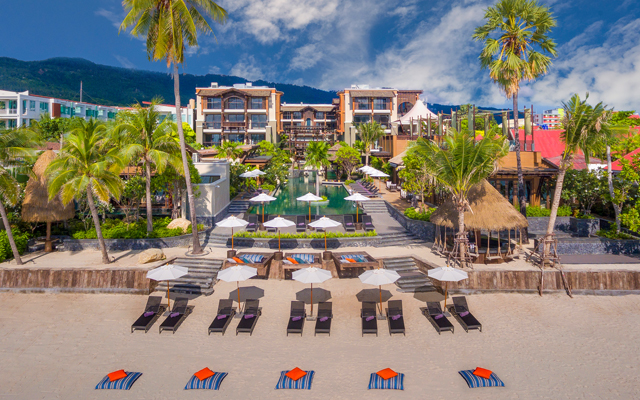
Utopia Corporation or UCORP has unveiled plans to open a collection of hotels in Phuket over the coming years to seize on the anticipated rebound of the tourism sector in the wake of the pandemic.
UCORP’s subsidiary, Utopia Hospitality Group or UHG, a leading real estate developer in Phuket, said further investment is to cash in on the island’s tourism potential in the long term following its reopening to foreign visitors.

Hachi Yin, CEO and founder of Utopia Corporation, said in Bangkok last Thursday (November 11) that despite the pandemic, UCORP continued to lock in sales, driven by deploying the latest technologies. A transformative business plan in sync with marketing trends, consumer behaviours and demands all contributed to the success.
In 4Q2021, Utopia continues to reinforce its commitment with the launch of UHG to operate hotels and resorts. UHG will operate several new hotels including rebranding and renovation from 2022 onwards.
Come 1Q2022, UHG is set to launch its new midscale aparthotel brand, with the first property under this brand slated to open in 4Q2022.
An ultra-luxury brand, which is a collaboration with Italian lifestyle brand Tonino Lamborghini, will be unveiled in 2Q2022. As well, an upscale lifestyle resort brand is set to launch in 1Q2023. All hotels will be located in different locations across Phuket.
Hachi projected that post-crisis, Phuket will be one of the destinations that attract travellers from all around the world, adding that he sees the digital nomad segment as a huge potential market.
To date, UCORP has developed ten property projects comprising of 2,000 units in Phuket.
New hotels: OMO5 Kyoto Gion, Courtyard by Marriott Phuket Town, and more

OMO5 Kyoto Gion by Hoshino Resorts, Japan
OMO5 Kyoto Gion by Hoshino Resorts marks the third OMO property in Kyoto, following the opening of OMO3 Kyoto Toji and OMO5 Kyoto Sanjo. All 36 rooms incorporate traditional Japanese patterns, with some room types having kitchens. Larger rooms that can accommodate up to six persons are also available. OMO5 Kyoto Gion is located in the Gion area, which is in Monzencho, centred around the famous Yasaka Shrine. With the concept “live like a local in Gion”, the hotel encourages guests to experience the arts and culture of the area. Hotel staff will be able to recommend long-established tea houses and stores favoured by locals, and share insights into the history and traditions of the area and temples.

Courtyard by Marriott Phuket Town, Thailand
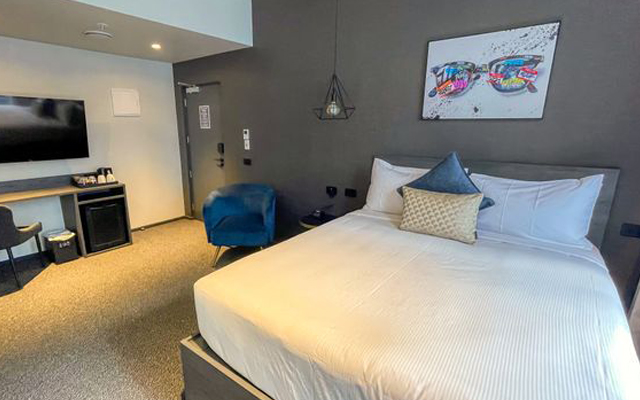
Located in the heart of Phuket’s old town, Courtyard by Marriott Phuket Town features 248 rooms and suites, including a pair of 140m² Presidential Suites, which are equipped with a flat-screen television, work desk, and separate living area with a window side lounger. The hotel’s all-day dining restaurant Krua Talad Yai offers authentic southern Thai cuisine and popular international dishes. The Talung Lounge serves coffee with cakes and confectionaries, while Kolae Pool Bar offers cocktails and light bites. Other leisure amenities include a kid’s club, fitness centre and outdoor swimming pool. The hotel also features facilities for meetings, business conferences and social events. The versatile event space includes a 660m² pillarless Grand Ballroom and several flexible function spaces.

Wyndham Garden Christchurch Kilmore Street, New Zealand
Wyndham Garden Christchurch Kilmore Street will mark the company’s second hotel for New Zealand’s garden city, and its 16th hotel in New Zealand. The 96-room hotel is centrally located near the city’s bustling food scene, with restaurants and cafes just a five-minute walk away, and a short walk from the casino and new Christchurch Convention Centre. Room types include 60 apartment-style options, each outfitted with kitchen facilities, washing machine and clothes dryer. Larger groups and families can take advantage of interconnecting rooms for extra space. On-site amenities include a fitness room, Spire café serving a wholesome breakfast and lunch showcasing free range local produce, room service, and a conference room featuring the latest in audio-visual technologies.

Hyatt Place Kathmandu, Nepal
Hyatt Place Kathmandu, the second Hyatt-branded hotel in Nepal, is located in the city of Kathmandu, set in a valley surrounded by the scenic Himalayan mountains. The property offers 153 guestrooms with separate spaces to sleep, work and play, as well as a Cozy Corner sofa-sleeper. F&B venues include the Breakfast Bar offering a selection of hot and cold items, and Zing World of Flavors serving a menu featuring bold tastes from South-east Asia with some Italian-Mediterranean options. Zing Sky Bar & Lounge is a poolside venue offering curated cocktails and Nepal’s best brews. Elsewhere, The Market serves freshly prepared meals all day; while The Bar features specialty coffees, premium beers, wines and cocktails. The hotel also offers approximately 500m² of flexible meeting spaces, and a fitness centre featuring cardio equipment with LCD touchscreens.
DoubleTree by Hilton deepens roots in SE Asia
Hilton is set to open 15 DoubleTree by Hilton hotels in South-east Asia over the coming years across key and emerging destinations.
“Following the reopening of domestic and international borders, the surge in travel demand we’ve observed across international markets after an extended period of disconnect shows that travellers are eager to hit the road, reconnect and seek out new experiences once more,” said Paul Hutton, area vice president, head of South-east Asia, Hilton.

Upcoming hotels include DoubleTree by Hilton Shah Alam i-City in Malaysia, slated to open in 2022 as part of the i-City mixed development in Selangor’s Golden Triangle. The 300-room property will feature state-of-the-art technology and a total of 1,000m² of function space spread over two floors.
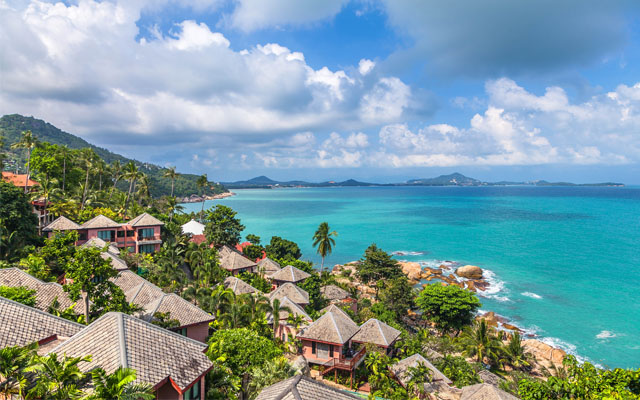
Also in Malaysia, DoubleTree by Hilton Damai Laut Resort is due to open in 2023. With a scenic view of the Malacca Straits, the 294-room resort will be located within 171ha of lush greenery, and will add to Hilton’s current portfolio of 11 properties across three brands in Malaysia.
Over in Indonesia, the 185-room DoubleTree by Hilton Jakarta Bintaro Jaya Xchange will form part of a mixed-use development in Bintaro Jaya, a satellite district in the Greater Jakarta area.
Come 2024, the opening of the 147-key DoubleTree by Hilton Negombo Resort will mark Hilton’s arrival to the seaside town of Negombo on the west coast of Sri Lanka.
Hilton currently operates 10 DoubleTree by Hilton hotels in South-east Asia, with 15 properties in the pipeline.
Reviving the hospitality industry by plugging into connectivity

The deployment of contactless and connected services, and the Internet of Things (IoT) has typically been gradual in the hospitality industry.
However, with the pandemic accelerating a shift in regulations and consumer priorities on safety and hygiene, hoteliers have been forced to undergo an overnight pivot towards digitally driven models.
Simultaneously, the rapid digitalisation in everyday lives has also led to higher consumer expectations of hotel experience.
Heading into 2022, the anticipated resurgence of the travel industry and new dimensions of tourism will irrevocably transform how hotels operate and interact with its guests. As travelling restarts, and consumers are eager to make up for lost vacation time, digitalisation is empowering an era of new contactless guest experience in the hospitality industry.
A contactless era
Mobile devices have become crucial in the evolving hotel-customer dynamic, and targeted notifications that convey essential experiential services, such as automated check-in guides or booking of amenities like the gym or swimming pools to consumers’ personal smartphones will continue to be even more commonplace in 2022.
Such methods not only provide hyper-personalised attention but can allow staff to provide services from a safe distance as people learn to adjust everyday activities around Covid-19. Contactless technologies can even do away with access cards and allow mobile applications to open electronic door locks.
Similarly, with people now demanding integration of services into popular daily applications, hotels will be leveraging its property management system (PMS) to collect user information to offer tailored services and products.
Such collected data can even be used to develop applications that detect users’ location and then provide timely location-related services in response. For example, alerting staff to attend to guests who can then tip through QR codes on the staff’s badges without making physical contact, or even enforcing proper safe distancing measures in an overcrowded space.
Smarter facility management
Hotels will also increasingly use a wider range of connected sensors, lights and devices to provide more efficient and “smarter” facilities management.
For instance, the use of IoT applications will allow smart doors connected over the network to automatically adjust a room’s air conditioning if a door is left open for some time, or even activate nearby security cameras when unsuccessful attempts to unlock the door are detected.
Ideally, management of such smart facilities should be through a single integrated network platform, which can enable more granular control of other essential protocols like guests’ experiences and staff operations that are also empowered by IoT.
Great experience starts with great connectivity
Reliable high speed internet access will be at the centre of guest experience for both business and leisure travel. Merely offering free internet access is no longer enough, as customers expect their chosen accommodations to provide similar speed, dependability, and convenience that their office or home network provides.
In most cases, a good Wi-Fi connection is one of the determining factors whether someone chooses to stay in a hotel, or to be a returning guest. Good connectivity in the hotel not only ensures customer satisfaction, but also enables the efficient processing of user data between the IoT applications and connected devices for the hotel to deliver improved guest services.
With the increasing bandwidth demand, investing in next-generation Wi-Fi 6 is critical for hotels to be able to support large-scale and high-speed connectivity. This includes faster performance, with speeds up to four times faster than Wi-Fi 5, bringing the maximum throughput speed to 9.6 Gbps up from Wi-Fi 5’s 3.5 Gbps.
With the IoT market expected to grow to US$398.6 trillion by 2023 in Asia-Pacific alone, we can expect an increasing adoption of connected devices. Wi-Fi 6 deployments can help hotels leverage this exponentially growing trend, by enabling the connection to remain robust and seamless even if multiple devices are connected, ensuring optimal network performance in crowded or remote areas within the premises.
Providing improved and fuss-free guest experiences with heightened standards of connectivity and safety will be key in the economic revival of the hospitality sector. Underpinning this is effective digital transformation and the adoption of new technologies that will no doubt be vital for the success of the industry, while ensuring better preparedness for the future.
Accor CEO misses Chinese travellers but says happy surprise awaits Asia
Accor is no longer in survival mode but in rebound mode, said its CEO Sebastien Bazin. He expects a full recovery by spring 2023.
A lot depends on the return of Chinese travellers, who are the major source of arrivals for Asia. Nearly a quarter of Accor’s 5,252 hotels are in Asia.

“We miss the Chinese traveller terribly and hope they can return as soon as possible,” said Bazin. “If soon, Asia will have a fast V-shape recovery.”
Although that’s a big if, Bazin is optimistic about Asia, which is reopening to international markets.
“We’re going to see lots of Europeans and Americans coming to Thailand, Cambodia and other Asian countries the minute they open. These are wonderful destinations. So we’re going to miss the Chinese, but don’t be pessimistic, because it’s going to be better than expected,” he said.
Asia could be “happily surprised” by the quality of spending and volume of traffic that is coming, said Bazin.
“In Europe and America, people are eager to travel and have saved money to travel. They accept to pay more for travel and are staying longer.”
He said since cross-Atlantic travel reopened on November 8, all planes from Europe to America have been fully booked.
While that is some consolation, China represents more than 40 per cent of international arrivals across Asia, according to a JLL report in October. The Asian countries that depend the most on Chinese arrivals are Hong Kong, South Korea, Vietnam, Japan and Thailand, in that order. In 2019, there were 169 million China outbound travellers.
If China remains closed, cities such as Tokyo, Seoul and Ho Chi Minh City (HCMC), where a lot of new supply has opened to meet China market growth, would be greatly affected, said JLL. For instance, HCMC’s occupancy could recover to near 70 per cent, but with a prolonged China closure, it would be around 50 per cent.
An obstacle to a return of China outbound is if Chinese-made vaccines are less effective to handle new variants and China maintains its zero-Covid policy. If so, China could close borders for longer, over fears of its outbound travellers returning and spreading a new variant, said JLL.
Few Accor owners are in trouble
For Asian hotel owners, it’s been a long, tough ride. Domestic travel, huge in countries such as Vietnam and Japan, is restricted. In Thailand, where it’s not, it’s a weekend market. In Singapore, there’s only so many staycations locals can endure.
Bazin, who is in Singapore this week, said Accor has been supportive of its Asian owners.
“Anything that helps with liquidity has already been done. In the last 18 months, we accepted to be flexible with brand protection. If the property needs capex (capital expenditure) and it’s agreed pre-pandemic, the renovation is postponed because the owners don’t have the means to do it. So I accept a bit lower standards, not much,” he said.
According to Bazin, not even 10 of Accor’s 4,000 owners globally have gone through deep financial difficulties, a third of them in Asia.
“The average debt of our owners is probably 30 per cent against the asset value. I am blessed to have strong third-generation families, insurance companies and sovereign wealth funds owning hotels. Their strength and stability is remarkable.
“That said, a lot of large economies in the Western world have provided state guarantee loans, stimulus packages and furlough benefits to owners.”
Lifestyle gets only bigger
Bazin expects Accor’s new lifestyle group, Ennismore, to “grow fast” in Asia.
Accor is the major owner of the joint venture with London-based Ennismore, founded by Sharan Pasricha. Completed last month, it pulls together a who’s who list of lifestyle hotel brands, such as Ennismore’s Hoxton and Gleneagles, and Accor’s SLS, Mondrian and 21c Museum Hotels, which the global chain bought pre-pandemic.
Altogether, there are 14 brands, including Accor’s hostel creation, Jo&Joe. This reflects that Ennismore isn’t about luxury, but innovations and experiences.
Currently, there are 100 hotels in this group, or two per cent of Accor’s hotel network. This should grow to 250 hotels in three years. But the kicker is, Ennismore will “quickly” represent a “big” percentage of Accor’s profitability, said Bazin, who declined to say the figure.
That’s because more than half of the hotels’ profit comes not from rooms but lifestyle experiences such as F&B, events and co-working. While local communities usually shy away from hotels, they want to see and be seen in these ones, he said.
He believes Asia will take to Ennismore like the Middle East has. Ennismore and Saudi Arabia’s Tourism Development Fund (TDF) have agreed to establish a US$400 million fund to develop Ennismore’s brands in 12 destinations in the kingdom. Bazin expects 12 to 15 lifestyle hotels to be built under the deal.
TDF will identify locations and provide financing options for the projects, while Ennismore will handle aspects such as design and operations.
“You’re going to see such funds by other big countries, likely here as well (in Asia), to accelerate the lifestyle position in their region,” said Bazin.
“If 55 per cent of your profit is from the local community, then you don’t have to depend on airlines, OTAs and so on, and your customer is a repeat. That reduces risk.”
The pandemic has increased demand for lifestyle. People want fulfilment, experience and discovery, he said.
It took frontiers to close for hotels and locals to realise that they need each other more than they ever imagined.
Stumbling blocks hinder Bali’s tourism recovery progress
The tourism industry in Bali is calling on the Indonesian government to revise some entry policies, which they identify as hindering factors for the rebound of international arrivals.
Although Ngurah Rai International Airport has reopened for international visitors since October 14, the industry has yet to see the return of business.

A trio of tourism industry associations – Bali Tourism Board (BTB), Association of the Indonesian Tours and Travel Agencies (ASITA) Bali Chapter and the Indonesia Inbound Tour Operators Association (IINTOA) – identified the existing incoming flight regulation, quarantine requirement and visa policies as the stumbling blocks.
Currently, fully vaccinated travellers from 19 countries including UAE, New Zealand, China, India, Japan and South Korea are allowed to enter Bali.
However, according to BTB, the requirement for airlines to operate only direct flights between these countries and Bali makes it “difficult” to yield business.
An evaluation conducted by the tourism board on Monday (November 15) showed that a month into its reopening, not a single international flight has yet landed on the island.
Ida Bagus Agung Partha Adnyana (Gus Agung), chairman of BTB, said: “The government allows only airlines of the 19 appointed countries to fly into Bali. From UAE, for example, it is difficult for Emirates Airlines or Qatar Airways to bring travellers to Bali, because (their home-bases) being international hubs, the majority of their passengers are from Europe, the US, etc., and not the local Doha, Dubai and Abu Dhabi residents.”
He suggested for the government to instead allow airlines to transit at hub countries but no more than 12 hours.
“Visa application mechanism should also be simplified to be more competitive with other countries,” Gus Agung said.
Putu Winastra, chairman of ASITA Bali Chapter, explained that with the absence of visa-on-arrival (VoA) and visa-free facilities, leisure travellers currently can only use visit visas obtained through sponsors.
“Travellers need sponsors who will apply for the visas (online) on their behalf. To be a sponsor, the (travel company) must be registered at the immigration office, so not many companies are eligible to be one. As such, it is a bit challenging and more costly for travellers to obtain a visa,” Putu explained.
He, therefore, suggested categorising requirements according to each country’s Covid-19 risk level – for instance, imposing the sponsorship requirement only on nationals from medium-risk countries, while allowing those from low-risk countries to be given VoA facilities.
Gus Agung, meanwhile, opined that sponsorship is unnecessary since the government has stipulated that all travellers must have travel insurance with Covid-19 coverage.
While the quarantine period has been cut from five to three days, that policy is taking the shine off Bali as a tourist destination since many other countries have scraped quarantine, said Paul Talo, chairman of IINTOA.
He said business partners have questioned the necessity of a three-day quarantine when travellers were fully vaccinated, with many having even taken booster shots, on top of undergoing Covid 19 testing.
Paul pointed out that while many countries such as the US, Germany and Poland have allowed their citizens to use vaccine passports – or digital health certifications – when travelling; in Indonesia, even those fully vaccinated must still go through Covid tests to travel within the country.
“This shows that the government has not acknowledged the vaccines. As long as this continues and the quarantine policy remains in place, we cannot expect travellers to come,” he said.
Apart from revising existing policies, BTB has also suggested expanding the border opening to more countries including the US, Russia, the UK, Germany and Australia.


The Philippine government has approved a plan to allow entry for fully vaccinated travellers from low-risk countries, the Department of Tourism (DOT) announced on Friday (November 19).
Tourism secretary Bernadette Romulo-Puyat said the coronavirus task force, under DOT’s recommendation, “has approved in principle the entry of fully vaccinated tourists” from countries under the green list, with guidelines to be finalised and approved.
“Allowing tourists from green countries or territories that have the majority of its population vaccinated and with low infection rate, will greatly help in our recovery efforts – increasing tourist arrivals and receipts, among others,” Romulo-Puyat said.
“This move will likewise aid in bolstering consumer confidence, which is a large contributor to our gross domestic product or GDP growth.”
Romulo-Puyat said that the proposal to open leisure travel from “green countries”, or those classified by the Department of Health as low-risk countries, will be based on strict conditions.
Only fully vaccinated individuals with vaccines recognised by the country’s Food and Drug Administration under an Emergency Use Authorization or those authorised by the WHO will be allowed entry to the country.
Romulo-Puyat noted that this is a welcome development as other countries have already reopened their borders to international leisure travellers.
“Our (South-east Asian) neighbours like Thailand, Vietnam, and Cambodia also did the same. We believe that it is also time for us to reopen our borders for inbound tourism as a way towards full recovery,” she said.
An inter-agency Special Technical Working Group on Travel has been tasked to come up with guidelines for the country’s reopening to international tourists, subject to the approval of the coronavirus task force.
Separately, the DOT will also be working on another proposal with the Small Technical Working Group on Travel on the possibility of establishing vaccinated travel lanes or bubbles to allow entry for vaccinated tourists from yellow list countries.