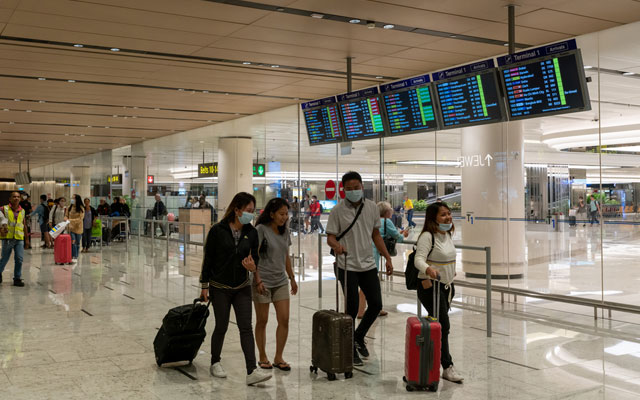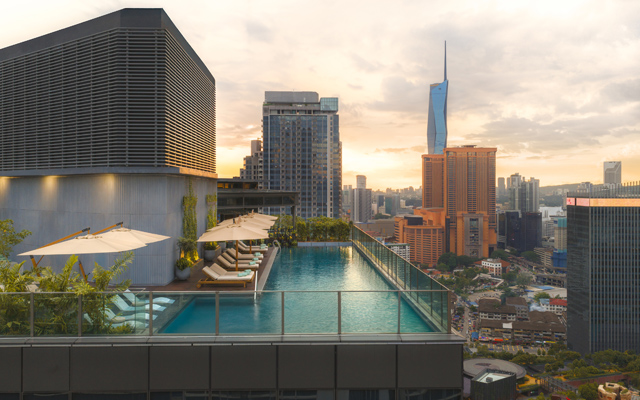
Travellers entering Singapore will face stricter rules from 23.59 on December 2 as the city-state attempts to buffer against the spread of the new Omicron variant.
The Straits Times reported that while no Omicron cases have been detected locally, the Ministry of Health said the pre-emptive measures are needed for Singapore to assess the implications of the new variant. Such measures will also help to reduce the risk of importation of the virus.
Travellers entering Singapore will have to abide by tightened measures for the next four weeks at least
Under the new requirements, air travellers arriving on the quarantine-free Vaccinated Travel Lane (VTL) scheme must undergo supervised, self-administered antigen rapid tests at a Quick Test Centre on days three and seven of their arrival.
Previously, such travellers would only need to take a Covid-19 swab test prior to their departure for Singapore, and upon arrival.
All air travellers entering, transferring or transiting through Singapore must also have tested negative in a pre-departure test within two days of leaving for Singapore.
Third, all travellers must take a Covid-19 polymerase chain reaction (PCR) test on arrival. This will affect non-VTL travellers entering Singapore who are not from Hong Kong, Macau, China and Taiwan.
These tightened restrictions will be in place for four weeks, and are subjected to review and possible extension.
This announcement follows on the heels of the government’s decision to indefinitely postpone planned VTLs for Qatar, Saudi Arabia and the UAE.
Garuda Indonesia and Singapore Airlines (SIA) have signed a Memorandum of Understanding (MoU) that will expand their wide-ranging commercial partnership to provide customers with additional options and an enhanced travel experience.
The agreement was inked by Garuda Indonesia president and CEO Irfan Setiaputra and SIA CEO Goh Choon Phong on November 26, 2021, coinciding with the launch of a quarantine-free Vaccinated Travel Lane (VTL) between Indonesia and Singapore on November 29, 2021.
Singapore Airlines and Garuda Indonesia will expand their wide-ranging commercial partnership
The scope of the collaboration includes the potential alignment of frequent flyer programmes, joint marketing activities, and initiatives to promote inbound tourism into Indonesia, subject to regulatory approval. Both partners are also committed to finding new growth opportunities in the air freight segment, as well as cooperation in maintenance, repair, and overhaul activities.
Garuda Indonesia and SIA reactivated their air connectivity partnership
arrangement between Singapore and Bali, Jakarta, and Surabaya on October 1, 2021. Garuda Indonesia commenced flights network connectivity on SIA’s services to London on the same day, and will codeshare on SIA’s flights to Mumbai from January 1, 2022, subject to regulatory approval.
Known for her big-city draws and star-studded football clubs among South-east Asian travellers, Spain is working to spread post-pandemic tourism attention to lesser-known parts of the country and play up unique local experiences.
Speaking to TTG Asia, Singapore-based Monica Sanchez, tourism counsellor with the Embassy of Spain and director of Spain Tourism Board, revealed that the tourism office has been spending the past 18 months of the travel freeze rebranding destination Spain and deepening South-east Asian travel agents’ understanding of Spain’s various points of appeal. Engagements were accomplished through webinars and one-on-one meetings with providers of Spanish travel and tourism products.
Sanchez: South-east Asian tourists have much to discover in Spain
“Tourists from this region know of Spain’s hit destinations, but most are unaware of the other areas where they can experience the full flavour of the country, such as tasting and learning to cook traditional Spanish dishes, making cheese and anchovies, going fishing, visiting farms, exploring nature trails, and so much more,” said Sanchez.
The webinars, which also present Spain’s rich Islamic history and readiness for Halal tourism, have attracted at least 500 travel agents from across South-east Asia.
Sanchez observed that since June 2021, when Spain resumed international travel for fully vaccinated individuals from all countries, nature trails for hiking and biking have gained a strong following. Leveraging post-pandemic travellers’ love for the outdoors, Spain is promoting routes that show off the country’s natural sights. Among them is the eight-kilometre Caminito Del Rey Trail, which was once considered one of the most dangerous in the world but is now made much safer for visitors to stroll down walkways hanging 100m up a sheer cliff. The other is the northern route of The Way of Saint James, down the coastline of the Cantabrian Sea, which promises to impress nature lovers.
The tourism board is also directing attention to Spain’s 15 small cities and villages bearing the UNESCO World Heritage Site status.
“Some are popular as a day-trip destination, made possible by our advanced and convenient transport system, but we are encouraging travellers now to savour these places slowly – stay for a few days, sit down for a meal, talk to the locals, and discover hidden gems,” she said.
As Spain’s nature trails and most of her UNESCO World Heritage Sites are unknown to South-east Asians, Sanchez sees great potential to grow arrivals from the region through these points of appeal.
“One of the projects we have now is to promote Green Spain, a collection of unspoiled beaches, charming villages and extraordinary nature reserves all across the north of Spain in Euskadi, Cantabria, Asturias and Galicia. Here, dishes use the freshest local produce, so flavours are quite impressive. Travellers can choose to stay in a little hotel in the countryside, and enjoy homemade meals that are sustainably sourced and contribute to local tourism earnings.”
Hiking and biking in Spain’s great outdoors is winning over travellers; Picos de Europa National Park pictured
According to Sanchez, raising awareness of off-the-beaten-path destinations and customised programmes is an effective way for Spain to counter overtourism issues that were present pre-pandemic, and to ensure that post-pandemic tourism will benefit more local communities, not just those in developed tourist circuits.
This direction will also enable Spain to encourage travellers to stay longer and experience more of what the country has to offer.
Working to Spain’s benefit is also the country’s reputation as one of the safest destinations to visit in Europe, opined Sanchez.
“While Spain was hit hard by Covid-19 in the early days of the pandemic, the country has shown how well she has regained control. Spain’s vaccination rate is among the highest in Europe. Locals continue to take masking seriously – masking indoors is still mandatory. In fact, locals remain respectful of the effects of Covid-19, so they are cautious and considerate even though our incidence of infection has fallen and is among the lowest in Europe,” she elaborated.
As more Asian governments ease international travel restrictions, Sanchez said 2022 would be a better year for tourism.
In Singapore, where a quarantine-free Vaccinated Travel Lane has been established with Spain since November, Sanchez’s office has been “inundated by enquiries for the year-end holidays season”.
“It is encouraging to see that the enquiries are not just from people who are thinking about going to Spain; many are in the process of booking. There are also Singaporeans travelling in Spain now, a mix of individuals and families, as well as small corporate groups,” she said.
Australia has halted border reopening plans to students and skilled workers, sparked by concerns over the new Omicron variant.
Initially slated to reopen on December 1, the date has been delayed at least two weeks.
Australia delays border reopening; Parliament House in Canberra pictured
Australia’s borders have been closed to most non-citizens for more than 20 months, with the exception of fully vaccinated Australian citizens, permanent residents and immediate family, as well as fully vaccinated green lane travellers from New Zealand and Singapore.
The reopening to travellers from Japan and South Korea will also be paused until December 15. The plan was to open borders to visitors from these two countries on December 1.
Australian prime minister Scott Morrison indicated that the temporary pause will allow the country to gather the necessary information to better understand the variant, the efficacy of the vaccine, the range of illness, and the level of transmission.
Australia has so far, detected five cases of the Omicron variant.
Elsewhere in Asia-Pacific, Japan has also temporarily suspended entry for all foreign visitors for at least a month while Indonesia has extended quarantine-on-arrival requirements.
Japan announced today (November 29) that it will be suspending entry for all foreign visitors due to the emergence of Omicron, a new Covid variant.
The measure will take effect Tuesday and last for about one month.
Japan has reinstated border controls as a precaution against the new Omicron Covid variant
With this, Japan will restore border controls that were eased on November 8 for short-term business visitors, foreign students and workers.
According to Kyodo News, prime minister Fumio Kishida said Monday that closing the border is a “temporary measure until information about the Omicron variant becomes clear,” adding that “when dealing with an unknown risk, it’s best to take every precaution”.
Japan is the second country after Israel to bar all entry to foreigners, while most countries around the world are scrambling to control flights and travellers hailing from South Africa.
In Asia-Pacific, governments of Indonesia, the Philippines, Hong Kong and Australia have tightened entry rules, while Singapore has deferred the opening of Vaccinated Travel Lanes with the UAE, Qatar and Saudi Arabia scheduled for next week.
It is currently unclear if the new variant is more contagious than the others that have been identified.
In a Reuters report, a South African doctor who was one of the first to suspect a different Covid strain among patients said last week that symptoms of the Omicron variant in patients have so far been mild.
Hotelbeds has entered a new partnership with the Department of Tourism of the Philippines to launch a new More fun awaits in the Philippines campaign aimed at travel-starved consumers in the UK.
“We are experiencing a significant amount of pent-up demand in the UK market and, with the slow lifting of travel restrictions in the Philippines, now is the perfect time to educate our agents and secure future bookings in the destination,” said Joseph Sheller, head of global destination marketing at Hotelbeds.
Hotelbeds will launch a new More fun in the Philippines destination campaign in the UK market; Palawan pictured
This new campaign will showcase the different activities that can be found in the Philippines. Home to more than 7,000 islands, travellers will discover endless beaches, bustling and trendy cities, smoking volcanoes and incredible underwater experiences. The unique gastronomic offerings of the Asian destination, as well as the culture of the place, are expected to become the perfect lure that UK travel advisors can offer their travellers.
With over 3,000 contracted hotels in the Philippines, the bedbank will now have the opportunity to highlight all properties in the area through the campaign, as well as provide a new set of exclusive offers for Hotelbeds’ network of UK-based clients.
Florian Blois, regional destination marketing manager at Hotelbeds, said: “The country is an important destination for Hotelbeds in Asia-Pacific, and we are delighted to be one of their official partners in the global campaign More Fun Awaits in the Philippines.”
Starting this month, and running until the end of January 2022, the marketing campaign will be promoted through the company’s two main distribution channels, Hotelbeds for wholesale distribution and Bedsonline for retail travel advisors, to its extensive network of travel advisors in the UK.
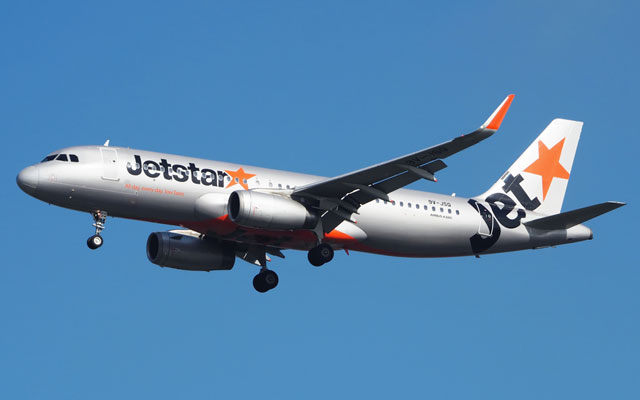
Jetstar Asia’s first designated Vaccinated Travel Lane (VTL) flight from Kuala Lumpur to Singapore has touched down on Monday morning, setting a momentous milestone for the airline’s recovery on the back of one of the world’s busiest international air links.
Passengers checking in for flight 3K683, which departed Singapore’s Changi International Airport at 07.15 on November 29; the return VTL flight – first for Jetstar Asia on this route – arrived in Singapore at 10.15
The airline’s first designated VTL flight, 3K684, arrived at Changi Airport at 10.15.
Seven of Jetstar Asia’s 16 weekly return services in December between Kuala Lumpur and Singapore will be designated VTL flights, enabling fully vaccinated customers to enter Kuala Lumpur and Singapore, quarantine-free.
According to a Jetstar spokesperson, there has been strong demand for the VTL services, highlighting the pent-up demand of customers wanting to reconnect with family, friends and colleagues.
Travellers from Thailand, Cambodia, Fiji, Maldives, Sri Lanka and Turkey may enter Singapore under the quarantine-free vaccinated travel lanes (VTLs) next month, joining 21 other countries that are already on the programme.
The scheme will kick in on December 14 for travellers from Thailand, while for the rest it will be enabled from December 16.
Singapore now has VTL schemes with 27 countries, all of which made up a third of total pre-Covid arrivals at Changi Airport; HSBC Rain Vortex at Jewel Changi Airport pictured
According to the Civil Aviation Authority of Singapore (CAAS), arrivals from all 27 VTL countries accounted for about 60 per cent of the total daily arrivals at Changi Airport pre-pandemic.
Along with the additional VTLs, Singapore will raise her daily VTL quota from 10,000 to 15,000 travellers.
According to a CNA report, transport minister S Iswaran said that Singapore’s VTL quotas amount to about one-third of the total pre-Covid flows from these countries.
He added that the VTL scheme will reconnect Singapore with the world while managing the public health risk, and the government will “closely monitor the global public health situation” and “impose additional safeguards as necessary”.
CAAS commented that the “successful implementation of the VTL without compromising public health” gave it the “confidence” to extend the scheme to more countries.
All six VTL countries announced on November 26 have “similar or lower Covid-19 incidence rates” than Singapore and the other VTL countries, it said.
Thailand, Cambodia, Maldives and Sri Lanka have reopened their borders to quarantine-free general travel for vaccinated people.
Fiji will reopen her borders to vaccinated travellers from 40 “partner countries”, including Singapore, from December 1, noted CAAS.
“The VTL with Fiji will allow fully vaccinated travellers from other VTL countries which Fiji has opened to, such as Australia, Canada, France, (South) Korea, the UK and the US, to extend their trip to Singapore without quarantine,” added CAAS.
Asia-Pacific is set to be the biggest driver of the demand for air travel
Trip.com Group and the World Travel & Tourism Council (WTTC) have published a new report that has found pandemic-induced changes to traveller preferences in three clusters – booking trends, consumer considerations and consumer profiles.
Titled Trending in Travel: Emerging Consumer Trends in Travel & Tourism in 2021 and Beyond, the study was commissioned to uncover the global trends for consumer travel by evaluating the booking data analysis and consumer survey responses acquired by the Trip.com Group’s platforms as well as those from industry sources, in a bid to better understand the changing consumer behaviour as a result of Covid-19.
Post-pandemic travellers in Asia-Pacific value domestic trips, longer stays, flexible booking policies, and responsible way of appreciating the destination
Sustained domestic rediscovery
As international travel continues to face persisting limitations or restrictions, travellers remain compelled to search for travel experiences within their home countries. Therefore, the report identifies that domestic travel will continue to lead the recovery of the travel and tourism sector, especially in the short to medium-term.
In particular, the concept of staycations may continue to be in demand and more so for countries with prolonged restrictions on outbound travel.
Globally, the report found that more than half of global travellers plan to travel for a domestic holiday in the next 12 months. Trip.com data analysed a surge in overall global domestic hotel bookings in 2021 as compared to previous years, with an increase of over 200 per cent for 2021 compared to 2019.
Particularly for Asia-Pacific markets, including Singapore, there has been a sustained increase in demand for local staycations. The report indicated that this growth and demand would also be attributed to the respective governmental policies for each country. Singapore, for example, introduced the SingapoRediscovers Vouchers (SRV) scheme to boost domestic demand. The scheme grants locals, above the age of 18, S$100 vouchers for use on hotel stays, tours, and at attractions.
The report noted that domestic travel may slow proportionally as international travel returns, but added that the trend in rediscovering domestic destinations is likely to linger in the long-term.
Preference for longer stays
This year has seen pent-up demand for extended stays, with approximately one in four global travellers preferring longer stays of over 10 nights, as they attempt to make the most of trips taken.
In addition, the pandemic has incited an appetite for hybrid models of travel, which combine work and school with leisure travel. Termed ‘bleisure’, in the form of ‘workcations’ or ‘flexcations’, this form of travel is also a key force in aiding the recovery of the travel and tourism industry.
In Asia-Pacific, a majority of Thai (69 per cent), Vietnamese (57 per cent) and Chinese (54 per cent) respondents indicated that remote work during quarantine and travel would encourage them to stay longer during their trips.
A new wave of travellers
The report uncovered that travellers today value flexible bookings for travel products. This has led to the need for the industry, including airlines, hotels and travel providers, to adapt and review cancellation policies to accommodate changes that may affect traveller itineraries.
Global data from Trip.com also identified shorter booking windows for hotels and flights made on the site. Flight booking windows shortened by 56 per cent to 23 days while that of hotel bookings shortened by 22 days to 10 days in 1H2021, compared to the same period in 2019.
With the prolonged periods of isolation facilitated by Covid-19, travellers are showing a preference to travel to less crowded and even unfamiliar destinations, with an increased interest in exploring secondary destinations and nature.
According to Ctrip data for Asia-Pacific, there has been a rise in nature-related attraction bookings – a 264.5 per cent spike in 1H2021 compared to 1H2020.
Travellers today are opting for more sustainable and wellness-driven options. The report identified an increase in travellers, notably 94 per cent of travellers in Thailand, who plan to reduce and recycle waste when visiting a destination.
Virus prevention measures are also crucial in the making of travel plans. In particular, a majority of Asia-Pacific consumers (72.8 per cent) prioritise clear health and safety precautions above price (36.8 per cent) and location (46.3 per cent).
Looking ahead, there is no doubt that travel will recover, with the WTTC projecting a rise in travel and tourism GDP by 30.7 per cent in 2021 and 31.7 per cent in 2022.
The quarantine period for travellers arriving into Indonesia has been raised from three days to seven as a new Omicron Covid-19 variant surfaces.
Taking effect from November 29, the tightened regulations apply to international travellers and returning Indonesians from countries other than South Africa, Botswana, Namibia, Zimbabwe, Lesotho, Mozambique, Eswatini, Malawi, Angola, Zambia and Hong Kong, which have declared cases.
Travellers entering Indonesia must now serve a longer quarantine on arrival
Foreigners from countries with Omicron Covid-19 variant cases will be barred, while returning Indonesians will have to serve a 14-day quarantine.
Indonesia’s tougher stance on international travel came amid a protest led by Bali’s travel industry, whose representatives have issued a petition to president Joko Widodo to revise the country’s entry policy, including scraping the quarantine requirement.
In the open letter to the president, 34 tourism-related associations belonging to the Bali Rise Forum raised five major requests.
Stakeholders asked for the government to provide a special paid e-visa facility without requiring travellers to go through corporate guarantors or re-impose visa-on-arrival and free visas, especially to travellers from low risk countries.
They also suggested that fully vaccinated foreigners with proof of negative PCR tests be exempted from quarantine, or at least be allowed to quarantine on the island instead of within a hotel.
Other key requests included allowing transit passengers at hub/transit countries to continue onwards to Bali after a maximum of 12 hours interval; adding travel-ready countries to the list of those eligible to travel to Indonesia; and lowering the minimum insurance coverage from US$100,000 to US$50,000.
Agus Yoga Iswara, Bali Rise Forum coordinator, said the open letter represented the anxiety of tourism stakeholders in Indonesia, particularly those in Bali.
“Our evaluation showed there was a policy discrepancy that resulted in the implementation of open borders being less than optimal. The regulations…have made it difficult for foreign tourists to come to Bali,” said Yoga.
Addressing concerned industry stakeholders, Sandiaga Uno, minister of tourism and creative economy, explained that the government did not want to rush into taking an open border policy just to attract foreign tourists. A cautious approach was still needed so as to protect the local community.
“Policies are made with prudence and vigilance,” he stated.
Garuda Indonesia and Singapore Airlines (SIA) have signed a Memorandum of Understanding (MoU) that will expand their wide-ranging commercial partnership to provide customers with additional options and an enhanced travel experience.
The agreement was inked by Garuda Indonesia president and CEO Irfan Setiaputra and SIA CEO Goh Choon Phong on November 26, 2021, coinciding with the launch of a quarantine-free Vaccinated Travel Lane (VTL) between Indonesia and Singapore on November 29, 2021.
The scope of the collaboration includes the potential alignment of frequent flyer programmes, joint marketing activities, and initiatives to promote inbound tourism into Indonesia, subject to regulatory approval. Both partners are also committed to finding new growth opportunities in the air freight segment, as well as cooperation in maintenance, repair, and overhaul activities.
Garuda Indonesia and SIA reactivated their air connectivity partnership
arrangement between Singapore and Bali, Jakarta, and Surabaya on October 1, 2021. Garuda Indonesia commenced flights network connectivity on SIA’s services to London on the same day, and will codeshare on SIA’s flights to Mumbai from January 1, 2022, subject to regulatory approval.