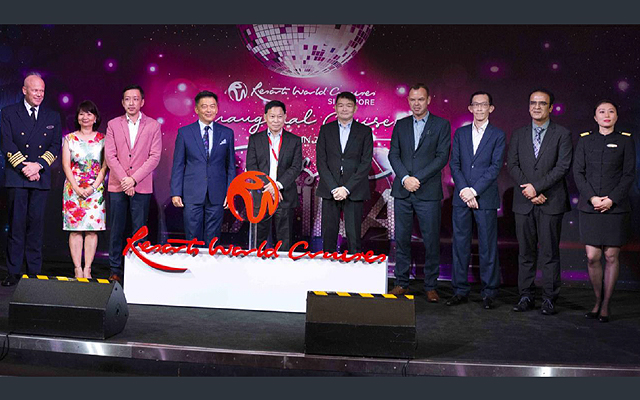
New cruise line, Resorts World Cruises, marked its global premiere with Genting Dream setting sail on its maiden voyage from Singapore on June 15, 2022.
The milestone event saw the participation of travel trade and media partners, cruise customers, and top leadership at Resorts World Cruises.
Leadership at Resorts World Cruises joined Genting Dream on its maiden journey; (fourth from left) Michael Goh, Colin Au, and Raymond Lim
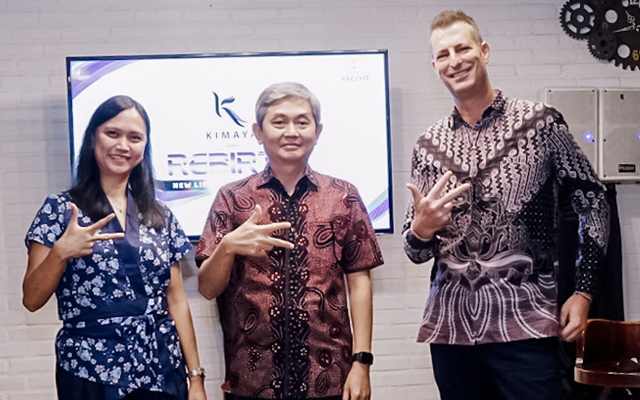
The Ascott Limited (Ascott) has opened three new properties in Jakarta, Bandung and Yogyakarta under the Kimaya brand.
The three hotels are the 340-key Kimaya Slipi Jakarta by Harris, formerly Ibis Slipi; the 193-room Kimaya Braga Bandung by Harris, formerly Ibis Styles Braga Bandung; and Kimaya Sudirman Yogyakarta by Harris, which used to be Novotel Sudirman Yogyakarta.
Ascott has opened three new properties under the Kimaya brand in Jakarta, Bandung and Yogyakarta
As a brand under Wahana Graha Hijau, part of Indonesia’s household and F&B company Wings Group, Kimaya Group operates in the midscale hotel sector in affiliation with the Harris brand.
Patrick Vaysse, chief operating officer for hotels, Ascott Indonesia, said at the media event held in Jakarta on June 11: “Indonesia is Ascott’s largest market in South-east Asia. We are very pleased to welcome Kimaya Hotel to be part of Ascott. This new opening is the latest milestone in our expansion plans for Ascott in Indonesia. Jakarta, Bandung and Yogyakarta are key areas of development for the group in Indonesia.”
Irene Janti, director, brand and marketing, Ascott, added: “The Kimaya brand was created to accommodate the owner’s desire to have their own brand, but managed by us. The hotels will target the same market segment as Harris, but they will carry its own brand identity.”
When asked about Wings Group’s interest in hotel investment, Hadi Setiadarma, director of Kimaya Group, told TTG Asia: “We are in the F&B business and the hotel business is (closely) related. We already own an (upper upscale) property in Bali, The Apurva Kempinski, so the Kimaya brand will be our midscale brand.”
On the choice of buying existing properties rather than building new hotels – in 2021 Kimaya Group acquired five properties – Hadi said the pandemic provided opportunities for the group to do so.
He explained that some hotel owners have decided to move onto other businesses and put these properties up for sale. Located in prime locations, these hotels would have been impossible to purchase under normal circumstances.
However, as the group does own some land, Hadi did not rule out the possibility of developing new hotels in the future.
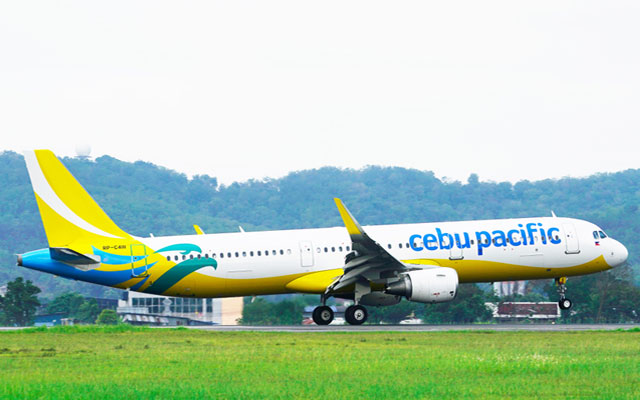
Cebu Pacific (CEB) will double its daily frequency between Singapore and Manila, as well as restart flights from Singapore to Cebu on July 16, with three services a week.
The additional morning service to Manila will depart Changi Airport at 10.15 and arrive at Ninoy Aquino International Airport Terminal 3 at 14.00; while the Singapore-bound flight will depart from Manila at 5.35 and arrive at 9.20.
Cebu Pacific resumes flights between Singapore and Cebu, and increases services between Singapore and Manila
Flights between Singapore and Cebu will be on Tuesdays, Thursdays, and Saturdays, departing from Changi Airport at 4.00 and arriving at Mactan Cebu International Airport Terminal 2 at 8.05. Flights from Cebu to Singapore will operate every Monday, Wednesday, and Friday, departing at 23.05 and arriving at 3.00 the following day.
Travellers at the baggage claim at Christchurch International Airport
New Zealand has announced that it will no longer require inbound travellers to conduct a Covid-19 pre-departure test effective June 20, 23.59.
The move brings forward the initial date planned for the change by six weeks, or July 31.
Travellers at the baggage claim at Christchurch International Airport
“We’ve taken a careful and staged approach to reopening our borders to ensure we aren’t overwhelmed with an influx of Covid-19 cases. Our strategy has worked and as a result it’s safe to lift pre-departure test requirements much sooner than planned,” said Covid-19 response minister Ayesha Verrall in a press statement.
“Around 90 per cent of international arrivals undertake their required testing once they are in the country, with only a two to three per cent positivity rate. So we don’t anticipate a significant increase in border cases once the requirement is lifted.”
“Factors such as the availability of and cost of getting a test are increasingly becoming a barrier for people intending to travel here, especially as other countries wind back testing availability or the requirement for a test on entry themselves,” she added.
However, New Zealand will still have a set of border surveillance measures for detecting any possible new variants of Covid-19, including requiring travellers to self-test on Day 0/1 and again on Day 5/6. A positive result would then require a PCR test.
Separately, travellers transiting through New Zealand will no longer need to be vaccinated, nor be required to complete a New Zealand Traveller Declaration.
Albert Lafuente is the new resident manager of Sedona Suites Ho Chi Minh City.
Lafuente has extensive experience in sales and marketing and joins Sedona Suites Ho Chi Minh from Swissotel Clark where he was the director of sales and marketing.
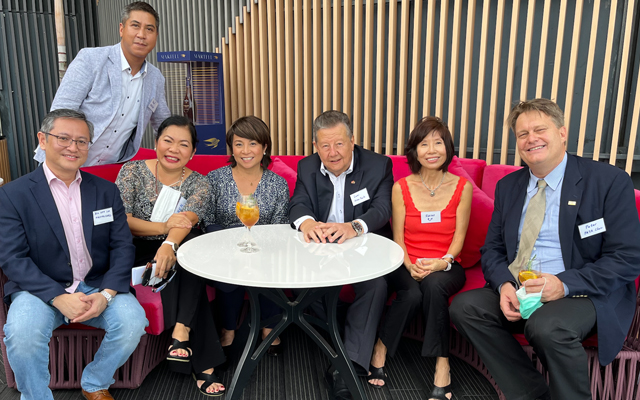
From left, Mastercard’s Lim Kok Kee, PATA’s Paul Pruangkarn (standing), Ben Montgomery and Liz Ortiguera, PATA life member and Asian Trails' Luzi Matzig, TTG Asia’s Raini Hamdi and PATA’s Peter Simone
That joyful cry was heard everywhere at an evening hosted by PATA Thailand Chapter and Centara Grand & Bangkok Convention Centre recently that saw members and partners meeting in person again in support of Thailand’s tourism opening.
From left, Mastercard’s Lim Kok Kee, PATA’s Paul Pruangkarn (standing), Ben Montgomery and Liz Ortiguera, PATA life member and Asian Trails’ Luzi Matzig, TTG Asia’s Raini Hamdi and PATA’s Peter Simone
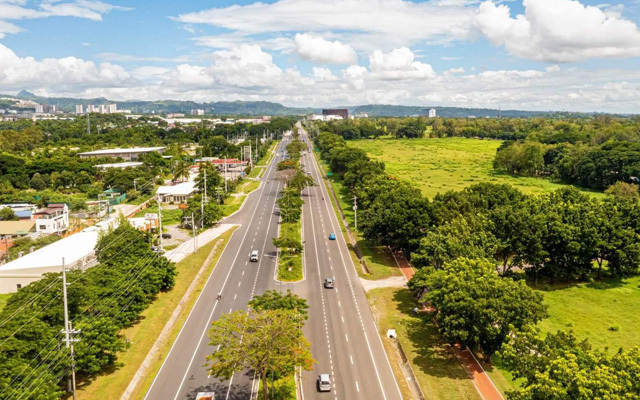
Philippines is transforming the Clark Freeport Zone into a preferred business and tourism destination
The Department of Tourism (DoT) is banking on the development of the Clark Freeport Zone (CFZ) and the New Clark City in order to further boost the recovery of the country’s tourism industry.
The DoT, in collaboration with the Tourism Promotions Board, and the Subic-Clark Alliance for Development, showcased how CFZ and the New Clark City could be positioned as premier tourism hubs during the first Central Luzon Tourism Investment Summit and Business Exchange (CLTISBEX) Hybrid Edition held recently at Hilton Clark Sun Valley Resort.
Philippines is transforming the Clark Freeport Zone into a preferred business and tourism destination
They proposed CFZ as a modern sustainable aerotropolis and a preferred business events destination, while the New Clark City could stand for an ideal destination for sports tourism in the Asia-Pacific region.
DoT 3 regional director, Caroline Uy, said: “Through the help of the private sector, the goal is to transform the CFZ into a preferred business and tourism destination in the Asia-Pacific region and enable investors to find long-term economic returns.”
CFZ is located in Pampanga, and can be easily accessed by the country’s major foreign tourist markets like China, Hong Kong, Singapore, South Korea, and Japan.
A total of 35 foreign and local investors from the Philippines, China, Singapore, Japan, Taiwan, and the UAE participated in the summit.
The event concluded with a total of 127 million pesos (US$2.4 million) investment leads which were mostly generated during the B2B meetings among 77 buyers and sellers.
As of December 31, 2021, CFZ is already home to some 1,153 companies that are also referred to as locators. These business ventures provided opportunities to a total of 121,341 professionals and workers inside the freeport zone which originally employed only 20,000 workers at the time of its opening.
For corporate groups, CFZ offers 80 convention halls, 3,648 hotel rooms, 126 dining facilities, and 45 tourism attractions such as Clark Safari, Clark Bike Path, Clark Museum and Theater, Aqua Planet, Clark International Speedway, and Dinosaurs Island.
In terms of exports, CFZ has since generated a total export of US$5.4 billion with a total investment of 265 billion pesos.
This announcement follows the recent opening of Clark International Airport’s new passenger terminal, which Tourism Secretary Bernadette Romulo-Puyat said will generate more gains to the industry, especially now that the DoT is also positioning CFZ as a business events destination.
Universal Studios Singapore’s (USS) Halloween Horror Nights returns for its 10th edition and fans can expect never-before-seen haunted houses, scare zones, laser tag, a dining experience and behind-the-scenes tour.
To mark its 10th edition, the iconic event will, for the first time ever, run across selected 19 nights from September 30 to November 5, 2022.
Universal Studios Singapore’s Halloween Horror Nights returns for its 10th edition
USS’ daytime family-friendly Halloween event will also make its highly-anticipated return from September 7 to November 6, featuring a park-wide procession with all-new original characters and meet-and-greet opportunities.
To minimise the acute manpower shortage in the travel and hospitality industry, Malaysia Tourism Council (MTC) has devised a plan to share with the Ministry of Tourism, Arts and Culture Malaysia, in the hope that the ministry will take it up with the relevant government agencies.
MTC president, Uzaidi Udanis, shared with TTG Asia that the council had a meeting with travel and tourism players two weeks ago and several strategies were devised for short- and mid-term solutions to cover the transport, hospitality, F&B and retail industry.
Uzaidi: hospitality and tourism institutions in Malaysia were having difficulties with recruitment
Short-term solutions included attracting foreign interns to gain industry exposure in Malaysia and encouraging students to pursue tourism and hospitality courses upon completing their secondary education. He pointed out that hospitality and tourism institutions in Malaysia were having difficulties with recruitment.
On the manpower shortage, Zahira Tahir, founder and CEO, Universal Holidays, also shared that the problem was acute in the hospitality industry across all hotels – regardless of star ratings – throughout the country.
Due to the labour crunch, many had not been operating at full capacity, she said. Currently, it is the peak season for tourists from India and Middle East markets, domestic demand is high and many Singaporeans visit on the weekends too.
Universal Holidays had to rearrange itineraries according to room availability. She explained: “When we can’t get rooms in Genting, we do Genting as a day trip. When there are no rooms in Kuala Lumpur, we develop the itinerary with another destination first.”
Zahira also highlighted on the shortage of private vehicles to ferry tourists around as suppliers were short of drivers while some had reduced their inventory.
Meanwhile, the Malaysian Association of Hotels had reached out to the Human Resources Ministry to expedite the work permits of foreign workers, but had not received a response, reported The Star recently.




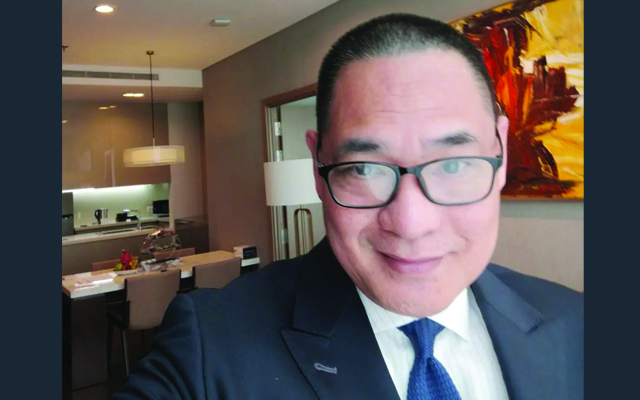

 Prior to his new position at Sustainable Hospitality Alliance, he was president and CEO of Canada’s Thompson Okanagan Tourism Region.