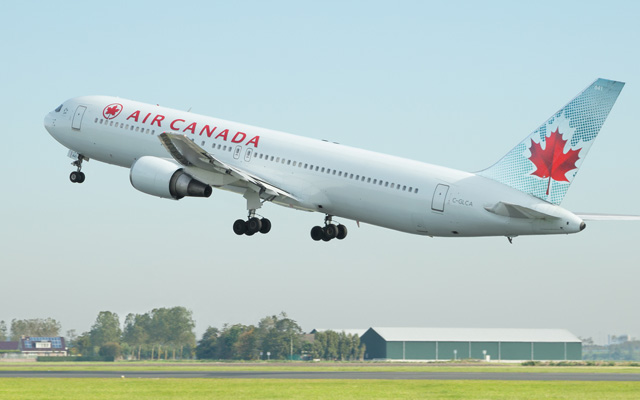
Air Canada is expanding its route network with the addition of Bangkok, Thailand – the carrier’s first non-stop service to South-east Asia – as well as resuming flights to Mumbai, India.
Both routes are subject to receiving final government approvals.
Air Canada is expanding services to Bangkok and Mumbai
Air Canada’s seasonal service to Bangkok will operate from Vancouver International Airport, while the carrier’s Mumbai flights will operate from Toronto Pearson International via London-Heathrow.
Mark Galardo, senior vice president, network planning and revenue management, Air Canada, said: “We are extremely pleased to be launching our first non-stop service to South-east Asia this winter, the only direct flight between North America and Thailand.
Galardo added: “We continue to pursue our strategy of expanding our global network in response to pent-up demand and expect to operate approximately 81 per cent of our 2019 international capacity this winter.”
A team of students from Singapore was crowned the winner of this year’s edition of Accor’s Take Off! Challenge after three months of competition – there were 179 teams of international students from eight regions.
Since 2012, Accor invites thousands of students worldwide each year to be inspired and get creative with its student competition by challenging them with various issues connected to the group’s activities.
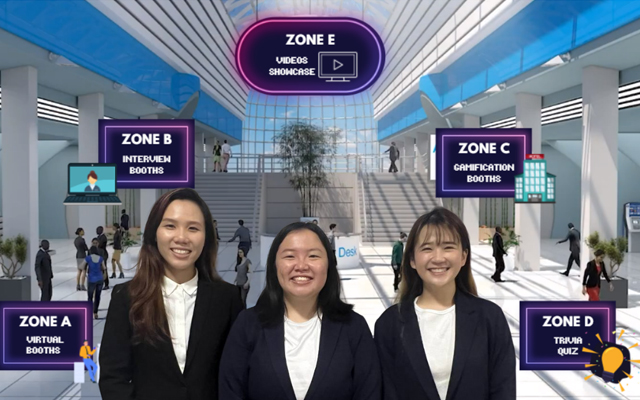
Accor Take Off! Challenge 2022 winners from Singapore impressed the judges with their project concept
This year’s topic was Talent Attraction, and students were posed the question: what innovative practices can Accor adopt on the post-Covid rebound to attract talent?
The winning team from Singapore, Meta Trio, proposed a holistic, innovative recruitment solution by creating a virtual world in the Metaverse to attract and better match talents with available jobs within the organisation, integrating gamification and entertainment to hire new recruits.
“This competition is instrumental in strengthening our ongoing school partnerships, as well as to inspire the next generation of talents to join the world of hospitality after completing their studies,” said Sonya Brown, senior vice president, talent & culture, Accor South-east Asia, Japan and South Korea.
“We are thrilled to see continuously strong interest and participation in the Take Off! Challenge from schools and universities across South-east Asia. We’ve always been impressed with the quality of students’ ideas and presentations. Most of all, we are very proud to witness the winning team this year coming from our region.”
Apart from growing awareness and interest for the hospitality industry among students globally, the Take Off! Challenge also aims to identify talented individuals to subsequently join the group.
This is the first time a Singaporean team has progressed to the final top five, and clinched first place. The winners will be sponsored a trip to Paris and invited to Accor’s global headquarters for an opportunity to meet Accor’s chairman and CEO, Sébastien Bazin, as well as the group’s global chief talent & culture officer, Steven Daines.
Making up the Meta Trio team are Chia Pei Rong, Phuan Shi Yun, and Ng Min Feng, who won the jury over not only for their astute project concept, but also for their poised and confident delivery.
With the increase in appetite for travel across APAC comes the expectation for more seamless and rewarding digital journeys. As travellers eagerly plan and prepare for their first trip in years, some have been subjected to sub-par experiences, with various travel disruptions due to staffing issues and evolving border restrictions. While the actual travel experience may be subject to unpredictable obstacles, the online travel booking experience really should not be.
Now is the perfect time for travel and hospitality brands to level up their digital experience offering in preparation for customers eager to plan their next vacation. Understanding what is causing frustration among digital visitors is the first step in creating seamless web and app journeys ahead of the actual trip.
Here are the key findings from Contentsquare’s 2022 Travel Digital Experience Benchmark Report to help the travel and hospitality sector set their digital strategy for success:
APAC traffic to travel and hospitality sites is mobile
Mobile accounted for nearly a quarter (23 per cent) of online traffic in 2021. APAC travellers are clearly happy to browse for holidays and experiences on their smartphones.
In order to win customers, travel brands need to ensure their mobile experience is smooth and logical by using data-driven insights to optimise their mobile sites and apps. Only by understanding their mobile journey and the unique needs of customer segments can brands streamline their travel site’s UX to increase conversion rate and revenue. Take it from the pros – by leveraging user experience insights to optimise its mobile booking experience, a leading hotelier gained a US$95k increase in yearly revenue.
Travellers spend more time researching on desktop
When it comes to time spent browsing, users are more likely to spend longer browsing on desktop (7.8 minutes per session) compared with mobile (6.2 minutes per session). The same proportion is also reflected in the time spent during a buying session, with users spending up to 40 minutes on desktop compared to 33 minutes on mobile. This indicates that mobile users prefer it short and snappy, while desktop users are willing to spend more time looking for their next adventure.
Today’s customer is largely device agnostic, and consumers expect brands to meet them wherever they are and whenever they choose. In order to create standout experiences across channels, brands must understand what customers are trying to achieve and how they want to go about it. From casual mobile browsing sessions and analytical desktop sessions (via everything in between), it is important to tailor customer journeys to the needs of each audience.
Bounce rates are still high for travel and tourism brands
Over 47 per cent of travel website visitors abandon their journey after viewing just one page. While this is down slightly from 50 per cent in 2020, it is still just under half of users bouncing after viewing just one page and shows there is plenty of work to be done by travel brands to create seamless digital experiences that entice customers enough to stick around past page one.
Alongside bounce rate metrics, travel brands should consider analysing the scroll rate and content engagement patterns for bounced visitors to help them further refine high-traffic landing pages to ensure visitors are finding content that is relevant, engaging, and useful. This will help to reduce bounce rates and increase the number of journeys that result in bookings.
To really understand why users are bouncing, travel brands need more insights than their typical analytics tools can provide – they need a holistic view of the entire customer journey and any obstacles alongside it.
Average conversion rate remains the same
The average conversion rate is 0.7 per cent for the travel and hospitality industry, no change from 2020, despite easing of Covid-19 restrictions globally.
As travel restarts for the APAC region, travel brands will need to optimise their customer journeys to increase the number of people taking the desired action on their sites. Analysing the conversion rate against industry benchmarks can help provide an accurate picture of the brand’s performance against peers and/or industry trends.
Jeremiah: Consumers are now planning travels in advance, with a significant change in booking windows observed
Jeremiah: Consumers are now planning travels in advance, with a significant change in booking windows observed
What are some new digital trends in APAC with regard to customer online preferences emerging post-lockdown? It’s an exciting time for the travel industry! A major trend is that consumers are now planning travels further in advance. We’re noticing a significant change in booking windows.
Our customers globally are now making purchases 30 days in advance compared to the same period in 2019, where they purchased their passes 23 days in advance.
This means that travellers are needing to plan in ways they haven’t had to before, and their behaviour is needing to change as a result. There is no doubt that there is an eagerness to get back out there, and an abundance of choice, but as prices and crowds both soar, we’re seeing travellers needing to do more advance planning than ever before in order to have a positive experience.
This is leading companies to increase their focus on the customer experience. As customers balance their pent-up demand for travel with the need for value, companies have to put the needs of the customer first.
For example, we’re focusing first and foremost on the customer experience at Go City, and have enhanced our pre-trip planning resources, educated customers on crowds and reservations at certain destinations, and removed pain points around redemption.
As a result, our NPS (Net Promoter Score) numbers have increased by 40 per cent in 6 months.
What is the biggest difference you noticed when leveraging big data pre-pandemic and the current recovery stage? The biggest difference in analysing big data pre- and post-pandemic is the fact that there are many insights from way back then, that may not necessarily apply in this current recovery stage.
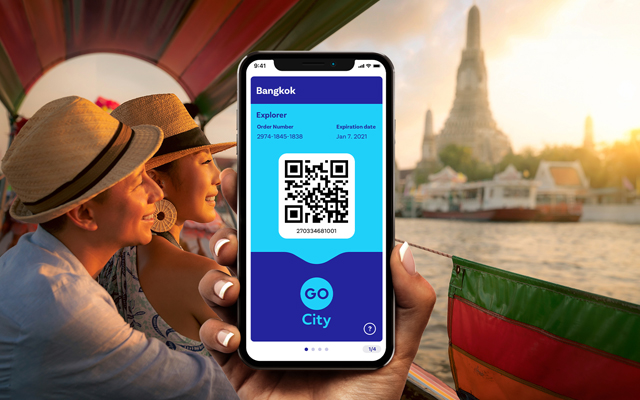
We’ve seen a shift in the types of products our customers purchase. In April to May 2019, 38 per cent of our customers in Asia-Pacific opted for our All Inclusive city passes which let customers visit as many attractions as they like based on a set number of days, and 62 per cent opted for our Explorer city passes, which let customers visit a set number of attractions across 60 days.
In April to May 2022, that percentage has shifted – our All Inclusive products now take 51 per cent share, compared to 48 per cent of Explorer.
The data also tells us that customers are opting to see more and do more, making the most out of their limited time in a city.
Data indicates customers are opting to make the most out of their limited time in a city
How can you maximise real-time data to best respond to latest customer travel preferences? Data matters, but action is king. Companies need to be leveraging data to improve every stage of the customer journey – from travel inspiration through to post-purchase.
Fo example at Go City, we recognised summer travel was going to be at an all-time high. Meanwhile, attractions are still facing staff shortages, and trying to determine which (if any) reservation technology works for them.
In order to minimise the impact of these issues on our customers, and also support our attraction partners, we began looking at real-time visitation data over time, and comparing with other third-party sources.
Working closely with attractions, we are now able to pinpoint the best time for customers to visit a given attraction for the ideal experience. This minimises crowding during peak times, and helps guide our customers to get the access they expect.
How can you best leverage customer data to create unique and hyper-personalised experiences for today’s Asian travellers? Hyper-personalisation occurs throughout the entire customer journey, from attracting customers with dynamic targeting, unique landing pages, omnichannel customer service, to dynamic pricing and loyalty programmes, and more.
The first step to take is to identify the needs of today’s Asian travellers – and data should be leading decision-making at all those points. And that’s not just demographics anymore, but psychographics and behavioural data as well.
It is then important to understand what the current state of technology and data is within the organisation, as a personalisation strategy needs to be enabled by the appropriate data, technology, and product architecture.
We use data to better serve our customers with suggestions of attractions which we believe they will enjoy, and send push notifications or emails to customers whom we know will benefit from a sale or a promotion that’s currently on.
What online strategy should tourism players use to boost resilience to market volatility? Modern businesses utilise forecasting models to guide operational decisions. These models will need to be replaced because of the massive economic and structural shifts caused by the pandemic.
I believe in sticking to the fundamentals – delivering a great product that your customers love via an efficient sales channel that is easy to use. Choice and flexibility is key in all areas especially when this region is still in recovery mode.
Catch Jeremiah and other progressive business leaders sharing their insights at the upcoming Digital Travel APAC 2022from August 23 to 25, 2022.
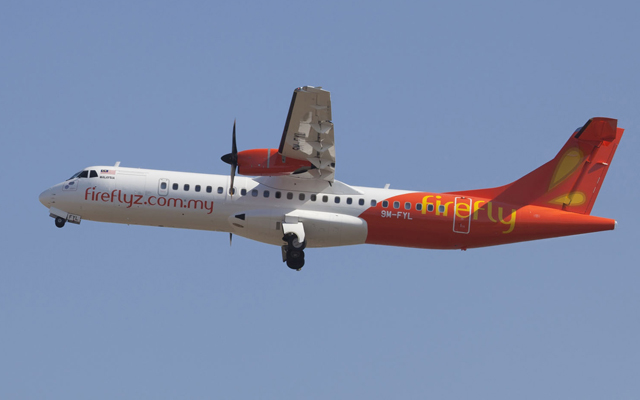
Malaysia Airlines’ exclusive products, MHflypass Malaysia and MHshuttle, have now expanded to its sister airline, Firefly, allowing passengers to enjoy exclusive privileges with the latter’s selected domestic network.
The new MHflypass Malaysia offering complements Malaysia Airlines’ existing coverage and adds greater flexibility and convenience to suit various passengers’ travel needs by providing a fixed-rate pass to a wider domestic destination.
Malaysia Airlines’ have extended its MHflypass Malaysia and MHshuttle to Firefly
Passengers also have the option to travel via direct Firefly flights to and from Sultan Abdul Aziz Shah Airport in Subang, Petaling Jaya.
MHshuttle will benefit customers, especially those commuting frequently between Singapore and Malaysia, with the option to fly between Kuala Lumpur International Airport and Changi International Airport, operated via Malaysia Airlines, or from Sultan Abdul Aziz Shah Airport to Seletar Airport via Firefly flights.
This coincides with Firefly’s recent resumption of its twice-daily flights to Seletar Airport, which had been suspended since March 2020 due to the Covid-19 pandemic.
Lau Yin May, group chief marketing and customer experience officer, Malaysia Airlines, said: “The expansion of MHflypass to MH-Firefly codeshare flights like Firefly is very timely, accommodating the surge in passenger demands and benefits all customers with flexible, convenient, and economical travel.
“As for MHshuttle, the extension of the offerings to Firefly flights between Kuala Lumpur-Singapore route, adding new departure and arrival points are in response to the rapidly increasing demand for enhanced flexibility, (and) offers a fuss-free travel experience for all guests.”
Travellers must sign up as an Enrich member to enjoy MHflypass Malaysia.
MHshuttle and Business Shuttle are available on both Malaysia Airlines and Firefly flights, and only on direct flights between Kuala Lumpur and Singapore.
Cross Hotels & Resorts has signed a hotel management agreement with PT. Origin Resorts Lombok, welcoming Away Lombok Mandalika and Amber Lombok Beach by Cross Collection to its growing portfolio.
This brings the number of Cross-branded boutique properties in Indonesia to six.
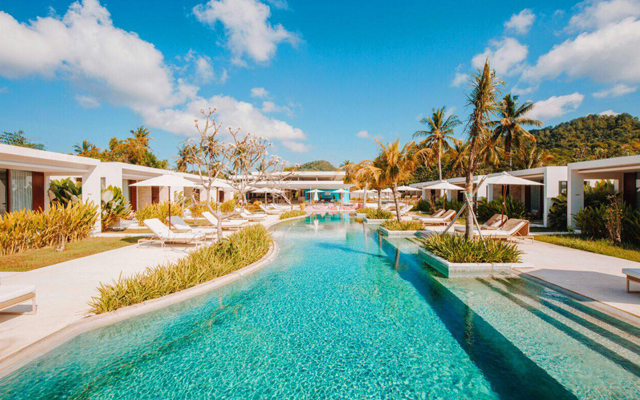
Away Lombok Mandalika is one of the two new Cross Hotels & Resorts properties in Lombok
Away Lombok Mandalika will feature deluxe garden and pool suites, and makes for a great surfing destination.
Amber Lombok Beach by Cross Collection comprises superior, poolside and oceanfront suites, as well as a honeymoon suite and multi-bedroom pool and beachside villas.
Guests will also be invited to be part of the resort’s earth-friendly initiatives that protect nature through a minimal ecological footprint approach.
Harry Thaliwal, CEO of Cross Hotels & Resorts, commented on the brand’s commitment to the focused expansion in Indonesia: “We are honoured to partner with PT. Origin Resorts Lombok and I am excited about the continued expansion of our eco-friendly footprint on the beautiful island of Lombok.
“With these two magnificent resorts joining the Cross family, I am confident our strong international network will help bring a new genre of holidaymakers to Lombok.”
Plaza Premium Group (PPG) the global airport hospitality services provider, has revealed that it will be providing airport passenger services at Hong Kong International Airport (HKIA) beginning July 6, 2022.
A total of 17 airport passenger services at HKIA will be operated by the Group’s brand, ALLWAYS. These services include meet & assist, porter service, wheelchair and buggy service, unaccompanied minor or young passenger assistance, administration (photocopy and printing), booking and inquiry, travel concierge, baggage wrapping, limousine service, and home baggage pick-up.
PPG is ALLWAYS ready to serve travellers in HKIA starting from early July
These services are available on ALLWAYS’ website, for travellers to book before arrival at HKIA.
ALLWAYS’ products will be hosted on PPG’s travel experience ecosystem, known as TECO. TECO includes an omnichannel booking engine that enables worldwide sales and distribution, a customer engagement centre with customer profiling and personalisation capabilities, a service delivery platform for dispatch, and real-time incident management.
In addition to the announcement, PPG has also signed its first strategic partnership with SATS HK in collaboration with ALLWAYS. SATS HK is an airport ground handler at HKIA, serving more than 40 international and regional airline customers.
Plaza Premium Group (PPG) the global airport hospitality services provider, has revealed that it will be providing airport passenger services at Hong Kong International Airport (HKIA) beginning July 6, 2022.
A total of 17 airport passenger services at HKIA will be operated by the Group’s brand, ALLWAYS. These services include meet & assist, porter service, wheelchair and buggy service, unaccompanied minor or young passenger assistance, administration (photocopy and printing), booking and inquiry, travel concierge, baggage wrapping, limousine service, and home baggage pick-up.
PPG is ALLWAYS ready to serve travellers in HKIA starting from early July
These services are available on ALLWAYS’ website, for travellers to book before arrival at HKIA.
ALLWAYS’ products will be hosted on PPG’s travel experience ecosystem, known as TECO. TECO includes an omnichannel booking engine that enables worldwide sales and distribution, a customer engagement centre with customer profiling and personalisation capabilities, a service delivery platform for dispatch, and real-time incident management.
In addition to the announcement, PPG has also signed its first strategic partnership with SATS HK in collaboration with ALLWAYS. SATS HK is an airport ground handler at HKIA, serving more than 40 international and regional airline customers.
Perth welcomed many new destination experiences over the Covid years, all ready to enchant international visitors now as they return, and one of them is the Matagarup Zip+Climb.
Opened officially on December 5, 2021, the Matagarup Zip+Climb is an easy soft-adventure option for active folks and a fun way to take in the city skyline in the distance and the immediate beautiful landscape around the iconic Optus Stadium in Burswood Park.
What In a nutshell, participants of the Matagarup Zip+Climb will climb up the frame of the bridge and then safely slide down a 400m-long zipline across the water body at up to 75km/h.
Sounds like the fun will be over in a jiffy, but the Matagarup Zip+Climb lasts a wholesome 90 minutes even with the Express Zip option, which involves 150 steps up to a platform set 35m above the Swan River.
The full Zip+Climb experience lasts two hours, requiring participants to take 314 steps up to the highest Sky View glass platform, down to the zipline platform and then swing off the zipline.
I took the Express Zip, and was put through a safety video and verbal briefing on what to expect. This briefing took place in an office on the banks of Swan River. Two staff then suited us up in safety harness, one cross-checking the other, before we set off on foot to the beautiful Matagarup Bridge.
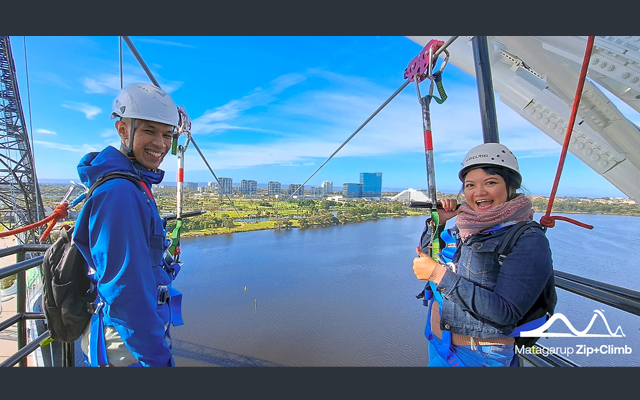
Once on the bridge, our harnesses were attached to safety cables and we started our trek up steep stairs with an average gradient of 45 degrees. These same steps are used for technical access, and some areas can get rather tight, requiring participants to twist, bend and duck to get through – a superb workout for my legs!
I got to rest my legs momentarily on the zipline platform, just before the real fun began. We got clipped onto cable lines – these are dual cable lines that cater for two riders at the same time – and were give a verbal refresher on the braking stance we would need to adopt as we neared the end of the line. Then, with a good-to-go signal, I shouted “mummy!” and got pushed off.
Whoosh! It wasn’t the hair-raising ride I had expected it to be. In fact, I was able to keep my eyes open and take in the lovely sights as I descended on the Burswood Park foreshore.
All too soon, it was over and I wished I could get a second go.
Verdict
I highly recommend this superbly fun way to see the city. It is great for families, since riders as young as eight and are over 30kg in weight can zip with an accompanying adult.
Rate: From A$99 (US$68.70) for the Express Zip, with free photos of participation included Website:www.zipclimb.com.au
Citadines Sudirman Jakarta is offering special opening rates for all guests who book before July 31, 2022.
Room rates start from 650,000 rupiah (US$44) per night, with monthly rates from 14,000,000 rupiah (including breakfast).
Book before July 31, 2022 to enjoy special opening rates at Citadines Sudirman Jakarta
A 40-minute drive from Soekarno-Hatta International Airport, Citadines Sudirman Jakarta is a mixed development of serviced apartments and apartments, suitable for both individuals and families.
The 253 units are fully furnished with modern amenities, complete with guest services and 24-hour security. Facilities include a gym, swimming pool, jogging track, launderette, all-day dining restaurant and meeting rooms.



 With the increase in appetite for travel across APAC comes the expectation for more seamless and rewarding digital journeys. As travellers eagerly plan and prepare for their first trip in years, some have been subjected to sub-par experiences, with various travel disruptions due to staffing issues and evolving border restrictions. While the actual travel experience may be subject to unpredictable obstacles, the online travel booking experience really should not be.


 What
What I got to rest my legs momentarily on the zipline platform, just before the real fun began. We got clipped onto cable lines – these are dual cable lines that cater for two riders at the same time – and were give a verbal refresher on the braking stance we would need to adopt as we neared the end of the line. Then, with a good-to-go signal, I shouted “mummy!” and got pushed off.