 What a time now to shoulder the responsibility of educating and nurturing hospitality talents! These talents are in great demand now as travel and tourism gets back its rhythm. What are the immediate demands on Shatec Institutes right now?
The industry was already facing labour shortages prior to the pandemic. Being a labour-intensive industry, the manpower crunch has only become more severe post-Covid, as the last two years saw many staff leaving the industry for good.
What is Shatec’s objective right now? To increase our enrolment of students from a more diversified pool of sources. We hope to attract more local and international students.
How? We will need to be more strategic in our marketing and stay very focused on bringing back the chic and cool nature of our business. You know, the hospitality industry used to be glamorous in the 80s and 90s. Everyone wanted to be in our industry, whether to join a hotel or to travel the world as a cabin crew. We need to bring back that confidence as an industry, and the glamour of a hospitality career.
We need to make sure that school leavers and jobseekers – who can be mid-career switchers – feel that working in our industry is very exciting, with many personal growth opportunities.
I may be biased but I still see our industry as a very glamorous one, even with the trials and tribulations of the pandemic. So, what do you think has caused the erosion of the sexiness of our industry?
It is not so much that the glamour is gone. New entrants come to realise that this profession requires tremendous passion and commitment. When people are playing, we are working.
When you are in F&B, for instance, you are working hard on New Year’s Eve or Christmas Eve to bring happiness to your guests and customers.
This is our stark reality, and that’s when some of the glamour rubs off.
Many aspects of travel and tourism have changed because of the pandemic. How is Shatec Institutes redesigning its courses as a result?
We have to make changes to our curriculum and how we teach our students. The key here is to remain relevant.
To teach future skills, we are reviewing future trends in the industry to identify what matters, such as sustainability, technology applications and digitalisation, designing guests experiences, as well as well-being. With well-being, it isn’t so much to create wellness experiences for customers, but also to ensure the well-being of employees in the industry.
An example of changes in course content is the inclusion of more digital marketing education. The pandemic has created huge opportunities in digital marketing. In the past, sales and marketing efforts were mostly face-to-face.
What is the state of enrolment this year compared to 2020 and 2021 when travel and tourism was still shaky? Is confidence in a hospitality education and career improving?
With the easing of travel restrictions in 1H2022, our foreign enrolment now is greater than the whole of 2021.
We are pushing harder into foreign markets with the knowledge that many prospective students are keen to come to Singapore to get an education at Shatec.
With the lifting of social restrictions in Singapore, we are able to return to school engagements and face-to-face open house events where local students and their parents can come and meet us. We are in the people business, but that face-to-face contact was so lacking for over two years.
I believe that the confidence in hospitality education is still there. The industry is embracing a lot of changes, and students are aware. That creates some very good vibes about a hospitality career.
Career prospects are unbelievable for the industry right now. Business is coming back, but the industry finds it very difficult to attract people. What happens when you have a demand and supply imbalance? Price has to go up, and so wages have gone up.
This augurs well for both new entrants and mid-career switchers. This is a tremendously good thing for our industry. For a very long time, people have chosen not to enter our industry because they find that salary is not compelling enough.
Where are your students coming from now, and what is Shatec Institutes doing to strengthen enrolment?
We generally get 80 of our cohort from Singapore, and the rest from the region.
Among local students, 90 per cent are fresh from schools and the rest are mid-career switchers or industry professionals looking to upgrade their skills.
We are confident of growing our enrolment from North Asia and South-east Asia. Currently we offer full-time and part-time diploma programmes.
We are launching the Apprenticeship Diploma. This is a very important programme for our trainees to be able to learn and work while pursuing a diploma, and is especially appealing to jobseekers who need to make a living or support their family while studying.
The first diploma track to be introduced under this programme is the WSQ Diploma in Hotel and Accommodation Services. The first intake is scheduled to commence this October.
What courses are most in demand, and is this a match with the most pressing talent needs by businesses?
Our most popular courses are for the culinary arts. All our students get snatched up as soon as they graduate. In fact, we don’t have enough graduates for the industry.
Beverage courses are very popular too, like the wine and sake appreciation classes. These are particularly popular among continuing education adult learners.
The courses that are short (on enrolment) are the F&B, housekeeping and front office service and management. So, when you ask me whether courses in demand are a match with the most pressing talent needs, my answer is no, we don’t have enough graduates to feed the pipeline.
We are trying our hardest to get more enrolment into the hospitality services and management areas.
Are young ones avoiding roles in F&B, housekeeping and front office service and management due to perceived lack of career growth?
I am a career hotelier. For the last 37 years, since I graduated, I’ve been in this line. I never left, I still love what I do. I will say that our industry offers incredible career development prospects.
(In my time as a hotelier) I often find that we do not have enough people to promote fast enough.
The problem is there are a lot of alternative jobs for young people, and the alternatives out there are too compelling.
The culinary arts cohort has tremendous passion, and every new graduate aspires to create stunning dining experiences for people. That passion drives their ambition. However, F&B, housekeeping and front office roles are not so compelling.
We may need to sing a different tune to appeal to young ones to get started in the areas of F&B, housekeeping and front office. I read your article recently about hotels having to get creative with hiring, by using casting calls. Our industry is a stage. When I was in the hotel business, I told my staff all the time that how they groomed themselves, spoke and carried themselves were reflective of themselves as individuals, of the brand and of the aspiration of all other talents in our industry.
I think high-profile shows like MasterChef have helped to elevate the profession of culinary arts. Perhaps our industry needs a MasterHousekeeper series to make the profession sexy.
(Laughs) We need to spin a story, and we are in the process of developing some marketing tactics to make our industry cool. We want to create career aspirations for our students.
Coming from the side of the business that uses and relies on hospitality talents, how will your perspectives shape Shatec Institutes’s priorities and activities going forward?
My experience as a hotelier can fill the gaps that Shatec currently lacks in its curriculum. I would like to provide insights and information from my experience that will result in courses that are relevant not just to full-time students but also mid-career switchers and executives who are already in our industry. Such courses could be in distribution, financial management, sustainability and wellness.
It is a common complaint that not all hospitality graduates move on to find jobs in our industry or stick around long enough. What proportion of Shatec Institutes’s young graduates typically move into fulfilling and lasting careers in our industry? And what can be done to improve their stickiness?
We don’t have empirical data to show how many Shatec graduates are still in the industry. However, we have a strong network of alumni who are industry leaders. They may be hotel general managers, chef owners, or executive chefs at the corporate office in Singapore and overseas.
A lot of our graduates stay on in the industry, and I am very proud of that. Our registered alumni number about 3,000.
So, how can we get our young graduates to stay on for long, to improve their stickiness as you say? Shatec has a Mentoring@SHATEC programme, which starts from the day they enter the school. This is so critical. We mentor students with mentors from the industry who come from a range of roles – general manager, executive chef, executive pastry chef, director of rooms, executive committee members, etc. The responsibility of these mentors is to guide the students while they are studying, to keep their dream of a hospitality career alive, and to help them fulfil their aspiration as they work in our industry.
Providing mentorship when they join the industry is even more critical. If we don’t meet their aspirations, they will leave the job. We are trying to get hoteliers to offer effective mentorship for new graduates who join the industry.
We hope that Mentoring@SHATEC can show the right way in effective mentorship. We believe that once our members begin to mentor students, they will also be inspired to mentor their own workforce. Hotels are pressed to retain staff, and mentoring and coaching are critical for staff retention.
We have accumulated 71 active mentors to date for the programme. All of them serve on our mentorship panel pro-bono.
As CEO of Shatec, I will also take on the role of mentor and guide some students. I’ve done that before; as division chief, I used to mentor undergraduates. I enjoy teaching and sharing what I’ve learnt, and I believe that doing so will help our industry to attract and grow talents, and to ultimately prosper.







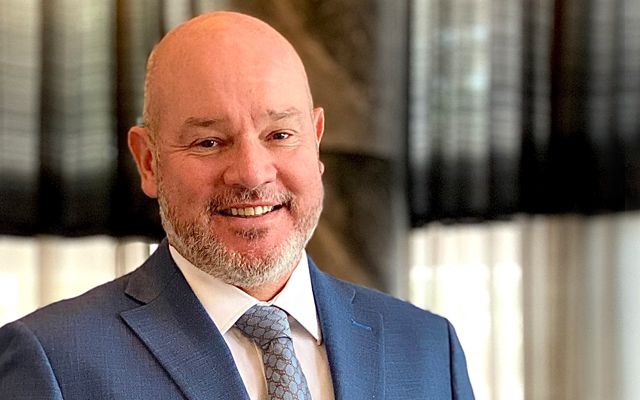
 Prior to his Bali stint, Cowan held senior leadership roles at The Savoy, The Berkeley and, Fairmont Mount Kenya Safari Club.