


Returning regional flights boost Medan tourism confidence

Medan’s tourism players are expecting arrivals to North Sumatra to rebound with the return of regional airlines to Kuala Namu International Airport.
Malaysian Airlines resumed its Kuala Lumpur-Medan flights on April 22 while AirAsia did the same on April 27. Most recently, Singapore Airlines recommenced its Singapore-Medan services.

Resylia Martinez, corporate general manager for sales & marketing with Horison Hotels Group, told TTG Asia that the resumption of international flights “indicates that demand for tourist and business trips to Indonesia is increasing”.
Returning air access between Medan and Malaysia and Singapore is very much welcome, stated Prita Gero, spokesperson for Santika Hotells & Resorts Group, as both markets contribute 40 to 42 per cent of the hotel’s business.
These regional flights are also facilitating the return of longhaul travellers too. According to Christine Kowandi, tour manager of Horas Tours, French and German customers have started to return to Medan since May 12.
Sharing the same observation, Yulhendry, director of Synergi Ravelino Tours & Travel, said both Malaysia Airlines and Singapore Airlines have helped to bring back travellers, although the “numbers are still small” compared to pre-pandemic levels.
For tourism in Medan and North Sumatra to truly recover, Yulhendry said direct flights from Europe must resume.
“Tourists from Europe take longer holidays. The French and Germans usually spend three weeks, while tourists from the Netherlands usually travel for four weeks. They do not only visit Medan, but also explore all places in Sumatra,” he explained.
India’s inbound sector sees green shoots

The resumption of international scheduled flights to India in March has helped to nurture a return in inbound business, inspiring business confidence among some Indian destination players.
Prateek Hira, president & CEO, Tornos India, said the inbound season beginning in October is looking very positive, with two large groups from the UK confirmed for November.
Inbound specialists say wellness products are in demand, and early trends are pointing to keener interest from younger travellers.
Abhilash K Ramesh, executive director, Kairali Ayurvedic Group, said travellers from German-speaking markets, North America and Japan are showing up for wellness experiences.
“Traditionally, the average age of our clients from European markets was 45 years, but this year we are seeing demand from those in their 30s,” shared Ramesh.
While there were expectations that India’s inbound recovery would be driven by short-haul markets, stakeholders are relieved to see that traditional longhaul source markets like Europe and the US were still biting.
Hira said it is now time for the tourism ministry and state tourism boards to “aggressively market India internationally”, and “send a strong message that we are ready to welcome international tourists”.
While confidence is up, recovery will take time. Arun Anand, managing director, Midtown Travels, expects inbound performance to only match pre-pandemic numbers in 2023 at the earliest.
Silversea asserts commitment to Asia, readies for sailings this September
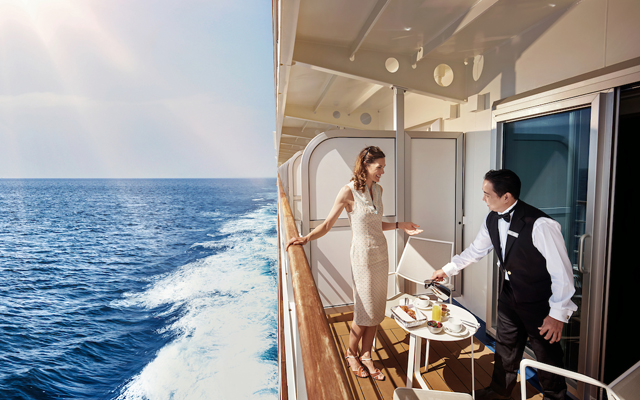
Silversea Cruises is well-positioned to capitalise on the new travel trends and changing consumer preferences emerging from the pandemic, Adam Radwanski, managing director, Asia-Pacific told TTG Asia.
An appreciation for slow travel and more immersive experiences, as well as a propensity to splurge on more luxurious offerings – a result of accumulated wealth from the lack of prior travel opportunities – meant greater business opportunity for the ultra-luxury expedition cruise line.
That appetite has resulted in a longer average cruise trip duration post-pandemic – from 16 days before to 18 days now, shared Radwanski. Guests are also keen to book more expensive selections.
Lured by great potential in Asia, Radwanski said the cruise line would roll out plans to grow Silversea’s presence, capture demand, and ride on the explosive growth in the region.
Despite the current challenging climate, he is very clear that slashing prices is not part of his strategy. Strong differentiation ensures the jewel in the crown of the Royal Caribbean Group remains ahead of the curve.
For one, Silversea is the world leader in expedition cruising, which is a hit with travellers in Asia. These breathtaking sea adventures see guests exploring aspirational bucket list-worthy destinations such as Antarctica, Arctic and Galapagos.
The ultra-luxury brand also has in place novel onboard ecosystems which are not easily replicated by competitors, Radwanki opined.
Take Silversea’s groundbreaking S.A.L.T. culinary programme for instance – it enables travellers to dive deep into culinary cultures.
He explained: “It creates a smooth experience starting from the cooking classes onboard, through to the restaurants and bars which have their menus and drinks changing daily depending on the destinations and ports; enrichment lectures in our theatres about the history of food in different countries and then to shore excursions to local markets.”
Always mindful of the unique needs of its business partners in different countries, as well as customers’ evolving preferences, Radwanski is also looking to localise content and review communication methods to find the most effective way to connect with them meaningfully.
He visits and speaks with trade partners in Asia to get a good grasp of ground sentiments and regulatory updates first-hand. Silversea conducts regular surveys to stay relevant to luxury travellers’ needs and uses findings to guide the cruise line’s business approach.
Radwanski said Asia sailings would resume as early as September this year, and at least three ships are planned for deployment in the region next year.
China and Japan remain strategic markets for Silversea, while its core target segment remains the baby boomers with high spending power. However, Radwanski is seeing strong potential in multi-generational groups, with families travelling together and couples in groups on the rise across the region.
Radwanki added: “Our commitment to Asia will not change, we will continue to invest in this market and as we grow, we will bring in more capacity and the latest ships in the future. We will also enhance the products in Asia, like finding interesting itineraries and ports, and growing Singapore as a base for cruising.”
Making a difference through sports

While career advisors typically urge a clear distinction between work and personal life, C Raaj Ganesh, CEO of Penangs.com, has found advantage in bringing both together – much to the delight of children and teenagers with special needs in his community.
Raaj uses his expertise in event management, and his network of contacts, to organise sporting events in Penang for young ones with special needs. He does this on top of running a full-time business centred on destination weddings in Penang, an online platform connecting travellers to verified tourist guides, and customised tours for travellers.
Growing up with an elder sister with Down Syndrome, he understands the importance of human interaction to improve the social skills and general well-being of those with special needs. At the same time, these interactions help others to understand the challenges faced by people with disabilities.
According to Raaj, his sporting events earn support from the local council in Penang. The council would sponsor the venue for activities, while Raaj would take care of the transportation and refreshments for the players.
His first project was in 2017, when he organised a nine-day event that involved Australian children and teenagers with special needs and their caregivers, the National Autism Society in Penang, and a government-funded secondary school in Penang for teenagers with special needs. The youngsters had fun interacting over activities such as bowling, cricket and sepak takraw. He also arranged a tour of Penang for the group of 46 attendees from Australia.
His work on such sporting events is driven by passion, and has no plans to turn them into a business. He told TTG Asia that he only hoped the events would provide “invaluable opportunities for interaction” between the Malaysian participants and their Australian peers.
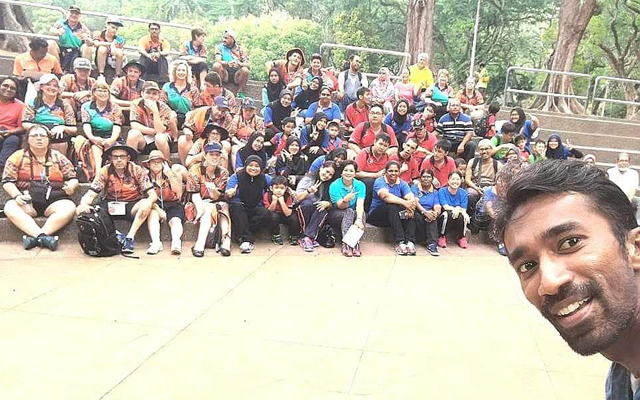
With the Malaysian borders now opened to the world, Raaj has received interest from two non-profit organisations in Australia keen on bringing children with special needs to Penang next year for sports interaction with their Malaysian counterparts.
For now, Raaj is busy planning for the ASEAN Autism Awareness Walk on July 3. This is a two-kilometre walk that starts and ends at Youth Park Penang. The event welcomes everyone, not just those with autism.
Raaj hopes the event will generate greater empathy for those with disabilities, and provide good networking opportunities for people with special needs, their caregivers and the general population.
He has plans later this year for a badminton event in Penang, which will be open to those with special needs.
Changi Airport Terminal 2 returns to business

Operations at Changi Airport Terminal 2 (T2) will resume on May 29 as the air hub readies for an increase in passenger traffic in the months ahead.
Closed for upgrading works since May 2020, T2’s phased reopening will augment Changi Airport’s capacity. When completed by 2024, the expansion works will raise the terminal’s capacity by five million to 28 million passenger movements per year.
The expanded facility will sport a larger Arrival Immigration Hall with more automated immigration lanes and special assistance lanes; and a longer baggage collection belt to accommodate a larger volume of bags.
In this first phase of T2’s progressive reopening, key touch points such as arrival immigration, baggage claim belts and contact gates at the southern wing of the terminal will be ready for flight operations. T2 will host mainly peak-hour arrival flights of airlines operating in Terminal 3 (T3). A small number of T3 departure flights may use boarding gates at T2 although passengers on these flights will continue to check in and clear departure immigration at T3.
Updated information for arriving flights will be provided on the Changi Airport website and the iChangi app at least two hours before the flight’s arrival time.
Tan Lye Teck, Changi Airport Group’s executive vice president of Airport Management, said the “strong pickup in travel demand” has necessitated the progressive reopening of T2 ahead of the June travel peak.
“The start of flight operations at T2 will provide more capacity to support our airline partners, who are also gearing up to serve more passengers in the months ahead. T2 will reopen in phases over the next two years to support Changi’s recovery as a regional air hub,” he added.
Tripadvisor Travel Index identifies persistent Singaporean travellers

Tripadvisor’s latest Seasonal Travel Index has found that rising costs are not putting a stop to Singaporeans travelling this summer, as 84% plan to have a holiday despite nearly three-quarters having major concerns about inflation.
The study uses a combination of search and sentiment data to reveal what is on the minds of Singaporean travellers ahead of the busy summer travel season and where they plan to go.
While inflation is a significant concern for the majority of Singaporeans, with 77% reporting that they are “extremely” or “very” concerned about the rising costs of goods and services, travel remains a top priority. A staggering 84% of Singaporean respondents plan to travel this year – 39% more than last summer.
In fact, they are more than willing to make other sacrifices to ensure that they can afford it. Dining out (64%) and clothing purchases (62%) are top for the chop as Singaporeans make cuts to non-essential spending in order to fund their travel this year.
Despite tight finances, 76% of Singaporean respondents say that they are planning to spend at least the same or more on travel this summer. 42% say that they are planning to take shorter trips and 39% will book trips closer to home. Singaporeans opting for an overseas trip stands at 58%.
According to Tripadvisor site data, which analysed searches made by Singaporean travellers for travel over the mid-year school holiday months, London ranked number one on the destination list, with Paris at second place, then followed by Bangkok, Kuala Lumpur, and Melbourne.
Tripadvisor’s Travel Index shows that even though 72% of Singaporeans think sustainable travel is more important than it was pre-pandemic, 45% have not yet spent more on sustainable travel. Despite 57% of Singaporean travellers worrying about their carbon footprint when planning their travels, 45% said they have done absolutely nothing to offset it.
A whopping 93% state that they practice some sustainable habits while travelling, including eating and shopping locally at destinations, and travelling closer to home. While they have not yet done it, 65% of Singaporeans travellers say they are open to spending more to travel sustainably in the future.
Cebu Pacific resumes international operations
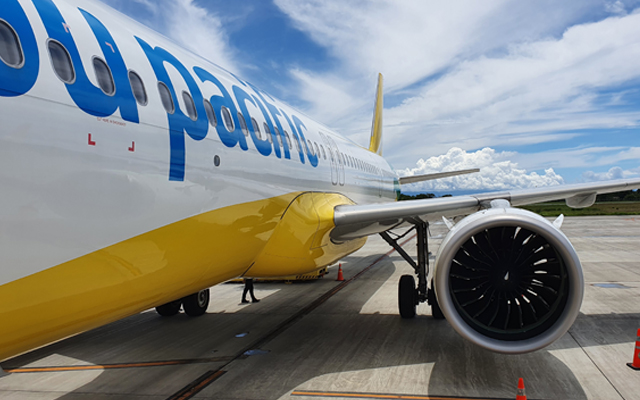
Cebu Pacific (CEB) will restart international flights from Cebu, beginning with twice weekly services to South Korea (Incheon) from July 3, 2022.
Scheduled for every Thursday and Sunday, departure from Mactan Cebu International Airport will be at 12.25 and arrival will be at 18.10 at Seoul International Airport; the return flight will leave Seoul at 18.55 and arrive in Cebu at 22.50.
Xander Lao, CEB’s chief commercial officer, said: “We are very happy to restart this flight as we know passengers in the Visayas and Mindanao have been looking forward to travel internationally again, without needing to pass by Manila.”
The airline intends to expand its international network in the coming months, now that it has returned to pre-Covid domestic capacity.
Singapore Grand Prix 2022 grants sneak peek into entertainment line-up

Marshmello, Westlife and Green Day are among the top acts to headline the Formula 1 Singapore Airlines Singapore Grand Prix 2022 from September 30 to October 2.
Billed as Singapore’s biggest party in three years, the race promises a final line-up that includes more than 75 performances over three days and across eight stages in the Circuit Park, together with roaming performers as well as an array of displays and activities.
More acts will be announced in the coming weeks.
Additional walkabout and single-day grandstand tickets to the Formula 1 Singapore Airlines Singapore Grand Prix 2022 will be available for sale in the coming days. The first release of ticket sales in early April sold out
within hours.
Zone 4 and Premier Walkabout tickets will go on sale from May 24, 10.00 (Singapore time). A limited release of single-day grandstand tickets will be available for sale from May 26, 10.00 (Singapore time).
All tickets can be purchased from www.singaporegp.sg.
Fresh family retreats at JW Marriott Mussoorie Walnut Grove Resort & Spa
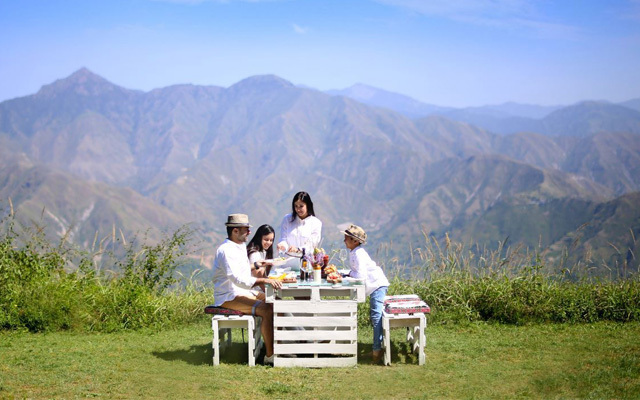
Enriching activities amid nature that bond the family are available at JW Marriott Mussoorie Walnut Grove Resort & Spa.
Offered under the Indian resort’s signature Family by JW programme, activities include Kachdi, a Garhwal outdoor evening tea ritual; lawn games; and a signature JW Farms tour featuring an experiential farm-to-table outdoor dining experience.
The hotel’s Implant Nature project also allows guests to give back to the local community by planting saplings together in the Garhwal Hills, led by the hotel’s in-house horticulturist.
Visit JW Marriott Mussoorie Walnut Grove Resort & Spa for more information.







The World Health Organization (WHO) said on May 23 that mass vaccinations are not needed against the monkeypox outbreak that has spread beyond Africa.
Latest reports this week state that there are about 200 confirmed and suspected cases across at least a dozen countries, most of them being in Europe.
The US and the UK are making some vaccines available while Germany is mulling options for vaccinations, isolation and quarantine. On May 23, Belgium ordered mandatory monkeypox quarantine; it is the first country to do so.
A senior official at WHO said measures like good hygiene, safe sexual behaviour, contact tracing and isolation will help control its spread, and noted that the virus does not spread very easily.
In a statement issued May 21, WHO said epidemiological investigations are ongoing, and reported cases have no established travel links to endemic areas. As the situation is evolving and surveillance is expanded in non-endemic countries, WHO expects more cases of monkeypox will be identified.