Parramatta is set to welcome DoubleTree by Hilton, with Hilton bringing the brand to one of Western Sydney’s fastest-growing commercial and infrastructure hubs.
The 100-room hotel, set to open in late 2028, forms part of Deicorp Group’s Cosmopolitan mixed-use project, which will deliver 597 apartments, retail, commercial, and dining to the area.
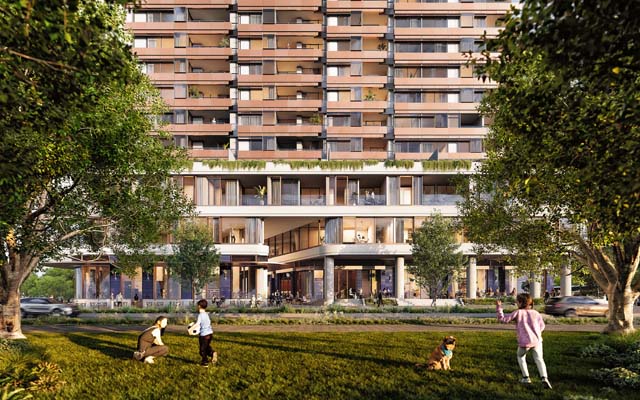
The DoubleTree by Hilton Parramatta, a 100-room hotel, is slated to open in late 2028 at 34 Hassall Street in Western Sydney
Trilogy Hotels has been appointed to operate the new hotel under a management agreement with Deicorp. It is the third hotel precinct the companies have undertaken together, building on their successful track record of delivering and operating hotels across Sydney.
Tushar Raniga, director of development Hilton Australasia, said Parramatta’s growing economic base and connectivity made it a strong fit for the DoubleTree by Hilton brand.
“The signing of DoubleTree by Hilton Parramatta reflects Hilton’s continued growth momentum in Australasia and our strategy to expand in high-demand urban markets where we see long-term opportunity,” said Raniga.
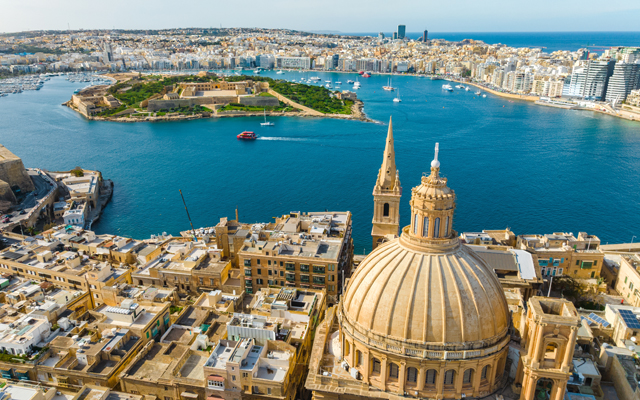
Valletta will host the 26th WTTC Global Summit from October 7 to 9, 2026
WTTC is set to bring more than 200 of the world’s leading travel and tourism CEOs and senior executives to Malta’s Valletta next month for the 26th WTTC Global Summit.
Running from October 7 to 9, the event will offer Malta an opportunity to showcase its tourism offerings, business environment, and investment potential to some of the sector’s most influential figures.
Valletta will host the 26th WTTC Global Summit from October 7 to 9, 2026
The theme of the summit, Futu[Re]Set: Shaping the Future of Travel & Tourism, reflects the profound changes reshaping the world today. As technology, AI, evolving consumer expectations, and geopolitical shifts transform the way people live, work and travel, the summit will bring together business leaders, policymakers and international organisations to explore what comes next and how travel and tourism can adapt, innovate and thrive in an increasingly complex global environment.
The summit will provide a platform to challenge conventional thinking and examine the forces shaping the future of travel and tourism. Discussions will focus on how the sector can navigate disruption, unlock new opportunities for growth and investment, and build greater resilience in an increasingly interconnected world.
A central focus of the event will be the role of stronger public-private collaboration in helping travel and tourism respond to rapid change, accelerate investment and unlock sustainable growth.
High-profile attendees include Hilton’s Christopher J Nassetta, Capital A’s Tony Fernandes, and Trip.com Group’s Jane Sun.
They will be joined by senior executives representing many of the world’s most influential travel and tourism businesses, including American Express Travel, Accor, Marriott International, and Minor Hotel Group, alongside leading organisations spanning aviation, technology, travel distribution, hospitality, cruise and destination investment.
Delegates will have the opportunity to experience the hospitality, connectivity and tourism infrastructure that underpin Valletta’s success, while gaining a deeper understanding of the role Malta can play in the future of global travel and tourism.
WTTC’s latest Economic Impact Research underlines the importance of travel and tourism to Malta. The sector is forecast to make a significant contribution to the country’s economy in 2026, reinforcing the importance of the industry to Malta’s continued economic growth and employment.
Gloria Guevara, president and CEO, WTTC, said: “Travel and tourism is entering a new era, and the summit will give leaders the opportunity to address the forces reshaping our sector, share ideas and strengthen collaboration. Together, we can help build a more resilient, sustainable and competitive future for travel and tourism.”
Carlo Micallef, CEO, Malta Tourism Authority, added: “Hosting the WTTC Global Summit in Malta is a moment of tremendous significance for our country and our tourism industry. To welcome more than 200 of the world’s most influential travel and tourism leaders to our shores is not simply an international endorsement of Malta as a destination, but an exceptional opportunity to place our country, our people and our vision for the future of tourism directly in front of those helping to shape that future.”
Millions of international travellers enter Malaysia through Selangor every year. Home to Kuala Lumpur International Airport (KLIA Terminals 1 and 2), Sultan Abdul Aziz Shah Airport and Port Klang Cruise Terminal, the state has long served as Malaysia’s principal gateway, connecting visitors to Kuala Lumpur and destinations across the country.
But in an increasingly competitive tourism landscape, connectivity alone is no longer enough. Tourism Selangor’s focus is now on transforming its gateway advantage into a destination advantage by encouraging visitors to stay longer and explore more of the state.
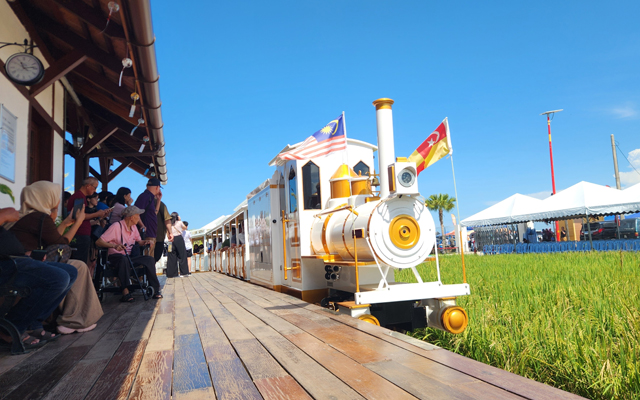
Selangor is expanding rural tourism experiences that take visitors beyond its urban centres
To achieve this, Tourism Selangor is developing new tourism products and experiences that support the broader objectives of Visit Malaysia Year 2026 and 2027. The objective is simple: to transform arrivals into longer stays and higher visitor spending.
“Every traveller has a different itinerary,” said Chua Yee Ling, CEO of Tourism Selangor. “Some visitors may only spend two or three nights in Malaysia, while others stay for a week or longer. If they have a shorter holiday, Selangor offers enough attractions and experiences for a complete trip. If they have more time, we work closely with tourism boards in other states to create seamless itineraries that allow them to discover more of Malaysia.”
Chua believes collaboration creates a stronger tourism offering for everyone.
“Selangor has always been the gateway to Malaysia. Our role is to introduce visitors to what the state has to offer, while making it easy for them to continue exploring the rest of the country. When visitors stay longer in Malaysia, everyone benefits,” she said.
That philosophy underpins Tourism Selangor’s strategy. Building on its air and sea connectivity, the state is investing in cruise tourism, nature-based experiences and community tourism to give travellers reasons to extend their stay.
While Port Klang Cruise Terminal continues to enhance its facilities to accommodate growing cruise traffic, Tourism Selangor’s bigger ambition is to position the terminal as more than just a port of call.
Chua said: “Our ambition is for Port Klang Cruise Terminal to become a cruise hub. Our aim is to encourage more cruise lines to homeport here. When passengers begin or end their cruise in Selangor, they are more likely to stay before or after their voyage, creating more opportunities for hotels, attractions, restaurants and local businesses.”
Cruise passenger numbers arriving at Port Klang Cruise Terminal have risen from 156,797 in 2024 to 173,000 in 2025.
The state’s cruise ambitions will receive international attention in November when Seatrade Cruise Asia is held in Malaysia for the first time. The event will bring together cruise lines, port authorities, tourism organisations and industry suppliers from across Asia.
Delegates will also take part in a technical cruise between Port Klang and Penang, experiencing the passenger journey, port infrastructure and shore tourism offerings first-hand.
For Selangor, the event presents an opportunity to demonstrate its capabilities as a potential homeport and strengthen relationships with global cruise lines.
Chua said: “Hosting Seatrade Cruise Asia in Malaysia gives us a valuable platform to showcase what Selangor can offer the cruise industry. Beyond the terminal itself, we want cruise lines to see the range of experiences available for passengers before and after their voyage.”
Beyond cruise tourism, Selangor is also leveraging its natural assets to broaden the state’s tourism appeal through the development of the Gombak-Hulu Langat Geopark.
The state is working towards securing UNESCO Global Geopark status by 2028 for the 112,000 ha geopark, which spans the districts of Gombak and Hulu Langat and comprises 31 identified geosites, 20 of which have been prioritised for tourism development.
For Chua, however, the UNESCO designation is about far more than international recognition.
“UNESCO Global Geopark status will elevate Selangor’s profile on the international stage and strengthen our position as a sustainable tourism destination. More importantly, it provides a framework for conservation, education and community participation, ensuring that tourism development benefits local communities while protecting our geological and natural heritage.”
To support that ambition, Tourism Selangor is working with local authorities and industry stakeholders to improve visitor infrastructure and accessibility, while developing tourism products, geo-guide programmes, geo-schools, educational initiatives and community-based tourism products across the geopark.
“The geopark allows us to showcase another side of Selangor,” Chua said. “Many visitors know us for our cities, shopping and theme parks, but we also have outstanding natural landscapes, biodiversity and cultural heritage. These are experiences that encourage travellers to venture beyond the traditional tourism circuit and spend more time exploring the state.”
The tourism body is also expanding its community-based tourism offerings as it seeks to encourage visitors to explore beyond the state’s established attractions.
The strategy includes village stays, farm experiences and small-town tourism, showcasing Selangor’s rural landscapes, local traditions and community life. Pulau Ketam, Sekinchan and Carey Island offer experiences ranging from fishing villages and paddy fields to Indigenous culture and local food.
Chua said: “Visitors today are looking for experiences that connect them with local culture, heritage and nature. By developing village stays, farm stays and small-town tourism, we are creating opportunities for travellers to discover another side of Selangor while generating income for local communities and small businesses.”
Tourism Selangor is working with inbound operators and local communities to package these experiences into market-ready products that encourage visitors to explore beyond the state’s established tourism areas.
Mint Leong, president of the Malaysian Inbound Tourism Association, believes Selangor’s diverse tourism assets position the state well to appeal to travellers seeking a variety of experiences.
She said: “Selangor has a diverse range of tourism experiences that appeal to different traveller segments, from cruise passengers and leisure travellers to those seeking nature and community-based experiences.
“Cruise tourism, geoparks and community-based tourism complement one another. Together, they give inbound operators greater flexibility to create programmes that appeal to different traveller interests while spreading tourism benefits beyond the traditional tourism hotspots.”
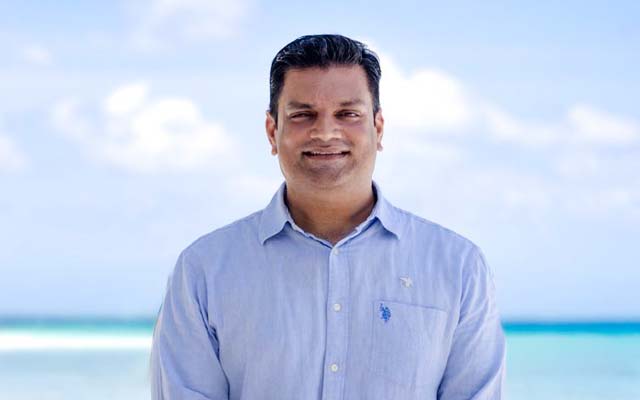
Kapil Mathur, a seasoned luxury hospitality professional with more than 18 years of experience, has been appointed director of sales & marketing at JW Marriott Maldives Kaafu Atoll Island Resort.
In his new role, he will lead the resort’s sales and marketing strategy, cultivating international demand, strengthening strategic partnerships and further shaping the resort’s presence within the luxury hospitality landscape.
Mathur joins JW Marriott Maldives Kaafu Atoll Island Resort from SO/ Maldives, where he served as director of sales & marketing for more than two years, overseeing the resort’s commercial strategy and international business development.
Prior to SO/ Maldives, Kapil held senior commercial positions across the Maldives hospitality landscape, including with Grand Park Kodhipparu Maldives and Universal Resorts, where he worked with renowned properties including Baros, Milaidhoo, Kurumba, Velassaru, Kandolhu and Kuramathi.
Earlier in his career, Kapil was associated with The Oberoi Hotels & Resorts in New Delhi.
Raffles Bali has appointed Fanny Purna Irianti as director of sales & marketing, where she will oversee the resort’s sales, marketing, public relations, partnership, and business development strategies.
In her new role, Fanny will support the continued development of Raffles Bali across its key markets, strengthening relationships with guests, partners and the wider travel community while contributing to the resort’s commercial and brand direction.
Fanny brings more than 15 years of hospitality experience across sales, marketing, events and operations, with a career spanning senior commercial and leadership roles within international hospitality groups. Her experience includes managing regional and international markets, developing corporate and leisure business, leading teams and building long-term relationships with clients and partners.
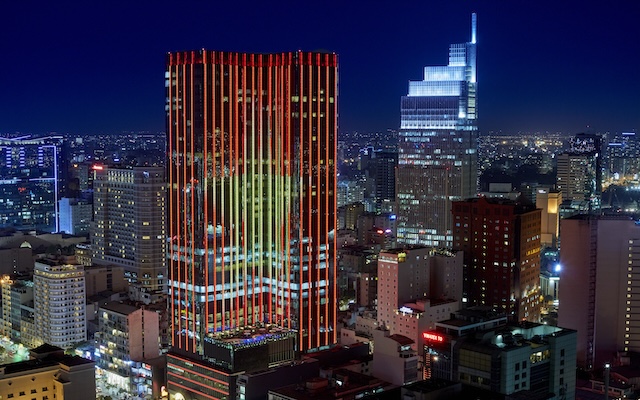
The Reverie Saigon occupies a prime location in the heart of Ho Chi Minh City
Named Asia’s Best MICE Destination for the fifth consecutive year in the World MICE Awards, Ho Chi Minh City is a leading destination for business travellers.
The city itself has made MICE a priority, with the Ho Chi Minh City People’s Council (Assembly) introducing a support policy for eligible MICE groups that combine conferences, seminars or exhibitions with tourism activities through to 2030.
Alongside other accolades such as Asia’s Leading Business Travel Destination and Asia’s Leading Festival & Event Destination (2023–2025) in the World Travel Awards, the city is internationally recognised for its attractiveness as a MICE destination.
Infrastructure in the city has also been upgraded to facilitate travel. Terminal 3 at Tan Son Nhat International Airport began operations in 2025, while Metro Line 1 introduced the city’s first urban rail connection and construction of Metro Line 2 began in January 2026. Together with an expanding road network, upscale accommodation and conference venues, these developments further strengthen the city’s capacity to welcome international MICE groups.
Beyond its infrastructure, Ho Chi Minh City offers a vibrant urban landscape where architecture, history, art, shopping, and gastronomy converge. From Vietnamese dining and historic landmarks to journeys along the Saigon River, the city gives planners plenty of opportunities to incorporate authentic local experiences.
1 of 5
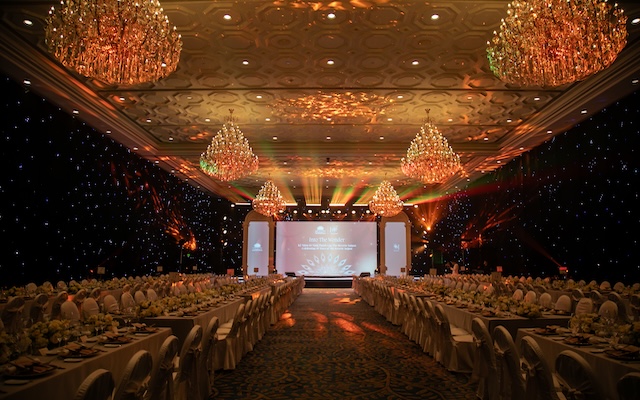
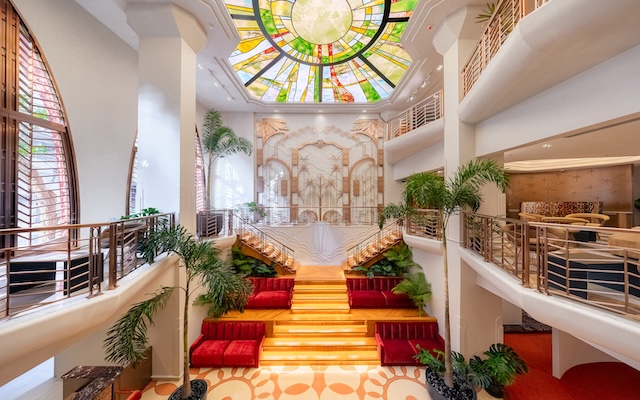
The pillar-less elegant La Scala ballroom
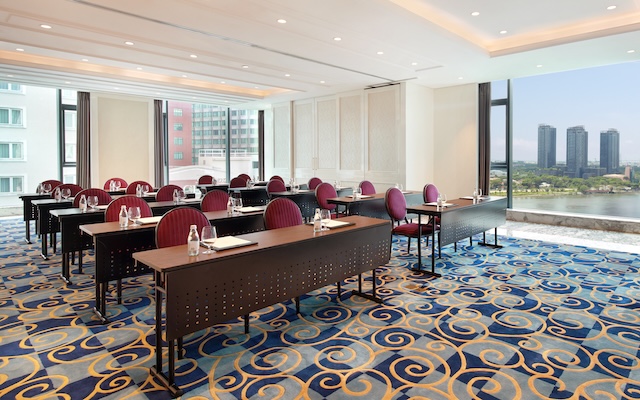
Conference room with a view
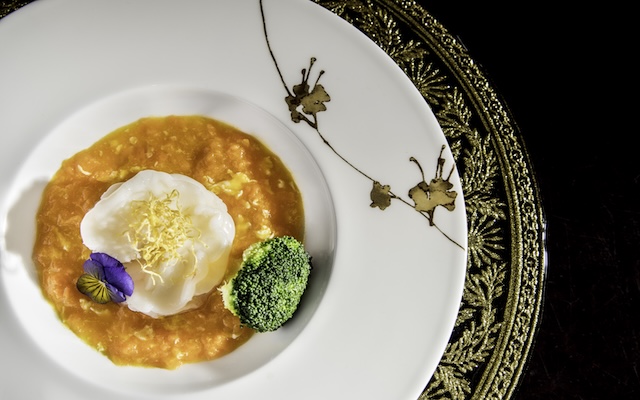
One Michelin star Long Triều, which serves exquisite Cantonese cuisine
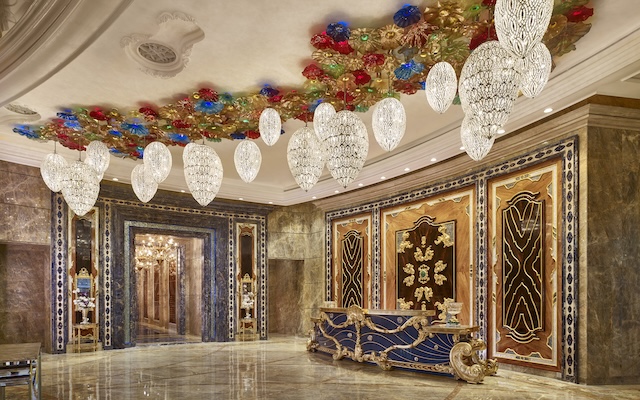
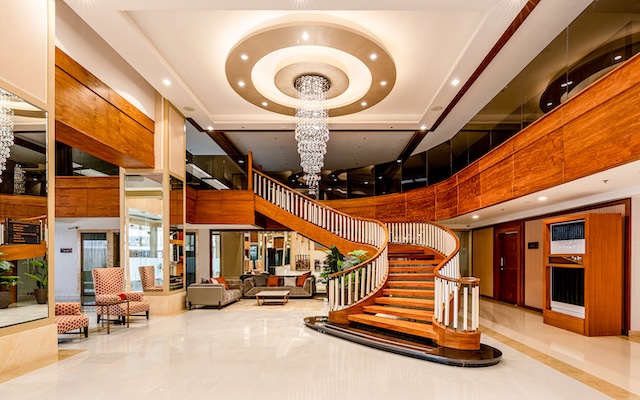
The Reverie Saigon's fancy lobby
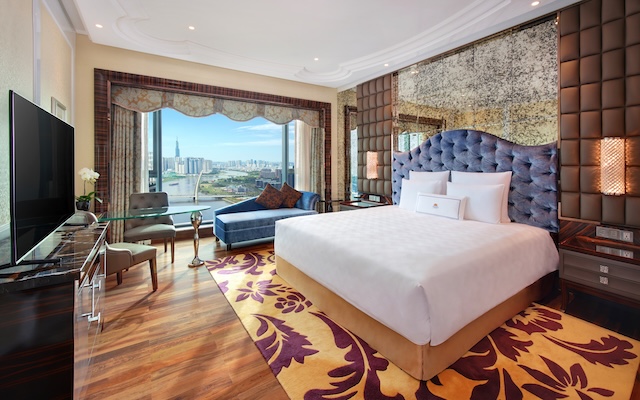
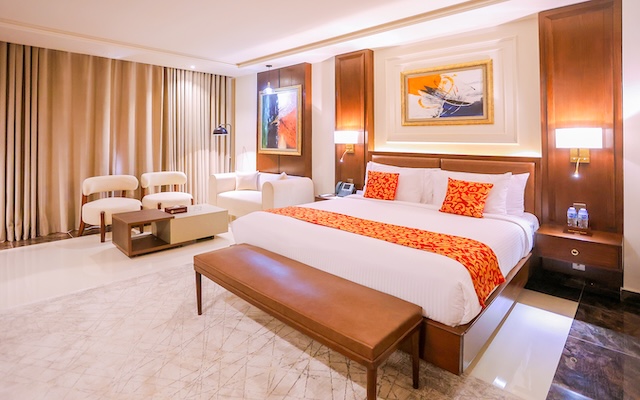
Deluxe king room offers splendid views of downtown Ho Chi Minh City
Helping business travellers make the most of their agenda and encouraging deeper immersion into the destination is five-star luxury hotel, The Reverie Saigon, also a member of The Leading Hotels of The World.
Located at one of Ho Chi Minh City’s most iconic addresses at the intersection of Nguyen Hue Boulevard and Dong Khoi Street, The Reverie Saigon occupies the upper floors of the landmark Times Square Building in the heart of downtown.
Featuring 62 suites, 224 rooms, and 89 serviced apartments, the hotel’s Italian-inspired interiors and commanding views provide a luxury retreat for the weary traveller.
To cater to business travellers, The Reverie Saigon is introducing a more experiential approach to luxury MICE travel, bringing business gatherings together with Michelin-starred dining, private wellness and bespoke journeys through the city.
“Today’s MICE travellers expect more than an efficient meeting agenda. They are looking for meaningful destination experiences, opportunities to reconnect and moments that remain memorable long after the programme has concluded”, said Gerd Kotlorz, general manager. “At The Reverie Saigon, we bring these elements together to transform a business gathering into a highly personalised journey through the city.”
The Reverie Saigon offers 15 meeting and event spaces, including La Scala Ballroom, one of the city’s pillar-free ballrooms, as well as San Carlo and Amber & Jade. The spaces cater to different event formats and group sizes, from conferences and executive meetings to private luncheons. An experienced events team manages programmes from planning and culinary arrangements through to on-site execution.
After meetings, guests can access the hotel’s Spa and outdoor swimming pool, while its restaurants and bars offer European and Asian cuisine. A highlight is Long Triều’s Cantonese cuisine, which has held one Michelin Star from 2024 to 2026. Other dining options include The Long @ Times Square, Café Cardinal and The Reverie Boutique. The hotel’s central location also puts guests within easy reach of the city’s dining scene, including MICHELIN Selected Vietnam House Restaurant.
The MICE team can also assist planners with itineraries around Ho Chi Minh City, including visits to the City Opera House, Central Post Office, cultural landmarks, shopping destinations, fashion boutiques and dining venues. The hotel’s Concierge team, led by a Head of Concierge who holds the Golden Keys distinction, can provide recommendations and personalised assistance.
For groups looking to explore the city, The Reverie Saigon also offers signature experiences including Saigon River cruises, Rolls-Royce city tours and private photography tours.
This gives planners the flexibility to combine meetings at the hotel with dining, leisure and city experiences, creating MICE programmes that extend beyond the conference agenda.
Aiden Surawong Bangkok features an impressive stained glass ceiling above the bar area
Hotels are more than just places to sleep but a gateway to a destination and its culture, character and land.
BWH Hotels’ latest opening across a diverse range of destinations – in Thailand’s Bangkok and Khon Kaen, Vietnam’s Da Lat, Cagayan Valley in northern Luzon, and Murree in Pakistan – let travellers explore and experience these locations differently.
In Bangkok, Aiden Surawong Bangkok puts travellers in the heart of the capital’s heritage-rich neighbourhoods. Situated on Surawong Road, the 77-room boutique hotel, the first Aiden brand hotel in South-east Asia, occupies a former jewellery workshop. Its history is reflected in interiors that feature precious gemstone imagery and Gatsby-like Art Deco styling.
1 of 3
Aiden Surawong Bangkok brings a hip vibe to the city
Clean lines and minimal aesthetic take centrestage at SureStay by Best Western Siriraj Bangkok
Muted tones at Best Western Q Khon Kaen's restaurant
Outside is a neighbourhood where culture, creativity and commerce converge. The century-old Neilson Hays Library and Jim Thompson’s flagship store are on the same street, while Bangkok Folk Museum and Tang Contemporary Art Bangkok are nearby. Silom, Chinatown and the Bang Rak riverside district are also within easy reach.
Elsewhere in the Thai capital, SureStay by Best Western Siriraj Bangkok offers a different perspective on the city. Located on Arun Amarin Road, the new-build hotel sits less than 1km from Siriraj Hospital and across the Chao Phraya River from Rattanakosin, Bangkok’s old city and home to renowned heritage sites such as the Grand Palace, Wat Pho and Wat Phra Kaew.
It’s 148 stylish rooms cater to urban explorers on short breaks or even medical travellers requiring extended stays.
Beyond the city, Best Western Q Khon Kaen in Khon Kaen, an important commercial, cultural, educational and transportation hub, offers a strategic base to explore Isaan, the northeast region known as the ‘rice bowl of Thailand’.
The newly refurbished hotel draws inspiration directly from its surroundings with design incorporating elements inspired by the Khon Kaen City Gate, the traditional Lao reed mouth-organ and Kan Kaen Koon silk, bringing touches of the region’s heritage into the guest experience. Its 125 rooms, meanwhile, are designed around the needs of modern travellers with home comforts and state-of-the-art amenities.
From Khon Kaen, travellers can discover a region of temples, forests, waterfalls, markets and museums, while the hotel also provides convenient access for those visiting the city for business or events at the Khon Kaen International Convention & Exhibition Center.
Head for the hills
1 of 3
Beautiful interiors adorn the room at Imperial Dalat Hotel, BW Premier Collection
Best Western Hotel Murree's Executive Club King room offers maximum comfort in a large space
Best Western Plus Pulsar Cagayan's grand lobby welcomes all guests
The group’s other openings put travellers within easy reach of rolling hills, mountains and greenery.
Surrounded by the verdant hills and gardens of Vietnam’s Central Highlands, Imperial Dalat Hotel, BW Premier Collection combines modern international hospitality with Indochine elements. Its 402 rooms and suites feature local design accents and views over Da Lat or the surrounding highlands.
Guests can make use of a year-round heated swimming pool, spa, fitness centre and kids’ club, while two meeting rooms and a grand ballroom for up to 1,200 guests also cater to conferences, gala dinners and weddings.
Over in northern Pakistan, the 63-room Best Western Hotel Murree provides a base for leisure itineraries in the area.
The mid-scale retreat makes the most of its setting with a rooftop venue featuring outdoor dining and panoramic views of the surrounding pine forests. Leisure facilities include a wellness spa, fitness centre and dedicated family entertainment facilities, while nearby attractions include Mall Road, the Patriata Chairlift and SOZO Adventure Water Park.
In the Philippines, the new-build Best Western Plus Pulsar Cagayan gives visitors a base in Cagayan Valley in northeast Luzon, a region characterised by rice paddies, lush forests, waterfalls and white beaches. Located in Tuguegarao City, the region’s main commercial centre, the 129-room property is a short drive from Tuguegarao Airport, which has direct flights from Manila.
Alongside its swimming pool, fitness centre and dining venues, the hotel caters to the business events market. Its Grand Ballroom seats up to 700 people, while 12 function spaces, ranging from 19 to 140 m2, cater to conferences, breakouts, board meetings, training sessions and business briefings.
From the bustling city of Bangkok to the mountain resort city of Murree, each property offers distinct experiences and caters to travellers in search of something more.
Holidays with pets are becoming mainstream, notes a recent Amadeus study on what it terms the pawprint economy. Citing Bloomberg data, the study projects the global pet industry will be worth US$500 billion in four years, with pet travel accounting for US$2 billion to US$3 billion.
Fred Barou, senior vice president for customer success management, Asia Pacific at Amadeus, described the projected growth of both the pet industry and pet travel as “amazing”.
Conrad Singapore Orchard is pet-friendly
The rise in pet travel is facilitated by a mix of conditions, according to Barou.
He said: “It is a lifestyle change as well as a generation change. In our survey, we found that 40 to 47 per cent of people were not only owning a pet for the first time, they were also travelling with their pet for the first time. Legislation changes have made travelling with pets easier now, while travel technology have improved searching and booking processes for pet-friendly accommodation and travel services.”
Barou emphasised that pet travel is a “new customer segment” that travel and tourism operators cannot afford to miss.
Indeed, there are now a growing number of travel and tourism products that are designed for both travellers and their beloved furkids.
The Kimpton brand of hotels has made pet-friendly central to its guest experience, where pets are not simply accommodated, but genuinely welcomed as valued guests and part of the family.
At Kimpton Margot Sydney in Australia, pets receive their own plush bed, bowls, treats and concierge guide to nearby parks, cafés, groomers and boutiques, while a dedicated in-room dining menu and access to selected hotel bars ensure they can enjoy the Kimpton experience alongside their owners.
At Thailand’s Kimpton Maa-Lai Bangkok, spaces and activities are curated for travelling pets. Informal get-togethers are also hosted from time to time to bring the pet community together.
“What’s telling is that most of that community is local – Bangkok residents and their pets – which says this is as much about the city as it is about travellers passing through,” said Patrick Both, general manager, Kimpton Maa-Lai Bangkok.
At Hyatt Regency Hakone Resort & Spa, in Japan’s Kanagawa prefecture, six dog-friendly rooms are offered. These come with an enclosed balcony as well as an in-room dining menu that features nutritionist-approved canine dishes such as chicken sauteed with rosemary, garlic and olive oil.
While most hotels cater primarily to dogs, selected properties, such as Capella Singapore, Conrad Singapore Orchard, and Amara Sanctuary Singapore, also welcome feline guests.
“By welcoming pets as part of the Capella experience, we helped to shift the perception that pet stays can be integrated in the overall guest journey and experience,” said Christian Westbeld, regional general manager, Southeast Asia, Capella Singapore. “Many guests value enjoying the same level of personalised hospitality with their pets.”
However, Amadeus’ study observes that some pet owners remain unsure of the conditions needed to facilitate pet travel.
“One of the barriers to pet travel is the lack of transparency and consistency. It is fairly easy to fly and stay with family or friends in another country, but complex trips that include a tour, a cruise or a hotel can bring travellers to a roadblock,” shared Barou.
Hence, he advised travel and tourism operators to work together to provide accurate and accessible information about the end-to-end pet travel journey.
The Philippines Department of Tourism (DOT) and Newport World Resorts have signed a Memorandum of Understanding (MoU) to develop its entertainment sector for tourism, with live performances, cultural productions, culinary experiences, and other leisure attractions being the focus of destination development.
The partnership aims to encourage longer stays, increase visitor spending, and support repeat travel.
The Philippines Department of Tourism will integrate Newport World Resorts’ offerings into its destination campaigns
DOT secretary Maria Bernardita Angara-Mathay, said: “Entertainment has become one of the strongest reasons travellers choose to visit and return to a destination, and this partnership allows us to bring that experience to more Filipinos and international visitors alike.
“Through this collaboration, we hope to showcase Filipino talent and creativity as part of what makes the Philippines worth discovering.”
She added that there is also an opportunity to support the country’s creative economy, from performers to production teams, while integrating these experiences into broader campaigns to grow tourism nationwide.
Under the agreement, the DOT will integrate Newport World Resorts’ offerings into its Love the Philippines and Discover More to Love campaigns, support the promotion of original Filipino productions, and connect Newport World Resorts with tourism stakeholders in the Philippines and overseas markets.
Newport World Resorts will develop integrated stay, dine, and watch packages designed around experiential travel, build visitor itineraries centred on Metro Manila, and explore promotional rates and ticket offers that turn national tourism campaigns into bookable, ready-to-enjoy experiences for travellers.
A development that will contribute to the entertainment scene is Westside Resort, which is slated to open later this year with four theatre venues.
Ennismore and Central Group Capital will bring the Rixos luxury all-inclusive concept to Thailand’s Phuket come 2028, as part of the brand’s expansion across Asia.
In a press statement, Ennismore said Phuket was a natural fit for the Rixos brand’s experience-led, all-inclusive model. As one of the region’s most established international leisure destinations, the island combines strong global appeal with a diverse mix of culture, coastline, dining and entertainment.
Rixos Water World Phuket packs in facilities and attractions for guests of all ages
Set along the tranquil shores of Mai Khao, within easy reach of Patong Beach, Bang Tao Beach and the cultural streets of Old Phuket Town, Rixos Water World Phuket is designed to deliver exceptional stays for guests of all ages.
The hotel will offer more than 600 guestrooms and villas along with five distinctive F&B venues, Kids Club, Teens Club, and a landmark integrated waterpark.
For active guests, the resort’s Exclusive Sports Club features a fully equipped indoor gym, a multifunctional space for group classes, an outdoor jungle gym near the beach, and multiple sports courts.
The resort will also feature one of the largest event facilities in Phuket.
François Baudin, chief business officer for Rixos and the ALL Inclusive Collection, said: “Bringing Rixos to Thailand marks an exciting moment for the brand as we continue expanding our luxury all-inclusive offering across Asia. With Rixos Water World Phuket and Rixos Phu Quoc Vietnam opening later this year, we’re introducing a new audience to our immersive, experience-led approach that defines Rixos. From standout restaurants and bars to curated entertainment, sports and wellness programmes, and one of the industry’s most comprehensive kids and teens concepts, Rixos is designed around moments that bring people together. We’re excited to bring that energy to Thailand and the wider region.”
Soravit Chairoj, managing partner and co-head of Central Group Capital, said: “We believe Phuket remains one of Asia’s most compelling long-term tourism and hospitality markets. Rixos Water World Phuket will introduce a differentiated all-inclusive concept to Thailand and broaden the island’s appeal to families and international travellers seeking experience-led resorts.”