Airport hospitality company Plaza Premium Group (PPG) has rolled out Smart Traveller, a mobile-app based global membership programme that combines all of PPG’s offerings under one umbrella.
Members enjoy exclusive discounts such as 20 per cent off Plaza Premium Lounge experiences and 10 per cent off Aerotel bookings, as well as offers from other hotels. They can also benefit from shopping discounts and special prices for SIM cards.
Smart Traveller membership programme offers great savings and a generous point redemption system
Arrture points can be earned from bookings made through Booking.com, Trip.com and Lazada; insurance purchase; and shopping with lifestyle partners such as Tumi, iHerb, lululemon, Book Depository, and Casetify.
Arrture points can be used to redeem for various rewards, such as ALLWAYS Meet & Greet services, e-gifts, and vouchers from participating partners such as Adidas and Klook. New benefits are refreshed regularly.
The Smart Traveller marketplace currently has a selection of over 1,000 travel and lifestyle products up for redemption. Pop-up Member-Only Perks also appear from time to time in high-demand locations.
Another perk of the Smart Traveller platform is its full integration with the Plaza Premium Lounge Pass, a digital pass that grants travellers access to more than 70 Plaza Premium Lounges worldwide.
Destination Gold Coast is leading what it calls an “all-out assault” to win back its valuable Singaporean tourism market.
It is the tourism bureau’s first trade mission to Singapore since the pandemic, and the move capitalises on the reopening of international borders and eased travel restrictions.
Destination Gold Coast sees strong interest in the Singapore traveller market
Destination Gold Coast CEO Patricia O’Callaghan said it was crucial Gold Coast was front and centre in telling international visitors of the city’s more than A$1 billion investment in new attractions, hotels, and experiences.
“The city has not stood still during the pandemic. In fact, it has worked even harder to reinvent itself to ensure the visitor economy rebounds as quickly as it can as international markets start to return,’’ said O’Callaghan.
Destination Gold Coast joins Tourism and Events Queensland, Brisbane Economic Development Agency, and Tourism Tropical North Queensland for a three-day trade mission in Singapore, meeting with airlines and trade partners to showcase the Sunshine State.
O’Callaghan said the Gold Coast had a particularly strong relationship with Singapore having welcomed back direct flights with Scoot Airlines in February, and it was important the city had boots on the ground to win them back.
“The response has been overwhelmingly positive. Singaporeans can’t wait to come back to the Gold Coast, and the Gold Coast can’t wait to roll out the red carpet,’’ she added.
Singapore contributed 33,000 visitors and A$42 million (US$30.6 million) to the economy prior to the pandemic, and is also important international aviation hub for travellers connecting to the Gold Coast on Scoot Airlines from 66 international destinations including Europe, India and the UK.
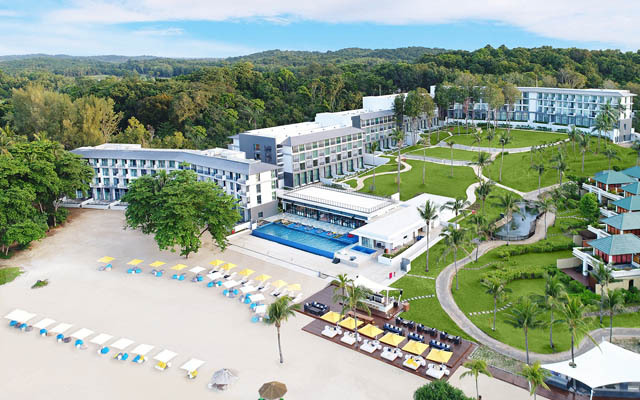
Desaru Coast Ferry Terminal, the final component of the phase one development of Desaru Coast Destination Resorts in Malaysia is now completed.
It is equipped with a Customs, Immigration and Quarantine (CIQ) complex and maritime facilities, as well as the latest bidirectional immigration automated e-gate. The new generation e-gate offers a double swing door and enhanced security features, making immigration screening more efficient and effective at peak travel times.
Desaru Coast Ferry Terminal is expected to help Desaru Coast realise its full potential as an international destination
The ferry terminal is able to process 300 passengers at any given time, and it intends to serve two round trips from Singapore on Thursdays to Sundays, and one round trip on Monday to Wednesday based on market demand.
Earlier in March, Desaru Coast Destination Resorts appointed Desaru Link Ferry Services to operate passenger ferry services connecting Singapore’s Tanah Merah Ferry Terminal with Desaru Coast Ferry Terminal.
Speaking at its officiating ceremony on March 31, Amran Hafiz Affifudin, chairman of Desaru Development Holdings One, said: “As a long-term developer, entrusted to play a central role in the tourism landscape of Johor, it has been our commitment and responsibility to bring value to the community and state. While we developed the ferry terminal as a connectivity and catalytic component for Desaru Coast to realise its full potential as an international destination, it is our hope that it will foster wider benefits for the state of Johor. In establishing this international gateway as the 16th entry point into Malaysia, we hope to spur and multiply the socio-economic development for the state and subsequently the country.”
With the completion of the Desaru Coast Ferry Terminal, the destination is ready to execute its strategic and commercial plans in its next phase of business growth.
Roslina Arbak, managing director and CEO of Desaru Development Holdings One, said the ferry terminal is a “game-changer”, enabling the destination to “unlock new market and business opportunities”.
She expects the improved connectivity to boost Desaru’s ability to capture business events and attract “like-minded investors who wish to leverage the infrastructure and facilities we have put in place to further enhance destination offerings and ensure the success of all players at Desaru Coast”.
Staff and partners were top of mind as Accor adjusted its hotel operations across Asia to deal with the various challenges that came with the travel and tourism crisis over the past two years, and these remain critical as the company ramps up operations to welcome travellers again, says Garth Simmons, CEO of Accor South-east Asia, Japan and South Korea.
In this episode of TTG Conversations: Five Questions, Simmons recalls the different impacts faced by Accor properties in the region throughout the pandemic, how the ALL Heartist Fund was a critical source of assistance to affected Accor staff, where operations are returning, and the challenges his team is facing in resuming operations.
Peaceful protests that turned violent last week in Sri Lanka and a resulting 36-hour islandwide curfew over the weekend have put local tourism players on edge, as they fear the situation’s impact on tourism recovery.
The protests were fuelled by rising discontent over the country’s crippling 13-hour power cuts and acute shortages of fuel, cooking gas and essential food over the past few months. Protesters demanded for the resignation of president Gotabaya Rajapaksa.
Sri Lankan inbound tourism players worry that anti-government protests and a weekend curfew would disrupt business recovery; Parliament of Sri Lanka in Sri Jayawardenepura Kotte pictured
The government has blocked social media platforms, including YouTube, Facebook and WhatsApp. A tourism industry official said the move has also prevented “potential travellers (from) seeking information about the country’s situation”.
Devindre Seneratne, past president of the Travel Agents Association of Sri Lanka, expressed concerns about the impact on tourism, while other industry officials revealed that tour operators had to be briefed about the situation.
Sri Lanka’s tourism business has been picking up, with January and February 2022 recording 178,834 arrivals – inching close to the 194,495 arrivals seen for the whole of 2021.
Industry veteran and managing director at NKAR Travels, Nilmin Nanayakkara, told TTG Asia that a top state tourism official had posted a Twitter message that urged the industry to “downplay” the crisis.
Furious, Nanayakkara said his peers have “protected the country and the industry for ages” and stakeholders need not be told of the necessary steps to take. “We have given a situation report to all our partners abroad,” he said.
Personalising the travel experience for consumers when it comes to booking is essential, however, fears over data sharing across sectors is hampering development, key industry players warn.
The future of data sharing was debated at Travelport’s recent The Future of Travel Retail conference, where speaker Anand Lakshminarayanan, senior vice president, revenue optimization at Emirates, said: “Data sharing is important to try and give customers what they want.”
Consumers’ privacy fears and reluctance among travel players to share information are hampering travel development
He noted that in aviation, there has been a recent shift from price for seats to price for the customers. This can be seen in the introduction of bundle packages tailor-made for passengers.
“To achieve this, we need to know all of the information and data about that customer. This information also helps us to serve those customers during disruptions, like we’ve seen for the last two years,” he added.
Lakshminarayanan said the challenges caused by pandemic-induced flight cancellations, border closures and other rapidly-changing restrictions were further enhanced for the airline as they often only had agents’ details and not passengers’. This made it difficult to directly communicate and offer top-notch customer service during stressful times for passengers.
Raj Patel, chief operating officer at Sky Bird Travel & Tours, said trust was an issue, with customers reluctant to share their data. “Airlines and other travel operators want to understand their customers but more than 70 per cent of passengers don’t believe their data helps us.”
Fears over privacy is a huge hurdle that needs to be overcome. Lakshminarayanan said: “This is a big responsibility. We need to make it a priority to protect customers’ data and give them absolute confidence that their data is safe with us.”
Sharing data among travel sectors would also vastly improve the travel experience for consumers. Jennifer Catto, Travelport’s CMO, said it is essential the industry moves towards a more collaborative model to offer more personalised and seamless experiences.
However, she noted hesitancy. “There is a reluctance to share information for fear of competition, despite the fact everyone knows it would be for the best. I think this will continue to be a discussion that evolves.”
Marriott International has set a target of adding nearly 9,000 keys within its portfolio for Vietnam, and will debut several key brands including Ritz-Carlton Residences, Marriott Hotels, Westin, and Courtyard by Marriott in the country.
Several premium brands will debut in the country. Sheraton Hotels & Resorts will debut in several new destinations, while Renaissance Hotels will establish its presence in Danang and Le Méridien Hotels & Resorts in both Danang and Cam Ranh. The flagship Marriott Hotels brand will debut in Hanoi and Hoi An, while Westin will open in Hanoi and Cam Ranh.
Marriott International will bring several brands into Vietnam, in destinations such as Danang and Cam Ranh; Golden Bridge, Danang pictured
Marriott Executive Apartments is also slated to enter Danang.
In the select service segment, Marriott International will introduce Fairfield by Marriott to Vinh Yen, Halong and Hanoi, while Danang, Ha Long and Nha Trang will see several Courtyard by Marriott hotels opening.
The company will also expand its branded residential portfolio over the next four years. In 2021, the company announced a milestone project that is expected to include close to 4,200 dual-branded residential and officetel units in Ho Chi Minh City. The project is expected to serve as the world’s largest hotel-branded residential project and is slated to open in phases in late 2024. The Ritz-Carlton Residences, Hanoi is also slated to open in 2024.
“Vietnam experienced impressive pre-pandemic economic growth driven in part by coordinated development policies and the strong investment in infrastructure,” said Rajeev Menon, president, Asia Pacific (excluding Greater China), Marriott International.
“Our growth in Vietnam reflects the trust our local owners and franchisees continue to have in Marriott International, and we look forward to presenting them with opportunities to leverage our comprehensive portfolio of 30 brands, as well as our strong distribution network.”
Marriott International’s area vice president – Thailand, Vietnam, Cambodia & Myanmar, Jakob Helgen said: “Vietnam is a vibrant destination and has over the years experienced record levels of tourism as international travellers flocked to the country and domestic travellers began to discover the many wonders available in their own backyard. With the recent reopening of borders, we are hopeful for Vietnam to rebound rapidly, and we are excited to expand across even more parts of this captivating country.”
Marriott International currently operates 10 properties in Vietnam, spanning six brands.
Soon after docking in Singapore in preparation for a new sailing season in two weeks’ time, Royal Caribbean International’s Spectrum of the Seas took off with a special preview for international guests – the first time a cruise line is able to welcome more than just Singapore residents since the pandemic hit in 2020.
The milestone sailing, from April 2 to 4, had media representatives, travel trade partners, business associates and their accompanying family from Singapore, Malaysia, Indonesia, Thailand and India.
Spectrum of the Seas took trade and media partners for a preview sailing over the weekend, ahead of its first official sailing on April 11
Angie Stephen, vice president and managing director, Asia Pacific, Royal Caribbean International, told TTG Asia: “We have been sailing globally with international guests since 2021, which was an important year for us because we returned to Europe, the Caribbean and Alaska. However, Spectrum is Singapore’s first cruise with international guests (since the pandemic).”
According to Annie Chang, director of cruise with the Singapore Tourism Board (STB), almost 500,000 people have sailed since Singapore restarted cruises in November 2020, with programmes restricted to no port calls and for Singapore residents only.
Set to begin its season on April 11 – six months ahead of schedule, Spectrum has seen “incredible” demand, revealed Stephen. Demand from the domestic market has remained strong, fuelled by sister ship Quantum of the Seas’s successful and extended season in Singapore. At the same time, interest from international guests is intensifying, stimulated by Singapore’s simplified arrival procedures that came into effect April 1.
Stephen said: “Initially, international demand was coming in for Q4 when we have published ports of call. Now that it is easier to come to Singapore, many international guests are happy to come here and join our cruise-to-nowhere programmes in Q2.”
Spectrum’s South-east Asian sailings offer a range of programmes, from two-night quick breaks to Kuala Lumpur in Malaysia to a nine-night retreat to Thailand and Vietnam. These will begin in October.
The ship’s new season in April coincides with Singapore relaxed social restrictions, allowing it to sail with 75 per cent of capacity instead of the previous 50 per cent. Guests can also do away with their mask outdoors, and enjoy the return of live entertainment at lounges.
“Singapore’s relaxation of social restrictions means more opportunities for more guests to enjoy our activities as we scale up occupancy in our venues. Theatres are the perfect example of how things are changing. At one point, we could only have 50 people in the theatre; now we can have up to 1,000,” said Stephen.
Spectrum of the Seas will sail with 75 per cent capacity and live entertainment; Showgirls musical was presented during the weekend preview (photo credit: Karen Yue)
However, as Singapore looks to win back international travellers, she said it is imperative that the authorities consider further easing restrictions, as travellers “would want their experiences here to be easier than or equal to the place they are coming from”.
Royal Caribbean International is doing its part to streamline procedures for guests. It now allows pre-departure ARTs to be conducted at any Quick Test Centres or Combined Test Centres designated by the Ministry of Health, or via a video consultation with an approved private healthcare provider. These are in addition to the existing test option by Fullerton Health Testing Centre at Raffles City.
The company has also fast-tracked the development of its Royal app to simplify the online check-in process and to introduce a new e-muster function, shared Stephen. The latter allows guests to complete their compulsory safety drill on the app.
“My favourite technology advancement on the app is the e-muster. The safety drill has to happen before we start sailing. Pre-pandemic, everyone had to gather at the assembly station at the same time, with their life jacket, watch a video and listen to the captain for 15 to 20 minutes. That was never a fun way to start a cruise,” she recalled.
The Royal app’s e-muster function went live on Saturday with the trade and media preview.
Stephen shared that the team is now “really focused on bringing back ports of call”, and is working with the governments of Indonesia, Malaysia and Thailand to set up one set of protocols to make it easier for international guests to enjoy three countries on one cruise.
Minor International advised investors on March 31 that it has won another right to pursue legal action against Marriott International in the Thai court and under Thai law for alleged mismanagement of its fully-owned hotel, the JW Marriott Phuket Resort & Spa.
The Thai-based chain first filed the lawsuit against Marriott and its Thai subsidiary Luxury Hotels & Resorts in July 2019. A Thai court said in September that year the case could proceed. However, in 2020, Marriott succeeded in getting the case to be moved to Singapore for arbitration, as per the arbitration clause in the management agreement.
Minor International is taking Marriott International to court over alleged mismanagement of JW Marriott Phuket Resort & Spa, pictured
Minor International is claiming damages of 570,605,134 baht (US$19 million). Allegations include Marriott’s failure to protect owner’s interest through poor purchasing practices and “damaging” sales and marketing decisions. Minor also claimed that Marriott is enriching itself “through non-transparent license fee arrangements, supplier rebates and use of monies in the Marriott loyalty programme fund”.
Contacted by TTG Asia, Marriott in Asia-Pacific said: “As this is pending litigation, we do not propose public commentary. For the avoidance of doubt, however, the Thai court has not made any decision in relation to the substance of Minor International’s legal claims. The Thai court has simply found that Minor International commenced proceedings in the wrong division of the Thai court and that the claims can therefore only proceed in a different forum. As part of that process, Minor International has also been compelled to withdraw a significant part of its claim.
“Marriott is confident that what remains of Minor International’s legal claim is without merit. Marriott will defend any claims brought against it vigorously and does not intend to litigate those issues publicly.”
Steve Chojnacki, chief commercial officer & general counsel, Minor International, responded to TTG Asia‘s questions by saying the case has now been transferred to the Intellectual Property and International Trade Court Thailand.
He has refused to comment on whether there is a stand-off with the Singapore outcome, citing “confidentiality reasons”.
“However, our Thai court lawsuit against Marriott International is absolutely permitted to proceed, which is extremely important to us. Marriott clearly wants to avoid Thai court, but we strongly feel that this is the appropriate forum to hear Thai law claims relating to a business that operates in Thailand,” he said.
“The court will now take up the claim and hear arguments before making a determination. We are confident of success and this will help not only us but other Marriott-system hotel owners who are trying to hold Marriott accountable for their business practices.”
Minor said that other Marriott hotel owners, including those in Thailand, are “closely monitoring” the legal case. In its statement, the company said it is aware of at least one other Thai hotel owner that has terminated Marriott’s contract and that it expects “others will follow suit shortly”.
Last December, Maneeya Realty Company, owning company of the Renaissance Bangkok Ratchaprasong Hotel, issued an early termination notice to Marriott. The management agreement was signed in 2007, for 25 years.
Meanwhile, Marriott emphasises that this dispute has no impact on the operations at the JW Marriott Phuket.
Blessed Yacht Charters has put a new Meridien 391 Power Boat Cabin Cruiser into the waters, ready to take holidaymakers and corporate groups around Singapore waters.
The 13m-long vessel, currently berthed at Marina At Keppel Bay, offers two air-conditioned cabins, a fully-equipped galley with refrigerator and microwave oven, a karaoke room with good sound system, and a flybridge at the upper deck that offers panoramic views and a spacious lounge.
It is good for small groups of 18 guests.
Floating mats, kayak, paddle boards, floats, fishing rods with artificial baits come part of the recreation package. Guests can charter the vessel for sailings to Lazarus Island or along Marina Bay to take in the city skyline.
Charter packages are priced at S$850 (US$625.40) for a four-hour block on a weekday, between 08.00 to 22.00, and at S$1,200 for weekends.
Guests can bring their own food and drinks at no extra charge.
Blessed Yacht Charters also provides BBQ pit rental and photography services at additional charges.
Contact info@blessedyacht.com for more information.
Personalising the travel experience for consumers when it comes to booking is essential, however, fears over data sharing across sectors is hampering development, key industry players warn.
The future of data sharing was debated at Travelport’s recent The Future of Travel Retail conference, where speaker Anand Lakshminarayanan, senior vice president, revenue optimization at Emirates, said: “Data sharing is important to try and give customers what they want.”
He noted that in aviation, there has been a recent shift from price for seats to price for the customers. This can be seen in the introduction of bundle packages tailor-made for passengers.
“To achieve this, we need to know all of the information and data about that customer. This information also helps us to serve those customers during disruptions, like we’ve seen for the last two years,” he added.
Lakshminarayanan said the challenges caused by pandemic-induced flight cancellations, border closures and other rapidly-changing restrictions were further enhanced for the airline as they often only had agents’ details and not passengers’. This made it difficult to directly communicate and offer top-notch customer service during stressful times for passengers.
Raj Patel, chief operating officer at Sky Bird Travel & Tours, said trust was an issue, with customers reluctant to share their data. “Airlines and other travel operators want to understand their customers but more than 70 per cent of passengers don’t believe their data helps us.”
Fears over privacy is a huge hurdle that needs to be overcome. Lakshminarayanan said: “This is a big responsibility. We need to make it a priority to protect customers’ data and give them absolute confidence that their data is safe with us.”
Sharing data among travel sectors would also vastly improve the travel experience for consumers. Jennifer Catto, Travelport’s CMO, said it is essential the industry moves towards a more collaborative model to offer more personalised and seamless experiences.
However, she noted hesitancy. “There is a reluctance to share information for fear of competition, despite the fact everyone knows it would be for the best. I think this will continue to be a discussion that evolves.”