 BWH Hotel Group moved very quickly when the pandemic hit in 2020 to provide financial relief, such as fee waivers, for its hoteliers. How much did that help to stabilise the BWH portfolio?
The positive results from what we have done are clear to see. We have only lost a very small number of properties over the past 27, 28 months, thanks to those supportive initiatives. These owners know we are here for them for the long run. Many of them went through very difficult times; some still are and I’m talking about hoteliers in places like China, Myanmar, Lao and Cambodia, where tourism is not yet back in full swing.
When times are better for investment and project development, they will support us.
BWH has a strong image, and is among the top 10 global hotel companies for a long time. We have benefitted from positive feedback given by existing partners to potential partners at trade events. We have 4,500 properties worldwide today, and more than 300 hotels in our development pipeline. That should tell you enough about our reputation.
Speaking of developments, how is BWH performing on that front this year?
We still consider 2022 a Covid year, but this is probably the best year we’ve ever had in terms of brand development. As of October 6, we have signed and secured 25 projects. I am confident that two more signings – potentially three – will happen before the end of the year.
The new signings are mainly in Vietnam at the moment, and four in Pakistan. Pakistan is a nice surprise. We have been working with Pakistan but we’ve never received four projects in one shot. It is clearly developing as a good destination for business. These new signings are each from different investors, and are for our core brand, our mid-scale Best Western Plus, and our upscale Best Western Premier. We have an area development office representing BWH in Pakistan, and he has very strong connections. He has been extremely helpful in establishing relationships with existing and new partners.
There are also upcoming projects in Thailand, the Philippines and Indonesia.
However, Vietnam truly takes the crown in terms of scale of hotel development. I’d say 60 to 70 per cent of our production is coming up in Vietnam at the moment.
Eighty per cent of new signings are for Best Western Hotels & Resorts, and the rest for WorldHotels Collection.
BWH completed its acquisition of WorldHotels back in February 2019. What’s the company’s vision for it now that business is coming back on track?
We have to keep in mind that WorldHotels is focused on conversions rather than greenfields. It is also a soft brand – at the moment we do not have any properties bearing the actual WorldHotels signage, except in China where we have four WorldHotels-branded properties. As such, people are not so aware of it.
We are spending a fair amount on PR and marketing to ensure the brand is known. We also plan to have new projects bear the WorldHotels logo and signage. Doing so will benefit us, as more developers will become aware of it and perhaps existing owners may be keen to go into the WorldHotels space.
Early next year, we will announce a reshuffling of our WorldHotels Collection – we have four now (Luxury, Elite, Distinctive and Crafted) and will review them to ensure there is no internal competition among our brands. We are also going to review our logos for consistency and relevance.
Historically, WorldHotels targets existing properties and conversions. Going forward, we want to push for management agreements. We want to show that we can also manage very well on behalf of these owning companies, and demonstrate that we can deliver on upscale properties as well as we do with mid-scale projects.
Let’s talk more about your development pipeline. What exciting openings can the industry look out for in the coming months?
There is an interesting concept emerging across the hotel landscape, one that is termed the branded residence. A buyer will purchase an apartment in a branded residence and benefit from hotel-quality housekeeping, F&B, security, etc. They will not lease it and will occupy it from time to time as a second home.
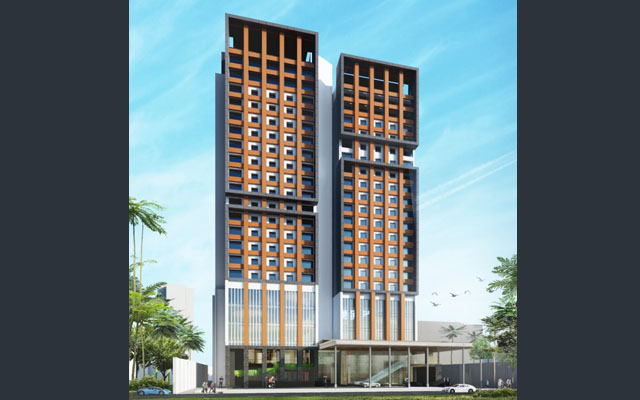
Property developers have come to realise the advantage of signing with major hotel companies to provide these daily services along with basic engineering. We signed two months ago in Ho Chi Minh City a 3,000-key branded residence project that will open by the river. It is our biggest signing this year, but the property will not be available for travellers to book on our platforms or any website.
This concept has been popular in the US for some time but has taken root only in Vietnam and Australia in this region, and now coming slowly into Thailand.
Getting into branded residences is a great opportunity for us to grow our brand awareness. The branded residence could carry any of our 17 brands, depending on standard, concept and potential of the location. The one in Ho Chi Minh City will open under the Best Western Premier brand. We have ongoing discussions for one to be under Best Western Plus and another under WorldHotels.
Besides that, we have a number of notable hotel openings – Best Western Nada Don Mueang in Bangkok, Thailand, which opened in August 2022; Best Western Chatujak in Bangkok, opening this December; and Best Western Plus Carapace in Hua-Hin, scheduled for January 2023.
On the WorldHotels side, we will open La Green Resort – WorldHotels Distinctive Collection in Phuket, Thailand in 2Q2023, and MV Luxury – WorldHotels Elite Collection in Ha Long Bay, Vietnam around the same period.
Let’s bring the focus back to your properties in operation now. How are they performing in terms of rates and occupancies?
Performance depends very much on the location. Bangkok is seeing volume coming back in a very strong way. The Europe summer season ending August was spectacular; we did not have any properties running below 75 per cent (in terms of occupancy) and ADR was 65 to 75 per cent of what it used to be pre-Covid. Vast majority of that business came from leisure.
But Asia has to realise that the situation in Europe – with Ukraine and Russia at war and lots of talk about inflation and recession – affects travel decisions. People are waiting to see what would happen next. They want to be sure before they spend their money on travel.
Yet, at the same time, we also see that as Covid goes away, people want to travel and get out of their homes. So, we remain quite optimistic about the Christmas season, especially for resort destinations like Bali, Phuket, Hua Hin and Pattaya.
In terms of booking trends, I see very last minute bookings because people know there will be availability, anywhere and at anytime.
Considering how Asia-Pacific consumers are more positive about travel than their European counterparts, is BWH paying more attention to regional markets?
While Europe is Asia’s big spending market, the industry here has learnt over the past two years of the importance of our own region.
Trends for 2023 show that we must rely on Asia first. For example, two of the most important markets for Thailand today are India and the Middle East.
The Middle Easterners are visiting Thailand for medical tourism and wellness – and this is something interesting. There was a huge backlog (in medical treatments) because many could not travel, so our properties that have a big involvement in medical tourism – due to their proximity to medical facilities or partnerships with hospitals – now have bookings all the way to the end of 2023. When the Middle Easterners come to Thailand for medical treatments, they come as a family and book two or three rooms for sometimes two weeks.
Medical tourism is a constant and reliable source of business for us, and I expect bookings from medical and wellness tourists to only grow. This is also influencing development – 30 to 35 per cent of projects with more than 1,000 rooms, specifically in Vietnam, have a wellness or medical component.
As an industry, we had also overlooked our domestic market until we had to rely on it during the pandemic.
As BWH moves forward, we want to acknowledge that the domestic market has helped many of our properties to remain open despite travel difficulties. This is definitely a market that we want to retain going into the future.
Competition for returning travellers is intense. How is BWH ensuring its brands and properties stand out in the marketplace?
BWH competes in the mid-scale and economy segment. This is where we do best, and where the bulk of the travel demand sits at the moment. We have very competitive prices and great properties; we adapt our rates to the specifics of each location. And we have the Best Western Rewards, which is a great programme with 50 million members globally.
We are now working on promotions for the festive season, and details will be announced anytime soon.
How important is your loyalty programme in winning back travellers post-lockdown?
It is a major component of our offer. As a consumer myself, I always look at my options through available rewards programmes. Yes, travel agents are useful, but most of the time I can find myself something better through rewards programmes, such as a free upgrade, late check-out, a welcome drink or a specific F&B discount. There is always something more through direct bookings.
Sounds like the loyalty programme and direct channels are most critical for BWH. What approach does the company take with travel agencies then?
Travel agents are great partners and they remain very important to us. But you see, the reach of loyalty programmes differs region to region. In the US, bookings through our loyalty programme can represent up to 40-plus per cent of our total revenue.
In Asia-Pacific, where people are used to booking online or through travel agents and DMCs, we get less from our loyalty programme. Every country in this region has a different contribution, but I’d say the range is from 10 to 18 per cent. And so, travel agents remain very strong partners for us here. We have every intention to strengthen this relationship as we move forward, and to rely on strong trade partnerships to secure a slice of the pie as travel resumes and competition heats up.
Last question: what would you say is most critical for BWH as it navigates this changed travel and tourism landscape?
Despite so many changes in the industry, BWH has remained very consistent. As discussed earlier, we have kept our portfolio almost the way it was before Covid.
We have a new president and CEO, Larry Cuculic, who has great ideas for the company and our brands as we move forward.
Competition is tough, so success in advancing ahead comes down to strong leadership, clear communications in the marketplace, and the quality of our support (for our hoteliers).
Another very relevant achievement as we move forward is our entry into the Sustainable Hospitality Alliance, a leading sustainability network. Doing so demonstrates BWH’s commitment to environmental and social responsibility.
We will work together, along with the Alliance’s other member companies, to leverage the collective power of the industry to make a positive impact locally and on a global scale. With BWH joining the Alliance, the network represents over 30 per cent of the hotel industry by room count, demonstrating the vast opportunity this group has to affect positive and meaningful change at all levels of the hospitality sector.