TTG Asia
Asia/Singapore Tuesday, 20th January 2026
Page 654

Singapore to launch sustainable aviation fuel credits

0

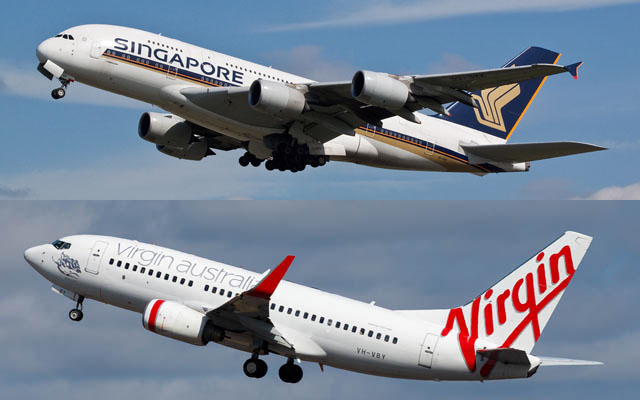
The Civil Aviation Authority of Singapore (CAAS), Singapore Airlines (SIA), and Temasek will launch in July the sale of Sustainable Aviation Fuel (SAF) credits as part of a pilot announced in November 2021 to advance the use of SAF in Singapore.

A total of 1,000 SAF credits will be available for sale, generated from the 1,000 tonnes of neat SAF which are blended, delivered and uplifted from Singapore Changi Airport. These are expected to cut carbon dioxide emission by 2,500 tonnes. Every credit purchased will help to reduce 2.5 tonnes of carbon dioxide emissions.

SAF credits can be purchased directly from SIA to help stimulate demand, support development and advance the adoption of SAF for aviation sustainability

The launch of the SAF credits provides customers, including corporate and individual travellers, an avenue to do their part for the environment. By purchasing these credits, they can also help to stimulate demand for SAF, support the development of the nascent SAF industry, and advance the adoption of SAF for aviation sustainability.

The SAF credits will be registered as part of a pilot project within the Roundtable on Sustainable Biomaterials (RSB) Book & Claim System to ensure that the SAF credit transactions are conducted in a trusted and transparent manner, with no double counting of credits. The Book & Claim System is enabled by the RSB, a global membership organisation that drives the sustainable transition to a bio-based and circular economy.

The SAF credits can be purchased directly from SIA.

From 4Q2022, all SIA customers will be able to purchase a mix of SAF credits and carbon offsets, as part of the SIA Group Voluntary Carbon Offset Programme. SIA will also partner Climate Impact X (CIX), a global exchange for quality carbon credits, to introduce a bundled portfolio consisting of SAF credits and carbon credits. The product will be designed to meet corporate demand for SAF while balancing affordability.

Lee Wen Fen, senior vice president corporate planning, Singapore Airlines, said: “As we progress with the SAF pilot in Singapore, we can now offer more opportunities for our corporate customers and travellers to mitigate their carbon emissions using SAF credits, which are registered and accounted for within the RSB Book & Claim System. This will help to accelerate and scale up the collective adoption of SAF, reinforcing our commitment to achieve net zero carbon emissions by 2050.”

Indonesia travel players lambast Jakarta e-Prix 2022 for leaving out agents

0

The inaugural ABB FIA Formula E World Championship (Jakarta e-Prix 2022) may have blazed a trail in the world of motorsports when it was held in the Indonesian capital city last week, but local travel players are not amused that the organisers have left travel agents out in sports tourism opportunities.

According to race organiser Jakarta Propertindo (Jakpro), the event at the new Jakarta International E-Prix Circuit attracted 22,000 spectators within the circuit, half of which were international visitors.

The first ABB FIA Formula E World Championship attracted 22,000 in-circuit spectators but travel players claim the benefit to inbound tourism was limited

Anies Baswedan, Jakarta governor, said the race was symbolic of the city’s future as it served as a test of Jakarta’s ability to hold an international sporting events of a higher level, such as the Formula One races.

To this end, Jakpro’s president director, Widi Amanasto, said Jakarta e-Prix 2022 has succeeded, as Jakarta is now seen as a desirable hub for sport events in the country.

“There are already racing events (of local and international scale) that will be held until the end of 2022 in Jakarta,” he said.

However, travel trade players argued that the event had little impact on Jakarta’s tourism industry.

Pauline Suharno, president of the Association of the Indonesian Travel Agents (ASTINDO), said travel agents were not relied for ticket distribution.

“Compared to the Mandalika MotoGP, where ASTINDO members were involved in ticket sales and the preparation of tour packages, the organisers of the Jakarta e-Prix 2022 have forgotten about travel operators. ASTINDO was not invited to collaborate on creating tour packages or to be ticket distribution channels,” she told TTG Asia.

Aditya A Wirakusuma, general manager of Grand Dafam Ancol, said Jakpro should look beyond the event’s sporting roots and position it for sports tourism in future. Collaborating with hospitality businesses would boost guest profiles beyond race entourage and organisers.

A dialogue with the travel operators was what Hasiyanna Ashadi, managing director of Marintur Indonesia, hoped to see in the future. There could be collaboration to “create more experiences for international visitors”, and for Marintur Indonesia to help promote event packages to overseas tour operators, which would ultimately raise “Jakarta’s popularity as sport tourism destination”.

BWH joins Sustainable Hospitality Alliance to influence responsible hospitality

0

BWH Hotel Group (BWH) has joined the Sustainable Hospitality Alliance (Alliance), and will work with the latter, along with the Alliance’s other member companies, to leverage the collective power of the industry to make a positive impact locally and on a global scale.

With BWH representing over 30 per cent of the hotel industry by room count, it has vast opportunity to bring about positive and meaningful change at all levels of the hospitality sector.

BWH will work with the Sustainable Hospitality Alliance to make a positive impact locally and on a global scale

“We are very proud to join the Sustainable Hospitality Alliance as an important step in our effort to build a robust, global ESG strategy for our company,” said Ron Pohl, president of international operations for BWH Hotel Group. “Not only do our guests, partners and developers expect that brands demonstrate a strong commitment to ESG efforts but executing an effective and comprehensive ESG programme is fundamentally the right thing to do.”

The Alliance works with the industry to assess the key global challenges affecting the planet and its people, prioritises activity to deliver impact through collective action, and aims to increase joined up action on sustainability across all parts of the hospitality value chain, bringing together owners, investors and other strategic partners to promote collaboration.

Patrick O’Meara, interim CEO, Sustainable Hospitality Alliance, said: “We are always encouraged to see the large global brands taking positive steps on their sustainability, which will have an impact right across the world. We welcome their expertise and contribution to enable us to support the whole industry to achieve critical sustainability goals.”

Agoda widens spotlight on qualified clean accommodation in Asia

0

Following the success of its Clean Certified Accommodations programme Singapore, Thailand, Malaysia and Indonesia, Agoda has expanded its partnerships to the Philippines, South Korea and Taiwan to better support the revitalisation of tourism.

The Clean Certified Accommodations programme identifies accommodation suppliers that satisfy the hygiene criteria in line with the local market and regional standards, and awards them with a Clean Certified Accommodation badge on the property page on Agoda’s platforms. Local hygiene certifications, such as Indonesia’s CHSE, Clean & Safe Malaysia, Korea Quality, Taiwan’s OK Travel in New Taipei City, the the Philippines’ Safety Seal, Thailand’s SHA+, and Singapore’s SG Clean, are currently displayed on Agoda’s platforms.

Agoda’s Travel Trend Survey noted that travellers seek assurances that hygiene measures at their destination are rigorous and follow global best practices

In line with travel trends noted in Agoda’s Travel Trend Survey, travellers seek assurances that hygiene measures at their destination are rigorous and follow global best practices. Survey respondents were most interested in “daily room disinfection” followed by “daily disinfection (of general areas)”, “providing hygiene standard listings”, and “hygiene certification from the government”.

“We are proud to partner with government authorities across Asia-Pacific and beyond, to promote hygiene standards for all travellers,” said Omri Morgenshtern, chief operating officer at Agoda.

“Agoda’s top priority has always been to help make travel easier, and travellers will be able to easily identify which properties meet the government cleanliness and hygiene standards in each market. Our objective for the Certified Clean Accommodation programme is to help promote hygiene protocols among our accommodation partners and offer a layer of confidence for travellers looking to get back out there. We want to continue doing everything we can to help rejuvenate the tourism economy in the best way we can.”

The metaverse and the future of travel

0

You have probably heard the word ‘metaverse’ over the last year, evoking a future of a persistent and shared virtual reality space. As we’ve seen from the past two years, the barriers between what is physical and digital have all but blurred, with consumers being increasingly comfortable with virtual experiences. In fact, according to Accenture’s research, 64 per cent of consumers worldwide had already purchased a virtual good or taken part in a virtual experience of service in the past year – a number that increases to 74 per cent when we zoom into those living in Asia.

These findings are unsurprising given the fact that many people were forced to look inwards and re-evaluate their priorities over the course of the pandemic. Accenture’s Life Reimagined research found that many consumers are now applying their post-pandemic mindsets to where, what and how they buy, and this is driven by a number of factors, which include:

Health and safety: After more than a year of social distancing, constant handwashing and wearing masks everywhere, consumers are highly attuned to the health and safety of any experience. Against this backdrop, travellers will want evidence of health and safety protocols, and it is important to reassure travellers that this has taken place.

Service and personal care: Consumers are seeking personal experiences with brands, and requiring clear and easy options for contacting customer service. They want to be understood – how their needs and objectives change during times of disruption and have those needs addressed. Travel companies that understand this are well positioned to win in a new reality where rapidly evolving circumstances and unpredictable events are the norm.

Trust and reputation: In the travel industry, strong ethical values are the top reasons for loyalty among customers. Many have come to expect companies to do the right thing for them and not just for the business. Businesses will need to prove that they are who they say they are, and stand for the things they stand for.

These factors, paired with consumers’ increased familiarity with engaging with the virtual world, beg the question: how can the travel industry leverage the metaverse to adapt to customers’ changing priorities, and what are the opportunities that will arise because of it?

Encouraging tourism equity
Understandably, post-pandemic, health and well-being are front of mind, and people want to be sure they are not putting their health at risk. There will be customer segments, such as the elderly and those with disabilities, who may not be able to travel due to health reasons.

The metaverse allows these people to ‘travel’ from the comfort of their homes, recreating landmarks in all their past glory or allowing them to experience different locales in an immersive way, which they cannot explore within real-life interaction.

In addition, consumers who have issues with mobility will be able to virtually sample flights, hotel rooms, and even attractions, allowing them to determine if their provider of choice may be accessible prior to taking their trip, helping build trust.

Engage new customer segments
Another major post-pandemic trend is a rise in travel expenditures. After two lost years, people are treating themselves to a higher class of travel as a well-deserved ‘reward’. This opens up the opportunity for the metaverse to introduce luxury travel to groups who typically cannot afford it.

By giving consumers the option to sit in a virtual first-class seat, experience the lounge or walk around a hotel resort or room, it opens up opportunities to truly engage and inspire people, providing personalised services even before they travel.

This ‘try before you buy’ ethos that the metaverse allows builds trust and reputation; consumers would be able to understand ‘why luxury’ and comprise a new aspirational segment of potential future customers. For existing customers, the metaverse heightens the luxury experience by providing the means for informed decision-making.

VR and AR functions are also able to provide experiences that are not limited by physical reality. Through creating a digital twin, travel and hospitality providers can transport consumers to alternate spaces or even time periods. This opens up a wealth of new segments that travel providers can target, including education. For example, students learning about the effects of global warming are not able to just see the glaciers in front of them, but able to go ‘back-in-time’, or even years in the future for a glimpse of the potential reality of melting glaciers.

Opportunities for business travel
These functions are also relevant for business travel, especially as consumers expect to travel less for work post-pandemic. In this current climate, where companies are increasingly selective, building trust and reputation will be key to driving growth. The ability to ‘try before you buy’ can play a key role in events and conferences, giving the ability to see a location before booking, especially as hybrid meetings become more commonplace.

The metaverse can also further build trust through allowing travel advisors to provide services through the metaverse, helping customers manage and design their travel journey in a personalised way.

Not a replacement, but an enhancement
It is important to recognise that the metaverse is not intended to replace physical travel, but rather provide a complementary enhancement to an overarching experience that, over time, may become an essential part of the travel ecosystem. As the technology develops, the opportunities for a more immersive, more emotionally powerful means to engage consumers over existing channels will inevitably arise, offering a rich and interactive way to inspire consumers to buy travel in the years to come.

Summer fun for kids at JOALI Maldives

0

JOALI Maldives, the country’s first and only immersive art and design resort, unveils a new Kids Summer Club programme for young guests staying between now and August 31, 2022.

Specially crafted for children between four to 12 years old, the complimentary two-week programme will run continuously from June through August.

JOALI Maldives unveils a new Kids Summer Club programme

With plenty of immersive art activities to choose from, such as a ceramics art class; tote bag painting workshop; palm leaves craft class where kids can make their own watermelon fan; and more.

Budding biologists can join in the Under the Ocean workshop and learn about the oceans with a guided snorkelling trip; or go on a guided nature-walk around the tropical island.

Sporty kids can participate in yoga sessions, Junior Ping-Pong tournaments, paddle boarding, badminton, beach treasure hunt, open-air beach cinema evenings, desert island Robinson Crusoe beach picnics, turtle and dolphin cruise adventures, glass-bottom kayaking and more.

Food lovers can cook up a storm in the Kids Club Kitchen and make their own pizza and fruit kebabs. During the months of June and August, families can also indulge in a special culinary art evening at fine-dining Mediterranean restaurant Bellini’s where the chef will use local flavours of the ocean as ingredients for his Italian-inspired dishes.

Rates for a beach villa with pool start from US$2,190 per night based on a family of four (with one child and one infant).

For more information, visit JOALI Maldives.

Save more with longer stays at Wyndham

0

Wyndham Hotels & Resorts celebrates the return of travel with the Stay Longer, Save More campaign till September 30, 2022. Guests can save 10 per cent on a one-night stay; 15 per cent for two consecutive nights; and up to 20 per cent off for three or more consecutive nights stay with every new booking.

Members can earn Wyndham Rewards points when they complete their stay by September 30 this year.

Guests can enjoy discounts with longer stays at selected Wyndham Hotels & Resorts

Plus, the ongoing ‘Stay Twice & Earn a Free Night’ promotion allows members to stack their rewards and be awarded 7,500 bonus points after completing two qualified stays when registering and booking by September 2, 2022. Members will need to complete the qualified stays by September 6, 2022. Wyndham Rewards points can be saved for use or redeemed anytime for free nights, and are valid for four years.

Both Stay Longer, Save More and ‘Stay Twice & Earn a Free Night’ are available at selected Wyndham Hotels & Resorts.

For more information, visit Wyndham Hotels & Resorts.

Resorts World Cruises sets off for SE-Asia ahead of plan

0

Resorts World Cruises is taking Genting Dream around the region, with sailings calling at Bintan and Batam islands in Indonesia, as well as Kuala Lumpur and Malacca (via Port Dickson) and Penang in Malaysia from July 1, 2022.

This is ahead of initial plans to roll out cruises with South-east Asian port calls from September 30.

In a press release, the company said the launch of destination cruises “is timely as the Genting Dream undergoes final preparations for her inaugural cruise from her homeport in Singapore on June 15″.

Genting Dream will sail the two-night Bintan and Batam Weekend Getaway Cruise every Friday from July 1, and the three-night Kuala Lumpur and Malacca (via Port Dickson)-Penang Cruise every Sunday from July 3. Genting Dream will also offer a two-night Malaysia option that calls at Kuala Lumpur and Malacca, setting sail every Wednesday.

Michael Goh, president of Resorts World Cruises, shared plans to expand itineraries to other hot destinations, such as Phuket and Krabi in Thailand and North Bali in Indonesia from October 2022 “to provide our vacationers with more destination options”.

Goh acknowledged strong support from Singapore, Indonesia, Malaysia and Thailand governments in facilitating Resorts World Cruises’ launch of destination cruises.

Annie Chang, director, cruise, Singapore Tourism Board (STB), said Resorts World Cruises regional sailings will help to boost Singapore’s cruise offerings.

“STB will continue to work closely with our regional counterparts to reopen more ports and reinvigorate the cruise industry in South-east Asia,” Chang said.

Commenting on Genting Dream‘s Indonesia cruise offerings, Sandiaga Uno, Indonesia’s minister of tourism and creative economy, said: “With Resorts World Cruises taking on a pioneering role to restart destination cruises in Indonesia, we are confident that together, we will rejuvenate the regional cruise tourism industry.”

Bringing back the shine to a hospitality career

0

What a time now to shoulder the responsibility of educating and nurturing hospitality talents! These talents are in great demand now as travel and tourism gets back its rhythm. What are the immediate demands on Shatec Institutes right now?

The industry was already facing labour shortages prior to the pandemic. Being a labour-intensive industry, the manpower crunch has only become more severe post-Covid, as the last two years saw many staff leaving the industry for good.

What is Shatec’s objective right now? To increase our enrolment of students from a more diversified pool of sources. We hope to attract more local and international students.

How? We will need to be more strategic in our marketing and stay very focused on bringing back the chic and cool nature of our business. You know, the hospitality industry used to be glamorous in the 80s and 90s. Everyone wanted to be in our industry, whether to join a hotel or to travel the world as a cabin crew. We need to bring back that confidence as an industry, and the glamour of a hospitality career.

We need to make sure that school leavers and jobseekers – who can be mid-career switchers – feel that working in our industry is very exciting, with many personal growth opportunities.

I may be biased but I still see our industry as a very glamorous one, even with the trials and tribulations of the pandemic. So, what do you think has caused the erosion of the sexiness of our industry?

It is not so much that the glamour is gone. New entrants come to realise that this profession requires tremendous passion and commitment. When people are playing, we are working.

When you are in F&B, for instance, you are working hard on New Year’s Eve or Christmas Eve to bring happiness to your guests and customers.

This is our stark reality, and that’s when some of the glamour rubs off.

Many aspects of travel and tourism have changed because of the pandemic. How is Shatec Institutes redesigning its courses as a result?

We have to make changes to our curriculum and how we teach our students. The key here is to remain relevant.

To teach future skills, we are reviewing future trends in the industry to identify what matters, such as sustainability, technology applications and digitalisation, designing guests experiences, as well as well-being. With well-being, it isn’t so much to create wellness experiences for customers, but also to ensure the well-being of employees in the industry.

An example of changes in course content is the inclusion of more digital marketing education. The pandemic has created huge opportunities in digital marketing. In the past, sales and marketing efforts were mostly face-to-face.

What is the state of enrolment this year compared to 2020 and 2021 when travel and tourism was still shaky? Is confidence in a hospitality education and career improving?

With the easing of travel restrictions in 1H2022, our foreign enrolment now is greater than the whole of 2021.

We are pushing harder into foreign markets with the knowledge that many prospective students are keen to come to Singapore to get an education at Shatec.

With the lifting of social restrictions in Singapore, we are able to return to school engagements and face-to-face open house events where local students and their parents can come and meet us. We are in the people business, but that face-to-face contact was so lacking for over two years.

I believe that the confidence in hospitality education is still there. The industry is embracing a lot of changes, and students are aware. That creates some very good vibes about a hospitality career.

Career prospects are unbelievable for the industry right now. Business is coming back, but the industry finds it very difficult to attract people. What happens when you have a demand and supply imbalance? Price has to go up, and so wages have gone up.

This augurs well for both new entrants and mid-career switchers. This is a tremendously good thing for our industry. For a very long time, people have chosen not to enter our industry because they find that salary is not compelling enough.

Where are your students coming from now, and what is Shatec Institutes doing to strengthen enrolment?

We generally get 80 of our cohort from Singapore, and the rest from the region.

Among local students, 90 per cent are fresh from schools and the rest are mid-career switchers or industry professionals looking to upgrade their skills.

We are confident of growing our enrolment from North Asia and South-east Asia. Currently we offer full-time and part-time diploma programmes.

We are launching the Apprenticeship Diploma. This is a very important programme for our trainees to be able to learn and work while pursuing a diploma, and is especially appealing to jobseekers who need to make a living or support their family while studying.

The first diploma track to be introduced under this programme is the WSQ Diploma in Hotel and Accommodation Services. The first intake is scheduled to commence this October.

What courses are most in demand, and is this a match with the most pressing talent needs by businesses?

Our most popular courses are for the culinary arts. All our students get snatched up as soon as they graduate. In fact, we don’t have enough graduates for the industry.

Beverage courses are very popular too, like the wine and sake appreciation classes. These are particularly popular among continuing education adult learners.

The courses that are short (on enrolment) are the F&B, housekeeping and front office service and management. So, when you ask me whether courses in demand are a match with the most pressing talent needs, my answer is no, we don’t have enough graduates to feed the pipeline.

We are trying our hardest to get more enrolment into the hospitality services and management areas.

Are young ones avoiding roles in F&B, housekeeping and front office service and management due to perceived lack of career growth?

I am a career hotelier. For the last 37 years, since I graduated, I’ve been in this line. I never left, I still love what I do. I will say that our industry offers incredible career development prospects.

(In my time as a hotelier) I often find that we do not have enough people to promote fast enough.

The problem is there are a lot of alternative jobs for young people, and the alternatives out there are too compelling.

The culinary arts cohort has tremendous passion, and every new graduate aspires to create stunning dining experiences for people. That passion drives their ambition. However, F&B, housekeeping and front office roles are not so compelling.

We may need to sing a different tune to appeal to young ones to get started in the areas of F&B, housekeeping and front office. I read your article recently about hotels having to get creative with hiring, by using casting calls. Our industry is a stage. When I was in the hotel business, I told my staff all the time that how they groomed themselves, spoke and carried themselves were reflective of themselves as individuals, of the brand and of the aspiration of all other talents in our industry.

I think high-profile shows like MasterChef have helped to elevate the profession of culinary arts. Perhaps our industry needs a MasterHousekeeper series to make the profession sexy.

(Laughs) We need to spin a story, and we are in the process of developing some marketing tactics to make our industry cool. We want to create career aspirations for our students.

Coming from the side of the business that uses and relies on hospitality talents, how will your perspectives shape Shatec Institutes’s priorities and activities going forward?

My experience as a hotelier can fill the gaps that Shatec currently lacks in its curriculum. I would like to provide insights and information from my experience that will result in courses that are relevant not just to full-time students but also mid-career switchers and executives who are already in our industry. Such courses could be in distribution, financial management, sustainability and wellness.

It is a common complaint that not all hospitality graduates move on to find jobs in our industry or stick around long enough. What proportion of Shatec Institutes’s young graduates typically move into fulfilling and lasting careers in our industry? And what can be done to improve their stickiness?

We don’t have empirical data to show how many Shatec graduates are still in the industry. However, we have a strong network of alumni who are industry leaders. They may be hotel general managers, chef owners, or executive chefs at the corporate office in Singapore and overseas.

A lot of our graduates stay on in the industry, and I am very proud of that. Our registered alumni number about 3,000.

So, how can we get our young graduates to stay on for long, to improve their stickiness as you say? Shatec has a Mentoring@SHATEC programme, which starts from the day they enter the school. This is so critical. We mentor students with mentors from the industry who come from a range of roles – general manager, executive chef, executive pastry chef, director of rooms, executive committee members, etc. The responsibility of these mentors is to guide the students while they are studying, to keep their dream of a hospitality career alive, and to help them fulfil their aspiration as they work in our industry.

Providing mentorship when they join the industry is even more critical. If we don’t meet their aspirations, they will leave the job. We are trying to get hoteliers to offer effective mentorship for new graduates who join the industry.

We hope that Mentoring@SHATEC can show the right way in effective mentorship. We believe that once our members begin to mentor students, they will also be inspired to mentor their own workforce. Hotels are pressed to retain staff, and mentoring and coaching are critical for staff retention.

We have accumulated 71 active mentors to date for the programme. All of them serve on our mentorship panel pro-bono.

As CEO of Shatec, I will also take on the role of mentor and guide some students. I’ve done that before; as division chief, I used to mentor undergraduates. I enjoy teaching and sharing what I’ve learnt, and I believe that doing so will help our industry to attract and grow talents, and to ultimately prosper.

Tourism recovery gains momentum as restrictions ease and confidence returns

0

According to the latest UNWTO World Tourism Barometer, international tourism saw a 182% year-on-year increase in January-March 2022, with destinations worldwide welcoming an estimated 117 million international arrivals compared to 41 million in 1Q2021. Of the extra 76 million international arrivals for the first three months, about 47 million were recorded in March, showing that the recovery is gathering pace.

Europe and Americas lead the recovery
UNWTO data shows that during the first quarter of 2022, Europe welcomed almost four times as many international arrivals (+280%) as in 1Q2021, with results driven by strong intra-regional demand. In the Americas, arrivals more than doubled (+117%) in the same three months. However, arrivals in Europe and the Americas were still 43% and 46% below 2019 levels respectively.

International tourist arrivals are now expected to reach 55% to 70% of 2019 levels in 2022

The Middle East (+132%) and Africa (+96%) also saw strong growth in 1Q2022 compared to 2021, but arrivals remained 59% and 61% below 2019 levels respectively. Asia and the Pacific recorded a 64% increase over 2021 but again, levels were 93% below 2019 numbers as several destinations remained closed to non-essential travel.

By sub-region, the Caribbean and Southern Mediterranean Europe continue to show the fastest rates of recovery. In both, arrivals recovered to nearly 75% of 2019 levels, with some destinations reaching or exceeding pre-pandemic levels.

Destinations opening up
Although international tourism remains 61% below 2019 levels, the gradual recovery is expected to continue throughout 2022, as more destinations ease or lift travel restrictions and pent-up demand is unleashed. As of June 2, 45 destinations (of which 31 are in Europe) had no Covid-19 related restrictions in place. In Asia, an increasing number of destinations have started to ease those restrictions.

Despite these positive prospects, a challenging economic environment coupled with the military offensive of the Russian Federation in Ukraine pose a downside risk to the ongoing recovery of international tourism. The Russian offensive on Ukraine seems to have had a limited direct impact on overall results so far, although it is disrupting travel in Eastern Europe. However, the conflict is having major economic repercussions globally, exacerbating already high oil prices and overall inflation and disrupting international supply chains, which results in higher transport and accommodation costs for the tourism sector.

Export revenues to recover faster as spending rises
The latest issue of the UNWTO Tourism Barometer also shows that US$1 billion were lost in export revenues from international tourism in 2021, adding to the US$1 billion lost in the first year of the pandemic. Total export revenues from tourism (including passenger transport receipts) reached an estimated US$713 billion in 2021, a 4% increase in real terms from 2020 but still 61% below 2019 levels. International tourism receipts reached US$602 billion, also 4% higher in real terms than in 2020. Europe and the Middle East recorded the best results, with earnings climbing to about 50% of pre-pandemic levels in both regions.

However, the amount being spent per trip is on the rise – from an average US$1,000 in 2019 to US$1,400 in 2021.

Stronger than expected recovery ahead
The latest UNWTO Confidence Index showed a marked uptick. For the first time since the start of the pandemic, the index returned to levels of 2019, reflecting rising optimism among tourism experts worldwide, building on strong pent-up demand, in particular intra-European travel and the US travel to Europe.

According to the latest UNWTO Panel of Experts survey, an overwhelming majority of tourism professionals (83%) see better prospects for 2022 compared to 2021, as long as the virus is contained and destinations continue to ease or lift travel restrictions. However, the ongoing closure of some major outbound markets, mostly in Asia and the Pacific, as well as the uncertainty derived from the Russia-Ukraine conflict, could delay the effective recovery of international tourism.

A higher number of experts (48%) now see a potential return of international arrivals to 2019 levels in 2023 (from 32% in the January survey), while the percentage indicating this could happen in 2024 or later (44%) has diminished compared to the January survey (64%). Meanwhile by end-April, international air capacity across the Americas, Africa, Europe, North Atlantic and the Middle East has reached or is close to 80% of pre-crisis levels and demand is following.

UNWTO has revised its outlook for 2022 due to stronger-than-expected results in the first quarter of 2022, a significant increase in flight reservations, and prospects from the UNWTO Confidence Index. International tourist arrivals are now expected to reach 55% to 70% of 2019 levels in 2022, depending on several circumstances including the rate at which destinations continue to lift travel restrictions, the evolution of the war in Ukraine, possible new outbreaks of coronavirus and global economic conditions, particularly inflation and energy prices.