Kyushu’s tourism stakeholders are adopting greater use of virtual reality (VR) and augmented reality (AR) at destinations in a bid to entice increasingly travel-savvy visitors in search of the hottest travel trends.
VR, a simulation of a three-dimensional environment that can be interacted with in a seemingly real way, and AR, which superimposes images on the user’s view of the real world, have been used by companies throughout Japan during the Covid-19 pandemic.
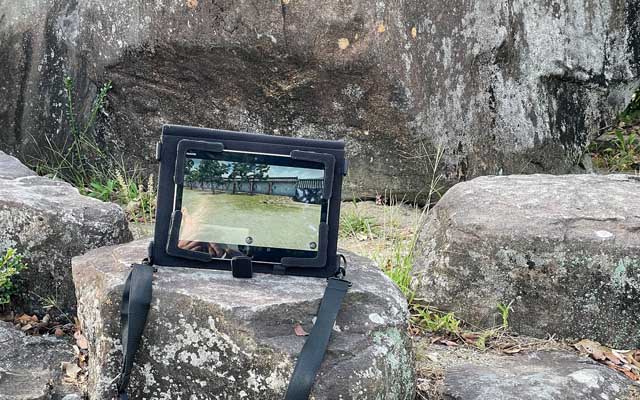
Travellers can see how Hara Castle, now in ruins, used to look like with the help of virtual reality
From offering tours of hotels and aircraft to attractions and even cities, the technologies have been used by travel-related companies, including JTB Corporation, Hankyu Travel and Japan Airlines, to recreate a piece of Japan for people stuck at home.
Now, Japanese organisations are using VR and AR to enhance products and services via a more immersive experience for in-person guests.
In Oita Prefecture’s Hita, where the renowned manga Attack on Titan was created, the city’s tourism association is promoting an AR-supported app. After downloading it, visitors can travel to sites from the manga that are located across the city, where they can superimpose themselves or other characters onto the screen.
“We launched the app in 2020 so international visitors haven’t really had a chance to try it yet,” said a spokesperson of Hita City Tourism Association. “We’ve had great feedback from the domestic market so we hope the inbound market loves the app too.”
In Nagasaki Prefecture, tablets on offer at Hara Castle, which is merely ruins, offer users the chance to see what the castle would have looked like in its heyday, thanks to VR.
Neighbouring Shimabara Castle, meanwhile, has created an AR headset that allows visitors to see and touch exhibits that appear to float in front of them.
A staff member at Shimabara Castle said further technology developments are underway, including VR walkthroughs of the castle in Japanese, English and Korean, to “bring its history to life”.
I tried out co-living for the first time recently. Yes, it’s true that what hotels are trying to do today – using technology to reduce operational costs, going local or being in the neighbourhood (even if they aren’t), getting strangers to socialise with one another – the co-living model has done it first, and done it well.
A key insight for me is that the best co-living players can make a stay seamless and efficient because technology is their DNA. Everything starts and ends with technology. For hotels, technology is often a capital expenditure to be carefully considered, not just because of the costs, but the risk and worries of de-personalising the guest experience.
Whether it was for business or leisure travel, I have stayed only in hotels. The chance to try out co-living arose during a Singapore visit recently and Hmlet, one of the largest co-living brands in the city, came to mind.
Hmlet’s technology was pervasive even before arrival. It starts with the user experience in searching for the right “home” on its revamped website and mobile app. The search was fuss-free, transparent and, actually, enjoyable. The most important details, such as availability and pricing, were shown upfront.
I found my place, Hmlet at Cantonment, and picked The Large, one of six room categories at the property. Hotels are never ever going to call their rooms The Small, The Medium, The Large, The X-Large, The 2-Bedroom and The 2-Bedroom with Kitchen, which are refreshingly simple and clear.
As I was travelling alone, The Large, 21-25m² with a queen-sized bed, small but fully-equipped kitchen, dining countertop for two and washer/dryer, was enough. Other in-room amenities were also spelled out clearly. A 3-D virtual tour done by Matterport left me with no doubt as to what I would be getting. When I arrived at my room, I felt I’d already been there.
Booking was easy and quick. I immediately received a confirmation with a link to update my credit card details. And on arrival, I picked up my key card and went to my room. I could even settle my outstanding balance and choose my departure time online so I wouldn’t have to go to the reception, unless I wanted to.
Guests who signed up on the Hmlet app can make seamless payments, set up self-renewal payment, in-app direct messaging among members, and access a help hotline, newsfeed and a marketplace featuring over 150 affiliate partners.
During the pandemic, in late 2020, Hmlet bolstered its tech function comprising product management, engineering, data, quality assurance and mobile development teams.
Living with technology
Hmlet Cantonment opened in mid-2019, a conversion of a three-storey building that was a former primary school and a police headquarters into a 150-room boutique apartment in two adjoining blocks.
My key card was used to access all indoor areas – reception/communal living room, wellness studio, common kitchen, as well as the laundry and ironing area. At no time during my stay did I feel unsafe or inconvenienced, as the key card always worked and the knowledge that you need it to enter all indoor areas was assuring for security.
Hmlet Cantonment’s The Large was comfortably-sized with a full range of amenities
Living with technology cuts out a lot of waste. The smart TV in-room had no broadcast or cable channels, but I could link my device to it for Netflix and YouTube. When I needed help, my Whatsapp message to the Guest Experience Team was always answered, even at 21:00, when the dryer refused to dry my clothes. I worked mostly in-room as it was comfortable, with housekeeping done twice weekly by young and cheerful housekeepers. When I needed some company, I simply took my laptop with me to the living room and worked alongside other guests there.
Food was not an issue – the property’s location, in the colourful Tanjong Pagar area close to Chinatown and the Central Business District, is overflowing with local hawker centres and all kinds of restaurants.
Hmlet Cantonment didn’t try too hard to make guests go local. A fun map on its website was the just right pinch of cajoling for me. It shows where to go for something “historic and exciting” (Keong Saik district), for “tipples and nibbles” (Duxton Hill), and so on. Before I knew it, I was exploring the whole precinct on foot almost on a daily basis, snapping photos of rows of beautifully-designed shophouses in Everton Park or gawking at the temples in Keong Saik Road, among others. It made me realise that going local is an attitude, and that attempts by some hotels to go local or emphasise their “neighbourhoodness” are a sign they may be taking this consumer trend too seriously.
Co-living is quick, convenient and contact-free, ideal for a post-pandemic world. It also empowers guests and lets them choose whether or not to explore the neighbourhood and socialise with other guests.
Even those less inclined may be tempted by co-living’s cheaper pricing due to lower operating costs and higher efficiencies, yet another factor that makes it unlikely for co-living to be just a passing fad.
The impact of co-living on hotel room supply in Singapore is already being felt, although real data on the segment is absent. Even the taxi-driver who took me to Hmlet Cantonment asked me what co-living is all about, as he had driven foreign visitors to these accommodations.
In Singapore, co-living units are widespread and can be hard to track. They need not necessarily be in one leased building such as Hmlet Cantonment, but in private condominiums, residential apartments and even shophouses and other private homes. Their main regulation is by a minimum length of stay.
Data from the Urban Redevelopment Authority (URA), however, suggests the figure is not yet alarmingly high.
As of September 30, Singapore has about 6,000 units that URA has approved for use as serviced apartments, its spokesperson told TTG Asia. As to how many of these are actually in operation as serviced apartments or co-living units is anyone’s guess.
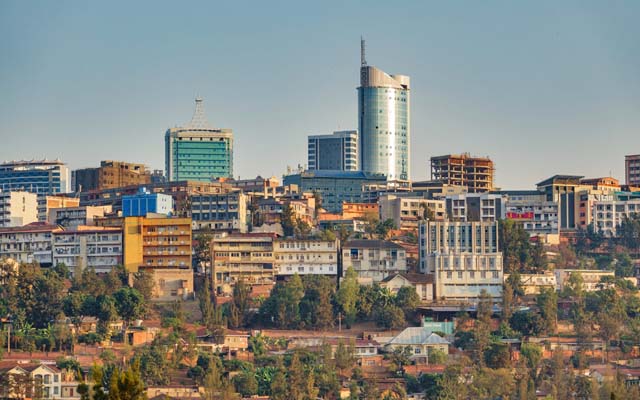
The Rwandan capital of Kigali will host the World Travel & Tourism Council’s (WTTC) Global Summit in 2023, marking the first time the event will visit Africa.
Rwanda, the home of the International Gorilla Conservation Programme, will showcase the power of sustainable tourism to protect biodiversity and create thriving communities.
The WTTC Global Summit in 2023 will be hosted by the Rwandan capital of Kigali
Julia Simpson, WTTC president & CEO said: “We are incredibly excited that Rwanda will host our next Global Summit in 2023. An amazing country famous for its conservation work, Rwanda is building its reputation as a must-see destination.”
More than 250 media delegates from around the world attended this year’s summit, with thousands globally watching remotely.
Under the theme Travel for a Better Future, the closing session in Riyadh, Saudi Arabia focused on the value of the sector, not only to the global economy, but to the planet and communities worldwide too.
Silversea Cruises has returned to ocean sailing in the waters of the Asia-Pacific region after more than 1,000 days.
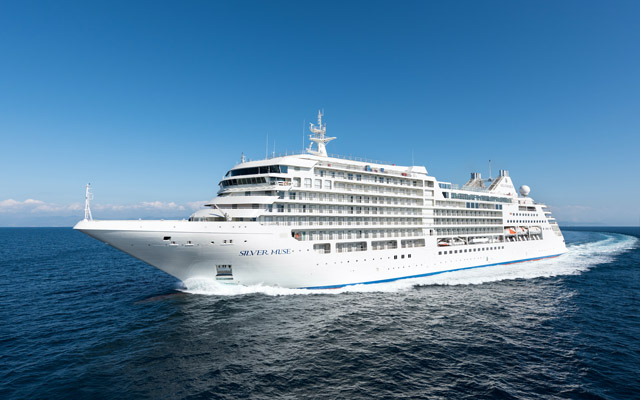
With Silver Muse having departed on an 18-day voyage from Singapore to Sydney on December 2, it marks the highly anticipated return of ocean cruising in the region, including Australia.
Silver Muse returns to sailing in the waters of the Asia-Pacific region
Adam Radwanski, managing director, Asia-Pacific, Silversea said: “Silver Muse is our first ocean liner in the Asia-Pacific seas in more than 1,000 days. We will have three ships in the Asia-Pacific this season, reflecting a significant commitment to the region.
“Silversea is investing heavily in the Asia-Pacific and has seen tremendous growth in this market, and we predict a long and successful return to these seas.”
The decision to depart from Singapore is a confirmation of Silversea’s commitment to the region and partnership with the Singapore Tourism Board (STB). This includes its largest deployment of ships for the luxury cruise market in Asia, including the inaugural calls of its newest ship, Silver Nova, which is slated to set sail from Singapore in 2024.
Jacqueline Ng, director for cruise, STB said: “We are very excited to announce this first-ever partnership with Silversea Cruises. Their presence in the region will further strengthen South-east Asia’s attractiveness as a cruising destination.
“Silversea Cruises will be instrumental in growing the appeal of luxury cruising for many travellers from Asia. We look forward to an exciting calendar of itineraries for the region in the coming years with Silversea Cruises.”
Joining Silver Muse in Australia from the Silversea fleet is Silver Whisper, arriving in December, followed by Silver Shadow, arriving in Sydney next January to commence the World Cruise 2023. It will also be the first time a Silversea World Cruise has departed from an Australian city.
The Lux Collective has unveiled four innovative projects launching in 2024 for its luxury flagship brand Lux* in destinations such as the Middle East, Vietnam and southern France.
In the Middle East, Lux* Al Jabal is a 45-key hillside retreat sitting atop the beaches of Khorfakkan and Luluya, overseeing the expansive Gulf of Oman. Located on 18.7 hectares of land, the resort will offer curated menus with high-quality local ingredients and the brand’s signature Keen On Green wholesome vegan cuisine.
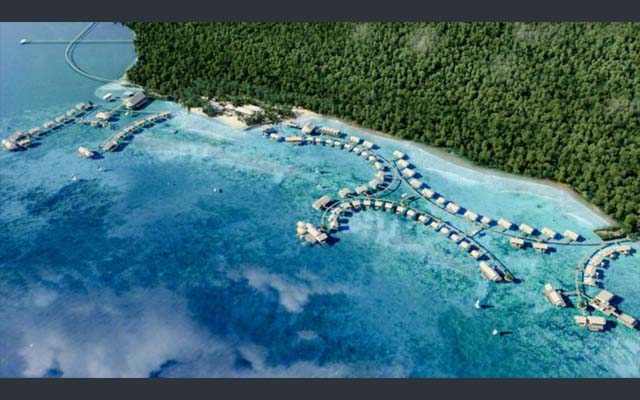
Luxnam* Phu Quoc will open late 2024
It will feature one- to three- bedroom suites and even a royal suite with a private pool and butler service. Guests will have exclusive private beach access, dining options, spa and wellness treatments, children’s activities, and experiences to connect with the local culture and community.
Lux* Al Bridi will overlook 1,690 hectares of conservation in the Sharjah safari project in the city of Al Dhaid, the largest safari in the world outside Africa. It will comprise 35 tented safari-style private retreats, spa and conservation-focused discovery centre. There is even the city’s first petting zoo, Al Dhaid Farm.
Over in South-east Asia, a one-of-a-kind overwater retreat awaits with Luxnam* Phu Quoc in Vietnam. The 126-villa-only resort will perch above the waters and coral reefs of Kien Giang Biosphere Reserve with the brand’s sustainability DNA incorporated throughout the dragon-shaped resort.
With a choice of 109 overwater villas, 13 beach pool villas, two penthouses and two beachfront pool mansions, Luxnam* Phu Quoc will offer facilities such as restaurants, spa, fitness centre, four swimming pools and a children’s playground.
The Lux Collective will also turn its head to Europe with the opening of Lux* Marseillan, France in 2024.
“(Lux*) redefine(s) the modern style of luxury and (is) excited to expand our global footprints into new awe-inspiring destinations set in secluded nature. We will continue to create extraordinary experiences for our guests through elevated shining service, beautifully designed spaces, and aspiring escapes,” said Paul Jones, CEO, The Lux Collective.
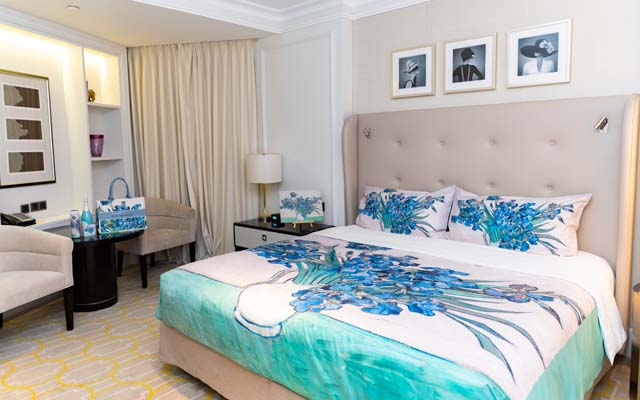
The Langham, Hong Kong, together with Klook, has brought back the Van Gogh-themed Staycation Experience.
With guest rooms and suites transformed into living canvases of the artist’s three most famous works – The Starry Night, Irises and Sunflowers – guests can immerse themselves in the specially decorated rooms of the artist’s impressionist works as well as indulge in an afternoon tea experience at the hotel’s Palm Court.
The Langham Hong Kong’s Irises-themed Deluxe City View Room offers guests an immersive experience
A highlight of the staycation experience is the twinkling canvas of stars projected on the ceiling, allowing guests to stargaze before falling asleep – another is the augmented reality painting presented in the room.
There are also souvenirs such as a themed handbag, bottle of sparkling wine, and smart thermal vacuum flask for guests to bring home.
The Van Gogh Staycation is priced from HK$1,425 (US$183) per night and up, depending on the room chosen, and includes one night’s accommodation, breakfast for two at The Food Gallery and a special Van Gogh-themed gift.
The Van Gogh Afternoon Tea at Palm Court is HK$798 for two persons, and serves scones, clotted cream and rose petal jam with premium loose-leaf tea.
Both the staycation package and the afternoon tea are available from December 1, 2022 to February 28, 2023.
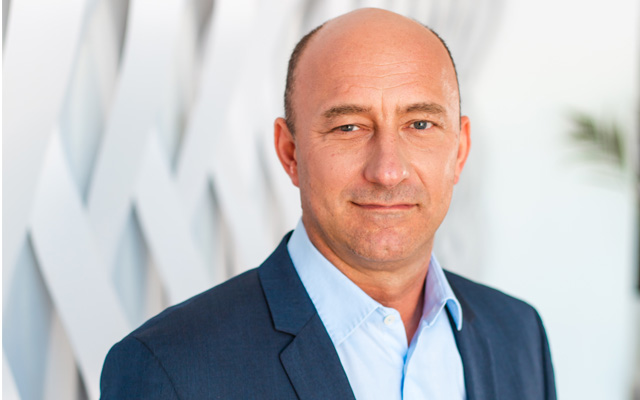
Olivier Monceau has been appointed as Club Med’s new general manager of Singapore and Malaysia.
His priorities will be to guide the team through the next phase of strategic brand growth within the region and lead his team to deliver effective and targeted end-to-end omni-channel experience to clients that synchronises consideration and conversion to grow top line and client acquisition.
The French national was previously general manager of Club Med Russia.
Asia-Pacific’s travel recovery has taken a slower pace compared to Europe and the US, allowing most destinations, airports and airlines in the region to avoid the chaotic scenes seen this summer at high traffic airports from Amsterdam to Miami, and to learn lessons on ramping up for the year-end travel peak.
Singapore Changi Airport is well acquainted with large crowds, having handled 68.3 million passengers in 2019. Since July this year, the air hub has averaged 3.4 million passengers per month compared to the 2019 monthly average of 5.7 million.
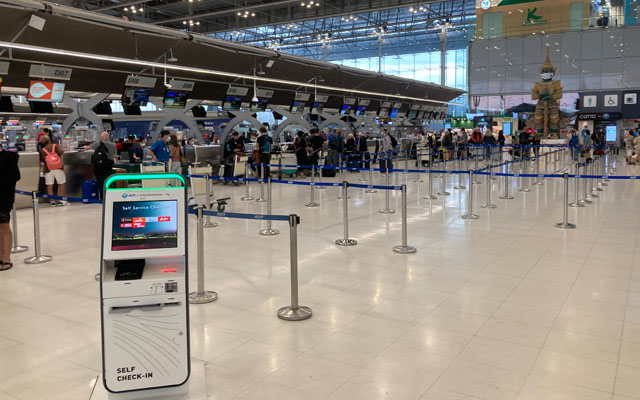
With sufficient manpower and the help of technology, the immigration process is a breeze for travellers; Suvarnabhumi Airport pictured (Photo: Michael Doran)
When asked how well prepared the airport was for the end of year and Lunar New Year rush, Changi Airport Group’s senior vice president airport operations management, Damon Wong, told TTG Asia that it is working with partners to ensure sufficient manpower is at every passenger touchpoint and that technology has a big role to play.
“The majority of our departing passengers can use our suite of self-service options, including automated check-in kiosks, bag-drop and immigration gates,” he said. “Our auto-clearance immigration lanes have a biometric system in place that uses face and iris recognition to match passengers with their travel documents.”
It is this combination of technology and trained staff that Singapore Changi Airport is relying on for the holiday season, when the airport expects to be operating at up to 80 per cent of its pre-pandemic levels.
A similar combination was in plain sight at Bangkok’s Suvarnabhumi Airport. When TTG Asia recently caught an international flight from the airport, it took just 20 minutes to complete the check-in, immigration and security checks process.
While not every passenger used the automated check-in and bag drop units, their impact on the traditional check-in desks was obvious. Check-in queues were almost non-existent, and when technology got the better of some travellers a helpful staff member appeared to render assistance.
Parashos: having a mix of both (staff help and self-check-in) allows travellers to choose how they want their service delivered
In October, Australia’s Melbourne Airport handled 2.57 million passengers and reached 78 per cent of pre-pandemic traffic numbers. Australia’s main airports are bracing themselves for an exceptionally busy holiday season, the first restriction free travel peak since 2019.
After Saturday’s launch of Qantas’ nonstop Melbourne to Dallas route, TTG Asia met with the airport’s chief of aviation Jim Parashos. He said the airport has rebuilt its workforce and will have extra staff rostered on during peaks to ensure passengers get smoothly through the airport.
“We’re also working with the airlines on gate allocation to spread arrivals and departures across each terminal and reduce the likelihood of crowding,” he added.
Security screening is often a pinch point, and Melbourne has revamped its Terminal 3 and 4 facilities with new technology, allowing passengers through without the need to remove laptops or aerosols from their bags.
Self-check-in kiosks are important, both for people wanting to do it themselves and for taking heat off the traditional check-in desks. Parashos said Melburnians were early adopters of the technology as it has been used on domestic flights for some time.
“Some people expect the service and the red carpet but others want to get through as quickly as possible, so having a mix of both allows travellers to choose how they want their service delivered,” he said.
Having a fully functioning airport is a good start but airlines also have a role to play in frictionless travel. Singapore Airlines (SIA) has bounced back quicker than most airlines, seizing opportunities to restart services as soon as border restrictions are eased.
Majority of passengers at Singapore Changi Airport can use its suite of self-service options
SIA told TTG Asia that SIA and Scoot combined are operating about 68 per cent of their pre-pandemic capacity. This is expect to rise to around 76 per cent in 1H2023. Karl Schubert, SIA’s regional manager public affairs and government relations, told TTG Asia that SIA has reduced many of the touchpoints along the journey.
SIA has installed self-check-in kiosks and automated bag drops at selected airports, including for flights from Singapore. Passengers departing Singapore on a single-sector flight can also generate their bag tags through the SingaporeAir Mobile app (subject to regulatory requirements).
“Passengers can view the inflight menu on the app or online before travel or onboard via the inflight Wi-Fi,” he explained.
“They can also use their devices to connect to and navigate the KrisWorld IFE to set up their list of favourite movies, TV shows and audio before travelling.”
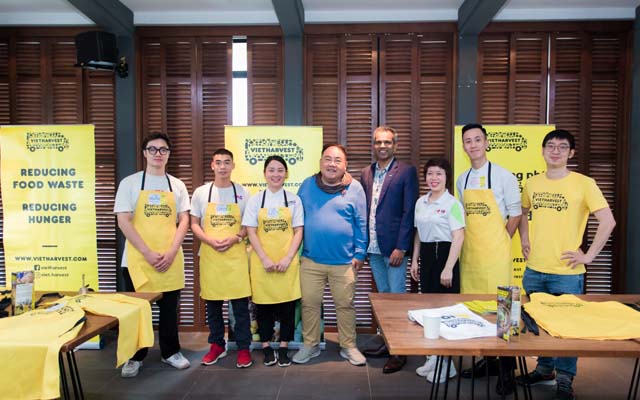
IHG Hotels & Resorts has partnered with VietHarvest for a twofold purpose – to provide food to communities most in need in Vietnam using the surplus food from its hotels, and in doing so, prevent food wastage, as well as educate the communities on food security and sustainability.
Committing 15 of its hotels in the country, with another 22 in the pipeline, IHG will support VietHarvest’s Food Rescue programme via a charity network starting in the Hanoi area.
IHG will support VietHarvest in reducing food waste and hunger among communities in Vietnam
IHG has also pledged funds to enable VietHarvest to expand logistics and operational support in Hanoi, scale up food rescue and its charitable operations, and enable it to deliver more than 10,000 meals to underserved communities.
This working relationship is an extension of an ongoing partnership between IHG and OzHarvest in Australia which was formed in 2019.
Jimmy Pham, co-founder, VietHarvest, said: “Our mission at VietHarvest is to reduce food waste and hunger and we need partners such as IHG to embark on this journey with us. Our approach is unique in Vietnam, providing businesses with a solution to divert waste from landfill, reduce carbon emissions and tackle social challenges.
“We believe that through strong partnerships, we can minimise the social and environmental impact of food waste and build awareness of this important topic.”
Rajit Sukumaran, managing director, IHG Hotels & Resorts, South East Asia and Korea, commented: “Our new partnership with VietHarvest will help us in two important areas – improving the lives of 30 million people in our communities around the world, and transforming to a minimal-waste hospitality industry.”
IHG’s Hanoi-based hotels – InterContinental Hanoi Westlake and InterContinental Hanoi Landmark72 – are already actively involved and supporting VietHarvest.



 I tried out co-living for the first time recently. Yes, it’s true that what hotels are trying to do today – using technology to reduce operational costs, going local or being in the neighbourhood (even if they aren’t), getting strangers to socialise with one another – the co-living model has done it first, and done it well.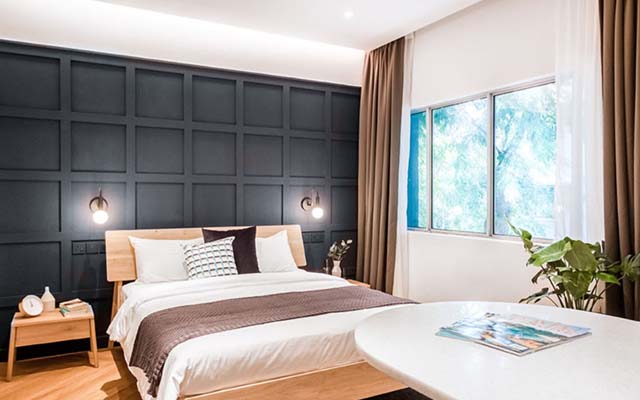
 The French national was previously general manager of Club Med Russia.
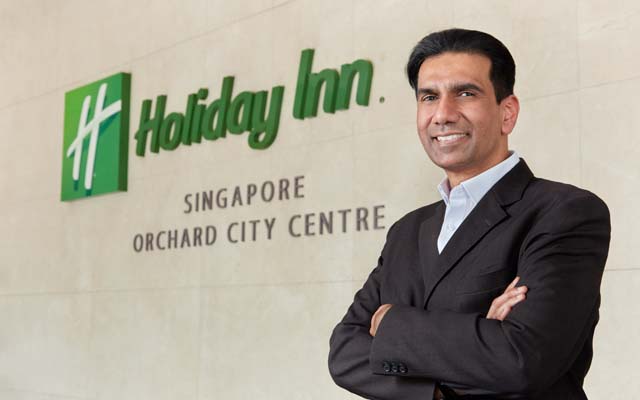 He was most recently general manager of Crowne Plaza Bandung in Indonesia.