

People with disabilities face inflated travel insurance costs: Valuable 500

New research from the Valuable 500, conducted with Opinium, reveals that disabled travellers are paying 8,060 yen (US$58) more than non-disabled travellers for travel insurance, a significant premium compared to those without disabilities or medical conditions.
People with disabilities have to factor in extra costs while planning their holidays, and face discriminatory insurance quotes to ensure their needs are covered. The survey findings come at a time when inflation is placing undue pressure on those with disabilities, who already face significant additional costs in their day-to-day lives.
The research also looked at the other barriers disabled tourists face while travelling, including time inequity, digital accessibility, a lack of disabled representation, lack of inclusive design, and lack of knowledge of disability and how to meet the needs of customers with disabilities.
Four in five listed at least one challenge they faced while travelling due to the agent or provider they were using not being accessible to disabled people. One-sixth of disabled people reported feeling unsafe and scared when travelling.
As a consequence of this, feelings of embarrassment, isolation and being disregarded were also felt by a quarter of the 500 China-based people with disabilities that were surveyed and nearly a quarter felt ignored.
The findings raise questions around the accuracy of insurance algorithms for disabled customers – and whether they are providing disproportionately high quotes for those with declared disabilities.
The financial penalty of insurance that disabled customers must face to go on holiday is another example of how people with disabilities are overlooked and underserved by the travel industry, and frequently find themselves in desperate situations while travelling.
The travel industry should consider making small, achievable changes that have a big impact on their customers with disabilities, like ensuring their websites are digitally accessible for all, and providing staff with appropriate training to cater to all needs – including both visible and non-visible disabilities.
Caroline Casey, founder, Valuable 500 commented that the global spending power of people with disabilities is estimated to be $13 trillion annually, and “the business case for the travel industry to put accessibility first, and not as an afterthought is absolutely imperative”.
She added: “This can be rectified by putting disabled staff and consumers at the heart of the travel business. If you put inclusive and accessible design at the heart of the business, it not only gives access to the disability market but it’s better for everyone.”
Kathy Martinez, vice president for global disability inclusion at Expedia said the company is committed to creating a more open world and lessening equity gaps.
“Disability is a natural part of the human condition. Everyone should have the right to travel, no matter their ability.”
Istanbul Airport is world’s first accredited accessible airport

The İGA Istanbul Airport has become the first airport in the world to be accredited under Airports Council International (ACI) World’s new Accessibility Enhancement Accreditation programme.
Launched earlier this year, the first-of-its-kind programme was designed to help airports measure, evaluate, and improve their accessibility management and culture, providing a continuous path of improvement in the area of accessibility for passengers with disabilities.
The accreditation was developed as a collaboration between accessibility advocacy groups, airports, industry partners, and ACI.
Luis Felipe de Oliveira, world director general, ACI said: “Air travel accessibility continues to be a priority for the industry, and this has been reflected in our recent advocacy work with governments through the International Civil Aviation Organization (ICAO) as well as the resources we are developing for airports.
“The input from the accessibility community was absolutely crucial for this programme as we work to make an air travel system for all people – one that is equitable, inclusive and accessible. We hope to welcome more airports in the coming year.”
Kadri Samsunlu, CEO, İGA Istanbul Airport said: “We view accessibility as a fundamental human right.
“We are proud of being the first airport in the world to be accredited with the ACI Accessibility Enhancement Accreditation programme and we will continue to improve accessibility on an ongoing basis, stand in solidarity with all local and international disability communities and advocate inclusivity and accessibility.”
WorldTicket Solutions rolls outs new initiatives for 2023

WorldTicket Solutions is introducing a number of initiatives in 2023, including W2 NDC and its own W2 UATP card.
Copenhagen-based WorldTicket, which offers “channel agnostic and holistic” distribution solutions for airlines and rail operators, is in 190 markets and collaborates with 85 carriers worldwide.
It is available in all major GDSs under the marketing carrier codes W2 (FlexFlight) and W1 (WorldTicket) respectively.
Peer Winter, vice-president-commercial, said TMCs, OTAs and travel agencies could use W2 to validate many carriers, such as TAP (Air Portugal) or Condor, which would otherwise not be available in their respective markets for ticketing and settlement via BSP.
Winter added: “The possibility of issuing one ticket for the booked segments of two airlines on our W2 ticket stock, which do not have an interline agreement, helps to decrease complexity in terms of interline ticketing for our travel agency partners.”
The W2 UATP card, he shared, would allow travel agencies to pay for W2 tickets and all UATP merchant airlines, including benefits such as accelerated refunds, and WorldTicket would be launching a “closed user group marketplace, offering travel agencies exclusive benefits such as frequent competitions and raffles in 2023”.
In a new collaboration with sister company AeroCRS, OTAs and aggregators in Asia can have exclusive access, via API, to more than 90 carriers hosted on the AeroCRS PSS platform AeroCRS Network.
WorldTicket, which has representation in Bangkok and Beijing, has seen South-east Asia bookings pick up strongly after the lifting of pandemic restrictions.
Winter noted: “Currently about 20 per cent of all global W2/W1 bookings, including issued tickets on W2, are from Asia and we expect very strong growth in terms of market share especially in the next three years.”
Winter pointed out WorldTicket had enhanced its presence in TravelSky in preparation for the opening of the Chinese market.
“Collaborating with Deutsche Bahn as their sole partner in the GDS will result in a lot of additional bookings with our Chinese Airline partners, but not limited to China Southern, China Eastern and Air China in terms of rail and fly.
“Furthermore, we will soon be available also via Infini (computer reservations system) in Japan. We just went live with Vistara from India for both W2 ticketing and rail and fly, and many more airlines from Asia will be coming up throughout 2023,” he said.
Growing extended stay wave lifts PPHG’s expansion

Pan Pacific Hotels Group (PPHG) will add more than 4,000 keys to its serviced suites portfolio by 2023, aided by fresh openings in key gateway cities such as Bangkok, Hanoi, Jakarta, Kuala Lumpur and Nairobi.
The latest wave of expansion is said to be catalysed by strong performance in the extended stay segment, according to CEO Choe Peng Sum.
“The extended-stay segment has continued to bring us strong performance, even more so in the last two years. We foresee that this market will continue to grow as demand increases for corporate long-stay and relocation in regional business hubs,” said Choe.
“Our expansion secures our position in key gateway cities and prime locations around the world, giving us the edge to capture the burgeoning long-stay demand in developing markets and key business hubs.”
PPHG’s serviced suites portfolio most recently presented Parkroyal Suites Bangkok on November 15. It will be joined in a few days’ time by Pan Pacific Serviced Suites Kuala Lumpur, opening December 1.
The portfolio will welcome even more additions come 2023 – Pan Pacific Serviced Suites Nairobi and Parkroyal Serviced Suites Hanoi in early-2023, and Parkroyal Serviced Suites Jakarta in July 2023;
Pan Pacific Serviced Suites Nairobi is the company’s first foray into Africa, while Parkroyal Serviced Suites Jakarta is its first in Indonesia.
Roseate Hotels & Resorts to open hotel at Noida International Airport
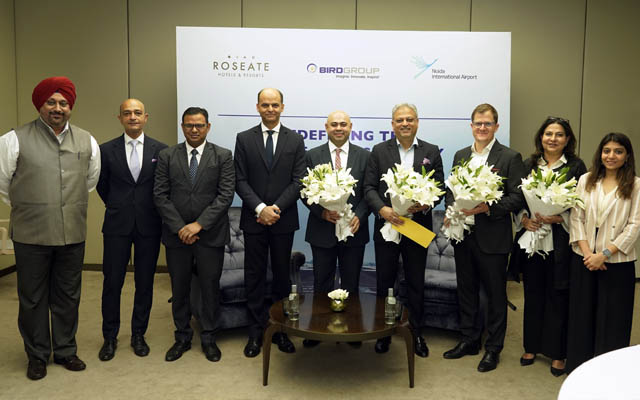
Roseate Hotels and Resorts, owned and operated by Bird Group, has won the bid to develop an airport hotel at Noida International Airport, the upcoming greenfield airport in Delhi NCR.
The 220-key hotel will feature intelligent technology like online check-in and check-out, instant online room allotment and smartphone room access designed to cater to the evolving demands and expectations of global leisure and business travellers.
Located in close proximity to the airport terminal – the first step towards building Noida International Airport as a business and leisure centre for the region – the hotel will offer a suite of banquet, dining and wellness spaces, as well as a fitness centre.
A spokesperson from Roseate Hotels & Resorts shared: “We want to build a property that brings a world-class experience to our guests from India and abroad with customer-focused efficiencies. We are looking forward to showcasing a world-class hotel built keeping sustainability and cutting-edge technology at the helm.”
Christoph Schnellmann, CEO, Noida International Airport, said: “Roseate Hotels understand the needs of Indian customers, come with a rich experience in managing airport hotels, and share our ethos of a digital-led experience and sustainable infrastructure that we hope will be an extension of the experience we aim to provide at the airport.”
“The hotel will be a catalyst for (the new airport) to become a leading destination for travel, leisure, business, shopping, entertainment and stay, with hassle-free multimodal accessibility.”
Roseate Hotels & Resorts by Bird Group has a collection of seven luxury hotels across India and the UK.
Avana Retreat takes yoga to the mountains

The new 36-villa Avana Retreat in Mai Chau, Vietnam has unveiled H’mong Cottage, a yoga and meditation centre that boasts panoramas of mountain scenery.
Perched 450m above sea level, the centre’s design pays tribute to the local H’mong community, with thatched palm-leaf roofs, sliding walls, and floor-to-ceiling glass panels that slide back for natural air conditioning.
Guests can enjoy complimentary sessions at the new centre with advance reservations required. Sessions comprise hatha yoga, yin yoga, singing bowl meditation and sleeping meditation.
Private sessions are also available for an additional fee.
For more information, visit Avana Retreat.
Outrigger Mauritius Beach Resort welcomes new DOSM and GM

Outrigger Resorts & Hotels has appointed Rory Campbell as director of sales and marketing and Michael Gaarde-Nielsen as general manager for Outrigger Mauritius Beach Resort.
In his new role, Campbell will be responsible for the development and implementation of internal and external sales and marketing strategies and related plans to maximise the resort’s revenue market share and optimise profitability for all source markets.
He was recently area director of sales and marketing for the former Outrigger Laguna Phuket Beach and Outrigger Koh Samui Beach Resorts.
Gaarde-Nielsen has extensive resort leadership experience in Europe, the Middle East and South-east Asia, and will be responsible for all aspects of Outrigger Mauritius Beach Resort operations.
He was previously general manager at Centara Hotels and Resorts in Phuket and Krabi.
Further East presentation spotlights equality in hospitality

Diversity, Equity and Inclusion (DE&I) was one of the key topics during the third edition of Further East, which returned to Bali earlier this month from November 7-10.
In one presentation, Business Strategy 101: The Road to Diversity, Equity and Inclusion by Paula Newby, the joint CEO of Predixa shared with the audience that moving forward, DE&I needed to be considered.
“There are three elements describing the perfect storm: the stakeholders’ pressure – this includes employees, suppliers, customers, business partners, investors and government, the Sustainable Development Goals (SDG) and the economic situation that we keep hearing every day.”
Explaining the employee element, Newby said the millennials and Gen Z would represent 75 per cent of the workforce by 2035. The pandemic had given them time to sit and consider their priorities and they want to work where they are valued, with organisations that are sustainable and are doing good to the society and the planet.
She noted: “Research shows that if you have diverse teams comprising of gender, age and geographic sharing ideas, you get 87 per cent better decisions and 60 per cent better results.”
She also quoted another research conducted in 2019, surveying 2,700 travellers from the US, the UK and Canada who were using airlines, hotels and cruises, on how the impact of DE&I has affected their decisions on travel providers.
The result showed that 56 per cent of respondents said it was important when doing the booking while 50 per cent were willing to pay a premium of five to 20 per cent. While 60 per cent said it increased loyalty to the organisation, 60 per cent expressed needing it to align with their own personal values, with 40 per cent saying they would switch provider if they did not see it.
The World Economic Forum projected that if the gender parity at work set by the SDG were achieved by 2025, this would add US$28 trillion or 26 per cent of Global GDP.
However, the pandemic slowed down some of the SDGs progress and International Labour Organisation estimated that of all the jobs lost during that period, two-thirds of them were women.
Newby explained: “It shows that if you can get those women who lost their jobs back into (the) work force, not only (will we) benefit from their skills but it would be adding to the local GDP.
“As a responsible company, your government would (then want) to see how your organisation helped them achieve the SDG goals.”
The Philippines to host world’s first green travel mart

The ASEAN Centre for Biodiversity (ACB) will co-organise the world’s first green travel mart from March 29 to April 2, 2023 in Silang, Cavite, the Philippines.
The International Ecotourism Travel Mart (IETM) is a historic assembly and world festival that pushes ecotourism for the good of the environment and local community. It is co-presented by the Asian Ecotourism Network (AEN) and the International School for Sustainable Tourism (ISST).
The event is expected to attract buyers and sellers of ecotourism packages from at least 21 countries; companies specialising in ecotourism-related and sustainability-advancing products; participants, speakers and panellists for IETM’s two-day forum and certificate course; and the general public.
Masaru Takayama, president of AEN, said the event would offer attendees a great opportunity to learn and network across cultures.
IETM participants will also gain crucial information through resource speakers on best practices involving ASEAN heritage parks and protected sites, including their experiences on the pathway to recovery after two years of pandemic.
Mina Gabor, chair and president of ISST, stated that ACB’s vital contribution to IETM fast-tracks the event’s goal of protecting the natural environment while uplifting local community welfare.
Mundita Lim, ACB executive director, added that the event “elevates tourism as a leader in promoting the balance between economic development and harnessing nature as a means to overcome current challenges”.
“With IETM 2023, we hope to help jumpstart sustainable economic recovery in the region with the promotion of a greener and biodiversity-conscious tourism industry. We see opportunities for greater participation of local communities, empowerment of local cultures, and enhancing windows for sustainability and continuity,” said Lim.








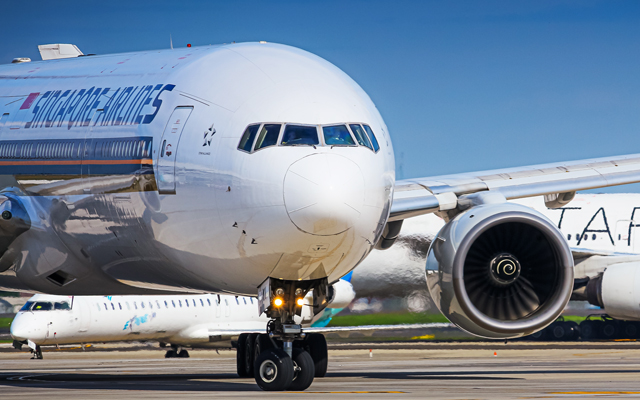
Singapore Airlines (SIA) and Tata Sons (Tata) will merge Air India and Vistara by March 2024, with SIA investing 20,585 million rupees (US$250 million) in Air India as part of the transaction, giving SIA a 25.1 per cent stake in an enlarged Air India group.
SIA intends to fully fund this investment with its internal cash resources, which stood at S$17.5 billion (US$12.7 billion) as of September 30, 2022.
In addition, SIA and Tata have agreed to participate in additional capital injections, if required, to fund the growth and operations of the enlarged Air India in FY2022/23 and FY2023/24, with the amount depending on factors including the progress of the enlarged Air India’s business plan, and its access to other funding options.
The merger would bolster SIA’s presence in India, strengthen its multi-hub strategy, and allow it to continue participating directly in a large and fast-growing aviation market.
Goh Choon Phong, SIA CEO, said: “We will work together to support Air India’s transformation programme, unlock its significant potential, and restore it to its position as a leading airline on the global stage.”
Natarajan Chandrasekaran, chairman of Tata Sons, added: “As part of the transformation, Air India is focusing on growing both its network and fleet, revamping its customer proposition, enhancing safety, reliability, and on-time performance.
“We are excited with the opportunity of creating a strong Air India which would offer both full-service and low-cost services across domestic and international routes.”
India is the fastest growing global economy, as well as the world’s third largest aviation market. However, India also remains underserved with low international seats per capita, signifying significant growth potential.
The combination of Air India and Vistara would bring significant synergies – Air India’s slots and air traffic rights at domestic and international airports that are not available to Vistara, and Vistara’s operational capabilities, customer base, and strong focus on customer service and product excellence.
In addition, it would reinforce Air India’s position as India’s largest international carrier and second largest domestic carrier, allow it to offer more options and connectivity for business and leisure customers, and enable it to compete as a leading global airline.