TTG Asia
Asia/Singapore Sunday, 14th December 2025
Page 622

What’s next for travel?

0

The travel industry in South-east Asia has come a long way since a decade ago. Traveloka was founded to solve the fundamental problem of flight discovery and booking present in Indonesia.

Access to travel alternatives and experiences across the region was also a challenge then. Trips were planned based on word of mouth or reliance on tour operators, focused on classic experiences – visiting Borobudur in Indonesia, swimming in Phi Phi Islands, sightseeing atop the Petronas Towers, cruising along Halong Bay, and cable car dining in Singapore. There was no transparency in flight options or pricing, so oftentimes, consumers are at the mercy of the travel consultant. This gap got us to build a platform that simplifies the painful process of travel booking across South-east Asia.

The next big challenge was financial access. At least 24 per cent of the population in South-east Asia is estimated to be ‘underbanked’. Due to the structural challenges in Indonesia and other parts of South-east Asia, it has been historically difficult to verify creditworthiness, with credit card penetration remaining at 10 per cent or less in Thailand, Indonesia and Vietnam.

Built on the foundation of deep customer trust and data from our beginnings in the travel business, we launched a number of financial services products, including pioneering Buy Now, Pay Later (BNPL) in Indonesia, and later two more products on the back of strong demand, making it easier for customers to enjoy these experiences.

As we move into travel recovery post-pandemic, the next frontier of travel will focus on leveraging technology to bridge the rift between the expectations and reality of travel.

Connected to disconnect
Travel is making a strong comeback. Airports and airlines alike are increasingly confident that they have reached a turning point in their financial recovery. Since the start of the year, travellers are quickly booking their next trips to fulfil their pent-up demand. As more countries fully reopen their borders, dropping all need for pre-departure and on-arrival tests, as well as quarantine requirements for the fully vaccinated, those looking to satisfy their wanderlust are increasingly encountering the nightmare of surging fares, alongside varying levels of concern and hesitance – from the virus to safety.

In order for travel to pick up and make a triumphant return to pre-pandemic levels, the purposeful deployment of technology will be key. Obviously, technology has been embedded in society now and has brought about many conveniences. Even the tourism industry, which has traditionally not been the most tech-connected industry, has stepped up to embrace digitalisation. For example, Changi Airport is making a concerted effort to make tech work harder for travellers, bringing contactless services to the next level. Self-check-in kiosks and baggage drops now operate when a person hovers their finger over a screen, and passengers can use automated immigration gates that scan faces and irises if those biometrics are registered in a passport.

The travellers of today want more holistic and personalised travel experiences. They are digitally engaged, and these connected consumers are expecting a better experience than ever before. The connected consumer is looking for instant gratification, everything and anything should be at their fingertips. If consumers can spend all their time looking at their phones; making comparisons before purchasing the products and/or services, all done on a single platform, fuss-free; travel should be no different. From the moment the individual thinks of taking a trip, to when they return safely to the comfort of their own homes, the new connected travel experience is the way to go.

The reality of travel
In actuality, the market for travel and local services continues to be highly fragmented in South-east Asia. There is a disparity between what discerning middle-class consumers expect, and what service providers can currently deliver. Technology can help to mitigate this problem by helping providers to better understand consumer preferences, and enabling them to create the experiences that they want – this is where the idea of a superapp comes to play.

Superapps need to understand the gaps and unique pain points that customers in each of their markets face, and then solve them. Strong data analytics capabilities are critical in understanding the different needs of consumers across the region, and to tailor and localise products and services accordingly is critical to ensuring success across geographies. Data insights will also play an important role in helping companies to meet and anticipate the future needs of consumers – particularly within the context of structural challenges across South-east Asia.

With this, superapps will connect providers and consumers, channelling feedback and guiding providers to improve their quality of service, which, in turn, establishes superior consumer experiences and gains better traction. Ultimately, with the speed of technological innovation, it is important that we establish clear principles for who we want to be as a global community, and that this is reflected in the technology we develop, and how it is implemented.

Technology must be used to build an equitable world
As we have seen, technology plays an important role in addressing the structural challenges in South-east Asia, such as financial inclusion and access to essential services. It will bring unprecedented opportunities to create greater equity and a better future for millions. But it is also clear that we need to ensure technology is building an equitable future for all; that all people and societies – from developed to emerging economies – are benefitting.

The pace of digitalisation will continue to accelerate and transform how we travel, connect, and live. Greater digitalisation will provide stronger data insights into the unique behaviours of South-east Asian consumers, and lifestyle services will become less fragmented as a result. We expect this to transform the customer experience, by necessitating personalisation never before seen in the world, in turn retaining and attracting customers.

Singaporeans confidence in travel peaks as demand grows: Expedia

0

Expedia’s latest Travel for Real study found that confidence in travel comes with ease of restrictions. Most people feel safe as they are vaccinated (69%) and find testing/entry requirements easier to manage (58%) now that countries have relaxed their entry restrictions.

The Travel for Real study surveyed 1,000 Singaporeans between 18-45 years old who travel for leisure at least once every three years, with an aim to understand what stimulates travel confidence in the post-pandemic world.

Six in 10 Singaporeans considered it safer to travel as restrictions have eased globally

More trips booked as travel confidence increases
When asked about reasons for decision to travel this year, six in 10 Singaporeans considered it safer to travel as restrictions have eased, and countries have started to reopen their borders, with relaxed entry requirements. Travel confidence is evident with more than 52% feeling more confident to travel – 73% plan to travel overseas this summer, with 40% of them having already booked their summer trip.

Singaporean travellers feel safer now that they are vaccinated and know that most travellers today are. 27% and 29% of travellers aged 18 to 25 and 26 to 35 respectively have booked their summer travel plans, while 33% of travellers aged 36 to 45 have made theirs. Younger travellers take a longer time to observe situations in planning their trips.

The common reason for those still hesitant to travel was budget (45%), as travel costs have increased since before the pandemic. This is most common among the 18 to 35 age group where 48% cited budget to be among their top concerns as compared to 37% among travellers aged 36 to 45. More than half of respondents also felt that a refundable/ flexible booking policy helped to boost their confidence in travel.

Longer time-out from reality
Trips are now planned for longer durations. Of the 73% planning to travel this summer, 50% plan to take one trip while 30% are planning to take two trips. Almost 46% would like to have a trip that lasts at least six days. Travellers aged between 18 to 25 are also most keen on taking trips that last six to nine days (31%), or a trip of four to five days (29%). Meanwhile, 37% of travellers aged 26 to 35 are most keen to take a four-to-five-day trip, while 32% of them are keen on a six-to-nine-day trip.

New motivations for travel
Expedia introduced better travel planning tools for travellers to get the best out of their travel investment during the pandemic, and revealed the following traveller planning trends: visiting bucket list destinations, relaxing and doing nothing was at 32%; travellers prioritise personal well-being more now than before; 31% wanted to try a new cuisine or a restaurant never experienced before; and 29% wanted to revisit a place that was closed during the pandemic.

Lavinia Rajaram, Asia head of public relations, Expedia Group, said: “It is encouraging to see Singaporeans finding confidence and feeling excitement about travel again. With many travel restrictions easing over the past months, Singaporeans have been inspired to take to the skies once again and fulfil that pent-up travel desire.”

The 2022 Travel Trends Report released at the start of the year showed travellers were open to last minute trips and had a carpe diem mindset. Fast forward to now, travel behaviours are shifting towards plans that cater to more meaningful experiences for their well-being. That said, the wanderlust for new sensations and discoveries remains.

“Prices are already indicating a huge demand for travel, and planning is going to be key in finding that sweet spot for a good deal,” she added.

Fresh round of mass testing, extended lockdowns hits China

0

Centara plans expansion into China

0

Centara Hotels & Resorts and Luxemon Hotel Group have signed an MoU that will enable both companies to accelerate the growth of their respective brands within China and South-east Asia.

For Thailand-based Centara, the partnership will support its goal of becoming a top 100 global hotel operator within five years.

Centara Hotels & Resorts and Luxemon Hotel Group partner to grow their respective brands in China and South-east Asia; Beijing City pictured

The MoU, which was signed in a ceremony attended by Markland Blaiklock, deputy CEO of Centara Hotels & Resorts, and Liang Xiao Jing, CEO of Luxemon Hotel Group, will focus on brand cooperation.

“For decades, our two countries have enjoyed a warm friendship with strong bilateral trade relations. China has been a priority market for future growth and our new partnership with Luxemon Hotel Group represents a significant step forward for Centara,” said Blaiklock.

Liang added: “I am confident that together we can contribute to the development of tourism between China and Thailand and the hotel industry.”

Sigur Rós takes World Tour to Singapore

0

Sigur Rós, one of Iceland’s most successful acts of all time – with six number ones in their home country and a trio of Platinum albums globally – will bring their World Tour 2022 to Singapore on August 17, 2022 at The Star Theatre.

Tickets for the concert are now on sale, and are priced from S$98 (US$69.70) for a standard seat.

Sigur Rós will perform in Singapore on August 17, 2022 at The Star Theatre

Ticket holders can also purchase admission to the Pre-Show Party at The Star Space Room, where quick bites and drinks can be enjoyed from 18.00 to 20.00 ahead of the performance.

Tickets to the Pre-Show Party are priced at S$150 per person and includes six drink coupons, finger food and a commemorative lanyard and pass that allows access to and from the private Pre-Show Hospitality Suite at The Star Theatre.

Green and gorgeous

0

The new profile of Mindful Explorers – defined as people who seek to contribute to regenerative and sustainable means of tourism – will find fulfilling days in Singapore. The destination has set off a tourism strategy that is resulting in holistic and sustainable visitor experiences across all aspects and touchpoints of the journey.

Cherie Lee, director, strategic planning and incentive policy, policy and planning group with the Singapore Tourism Board (STB), told TTG Asia that the country is transforming into a sustainable urban destination – a City in Nature, where large experiences come with small footprints.

South-east Asia’s first-ever gamified electric Go-Kart circuit, HyperDrive, will open its doors next year (Photo: Shangri-La Group)

She explained: “This vision differentiates Singapore from other sustainable destinations, by making us a destination where it is fun to travel sustainably, and where post-pandemic travellers can rest and recharge with complete peace of mind.”

Indeed, from how they play and what they eat, to where they stay, eco-conscious travellers can go green all the way.

Minimal carbon footprint does not mean minimal fun, as HyperDrive is determined to show. Said to be South-east Asia’s first-ever gamified electric Go-Kart circuit, HyperDrive will open its doors next year to racing enthusiasts. Housed within Shangri-La Group’s first standalone lifestyle and entertainment precinct, Palawan Sands on Sentosa, the attraction spotlights an impressive eco-friendly fleet of electric karts. The zero-emission vehicles run smoothly and quietly without noise pollution.

Speed demons zipping around the three-level indoor track have the option to level up their racing experience with a “Game of Karts” that will transport them into the realm of virtual gaming.

Drivers can also turbo-charge their racing experience or sabotage competitors within an interactive experience heightened with light and sound effects, revealed a Shangri-La spokesperson.

Meanwhile, outdoorsy travellers will be heartened to know they are doing their part to protect wildlife every time they visit the parks at Mandai Wildlife Reserve. The reserve’s steward, Mandai Wildlife Group, commits a portion of its revenue to support conservation projects in Singapore and across South-east Asia.

Mandai Wildlife Group is also actively striving to further reduce absolute emissions to achieve its aim of becoming a carbon neutral precinct by 2024.

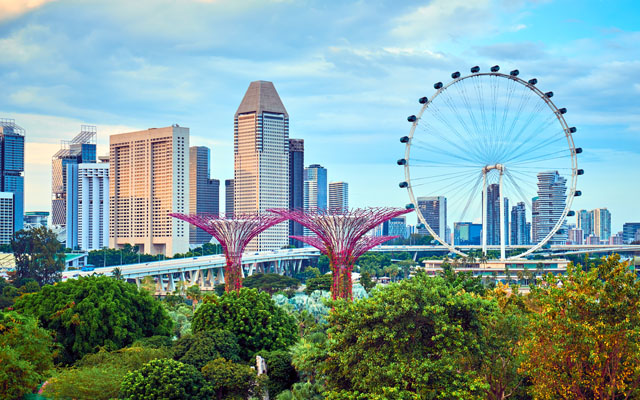
Visitors in awe of the Supertrees at Gardens by the Bay may be delighted to know that these mega structures are more than just photography landmarks. They act as air venting ducts for nearby conservatories, dispersing heat. Seven of the Supertrees are fitted with solar photovoltaic systems that convert sunlight into energy.

In fact, the popular horticultural attraction houses over 1.5 million plants in its gardens to help offset carbon dioxide in the city.

Supertrees at Gardens by the Bay are embedded with sustainable features, of which seven are solar photovoltaic systems

For more green draws, eco-conscious tourists can hop on the guided Pulau Ubin Island Bike Tour, where they will discover various flora and fauna across the rural island and learn about the mangrove ecosystem at Chek Jawa Wetlands – all that on a sustainable vehicle no less.

Sustainable tourism spills into arts spaces here in Singapore. When art aficionados visit the iconic lotus-shaped ArtScience Museum at Marina Bay Sands, they are supporting an environmentally-conscious infrastructure. The museum is the first in the Asia-Pacific to obtain the LEED Gold certification. Its key green features include infiltration of natural daylight into the interior and a Rain Oculus which recycles nearly 1.4 million litres of rainwater annually.

What is destination discovery without food? In Singapore, sustainable dining options can feed guilt-free indulgences.

Open Farm Community is Singapore’s pioneering urban farm and restaurant concept, Michelin-starred Labyrinth spotlights local produce, and Scaled by Ah Hua Kelong sources fresh seafood from local kelongs and farms.

Getting a tipple can quench green thirst too. At eco-friendly bar, Graft, a series of cocktails, beers and mocktails are on draft, allowing customers to pull by hand themselves and reduces the reliance on manpower.Drinks also come served in recycled sake, beer, and wine bottles.

Native cocktail spot takes on a zero-waste approach, deploying ants and fermented grasshoppers in its drink-making process.

At plant-based resto-bar, Analogue, guests can even shop for sustainable furniture.

With plenty of sustainable accommodation options in Singapore, Mindful Explorers can rest assured of a responsible stay. Many eco-conscious hotels are partially powered by solar energy, their single-use plastics replaced by reusuable alternatives, have food waste processes as well as energy-efficient systems.

For instance, Singapore’s first garden-in-a-hotel, Parkroyal Collection Marina Bay, Singapore, places travellers amid lush foliage that operates as natural purifiers and sinks for carbon dioxide. The eco-friendly hotel is home to one of the largest urban farms in the city-state, providing 20 per cent of the hotel’s food supply. With more than 60 varieties of vegetables, herbs, fruits and edible flowers, the urban farm forms the backbone of the hotel’s farm-to-table, farm-to-bar, and farm-to-spa concepts, reducing both the hotel’s dependence on the food supply chain and carbon footprint, according to general manager, Melvin Lim.

Gino Tan, country general manager, The Fullerton Hotels and Resorts, said the recently-revamped Fullerton Farm, located at The Fullerton Hotel Singapore, also features a wide variety of herbs and spices which are used by its chefs for creative dishes, cocktails and garnishes.

Hotel guests can savour a pure vegan menu – made from the farm’s fresh organic produce – by ordering the plant-based Afternoon Tea set, available at The Courtyard at The Fullerton Hotel Singapore as well as The Landing Point at The Fullerton Bay Hotel Singapore.

Sustainable stay experiences are increasingly extending beyond the hotel’s confines, through curated learning opportunities. Complimentary Fullerton Farm Tours, led by an experienced horticulturist, for example, invite hotel guests to learn about biodiversity.

Resorts World Sentosa’s new RWS EcoTrail provides guests a behind-the-scenes look at the integrated resort’s sustainability highlights, such as its 29,000m² forest, solar photovoltaic system, and herb garden.

Parkroyal Collection Marina Bay, Singapore is now looking to extend its well-received guided tours to a wider audience, like corporate guests.

Lim said: “This would not only showcase the sustainability aspects of the hotel, but also reassure corporate organisations that their choice of accommodation supplier and event venue partner contributes to making their own value ecosystem a sustainable one.”

The talent challenge: It is time for the industry to emphasise that service is not servitude

0

The latest UNWTO World Tourism Barometer recorded a 182 per cent year-on-year increase in international tourism for the January-March 2022 period, with destinations everywhere welcoming some 117 million international arrivals compared to 41 million in 1Q2021. In March alone, there were 47 million arrivals.

But you don’t need the stats to know that travel recovery is gaining pace. Airports, hotel lobbies, attractions and restaurants are bustling again. My social media feed in the last two months has been bursting at the seams with photos and videos of friends getting back on the road for meetings, events, family reunions and leisure retreats. It is fabulous.

Travel and tourism stakeholders everywhere have been preparing for this recovery, even as soon as lockdowns were ordered in 2020. Whatever goes down must come up, and it has been reported time and again that businesses have made good use of the travel disruption to review and evolve their operations so that they can hit the ground running once Covid red tapes are removed.

However, even the most well-prepared business owner is fighting a tough battle now to rebuild his team – a challenge that exists in our industry pre-pandemic and has only intensified since many have left their roles and even the industry for good. In an employee’s market, wages have gone up and HR must do much more to retain staff, thus adding to the mounting cost pressure on businesses everywhere.

Travellers today will find that travel isn’t as smooth as they last remembered. Queues to check in luggage or clear immigration are getting longer and moving slower. Delayed hotel check-ins are common, and daily housekeeping may take a little longer to complete. On board flights and at restaurants and attractions, it takes a little more effort to get some assistance.

Tempers are short and complaints are flying fast across social media. Such experiences cast a shadow over businesses’ warm welcome for returning travellers and customers, which is unfortunate because we, in this industry, know how earnestly we have pined for recovery.

It is now a test of patience for both the customer and business operator, and the latter has to find an acceptable balance between digitising processes for efficiency and keeping the promise of hospitality through human touch.

In recent interviews with hospitality leaders, hirers and a hospitality educator, the consensus is that the talent shortage now is an opportunity for travel and tourism businesses to revamp their employment terms and expand career opportunities for their staff.

An improved public perception of service as a career is important. By sending a louder and more positive message about the value of service and the career prospects it brings, the industry will also impress upon consumers that – in the words of Arthur Kiong, CEO of Far East Hospitality – service is not servitude but a respectable passion.

Monaco magic

0

Monaco is shaking off its post-lockdown cobwebs, and is ready to welcome the Asian leisure market after two years with refreshed products and the promise of a luxurious European adventure.

During the pandemic, notable areas such as the Casino Square and Larvotto Beach were given facelifts, while the Monaco Grand Prix, Monaco Yacht Show, and Monte-Carlo Jazz Festival are once again mainstays in Monaco’s busy yearly calendar.

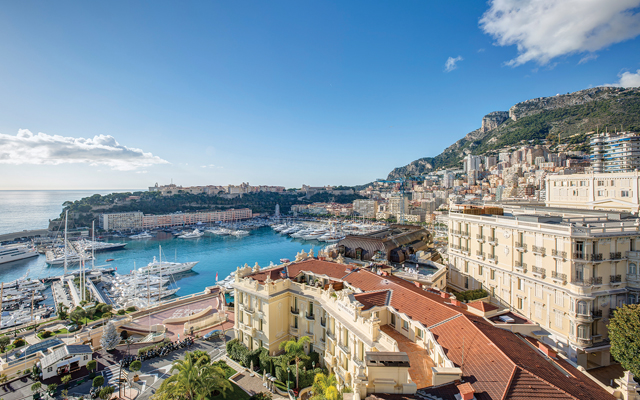
Port Hercule in Monaco (Photo: Benjamin Vergely)

To attract more tourists, Benoit Badufle, managing director of the Promotion Bureau of the Principality of Monaco, shared: “We have also rolled out a series of thematic trips ranging from a friends getaway to gastronomic adventures to appeal to the leisure market.”

That is why Charlotte Harris, managing director of Charlotte Travel, a Hong Kong-based travel agency affiliated with Virtuoso, believes that Monaco will continue to appeal to her clients.

“I think Monaco tourism is doing a great job promoting the many attractive events in the region. Many of our clients are drawn by the unique events and plan their trips around these dates. Monaco is also full of exceptional hotels and high-end boutiques.”

This positive sentiment is echoed by Julia Lai, general manager for Kuoni Tumlare in Malaysia.

“Monaco has always been on the bucket list for travellers. Aside from having an elegant vibe, tourists are curious how such a country with a low population can sustain high living standards and an elegant lifestyle.”

Local hoteliers are eager to promote to various Asian markets, building onto their current sales strategy that in the past two years was largely focused on European markets.

Jesus Scott, director of sales, Hotel Metropole Monte-Carlo, said: “We know that travellers in Asia, especially China, are eager to travel abroad. We will focus our actions on the niche market of HNWI living in Asian capitals, as well as the first-tier cities in China, as there is great potential there.”

For Fairmont Monte Carlo’s director of leisure sales, Koji Ito, the hotel is already welcoming FITs from India, and package tours from Malaysia and Thailand.
However, one of the largest challenges in selling Monaco to the Asian jetset is air connectivity.

“We used to have more Middle Eastern and European carriers flying from South-east Asia to Nice (in France, the main gateway to Monaco), but not all flights have resumed their routes, and therefore capacity is affected,” Lai shared.

To welcome more Asian travellers, Scott pointed out, the “regular airlift to Europe” has to be restored, for example, the direct Air China flight between Beijing and Nice pre-pandemic.

To keep the travel industry abreast of Monaco’s happenings, Badufle shared that “in-person reconnections” with key travel partners, tour operators, agencies, and media in the region are currently happening, having recently visited Indonesia and South Korea.

Ongoing infrastructure projects include the waterfront eco-district Mareterra set for completion in 2025, while the extension of the Grimaldi Forum convention and exhibition centre will finish in 2024.

Looking ahead, Monaco’s Exotic Garden – first opened in 1933 – will reopen in 2023 after a two-year renovation that will enhance its botanical and cultural aspects, as well as offer improved accessibility.

Meanwhile, Monte-Carlo’s iconic Café de Paris – temporarily located within the Hotel de Paris – will also reopen in 2023 after a two-year uplift, which will raise the current brasserie by two floors, as well as introduce a unique rooftop space.

Hotel Metropole Monte-Carlo will also undergo its next phase of renovations, with its restaurant expected to open in spring 2023, and renovated guestrooms in October 2023.

Singapore expects to welcome up to six million visitors this year

0

The Singapore Tourism Board (STB) has forecasted international visitor arrivals (IVA) to be between four to six million visitors this year, following the city’s reopening of its borders on April 1, 2022,

In 1H2022, Singapore clocked 1.5 million visitor arrivals, nearly 12 times more compared to the same period in 2021 (119,000), and tourism receipts (TR) reached an estimated S$1.3 billion (US$925.7 million) in 1Q2022. While IVA and TR remain a fraction of Singapore’s pre-pandemic numbers, STB remains optimistic that tourism flows will recover to pre-Covid levels by 2025.

Singapore Tourism Board remains optimistic that tourism flows will recover to pre-Covid levels by 2025

STB’s chief executive Keith Tan said that the numbers signal “strong pent-up demand”, and underscores Singapore’s continued appeal as a destination. He remains confident that Singapore’s “rich calendar of events, as well as new and refreshed tourism offerings, will continue to attract visitors for the rest of 2022 and beyond”.

Singapore’s top five international visitor-generating markets, accounting for 56 per cent of total IVA from January to June 2022, came from Indonesia, India, Malaysia, Australia and the Philippines. Registering the largest absolute year-on-year growth were Indonesia, India and Malaysia.

The Republic currently boasts a healthy roster of events such as Formula 1 Singapore Airlines Singapore Grand Prix 2022, Tour de France Singapore Criterium, Bloomberg New Economy Forum, and Sail Grand Prix in 2023.

Fresh offerings like Hell’s Museum at Haw Par Villa, the Museum of Ice Cream, SkyHelix Sentosa, and the Avatar: The Experience at Gardens by the Bay later this year are also set to attract more visitors.

Katrina Group appoints COO for hospitality business

0

Katrina Group has named Andreas Lorenz as chief operating officer for its hospitality subsidiary, in a move aimed at rekindling the company’s accommodation business.

In his new role, he will oversee ST Hospitality’s operations while spearheading its expansion in Singapore and beyond, including identifying new properties to manage.

The German joined the company in February this year as general manager of ST Hospitality, Katrina Group’s wholly-owned subsidiary.
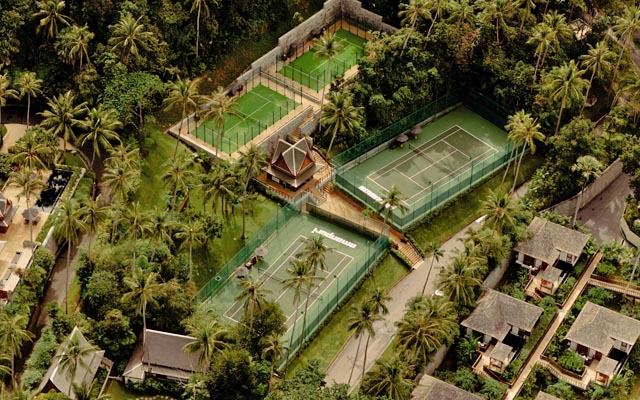
ST Hospitality operates four boutique co-living hotels, a block of serviced apartments comprising 38 units, and more than 50 fully serviced condominium rental units in Singapore. It expects to add more fully serviced condo units and hotel rooms to its portfolio in Singapore before the end of the year.

Before joining ST Hospitality, Lorenz was vice-president of asset management at The Garcha Group. Prior to that, he managed two hotels in Singapore – Six Senses Maxwell and Six Senses Duxton – from 2017 to 2019.