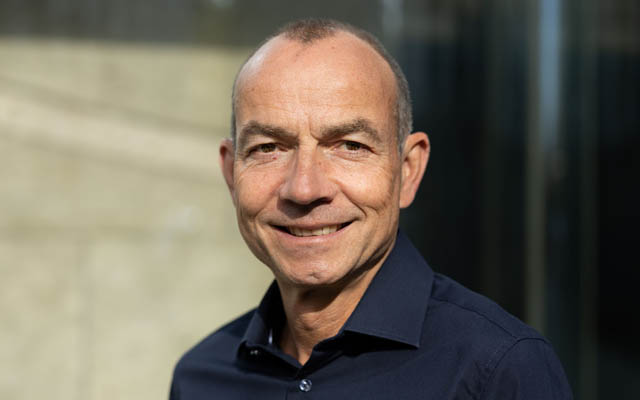
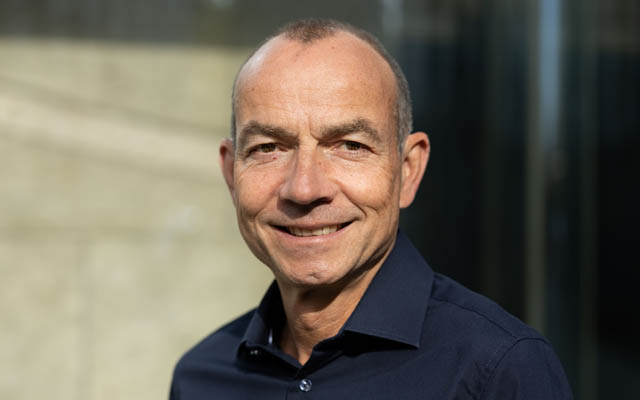
Martin Rinck has been appointed to the executive board by Small Luxury Hotels of the World (SLH).
In this role, he will support SLH’s strategic vision and growth plan for SLH, along with their continued expansion of independently owned and operated properties.
As a seasoned hospitality executive with over 35 years of global experience in strategy, operations, business development, P&L and brand management, he has held leadership positions at some of the world’s largest hospitality companies and brings with him extensive business, talent, and stakeholder management expertise.
Most recently, he was the executive vice president and chief brand officer at Hilton, where he led a portfolio of 18 brands across 6,500 hotels globally, developing and executing the enterprise portfolio strategy, and leading multiple ESG initiatives for the company.
Preparations are underway in Yogyakarta to welcome delegates of the ASEAN Tourism Forum (ATF) 2023, with improvements being made to various tourist attractions, venues and facilities.
For instance, Jogja Expo Center, the official venue for ATF, is currently under renovation and targeted for completion in December 2022.
The welcome dinner for ATF 2023 will be held on the grounds of Prambanan Temple
Other infrastructure improvements include the Malioboro shopping stretch which will introduce a number of electric becak rickshaws, and the Sultan’s Palace museum which is undergoing an upgrade to include 4D technology.
Gusti Kanjeng Ratu Bendara, head of the Yogyakarta Tourism Promotion Board (BPPD) and chairman of the ATF 2023 Committee, shared that the city is keen to showcase its cultural experience to delegates.
That is why the welcome dinner will be held on the grounds of Prambanan Temple, while the closing event will be at the Sultan’s Kraton Palace where a special royal dinner will be served.
In all, ATF 2023 is expected to attract 1,000 delegates, both from Indonesia and overseas.
However, direct air links to Yogyakarta have not been reinstated to pre-pandemic levels. Currently, direct flights to the new Yogyakarta International Airport (YIA) include flights from Singapore (Scoot), and Malaysia (AirAsia and Malaysia Airlines).
Responding to concerns over accessibility, Singgih Raharjo, head of Yogyakarta Tourism Office, shared there will be more direct regional flights starting next month. For instance, Thai Smile will commence operations from Bangkok, while AirAsia plans to mount a Singapore-Yogyakarta service in December.
Singgih added that the government is also working with Indonesian airlines to add more flights from Jakarta and Bali to Yogyakarta. He added that Yogyakarta is also easily accessible from Jakarta and Surabaya by land transport, as well as via trains.
Other preparations include the arrangement of shuttle services for delegates during the summit, as well as transportation from the airport into the city, shared Wayan Suweta Darma, director of Karma Events, the official organiser for ATF 2023.
A total of 10 official hotels and 14 partner hotels will provide accommodation for the ATF 2023 delegates.
Philippine Tour Operators Association have declared Mindanao as a safe destination to promote
Department of Tourism to spur connectivity by improving accessibility and infrastructure
Tourism Promotions Board to work with property development companies for accommodation standards
The Philippine government is paving the way for tourism in Mindanao, a pristine and undeveloped part of the southern Philippines that has had a troubled image.
After several travel caravans to various parts of Mindanao, Philippine Tour Operators Association (Philtoa) president Fe Abling-Yu, concluded that it is safe, and has listed it as one of the new destinations to promote.
Mindanao booths at Philtoa’s 33rd Philippine Travel Mart in Manila
In late September, all five of Mindanao’s regions were present at Philtoa’s 33rd Philippine Travel Mart in Manila, stealing the limelight with their colourful booths and costumes, quality artisanal wares, and tour packages even in areas previously off to tourism.
“Imagine the impact on local communities and their livelihood, on small and medium enterprises, on the local economy, on investments, if Mindanao is given the chance to wield its full tourism potential,” Abling-Yu commented.
The need to change perceptions
While areas of armed conflict still exist, tourism stakeholders need to help change misconceptions and create awareness that Mindanao also has safe tourist spots such as Siargao, Davao, Cagayan de Oro, Camiguin, Bukidnon, GenSan, and Zamboanga.
Recently added to this growing list is the island province of Basilan, which used to have an exaggerated image of violence. Today, demand is growing for tour packages twinning Basilan’s capital, Isabela de Basilan, with its gateway port, Zamboanga City, noted Charles Anthony C Rotoni, senior tourism operations officer, Department of Tourism (DOT) Region 9 (Zamboanga Peninsula).
“When you see Basilan, it is different from how it is perceived. We have tourism circuits that include Basilan for farm tourism, Yakan indigenous culture, gastronomy and its clean, pristine beaches,” said Errold Lim Bayona, tour director of Itravel Tourist Lane and manager of All For South Consultancy.
Bayona said that although his companies are in Zamboanga Peninsula, they are also expanding to the neighbouring island provinces of Basilan, Sulu and Tawi-Tawi because tourism products are already available there.
Zamboanga too, used to have a spotty image many years ago, but successfully transitioned into a safe, popular destination, with varied offerings of nature, secluded pink beach, seafood delights, and cultural heritage from Christianity and Muslim backgrounds, among others.
Rotoni said that apart from Basilan, DOT Region 9 is also starting to promote the cities of Dapitan and Dipolog, both in Zamboanga del Norte. These safe havens have oft been overlooked due to limited access and infrastructure.
“We’re trying to spur connectivity under DOT’s thrust on (improving) accessibility and (building) infrastructure,” shared Rotoni.
For instance, national carrier Philippine Airlines currently flies to various points in Mindanao, and is helping to encourage domestic tourism by adding more flights to and from Tawi-Tawi, Cotabato and Jolo.
Nograles: to make sure that when we say Mindanao is safe, it is safe
Government assistance
For Mindanao to gain a larger foothold on the tourism map, DOT’s Rotoni said they will be pushing for a Northern Luzon Travel Exchange next year for its main domestic source market.
“We see the potential of this market so we nurture and grow it. Tourists who visited are the best bet in telling the story on the ground and world-of-mouth advertising instead of relying on photos and videos,” Rotoni explained.
Tourism Promotions Board (TPB)’s new chief operating officer, Margarita Nograles, added: “We have to make sure that when we say Mindanao is safe, it is safe.”
“A quick solution for us to show to the world that Mindanao is safe is to bring more fam tours and let international tourists enjoy meaningful experiences in our region…. especially now that we’re rooting for sustainable, community-based tourism,” Nograles pointed out.
Stakeholders also understand that Mindanao has miles to go in achieving lasting peace and building tourism hardware.
Hence, apart from destinations that are already known to foreigners like Siargao, its target market is mainly domestic and viable markets in certain Asian countries for halal tourism, and those not sensitive to travel advisories.
This comes as Western countries have red-flagged parts of Mindanao in their travel advisories and travel insurance for their citizens excludes portions of Mindanao.
Regardless, TPB is pushing forward with a Colors of Mindanao campaign to highlight indigenous people, and reiterate that Mindanao is a safe destination for visitors.
Charles Aames Bautista, TPB’s deputy chief operating officer, added that Mindanao is also being explored as a “MICE destination”, which is why the “next MICECON will be held in Davao next year”.
“If it’s any indication, even the private sector is echoing our sentiments. We just had a meeting with a few online platforms and (are) working with property development companies to set the standards for accommodations.
“A lot of travel agents are creating Mindanao tours and circuits but if you don’t have a place to stay, it’s no use. That is why accommodation and food availability are always in conjunction with tourism circuits,” Bautista explained.
Nearly half (46%) of travellers cannot remember which online travel agency (OTA) they used to book their last leisure trip, according to the Modern Retail Study, a new independent research commissioned by Travelport.
This new research study, in partnership with Toluna Research, is to better understand the current online travel retailing landscape and identify gaps in travellers’ shopping experiences among thousands of leisure and business travellers around the world.
Travelport’s Modern Retail Study aims to understand the current online travel retailing landscape and improve travellers’ shopping experience
Over 3,000 travellers from Japan, Saudi Arabia, and the US were surveyed.
Modern retailing demands stellar, memorable experiences
The study results revealed important factors that contribute to brand recall for OTAs, such as the experience of booking. Of all travellers surveyed that could recall the last OTA they booked with, the vast majority (78%) ranked the experience as ‘above average’ or ‘excellent’. While most travellers from the US do not have a preferred OTA (55%), many travellers in Saudi Arabia (63%) and Japan (70%) say they do have a favourite travel site.
Of those travellers that do have a preferred OTA, factors such as ‘a wider range of options’ have fuelled loyalty in Saudi Arabia (54%), the US (51%) and Japan (38%). OTAs are also winning over travellers in Japan with personalised experiences (45%), as well as the ability to ‘easily navigate the site’ in Saudi Arabia (42%) and in the US (40%).
“As one of the first sectors to go digital many years ago, the travel industry has a strong history of innovation,” said Jen Catto, chief marketing officer for Travelport. “However, travellers’ digital expectations have rapidly evolved, far surpassing current travel retailing capabilities.
“Prioritising the needs of our customers to better serve their customers is our priority – agencies need more choice, clear comparison shopping, and easy ways to manage experiences like exchanges. While price is important, these value-add factors create an ‘excellent’ modern retailing experience that stands out and earns loyalty.”
Customers are less price sensitive
Historically, OTAs have been trying to compete on one factor alone – price – but that is not what customers need to remember the experience. Of the travellers who cannot remember the last OTA they used, nearly half (44%) ranked their last experience as ‘poor,’ or ‘below average’. In certain parts of the world, where many travellers in Saudi Arabia (60%) and the US (60%) were shown to be the most forgetful of specific OTA brands they have used, and there was a significant 19 and 27 percentage point gap between recall and an ‘above average’ experience, respectively.
The study indicates that OTAs may be less distinguishable because they have been focusing on the wrong things. While there is a heavy focus on price, that has likely come at the expense of other experience factors that travellers care about when booking a trip. As travellers are using OTA sites for research and comparison, the survey revealed there is a missed opportunity for bookings as the majority of travellers do not follow through with booking car (67%) or air travel (55%), and 36% do not book their hotel accommodations on OTA sites. However, travellers also shared that the ability to ‘book everything at once’ is one of the most important reasons for using an OTA.
Business travellers are even less engaged
Even with the majority (78%) of business travellers collectively bound by corporate policy, the research finds that 99% of employees do not know the name of the travel management company (TMC) they use to book business trips.
Looking deeper into the potential causes, the survey found that most business travellers (69%) find the options provided as ‘undesirable’ while 46% want more choice, 38% lack confidence overall in their TMC booking and 35% want business trip options that support their well-being.
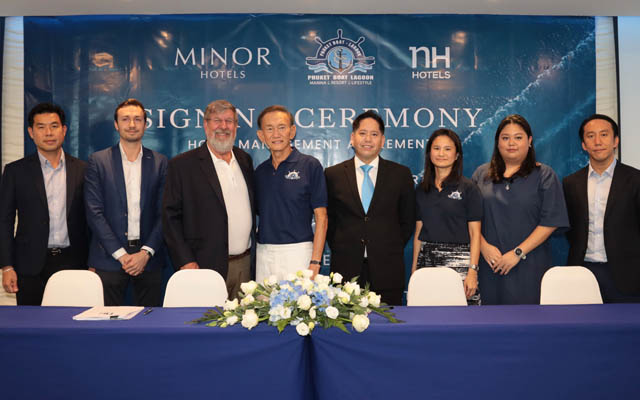
Minor Hotels has signed a management agreement with Phuket Boat Lagoon Co. to rebrand the existing Boat Lagoon Resort in Phuket to NH Boat Lagoon Phuket Resort, marking the arrival of NH Hotels to Thailand and the brand’s Asia debut.
The rebranding process will be completed in phases, and is set to open in mid-2023.
NH Boat Lagoon Phuket Resort will be the brand’s debut in Thailand and in Asia
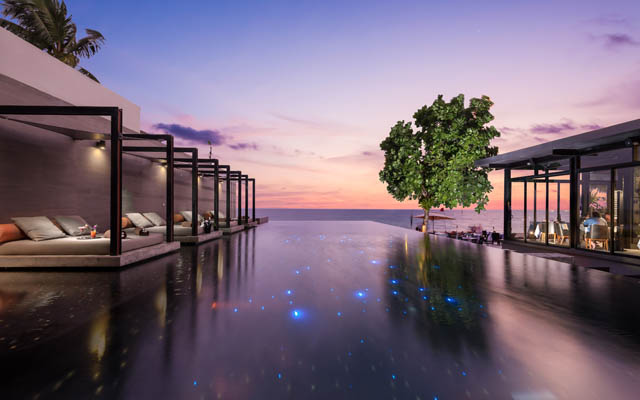
The 271-key NH Boat Lagoon Phuket Resort will be located on the east coast of Phuket, in the heart of Boat Lagoon, Phuket’s first full-service marina. There will be a mix of rooms and serviced apartments, alongside facilities such as an all-day dining restaurant, lobby café, swimming pool with a bar, gym, tennis court and a kids’ club.
Long-stay guests can enjoy the range of local shops and conveniences nearby, including Villa Market, restaurants and entertainment facilities including an ice-skating rink.
The resort will also cater to the business events market, and offer extensive meeting and event facilities such as a business centre, and a 1,000m2 marquee for large events.
Dillip Rajakarier, group CEO of Minor International and CEO of Minor Hotels, said: “We look forward to working together to further position the property as a key leisure and MICE destination in Phuket, as well as driving the high-potential long-stay segment.”
Acquired by Minor Hotels in 2018, NH Hotels has an existing portfolio of over 330 hotels in 30 countries across Europe and the Americas.
Small Luxury Hotels of the World (SLH) celebrates the first anniversary of Considerate Collection, which was launched in 2021 with 25 founding members of actively sustainable luxury hotels.
A year later, Considerate Collection now boasts 43 hotels, a growth of over 70 per cent in the last year, with new additions such as Thailand’s Aleenta Resort & Spa Phuket and Zeavola Resort in Krabi; the 15th-century, restored farming estate Villa Petriolo in Tuscany; and Casale Panayiotis, Cyprus, a village restoration project turned luxury hotel.
Considerate Collection has grown from 25 to 43 hotels in its first year; Aleenta Resort & Spa Phuket pictured
Other sustainability efforts include planting almost 40,000 trees in the past year in collaboration with TreeSisters, coinciding with the launch of the Considerate Collection.
Earlier in October this year, SLH partnered Weeva, a new sustainability platform that caters specifically to small hotels and accommodation providers, to enable properties to adopt measurable and holistic sustainability practices. The partnership allows all 520 SLH member hotels to benefit from an exclusive and preferential annual rate on the platform.
In addition, SLH signed an exclusive brand amenity partnership with Vanity Group earlier this month. Vanity Group licenses the most sought-after beauty brands, with implemented responsible and sustainable practices for its products, packaging and processes.
Aside from its hotels, SLH continues its corporate sustainability journey by undertaking work to audit its headquarters’ carbon footprint, averaging 1,514kg per SLH employee for 2021.
Richard Hyde, managing director, SLH, said: “As we strive to improve our business practices, we’ve used the data collated and worked with ecollective to set a seven per cent C02 reduction target YOY for our team in 2023 by engaging with the right suppliers and adjusting our business travel priorities, among other strategies.
“Our footprint must get smaller and smaller each year even as we scale up the business.”
An adventure holiday awaits at The Chow Kit – An Ormond Hotel in Kuala Lumpur with two curated tours to explore this part of Malaysia.
Located just five minutes from Chow Kit suburb’s famous market, The Chow Kit is in the heart of Kuala Lumpur’s most authentic neighbourhood, featuring eateries that serve local fare such as hand-made noodles and roasted meats, refurbished shophouses and diverse heritage as well as history.
The Chow Kit offers two new tours to explore the neighbourhood
For 99 ringgit (US$21) per pax, The Chow Kit Walking Tour places the spotlight on the eclectic neighbourhood of Kampung Baru in which the hotel is located. Discover Kuala Lumpur’s oldest district which holds hidden gems within its alleys, and reconnect with history while exploring famous landmarks.
For food lovers, The Chow Kit Foodie Tour allows guests to live their culinary dreams for just 115 ringgit as they walk and uncover the delicacies of the city such as charcoal-toasted bread with kaya and butter alongside a cup of kopi, murtabak (savoury meat stuffed pancake) and local childhood favourites such as hawthorn flakes and ice gem biscuits.
Pimalai Resort & Spa in Thailand has appointed Brice Borin as its new general manager.
The respected hotelier has almost 30 years of experience in the hospitality industry, having started out as an executive chef and gradually taking on more senior executive roles from F&B manager to director of F&B, resident manager, hotel manager, and eventually, general manager.
He was recently the complex general manager of the Mövenpick Cam Ranh Resort, Vietnam, which he helped to successfully launch in 2019 and kept open throughout the pandemic.
Wondering where you can spend your next travel adventure? A place where the beauty of tropical paradise, rich culture, and a blend of modern city vibes converge? Book your next destination in the Davao region!
Located in the southeasternmost part of the Philippine islands, the Davao region prides itself as one of the top travel destinations with its pristine beaches, mouth-watering dishes, and a wide range of close-to-nature adventures that await tourists. It’s no surprise that the region recorded a 70% growth rate in collective tourism arrivals as of August 2022 and is poised to exceed the government target.
Explore the white-sand beaches
Among the top tourist spots is the largest resort city in the Philippines – the Island Garden City of Samal (IGaCos). It is blessed with pristine white-sand beaches, diverse marine life, and turquoise blue waters which are perfect for snorkeling, scuba diving, and island hopping.
With the Davao del Norte Sand & Beach Circuit, you can make your Samal Island hopping possible for as low as 1,500 pesos which allows you to witness the wonders of Angel’s Cove, Wishing Island, Pearl Farm, Malipano Island, and Isla Reta. Fee already includes the boat, boat entry fee, environmental fee, picnic lunch, tour guide, and travel insurance.
There are also other adventures that await you such as taking a dip at the Hagimit Falls, spelunking and exploring the Monfort Bat Cave, cliff diving at Talikud Island, and even hiking at Mt. Puting Bato. Indeed, you will never run out of things to do and explore here at the Island Garden City of Samal!
Discover the green and close-to-nature city
Davao City makes you redefine what a city is as it strives to modernize without taking away the classic beauty of nature – thus being the perfect place for those who want the best of both worlds.
Malagos Garden Resort prides itself as the home of the Malagos Chocolate Museum – the first in the country. It gives a true-to-bar experience by allowing tourists to create their own chocolate! Aside from the museum, there are various activities offered such as birdwatching, feeding animals, and watching an interactive bird show. Malagos Garden Resort remains true to its philosophy of #ToBeOneWithNature.
If you are searching for a place to meditate and connect with your inner spirit, perhaps the Tamayong Prayer Mountain is the one you are looking for. Also known as the Garden of Eden Restored, this man-made European-inspired garden is occupying the foothills of Mt. Apo and provides tourists with a realization of everyone’s imagination of what heaven looks like. Albeit owned by The Kingdom of Jesus Christ, the place is welcoming everyone regardless of their religious beliefs and practices.
Meanwhile, if you are interested in knowing and seeing the king of birds in real life, you may want to check out the Philippine Eagle Center. This tropical rainforest environment provides shelter and also serves as a captive breeding program for eagles whose numbers are decreasing drastically. The facility offers free tour guiding and use of kiosks as well as special education programs like keeper talk, falconry, and open classroom project.
Another tourist spot for nature trippers and animal lovers is the Eden Nature Park and Resort. It is, by far, one of the largest man-made forests ever created in an effort to combat illegal logging. Since its redevelopment in 1997, the park is committed to preserving the environment and giving tourists an authentic mountain experience. For those with a brave heart, it offers fun adventures such as skyriding where you get a glimpse of the beauty of Davao from above. The park also introduces the Mindanaoan culture for those who are interested to get an in-depth knowledge of their traditions and beliefs.
Hike the highest peak
How can we forget the tallest mountain in the Philippine Archipelago when discussing the mountains of Mindanao? Mt. Apo, known as the “Grandfather of Philippine Mountains,” provides more than just a stunning view from a distance; it also serves as a source of electricity and water and is inhabited by indigenous tribes. It was designated a protected area in addition to being an ASEAN Heritage Site. Many adventurers frequently include this peak, which rises 2,956 meters above sea level, on their bucket lists!
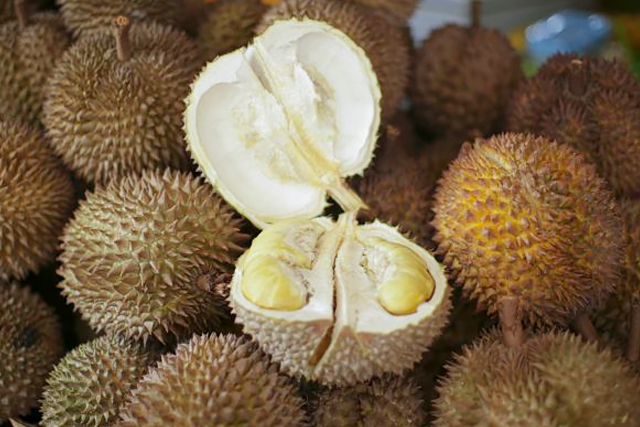
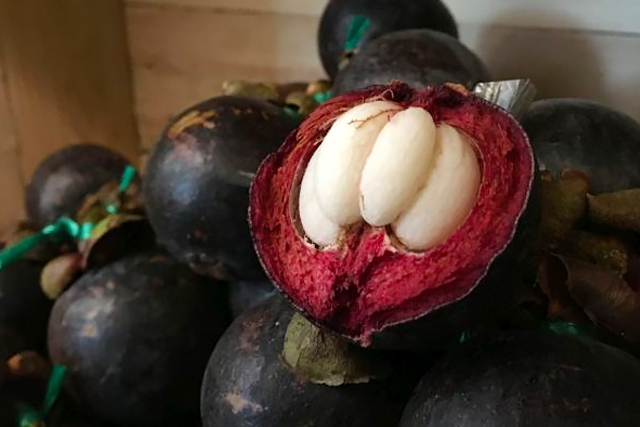
Your stay in Davao won’t be satisfying and complete without tasting the sweetest fruits in the country! Blessed with fertile soil and a relatively better climate, Davao produces the best fruits such as pomelo, lanzones, papaya, and banana. But among the list, try the king and queen fruits – durian and mangosteen! Indeed, Davao is the Philippines’ fruit basket and is also one of the world’s biggest growers and exporters of exotic fruits.
1 of 2
Durian fruit
Mangosteen fruit
If you are looking for a travel destination, choosing Davao will never disappoint you. It will never fall short in meeting, if not exceeding, your expectations!
Know more about the Philippines by downloading the Travel Philippines App today via Google Play and App Store or visit https://app.philippines.travel/.
The onset of the pandemic had battered the wedding segment – a very important market for Indian hospitality players. However, with the coronavirus situation under control, the pent-up demand is at an all-time high this year, say Indian hoteliers.
Manoj Bagri, managing director, 7 Apple Hotels & Resorts said: “Destination weddings are witnessing good traction this year. The wedding segment is a key market for both our properties – Amoravida by 7 Apple Resorts, North Goa and 7 Apple Resort Lonavala.
Hotels in India are rejoicing as a large number of weddings are taking place in the country this year
“There is an increase in the demand for intimate weddings. This year, we have registered approximately 35 per cent growth over the last year from the wedding segment.”
As per WedMeGood Indian Wedding Industry Report 2021-2022, last year has been a tumultuous one for the wedding industry. In its survey which polled over 3,000 users and wedding vendors, 80 per cent of vendors agreed that more than 30 per cent of their business was affected. Only a minority of the vendor population mentioned that they had witnessed minor or no change.
Akash Garg, chairman & managing director, Timber Trail Resort and Moksha Himalaya Spa Resort said: “The demand for Indian hotels is back to pre-pandemic years – in fact, it is surpassing the growth of the 2018-2019 wedding season. We are working closely with leading wedding planners and are promoting our hotels through social media platforms to attract demand from this segment.”
Many hotels recorded weddings either getting postponed or trimmed down in 2020 and 2021, resulting in overall losses for the hospitality players. This year, tables have turned and the buoyancy in the wedding market is helping hotels to recover from the setbacks caused by the pandemic.
Damandeep Singh, general manager, Karma Lakelands, Gurgaon shared: “The Indian wedding segment is bouncing back in a big way. With normalcy returning, Indian guests are now looking at various destinations for their special day. The number of wedding queries this year has increased by three times compared to last year with the guest list increasing significantly, which is a great boost to the business.”
The Indian hotels are now rejoicing as a large number of weddings are taking place in the country this year. Many have devised strategies to garner their share of the wedding market.
“Weddings are back for us to almost 90 per cent of the pre-Covid levels,” said Sarbendra Sarkar, managing director, Cygnett Hotels & Resorts.
In order to cater to this segment specifically, the hotel chain has created a new product, Wedding Bells by Cygnett, which offers “end-to-end solutions for the vast requirements of a wedding group”.


 As a seasoned hospitality executive with over 35 years of global experience in strategy, operations, business development, P&L and brand management, he has held leadership positions at some of the world’s largest hospitality companies and brings with him extensive business, talent, and stakeholder management expertise.




 He was recently the complex general manager of the Mövenpick Cam Ranh Resort, Vietnam, which he helped to successfully launch in 2019 and kept open throughout the pandemic.