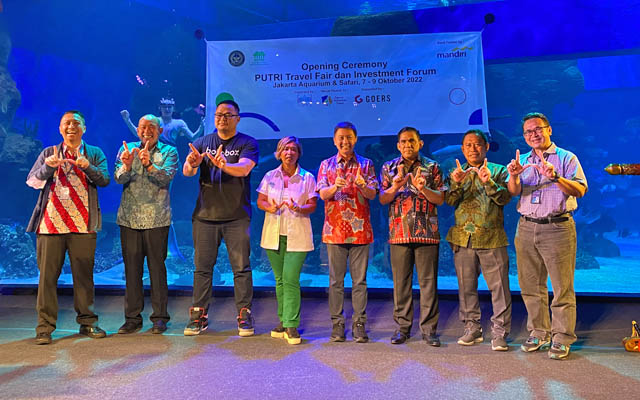
The Association of Indonesian Recreational Parks & Attractions (AIRA or PUTRI in Bahasa Indonesia) recently held its own PUTRI Travel Fair for the first time in Jakarta, with the aim of making it an annual affair.
Hans Manansang, chairman of AIRA and managing director of Jakarta Aquarium and Safari, said at the fair’s opening: “The goal of this event is to promote the existence of AIRA, as well as to boost sales among the (members), who have been (affected the most by the pandemic).”
The PUTRI Travel Fair aims to promote the existence of AIRA and boost sales among the members
Also present at the fair were non-member sellers representing the Greater Jakarta, West Java, Yogyakarta, East Java and Bali areas.
Aside from B2B selling, Heni Smith, secretary general of AIRA added that the fair was also a promotional event which offered direct sales to the general public, as well as schools and travel companies in the greater Jakarta area.
AIRA is a non-profit organisation founded in 1973, with members ranging from recreational parks and tourist villages to conservation areas and natural attractions.
It counts East Java Park, Safari Park, Ancol Dreamland, Jakarta Aquarium & Safari, Yogyakarta Palace Museum, Merapi Park, Saung Angklung Udjo, Mini Indonesia Park, Bunaken Marine Park, Bogor Botanical Gardens, Lombok Wildlife Park, Lombok Tree House, Marina and Sei Timiang Agrotourism, and Galang Island Historical Tourism Area, among its members.
Apart from hosting its own travel fair in Jakarta, AIRA recently participated at ITB Asia in Singapore to promote itself on the international market by introducing its members and products available in Indonesia.
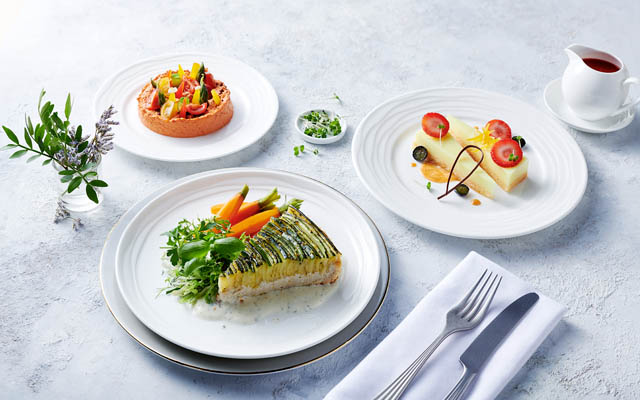
In line with the upcoming World Vegan Day on November 1, Emirates has introduced a curated vegan menu into First and Business Class, as well as refreshed the selection of plant-based produce for Economy Class menus.
The vegan menu in First and Business Class was developed after a year of multiple presentations and tastings at the Emirates Flight Catering based at Dubai International Airport. The tasting panels included both vegan and non-vegan chefs and team members to ensure an inclusive approach.
Emirates’ new vegan options are available to order and pre-order onboard, as well as in Emirates Lounges
In Economy Class, current passenger favourites include a spinach and avocado mousseline, with marinated tofu, blanched snow peas, radish, asparagus, pomegranate seeds, courgette ribbon and sriracha oil; and arley risotto with mushrooms, served with sundried tomatoes, buttered chestnuts, blanched broccolini and toasted pumpkin seeds.
Menus across all classes are refreshed monthly, where the airline currently offers more than 180 plant-based recipes catering to vegan customers. The vegan dishes are complemented by gluten-free Vitality juices, a bespoke range of juice blends, created by UAE brand Barakat.
Meanwhile, ingredients for the new vegan dishes are sustainably sourced from UAE-based suppliers, such as Bustanica, the world’s largest hydroponic vertical farm.
Although Emirates has been serving vegan options onboard since the 1990s, vegan dishes are now rapidly gaining popularity on routes from the US, Australia, Europe and the UK.
These new vegan options are available to order and pre-order onboard, as well as in Emirates Lounges.
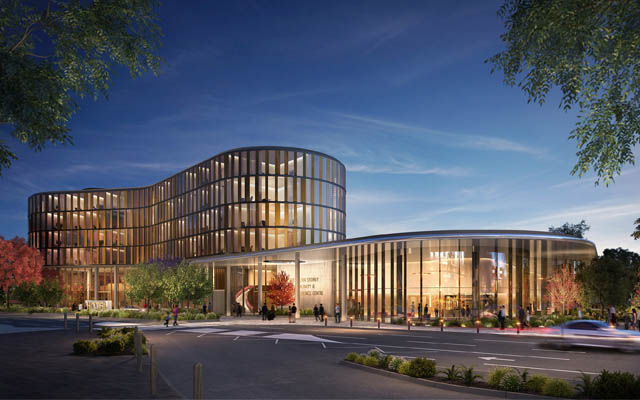
Accor and Panthers Group have partnered to launch a new five-star Pullman hotel at the Penrith Panthers precinct in Western Sydney, slated to open in 4Q2023.
The 153-room Pullman Sydney Penrith hotel forms part of Panthers Group’s landmark transformation of the Penrith Panthers precinct to create a new state-of-the-art business and entertainment destination, and follows Accor’s seven-year deal for the naming rights of Accor Stadium at Sydney’s Olympic Park.
Pullman Sydney Penrith is slated to open in 4Q2023
The hotel will service the adjoining new 1,250m² Western Sydney Conference Centre (WSCC), which remains on track to open in 4Q2023, and will include a café as well as a restaurant and bar.
Panthers Group CEO, Brian Fletcher, said: “Pullman Sydney Penrith will be a welcome addition to Western Sydney’s tourism offering and builds upon the existing and upcoming new amenities within the Panthers precinct and the wider Penrith locale.
“This development will enhance Penrith’s reputation as a world-class event and tourism destination.”
Meanwhile, the upcoming Western Sydney International Airport – set to open in 2026 – is just a 30-minute drive away.
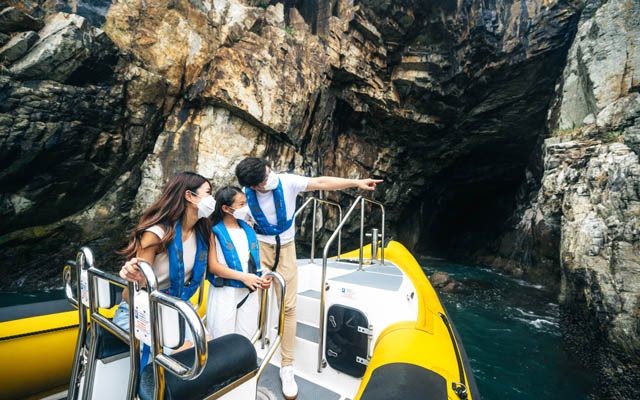
Ocean Park is adding a new programme, Little Geologist, to its marine tourism series Island South Discovery which will bring guests on a boat ride to explore Hong Kong’s southern coastal geology and discover its ecological and cultural diversity.
There are two adventures to choose from. The Little Geologist – Surf in History Tour, priced at HK$688 (US$87), is for those aged nine and above, and combines a jet boating experience with an educational sightseeing opportunity where participants will learn about Hong Kong’s military and nautical history as they go past landmark attractions including Murray House in Stanley and the Wordless Monument in Tai Tam Bay.
The Little Geologist – Surf in History Tour lets participants learn about Hong Kong’s military and nautical history
Meanwhile, the Little Geologist – Life on Coast Tour, priced at HK$190, is suitable for adults and younger kids (three and up), where they relax on a traditional fishing boat and learn about Hong Kong’s fishing heritage and culture, and explore the different rock formations like the Godzilla Rock in Tau Chai, and the sea caves around Middle Island.
The programmes are narrated in Cantonese and run from October 29, 2022 to January 2, 2023 at scheduled timings. Participants below 18 years old must be accompanied by an adult.
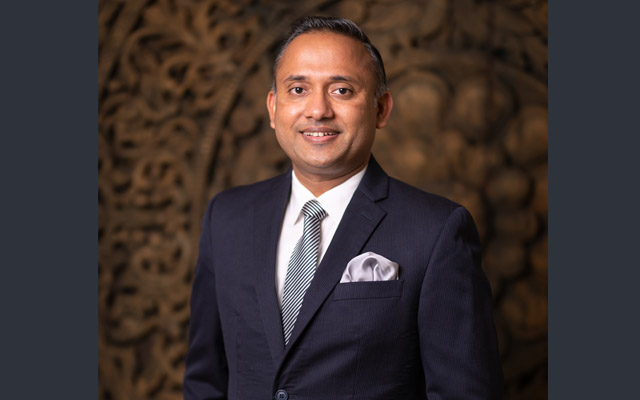
The St Regis Goa Resort has appointed Satish Kumar as general manager.
Kumar was previously general manager at The Leela Goa and Conrad Pune.
He has over two decades of experience in luxury hospitality, having led hotel operations with The Oberoi Hotels & Resorts, The Taj Group of Hotels, and overseas properties like The Marriott Marquis Doha, The Westin & Le Méridien City Centre Bahrain, and JW Marriott Jakarta.
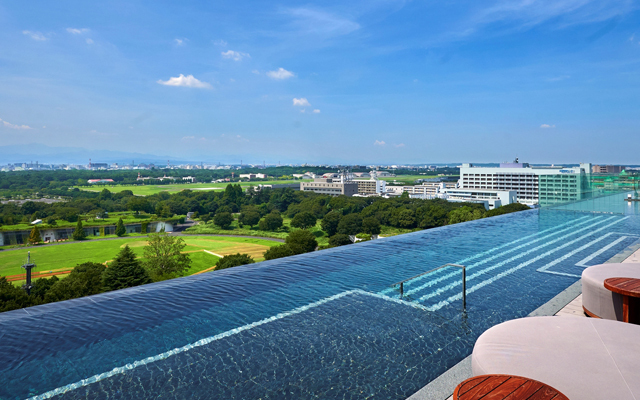
The infinity pool on the rooftop looks out to Showa Kinen Park
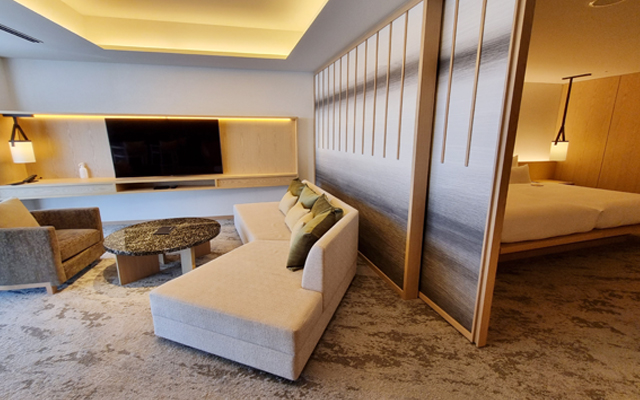
A spacious suite (Photo: Karen Yue)
Japanese-style rooms are available (Photo: Karen Yue)
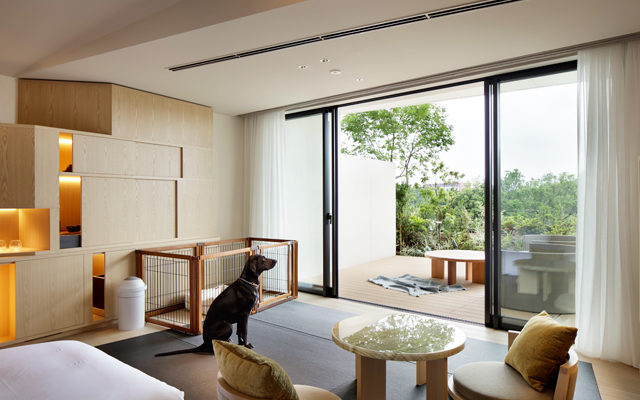
Dogs are welcomed at the hotel
Sorano Hotel
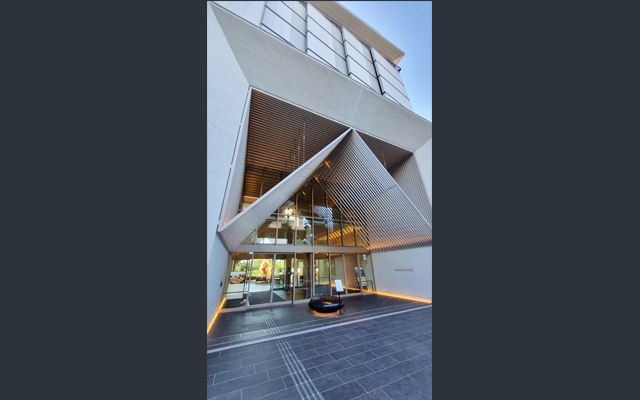
The tent-inspired entrance of the hotel (Photo: Karen Yue)
Opened in 2020 when Japan was still closed off to the world and domestic movements were limited, Sorano Hotel in Tachikawa, a city in western Tokyo Metropolis, became a well-kept secret of Tokyo urbanites looking to escape the humdrum of city life.
Now that Japan is welcoming international travellers again, Sorano Hotel can finally demonstrate to a wider audience why it is so loved by local Tokyo staycationers.
Location
A 30-minute train ride from Tokyo’s Shinjuku takes one from a busy part of the Japanese metropolis to a quieter district where gardens and open spaces are visible in all directions.
This district is the new Green Springs multipurpose lifestyle development that was launched to a limited and domestic public in April 2020, when international travel was heavily restricted to stave off Covid-19 infections.
The biophilic design of Green Springs means visitors are brought into a garden city, where public spaces are filled with trees, shrubs and plenty of places for rest and interactions.
Benefiting from this concept is Sorano Hotel, whose prominent entrance resembles a tent. Stepping within, guests will find themselves in a cocoon of light-coloured wood and gentle shades of grey and white, complemented by endless stretches of greens beyond the enormous windows.
Accommodation
Sorano Hotel offers just 81 keys, which helps to maintain its intimate and serene setting for guests looking to rejuvenate in peace. Rooms are generously sized – from 52m2 standard rooms to 86m2 one-bedroom suites.
Among standard rooms, there are four types on offer – Sky King Park View, Premier Park View, Wa Modern Park View, and Wa Modern Garden Terrace. They are differentiated by Japanese or western-style layout, and by the levels they are on.
I spent the night in a Premier Park View on level eight, and I adore it for its space, therapeutic green views from my balcony, and palette of earthy and neutral shades. What I love even more is its lightning system, which comes in Day, Night and Midnight modes. Lights turn up and down progressively over 17 seconds to mimic sunrise and sunset.
The room offers twin beds and an oversized ottoman that can be combined with the sofa to create a third bed. This is an ideal option for families with young children. Another treat is the large bathroom that comes with both a bath and shower.
I had a peek into a Japanese-style standard room, which comes furnished with thick futon-style mattresses on a tatami floor plus a low table where guests can sit at for a cup of matcha. It is a tantalising option for travellers wanting a local stay experience in a modern hotel.
Another good point to note – the hotel is pet-friendly!
F&B
There are two dining venues– Daichino Restaurant on the ground floor and Sorano Rooftop Bar on level 11.
Daichino Restaurant takes pride in using locally-sourced ingredients, with priority given to fresh and seasonal produce – particularly vegetables – from the Tama region where Tachikawa belongs. The sustainability-focused kitchen will source from around Japan when needed.
Its menu claims to showcase “Japanese crossover food” which is defined as Japanese food fused with “the essences of dishes from various countries”. I am not sure what that means because my bento lunch was as Japanese as I could wish my meal to be. I am impressed by the visual presentation and flavours of my lunchbox. The six bite-sized dishes – comprising delicacies like straw-smoked autumn salmon and Shiratama miso-glazed eggplant – and accompanying seasoned rice and red miso soup are memorable.
I did not have time for a post-dinner tipple at Sorano Rooftop Bar, but I was able to pop in quickly to assess the space in the afternoon. With it located on the topmost floor, the bar boasts picturesque views of Showa Kinen Park and Mount Fuji in the distance.
Facilities
Private parties can take their pick of a 12-seat or 16-seat private dining room. There is a 40-seat Terrace that is a great spot for furkids to laze alongside their hoomans.
Sorano Spa is not to be missed. It comprises a 60-metre infinity pool plus a shallow wading pool for children; an indoor spa with piped-in hot spring water that is temperature controlled for year-round use; a Nano-Mist Sauna that uses ultra-fine particles; and a gym. Aqua tai-chi and yoga lessons are offered too.
A quick look at the hotel’s website reveals even more – and rather fascinating – wellness treatments, such as Full Moon Watsu Aqua Therapy that draws on the spiritual healing powers of, well, a full moon.
Service
The service team carry themselves elegantly, speaks well in English, and is attentive. My host at Daichino Restaurant took the time to introduce every dish he brought out to me.
Verdict
I am a city girl who loves escaping the city buzz while wanting modern conveniences and the occasional luxury treatment. Sorana Hotel satisfies all that I desire, while gifting me with the convenience of being in such close proximity to the beautiful Showa Kinen Park and the Tachikawa train station which can connect me with the Tokyo city centre.
Making responsible travel choices is getting easier, now that many leading tourism suppliers are providing prominent labels that identify sustainable options.
Back in November 2021, Booking.com debuted what it said was a first-of-its-kind Travel Sustainable badge to help travellers identify properties that have implemented a combination of sustainable practices that meet the requisite impact threshold for their destination.
Amilla Maldives Resort, located in the Baa Atoll UNESCO Biosphere Reserve, has 31 ongoing sustainability projects
A study by the OTA found that 81 per cent of global travellers wanted to stay in a sustainable accommodation when they resumed their travel in 2022, while 73 per cent would more likely choose a specific accommodation if they knew it was implementing sustainable practices. The Travel Sustainable badge serves to support that desire, and a filter on Booking.com’s search function helps travellers to more easily identify responsible options.
Sharing that foresight is Small Luxury Hotels of the World (SLH), whose Considerate Collection of responsible and sustainable hotels has just celebrated its first anniversary. When it launched in October 2021, the Considerate Collection had 26 hotels in 16 countries. At press time in November, the network has expanded to 43 qualified properties.
Mark Wong, senior vice president, Asia Pacific of SLH, said the creation of the Considerate Collection has allowed the company to identify many attractive and responsible hotels that “were not on our radar”.
He noted that there are many responsible hotels around the world – particularly in Thailand, Indonesia and the Maldives here in Asia – and SLH can use its global reach to bring such properties to the attention of many conscious travellers and travel trade buyers worldwide.
The Considerate Collection is set for continued growth, evident in the number of hotels approaching SLH at an early stage of development for suggestions on incorporating sustainable features and experiences into their property, to ensure they qualify for induction into the programme once they launch.
Getting the green star
A stringent and scientific approach has been employed by these travel companies to determine who gets the coveted sustainable label.
For Booking.com’s Travel Sustainable badge, qualifying attributes are determined and validated by the Travalyst Independent Advisory Group, and the OTA takes a step further by working with other industry experts to identify a set of the most impactful practices for a property to consider in five key areas: waste, energy and greenhouse gases, water, supporting local communities, and protecting nature.
Keemala has a strict anti-animal exploitation policy while its guests activities foster a strong sense of community spirit among guests
This foundational framework is further broken down into 32 specific sustainability measures or practices that properties can implement, including everything from eliminating single-use plastic toiletries or switching to LED light fixtures to running on 100 per cent renewable energy sources or investing a certain percentage of profits into local community and conservation projects.
For SLH’s Considerate Collection, properties looking to be inducted must do more than just end their reliance on single-use plastics. SLH partners reputable organisations like Greenview and Global Sustainable Tourism Council as well as subject experts and travel agents specialising in this field to provide it with guidance and ensure SLH is not “just greenwashing our approach”, Wong told TTG Asia.
All Considerate Collection hotels undergo strict assessment across three levels – Environmentally Conscious, Cultural Custodians, and Community Minded.
“Our members have to take these pillars into their operational consideration to qualify and ensure that these are achieved both behind the scenes and in guest-facing experiences,” shared Wong.
For instance, Amilla Maldives Resort, one of the newly-inducted Considerate Collection properties, boasts 31 ongoing sustainability projects since its debut three years ago in the Baa Atoll UNESCO Biosphere Reserve. One of its projects utilises 2,500 coconut trees on the island to produce coconut oil, vinegar, milk and cream, as well as turn the resulting waste into nutritious coco peat for its gardens and crafting needs.
The property continually comes up with creative ways to celebrate island culture, from founding the country’s first and only Maldives Cultural Week in 2021 which promotes local musical, artistic and fashion talents, to holding weekly Maldivian dinners and cooking classes for guests to get an authentic taste of Baa Atoll and beyond.
It also takes pride in operating with a team made up mostly of Maldivians, many of whom hold management positions, as well as sourcing from local producers and engaging local vendors.
Low impact experiences
Contiki Tours, which runs 350 trips across six continents, is contributing to the movement too, by putting up programmes that enable conscious travellers to explore guilt-free and with minimal carbon footprint.
It has made 100 per of its trips carbon-neutral this year. It is a momentous decision, but also just one of the many milestones in the company’s “long journey to sustainability”, said global CEO Adam Armstrong.
All Contiki tours are carbon neutral now
“Our journey to carbon neutrality requires a lot of work. First, we have to measure, and that’s a task in itself. For every trip we have to work out how much carbon we are emitting through transport, accommodation, dining and experiences. Then, there is a load of initiatives around reducing emissions and getting third parties to work with us. After that, we offset what we cannot reduce and invest in carbon capture initiatives,” detailed Armstrong.
All initiatives are included in the ticket and there is no opt-in required. Contiki has chosen to keep its carbon neutrality offering simple and accessible, as the young generation views such features as a basic consumer right, reflected Armstrong.
SLH’s Wong said spotlighting responsible travel options is now basic business and no longer just a post-lockdown travel trend.
“It won’t go away any time soon and will become a requirement among conscious travellers. In fact, our corporate RFPs now come with a request for our hotels to submit details on their sustainability policy and programmes,” he said.
Contiki’s Armstrong agrees, saying that data points to the growing importance of sustainable travel.
“Most Gen Zs prioritise sustainability and choose brands based on their sustainability credentials. They avoid brands with poor sustainability credentials. Going carbon neutral is therefore good for the environment and for the business,” he said.
Conversations at trade events for our industry have been gravitating most towards three areas – digitalisation, manpower pains, and sustainability. Naturally, these three topics were top of my mind when it came to planning the theme for our year-end special issue.
It is sustainability that I chose to eventually build our content on because the topic is divisive. There remain opinions that the travel and tourism industry isn’t as responsible as it claims to be; that travel buyers actually still care more about pricing and value than their emissions, and consumer intention studies showing strong desires for responsible travel are skewed by response bias.
Despite these dampers, it is clear that our industry is shifting towards more responsible actions. Travel and tourism suppliers are making responsible travel options more visible, to serve conscious travellers as well as to educate fence sitters about better options. They are scrutinising their internal processes as well as that of their partners to ensure goals are aligned.
They are broadening their sustainability view to consider more than just energy usage and waste reduction; they are paying attention to matters like community support and development, gender parity, and culture preservation.
At a higher level, governments are making clear their sustainability plans and establishing nation-wide roadmaps to get both the public and private sectors moving in the same direction. Such roadmaps will guide tourism developments too, benefiting the society and the environment.
The accusation that the very act of travel is detrimental to the environment remains loud. Yet, putting an end to travel is an extreme solution. The disruption of global travel for more than two years lays bare the important contribution it brings to economic and social activities.
Travel must continue, it must be done responsibly, and it is already happening.
Sabah’s community-centric and rural-based tourism options appeal to the new profile of Mindful Explorers – defined as people who seek to contribute to regenerative and sustainable means of tourism.
Travellers can participate in a community-based tour that gives them the opportunity to immerse in the local culture, gain an authentic and rewarding experience while giving back to the community in the Malaysian state.
Community-based tourism highlights
1 of 8
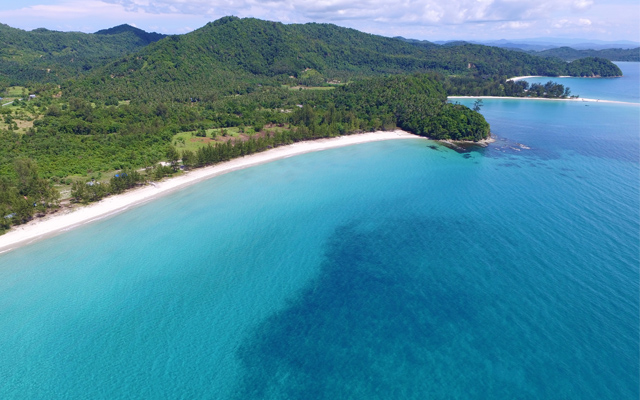
Kudat is home to white sandy beaches in Sabah
Adventure-seekers can explore the Kota Belud district
Rundum Highland, set up by the Murut community in Tenom, delight with its fresh, cool air and scenic nature views
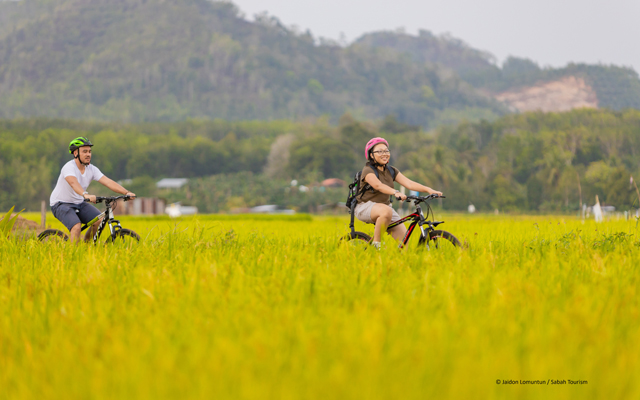
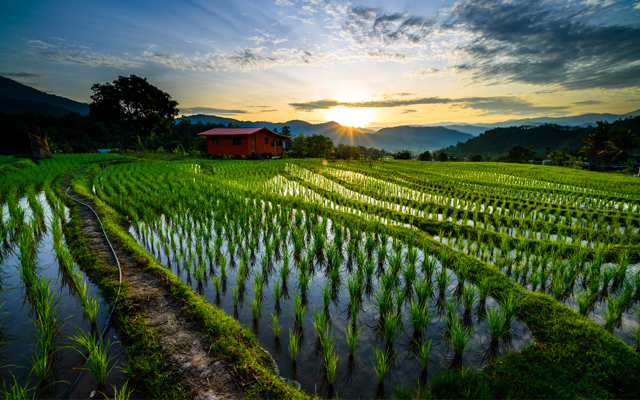
Tourists in Sabah can try their hand at paddy farming
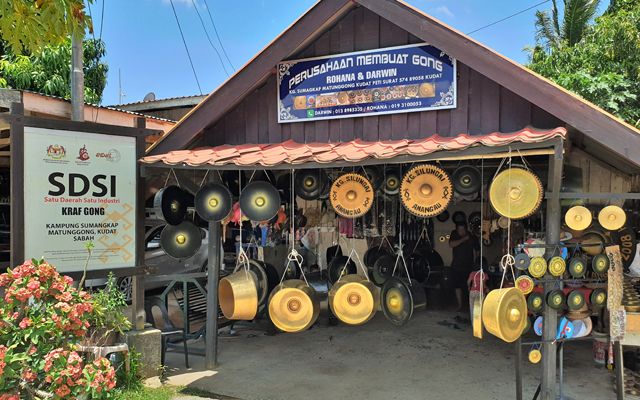
Some communities in Sabah are skilled in gong-making
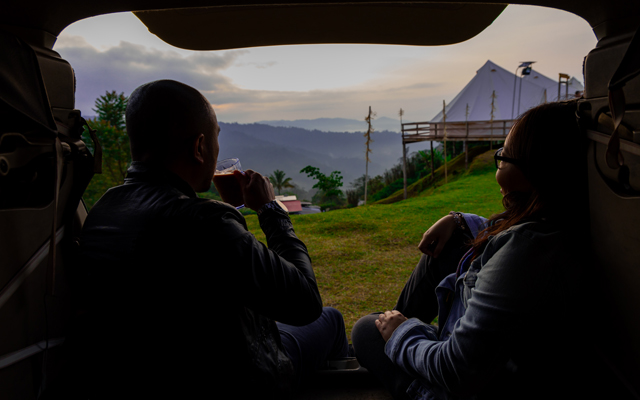
In Sabah, visitors can immerse in the local culture for a rewarding experience while giving back to the community
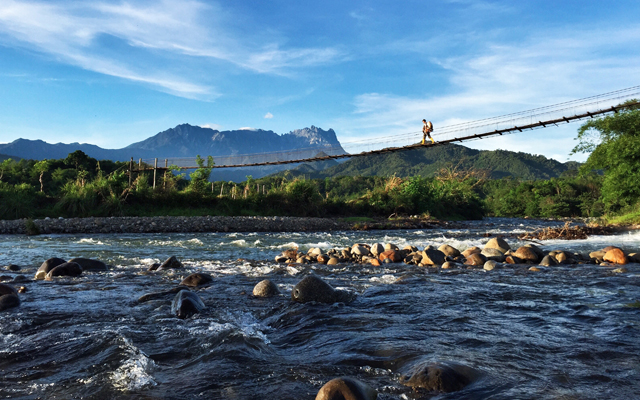
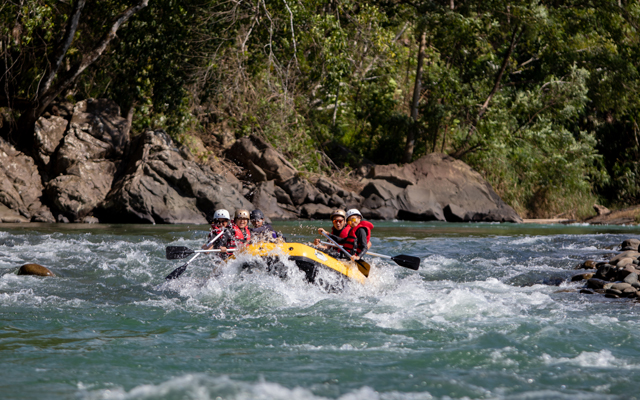
The Kadamaian river is ideal for white water rafting
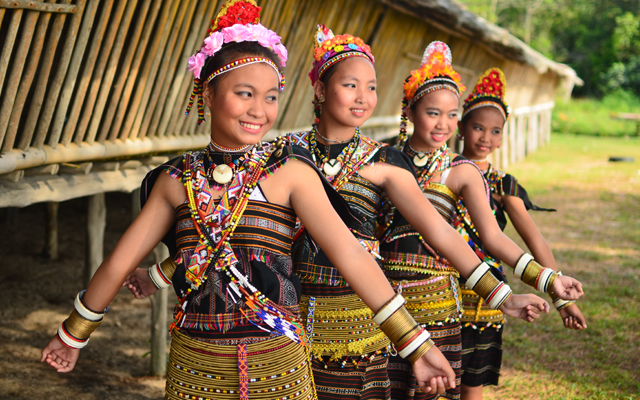
Tourists can stay in a longhouse alongside the Rungus community
Kudat Travellers seeking a cultural experience can head to Kudat, the northern part of Sabah, and stay in a longhouse alongside the Rungus community, known for its rich culture. Majority of the Rungus people are skilled in crafting gongs, colourful beadwork and other handicrafts.
Kudat is also home to some of the finest white sandy beaches in Sabah.
Kiulu and Kadamaian
Adventure-seekers can explore the Kiulu and Kadamaian rivers in the Tamparuli and Kota Belud districts, known for their grade 1-2 water rapids – perfect for those looking for a ride on nature’s rollercoaster.
Visitors can join the villagers in their daily forage for edible or medicinal plants, or make their way to a scenic small stream or waterfall only known to the residents. They can also partake in jungle trekking, hiking, camping and stargazing.
Some can even try their hand at paddy farming, rubber tapping, traditional basket weaving and beads crafting.
Kadamaian is one of Sabah’s fastest developing rural tourism attractions, and has a goal of becoming a world-class rural tourism destination by 2025.
The Project Picasso by non-governmental organisation, Meraki Daat Sabah Initiative, set to begin in 2023, aims to transform such identified water villages into Instagram-worthy tourist attractions in Sabah – by painting the stilt houses in creative ways.
The Kinabatangan River and Rundum Highland Nature lovers can visit the Kinabatangan River, located in Sandakan, the gateway to Sabah’s wilderness and the second longest river in Borneo and Malaysia.
The river and its surrounding area are home to various unique animals because the rich biodiversity offers them the perfect habitats.
Travellers can take a boat ride on one of the river’s branches and spot some of Borneo’s most iconic species – orangutans, proboscis monkeys, saltwater crocodiles, hornbills, and pygmy elephants – on the river banks.
To truly experience the life of the Orang Sungai, tourists can stay at one of their rustic traditional wooden stilt homes, join in their cultural activities and experience the local way of farming. Forest conservation programmes are also available to visitors.
On the other hand, Rundum Highland, set up by the Murut community in Tenom, delights with its fresh, cool air and scenic nature views.
Sabah’s rural areas also feature marine and nature parks, wildlife sanctuaries and forest reserves.
Community-based tourism (CoBT) is an initiative to promote sustainability and improve the livelihood of the community in an area, while getting the residents involved in developing and managing their own tourism destination and products.
It is also a great way to empower and create more employment for women and youths.
Sabah is home to more than 30 different races and ethnicities, and boasts a range of more than 80 languages and dialects. The different diverse groups live together to form a homogenous community, while still retaining their own cultures, customs, traditions, arts and festivals.
Keen to explore a meaningful and sustainable itinerary? Agents and operators keen to consider CoBT can find out more about rural tourism options in Sabah here.
The Philippines will soon drop the Covid-19 test requirements for incoming visitors and the mask-wearing mandate for indoor settings.
This was announced by tourism secretary Christina Garcia Frasco on October 25 in a press briefing, following the Cabinet Meeting with the country’s president Ferdinand R. Marcos, Jr.
Visitors to the Philippines will no longer need to do a Covid-19 test upon arrival
Indoor mask-wearing will still be required on public transport, medical transport and in medical facilities. For the unvaccinated, individuals with comorbidities, and senior citizens, mask-wearing is still highly recommended.
Fully-vaccinated visitors entering the Philippines will be allowed entry into the country without the Covid-19 test requirement, while unvaccinated guests are given the option to take an antigen test 24 hours before travel or upon arrival in the Philippines.
This policy is in line with the president’s vision to facilitate ease of travel and tourist convenience and will supersede the stringent Covid-19 test and quarantine requirements for vaccinated and unvaccinated visitors.
In addition, the Philippines recently announced the removal of the One Health Pass (OHP) to make way for the e-Arrival Cards which aims to simplify the entry procedures for travellers.
As of October 24, 2022, the DoT has recorded 1.8 million visitor arrivals exceeding the 1.7 million projection for the current year.
The biggest bulk of tourists came from the US at 346,806, followed by South Korea with 250,021, and Australia with 85,986.


 He has over two decades of experience in luxury hospitality, having led hotel operations with The Oberoi Hotels & Resorts, The Taj Group of Hotels, and overseas properties like The Marriott Marquis Doha, The Westin & Le Méridien City Centre Bahrain, and JW Marriott Jakarta.