TTG Asia
Asia/Singapore Saturday, 17th January 2026
Page 569

An accessible welcome

0

Travel accessibility is improving after more than two years of disruption, and people around the world have responded to easing border restrictions by getting back to travel planning.

However, for people with mobility, mental and/or sensory issues, the definition of travel accessibility takes on a much deeper meaning. While differently-abled, these consumers share the same wanderlust as everyone else and look to destinations and tourism suppliers to provide the support they need to fulfil their travel dreams.

Spain, whose tourism appeals range from big-city draws, star-studded football clubs, historical landmarks and tantalising cuisine, says all these and more welcome travellers with disabilities. Fifteen cities across the country whose historical centres and urban spaces have been declared UNESCO World Heritage Sites promise universal accessible routes.

Take Ávila for instance. The destination, renowned for its medieval city walls, is regarded as one of the leading accessible tourist destinations in Spain. The Visitor Reception Centre offers wheelchairs for loan, while travellers relying on hearing aids can communicate with a magnetic loop installed at the information desk. Typhlological scale models of five of the nine gates in the iconic city walls enable travellers with visual difficulties to learn about the monument through touch. Furthermore, audio-video guides are available in nine different languages, including international sign language and a version adapted for children.

The Spain is Accessible website helps users to search destinations by theme or 
disability

As differently-abled travellers explore Ávila’s best sights via a specially-designed accessible route that threads through town, they will notice that commercial establishments with basic accessibility requirements are identified by the international symbol of access on their doors along with the Ávila Accessible label – the latter awarded by the Ávila Town Hall and the Municipal Board for the Disabled.

To further assist differently-abled travellers, Turespaña has created the Spain is Accessible website that allows users to search destinations by theme or disability.

Contributing to Spain’s commitment to accessible tourism is local hotel chain, Ilunion, which has 29 properties adapted for people with disabilities. Supportive facilities include individual articulated beds, telephone adapted for people with hearing and visual disabilities, inclined bathroom mirrors for people in wheelchairs, and recreational areas and parking designed for the disabled. The hotels are awarded with the universal accessibility certification (UNE 170001-2), while Ilunion itself has earned the Ethics Award from the UNWTO for its work in the field of accessible tourism. As of November 2021, two in five of the company’s 37,000-strong workforce have an impairment – demonstrating Ilunion’s determination to have diversity in both its clientele and talent teams.

Here in Asia-Pacific, Tropical North Queensland in Australia is the latest to take firm steps towards accessible tourism. In September, it announced the addition of Accessibility Hub to its destination website, listing experiences and accommodation that are accessible to all travellers.

Tourism Tropical North Queensland worked closely with Spinal Life Australia and Out There Travel Care to put together content showcasing accessible products, such as wheelchair-friendly beaches and rainforest boardwalks that are wheelchair-friendly.

“People needing to consider accessibility can now easily find accommodation options from specialised providers like Spinal Life’s Healthy Living Centre which has personal support workers, to traditional hotels with accessible rooms such as the Cairns Novotel Oasis Resort,” said Mark Olsen, CEO of Tourism Tropical North Queensland.

Skyrail Rainforest Cableway is an accessible tourism experience. Photo by Dane Cross, Spinal Life Australia

Disabled Mission Beach journalist Imogen Kars has trialled a selection of accessible accommodation and tours, and has produced a series of blogs on travel options in Cairns, Palm Cove, the Cassowary Coast, Port Douglas and the Atherton Tablelands.

To align tourism operators with its accessible tourism goal, the NTO led a Making Tourism More Accessible Workshop at the Spinal Life Healthy Living Centre. Trade participants got to learn about opportunities in the accessible tourism market, access business case studies, and hear from people with physical disabilities about what they are looking for in a destination.

Senior advisor access and advocacy for Spinal Life Australia, Dane Cross, said the accessible tourism market represented a largely untapped opportunity for tourism operators.

“Often, tourism operators don’t know where to begin on their journey towards better accessibility – this workshop enables people to ask simple questions and find out more about where to begin. We’d love to help tourism operators understand how to be more accessible and to secure a larger part of this market,” said Cross.

Accessible sandy paradise
Recognising that the Maldives is usually physically out of bounds for differently-abled travellers, no thanks to its sandy island paths, water jetties and layout of villas and restaurants, one private island resort has made it its mission to make its space welcoming for everyone, including those with additional mobility, sensory and cognitive requirements.

Taking guidance from Inclucare, a UK-based organisation that works to remove barriers to travel for disabled people across the globe, Amilla Maldives Resort has ordered staff training on inclusion excellence and has had its facilities audited by Inclucare officials.

The property is now waiting for the certification process to be completed.

General manager Jason Kruse told TTG Asia that Amilla Maldives Resort is equipped to meet inclusive travel needs. It already boasts many universally accessible villas on the ground level, all designed with wide doorways and accessible showers. These units also come with beach wheelchair, floating wheelchair for swimming, and in-villa phones that light up when they ring, for the benefit of hearing-impaired guests.

Soon to come are deaf-alert systems, induction hearing loops, magnifying glasses, adaptive yoga, aroma and sound experiences through the jungle for vision-impaired holidaymakers, and facilities that regulate sensory input for guests on the autism spectrum.

Tripseed’s electric tuk tuks are designed to bring ease of movement to differently-abled guests

Taking ground control
Thailand-based travel operator and distributor Tripseed has recently made the country even more welcoming through a range of accessible travel programmes and experiences.

These inclusive tours for elderly and disabled travellers promise more than just wheelchair-accessible facilities. Extensive audits have been conducted across properties, tour locations and transportation – all to evaluate ramp inclinations, availability of grab bars, manoeuvrability clearance and other important aspects, and to advise agents and partners on the most suitable travel options based on the level of assistance required.

Looking to support travellers with invisible disabilities, Tripseed is standing by specialised guides who are trained in American sign language, British sign language and Thai sign language, as well as those trained to assist guests with other audio-visual impairments.

With this universal accessibility arrangement, Tripseed’s differently-abled guests can enjoy top-selling tours, such as an evening street food experience in an electric tuk-tuk, specially outfitted with a built-in wheelchair ramp and unique wheelchair restraint system – a first in the industry.

Tripseed also scrutinises tour routes to ensure that travellers are not met with navigation difficulties.

Founder Ewan Cluckie told TTG Asia that his company has delivered two accessible trips for the Thai market at press time in September, and has a few international bookings lined up for the upcoming Christmas period and through to mid-2023.

It is also working with Wheel the World to reach out to differently-abled travellers.

Cathay Pacific Group announces senior leadership appointments

0

The Cathay Pacific Group has named the following senior management appointments.

Ronald Lam will take on the role of chief executive officer effective January 1, 2023. Previously chief customer and commercial officer, he is responsible for all customer, commercial and cargo-related activities of the Cathay Pacific Group’s airlines.

Ronald Lam has been named chief executive officer of Cathay Pacific Group

In his new position, he will lead the airline through its post-Covid recovery and the introduction of the Three-Runway System at Hong Kong International Airport. He will also continue to serve as chair of HK Express.

Effective from January 1, 2023, Lavinia Lau will take over Lam’s role as chief customer and commercial officer. Lau will also be appointed executive director on the board of Cathay Pacific. She will be succeeded by Erica Peng, who will also be appointed director of customer travel.

Alex McGowan will be appointed chief operations and service delivery officer and also executive director on the board of Cathay Pacific effective April 1, 2023. McGowan will also be appointed chair of Air Hong Kong.

Mandy Ng, currently chief executive officer of the HK Express, will return to Cathay Pacific as director service delivery effective April 1, 2023.

Jeanette Mao, currently general manager inflight services at Cathay Pacific, will take over Ng’s current position of chief executive officer of the HK Express from April 1, 2023.

Asia-Pacific air traffic continues to trend up, but still far behind other regions

0

The Association of Asia Pacific Airlines (AAPA) 66th Assembly of Presidents in Bangkok this week has brought optimistic news of continued growth in both international air passenger traffic and capacity.

At a media roundtable this afternoon, Subhas Menon, AAPA director general reported that passenger traffic carried by Asia-Pacific airlines has increased by five-fold to 62 million between January and September when compared to the same period in 2021, capacity has expanded by 125 per cent over the same period, and international passenger load factor has risen by 40 percentage points to average at 70 per cent.

Subhas: airlines continue to actively invest in recruitment and training to address additional manpower needs as air travel demand is expected see healthy growth in the coming year

“The travel rebound has been quite stupendous, and is taking place in spite of the worsening economic conditions,” he said, but added that Asia-Pacific’s air recovery still lags behind other regions of the world.

Air traffic here stands at around 40 per cent of 2019 levels compared to other regions that are already approaching 90 per cent.

“Obviously, the main reason is that China hasn’t come to the party yet. And China is a huge market,” reasoned Subhas.

Excluding China, the region’s air travel traffic stands close to 60 per cent of 2019 levels, propped up by major markets like India, South-east Asia and Australia.

Subhas is confident that performance figures for the full year would look even better, as latest data takes in only the first nine months of 2022 and excludes travel demand resulting from the reopening of South Korea, Japan, Taiwan and Hong Kong in October.

He shared that IATA’s forecast is for air traffic to reach 75 per cent of 2019 levels by the end of 2022.

Looking into 2023, Subhas maintains optimism based on “robust forward bookings across the globe”, especially driven by business travel, business events and Visit Friends and Relatives tourism.

However, he cautioned that the aviation industry faces many headwinds in its road to recovery, such as constricted fuel supply, rising oil prices, strengthening US dollar due to periodic interest hikes by the Federal Reserve, and increasing cost of business operations.

“At the same time, though, a strengthening US dollar also means that we are likely to import more visitors to Asia,” he said.

Further emphasising the conflicting conditions between the macro environment and state of aviation business, Subhas said: “We are going into recession in a ‘job-full’ market, where unemployment rate is at its lowest and job vacancies are very high. So, people are gainfully employed during the coming recession. However, with interest rates going up, people are generally incentivised to save and that could impact travel.”

When asked to cast his eyes beyond 2023, Subhas said it is “very hard to say how travel demand will hold for the coming years”, and airlines will have to carefully navigate these conditions further down the road.

China: long runway for comeback
In discussions about the return of volume travel market China, Subhas said it has been difficult for airlines to plan their operations to and from the country due to its government’s resolve to stick with its zero-Covid strategy.

When asked if airlines would shift operations and capacity away from current well-performing routes to China when reopening finally happens, Subhas told TTG Asia that such moves were unlikely.

“There will be some balancing of capacity to take advantage of the situation though,” he remarked.

“Right now, you are right, airlines are looking at the low hanging fruits. Some markets have opened up close to six months already. India is a massive market with huge outbound potential, and the travel appetite there has rejuvenated the Indian carriers. So, it makes sense for airlines to continue to tap into these markets that are already at the table (instead of shifting operations heavily to China),” he reasoned.

He added that China’s slow reopening has given the aviation industry time to rebuild operations without intensive demand pressures.

“Nobody has said this, but it is good that China has not opened up at the same time as other destinations while airlines are trying to ramp up capacity. Imagine, China’s return will only exacerbate the situation (of air travel demand outstripping supply),” he opined.

Airlines boost green efforts as tourists return

0

As Japan’s inbound tourism begins to recover, the country’s airline industry is stepping up efforts to offer visitors more sustainable travel amid growing demand for greener trips post-pandemic.

Japan Airlines (JAL) and All Nippon Airways (ANA) are increasing awareness of sustainable aviation fuel (SAF) and have submitted a joint report on the demand for SAF to the Japanese government.

Japan Airlines and All Nippon Airways are increasing awareness of sustainable aviation fuel

“It’s important to improve people’s understanding of SAF,” Shinichi Inoue, chairman of The Scheduled Airlines Association of Japan and president and CEO of ANA, told attendees at Tourism Expo Japan 2022, while introducing ANA’s SAF Flight Initiative: For the Next Generation.

The programme enables customers using ANA for cargo transportation or employee business trips to pay part of the SAF cost, thereby contributing to the reduction of CO2 throughout their value chain. In exchange, they receive a CO2 reduction certificate approved by third-party organisation GHG Protocol.

ANA is aiming to achieve net-zero CO2 emissions, zero resource disposal and a 50 per cent reduction in food waste by 2050 compared to fiscal 2019.

JAL, meanwhile, will operate its first fully sustainable charter flight from Tokyo’s Haneda Airport to Naha, Okinawa Prefecture, on November 18. The chosen craft, the Airbus A350, ordinarily emits 15 to 25 per cent less CO2 than JAL’s conventional aircraft. By using SAF and a carbon offset programme, the initiative will generate net zero CO2 emissions.

The flight “marks a new era of air travel”, said JAL in a statement.

To support local communities and help prevent over-tourism, The Scheduled Airlines Association of Japan is also trying to encourage more travellers to explore rural Japan, shared Inoue.

In 2019, 47 per cent of inbound travellers visited Tokyo but about half of the country saw less than one per cent of international arrivals, according to the Japan Tourism Agency.

As official partners of the National Parks of Japan, ANA and JAL promote flight and travel packages to national parks to encourage enjoyment and conservation of the natural environment.

Sustainable Hospitality Alliance, Greenview partner to advance sustainability across the hotel industry

0

The Sustainable Hospitality Alliance (SHA) and Greenview have teamed up to progress sustainability across the hospitality industry. The partnership will focus on creating innovative tools and initiatives to support the industry to work towards Net Positive Hospitality

Both organisations will build on their previous collaborative work developing the Hotel Carbon Measurement Initiative (HCMI) – which enables hotels to measure the carbon footprint of stays, meetings and events. Used by over 30,000 hotels worldwide, the newly updated tool is applicable to all hotels.

The partnership will create innovative tools and initiatives to progress sustainability across the hospitality industry

HCMI provides consistent, transparent, and globally comparable data, enabling hotels to inform buyer decision-making and track their carbon reduction progress. The tool is used in the Cornell Hotel Sustainability Benchmarking index, the largest industry initiative of its kind which enables hotels and their customers to benchmark sustainability performance.

SHA and Greenview have also worked together to create the Hotel Destination Water Risk Index and build the Hotel Water Measurement Initiative, as well as collaborating with Tourism Declares, the Pacific Asia Travel Association and the World Travel & Tourism Council to create the Net Zero Methodology.

Glenn Mandziuk, CEO, SHA said: “If we are to progress towards net positive hospitality, it is essential that hotels, partners and clients have access to reliable tools to understand the impact of the industry. Having worked collaboratively with Greenview to develop pioneering tools for a number of years, this new agreement will ensure that any and all hotels around the world are able to measure their impact and help create alignment in order to drive significant progress.”

Eric Ricaurte, founder and CEO, Greenview added: “Through this joined-up approach, we aim to facilitate hotels to not only keep track of their impact, but also understand and communicate their progression towards a more sustainable future.”

Inflight connectivity a priority among Asia-Pacific airline passengers

0

Rising from just 6% last year, Inmarsat’s latest Passenger Experience Survey showed 75% of airline passengers in Asia-Pacific now feel confident about flying again. Inmarsat had surveyed 4,000 people across the Asia-Pacific region who have travelled by air in the past 12 months.

The renewed confidence in air travel was reflected in findings across the surveyed countries in Asia-Pacific, with India (87%) topping the list, followed by Australia (79%), Singapore (78%), and South Korea (53%).

Inflight connectivity is one of the leading factors that influence which airline is selected by Asia-Pacific passengers

Airlines are enhancing efforts to create the best possible flying experience. Inflight connectivity remains one of the leading factors that influence which airline is selected by Asia-Pacific passengers, with 83% more likely to rebook with an airline if quality inflight Wi-Fi was available, an increase from 78% in the previous year.

The heightened desire to stay connected while travelling is also evident with 74% saying it is important to connect to Wi-Fi when flying, up from 39% in 2021.

David Coiley, Asia Pacific regional vice president, Inmarsat Aviation, said: “Airline passenger traffic in Asia-Pacific is recovering faster than anywhere else in the world, with a staggering rise of almost 450% year-over-year according to recent statistics from the International Air Transport Association.

“Passenger demand for fast and reliable Wi-Fi has never been higher, so providing access to such services is absolutely essential for airlines. This also serves as the foundation to enhance the overall onboard experience through digitalisation, which our survey results indicate will not only be embraced by passengers, helping to drive their future brand loyalty, but also unlocks even greater revenue generation opportunities for airlines across the Asia-Pacific region.”

The volume of Asia-Pacific passengers using digital devices on flights remains high at 96% – mostly for entertainment and administrative tasks. In addition, 78% have connected to inflight broadband when it has been made available on a flight, more than double the percentage from the previous year (38%). This demonstrates how passengers continue to value top-notch inflight connectivity, suggesting airlines should prioritise the availability of reliable Wi-Fi and simplify the signing up process for travellers to stay connected.

Travellers across Asia-Pacific are also willing to trade for connectivity. 36% of respondents say they would be willing to view advertisements and 32% claim they would even give up alcoholic drinks inflight if it means having access to quality and consistent connectivity. 29% of travellers from India say they are willing go as far as standing for the entire duration for the flight if it meant access to reliable Wi-Fi onboard.

Watching downloaded movies or TV shows was the most popular onboard activity passengers would engage in while connected – 32% indicated they would pay more to access exclusive inflight entertainment content while 28% said they would pay more for both unlimited downloads and social media usage.

Although results show Asia-Pacific passengers are willing to pay for better or more connectivity-enabled experiences during their flights, cost remains the single most prohibitive factor across all markets, with Australian passengers (55%) feeling the most strongly about it. 80% of Asia-Pacific passengers also believe that Wi-Fi should be free on longhaul flights, with 49% saying the same for short-haul flights.

Like their peers around the world, today’s post-pandemic travellers clearly value and even prioritise staying connected throughout their entire journey, including while in the air. As the demand for travel continues to recover and climb further, there are clear opportunities for airlines to tap into the demand for connectivity and offer passengers a richer inflight experience.

Philippine Airlines flies to Hong Kong and South Korea

0

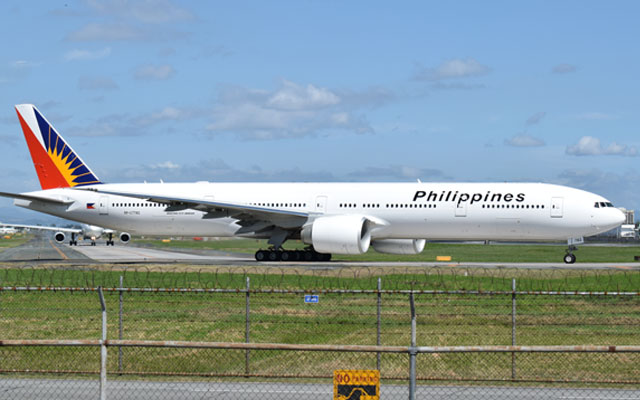
Philippine Airlines (PAL) is launching a network of international routes linking Clark International Airport in Pampanga to Seoul, Busan and Hong Kong.

Services to South Korea will commence in November, with PAL operating regular daily flights from Clark to Seoul Incheon starting November 11, along with four weekly flights from Clark to Busan starting November 10.

Philippine Airlines will start services to South Korea and Hong Kong in November and December respectively

The thrice weekly seasonal service from Clark to Hong Kong will start from December 9.

PAL currently flies between Manila and Seoul (Incheon) twice daily, as well as between Manila and Busan with four times weekly flights.

New hotels: Tribe Bali Kuta Beach, Radisson Beach Resort Palm Jumeirah and more

0
Tribe Bali Kuta Beach

Tribe Bali Kuta Beach, Indonesia
Tribe Bali Kuta Beach is situated on the famous Kuta beach strip, a 10-minute drive from the airport and within walking distance of restaurants and bars, the Beachwalk Shopping Mall, Waterbom Water Park, and Dewi Sri Street Food.

The hotel features 165 smart rooms, collaborative workspaces, decompression zones, and co-living areas. Also available onsite are restaurants, bars, gym, pool and event spaces.

Radisson Beach Resort Palm Jumeirah

Radisson Beach Resort Palm Jumeirah, Dubai
Located in the trendy, new hot-spot West Beach in Dubai, Radisson Beach Resort Palm Jumeirah provides travellers with easy access to the city’s lifestyle and entertainment destinations, including Nakheel Mall, Mall of the Emirates, and Emirates Golf Club.

The 389-room resort boasts multiple swimming pools, a spa and hybrid meeting rooms. There are also several restaurants and bars onsite.

Pullman Lombok Mandalika Beach Resort

Pullman Lombok Mandalika Beach Resort, Indonesia
Just a 20-minute drive from Lombok International Airport, Pullman Lombok Mandalika Beach Resort is nestled within a secluded bay and surrounded by verdant hills.

The 257-key resort offers convenient access to the nearby Pertamina Mandalika International Street Circuit, and trekking trails at Merese Hill and Mount Tunak Nature Park.

Facilities comprise four dining venues, fitness lounge, spa, pool and ballroom.

Artotel Casa Kuningan

Artotel Casa Kuningan, Indonesia
Artotel Casa Kuningan offers a service residence concept and features 46 rooms, with facilities such as a pool, rooftop bar, gym, and a restaurant.

The property is located close to embassies and government offices, business centres, and shopping malls.

Trip Affiliates Network expands partnerships with Tribe Rewards and United Points

0

Trip Affiliates Network (TA Network) has expanded their collaboration with Tribe Rewards and United Points (LT).

TA Network will power Tribe Rewards Booking Platform, which offers online hotel booking services on its loyalty platforms used by over 500,000 users in Singapore and Malaysia, to offer more than two million hotel properties globally direct booking capability using Tribe Points.

Trip Affiliates Network will power Tribe Rewards Booking Platform to offer online hotel booking services

With curated programmes that help businesses engage and develop cultures with their customer and/or employee, Tribe Rewards maximises merchants’ marketing dollars and help business owners and programme managers pre-qualify consumer needs. In addition, they get opportunities to supply via multiple programmes via the same channel – rewards, recognition, group-buy and savings.

Shaun Sha, chief commercial officer, Tribe Rewards said: “Participating companies can provide more personalised consumer experiences, evolve their loyalty programmes to stay current with customer expectations and help drive business value by creating loyal, lifelong customers.

“Loyalty commerce technology allows companies to evolve their loyalty programmes from a transactional to a human-centric approach, capable of creating personalised, relationship-building moments with each customer.”

TA Network’s partnership and integration with LT will bring together Asia-Pacific leading travel wholesalers, operators and destination management companies onto a single open travel ecosystem, where businesses will have additional tools to increase sales by rewarding loyal customers with discounts or other incentives while streamlining processes for customer retention.

Josef Foo, TA Network’s managing partner, said: “While loyalty programmes available in the market can help companies develop long-term relationships with customers and drive growth, many rely on outdated, fragmented technology.”

Foo explained that such programmes need to evolve with industry trends, such as shifting from traditional point-based reward programmes to exclusive experiences and products.

“Our integration with LT can realise synergies created to deliver meaningful experiences – LT’s powerful loyalty software working directly within a travel B2B digital ecosystem will enrich LT’s ecosystem through cross channel management, market basket analysis and data analytics.”

Off to an adventure

0

Adventure Travel Trade Association (ATTA) is an unfamiliar name in this part of the world. Will you give us a flash introduction to the association?

It is a name that is a little bit unfamiliar here, as you say, as it had originated in the US.

Established in 1990, ATTA advocates for adventure travel. Anybody who touches the adventure travel trade can be an ATTA member, so that means anything from tour operators who run adventure tours and travel agents who buy adventure tours, to gear and accommodation providers, tourism boards and media representatives.

ATTA’s current global membership is around 30,000. Forty per cent of that are tour operators.

The majority of our members come from the US, followed by Europe. Only six per cent are from Asia and four per cent from Oceania.

Within this region, our biggest representation is in Japan, Nepal, India, Australia and New Zealand, while in Vanuatu, Bhutan and Mongolia we have a small community of operators.

My role is to cultivate ATTA’s Asian membership, develop business, and look at ways to work with our partners to bring out the potential of adventure travel for destinations in this region.

I’ve been in Asia for so long, so I know that there are fantastic opportunities for adventure throughout the region. However, the rest of the world does not quite know it yet.

ATTA provides opportunities for members to meet international buyers, which is so important post-lockdown as businesses strive for recovery. There are North American and European buyers who are looking to develop what they regard as newer destinations here in Asia or different ways to experience the region. ATTA can facilitate these business connections.

I cannot help but notice that ATTA’s Asian members are in destinations typically associated with adventure – Nepal, Bhutan and New Zealand. That leaves you with plenty of room to grow membership in destinations seldom seen as an adventure paradise.
Absolutely! There are many countries with great adventure offerings but where we have only a handful of members – such as Thailand and Malaysia. There is a lot of work for me to do, but it is a happy challenge.

There is a belief that adventure tourism is a very niche segment. Is it truly that niche, or are we in Asia-Pacific missing something?
That’s a good question and the answer is no – adventure travel is not a niche segment at all.

In terms of monetary value, adventure travel is a growing segment. There was a 2018 study done on the size of the global adventure travel market, and it showed the market contributed US$683 billion to the worldwide economy. In comparison, the cruise market was US$119 billion and the global prescription drugs market was US$744 billion. So, that gives you a good view of the weight of adventure travel.

This huge headline number is fascinating but even more important is that a lot of this money actually stays in the community. According to ATTA studies, 65 per cent of adventure travel expenditure stays in the destination and 45 per cent of adventure travellers use a local operator.

Adventure travellers typically require the guidance of a local specialist. Imagine going for a multi-day kayaking adventure – you will need an adventure operator with local knowledge to make that happen.

Or insane courage to just pick up oars and go! Is adventure tourism all about intense activities though? How does ATTA define adventure?
Yes, that is another misconception. The word adventure often brings to mind something extreme, like jumping off a plane or climbing a mountain. At ATTA, we define adventure as something that combines three elements – activity, nature and culture. For us, an adventure could be a challenge, a transformational experience or a wellness pursuit.

Hence, going on a food tour and learning to cook a local dish, or taking a walk along a river in a new city can be adventures too.

Now, with this definition, you will realise that the traveller does not need to leave the urban environment for an adventure or to participate in something extreme. That broadens the opportunity for destinations to develop adventure travel offerings and for more people to participate in adventure travel.

Furthermore, by defining soft adventures as being part of the wider adventure travel mix, it becomes clear that adventure can be for everyone. We had a recent webinar discussing how to make adventure travel (universally) accessible and inclusive.

Since adventure tourism is defined as comprising nature and culture, can building an adventure tourism forte influence the destination and its tourism stakeholders to be more mindful of sustainability?
Definitely. For ATTA, sustainability is a core value. Sustainability is also at the heart of adventure travel because you need both the environment and the people for the formation of authentic experiences. People could refer to indigenous people, and the environment could refer to indigenous cultures, for instance.

We have been hearing more talk from governments about wanting to go after quality tourism – that is, quality over quantity ­– post-lockdown. Adventure travellers tick those boxes. But it remains to be seen if governments will stick to their quality tourism approach as travel recovers. It is easy to say you want quality tourists when tourists are few.

Destinations that are serious about attracting adventure travellers must truly walk the talk. Adventure travellers are very aware of their impact on the environment and are wary of greenwashing.

ATTA has a set of adventure travel guidelines developed with the help of a steering committee and relevant organisations, and one of them is about interpretation – how can an experience be interpreted in the local context. For example, when a traveller goes on a forest trail, he will learn about the environment, the native wildlife and how local lives are connected with the forest. This interpretation is also very powerful for communities, as it lets them realise the value of the place they live in and encourages them to preserve the natural environment.

When local communities realise the financial benefit of (travellers coming to visit their natural environment), they will no longer need to engage in activities like poaching or logging to make a living, which then contributes to sustainable development. Tourism job opportunities can also encourage youngsters to stay in the community (which then preserves culture) instead of leaving for the big city.

So, the sustainable benefits of adventure travel is wide-ranging.

From your observations, which destinations in Asia-Pacific are doing great with adventure tourism development and which have the potential to do more?
New Zealand is known as the capital of adventure travel here in Asia-Pacific, while Australia has positioned itself so well for adventure and indigenous culture.

Japan is also pushing very well on the adventure travel front. ATTA has worked with Japan for years now, from adventure guide training to destination positioning among adventure travellers. These efforts culminate with our 2023 Adventure Travel World Summit in Hokkaido.

South-east Asia can do so much more to demonstrate its adventure potential, but it is also important that destinations develop the necessary infrastructure before bringing in adventure seekers.

Tell us more about the Adventure Travel World Summit – what does it hope to achieve and who should attend it?
This is an annual event that brings about 800 people together from across the world; some ATTA members, some not. It focuses on adventure travel and dives into issues faced by stakeholders. There is also a marketplace and a meet-the-media session.

The Summit is unlike most trade events. It is very casual, in that attendees can come in jeans and tees. Being in adventure travel affords that comfortable setting. The event is across four days, and kicks off with Day of Adventure for attendees to pick an adventure they wish to experience in the host destination. It presents a fun and informal platform for attendees to network and break the ice.

Our recent Summit in Lugano, Switzerland had a strong focus on sustainability, not only through the content but also in the way the event was conducted. That tied in nicely with Switzerland Tourism’s Swisstainable sustainable tourism initiative.

For my Day of Adventure in Lugano, I chose to go on a cruise down Lake Lugano and then cook a dish of risotto. That’s my idea of an adventure!

There is a lot of hype over the Summit next year because it is ATTA’s first in this region and the first for Japan. The Summit has only rotated across the Americas and Europe previously.

Furthermore, Japan is a desirable destination among people from most parts of the world, and many outside of Asia are not familiar with Hokkaido. Our members in Europe and the Americas are eager to experience Hokkaido along with its Ainu indigenous people.

The Summit in Asia will hopefully attract more Asian attendees due to ease of access.

What other ATTA trade events are lined up for 2023?
We have AdventureElevate happening in Maine (the US) next May, an annual North American event. Although it brings mainly North American trade together, the marketplace feature sees the participation of some Asian destinations and sellers looking for a chance to meet North American buyers.

There is also AdventureConnects, a series of member networking sessions. Most are held in North America, but we also have a presence post-World Travel Market in London and at ITB Berlin.

I’m now planning the next Asia meet-ups for 2023.