TTG Asia
Asia/Singapore Sunday, 28th December 2025
Page 563

Trip.com, Atome offer regional buy-now-pay-later options

0
Airline industry incurs losses of US$1 billion per year from payments made on stolen, compromised or fake credit cards, IATA says

Trip.com has teamed up with Atome to offer buy-now-pay-later (BNPL) options to its customers in Singapore now, and other markets in the Asia-Pacific region next year.

Travellers in Singapore can pay for their flights and accommodation through flexible deferred payments by selecting Atome as a checkout option on Trip.com’s mobile app or website.

Travellers in Singapore can pay for their flights and accommodation through the buy-now-pay-later options

The announcement comes as Trip.com continues to expand worldwide with its all-in-one app-first offering.

Edmund Weng, regional director, Trip.com said: “This new regional partnership with Atome is also timely with the year-end holidays coming up and we look forward to making travel more affordable and accessible to even more of our customers in Asia.”

Atome’s regional head of commercial William Yang said the partnership allows the company to “support the post Covid-19 travel recovery boom”.

To celebrate the launch of the partnership, Atome is hosting an online travel fair _Own your Adventure_ from now until November 16.

Atome also recently partnered Klook to expand its BNPL payment options.

British Airways adds second Singapore-London service

0

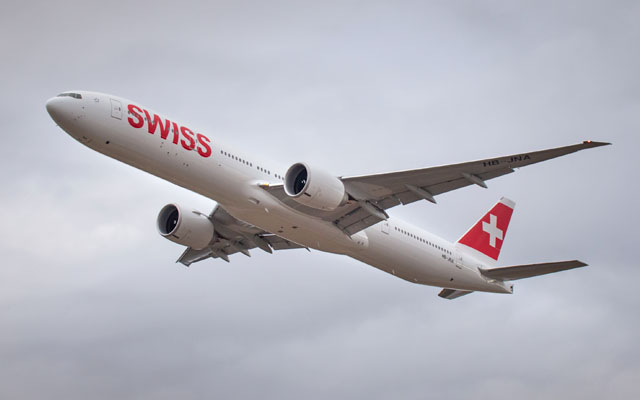
British Airways has added a second daily flight from Singapore to London, returning to its pre-pandemic schedule to Singapore.

The London-Singapore service will fly daily from November 6, departing London Heathrow Airport at 18.50 and arriving Singapore at 15.55.

British Airways will now fly twice daily from Singapore to London

The return flight from November 7 will also be a daily service, leaving Singapore at 23.15 and arriving in London at 05.25.

Arabella El Barkouki returns to Dorchester Collection

0

Dorchester Collection has appointed Arabella El Barkouki as its new global director of sales.

El Barkouki will be responsible for leading the brand’s global sales teams, developing sales strategies to support growth and spearheading policies, objectives and initiatives across the portfolio of current and future hotels.

The Brit brings over 20 years of leadership experience from the luxury hospitality industry to her role. She first joined Dorchester Collection in 2008, before moving to Mandarin Oriental in 2015 as head of regional sales Europe.

Most recently, she was vice president of global sales partners at Mandarin Oriental Hotel Group.

Hong Kong to soon allow inbound tour groups

0

The Hong Kong government has revealed specific arrangements for inbound tour groups that will come into effect this month, although no timeline has been given for implementation.

Groups with travellers holding an Amber Code on their Vaccine Pass will soon be allowed entry into designated attractions such as theme parks and museums, as well as partitioned areas in designated catering premises.

Inbound tour groups will soon be allowed entry into designated attractions and catering premises

Relevant licensed travel agents will have to pre-register the itineraries of their inbound tour groups with the Travel Industry Council of Hong Kong (TIC).

Tour groups will have to observe applicable anti-epidemic measures, such as the use the LeaveHomeSafe mobile app and comply with requirements under the Vaccine Pass. Staff members will need to wear a mask at all times when receiving inbound tour groups.

Discussions between the government and TIC on implementation details and conditions are ongoing.

The government is also exploring the possibility of allowing inbound tour groups on short-term stays in Hong Kong to undergo fewer nucleic acid tests upon their arrival and reduced daily ART/RATs during their days in the destination.

Hong Kong’s cautious approach to reopening has drawn mixed views from travel industry players.

While acknowledging that the new arrangements are a step towards recovery, Ronald Wu, executive director, Grayline Tours said: “Hong Kong is behind other neighbouring destinations like Singapore and Thailand where travel restrictions have already been lifted. The arrangements will definitely not spur any arrival growth because many other destinations no longer demand PCR tests.”

Wu hopes that the arrangements would “work out smoothly” without triggering “waves of infection”, so that the government would be encouraged to scrap remaining travel restrictions.

W Travel’s managing director Wing Wong expressed concerns about dining restrictions for tour groups. He drew reference to Japan’s initial reopening, which had also restricted the movements of inbound tour groups.

“It didn’t work,” he said, suggesting instead that the authorities allow tour groups to dine in restaurants that offer separate and private dining rooms.

He looks forward to directions from the government on procedures should travellers get infected during their trip.

Away & Co rebrands with new take on luxury travel

0

Leading Indian DMC Creative Travel (CT) is “diversifying” and focusing on the growth of its seven-year-old outbound arm Away & Co (A&C) to tap the country’s “enormous appetite for luxury travel”.

CT joint managing director, Rajeev Kohli, told TTG Asia that his younger brother and joint managing director, Rohit was overseeing A&C’s development and the target was for outbound business to match inbound in the next five years.

Rohit: to rewrite the idea of experiential travel in an ever-changing world

The rebranding of A&C, formerly Signature Tours, as a purveyor of fine experiences was on the cards before the pandemic and the disruption expedited the process, according to Rohit.

He described A&C as “destination agnostic” and that any destination would come alive through “an amazing experience-based journey”.

“What we have is deep knowledge and great partnerships across the world to rewrite the idea of experiential travel in an ever-changing world,” he said.

A&C, he added, would focus on destinations that were now underserved in the Indian market which include Central and Latin America, off-the-beaten path Africa, North Asia and Indochina.

Customer acquisition has been the focus since the rebranding, and A&C has been spending time and energy in training the team on product and positioning.

According to Rohit, a first-time traveller to Europe or Asia is not a typical A&C guest, and neither is a traveller going to Europe for the fifth time but wants to plan a “vanilla trip”.

Rohit observed luxury travel was “totally misconstrued in India”, and a booking with A&C was not just about staying at the best hotel or using the best car, but defined by the luxury of the experiences.

Despite India having a challenging ecosystem and a fragmented consumer mindset, the outlook is promising.

Rohit said: “India’s current economic growth pattern and all economic expert research clearly put the market as the future leading consumer of luxury goods and services across the world, and that’s not just a factor of the size of market – it’s the pure disposable income available.

“India continues to be among the top-three markets for many global destinations and this number will only climb further. The challenges now are really logistical in nature, such as prohibitive airfares and deficiency in visa processing by many destinations.

“However, we’re confident this will get alleviated soon enough,” he said.

Sustainable tourism at a critical juncture

0

The 2022 GSTC Asia-Pacific Sustainable Tourism Conference was held recently in September. What were the focal points at the event?
There were three principal themes: attraction & destination stewardship, MICE & hotels, and ecotourism & heritage.

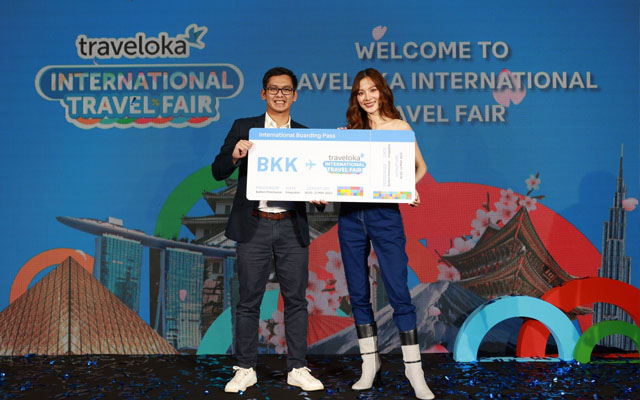
We started the conference with a keynote speech by Caesar Indra, president of Traveloka, which joined the GSTC recently and has a few collaborations with us in 2022. We also had a session on sustainable development, looking into the Saemangeum reclaimed land project in Jeonbuk, South Korea as well as the sustainable tourism path that Sentosa Development Corporation of Singapore is taking.

Another special session and topic focused on the young generation in the tourism industry. It was very well received, as we had young leaders (as speakers), including Natalie Kidd, chief people and purpose officer of Intrepid Travel; Jason Lin, CEO of Talent Basket; Jennifer Lin, senior business development manager of Rezio; Shinobu Hayama, CEO of Journey for Change; and Halim Choi, programme officer of Jeonbuk MICE Bureau.

Where do you think the travel and tourism industry stands in terms of sustainability?
The term sustainability is now mainstream. We have all the framework in place; we have credible assurance programmes set by GSTC, our partner certification bodies and accreditation bodies. We are working in this ecosystem together so we have this foundation.

We are also working with governments to support training to increase knowledge on the skills and benefits of sustainable operations and businesses. We have OTAs that are promoting (sustainability) to their customers.

We are at a critical point here. There are many stakeholders that can (facilitate) change and are making the change.

However, from a consumer perspective, it is still difficult to find a sustainable provider. We need hotels and tour operators to start making this shift to become more sustainable, especially since this proper system has already been set.

It is now much easier to explain the benefits of making this shift: becoming more sustainable usually means cost savings, allows for better market benefits, and it is the right thing to do!

There is no doubt that sustainability is the keyword for our industry. How will GSTC assert its authority as the global body for sustainable tourism to better educate both the industry and the public on this subject?
That is a very good question. Clearly, there’s still a lot of greenwashing, as well as misleading and false claims.

The UK’s competition and markets authority as well as equivalent bodies and two European Union member states had recently begun investigating companies over eco-friendly and sustainability claims, to make sure that consumers are not being misled. A greenwashing lawsuit was also filed against KLM Airlines in court in the Netherlands.

So, it raises the topic again on the liability to organisations and companies when they make sustainability claims. The assurance of sustainability claims is very important, and it is one of the GSTC’s core activities, which is eventually providing assurance for sustainable tourism. We do that through an accreditation programme for certification bodies as well as collaboration with standard owners.

I’m happy to see that different actions are being taken by regulators and private organisations to tackle that and to criticise those that make false or misleading claims.

It is also important to note that when we speak about sustainability in tourism, it is not just about the environment; it refers to a number of dimensions as set out in the GSTC criteria, including societal, cultural and economic aspects.

How has GSTC’s work evolved?
(There has been greater) involvement from governments with regards to guidelines and enforcement. We are now working specifically on supporting businesses in the region or country to be more sustainable.

In Japan, for example, we run tens of trainings every year sponsored by the Japan National Tourism Organization. In Turkey it will soon be mandatory for tourism businesses to follow the Turkish version of the GSTC criteria, with a transition period until 2030.

Booking.com, Agoda, Traveloka, Makemytrip, Google Travel – and a few more in the coming months – work with GSTC on different levels. The foundation is to highlight sustainable hotels and tours on their platform to consumers, a segment the GSTC does not directly engage with. When customers learn more about sustainable brands through these OTAs, it helps to push hotels and tour operators to adopt more sustainable measures.

(Accommodation buyers) are also joining the scene. For example, TUI and American Express Global Business Travel (AMEX GBT) make it clear in their RFPs that they prefer sustainable hotels.

So, GSTC’s collaboration with these three main stakeholders influences the travel and hospitality industry to become more sustainable.

How has the GSTC membership from destinations and hotel organisations evolved in the past two years?
I see three main trends. Firstly, destinations and governments have been introducing sustainability in a systemic manner over the past two years of the pandemic. This was very different from pre-Covid times where there was a general interest, moderate engagement, (and application of) some framework from the GSTC.

During the pandemic, many NTOs and DMOs invested a lot of effort into raising their skills, knowledge and cooperation to make their destination more sustainable. It is no longer just plugging the word sustainability into destination marketing campaigns, but pushing the agenda in a serious and systemic manner.

The second trend is the rise in hotels and chains joining GSTC and their sustainable tourism movement. Some of them are even updating their programmes (in accordance with) GSTC criteria.

Most notably, in March this year, the Singapore Hotel Association and the Singapore Tourism Board launched the Singapore Hotel Sustainability Roadmap with a goal of reaching 60 per cent of hotel room stock certified by GSTC-accredited certification bodies by 2025. It’s a great example of collaboration between the government and the private sector. It has really pushed hotels to take this topic more seriously.

One of our important OTA members, Agoda, launched online training for Singapore hotels in October, using their CSR budget to support this (initiative).

The third trend is an increasing demand for business travel to be more sustainable. AMEX GBT is actively promoting and preferring hotels that are certified by GSTC-accredited certification bodies, as it recognises the importance of assured sustainability claims made by hotels.

Recently, we also had BCD Travel and CWT join GSTC as members. These three huge entities represent the majority of the corporate and business travel companies out there, and they mean business when it comes to sustainability.

What more can we expect from GSTC’s work in 2023?
One core message to highlight in 2023 is the emphasis on the general usage of the sustainability standards as guidelines. Anyone can use the standards, which are readily available and free on the Internet, such as the one published by GSTC.

Apart from the GSTC Destination and Industry criteria, we are now in the process of creating the GSTC Attraction criteria and the GSTC MICE criteria which we expect to be published at end-2023 or early 2024.

Genting Dream readies for Phuket

0

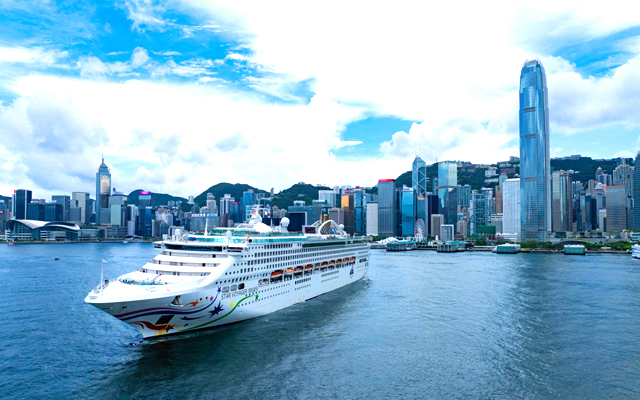
Resorts World Cruises (RWC) will launch three- and five-nights cruises to Phuket from both Singapore and Kuala Lumpur (via Port Klang) aboard Genting Dream later this month.

Guests can choose to board the ship from Singapore for the five-night Kuala Lumpur-Penang-Phuket cruise departing on November 20, 2022 and March 12, 2023; or from Port Klang on November 21, 2022 and March 13, 2023 for a five-night Penang-Phuket-Singapore sailing.

Genting Dream will commence sailings to Phuket In November; fishing village Koh Panyee pictured

There are also the three-night options, from Singapore and from Port Klang with sailing dates available between May 2023 and April 2024. All cruises to Phuket will offer shore experiences.

Bookings will open from November 15.

Michael Goh, president, RWC, said Genting Dream’s two- and three-night cruises have been very popular.

“As such, the introduction of Phuket as a cruise destination is timely and will further fuel the growth of the domestic and FlyCruise markets in the region,” said Goh.

Nongyao Jirundorn, director, Malaysia & Brunei, Tourism Authority of Thailand, said: “As the cruise tourism industry is making a comeback, we are delighted to collaborate with Resorts World Cruises to welcome more inbound tourists to Phuket and across Thailand from the cruise sector.

“We are excited that more calls to the island are confirmed and expected in 2023 and 2024.”

Emirates boarding pass unlocks winter offers in Dubai

0

Emirates is bringing back its popular My Emirates Pass. Starting from November 1, 2022 to March 31, 2023, My Emirates Winter Pass enables customers to get more from their trip with exclusive offers at over 500 locations in the UAE.

Emirates customers flying to or through Dubai can show their boarding pass and a valid form of identification to access discounts on hundreds of retail, leisure and dining outlets, as well as attractions and spas, throughout Dubai and the UAE.

Emirates customers can get discounts throughout Dubai and the UAE with their boarding pass

In November, travellers can enjoy a complimentary Creek Sightseeing Cruise with Tour Dubai on a traditional dhow boat to see Dubai’s historic district.

Members of Emirates’ Skywards loyalty programme can earn miles on everyday spends at retail outlets in the UAE, and redeem these miles for reward tickets, upgrades, concert tickets and sports events tickets.

In addition, customers can browse, create and book their own customised itineraries including flights, hotel stay, visits to key attractions, and other dining and leisure experiences in Dubai and the UAE, through Emirates’ Dubai Experience platform, and enjoy even more benefits.

NFTs – Innovative technology for hotels and hospitality that could come back to bite us

0

Everyone is talking about NFTs – non-fungible token technology, and businesses are spending big bucks on massive opportunities for bringing this technology to the hospitality industry. In fact, last year over $2B was spent in the first three months. While the global luxury hotels and resorts industry is expected to be a $160 billion market by 2031, the experience economy is forecast to reach $8 trillion, with the metaverse market opportunity a mind-blowing $13 trillion.

It is no wonder that excitement has reached fever pitch, and big brands are jumping on board. It’s not difficult to see the potential of this technology and what it could bring to a hotel, as the possibilities are endless. Leading hotel chains are already releasing their versions of NFTs with actual use cases to benefit their clients worldwide.

In 2021, Marriott International was among the first brands to benefit from the value of NFTs in the form of hotel technology to reignite a passion for travel following a long lockdown period. The hotel partnered with digital artists TXREK, JVY, and Erick Nicolay, to create unique digital images that owners would claim as their original artworks. During the Art Basel Miami Beach 2021 event, the hotel unveiled a collection of artworks with NFTs awarded to individuals who could redeem them for travel experiences. It inspired people to start traveling again. Marriott saw where people were hanging out during lockdown and knew they had to be there too.

The most successful metaverse and NFT projects will be those that build communities. Finding new ways to engage communities and appeal to them. Initiatives that tap into the growing experience economy is key for any business venturing into Web3. Wyndham Hotels partnered with a crypto start-up to create a Bitcoin rewards programme for their guests which allows them to claim Bitcoin rewards for cash or loyalty perks.

However, even with the emerging rise of technology, the basic business model of the hotel industry requires an in-person experience. At the end of the day, hotels need guests to physically visit their locations and stay in “real” rooms.

Some hotels are considering selling reservations as NFTs. The idea is basically that a customer books a room and receives an NFT. If they can’t meet the reservation, they can resell it to someone else. It will enable them to make their money back, and the hotel doesn’t have to deal with an empty room. It sounds good in theory, but ultimately this will lead to chaos.

This model will likely encourage a secondary market for popular tourist destinations. Scalpers will buy up nights in advance, then resell them for a profit when tourists run out of alternatives. The biggest problem, however, will be the impact this has on the local economy. If a business buys up nights to sell at a hugely inflated price, they may stop selling once they’ve made enough profit. This would leave many rooms empty, which would lead to staff losing their jobs. This will trickle down to local businesses, bars, and restaurants that will lose thousands from non-existent guests. The solution could be that other industries, such as airlines, move in to buy up the NFTs; however, this would affect the smaller players that don’t have the resources to do this.

Metaverse technology, if utilised correctly, should enhance and complement the “in real life” hospitality and travel experience, not try to replace it. The potential of this technology is limitless; however, before we get carried away with the possibilities, it needs careful monitoring and agreed rules and systems from the outset.

Dao by Dorsett AMTD Singapore

0

Location
Rebranded from the Oakwood Premier AMTD Singapore, the 268-key aparthotel is located at OUE Downtown in the heart of Singapore’s vibrant business district and a five-minute walk from Tanjong Pagar MRT Station.

Accommodation
I stayed in a one-bedroom serviced apartment, which was spacious and featured a full-sized kitchen, a dining table with four chairs (which doubled up as my workspace), a sofa in the living room and a TV – there was a king-sized bed and another TV in the corner bedroom.

The view from the bedroom is unbeatable, where windows running along the L-shaped wall of the building opened out to a glittering sea view, the Marina Bay Cruise Centre, and Tanjong Pagar Terminal.

The property is still in the middle of conversion, so the small bottles of shampoo and body wash will soon be replaced by big refillable aluminium pump bottles from vegan-friendly brand Abyssian. The sustainable brand is known for its hair care products, and will be exclusively producing shower gels and hand washes for Dao by Dorsett.

We felt that the shower pressure was lacking, but as we were only staying a night it didn’t bother us much. We raised it to duty manager Peng Wee upon check out, and he promised to look into it.

My stay also included a Dao+ experience, similar to a club experience, as the hotel has no club room floors. This can be opted in for a fee, and is chargeable by day. Guests have the flexibility to add on the benefits for just a day, or their entire length of stay.

The Dao+ experience includes a fruit platter, welcome snacks, Bacha coffee, in-room dining breakfast with prosecco, a turndown service, and complimentary Dao+ cocktails and canapes from 17.00 to 20.00 at The Living Room.

F&B
Collective is the only F&B offering on-site, offering a mix of local and Western dishes. Highly recommended dishes include the Truffle Wagyu Beef Horfun, and their elevated take on Nasi Lemak (sambal river Prawn, squid, turmeric chicken, fried egg, coconut-infused rice). Portions were substantial, and arrived not long after we placed them.

The menu also has a page dedicated to plant-based dishes, created in collaboration with vegan restaurant Green Common.

Dao by Dorsett AMTD uses TWG tea in all of its rooms and F&B service, and is currently developing an exclusive Dao tea blend.

Facilities
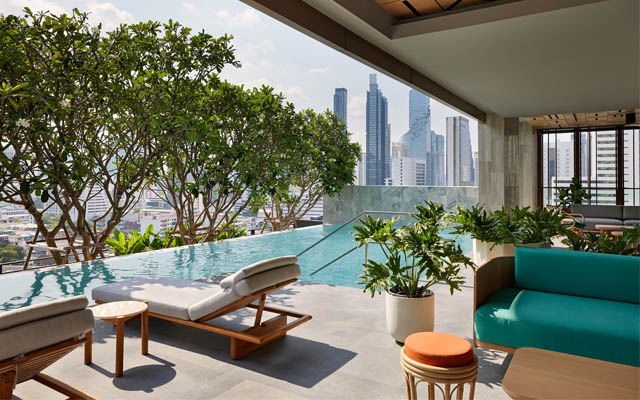
An outdoor swimming pool, gym, boardroom and event space, are all found on level seven. There is also a complimentary shuttle service to several locations – such as Vivocity and Marina Bay Sands – at fixed times.

What sets Dao by Dorsett AMTD apart from its competitors is that the hotel is all about personalising a guest’s stay according to the brand’s three attributes: Harmonious, Custom-Fit and Social. To this tune, the hotel has collaborated with several local partners to offer guests experiences not commonly found at other properties.

For instance, upon arrival, I was invited to visit the custom-built Dao Plant Library presented by The Botanist & Her Thieves – where I learnt that as part of the Harmonious concept, one could adopt a houseplant for the duration of the stay. Although I opted out, I can see how long-stay guests would appreciate a spot of green in their apartments.

Instead, I chose the Custom-Fit experience, where I received a food box from local fresh produce company Avo & Co to whip up breakfast within the comfortable confines of my room, as opposed to Collective for a buffet breakfast. My fresh produce box included fruits such as green grapes and strawberries, as well as a packet of granola, yoghurt, a box of eggs, cherry tomatoes on vine, and a carton of milk. Hotel staff also thoughtfully provided a small jar of olive oil, salt and pepper for my cooking needs.

Dao by Dorsett is also one of the few hotels that extend a warm welcome to furry companions, and offers a specially-designed package that includes comfortable beds, treats, toys, and bowls to make their stay as comfortable as yours.

Other custom-fit options include guests being able to request for fitness equipment like dumbbells, yoga mats or spin bikes, as well as in-room spa accessories such as a sweat blanket and LED red light therapy.

Under the Social umbrella, the hotel has also struck up partnerships with Brass Lion Distillery for cocktail-making tours, and The Bloom Box for flower-arranging workshops. For fitness enthusiasts, complimentary trial classes at Absolute Cycle, Haus Athletics, and Boulder Movement can be arranged.

Service
Warm, welcoming and attentive – from the driver who picked me up to the service staff at the restaurant.

Verdict
My stay was sequestered and peaceful, a far cry from the hustle and bustle reflective of its prime location. For my 24-hour stay, I didn’t even step out of the hotel once; that’s how comfortable I was. I left recharged and refreshed, which I reckon should be the case for all staycations.

Contact details
Tel: +65 6812 6000
Website: https://www.daobydorsett.com/dao-by-dorsett-amtd-singapore/hotel-overview.html