The Standard, Bangkok Mahanakhon is offering a new Make Room for Mott 32 package that includes an overnight stay, breakfast and lunch at Mott 32 Bangkok, one of Hong Kong’s most celebrated Cantonese restaurants.
The set menu will feature Mott 32’s hallmark Cantonese dishes prepared with a modern flair along with nods to other regional cuisines of China.
Enjoy Mott 32’s hallmark Cantonese dishes at The Standard, Bangkok Mahanakhon
Dishes include starters such as pan-fried turnip cake with conpoy, and King prawn Ha Gow; soup of the day; mains like sweet and sour pork with dragon fruit and aged black vinegar, and tossed Shanghainese noodles with dried shrimp and scallion oil; and sweetened guava soup with sago and pomelo as dessert to round off the meal.
The Make Room for Mott 32 package can be booked for stays until the end of December 2023, with rates starting from 8,700 baht (US$249) per room per night which includes breakfast, and lunch set at Mott 32 Bangkok for two persons.
Khiri Campus, a new specialist ground handler and programme creator for young people around the world travelling with educational institutions, has launched in Asia, taking over from Ground Asia, which ceased operations in 2021 due to the pandemic.
Through the rebranding and relaunch, Khiri Campus will leverage on the expertise, knowledge, itineraries, reputation and contacts of its predecessor, Ground Asia. Both have been responsible for implementing 237 projects for 4,036 students in six Asian countries over the last five years.
Khiri Campus offers programmes for schools where students experience service learning, outdoor adventures, cultural explorations and environmental work
According to Future Market Insights (FMI), 73 per cent of the global educational tourism sector was generated by the 19-25 age group pre-Covid, with an estimated worth of US$400 billion a year. FMI also estimated a growth rate of over 17 per cent leading to 2031.
With the educational travel sector for young people growing strongly again, Khiri Group’s director, Simon Drayton, said the timing for the rebrand and relaunch was right.
“The new Khiri Campus starts with fully enhanced and updated itineraries and field learning options,” he said. “Post-Covid Khiri Campus journeys have been designed for global students seeking to strengthen leadership skills and learn first-hand about different cultural, educational training experiences and MBA study tours.”
Khiri Campus offers programmes in Thailand, Vietnam, Cambodia, Sri Lanka, Indonesia and Laos.
Just last month, Khiri Campus took 12 students from Australia on a 15-day culture-focused trip to Sri Lanka. They also facilitated and led a visit of 19 Australian college students on a 15-day trip to Java, Indonesia, where the focus was on biotech, pharmacy and public healthcare.
For universities and colleges, Khiri Campus now offers business, health care, social science and natural science learning trips. For schools there are programmes for service learning, outdoor adventures, cultural explorations and environmental work.
Drayton shared: “Due to pricing and the quality of cultural and field experiences, Khiri Campus expects Asia to be at the forefront of a renewed demand for educational travel for young people.”
Vietnamese travel tech company VNTravel has extended and expanded its partnership with Yanolja Group to boost innovation and collaboration in the travel and technology sectors in Vietnam.
Both companies will collectively revolutionise the travel landscape through digital solutions in both B2C and B2B verticals, and drive technological advancements to deliver unparalleled experiences to travellers in both Vietnam and South Korea.
From left: VNTravel’s Giang Binh Tran and Yanolja Cloud’s Andrew Kim
VNTravel and Yanolja will work together to develop and deploy innovative travel technology solutions, including enhancing VNTravel’s OTA and SaaS Hospitality Management Solution offerings.
Through this collaboration, VNTravel and Yanolja will share with each other their extensive network of accommodations and hospitality solutions, enabling both companies to enhance their portfolio of offerings, providing international customers with an even wider range of options and ensuring exceptional travel experiences across Vietnam as well as South Korea.
Both companies will also foster collaborations with local and international industry partners, including airlines, tour operators, and other travel service providers. By creating synergistic relationships, the companies aim to elevate the travel ecosystem, drive economic growth, and position Vietnam as a prominent player in the global travel industry.
Giang Tran Binh, CEO at VNTravel Group, said: “This partnership signifies our shared vision to transform the travel landscape in Vietnam, fuelled by technological innovation and collaboration. Together with Yanolja, we are poised to revolutionise the way people travel, unlocking new opportunities and delivering exceptional value to our customers.”
“By strengthening the partnership between Yanolja Cloud and VNTravel, we will continue to create innovations and additional value for all travellers coming to and travelling between South Korea and Vietnam,” added Andrew Kim, senior director of global partnerships at Yanolja Cloud.
Sunway Resort Hotel has revealed the latest phase of its transformation, which is part of its most extensive renovation in its 25-year history. Works that started in 2020 are said to come with a price tag of US$60 million.
The next-stage transformation will see the creation of fresh facilities and accommodation tailored to the needs of families.
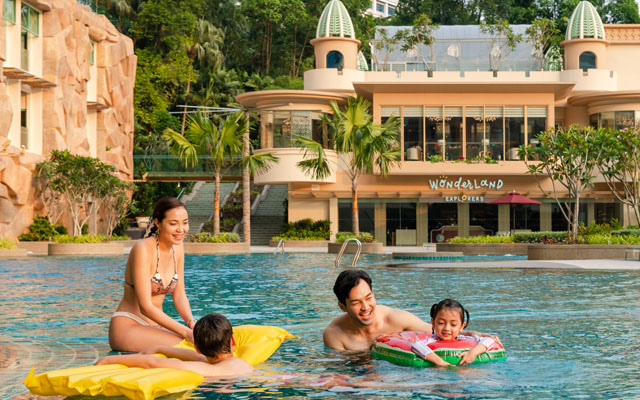
New family-friendly attractions, facilities and accommodation will emerge through the next phase of redevelopment
The line up of new facilities include outdoor splash zone Waterventure, which features shallow pools and a water playground to keep children occupied while parents chill out on the sun loungers. This will join the revamped tropical freeform swimming pool.
Also new will be the Wonderland Explorers kids’ club, which will offer activities, interactive games, quiet corners and technology rooms. Young guests can learn about science and sustainability as they play.
Sunway Resort Hotel will also mark out family rooms in its accommodation inventory. These units are perfect for two adults and two children, and come with kids’ bathroom amenities, bathrobes and slippers.
The Waterventure Terrace rooms offer direct access to Waterventure, while the Family Terrace rooms enjoy a larger space, connecting room options, and a view of the pool.
The Family Fun Suites come fully equipped with a separate entertainment zone including karaoke, gaming consoles, big screen entertainment and complimentary kids’ treats, as well as daily breakfast at the Sunset Terrace, which includes a dedicated children’s buffet area.
Families can also get together for a complimentary afternoon tea at the Premium Leisure Lounge.
“Sunway City Kuala Lumpur is Asia’s premier integrated resort and these latest facilities will reaffirm our status as a leading destination for families. We look forward to welcoming all guests to the new-look Sunway Resort Hotel and helping families create lifelong memories,” said Alex Castaldi, senior general manager of Sunway City Kuala Lumpur Hotels.
Vietjet is offering complimentary Sky Care travel insurance for all passengers flying on domestic and international flights in the airline’s network regardless of their ticket class.
Coverage benefits including reimbursement of medical expenses incurred due to accidents or illnesses (including Covid-19), flight-related problems (flight delay, baggage delay, baggage loss or damage, lost travel documents), and Global Travel and Medical Support Services 24/7.
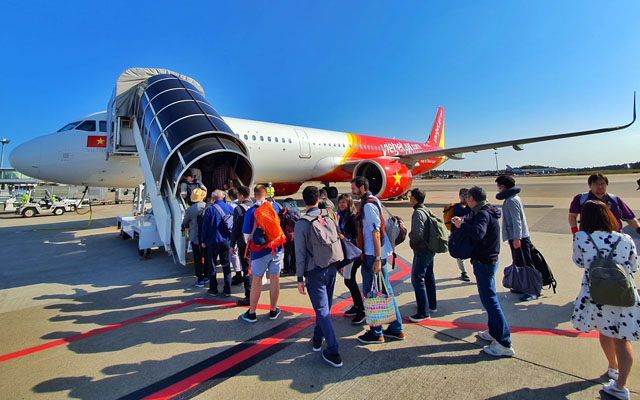
Passengers now receive free travel insurance when booking Vietjet flights
Guests who successfully purchase their tickets will automatically receive Sky Care travel insurance when flying with Vietjet.
Passengers will be able to look up the insurance certificate information online after 24 hours from the time of completing their flight.
The Formula 1 (F1) Singapore Airlines Singapore Grand Prix (Singapore GP) 2023 has unveiled its complete entertainment programme, which will feature a mix of local and international acts.
From September 15 to 17, fans can look forward to over 80 hours of entertainment throughout the Circuit Park as well as an array of activities to complement action on the track. This year also showcases the most acts ever at the Zone 4 Padang Stage.
Fans can look forward to over 80 hours of entertainment throughout the Circuit Park at this year’s race; Marina Bay Street Circuit, pictured
Asian-American record label 88rising’s line-up for September 15 comprises Jackson Wang, NIKI, Rich Brian, Warren Hue, XG, BIBI, MILLI, and Atarashii Gakko!.
Rock band Kings of Leon is one of the headliners at the Zone 4 Padang Stage on September 16 and the Zone 1 Wharf Stage on September 17.
Texan artist Post Malone will perform on Zone 4 Padang Stage on September 16, while indie band The Kooks and British pop band Culture Club will both make an appearance on the Zone 1 Wharf Stage. Culture Club’s lead singer Boy George is also scheduled to perform an exclusive DJ set at Twenty3 on September 17.
On September 17, race spectators can catch British electronic music duo Groove Armada on Zone 4 Padang Stage, and British band Madness playing at the Zone 1 Wharf.
Singapore artists will take to the stage too – local pop singer-songwriter Matilde G, singer-songwriter Dreebsby, dance troupe Royalusion and indie rock band Hijack Hayley have been confirmed.
Other highlights include the F1 Drivers’ Meet & Greet Sessions on September 15 and 16 at the Zone 1 Wharf Stage, the Porsche Carrera Cup Asia, and TSS The Super Series.
Due to the high demand, Singapore GP has previously added tickets for the Sheares (Turn 1) and Promenade (between Turns 17 & 18) grandstands. Now, limited tickets are also available for two new grandstands – Bayfront (Turn 17) and Raffles (Turn 5).
All tickets to the F1 Singapore Airlines Singapore Grand Prix 2023 provide access to the concerts at the Padang Stage in Zone 4; Zones 1 and 2 ticket holders can also look forward to complimentary rides on the Singapore Flyer over the race weekend this year.
Gran Meliá Nha Trang, Vietnam Gran Meliá Nha Trang boasts 272 rooms, including 94 private pool villas and the multi-level four-bedroom villa. All private villas come with infinity pools, dining areas, and indoor and outdoor living spaces.
A 55-minute drive from Cam Ranh International Airport, the property features five dining venues, a spa, infinity pool, gym, kids club, kids pool, and a multi-function space that caters up to 110 guests.
Situated within a new leisure and entertainment destination, Vega City, resort guests also have access to an opera house, a beach club, and shophouses nearby.
Centara Grand Hotel Osaka
Centara Grand Hotel Osaka, Japan Centara Grand Hotel Osaka is a 33-storey tower located near Namba, Osaka’s vibrant entertainment and retail district.
The hotel features 515 rooms and suites, with facilities such as a spa, fitness centre, F&B outlets, and meeting venues.
INNSiDE by Meliá Bangkok Sukhumvit
INNSiDE by Meliá Bangkok Sukhumvit, Thailand Situated in the heart of Bangkok’s vibrant On Nut neighbourhood is the 208-room INNSiDE by Meliá Bangkok Sukhumvit.
Featuring a sky-high transparent infinity pool, pool bar and a Spanish tapas bar, the hotel also offers facilities such as an integrated co-working space and lounge, as well as meeting rooms.
OMO3 Asakusa
OMO3 Asakusa, Japan The 98-key OMO3 Asakusa is just a four-minute walk from Asakusa Station and a minute’s walk from Senso-ji Temple, Tokyo’s oldest temple.
Guests here can see a different side to Asakusa at night and in the early morning with guided tours that reveal the old streets, dining options, and the charm of the old town.
There are eight different room types catering to different travelling needs and groups sizes, as well as a round-the-clock Food & Drink Station.
Marriott International’s travel programme Marriott Bonvoy is amping up this summer with a Sizzling Summer Music Fest, featuring a series of music events taking place across its portfolio of hotels in Japan.
Music lovers can get up close with Japan’s rising music stars across a series of immersive music events in Tokyo and Osaka. On July 28, MIYAVI at W Osaka takes guests to the port city of Osaka headlined by Japan’s rock legend and Samurai guitarist, MIYAVI. Rocking the stage with MIYAVI are singer/DJ Alisa Ueno, music duo twins AMIAYA and DJ TAIKI & NOAH.
Marriott Bonvoy’s Sizzling Summer Music Fest will feature music events across its portfolio of hotels in Osaka and Tokyo
Japan’s singer and songwriter SIRUP is set to showcase his distinctive music at Aloft Osaka Dojima on August 10. The Marriott Bonvoy Moment experience includes an exclusive meet and greet with SIRUP, followed by an evening of live performances at WXYZ Bar with DJs Ami and Nono Thing adding to the line-up.
Free-spirited guests can discover new music, connect and revel in an inclusive, playful, and fun-loving community during DJ Night Party at Moxy Osaka Honmachi on August 22. Catch DJ Alisa Ueno, DJ HiRAPARK and NaNaMi spinning the hottest tracks at Moxy Bar & Lounge.
From August 19 to 20, one of Japan’s largest international music festivals, Summer Sonic 2023, will take place at the ZOZO Marine Stadium and Makuhari Messe in Tokyo. Marriott Bonvoy members will get VIP access which includes entry to the private viewing area, private lounge, shuttle service and more.
Banyan Tree Krabi, a 72-key resort situated on Tubkaek Beach, is encouraging its guests and corporate groups to immerse themselves in the local Southern Thai culture, by joining weekly excursions to a nearby island renowned for producing batik fabrics and woodcrafts.
A lunch, comprising home-grown fruits, vegetables and recipes passed down from one generation to the next, is served on a floating restaurant among the mangroves, then the guests meet the villagers and interact.
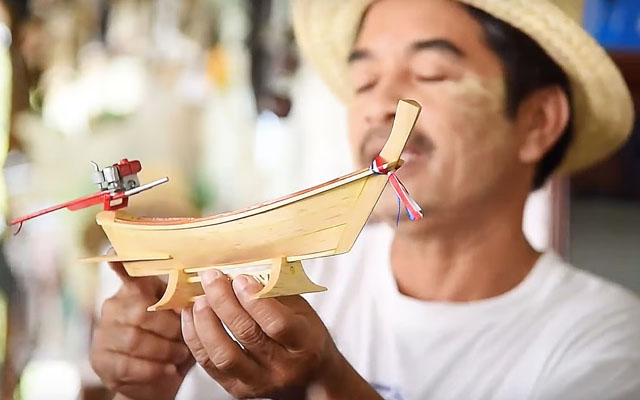
Guests can learn how to carve longtail boats from local craftsmen
Among the daily pursuits visitors can experience include joining the local craftsmen who carve and create wooden models of longtail boats, which are sold in Krabi as souvenirs; and sitting with the women of Ban Koh Klang who are veterans of batik art, mixing organic dyes and painting colourful fabrics. Harvesting rice in the fields with a local family is included as a seasonal activity.
The excursions are good for groups with no more than seven participants.
This initiative is part of the Banyan Tree Group’s Stay for Good programme. Launched two months ago, the programme aims to entice guests at five-star hotels worldwide to roll up their sleeves and join neighbouring villagers at work.
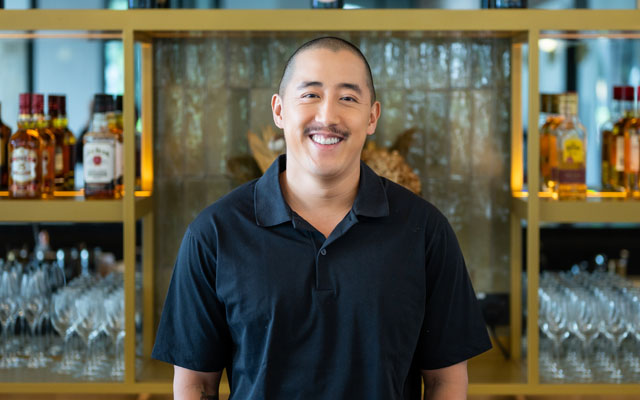
Habyt has appointed Jonathan Wong as its new chief executive officer for Asia-Pacific.
He will lead the business in the region by delivering commercial success for real estate partners, enhancing stay experiences for members, expanding Habyt’s presence across the region, as well as deepening its footprint in current cities.
Prior to joining Habyt, Wong held senior executive positions in CloudKitchens Asia-Pacific and Uber South-east Asia.









 Prior to joining Habyt, Wong held senior executive positions in CloudKitchens Asia-Pacific and Uber South-east Asia.







Sunway Resort Hotel has revealed the latest phase of its transformation, which is part of its most extensive renovation in its 25-year history. Works that started in 2020 are said to come with a price tag of US$60 million.
The next-stage transformation will see the creation of fresh facilities and accommodation tailored to the needs of families.
The line up of new facilities include outdoor splash zone Waterventure, which features shallow pools and a water playground to keep children occupied while parents chill out on the sun loungers. This will join the revamped tropical freeform swimming pool.
Also new will be the Wonderland Explorers kids’ club, which will offer activities, interactive games, quiet corners and technology rooms. Young guests can learn about science and sustainability as they play.
Sunway Resort Hotel will also mark out family rooms in its accommodation inventory. These units are perfect for two adults and two children, and come with kids’ bathroom amenities, bathrobes and slippers.
The Waterventure Terrace rooms offer direct access to Waterventure, while the Family Terrace rooms enjoy a larger space, connecting room options, and a view of the pool.
The Family Fun Suites come fully equipped with a separate entertainment zone including karaoke, gaming consoles, big screen entertainment and complimentary kids’ treats, as well as daily breakfast at the Sunset Terrace, which includes a dedicated children’s buffet area.
Families can also get together for a complimentary afternoon tea at the Premium Leisure Lounge.
“Sunway City Kuala Lumpur is Asia’s premier integrated resort and these latest facilities will reaffirm our status as a leading destination for families. We look forward to welcoming all guests to the new-look Sunway Resort Hotel and helping families create lifelong memories,” said Alex Castaldi, senior general manager of Sunway City Kuala Lumpur Hotels.