 Kempinski’s Asia-Pacific presence has so far been most prominent in China (21 in operation), but in a short time you have opened one in Bali and just signed on two more – one in Ubud and another in Lombok – both opening in 2027. What led to the Indonesia spurt, and where else in South-east Asia do you have eyes on?
We have to look at profitable growth first and foremost, then ideally, with one partner who will give us a family with many ‘children’ (properties). We are a small company with 81 hotels, with something like 31 in the pipeline – that is the fastest growth in the company’s history. We signed over 20 deals in the last 2.5 years.
We have to be very selective.
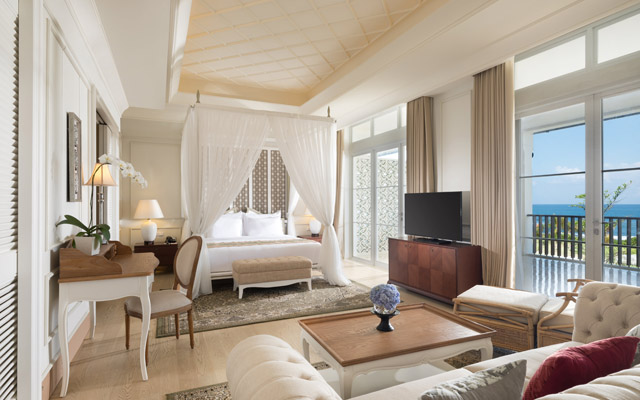
Our Indonesian properties are with one partner: the Katuari family (which runs real estate firm Panorama Indah Dewata). They are a fantastic owner who built us a beautiful hotel in Nusa Dua – The Apurva Kempinski Bali. This property was where the G20 was hosted last year, and it earned us extensive publicity.
The same owner then looked at Lombok, where a large integrated resort with several hotels has been planned; Kempinski will manage one or two of them and be the anchor project. Following that, a discussion came up about Ubud, which has vast opportunities for hotel development.
There are only a handful of hotel operators in Bali that have a property on the beach and also in Ubud. I think hotel operators today have to give guests a necklace of different destinations.
Now, to your other question, where we want to be in South-east Asia: we have a project (8 Conlay Kempinski Hotel) in Kuala Lumpur (Malaysia), which is part of a mixed-used development just opposite of Pavilion; and we signed one in Khao Yai (Thailand), which is part of a massive integrated resort that will also have a Kimpton, a golf course, and an airstrip.
We are looking at what else can be put on in Thailand. We want to be on the beach side, joining our two absolute flagship hotels in Bangkok which are doing very well. Siam Kempinski, which has a strong retail component, is doing very well with the Middle Eastern and business markets. The Middle Easterners buy suites, which has a big impact on average rates. Our other hotel, Sindhorn Kempinski, is very different. It has over 4,000m² of wellness space and offers a lot of tranquillity.
I would like us to also go into Vietnam, where we could do one in Ho Chi Minh City or Hanoi plus another one along the coast; Manila is important for us too.
We had a project in Yangon, but that was stopped because of the crisis.
(Also), Hong Kong and Macau are good too and would be our logical next steps – but they are difficult to enter.
How has Kempinski’s top outbound market mix changed?
China was traditionally our strongest outbound market, and I’m always super positive about China. There are 150 million outbound travellers pre-Covid, and only 10 per cent of the population hold a passport, so there is room to grow. This pond is big and will remain big. We should not worry about short-term issues, like insufficient flights and visa problems.
What surprised me was the strength of the US outbound market. We have no hotels in the US, but we are doing a lot of activities in the US with our partners like AMEX FHR (American Express Fine Hotels+Resorts). Today, the US is our strongest market. It is also a market that buys suites, which is different from the European market which traditionally upgrades to a club floor or harbour view.
India’s outbound market is also doing extremely well.
The future will be about these markets, but we must not forget South-east Asia and South Korea. The travel spend in both regions is really high. There are Singaporeans taking up beautiful hotels in the Alps for destination weddings. We need to do better in these markets.
We did a news piece for TTGmice recently on where Asian corporate events are heading to, and found that Asian destinations are favoured now due to high travel costs and careful budgets. Are your MICE-friendly properties in Asia benefitting from more Asian bookings?
This depends on the destination. Here in Singapore, for example, the glass is always full. The way the Singapore Tourism Board is handling MICE development is too good to be true, but this is not the case in some other Asian destinations.
In China, we have a lot of hotels with large event spaces – lavish ballrooms, multiple breakout rooms, and so on. Many of them were used for large government functions, and this segment has gone down.
MICE is the most profitable segment for hotels because we get business on the books one or two years in advance; we can secure a deposit ahead of time, and the customer acquisition cost is relatively low, with one person booking multiple room nights, coffee breaks, three meals, spa, airport transfers, etc.
We love the MICE segment. However, in an environment with geopolitical risks, recession risks, and interest rate hikes, MICE is something that is moving very slowly as business leaders are just nervous about spending. So, we have to be more active and creative, and do more of other things (events), like pop-up restaurants, to use our real estate (spaces in the hotel) in a different way.
Looking at how expensive travel has become, how do you expect business to be in the coming months and next year?
The rate hikes in the world this summer are enormous, and they are all driven by leisure travel. It begs this question: is this sustainable?
Repeat business is the most profitable business in the world. You look at the great European resorts as an example – they are not so strong on yielding, but they have sometimes up to 70 per cent repeat business. When you have so much repeat business, you won’t need to spend a lot on customer acquisition.
The risk of yielding too aggressively – like squeezing blood out of stone – is losing the customer in the long term. So, we, the hotel sector, have to be careful and not overdo it.
That said, I am quite optimistic about the way forward. I think that corporate, leisure and big events will come back by 2024, and it is just a question of when.
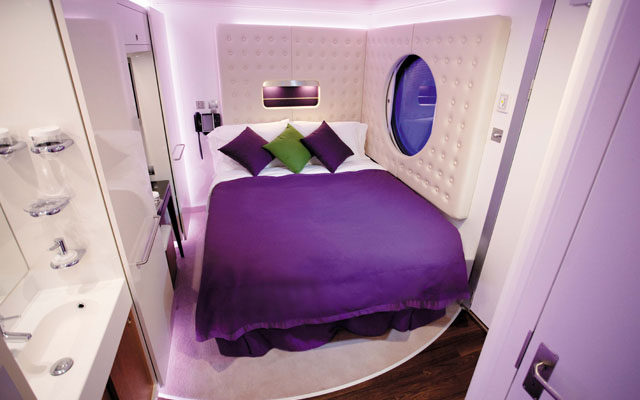
There is one interesting thing that is happening with leisure travel today. We see customers go into the Adlon (Hotel Adlon Kempinski Berlin), but they fly with a budget airline. People are wanting to splurge on their hotel stay. We also see tech entrepreneurs from Silicon Valley, who fly only first class around the world, check into Motel One because they just need a good breakfast and Wi-Fi.
When I am in Berlin, I sometimes fly EasyJet to Geneva because the airline has a good hub there. This is different from the old days when businessmen only flew Lufthansa.
So, I think all the drawers where the travel industry put people in the past are shuffled. The world is changing and hotels need to do better in understanding consumers.
You brought up an interesting point about shuffled customer types. Does it make it harder for hotel companies to track and build loyalty if people are booking differently – booking out of character, preferring the most practical option, or making the rare splurge?
I think loyalty is still a valuable asset for hotels, and there are many ways for hotels to run loyalty programmes.
A small boutique hotel operator may not need a loyalty programme, since people who love it will just keep coming back. Loyalty, in this case, is driven a lot by emotions.
In the case of the earlier example I gave – long-standing European hotels with a high repeat customer base – loyalty is driven by tradition. Families over generations continue to stay there, and book for the following year upon check-out.
You also have the really big players, the Marriotts of the world, with a massive loyalty programme. Marriott does a great job with Marriott Bonvoy, which has 30-plus brands with some very loyal customers.
Then, you have the mid-sized players like us, that are part of the Global Hotel Alliance (GHA). Kempinski holds the largest share of the GHA, and have great partners like Pan Pacific Hotels Group and Minor Hotels. GHA has over 40 brands and roughly 20 million members.
And as the largest shareholder of GHA, Kempinski is always looking for ways to add value to the programme. From just being GHA Discovery, the programme was rebranded (in December 2021) to reflect the hotel brand. So, for some customers it could be Kempinski Discovery, and for others Pan Pacific Discovery. The second thing we did was to transform the experience-based programme into a currency-based one, by offering guests a chance to earn Discovery $ when they stay with a GHA property.
A loyalty programme that facilitates cross-brand access gives people opportunities to stay with different brands and hotel types – and this resonates with the trend of shuffled customer types.
The shuffled customer segments must make marketing and communications difficult. Is Kempinski using Artificial Intelligence (AI) to identify customer segments faster and create more precise messages and products?
I think that will come. We have not started on AI yet, but a few years ago we bought a small tech company called Consiglio that does work with GHA. We are talking to them about the use of AI, perhaps in internal communications for a start.
With technology adoption, (however), we have to tailor our approach with the destinations we operate in. Asia is so far ahead with technology use.
I also think hotels have to drive digitalisation on their own and at their level. Each hotel is different, and has different chunks of customer segments. Products, therefore, have to be localised.