

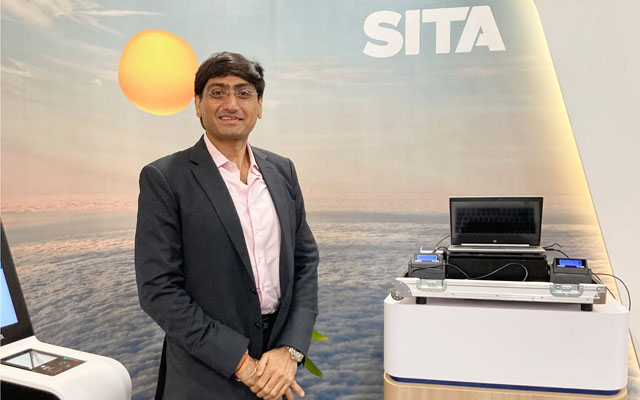
Global travel rebound, now close to 2019 levels, has proven to be challenging for airports and airlines, according to SITA, but increased traveller acceptance of technology in areas such as biometrics and robotics in customer service bodes well.
SITA recently launched the findings of the 2023 Passenger IT Insights and found that “passengers were increasingly comfortable using technology and demanding new services during travel”.
The report said passenger behaviour had changed, and that biometric identity verification is now more accepted, especially for boarding, security and identity verification.
Sumesh Patel, SITA president, Asia-Pacific, commented that SITA Lab Solutions was testing no passport biometric technology at airports, and Singapore was taking the lead.
“No other country is looking at it now in terms of thinking, implementation and co-operating with stakeholders,” he opined, adding that Singapore’s investment in biometrics would augment its existing system.
He continued: “When Singapore is fully biometric, incoming travellers can register their passports and exit without them and do not have to see an immigration officer anymore.”
SITA is also experimenting with robots using generative AI for passenger assistance as well as in airport operations.
The 2023 survey showed a clear and sustained preference for check-in bags, with three in four passengers expecting to book at least one intermodal trip across air, land and sea, and wanted the ability to entrust baggage handling to smart systems and have operators effectively handle and resolve disruptions.
SITA, Patel shared, was helping airlines solve the problem of lost bags, save money, and deliver a better passenger experience with its auto-reflight technology.
He said Lufthansa had begun using SITA’s new offering, Bag Reflight, mainly on its regional network.
Passengers, post-Covid, “want control of their travel journey” via their smart devices and to leverage biometrics, Patel added.
According to SITA, passengers in 2023 continue to adopt mobile as a remote control for the journey, with boosted usage across booking, check-in, dwell time, on board, and bag collection.












Japan is seeing the opening of more big-name and glitzy attractions, as companies seek to gain from the country’s tourism recovery.
Warner Bros. Studio Tour Tokyo: The Making of Harry Potter, which opened in June, is the second theme park based on the hit film series after the one in London, which has welcomed 17 million visitors since opening in 2012.
Covering 30,000m2, the Tokyo site is also the world’s largest Harry Potter attraction. Operated by Warner Bros. Studio Japan, it features exclusive sets from the film series, interactive experiences including using a green screen, F&B options and shops, with entry for adults priced at 6,300 yen (US$42).
Attractions based on Japanese characters are also expanding, due to their popularity at home and abroad.
Building on its 60 billion yen (US$403 million) investment to open Super Nintendo World in 2021, Universal Studios Japan, in July, launched attractions based on several animation series including One Piece, Detective Conan and Attack on Titan.
Ghibli Park, which opened in Nagoya Prefecture in 2022, has also expanded this year to add two new areas: Mononoke Village, which unveils Japan as it was in the fifteenth century, and Irontown Village, featuring giant sculptures of creatures from Studio Ghibli films.
Growth in theme park attendance is important to tourism recovery as Japan seeks increased consumption by visitors.
Theme parks and amusement parks across the country are welcoming fewer visitors than pre-pandemic, with recovery at just under 80 per cent, but those visitors are spending more. Consumption per person exceeded 10,000 yen for the first time in 2022, according to data from the Ministry of Economy, Trade and Industry.
There are more products in the pipeline.
Tom’s City Circuit Tokyo Bay will open at the capital’s Odaiba waterfront in November, offering indoor and outdoor electric vehicle go-karting, as well as VR-based entertainment.
The company said the attraction can “help revitalise Tokyo’s night-time economy” as electric vehicles are quiet, allowing smooth operations at night.