TTG Asia
Asia/Singapore Tuesday, 30th December 2025
Page 458

Thailand properties turn to Airbnb to drive international bookings

0

According to Airbnb data for 2022, Thailand was the top most visited country on the platform in South-east Asia for that year, while Bangkok ranks fifth on Airbnb’s list of top trending global travel spots in 2023.

More travellers are flocking to the country for business, leisure and remote work. They are searching for affordable stays and exploring a wider variety of accommodation offerings that meet their varying needs, from entire homes to shared homes and rooms. Amenities were taken into consideration as well, with kitchens one of the top most searched amenities globally.

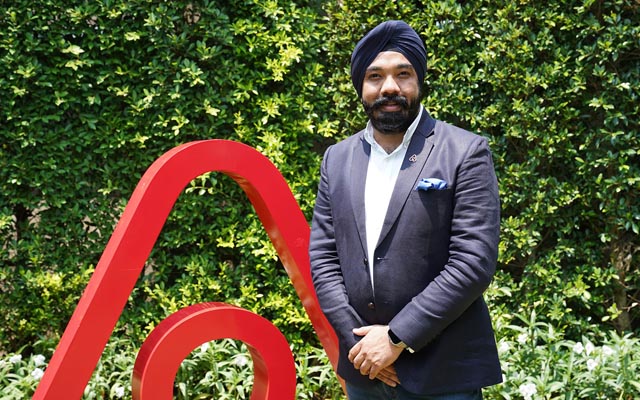
Bajaj: hospitality companies are tapping into our user-friendly platform to connect with international guests

In addition, Airbnb’s data showed that nights booked in private room listings on the platform in Thailand grew by over 500 per cent year-on-year last year, up from 2021.

To tap into strong international demand and stay ahead of the curve, more Thai hotels and serviced apartments are turning to list their properties on Airbnb, including renowned Thailand investment property company Siamese & Kew Green Hotel Management, who currently hosts four of their properties on Airbnb and has plans to host more.

The company revealed that Airbnb was the top platform driving monthly bookings at its properties in 2022, which include Wyndham Garden, Siamese Exclusive Queens, Ramada Sukhumvit 87, and Ramada Plaza Sukhumvit 48. Airbnb guests booked an average of four to five days across Siamese & Kew Green Hotel Management’s properties last year.

Airbnb’s general manager for South-east Asia, India, Hong Kong and Taiwan, Amanpreet Bajaj, said: “Our international guests to Thailand are staying longer, with long-term stays of over 28 days more than tripling year-on-year last year. We are heartened that innovative hospitality companies like Siamese & Kew Green are tapping into our user-friendly platform to connect with our huge base of international guests, as they continue to visit Thailand.”

“Our partnership with Airbnb has allowed us to reach a wider audience of guests seeking unique travel accommodation options in Thailand, that can accommodate larger groups and longer stays…we are grateful for the opportunity to collaborate with them to connect with, and meet the needs of today’s travellers,” added Scott Walton, managing director at Siamese & Kew Green Hotel Management.

KKday marketplace to promote digitalisation for travel merchants in South-east Asia

0

KKday has launched KKday Marketplace in South-east Asia, which is designed to help local merchants develop e-commerce operations and expand the service capacity of international travellers.

According to KKday’s local observations in Thailand, Vietnam, the Philippines, Malaysia, Singapore, and Indonesia, at least 90 per cent of South-east Asian travel experience merchants have not made the digital transition yet.

From left: rezio’s Jasmine Lin, KKday’s Ming Chen, and KKday Marketplace’s Clement Wen

On the other hand, more than 85 per cent of travellers (who are KKday users) place orders via mobile devices and are used to digital browsing, online booking, online payment, and instant customer service interaction.

KKday Marketplace features six major advantages, through which merchants can set up their stores quickly, list their products independently, price their products flexibly, control their inventory accurately, respond to orders instantly, and access the KKday platform’s global traffic.

First introduced end-2021, merchants from Japan, South Korea and Taiwan are presently using KKday Marketplace’s multilingual services to capitalise on the rebounding of cross-border travel.

KKday Marketplace currently has more than 1,000 merchants globally, including water and outdoor activities operators, cultural experiences providers, and traditional agencies which will offer early bird commission discounts.

With a goal to reach 2,000 merchants worldwide in 2023, KKday Marketplace will target small, non-franchise merchants with less than 10 employees and a capital of less than US$10,000, who serve a single city or island, willing to take on casual travellers, with Chinese or English language skills, and services that focus on in-depth day tours and half-day tours experiences.

Relying on Asian giants

0

With the tourism sector now back on track, what are your plans to promote Nepal in international markets?
We have noticed that travellers are more inclined to explore shorthaul destinations post-lockdown – considering this trend, we will first focus on the Indian market. This year, we have organised 10 sales missions in different parts of India. During our sales missions, we also focused on Indian states that are close to our borders like Uttar Pradesh, Bihar and West Bengal, as we believe travellers from these states can easily drive to Nepal thanks to the existing good road infrastructure. In the last couple of years, new five-star properties have also come up on our side of the border which we want to promote among Indian tourists.

Also, considering that hill stations in India – like Darjeeling, Nainital and Shimla – are overcrowded during the summer season, we expect a segment of tourists who can simply drive to Nepal and enjoy the same cool weather in our hills. Moreover, airport development has also taken place on both sides of the border, so travellers can reach these airports and then drive to destinations like Pokhara or Kathmandu.

The other key market for us is China. Since the Chinese market has opened for travel, we have received a number of charter flights. We are now focusing on events that can attract Chinese tourists. We will soon be organising a dragon boat race competition in Pokhara’s Phewa Lake in association with the Chinese embassy – the objective to bring more and more tourists from China. Two charter flights from China will be landing at the Pokhara International Airport for the event, which will be the first international flights landing in Pokhara after the construction of the new international airport.

We are also targeting the countries where Buddhism is being followed. So, we are doing a number of sales missions in markets like Cambodia, Vietnam, Laos, Malaysia, Myanmar and Sri Lanka.

What about longhaul international markets like Europe?
Europe is our regular focus market for adventure activities like trekking and climbing. We have been participating in key trade shows like ITB Berlin, WTM London and FITUR to tap the opportunities vested in the European markets. We are also planning to conduct some promotional activities in North American markets like the US and Canada in the near future. Nepal Airlines is going to operate direct flights to Australia (Sydney), which will help us attract more Australian tourists to Nepal.

What are the products and experiences that you are looking to promote in international markets going ahead?
Traditionally in Nepal, popular tourist destinations have been Kathmandu, Pokhara, Chitwan and Lumbini. These destinations have a good tourism infrastructure in place. However, now in western and eastern Nepal, good hotels have come up too. We will be promoting new destinations, like Dolpa, apart from the existing popular destinations.

‌Similarly, not many are aware of Bardiya National Park, which has a growing population of tigers. We are looking to promote such lesser-known tourist products in international markets. For the Indian market, we want to attract tourists to religious sites beyond the famed Pashupatinath Temple like Janakpur and Valmiki Ashram. Adventure tourism is one segment that we will continue to promote in all international markets.

The government of Nepal recently declared 2023-2033 as the “Tourism Decade”. What does this announcement mean for the industry?
The announcement was made in the financial budget of 2023-2024 and just showcases the importance of the tourism sector for the Nepalese government. We are looking to create many more employment opportunities for the youth in the tourism sector. We are hoping to reach pre-pandemic international tourist arrival numbers by the end of 2024 and gradually work towards increasing international tourist arrival numbers year-on-year.

‌With the government’s emphasis on the tourism sector, we are also going to witness a lot of infrastructure developments taking place across the country, be it in terms of roads, airports or hotels. As I mentioned earlier, tourism in Nepal presently is mainly concentrated on four destinations (Kathmandu, Pokhara, Chitwan and Lumbini) and we want to take tourism beyond these destinations. So, following the Tourism Decade announcement, the government is going to ask different provinces to share details of their products and experiences that can be promoted for tourism activities. The idea is to bring forth many hidden gems of our tourism sector and market them internationally.

Sustainability has become a very critical part of tourism growth, especially in the post-lockdown world. How do you look at sustainable tourism?Sustainable tourism is very important for a destination like Nepal that has a fragile geography. At present, we don’t have any benchmarks to measure sustainable tourism practices but we want to involve local ethnic communities in our tourism outreach. So, we are focusing on promoting home stays at places where ethnic groups stay. We will also be emphasising on Eco-tourism activities without compromising on environmental protection.

United Airlines launches direct flights between Los Angeles and Brisbane

0

United Airlines will commence brand new non-stop services from Los Angeles to Brisbane from December 1, and increase its San Francisco-Brisbane service from thrice weekly to daily from October 29.

United Airlines will operate the Los Angeles-Brisbane service from December 1

The airline will also operate 10 services a week between the US and Brisbane by December 1 for the upcoming winter season.

Disney musical extravaganza arrives in Singapore for one performance only

0

Enjoy Disney magic in a one-night-only musical to be held at the Singapore Indoor Stadium on July 1.

Disney In Concert: Tale as Old as Time will let the audience embark on a magical journey into storytelling and music with a 45-piece orchestra and the vocal talents of four singers direct from the US.

Enjoy an afternoon of music and songs at Disney In Concert: Tale as Old as Time

Featuring high resolution film sequences from classic and contemporary Disney animated feature films, Disney In Concert: Tale as Old as Time explores iconic moments, plot twists and feats of daring heroics from EncantoPrincess and the FrogHunchback of Notre DameCarsPocahontasFrozenBeauty and the BeastCinderellaThe Little MermaidTangledThe Lion King and many more.

In addition, Trip.com is now offering an exclusive five per cent discount across all ticket categories.

Ticket prices range from SG$87.60 (US$65) to SG$144.60 after discount.

To book, visit Disney In Concert – Tale As Old As Time.

Enjoy unforgettable moments with Preferred Hotels & Resorts

0

Preferred Hotels & Resorts has launched Unforgettable Moments: Stay Where You’re Preferred, at its portfolio of over 650 properties.

The promotion offers complimentary breakfast and room upgrades, as well as a 20,000-point booking bonus from the company’s loyalty programme, I Prefer Hotel Rewards, for stays before July 31.

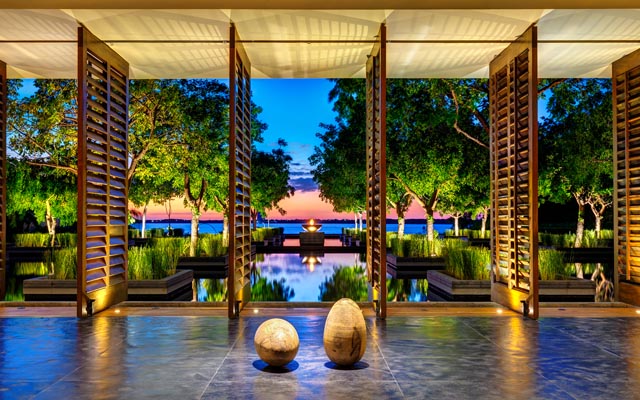
Travellers can enjoy an unforgettable stay at Preferred Hotels & Resorts; NIZUC Resort & Spa, pictured

In addition, travel agents will benefit from a commission of 12 per cent for bookings made via GDS or directly with a qualifying IATA or TIDS number.

Bookings can be made through December 31, 2023 for stays till March 31, 2024.

A minimum two-night stay is required.

For more information, visit Unforgettable Moments.

Portugal city aspires to be a top-of-mind destination for Asian travellers

0

WOW, The Cultural District, located in Porto’s historic Port Wine district, was recently in Singapore to drum up visiting interest in both the destination and Portugal, among Asian outbound travellers.

Adrian Bridge, CEO of WOW, The Cultural District, who was recently in attendance at Vinexpo Asia at Marina Bay Sands, outlined the destination’s two-pronged strategy for the Asian market.

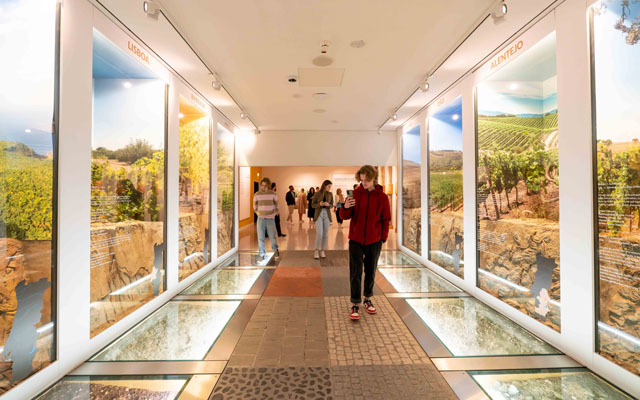
WOW, The Cultural District features museums dedicated to the history of the region, including the Wine Experience, pictured

“First, we want to target those who have a historical and cultural connection with Portugal, typically those with an interest in wine and are already buyers of Portuguese wines, for example, Macau and South Korea. Second, greenfield markets where there is potential for Portugal to become a popular destination (for travellers who have an) appetite for longhaul vacations, culture-driven tourism, shopping, food and wine.”

By “greenfield markets”, Bridge meant China, Japan, Taiwan, Singapore and Hong Kong, adding that “every market is unique”. Currently, South Korea provides the greatest number of visitors to Porto.

Classified as a Project of National Interest in Portugal, WOW, The Cultural District, was created in 2020 during the Covid-19 pandemic. It is a large-scale urban regeneration project that has transformed the historic area by converting and renovating centuries-old wine cellars into a complex housing immersive and interactive cultural experiences and a variety of dining options.

Aside from port wine it is already famous for, Porto also offers architecture, history, culture and industry.

“Within WOW, The Cultural District, we have museums dedicated to the history of the region, as well as the cork industry. There are also 12 restaurants, bars, and cafés, and a chocolate museum that details how cacao is transformed from bean to bar while also offering chocolate tastings and workshops.

“This July, our Atkinson Museum will host an exciting exhibition curated from the Tate Collection. Called The Dynamic Eye, it was recently hosted in Shanghai at the Museum of Art Pudong, and will now be at The Cultural District until October 2023,” Bridge elaborated.

The biggest challenge at the moment, he said, was the need to establish more direct flights from Asia to Lisbon. WOW, The Cultural District is also working towards providing content – for instance, museum plaques and menus – in a visitor’s own language, and having ample interpreters or guides ready to assist visitors.

To generate more visitor interest, Bridge shared he will be working closely with “Visit Portugal teams in China, South Korea and Japan to deliver a framework that executes our strategy and objectives, (and show that both northern Portugal and WOW are) unique and compelling destination for groups, FITs and luxury travel”.

“In September this year, we will also be present alongside Visit Portugal at ITB China in Shanghai, and participate in other trade fairs in Seoul, Hong Kong, Macau and Bangkok.”

Horison Hotels celebrates 20 years; plans to launch 100 hotels by 2028

0

Indonesia’s home-grown hotel company, Horison Hotels Group, celebrated its 20th anniversary with an ambitious target to operate 100 hotels over the next five years.

Having started with two hotels in 2003, Bayu Waskito Nugroho, executive director at Metropolitan Golden Management – Horison Hotels Group, said: “Right now, there are 67 properties. By the end of the year, we will operate 70 hotels ranging from (budget to mid-scale) categories, located in 35 cities across the country.”

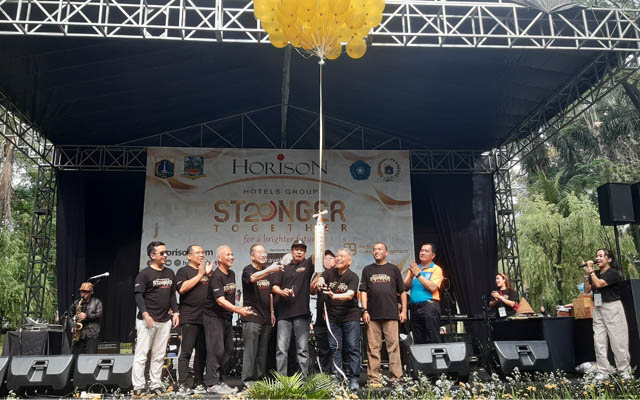
The Metropolitan Golden Management – Horison Hotel Group management team celebrates 20 years by flying 20 balloons

The three new properties will be located in Java, Bali and Kalimantan islands. The first to open will be the 139-key Horison Ultima Bandara Balikpapan Hotel in Balikpapan, East Kalimantan. This will be followed by Horison Pondok Layung Hotel in Anyer, which features glamping by the beach, and Horison TC UPI Serang in Banten Province in August.

Earlier in February, the group opened its second Papua property, Erbe Style Jayapura Papua by Horison. Its first Papua-branded hotel, Horison Sentani Papua, was launched in September 2022.

Moving forward, the company plans to operate hotels outside of Indonesia, especially in destinations popular among Indonesians travellers, shared Bayu.

The first target will be to obtain properties in the Middle East, particularly in Mecca and Madina, to cater to the Indonesian Haj and Umrah pilgrimage.

“Several parties have contacted us, but we are still exploring,” he said.

Evolving destinations

0

What new offerings can visitors expect post-lockdown?
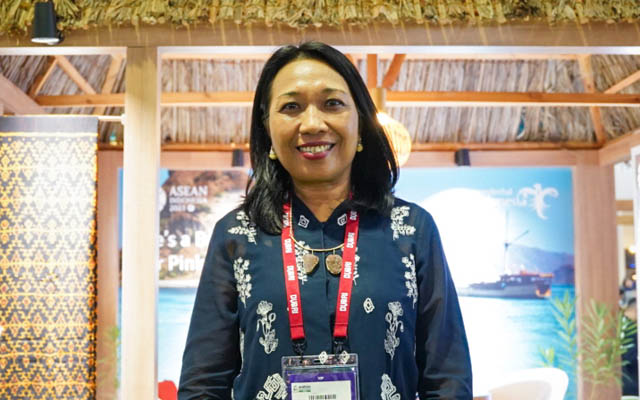
Pre-Covid, we had almost 17 million tourists, then the pandemic happened. Now we’re focusing on quality tourism, sustainability, and people, planet profit.

Eight years ago, the government came up with a vision – the president had remarked that while Bali is famous, the country has equally beautiful and amazing potential elsewhere. So, we established five new destinations to develop.

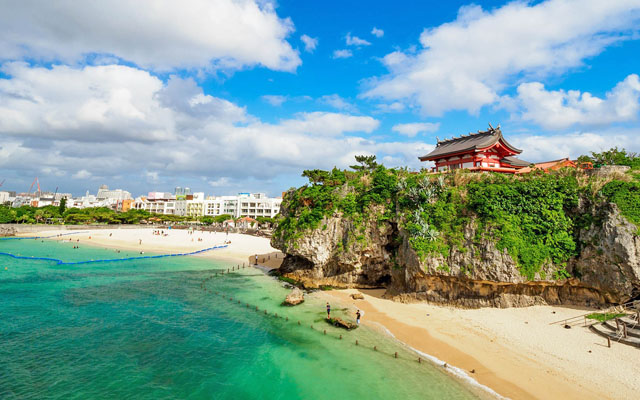
In Sumatra, there’s Lake Toba, the world’s largest volcanic lake; Borobudur in central Java is the world’s biggest Buddhist temple; Lombok is a beautiful island next to Bali; Labuan Bajo is home to the Pink Beach; and there is huge potential for marine tourism at Likupang.

We’re ready to promote these destinations now. While infrastructure is ongoing in all of them, Borobudur, Lombok, and Labuan Bajo are already well established. The other two still need heavy investment in hard and soft infrastructure.

How do you build a new destination?
These places are beautiful but how do you get there? Where is the connectivity, amenities, transportation and infrastructure? The government said build them because infrastructure brings business; it builds economic movement. In Toba, for example, we established special economic zones to attract investors. (Once) we have five-star resorts and an airport, we then have to think about soft infrastructure, people, and training schools.

Lombok is beautiful but, until recently, it had nothing that Bali has. So, we built a MotoGP circuit for people to have something to do. If you went to Labuan Bajo five years ago, it was very different to what it is today. In May, Labuan Bajo hosted the entire 42nd ASEAN Summit. When our president said it had to take place in Labuan Bajo, we all thought “Wow, but how?”. Sometimes you need that push. When it becomes a priority, the business and investors will come together and find opportunities. Suddenly, within a few years, we now have five-star hotels and other infrastructure.

How do you ensure destination development is sustainable?
Destinations need to be sustainable. In Labuan Bajo, there are amazing coral reefs and if we don’t take care of them now, they will no longer be an asset. We also have to educate the people because they have never been exposed to this kind of tourism.

We understand how tourism can contribute to local communities. When tourists visit Labuan Bajo, they not only want to enjoy the beach, they want to visit the villages and see how people make a living. We are pushing this, but it’s not easy and needs a lot of education. It’s a long journey ahead but with the right mindset and leadership, we can achieve people, planet and profit.

We also need to educate tourists to be responsible. One or two tourists are easy to handle but when it’s hundreds, thousands, millions, it gets harder. Nonetheless, it’s our job to educate and that’s part of responsible and sustainable tourism.

How do you promote new destinations?
My job is not only to promote, but to also tell stories. We have to get the narratives out – if people haven’t heard of the destinations, it’s because we are not doing our jobs right. This year, we are going to be more active, get out there and get the private sector involved because the government can’t do it alone.

How important is domestic tourism?
Thankfully, during Covid, we were blessed with domestic tourists. We have a population of 275 million, so domestic travel was big. The government decided to develop village tourism because during the pandemic, people were tired of not going anywhere.

Village tourism brings back childhood memories of seeing the paddies and the rivers flow in these small villages. Three years ago, we created village tourism programmes and about 6,000 villages registered, but many were basic. So we designed standards and regulations, such as villages have to manage their waste, have toilets, adequate home-stay facilities, and someone to manage it all.

Is domestic tourism still key post-lockdown?
Our target for 2023 is 8.5 million foreign tourist arrivals, but we also have a domestic target of 1.4 billion movements. There are almost 300 million people here, so if one Indonesian travels three times a year, we will achieve that.

It’s important that Indonesians travel because it equals economic movement. If you rely solely on international tourists, then it’s only concentrated in a few places. Public holidays are very important. In fact, the government decided to extend a recent public holiday from two days to one week. During that period, 150 billion rupiah (US$10.06 million) was spent, showing the power of domestic tourism.


Newcastle Airport to undergo significant expansion

0

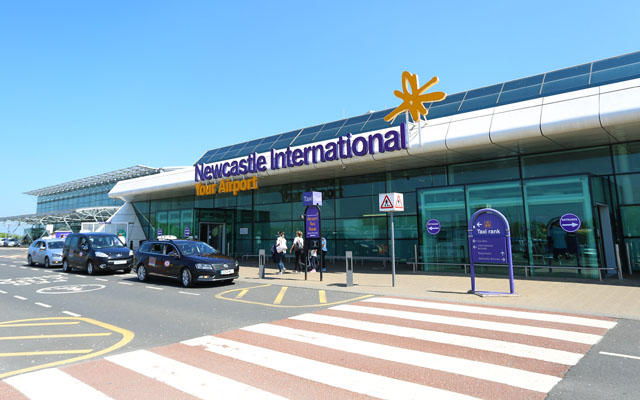
Newcastle Airport is embarking on a significant expansion plan, in partnership with Commonwealth Bank of Australia (CBA), which is acting as sole financier.

The A$240 million (US$159.93 million) deal includes the expansion of Newcastle Airport to enhance domestic capacity and develop a new international terminal. It will also help finance the construction of the first Astra Aerolab commercial office building, subject to current development applications.

The expansion of Newcastle Airport will facilitate the introduction of new domestic and international routes

As the second busiest airport in New South Wales (NSW), Newcastle Airport generates around A$1.2 billion in economic activity a year and supports around 5,600 jobs. It currently services 12 domestic routes with six domestic airlines, catering for around 1.3 million passengers a year.

In addition, the airport expansion will address capacity for forecast growth to around 2.3 million passengers a year by fiscal 2028.

Paul Fowler, executive general manager, regional and agribusiness banking, CBA, said: “The airport’s expansion and modernisation will significantly increase its capacity and improve connectivity across Newcastle, the Hunter Valley and the Central Coast, driving new business and employment opportunities that add to the region’s prosperity.”

With the Hunter Valley population expected to increase to around 950,000 people by 2041, Paul Cragg, executive manager, regional and agribusiness banking NSW Newcastle and Hunter Valley, CBA, explained that the bank has expanded its “business banking and customer support teams on the ground to assist the growth of diverse sectors including tourism, defence, manufacturing, health, energy, agriculture, education, property and transport”.

“We’re looking forward to helping more businesses in Newcastle and beyond take advantage of new possibilities as the economy transitions,” added Cragg.

Commenting on the partnership, Peter Cock, CEO of Newcastle Airport, said: “Driving greater economic and social benefits by broadening our domestic and international destinations and contributing to Newcastle’s transformation from a major regional hub into an international destination and a significant second international gateway to NSW, is key to our purpose.”

Newcastle Airport will also commit to reducing its environmental footprint across the airport, with the expanded terminal building and Astra Aerolab being designed and built to target a five-star Green Star rating accreditation, as well as the under construction solar-powered covered car park powering more than 30 per cent of the airport.