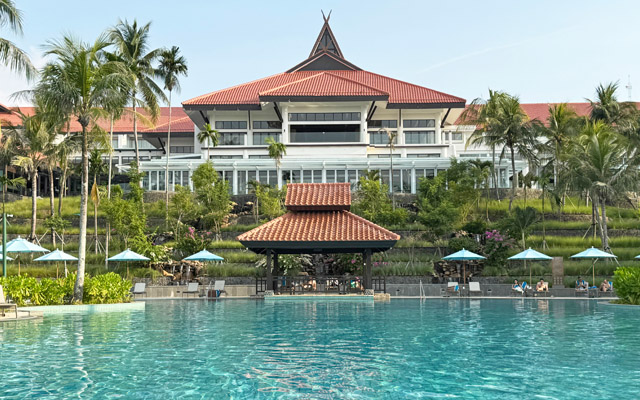
InterContinental Khao Yai Resort in Thailand has introduced its new Spa and Wellness Getaway Programme set in the pristine countryside, away from hustle and bustle of busy city life.
The resort comprises 45 rooms, with the 19 Heritage Railcar Suites and Villas housed in previously abandoned heritage train carriages from the 19th century that have been meticulously and exquisitely restored. Also on the train are the Back on Track Spa (with four treatment suites), Tea Carriage and popular Planet Trekkers Kids Club.
Enjoy wellness treatments at Back on Track Spa, located on the Heritage Railcar
The Wellness Getaway Programme features a four-day-three-night stay in the One Bedroom Heritage Railcar Suite, afternoon tea, daily breakfast (including one picnic breakfast at Khao Yai National Park), private yoga sessions, 60-minute Foot Massage, 60-minute Aromatherapy Massage, 90-minute spa treatment, Private Hermit Art and Stretching class, and more.
Outings include Khao Yai National Park, Ban Tha Chang Natural Spring, Khao Yai Thieng Windmill.
The Spa and Wellness Getaway is priced at 68,000 baht (US$1,900) and is available until December 20, 2024. Additional nights are available from 13,000 baht inclusive of breakfast for two.
The Indonesian government is planning to establish an Indonesia Tourism Fund (ITF) to support the promotion of tourism and nation branding via international activities, such as sports events, concerts, and business events.
Allotted and managed aside from the marketing budget of the Ministry of Tourism and Creative Economy (MoTCE), this fund is also meant to encourage tourism development in super priority tourist destinations, such as Lake Toba, Borobudur, Mandalika, Labuan Bajo, and Likupang.
The Indonesia Tourism Fund would support bids for international major events, like the 33rd ICM Triennial Congress held in June last year, pictured
In the initial stage, two trillion rupiah (US$128.6 million) will be disbursed by the Ministry of Finance (MOF). MoTCE will then need to propose the amount of annual funding, which will later be approved by the president.
Sandiaga Uno, minister of tourism and creative economy, said the fund would support bids for international major events targeting for launch in 2H2024.
“Events are the most effective strategy for promotion – (they increase) the number of quality tourist visits, and have a big impact on the economy,” said Sandiaga, citing the success of hosting international events such as the G20 Summit, the FIFA U-17 World Cup, and MotoGP Mandalika – the last of which had an estimated economic impact of over eight trillion rupiah.
He explained that the management of these funds would either be handed over to Indonesian Journey (Injourney), a state-owned company in the aviation and tourism industry, or another fund management institution established by the MOF.
“We are currently finalising the scheme, financing mechanism and (determining) the management institution. Currently the government is working on a legal basis, including waiting for the ratification of a presidential regulation regarding the fund,” said Sandiaga.
In response, Pauline Suharno, secretary general of the Indonesian Tourism Industry Association (GIPI), hopes that the tourism fund will be impactful to the industry.
However, Pauline said information about the fund has yet to flow to tourism industry players, as none of them have been “invited to discuss it”.
“If the government sees that tourism is important and generates foreign exchange, its should immediately have a dialogue with the industry and see interests from our perspective,” she remarked.
Ndang Mawardi, CEO of Inspiro Group, stressed the importance of clarity in the allotment, accountability and audit of the fund, and urged key performance indicators be set for events. This way, “the impact on society can be projected”.
Raty Ning, chairman of the ICCA Indonesia chapter, expects to see standards and criteria being set to qualify events for funding.
She pointed out that it is vital to choose large-scale events in order to “have the biggest multiplier effects”.
Ndang also hopes that the use of tourism funds will be more developmental in nature – such as for tourism innovation, service excellence and sustainability training and projects.
Silversea has expanded the role of cruise industry veteran Massimo Brancaleoni who becomes senior vice president, global sales & revenue.
With almost 30 years of experience in the global cruise industry, Brancaleoni has held executive positions for international organisations in Europe and Asia. He joined Silversea in January 2023 as senior vice president, global sales.
Prior to joining Silversea, he held the role of senior vice president, worldwide sales, at Costa Cruises.
Now midway into snow season, Japan’s tourism professionals are confident of seeing full recovery of the winter season based on pent-up demand.
This year marks the first time since the pandemic that winter sports operators have enjoyed a full lead up to the snow season, which runs from mid-December to early April. Additionally, 2.73 million international travellers arrived in Japan in December 2023, an 8.2 per cent increase on December 2019, resulting in renewed optimism.
Winter activities in Japan are seeing a rise in international demand
“Japan’s borders reopened six weeks before the 2022-23 ski season was due to start. With consumer confidence dented and so little time to book, the 2022-23 season recovery was modest,” Lindsay Colbert, managing director of Hokkaido-based travel agent Japan Ski Experience, told TTG Asia. “Demand which had been building up since 2020 was unleashed by the time bookings opened for the 2023-24 season, and bookings quickly exceeded pre-pandemic levels.”
William Ross, creative director of Dancing Snow, which offers backcountry tours, snowshoeing and ski hiking in Niigata Prefecture, is also seeing an uptick in international demand. Bookings are coming from both long-established country markets such as Australia, and newer country markets including the US, Taiwan, Singapore, Hong Kong, Finland, Sweden and the UK, he told TTG Asia.
Colbert also reports a “noticeable change” in the number of travellers from the US, while Nagano Prefecture, another of the country’s top winter sports destinations, is welcoming more visitors from Singapore, Thailand, Malaysia and Indonesia, according to independent tour guide Peter Carnell.
With new markets and strong rebound, agents and operators are eyeing opportunities for growth.
“Many post-pandemic travellers to Japan ski resorts are looking for new and exciting experiences, as evidenced by increasing numbers of first-time visitors, more non-skiers or snowboarders in resort and an increase in demand for more off-the-beaten-track destinations,” said Colbert.
“Both travellers and tour operators are looking for new destinations and activities” to help alleviate overtourism, added Carnell.
Air India has selected TamGP Co. as its passenger general sales agent (GSA) in Thailand.
TamGP Co. will facilitate reservations and ticketing, support marketing efforts, and provide comprehensive passenger sales support on behalf of the airline.
The collaboration will enhance Air India’s presence in Thailand
This partnership with TamGP Co. aims to further enhance Air India’s presence in Thailand while supporting the airline’s ongoing global expansion.
Anindam Choudhury, assistant vice president, commercial, TamGP Co., commented: “We strongly believe that this partnership will not only ensure smooth and seamless travel experiences for passengers but also promote cultural and economic exchanges between India and Thailand.”
Currently, Air India operates two daily, non-stop flights between Bangkok and Delhi, one daily, non-stop flight between Bangkok and Mumbai, and one daily, non-stop flight between Phuket and Delhi.
Philippine Airlines (PAL) will deploy an advanced customer profiling and personalisation solution, Amadeus Traveler DNA, on its journey to ensure that interactions with its passengers are not only seamless but also deeply personalised.
The carrier will benefit from real-time, comprehensive traveller intelligence to understand, predict, and personalise sales, service, and end-to-end customer experience.
The partnership will ensure that interactions with Philippine Airlines’ passengers are seamless and personalised
Amadeus Traveler DNA automatically integrates valuable insights and personalisation logic into the airline’s business operations for relevant traveller communications. This gives PAL the intelligence needed to offer its passengers a smooth and tailored journey every time they travel.
These personalisation capabilities will also enable PAL to improve customer retention by minimising the impact of travel disruptions with proactive customer care. The carrier can also increase revenue by upselling relevant offers tailored to its customers’ needs and preferences. Brand loyalty and customer satisfaction are also improved by enabling the airline to anticipate and respond to the needs of valuable customers with personalised services.
The solution is also integrated into PAL’s Altéa Passenger Servicing System (PSS) which allows for consistency across all channels and touchpoints, including airline agent, travel agent, and online.
“By harnessing the power of Traveler DNA, we aim to go beyond the conventional boundaries of air travel. It’s about understanding the unique preferences, habits, and aspirations of our passengers, and using that knowledge to create tailor-made experiences that resonate with them,” shared Aurea Patria Vidal, chief information officer, PAL.
Jonathan Tong, senior vice president, head of South-east Asia, India Subcontinent & Greater China, Amadeus, added: “The importance of providing a complete picture of travellers so airlines can offer them a more personalised experience cannot be understated. We are proud to work with Philippine Airlines to improve the customer experience while delivering on the carriers’ vision to put its passengers at the heart of everything they do.”
Krabi and Koh Lanta are two of Thailand’s most popular destinations, known for their stunning natural beauty, rich culture, and unique experiences. Krabi is a province located on the south-west coast of Thailand, famous for its limestone cliffs, crystal-clear waters, and pristine beaches. The province is also home to several national parks, not to mention some of the world’s most beautiful beaches. Koh Lanta, on the other hand, is a beautiful island located in the Andaman Sea, just off the coast of Krabi. Less developed than the mainland, the island features stunning beaches, crystal-clear waters, and a laid-back atmosphere.
Like all tourist destinations in Thailand, 2023 has been a vital year for Krabi and Koh Lanta. The ongoing crusade to rebuild post-lockdown continues while environmental issues have forced the province to bring sustainable tourism and eco-conscious policies to the fore of any plans in the region.
Ko Hong island in the Krabi region
Earlier this year, the Thai government announced plans to make the region carbon neutral and signed a Memorandum of Understanding (MoU) with more than 20 stakeholders and state agencies to spearhead a drive to reduce pollution and become the first Thai province to reach net zero carbon emissions by 2040.
The Ministry of Higher Education, Science, Research and Innovation is collaborating with the group, a mix of local agencies and tour operators, to evaluate the potential of blue carbon (carbon stored in coastal and marine habitats) storage in mangrove forests and natural seagrass. The project is also planning restoration projects in the southern part of the Andaman Sea and organising campaigns to raise awareness about coastal ecology and restoration practices in local communities.
Advising the 22 signatories of the MoU is associate professor Siwarit Pongsakornrungsilp, acting dean of Nakhon Si Thammarat’s Walailak University, who explained that the tourism industry is responsible – approximately eight per cent of Thailand’s total emissions of greenhouse gases can be attributed to transport, manufacturing, and hotel and restaurant operations.
The annual closure of Maya Bay, a popular destination in South-east Asia made famous by the Leonardo DiCaprio starring blockbuster, The Beach, is another sustainable tourism scheme that has been successful in the region.
In 2018, the island was closed for three and a half years to allow the island’s coral reef and natural habitat to recover from the damage inflicted by thousands of tourists who visited everyday. Since re-opening last year, visitors to Maya Bay are restricted to 4,000 each day, and swimming has been banned to protect the area’s delicate eco-system.
Krabi’s Maya Bay is managed strictly now to conserve its natural environment
Crucially, the island now operates an annual closure of three months during the rainy season to encourage conservation and re-growth.
Another component of Krabi’s post-lockdown recovery is the upgrade of Krabi International Airport. The three billion baht (US$84 million) transformation will allow the airport to handle more passengers, refurbishing the two existing terminals, and constructing a third, and expanding parking facilities.
The new terminals will double the airport’s passenger-handling capacity from the current cap of 1,500 passengers per hour or four million annually to 3,000 passengers per hour or eight million annually. The project will complete by 2024, and fully operational in 2025.
There are plenty of properties in Krabi and Koh Lanta to service the enhanced passenger capacity, notably the Varana Hotel, which opened in April 2023. The five-star wellness-themed property features 141 luxury rooms and four swimming pools – including Krabi’s first Olympic-sized pool and the NAAM Wellness Pool, the location of the hotel’s 10-step DIY aqua therapy programme.
Over on Koh Lanta, Pimalai Resort & Spa has spent 50 million baht on updating its product, with 30 million worth of upgrades on its beachside villas and 20 million on installing an improved bar lounge bar.
The hotel has also begun a number of sustainable tours, including the Mangroves Tour and the Talabeng + Koh Lanta Old Town tour uncovers the dramatic limestone karsts and cliffs of Koh Talabeng island, before heading to Koh Lanta’s Old Town, a quaint port with more than 100 years of heritage.
The hotel participates in several community projects, such as a drive to release 50 endangered turtles and millions of crabs into the Andaman Sea, as part of its commitment to conserving the marine environment.
TTG Asia will be taking a break from February 9-13, 2024, for the Lunar New Year holidays. The online news bulletin will resume on Wednesday, February 14, 2024.
From all of us at TTG Asia Media, we wish all of our readers a happy and prosperous Lunar New Year!
Based on the first month of the year, Agoda is anticipating that the rest of 2024 could be a great year for travel.
Agoda also shared the top performing destinations in 2024 so far, with Japan, Thailand, and Vietnam leading the pack as the top markets attracting international tourists. Following closely are Malaysia and South Korea, completing the top five inbound markets.
Agoda predicts that 2024 could be a great year for travel based on the findings in January
These findings, based on January 2024 Agoda booking ranks, indicate a robust start to the year for Asian travel destinations.
When comparing the number of accommodation searches between January 2023 and January 2024, India tops the list of biggest risers. Hong Kong, Taiwan, Vietnam, and Italy, respectively, have also shown notable leaps compared to last year. This shift underscores the dynamic nature of travel trends and the growing appeal of these diverse destinations.
With markets spearheading tourism campaigns for 2024, and inspiring discussions about how travellers are taking full advantage of innovative technologies and fewer travel restrictions, here are the five trends that Agoda predicts will shape the travel industry in 2024.
Visa-free travel gathers pace
Tourism features prominently on the agenda for many popular and emerging markets and this has led to a recent wave of visa easements. This will further reduce friction in travel and enable destinations to diversify their source markets in a bid to boost inbound traffic. For instance, when Malaysia removed restrictions at the beginning of December, there was a four-fold increase in searches from India and China to Malaysia compared to the previous month. Relaxed visa requirements, such as Indian travellers enjoying visa-free access to destinations like Thailand, Sri Lanka, and Malaysia, will lead to other markets following suit.
More impetus for connected travel bookings
Travel providers will continue to simplify bookings by seeking ways to seamlessly integrate flights, hotels, experiences, and activities. With three out of four travellers booking tours, activities, and attractions within a week of their arrival date, it will be welcomed by travellers if convenient opportunities to book ahead are enabled.
As people come to expect travel planning within a single interface, providers will need to rise to the challenge by offering a ‘one-source’ travel concierge and cater to a higher demand for flexibility.
Greater assistance from AI
The Agoda team has been embracing evolution over revolution, using GenAI to supercharge their team’s performance across all areas of the business. Agoda’s CEO Omri Morgenshtern predicts that in 2024, GenAI will continue to be the biggest opportunity for business.
Further rise of B2B loyalty programmes
B2B loyalty programmes will make a bigger mark on travel in 2024 and will play a role in driving the growth of the category, with 69% of travellers interested in earning rewards for wellness behaviours and two-thirds eager to earn rewards for sustainable practices, according to a Mastercard study.
Travel fintech makes its mark
The intersection of fintech and travel is reshaping the way consumers manage their finances while exploring the world. Fintech solutions are enabling ever-more seamless payments for travellers, especially in cross-border travel interaction with domestic payment options, and the proliferation of QR payments. More financing options brought closer to the customer break the boundaries for many people and expedite the process of exposing more and more people to travel.
Morgenshtern believes that private sector innovation will accelerate this trend: “The private sector has an important role to play in fintech, because the tech and the speed can be pushed by the private sector – but ultimately public and private sector will need to work together on fintech solutions for seamless travel experiences.”
He concluded: “Fuelled by more frictionless visa experiences, travel continues to gain pace. With technology playing an even bigger role in how people choose, book and pay for travel, 2024 promises to be a watershed year.”
Hilton is expanding its mobile messaging platform to its more than 7,000 Hilton properties worldwide by the end of 2024, all to support the growing need for frictionless travel and introduce easier guest communication methods.
The system, developed in partnership with Kipsu, will enable messaging via the Hilton Honors app, SMS, WhatsApp and LINE, and soon, other messaging channels such as WeChat. The digital messaging capability will enable a two-way, immediate exchange between guests and hotel teams to answer questions, address concerns, arrange experiences and more.
The digital messaging capability will enable a two-way, immediate exchange between guests and hotel teams
This digital expansion spotlights a dramatic shift in traveller communication preferences globally and reinforces a journey that Asia-Pacific was already on, where 65 per cent of consumers prefer to contact businesses via chat rather than over email or phone.
In response to this trend, Hilton doubled the number of Kipsu-enabled hotels across Asia-Pacific in 2023 to over 100 properties, and saw the monthly volume of messaging conversations triple over the same period. A total of 7.5 million messages in the region were facilitated in 2023, leading to 88 per cent of guests who used messaging indicating that it improved the overall satisfaction of their stay experience.
Chris Silcock, president, global brands and commercial services, Hilton, said: “Travellers’ preference to communicate with hotel team members via their mobile device is growing. By expanding this capability to all of our hotels around the world, we are meeting our guests where they are and creating an elevated and reliable experience for every guest during their stay.”





 Prior to joining Silversea, he held the role of senior vice president, worldwide sales, at Costa Cruises.





 From all of us at TTG Asia Media, we wish all of our readers a happy and prosperous Lunar New Year!