


Dubai airport pushes further for progress

Dubai International Airport (DXB) wants to explore passenger-centric strategies and is rethinking mega infrastructure development cost, design and size.
Paul Griffiths, Dubai Airports (DA) CEO, wants to see airports of the future that are smaller, where passengers walk less; the proliferation of more right-sized, well-connected facilities to distribute loads; a greater focus on technology to speed travellers through with “no red lights”; and operations that can be measured to make the airport more cost effective.
Griffiths told delegates at the recent Aviation Festival Asia that airport operators are in the hospitality business and not infrastructure development.
He remarked that DA “did not retrench staff and knew recovery would be rapid even though we did not know when, but we would be ready”, sharing that DA worked with a service business partner who trained staff to its standard and had access to a flexible employment base that was “highly motivated”.
Dubai was among one of the first cities to reopen and DXB handled 86.9 million passengers in 2023, surpassing the 86.3 million in 2019. It is connected to 262 destinations in 104 countries via just over 100 international carriers.
The city-state welcomed a record 17 million visitors in 2023 and the 60:40 ratio of transit vs visit traveller at the end of the pandemic has now flipped to 40:60 and Dubai government is aiming for a 50:50 target.
“The government knows how important the airport is to the city and both have equal prominence in contributing to GDP,” Griffiths noted, adding that two-thirds of flights were within an eight-hour radius and four hours for the rest.
While the transfer market in the region – Qatar, Turkey, Abu Dhabi, etc – was “very competitive”, tourism potential was “extraordinarily enormous”.
“Like Europe, visitors coming to the Middle East visit more than one country. During the 2022 World Cup, 465,000 passengers travelled between Dubai and Doha so competition stimulates far more demand,” he commented.
ILTM Asia Pacific attracts record attendance amid strong post-lockdown growth
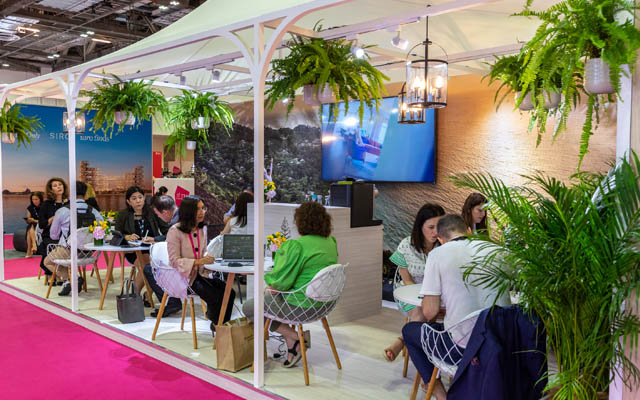
The International Luxury Travel Market (ILTM) Asia Pacific is gearing up for its most significant edition yet, with a record-breaking 650 international buyers set to attend this year’s show at Marina Bay Sands from July 1 to 4, 2024.
Steve O’Loughlin, ILTM’s hosted buyer lead, told TTG Asia: “This year’s 650 accredited buyers marks a 28 per cent increase from the 2023 edition. Thirty-six per cent of the buyers are from Australia and New Zealand, and for the Chinese market this year, we will host over 100 luxury buyers – this is double the number from 2023.”
Meanwhile, nine per cent of the buyers hail from India, another key region for ILTM.
“India is growing with more airports being built in the next four to five years, (which bodes well for) outbound travel. We need to be ahead of the curve and invite and host buyers dealing with the growing wealth in India,” he added.
This growth signals a robust appetite for travel in the region, reflecting the increasing expenditure on leisure travel plans by outbound travellers.
According to O’Loughlin, buyer selection is meticulous. Using a curated database, ILTM identifies and invites senior decision-makers with proven track records ensuring a high level of industry engagement. To qualify, hosted buyers must have an annual revenue of at least one million pounds (US$1.3 million), emphasising their dealings with High Net Worth Individuals.
Buyers will have 54 pre-scheduled appointments lasting 15 minutes each over the three-day event, and will be able to join in various networking opportunities at the Opening Forum and Closing Party. At this year’s edition, buyers can also expect to meet with more European and Japanese destinations.
“There is more airlift now from Asia-Pacific to Europe, and this is demonstrated by the European hotels who are exhibiting. Inbound travel to Japan is growing beyond belief, and consumers are now looking at other prefectures such as Okinawa,” O’Loughlin explained.
Other notable exhibitors include Los Angeles Tourism (a significant new attendee), Edition Hotels returning after three years, Banyan Tree, Wilderness Safaris, Avalon Waterways, and Uniworld.
Saudi Tourism Authority, Trip.com Group to boost inbound travel to Saudi
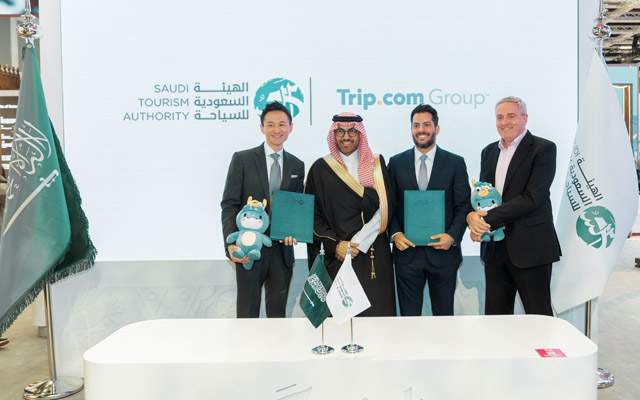
Saudi Tourism Authority (STA) and Trip.com Group have partnered to drive greater inbound tourists to Saudi Arabia as part of its Vision 2030 programme, with the aim of drawing over 350 thousand additional tourists to Saudi over the course of the agreement.
This collaboration will encompass all brands under Trip.com Group’s umbrella, including Trip.com, Ctrip, Qunar, Skyscanner, Travix, and Make My Trip, to showcase Saudi’s tourist offerings to a worldwide audience through the utilisation of Trip.com Group’s expertise across tech, content creation, and AI development.
In addition, STA and Trip.com Group will collaborate to further develop AI travel products and payment solutions, which will assist travellers in building itineraries, booking flights, and making seamless payments.
Fahd Hamidaddin, CEO and board member, STA, said: “Our partnership with Trip.com Group, our largest strategic partnership to date, further demonstrates our commitment to building successful collaborations with global partners to unlock shared value and go beyond traditional marketing. Together, we are leveraging the latest technologies and innovations to boost tourism across Saudi and shape its future.”
“Our team is thrilled to strengthen cooperation with the Saudi Tourism Authority, deepening collaboration across products, technology, and marketing to promote the captivating destinations of Saudi Arabia. We have previously collaborated on a cross-platform campaign, which doubled product sales targets compared to the same period last year,” shared Schubert Lou, COO of Trip.com.
Cebu Pacific to add 100 aircraft to fleet
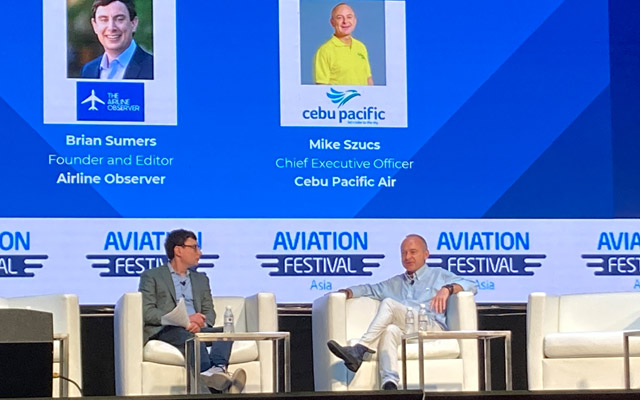
Cebu Pacific (CEB) reiterated its commitment to buy 100 Airbus and Boeing aircraft at the recent Aviation Festival Asia with CEO Mike Szucs vowing to negotiate “the right economic outcome for the Philippines” as the low-cost carrier plays expansion catch post-lockdown.
A Philippine business report last month confirmed CEB was in talks with the manufacturers for orders of up to 150 aircraft valued at some US$18 billion, said to be the biggest order in the country’s aviation history.
According to Szucs, the need for so many aircraft is based on what he described as a “game changer” – the New Manila International Airport (NMIA) in Bulakan municipality, Bulakan province, about 32km north of the capital.
“The price is always important and we need the right deal from Airbus, Boeing and the engine manufacturer,” he opined.
Szucs’s outlook also stems from the country’s 115 million population which continues to “boom, (with a) GDP growth of six per cent every year and untapped potential”.
“The propensity to travel is four times less compared to Malaysia, and within a four-hour flight radius to the Philippines are two billion people,” he explained.
NMIA, also known as Bulacan International Airport, scheduled to start operating in 2027, will be developed in phases, with an initial capacity of 35 million passengers annually, and a target of 100 million passengers per year, once fully completed.
San Miguel Aerocity, a wholly-owned subsidiary of San Miguel Holdings, the infrastructure arm of San Miguel Corporation, holds a concession agreement to develop, construct, operate, and maintain NMIA.
The CEB chief said the privatised facility will be able to offer more slots, as well as improve on facilities and service standards.
CEB’s new fleet will also address the need to cater to the development of regional airports into international gateways like Bohol, according to Szucs, in the next 12 to 18 months.
CEB is said to operate the world’s highest-capacity Airbus A330-900s (A330neo) aircraft with 459 seats, in a single class.
Island hop in the Philippines with Contiki
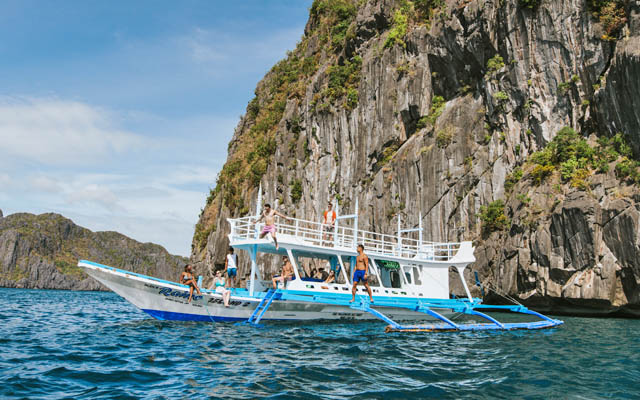
Contiki has introduced its Philippines Island Hopping experience, giving travellers the chance to explore the country’s most famous tourist hotspots in under two weeks.
There are two versions of this trip – the nine-day version goes to Puerto Princesa, Port Barton and El Nido, while the 13-day version includes an additional sea safari adventure to the Coron Islands.
Both trips include many island adventures, such as a boat ride through the UNESCO World Heritage Site of Subterranean River National Park, an island-hopping day trip in Port Barton, a Jeepney ride to Nacpan Beach, and a Special Stay and Make Travel Matter experience at the Isla Experience in Daracoton Island – which directly contributes to the welfare of the locals.
The optional four-day Boat Expedition takes travellers to some of the undiscovered gems in the Philippines, including Palawan Calamian’s Group of Islands (Northern Palawan archipelago) and famous attractions such as Coron islands, Cullion and Linapacan. It includes a private boat, the chance to go snorkelling in Coral Garden, seaside camping in Coron, and a visit to Turtle Islands.
Among the included experiences is a Filipino-classic tricycle ride to Las Cabanas for a beach sunset, and a traditional boodle fight. Travellers will also have a chance to visit a local’s house for an authentic locally-grown Filipino Meal.
Both trips include internal flights, boat transfers and all other transport – along with all accommodation and various meals.
Find more information, visit Contiki.
Rock on with Deep Purple at Singapore Rockfest 2024

Hard rock pioneers Deep Purple are headed for the Lion City on May 1 to kick off Singapore Rockfest 2024. They will be performing at 20.00 at Fort Canning Park.
Having sold more than 100 million albums, a body of work spanning seven decades, and the power to fill arenas across the globe, Deep Purple has helped define the hard rock genre while progressively moving into new areas, attracting new fans to their massive legion.

Known as one of the hardest working bands ever, Deep Purple has continued to release No.1 albums and tour globally since forming in 1968, and has stayed true to its roots taking from an eclectic mix of styles to create a distinct sound that de-fines the band today.
The Singapore Rockfest concert series begins on May 1 and will take place over multiple days in May.
Tickets are available via Sistic outlets and Sistic online.
For more information, visit Deep Purple Live in Singapore.
Vietnam gains greater love from Indonesian travellers
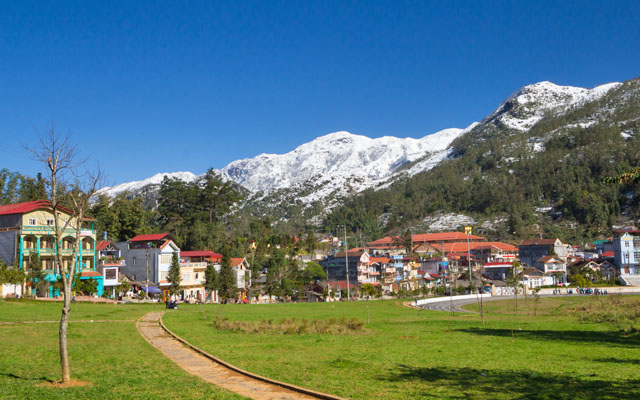
Traveloka data has shown a spike in travel expenditure among Indonesian residents as travel resumes, with Vietnam being the destination that saw the biggest improvement in demand.
Expenditure on international products, ranging from flight tickets and hotels to attractions, has doubled in 2023 over 2022.
Singapore and Japan were most popular among Indonesians, but Vietnam has shown to be a strong contender, noted Traveloka’s CEO transport, Iko Putera.
“The strong demand to visit Vietnam is because Sapa and Danang are becoming viral on social media – (this shows) that people always look for new experiences and are keen to (discover) new hidden gems,” said Iko.
He added that Vietnam’s affordability was also a key factor, especially as airfares and hotel rates are more affordable than that of other South-east Asian destinations.
Yento Chen, CEO, Destination Tour Indonesia, opined that Vietnam draws Indonesian travellers with its diverse offerings – from both green and snowy landscapes to culture and culinary – without the need to travel long distances.
While tours to Halong Bay, Ho Chi Minh City and Hanoi were popular once, Sapa and Phu Quoc are now winning hearts, particularly for winter breaks, according to Yento.
He added that Vietnam “appeals to incentive groups as well as families and adventure travellers” as the country offers “more experiential travel”, which is highly sought after by Indonesians.
The five-day tour package to Sapa is the most popular at G-Tour, shared tour manager Angelina Samudera, with most bookings being made between December and February during the snow season.
“Sapa is the perfect destination for Indonesians who want to see snow because it is close by, (has) easy access, and (is) visa-free. The price is affordable but the facilities are quite complete,” stated Angelina.
G-Tour has seen a 20 to 30 per cent rise in bookings for Vietnam in 2023, and Angelina hopes to nurture this growth by creating attractive packages combining Hanoi, Halong Bay and Sapa. Setting its target on young travellers seeking adventure, the company is also developing new packages to Danang and its surroundings.
Sentosa launches new immersive sensorial journey
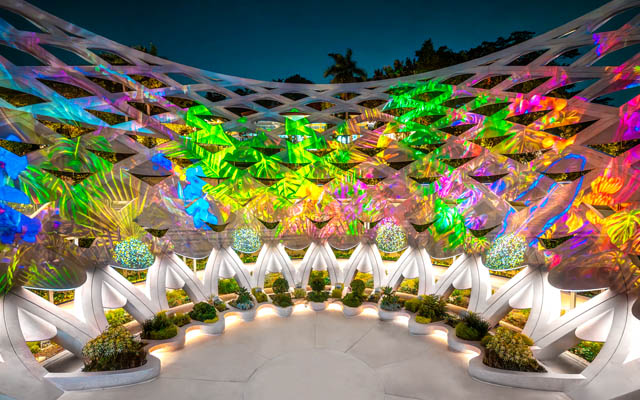
Newest Singapore attraction, Sentosa Sensoryscape, an immersive multi-sensory experience incorporating augmented reality (AR), design, nature and music, was showcased to local and regional media from Australia, India, Indonesia, Malaysia, the Philippines and Thailand ahead of its March 14 public debut.
The 30,000m² “ridge-to-reef landmark” comprising six zones – Lookout Loop, Tactile Trellis, Scented Sphere, Symphony Stream, Palate Playground and Glow Garden – connects guests from Resorts World Sentosa in the north to the island’s beaches in the south.
Access to Sentosa Sensoryscape is free and its gentle-incline design is user-friendly to parents with young children in prams and the elderly using mobility devices.
Guests can download the ImagiNite app for a night-time AR experience which begins at 19.50 and ends at 21.40 daily and it includes a Hyperzoom Special Photo Spot feature for taking wefies.
Thien Kwee Eng, CEO, Sentosa Development Corporation (SDC), said the first key milestone of the Sentosa-Brani Master Plan to be completed will further strengthen the island as a world-class destination.
It embodied SDC’s commitment to push boundaries and create extraordinary landmarks inspired by the beauty in nature, she continued.
“This thoughtfully-designed and welcoming green connector right in the heart of Sentosa will inspire our guests through a plethora of endless and unique discoveries… where a walk in Sentosa will never be the same again,” Thien commented.
The entire space which pushes the boundaries of park design can encourage guests to slow down, unwind and rediscover oneself in a tranquil setting.
Designed by Serie + Multiply, the sensory gardens are framed by three intricate diagrid, Asian basket-weaving-inspired wooden structures.
Thien told TTG Asia, the versatile spaces offered new opportunities for “business applications” for curated events and brand collaborations.
A spokesperson noted SDC was partnering Samsung Electronics Singapore to enhance the visitor photographic experience and added the venue would appeal to meeting planners organising business events and incentive programmes.
Bangkok Airways flies towards greener and smoother operations in 2024
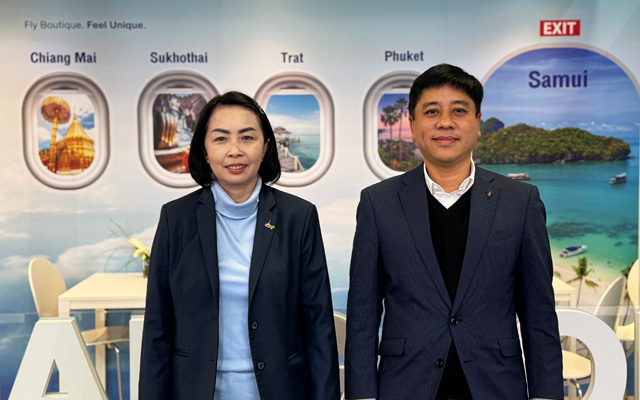
Bangkok Airways is focused on achieving full recovery, being more sustainable, as well as bettering its airport operations, for the year.
Bangkok Airways’ director – key account and ancillary product, Komkrit Ngamwongwirot, told TTG Asia at ITB Berlin: “Our target this year is to fly 4.4 million passengers, up from 3.6 million last year. This translates to 16 billion baht (US$452.7 million) in revenue this year – last year we did 14.8 billion baht.”
To hit that target, frequencies in the current network have to be restored, with at least 50,000 flights to take to the skies this year. However, the airline will not be exploring new destinations beyond its current network this year.
“We recently restored our Koh Samui-Chengdu and Koh Samui-Chongqing flights, and will be doing some marketing in China. The China market has been quite slow to recovery, and currently, Europe is our number one source market,” Komkrit said.
When asked what the airline’s biggest hurdle was at the moment, Komkrit said: “The biggest challenge we have at the moment is the move to net zero, as this comes at a cost. We are moving towards SAF (sustainable aviation fuel), but this is more expensive than regular fuel. We are trying to find the right balance, and sell it at a price that customers can accept.”
Bangkok Airways’ other carbon-neutral efforts include upcycling used staff uniforms into tote bags and aprons for airport lounge staff. The airline has also implanted technology to reduce fuel consumption, as well as several technical procedures, such as using one engine to taxi instead of two, which “has already helped us save a fair bit”, he shared.
Aside from increasing passenger count, Komkrit indicated that Bangkok Airways will also ensure better and smoother operations, including ground and catering services, at its three airports – Koh Samui, Sukhothai, and Trat.
“We are developing and investing the airports so that they will be key hubs for visitors into Thailand in the next five to 10 years. To do that, we are working to fly more planes, (and attract more airlines) to land at those airports. We are also on the lookout for partners to work with to further develop (other airport-related) services,” he stated.
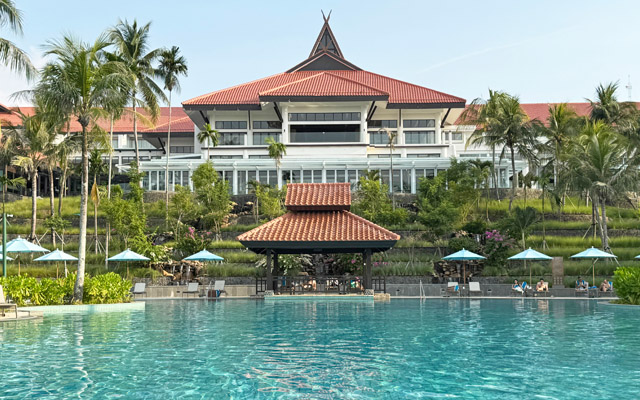






Cambodia is hoping to tap into the slow travel trend, with a notable uptick in interest in the nation as a single travel destination.
Steve Lidgey, general manager of Travel Asia a la Carte, told TTG Asia that during ITB Berlin 2024, there was an increase in interest in Cambodia from European agents as a standalone destination.
Traditionally, the Kingdom has been popular as an add-on to Thailand, Vietnam and other South-east Asian destinations. The average stay in the country sits at three days.
“It’s been good to see that many people are interested in Cambodia as a single destination, not combining it with other countries,” Lidgey said. “People want to explore the destination and not just spend three or four days there.”
He said that soaring flight prices to the Kingdom, coupled with the increasing post-lockdown slow travel trend, are pushing the movement.
“Once you arrive in Cambodia, there’s no need to take any domestic flights,” Lidgey stated, adding he received a group booking for a 30-day tour of Cambodia, with a group about to set off on a 23-day cross-country adventure.
“People are starting to be interested in staying longer in Cambodia to get a full feel of the country. Instead of only Siem Reap and the temples and Phnom Penh, they want to go to Battambang, see the dolphins in Kratié, trek in Mondulkiri, and experience the people,” he said.
“Many Europeans are showing interest in slow travel, and we can see they want to spend more time in one destination.”
He said out of Western markets, slow travel is more accessible for Europeans due to the longer annual leave they receive over, for example, the US.
Lidgey also called on the Cambodian Ministry of Tourism to put more work into forward planning. Annually, Cambodia hosts a raft of colourful cultural festivals, including Khmer New Year, Bon Om Touk (Water Festival), and Pchum Ben (festival of the dead).
However, the itineraries and activities for each are released just weeks ahead, meaning tour operators cannot promote them to longhaul markets that tend to book months in advance.
“There are a lot of interesting opportunities to introduce guests to the traditions of these festivals, but we need to know the schedule in advance,” he urged.