Civil Aviation Authority of Singapore’s sustainable air hub blueprint has spelt out plans to implement compulsory sustainable aviation fuel (SAF) usage on flights departing from the city-state from 2026.
This is part of efforts to progressively decarbonise airline operations.
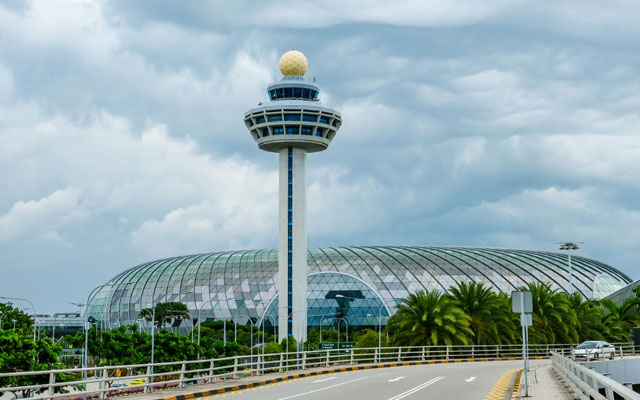
Singapore will implement compulsory SAF usage on flights departing from the country from 2026; Changi Airport in Singapore, pictured
The announcement was made by transport minister Chee Hong Tat at the Changi Aviation Summit on February 19.
Singapore will aim for a one per cent sustainable aviation fuel uplift target in 2026, and three to five per cent by 2030 – subject to “global developments and the wider availability and adoption” of SAF in the next few years, Chee told the press.
As a result, passengers flying from Singapore can expect to pay more for their air tickets due to the fuel levy attached. An economy class ticket from Singapore to Bangkok, Tokyo and London could go up by around S$3 (US$2), S$6, and S$16 respectively.
More details on the implementation will be shared in the near future.
SeaLink Northern Territory connects visitors to the unique and vibrant indigenous community and cultural traditions of the Tiwi Islands with its Tiwi by Design day tours.
Located approximately 80 kilometres north of Darwin, the Tiwi Islands comprises Australia’s second and third-largest islands – Bathurst and Melville Island.
Get up close with the indigenous community at the Tiwi Islands (Photo: Tourism Australia)
Known for their traditional practices and warm hospitality, fewer than 5,000 Tiwi people call the islands home.
With SeaLink’s Tiwi by Design tour, guests will enjoy a personalised and leisurely walking experience, curated for an intimate immersion into the rich tapestry of Tiwi culture. Upon arrival in the Aboriginal community of Wurrumiyanga on Bathurst Island, the Tiwi guide will bring you to experience local artists and dancers performing a formal Welcome to Country through a smoking ceremony and totem dances, before indulging in a traditional morning tea of damper and a cuppa while connecting with local community members.
Next, immerse in the vibrant narratives of life and culture in the Tiwi Islands while exploring the historic Mission Precinct – visit the Patakijiyali Museum and discover the history of Mission days, the Tiwi Creation story, WWII involvement, and the legendary local football players; and explore the nearby small Catholic church that was featured in the movie Top End Wedding. After lunch, guests can participate in an exclusive ‘behind-the-scenes’ screen printing workshop to craft their own unique take-home souvenir.
Tours are available from April 1 to November 30, and prices start from A$439 (US$287) per adult, with discounts for children and seniors.
The day tours operate on Thursdays and Fridays, with additional Monday departures in June, July, and August.
Stakeholders have been asking for a clearer Philippine tourism recovery plan while proposing interventions to make it easier for tourists to visit.
Tourism secretary Christina Garcia Frasco has announced that the 4.8 million foreign arrivals target for this year has already been breached in November, with top arrivals from South Korea, the US, Japan, China and Australia.
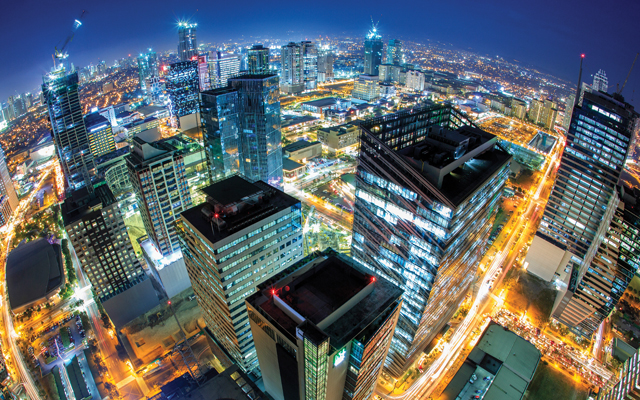
Skyline of Bonifacio Global City
However, industry stakeholders want to know the Department of Tourism’s plans on, among others, how and whether the 8.2 million foreign arrivals in 2019 can be reached in 2024 or in 2025 yet; clear indications of targeted source markets, taking into account also the movements coming in and out of these markets; clear directions on marketing and promotions and targets so that they can also plan and adjust accordingly.
“You cannot skirt the numerical indicators. The numbers pre-pandemic are absolute figures already. What are the targets for 2024 and 2025?” asked Benito Bengzon Jr, executive director of Philippine Hotel Owners Association.
“We need to know the recovery plans. This is serious business,” he emphasised.
DTH Travel CEO, Stephan Roemer, has discussed with Frasco the need to simplify the bureaucratic and complicated filling up of online forms for incoming visitors.
Roemer stressed to “make it easy” and “friendly”, adding that tourists like easy and simplified handling. He said: “Tourists don’t have to be treated in a complicated way.”
Other countries have easier inbound procedures – including Thailand where tourists can swiftly enter the airport, said Roemer who has investments in Blue Horizons Travel and Tours and The Ocoy Hotel and Villas.
Another issue to contend with, he said, is that the Philippines does not have many direct flights, especially from longhaul markets, an aspect that gives other competing destinations a stronger edge.
Roemer said that while the Philippines has improved a lot over the last three years and has all that tourists want, addressing these issues will further boost inbound performance.
Scant air connectivity is a major issue considering that over 99 per cent of Philippine inbound arrive via airplanes. It is the only South-east Asian country that has no crossborder with its neighbours. Most of its top tourist attractions are islands reachable faster by airplanes.
“If you don’t have flights and seats, you don’t get the numbers,” Bengzon said.
Numbers indicate that there is still a big gap in air passenger traffic in 2019 and 2022. “Unless we go back to 2019 in air passenger movements across all airports, it will be difficult to get back to 2019 (levels),” he noted.
Rajah Tours president Jojo Clemente pointed out that “accessibility is one thing we should be talking about”.
“Not only accessibility from abroad but inter-island accessibility too,” he added.
Clemente said the saying, build and they will come, holds true in the tourism and hospitality industry, and highlighted the importance of accessibility – by air, water and overland – in growing tourism business.
At the recent Hotel Sales and Marketing Association (HSMA) Summit, Bruce Winton, Marriott International’s multi-property vice president Philippines, said he is always in awe of the Philippines’ physical beauty and many of its destinations are unexplored, but that how to reach those destinations can be a challenge at times.
Also at the HSMA Summit, Jonathan Ravelas, managing director, eManagement for Business and Marketing Services, predicted that the Philippine hospitality industry’s recovery will be two years from now, with relatively high interest rates and a different global landscape than in 1990s.
From an economist’s viewpoint, Ravelas said the industry cannot rely on marketing and promotions alone. The destination has to improve its infrastructure as well.
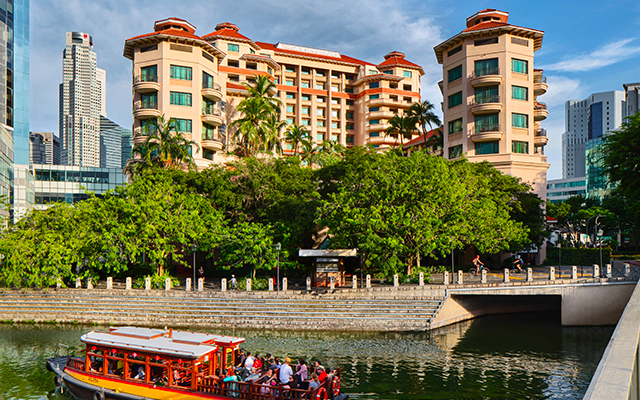
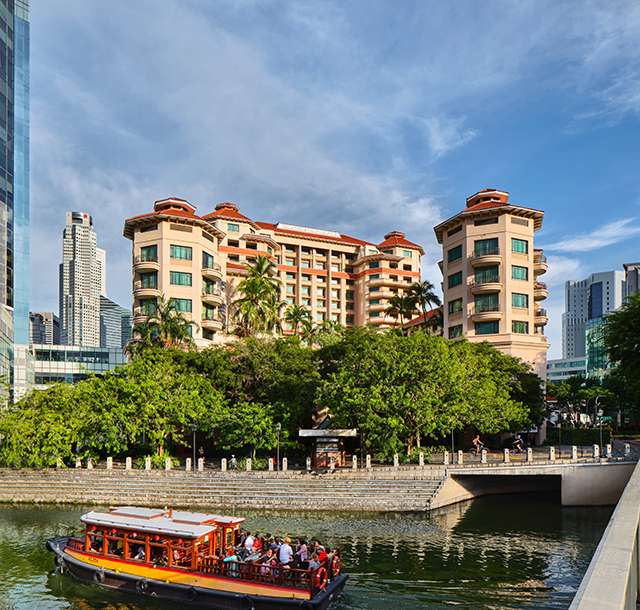
In the heart of Singapore’s dynamic Clarke Quay, where entertainment options abound, Paradox emerges as a distinctive haven that transcends the conventional notion of a venue, providing an immersive and all-encompassing experience. Being an urban resort that offers guests a sophisticated yet playful blend of traditional refinement and modern elegance, Paradox seamlessly marries opulence with practicality, meticulously designed to cater to elite incentive programs that demand nothing short of excellence.
Paradox Singapore Merchant Court epitomises the essence of a contemporary urban resort, seamlessly blending work and play to curate events that are not just gatherings but transformative experiences. Its 476 guestrooms and suites are not merely spaces for repose; they are meticulously appointed with modern amenities that prioritise both comfort and functionality.
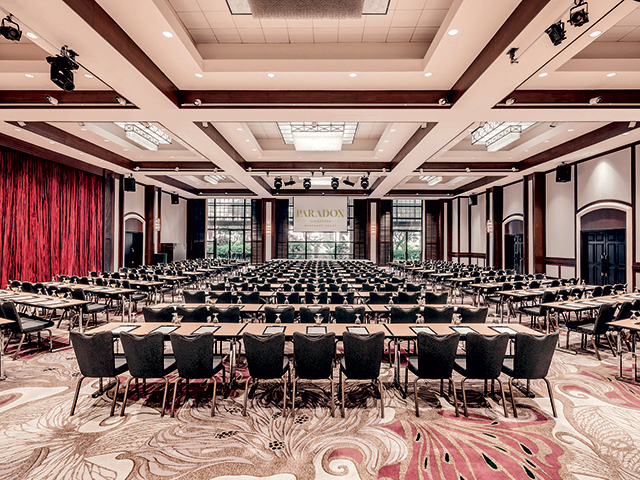
Merchant Court Ballroom
With 1,168 square meters of meeting space strategically situated on the lobby level, Paradox ensures that events of any scale unfold seamlessly. The Merchant Court Ballroom, capable of accommodating up to 500 guests, inviting natural daylight through its expansive floor-to-ceiling glass walls. This adaptability positions it as an ideal venue for both daytime conferences and evening soirees, further enhanced by an adjacent foyer for intimate private receptions. For more intimate gatherings, the poolside patio offers an inviting space accommodating up to 14 guests, perfect for intimate cocktail or networking sessions. Shaped like a gazebo, it provides shelter while offering a picturesque riverside view.
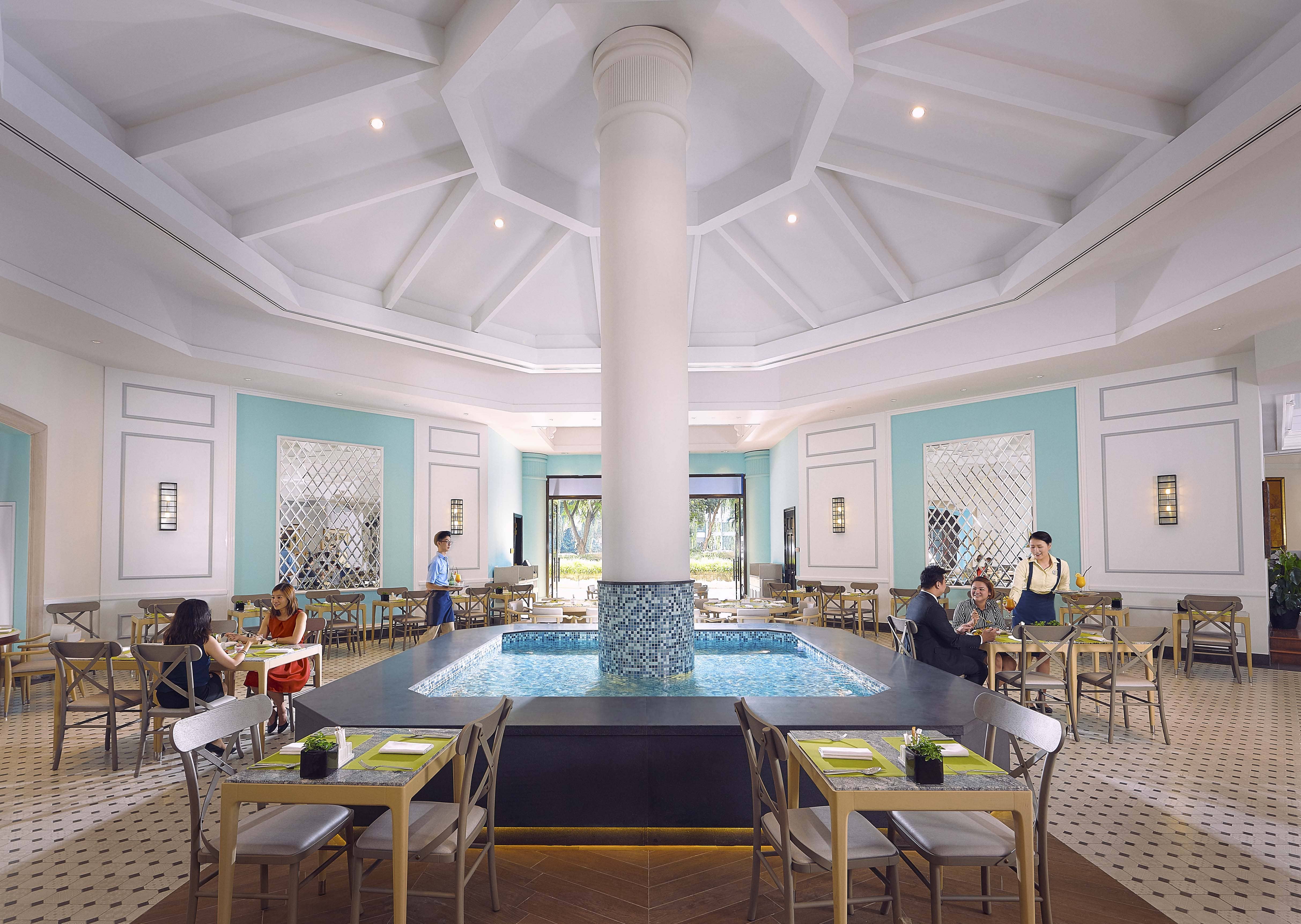
Ellenborough Market Cafe
Paradox’s commitment to leaving a lasting impression extends to its culinary offerings. Crafted by an award-winning culinary team, bespoke menus pay homage to Singapore’s rich gastronomic legacy, offering diverse and tantalising catering options that elevate the overall event experience. For time-conscious professionals, substantial and health-conscious catering options are seamlessly integrated into pre-function spaces and breaks, allowing delegates to indulge in local Peranakan and international flavours at Ellenborough Market Café or opt for a global culinary journey poolside at Blue Potato.
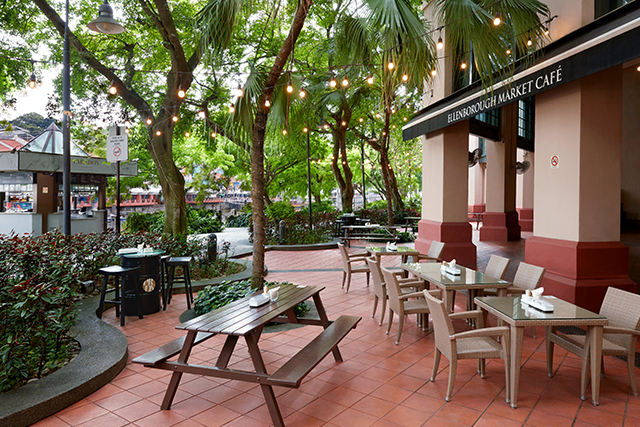
Ellenborough Market Cafe
As the sun sets, casting a warm golden glow over the city, Paradox transforms into more than just a venue; it becomes the backdrop for potent networking opportunities. Whether within the sophisticated ambiance of Crossroads Bar or the laid-back charm of Alfresco Dining, every sip and conversation unfold against the serene backdrop of the Singapore River. For more casual networking sessions by the river, the Alfresco Dining area and its picnic tables offer the perfect opportunity for delegates to mingle. Additionally, our venue provides the ideal setting for memorable BBQ sessions, where guests can savour delicious grilled delicacies while enjoying the scenic views. For those looking to unwind with a touch of sophistication, our dedicated cocktail sessions present an excellent option, allowing participants to connect over expertly crafted drinks in a relaxed and inviting atmosphere.
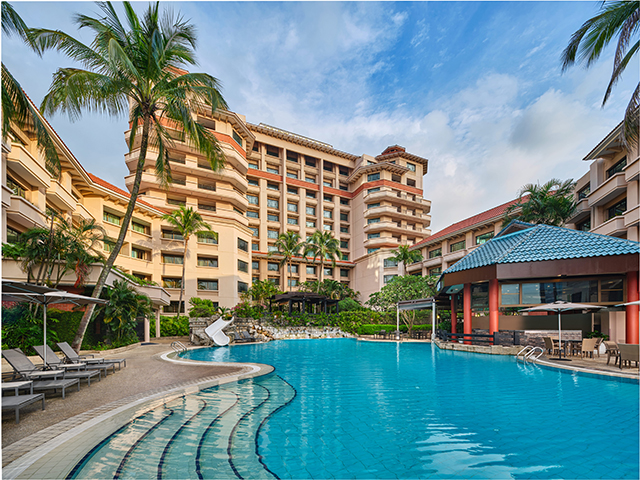
Pool during the day
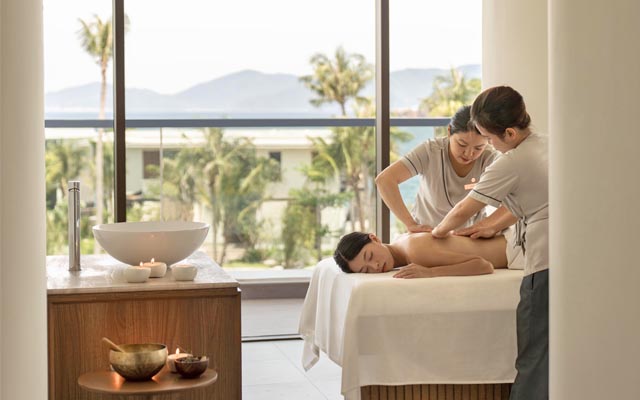
Recognising the significance of well-being in corporate engagements, Paradox Singapore Merchant Court seamlessly incorporates wellness into its all-encompassing meeting schedule. The outdoor areas transform into adaptable settings for various open-air activities, ranging from workout exercise sessions to team-building exercises. Yet, for those seeking relaxation, the Aramsa Spa, nestled beside the tranquil swimming pool, functions as a haven where delegates can unwind and revitalise with a diverse range of therapeutic treatments. It provides an ideal retreat following prolonged and intense meeting days.
Choosing Paradox Singapore Merchant Court goes beyond selecting a venue; it entails embracing a subtle transformation. Here, events effortlessly become memorable experiences, and ordinary meetings subtly evolve into purposeful gatherings.
To explore the venues available at Paradox Singapore Merchant Court and discover the possibilities for your next meeting, click here.
Reach out to us at sales@paradoxsingapore.com, and let us tailor an experience that transcends expectations, setting a new standard for corporate events and gatherings.
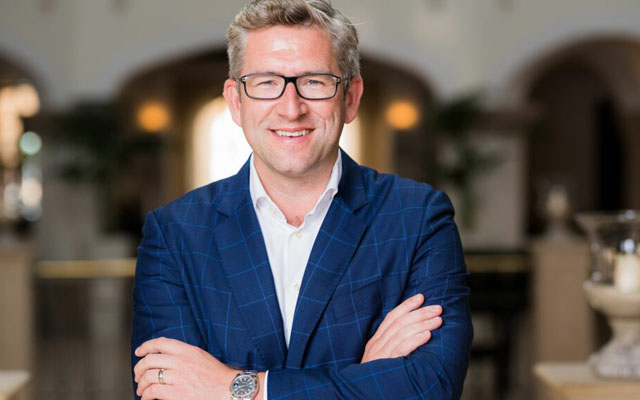
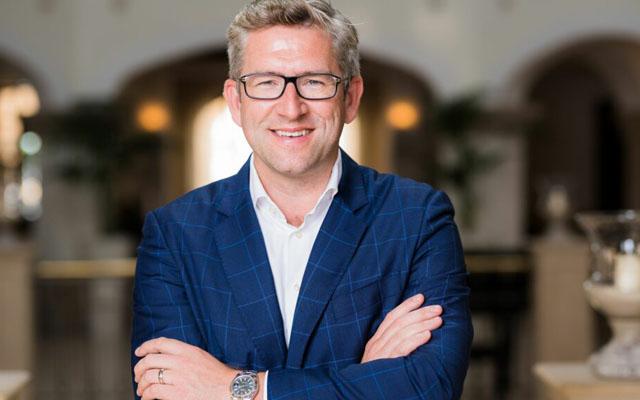
Design Hotels has appointed Stijn Oyen as managing director. He will define the future strategy and growth of the Design Hotels’ portfolio in his new role.
Oyen has a strong background in hotel operations, having spent the last 20 years with Marriott International and Starwood Hotels and Resorts.
He was most recently complex general manager for three properties in Mallorca – The St Regis Mardavall Resort; Castillo Son Vida, a Luxury Collection Hotel; and Sheraton Mallorca Arabella Golf Hotel.
PATA has appointed Soon-Hwa Wong as its ambassador for Greater China for a two-year term.
In this role, Wong will serve as a representative of PATA in the region. He will work towards achieving the goals of PATA, facilitating collaboration among stakeholders in the travel and tourism industry, and enhancing the presence of PATA in Greater China.
As the CEO of AsiaChina, he leverages his extensive network of high-level contacts and deep understanding of the two-way tourism and trade flows between Asia-Pacific and China to provide effective and tailored solutions for clients and partners across various sectors, such as destination management, aviation, car rental, urban mobility, travel agency, and startup.
With over 40 years of experience in travel and tourism, Wong’s various association leadership roles include being the immediate past chair of PATA. He is the current chair of PATA Singapore Chapter, and the honorary chairman of the Tourism Management Institute of Singapore.
Anna Rohm has been appointed as the new general manager of Renaissance Pattaya Resort & Spa.
With a seasoned international career in hotel management spanning Europe, the Middle East and Asia, she brings a wealth of experience and leadership to her new role where she will oversee day-to-day hotel operations and drive the resort’s overall business strategy.
Before joining Renaissance Pattaya Resort & Spa, Rohm served as hotel manager at one of the flagship hotels of the Banyan Tree Hotel Group in Thailand.
Travel trend analyst ForwardKeys has found Chinese New Year travels taking place earlier than usual this year, as Chinese consumers make smarter holiday plans to dodge crowds and expensive fares during the holiday rush. Consumers are also choosing to take a longer break after long years of staying put on home grounds.
ForwardKeys’ latest data showed that issued flight tickets for international travel from China for the period spanning January 26 to February 29 – comprising the official Chinese New Year public holidays from February 10 to 17 – are just 37 per cent behind 2019’s levels.
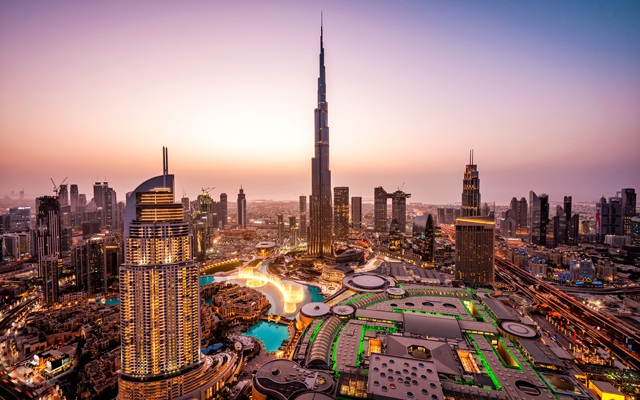
More Chinese travellers are planning ahead for their holidays, with issued tickets to Dubai, pictured, surpassing 2019 levels during this year’s Chinese New Year season
Departure activity spiked earlier than usual – as early as January 27.
According to ForwardKeys researchers, this year’s holiday season is particularly significant as it marks the first celebration following the easing of pandemic restrictions. The traditional seven-day holiday has also been extended to eight days.
Kuala Lumpur (up 15 per cent), Dubai (up eight per cent), and Macau (up eight per cent) surpassed 2019 issued ticket levels for this year’s Chinese New Year season, benefitting from relaxed entry requirements for Chinese travellers. Sydney (down five per cent) and London (down eight per cent) showed resilience with single-digit decreases against 2019 volume, while Singapore (down 18 per cent) and Seoul (down 22 per cent) continued to attract Chinese tourists with advanced flight connectivity and simplified visa procedures, noted the report.
ForwardKeys projects a peak in travel on the last two days of the Chinese New Year period and the day after the holiday period, as the Chinese choose to extend their vacation.
Examining Chinese travellers transferring on their way home, ForwardKeys’ data showed Istanbul and Abu Dhabi increasingly vital as connecting hubs, with Chinese transfers reaching 104 per cent and 75 per cent respectively of 2019 levels.
In terms of domestic trips, Haikou (up seven per cent against 2019) maintained popularity, while destinations in China’s north-eastern region, like Harbin and Changchun, exceeded 2019 levels by 15 per cent, driven by the appeal of winter sports and effective social media marketing.
Nan Dai, ForwardKeys’ China expert, commented: “The robust recovery of Chinese travel during the Chinese New Year period reflects not only the resilience of the tourism industry but also the strategic measures taken by the government and the changing preferences of Chinese tourists”
“The early spike in departure activity and the positive performance of various destinations signal a promising trajectory for the travel sector in the coming year. This presents a golden opportunity for tourism-related businesses, such as retailers, who can potentially take advantage of this surge in consumer activity and capitalise on the increased spending propensity of Chinese travellers during their extended holidays.”
Tourism Malaysia officials are in India this month on an intensive destination promotion campaign to position the destination as the preferred choice among Indian travel agents and travellers.
Initiatives kicked off with Tourism Malaysia’s participation in the Outbound Travel Mart (OTM) 2024 in Mumbai from February 8 to 10. Ammar Abd Ghapar, director general of Tourism Malaysia, led 43 organisations representing tour agents, hotel/resort operators, tourism product owners, state tourism boards, airline operators to the show.
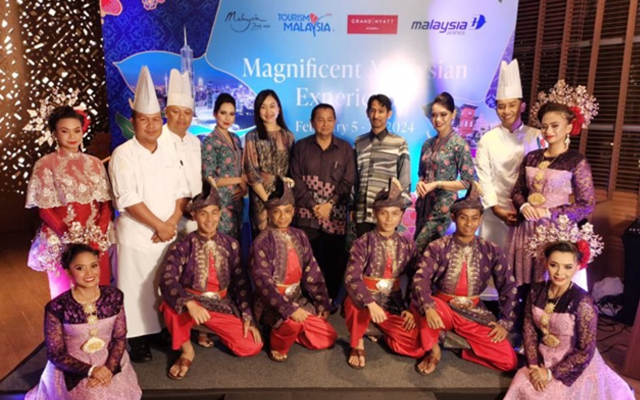
Tourism Malaysia hopes to attract more Indian travellers to the country; Malaysia Food and Cultural Festival held in Mumbai, pictured
The tourism board’s last OTM participation was in 2020.
Through its presence at OTM 2024, Tourism Malaysia showed off niche products such as shopping, golfing, luxury tourism, theme parks and honeymoon packages, as well as the destination’s appeal for weddings and film-induced tourism.
The Malaysia Food and Cultural Festival was also hosted from February 5 to 11 in the same city, while an extensive roadshow spanning four key cities in India – Bangalore, Chennai, Calcutta, and Ahmedabad – is ongoing from now till February 19.
These promotional efforts will culminate in South Asia’s Travel & Tourism Exchange in Delhi, taking place from February 22 to 24.
Ammar said: “India holds considerable importance as a priority market for Malaysia, boasting robust economic ties and deep cultural connections. It stands as Malaysia’s fifth-largest source of tourists, contributing significantly to the tourism landscape. The period from January to September 2023 witnessed Malaysia welcoming 14.4 million tourists, with 472,479 arrivals originating from India.”
Malaysia is offering visa-free entry for Indian tourists until December 31, 2024.
Malaysia’s ambition to welcome more Indian visitors is supported by various airlines, such as Malaysia Airlines, Batik Air, AirAsia, and IndiGo, which provide 180 flights and 33,374 seats weekly between India and Malaysia.
International visitors to Thailand will be able to receive medical coverage of up to 500,000 baht (US$13,861) if involved in any accident while holidaying in the country – in the event of death, there will also be a compensation of up to one million baht.
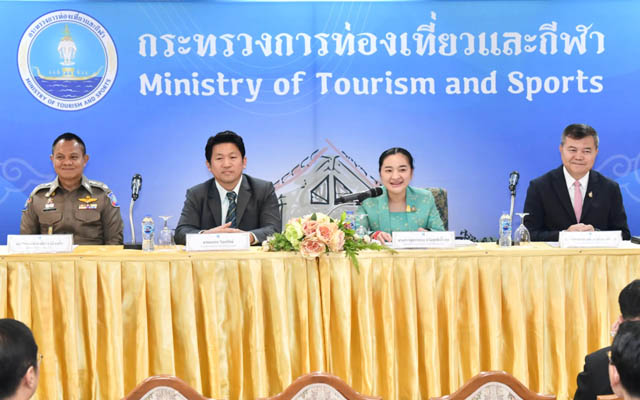
Launched on February 14, this insurance coverage is to assure tourists of their safety when travelling in Thailand, and is part of the government’s new campaign in collaboration with Thailand’s Ministry of Tourism and Sports (MOTS) and the National Institute of Emergency Medicine (NIEM) under the Ministry of Public Health.
Thailand will provide medical coverage for tourists who travel in the country between January 1 and August 31 this year (Photo: )
Foreign tourists are eligible for coverage if they have valid passports and are travelling in Thailand between January 1 and August 31, 2024 for the purpose of tourism only.
The Thai government has set aside 50 million baht to fund the scheme in order to ensure tourists’ safety as well as to strengthen the positive image of Thailand as a global holiday destination. The funds will come from the ministry’s budget for emergency expenses and will be used to compensate foreign tourists on a case-by-case basis during their travel in Thailand.
Foreigners with a tourist visa can apply for the coverage by submitting documents at the provincial tourism and sports offices, or at tourist assistance centres located in Bangkok’s Suvarnabhumi and Don Mueang airports. Applications can also be submitted via post and e-mail.
The maximum coverage is one million baht per person in case of death and 300,000 baht per person for permanent organ loss, loss of sight or permanent disability. Medical expenses will be covered up to a maximum of 500,000 baht. Tourists can claim medical expenses within 15 days of the incident and compensation is expected to be paid 15 days after that.
Tourists will not be eligible for the coverage if the incidents are ruled as risky or careless behaviour, or an intention to participate in illegal activity.
Meanwhile, MOTS has also initiated the Thailand Traveller Safety system for foreign visitors to check if they are eligible to apply for relief.
In addition, NIEM has proposed the establishment of a Tourist Emergency Medical Assistance Centre to facilitate coordination with the MOTS’s Tourist Assistance Center, the Tourist Police Hotline, or the NIEM Hotline to verify tourists’ eligibility for compensation under the scheme in order to refer them to the hospital for medical treatments.
Furthermore, the Tourist Police is operating the existing Command and Control Operation Centre and the Strong Tourism Community initiatives under the guidelines for implementing the Smart Safety Zone project and applying technology to maintain tourist safety such as strict law enforcement, suppressing exploitation of tourists, and fraud incidents.




 He was most recently complex general manager for three properties in Mallorca – The St Regis Mardavall Resort; Castillo Son Vida, a Luxury Collection Hotel; and Sheraton Mallorca Arabella Golf Hotel.
 As the CEO of AsiaChina, he leverages his extensive network of high-level contacts and deep understanding of the two-way tourism and trade flows between Asia-Pacific and China to provide effective and tailored solutions for clients and partners across various sectors, such as destination management, aviation, car rental, urban mobility, travel agency, and startup.
 Before joining Renaissance Pattaya Resort & Spa, Rohm served as hotel manager at one of the flagship hotels of the Banyan Tree Hotel Group in Thailand.