The Guam International Dance Festival will run from December 4 to 6, 2026, bringing together global performers and competitive dancers
The Guam Visitors Bureau (GVB) will bring back the Guam International Dance Festival (GIDF) from December 4 to 6, 2026.
The three-day event features competitive dance categories, cultural showcases, and professional workshops. GVB is currently working with the Federation of International Dance Festivals (FIDAF) to secure official festival sanctioning. The effort is supported by Vince Reyes, FIDAF local chairman for Oceania and president of local cultural performing arts programme Inetnon Gefpa’go.
The Guam International Dance Festival will run from December 4 to 6, 2026, bringing together global performers and competitive dancers; photos by Visit Guam
Sanctioning by FIDAF will grant the festival access to international judging panels and accredited dance troupes. Additional details regarding competition divisions and registration guidelines will be released in the coming months.
GVB president and CEO Régine Biscoe Lee said: “GIDF gives us another opportunity to welcome some of the most talented dancers and performers from around the world while giving our local community a chance to experience entertainment of the highest calibre right here at home.”
“GIDF is about creating an experience that people will want to come back for year after year,” added GVB director of destination development Ina Carillo. “We have an incredible opportunity to bring together competitive dancers who are at the top of their craft with professional performers who know how to command a stage.”
Jallah: the next phase of industry growth will be increasingly powered by connected ecosystems
RateHawk recorded a 78 per cent year-on-year increase in API bookings in the first half of 2026, alongside a 28 per cent expansion in its partnership network.
The B2B travel technology platform, owned by Emerging Travel Group, now has 1,800 API partners globally, including online travel agencies, tour operators, travel management companies, and technology start-ups. The API provides partners access to accommodation options across more than 190 countries from global suppliers and directly contracted properties.
Jallah: the next phase of industry growth will be increasingly powered by connected ecosystems
To support integration demand, the company launched a Content API in 32 languages featuring AI-driven property mapping, rate matching, and data anomaly detection. The platform also added support for package rates and single-order multi-room bookings.
RateHawk introduced an API Optimisation Manager role across key operating markets and released a self-service sandbox environment for partner testing.
Christopher Jallah, head of API Distribution at RateHawk, noted that rising traveller price sensitivity and shifting demands are driving businesses to expand supply options faster. He added that independently building a competitive accommodation portfolio takes years and heavy investment, leading more firms to choose API integrations.
He said: “We believe the next phase of industry growth will be increasingly powered by connected ecosystems, and developing our API infrastructure remains one of our strategic priorities.”
Jallah explained that partners can connect directly or via more than 100 travel technology partners to accelerate time to market, supported by dedicated regional resources and testing environments.
“We believe the next phase of industry growth will be increasingly powered by connected ecosystems, and developing our API infrastructure remains one of our strategic priorities.”
Andalusia Travel & Tours has expanded into Singapore to offer Umrah and Hajj pilgrimage services, educational programmes, and community initiatives
Andalusia Travel & Tours, Malaysia’s largest Umrah and Hajj travel provider, has established a physical footprint in Singapore to offer pilgrimage services, community guidance, and educational programmes.
Having served more than 800,000 pilgrims since 2002, the company’s expansion aims to provide Singapore’s Muslim community with access to guidance, educational programmes, and competitively priced travel packages directly from its new local office. Introductory 12-day Umrah packages start at S$2,990 (US$2,280) per person.
Andalusia Travel & Tours has expanded into Singapore to offer Umrah and Hajj pilgrimage services, educational programmes, and community initiatives
As part of its entry into the market, Andalusia will offer free weekly educational classes every Sunday at its premises on Pahang Street. The firm is also introducing its Andalusia Umrah Cilik initiative for children, which includes simulated pilgrimage rituals, launching in collaboration with Iman Kindergarten.
Additionally, the brand has partnered with social service organisation PPIS to sponsor an Umrah trip for a graduate of the Rise Above Halfway House, supporting women undergoing community rehabilitation.
Saleha Rashidi, head of PPIS Rise Above Halfway House, thanked Andalusia Singapore for the sponsorship, noting that the pilgrimage would offer valuable support to a resident rebuilding her life.
“Singapore represents an important new chapter for Andalusia. After many years of serving pilgrims in Malaysia, we are proud to bring our experience and approach closer to the Muslim community here, while building a presence that responds to the needs and aspirations of Singaporeans,” said Hajah Ida Riswana, founder of Andalusia Malaysia Travel & Tours.
“Our purpose in Singapore is to make the journey towards Umrah and Hajj feel within reach for more people. That means providing greater choice and value for those ready to travel, trusted guidance for those taking their first steps, and being present in the community long before a pilgrimage begins,” added Fara Abdullah, managing director of Andalusia Singapore Travel & Tours.
Hyatt Hotels Corporation is set to expand its presence in Indonesia with three new properties in Jakarta, Semarang, and Lombok, building on its existing portfolio of 14 hotels across seven brands.
In Lombok, Samara Lombok is scheduled to open in 2027 as the first Destination by Hyatt hotel in South-east Asia. The 125-hectare development spans two sites, Samara Bay and Samara Hills, featuring 249 guestrooms and villas.
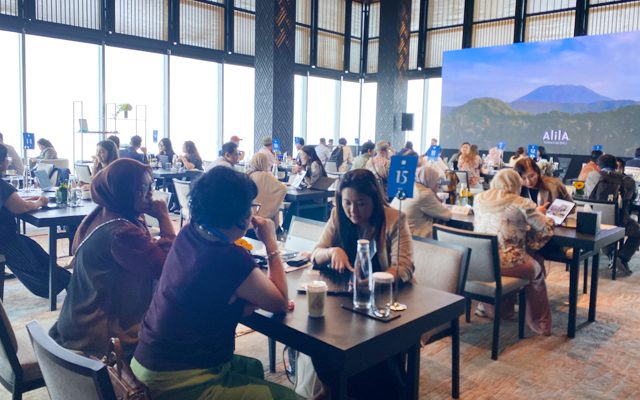
Attendees engage with representatives during the Hyatt Fair in Jakarta, where the group outlined its latest expansion plans across Indonesia; photo by Tiara Maharani
In Jakarta, Andaz Jakarta Sudirman is expected to open in 2028 within one of the capital’s tallest CBD skyscrapers. The property will offer 198 guestrooms and 167 serviced apartments.
Meanwhile, Hyatt Place Semarang will feature 154 rooms across seven floors, along with an all-day dining restaurant, a ballroom, meeting rooms, a gym, and a rooftop bar.
Perry Chung, marketing and events manager for Hyatt Asia-Pacific, spoke to TTG Asia during the recent Hyatt Fair in Jakarta, highlighting Semarang’s growth as both a commercial and leisure hub.
“Semarang has a lot to offer, from culture to culinary, while its location also makes it a good base for travellers exploring destinations such as Yogyakarta and Solo. This allows us to reach more travellers across Central Java,” Chung said.
Beyond Semarang, Chung noted that Hyatt is actively seeking opportunities in unrepresented regions.
“Key cities like Jakarta and Bali are still very important, but we also explore destinations where Hyatt does not have a footprint, such as second and third tier cities, to expand our portfolio,” he said.
Chung added that Hyatt has additional Indonesian projects in the pipeline, including the debut of new brands, with further details to be announced later.
Flash floods along the Nepal-Tibet border on August 26 damaged areas along the Trishuli River and halted the Kailash Mansarovar Yatra via Nepal, disrupting a key pilgrimage route for Indian travellers.
Indian tour operators reported immediate cancellations and postponements across leisure and religious itineraries, with the border closure causing the primary disruption.
Major religious sites in Nepal, including Pashupatinath Temple in Kathmandu, remain fully operational despite flood-related disruptions near the Tibet border
“Indian tours and pilgrimage trips to Nepal have been significantly impacted due to flash floods in the Rasuwa region along the Nepal-Tibet border. The biggest impact right now is on the Kailash Mansarovar Yatra via Nepal. However, we are also seeing postponements of other tours to Nepal,” said K Vijay Mohan, managing director of Holiday World.
The disaster has also weighed on consumer sentiment in India.
“All tours and pilgrimages to Nepal have come to a complete halt and groups are asking for cancellations. There are no new enquiries for Nepal as people are in shock after seeing the scale of the natural disaster. Even some travellers who were planning to visit Kathmandu for gaming have cancelled their trips,” said Ashwani K Gupta, managing partner at Dove Travels.
The Rasuwagadhi-Kerung border served as the primary transit point into Tibet for the season, which usually runs through mid-October. Suresh Singh Budal, CEO of the PATA Nepal Chapter, highlighted its importance for tour operators before China issued border restrictions.
“It is the most accessible and affordable option, and the one most private Indian and Nepali tour operators rely on. Following the flash floods, the Chinese National Immigration Administration formally suspended the issuance of electronic border permits for Shigatse City, the administrative area covering Gyirong Port, on August 28. The notice is unambiguous: no new permits will be issued and those already holding permits have been advised not to travel there until a further announcement,” Budal said.
While departures via Rasuwa are paused, major Nepali pilgrimage sites such as Muktinath, Pashupatinath, Janakpur, and Lumbini remain open. Travel trade leaders expect core tourism circuits to recover quickly once safety perception stabilises.
“Kailash Mansarovar and Rasuwa are likely to face significant disruption with postponements expected. Kathmandu, Pokhara and Lumbini have not witnessed any major destination-level impact, although temporary cancellations may occur due to concerns around safety perceptions and connectivity. Other mainstream Nepal tour programmes are also likely to experience a short-term slowdown rather than a sustained decline in demand,” said Subhash Goyal, chairman of STIC Travel & Air Charter Group.
“Overall, once travellers are reassured about safety, demand from India is expected to recover quickly, given Nepal’s proximity, affordability and strong religious and cultural appeal,” Goyal added.
Anuj Singhal, founder of Travel Representation House India, stressed the distinction between defined flood zones and key tourist corridors.
“It is important to emphasise that the flood-affected areas are localised and geographically distant from Nepal’s primary leisure and pilgrimage corridors. Destinations such as Kathmandu, Pokhara, Chitwan and Lumbini remain operational, safe and accessible,” Singhal said, adding that trade education is underway to clarify that cancellations are largely limited to remote overland routes.
“For mainstream itineraries, we are actively re-educating our trade partners in India to help manage consumer perception,” Singhal added.
Searches for first and business class outbound flights from Singapore grew by 137% year-on-year in the first half of 2026, according to data from Trip.com.
Searches for five-star hotels also rose by 42% over the same period. The growth is particularly evident among travellers visiting China, South Korea, Japan, the US, and the UK.
First and business class flight searches from Singapore surged by 137% year-on-year in the first half of 2026
Millennials and Gen X travellers are driving the demand, with those aged 35 to 49 accounting for nearly half of all premium flight and hotel bookings for the second half of the year. Travellers aged 50 to 59 account for almost a quarter of premium flight bookings.
Singapore is also seeing an influx of inbound premium travellers. Visitors from China, South Korea, Thailand, Malaysia, and Indonesia represent the top five source markets. These travellers spend an average of 10 times more per trip than typical travellers, with spending on tours, attractions, and activities estimated to be four to six times higher.
More than four in 10 first and business class flights booked for the second half of the year are longhaul flights. Japan remains a key destination, accounting for four of the top 10 most-booked five-star hotels. Booking patterns among Trip.com’s Black Diamond and Diamond+ members also reflect demand for longhaul destinations, including Australia, the UK, and the US.
Travellers flying first or business class average at least 14 days overseas per trip, which is close to 40% longer than average travel durations, stretching to 20 days on some occasions.
Demand for tailored travel options has also increased. Bookings from Singapore for Trip.com’s custom tour offering grew by 650% year-on-year. Gross hotel bookings under the Old Friends Club, an initiative for users aged 50 and above, rose by over 100% year-on-year in the first quarter of the year.
Live entertainment and events continue to motivate travel spending, with 63% of Asia-Pacific travellers having crossed borders for concerts, and 66% willing to travel abroad for events.
Accor has been certified as a Great Place To Work in Singapore following an anonymous survey of staff across its corporate office and local hotels.
In the 2026 assessment, 84 per cent of employees – referred to within the company as Heartists – named Accor a great place to work, while 91 per cent reported feeling welcome upon joining the group. The certification framework, administered by global workplace culture authority Great Place To Work, measures employee experience, retention indicators, and leadership practices.
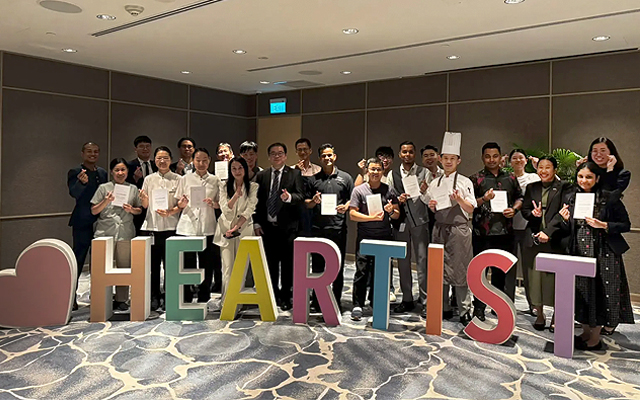
Accor has earned Great Place To Work certification under its Hospitality is a Work of Heart framework for its Heartists
The company’s regional talent strategy operates under its Hospitality is a Work of Heart framework, focusing on professional development, workplace diversity, and community engagement.
“Great workplaces are not built by policies or perks alone; they are built by people, by how we show up for one another every day, create space for different perspectives and ideas, and inspire each other to be at our best,” said Garth Simmons, COO, premium, midscale and economy division for Accor in Asia. “As Accor continues to grow across the region, attracting, developing and retaining great talent is fundamental to our success.”
“Our Purpose at Accor is to pioneer the art of hospitality, connecting cultures with heartfelt care, and that begins with how we care for our own people,” added Shelley Perkins, senior vice president, people & culture, Middle East, Africa and Asia-Pacific. “This certification, awarded entirely on the basis of what our Heartists shared, is the most authentic recognition we could receive.”
Luxury boutique brand Trunk(Hotel) will open its first property outside Tokyo with the launch of Trunk(Hotel) Sapporo in Hokkaido on September 17, 2027.
Situated in central Sapporo’s Odori district, the 18-storey, 107-room hotel will be the brand’s fourth and largest property. The hotel includes 18 suites and 89 standard rooms designed around a Midcentury Folklore theme incorporating regional wooden textures and craft details.
A rendering of a guestroom at Trunk(Hotel) Sapporo, set to open on September 17, 2027, as the brand’s first property outside Tokyo
The property will feature Trunk(Bath House), a dedicated spa floor built around a 40-metre waterway leading to 10 communal bathing areas, saunas, cold plunges, and open-air relaxation spaces. Dining offerings include the first Sapporo location for Michelin-recognised Sushi Saito, combining traditional Tokyo techniques with local seafood, as well as an all-day dining restaurant and a lounge bar featuring live music and outdoor winter dining domes.
Additional facilities include three banquet halls, a chapel with a six-metre ceiling, and an entertainment studio complete with a private cinema and karaoke room.
“The Lounge & Bar provides a refined, welcoming setting, enhanced by live piano and band performances,” said a spokesperson for Trunk(Hotel). “Guests can enjoy an immersive experience throughout the day, with all-day dining, curated drinks, and music from morning to night.”
S Hotels & Resorts has launched its It’s About Time campaign across its property portfolio in Thailand and the Maldives.
Designed to encourage travellers to reset before the end of the year, the campaign applies to SAii Hotels & Resorts properties in Phi Phi, Phuket, Koh Samui, and the Maldives, as well as Santiburi Koh Samui.
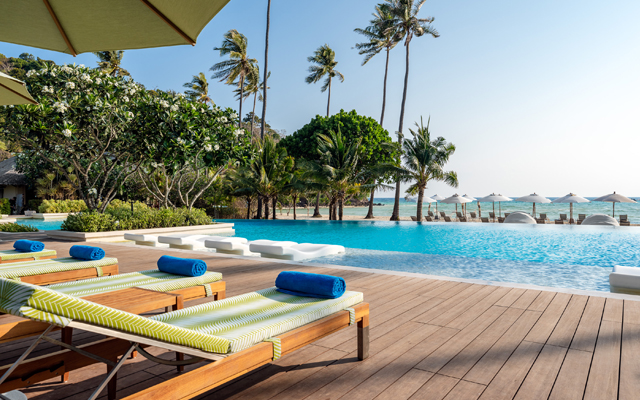
SAii Hotels & Resorts and Santiburi Koh Samui have introduced promotions across Thailand and the Maldives to encourage travellers to slow down
The initiative structures guest experiences around themes such as adventure, nature, self-care, local cuisine, and shared activities. Activities include kayaking through mangrove forests in the Andaman, exploring reefs in the Indian Ocean, beachside dining, spa visits, and padel tennis at the SunRay Social & Swim Club.
At Santiburi Koh Samui, a 9.3-hectare property set amid tropical foliage and lotus ponds, the campaign takes the form of Time to Exhale. Key features include quiet beach access on Mae Nam Beach, wellness facilities at Santiburi Spa, a renovated fitness centre, and Thai dining at Sala Thai Restaurant.
Advance bookings across SAii Laguna Phuket, SAii Phi Phi Island Village, SAii Koh Samui Villas, SAii Lagoon Maldives, and Santiburi Koh Samui receive discounts of up to 30 per cent.
Thailand is advancing a broad visitor economy framework, reclassifying who counts as a visitor and measuring diverse spending streams to reach a 2035 target of six trillion baht (US$185 billion) per year – roughly double the country’s current annual tourism income – in economic value, alongside the creation of at least 1.2 million new jobs.
The framework positions visitors as a driving force for the broader economy. Rather than focusing solely on increasing tourist numbers, the national strategy aims to drive economic value, investment, employment and quality of life across all regions.
Krabi is among three destination sandboxes – alongside Bangkok and Chiang Rai – selected to pilot Thailand’s broad visitor economy framework
The concept was integrated into government planning on August 19, 2026, by deputy prime minister and commerce minister Suphajee Suthumpun, who established a working group to drive the strategy. The framework encompasses various non-residents travelling in and out of Thailand whose spending supports sectors not typically associated with the tourism industry.
“Thailand should no longer treat every visitor as the same type of tourist. Instead, it should recognise different purposes for travel, including health, education, business, weddings, film production and Work from Anywhere, as well as niche groups with high spending power,” Weerasak Kowsurat, chairman of the Working Group on Creative Economy Development and Visitor Economy, told local news outlet The Nation.
Spending from these visitors flows into airlines, restaurants, hospitals, shopping malls, education, real estate, transport, sports, culture, entertainment and digital services. Weerasak said there is potential to integrate further sectors, such as insurance, into the visitor economy, which could foster job creation for agents servicing visitors.
The working group currently meets weekly to advance the strategy. At the August 25, 2026 meeting hosted at the Association of Thai Travel Agents headquarters, members agreed to launch sandbox pilots in Bangkok, Chiang Rai and Krabi.
Each pilot will gather visitor economy data for benchmarking across cities, aiming to raise the value per visitor, retain spending within local areas, improve community living standards and support green growth. The Thailand Convention and Exhibition Bureau, which measures visitor economy activity for business travellers, sits on the working group.
Weerasak emphasised that the visitor economy transcends traditional silos, citing international students as an example. He noted that the Ministry of Education runs its own subset of the visitor economy through private schools and international university programmes. He plans to collaborate with the ministry to track foreign student tuition and accommodation spending – metrics previously not considered by the tourism sector.
As this approach requires integrating existing sectors under a new framework, Weerasak said the committee is not expecting immediate results.
“We cannot be impatient with the visitor economy, because it takes time to create a proper foundation. Today our aim is not to produce a hurried plan on paper, but to build more connectedness, foster ownership across sectors and let each agency connect and plug into the ecosystem according to its own reality,” Weerasak said.