TTG Asia
Asia/Singapore Saturday, 13th December 2025
Page 398

Singapore launches new global campaign to inspire visitation

0

The Singapore Tourism Board (STB) has unveiled its latest global campaign, Made in Singapore, to inspire travellers to choose Singapore as their next travel destination.

The campaign puts a fresh spin on the Passion Made Possible destination brand, which was launched in 2017 by STB and Singapore Economic Development Board. Replacing STB’s SingapoReimagine international recovery campaign launched in November 2020, Made in Singapore will spotlight quintessentially Singapore experiences, from iconic attractions to hidden gems, and how ordinary moments are turned into extraordinary experiences in Singapore.
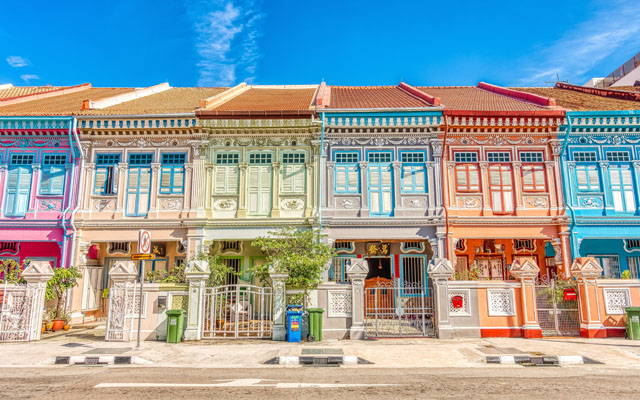
The new campaign will spotlight unique Singapore experiences, from iconic attractions to hidden gems; Peranakan houses, pictured

Kenneth Lim, assistant chief executive (marketing group), STB, said: “The Made in Singapore campaign is anchored on our Passion Made Possible destination brand, which embodies the Singapore spirit of fulfilling individual passions and creating new possibilities. Through this latest campaign, we would like to reinforce Singapore as a destination that turns imagination into reality. Our goal is to showcase how everyday ordinary moments are made extraordinary and unforgettable – experienced only in Singapore – to inspire travel here.”

The campaign aims to keep Singapore top of mind and connect across different travellers by showcasing the country’s key attributes – an inspiring City in Nature destination that is not only vibrant and cosmopolitan, but also rooted in strong multicultural heritage.

To build emotional affinity and inspire travel to Singapore, the campaign adopts a bolder and playful approach to convey the spirit of Made in Singapore. From “forest bathing” at the unexpected setting of Jewel Changi Airport’s Rain Vortex, to working up a sweat dining at Lau Pa Sat hawker centre, and witnessing a colourful “air show” at the all-new Mandai Bird Paradise, Singapore turns imagination into real and inspiring experiences for travellers.

Made in Singapore will roll out across key markets globally including China, India, Indonesia, South Korea, the UK and the US. Beyond film and social, the campaign will include in-market activations, industry partnerships, collaborations with content creators, as well as familiarisation trips to immerse media and influencers in Made in Singapore experiences.
Outbound travel for China spots new trends

0

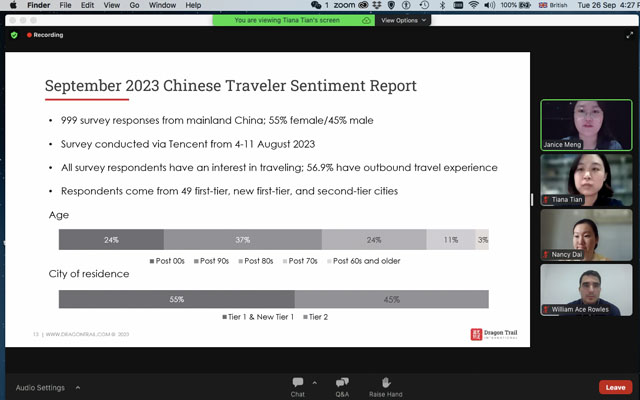
Dragon Trail International (DTI) and ForwardKeys’ latest webinar on Chinese Tourism Outlook: October Holiday and Beyond on September 26 revealed a couple of unexpected findings.

Iceland has become a hotspot all thanks to social media and was the most searched destination on popular Chinese platforms like Xiaohongshu, Douyin and Weibo, according to Janice Meng, DTI market research analyst.

Dragon Trail International and ForwardKeys’ latest webinar revealed the latest Chinese traveller preferences

Meng noted the photos and videos of active volcanoes and beautiful scenery placed Iceland, which had never made it to the top 10-destination list, in the number five spot.

“More and more, social media is making an impact on trip planning and traveller behaviour,” she added.

On where they want to visit this year for the first time, a high proportion of Chinese travellers picked South Korea, Japan (when the survey was conducted before news of Japan’s release date of treated nuclear water from August 24), Thailand, Hong Kong, Iceland, Macau, the Maldives, France, Singapore and the UK.

Noticeably, Thailand has fallen off the top 10 list based on the August survey of some 1,000 respondents, and Nancy Dai, China market expert, ForwardKeys, commented all eyes were on its recovery with the destination offering visa-free entry from September 25 until February 2024, straddling the Spring Festival high season.

Dai observed: “We will have to wait and see the impact of Thailand’s visa-free entry and what the airlines announce in the last week of October for the winter season.”

In taking a more detailed look at safety in 16 destinations, she said Hong Kong and Singapore were perceived to be “much more safe” and “less unsafe”.

Western countries like Australia also improved and the safety perception of the US described as “terrible in the past” improved considerably.

She continued: “Thailand’s safety ranking dropped, with 51 per cent saying it was now unsafe during to news of kidnapping, human trafficking and Chinese being robbed and the reason for joining tour groups and buying travel insurance.”

September 29 to October 6 marks the last week-long holiday in China this year.

Tiana Tian, DTI market research analyst said Trip.com reported that outbound travel hotel searches increased by 20 per cent and flight searches nearly recovered 100 per cent compared to 2019.

In addition, she said Tongcheng Travel noted the average price of international air tickets on September 29 was 72 per cent higher than the average price during summer.

According to Dai, the revival of outbound travel was “unaffected by China’s economic downturn, with travellers favouring longer stays and 61 per cent spending more than six nights away”.

ForwardKeys is also tracking smaller group sizes with solo, couples and families of three to four going away between September 23 and October 8 as of September 6, compared to 11 per cent for groups with five or more people.

It added that Hong Kong, Macau, Malaysia, Singapore and Indonesia were the most resilient destinations in Asia for outbound China travel with +52 per cent, +36 per cent, +10 per cent, -11 per cent and -33 per cent arrivals respectively, based on tickets issued on September 15 for travel between September 23 and October 8, compared to 2019.

Phuket stakeholders embrace the potential of Phang-Nga Airport project

0

The news that AOT, the organisation that manages Thailand’s international airports, is proceeding with plans to build a new hub in Phang-Nga, has been welcomed by local stakeholders.

Conceived as a way to ease pressure on the region’s infrastructure, the construction is part of the 140 million baht (US$3.8 million) Andaman-Lamphun project, with the goal of building two new airports in Lampuhun and Khok Kloi in Phang-Nga for 70 million baht each.

A new airport hub at Phang-Nga is in the works; Phang-Nga Bay, pictured

With Phang-Nga’s proximity to Phuket, where there has been demand from local businesses for a second hub on the island to process the surge in arrivals, the new airport is welcomed news. Phuket’s rapid tourism recovery has driven a sharp rise in recovery, but it has also impacted the island’s population profile.

Bill Barnet, managing director of C9 Hotelworks, explained the effect of the influx of travellers and the need for increased connectivity.

“Covid-19 saw a dramatic urban flight of new residents from Bangkok and expat migration from Hong Kong, Singapore, the US and others. Also, the Russian-Ukraine conflict sparked a significant rise in residents. The island’s real estate sector has boomed, and the island is now embroiled in a looming infrastructure crisis.

“The need for a second airport (nearby) is not all about tourism – though it’s hard to ignore that the current facility also serves a growing Khao Lak hotel sector – Phang-Nga is (also) a secondary gateway for nearby Krabi.

“The long-term growth of Phuket and the Andaman region is clearly moving ahead, and a single airport on the island simply cannot cope with the growing population and urbanisation of Phuket. Something has to give.”

Duncan Worthington, chief strategist, Infinity Communications, cites how the move might increase footfall and boost the local economy.

He said: “We don’t see the Phang-Nga airport significantly impacting our business. If it drives arrival numbers (and not simply disperses them), then there could be some trickle-down benefits by creating more businesses and local jobs.”

Worthington has some reservations about the construction project’s impact on the environment but believes if the work is carried out sustainably, then it can only be for the good of the region.

“Infrastructure is a concern – the road network from the new airport to the coastal resort destination, as well as those inland, will need upgrading to support the increased traffic volume, which could mean expansion and land appropriation. Several national parks and green spaces in the area also need to be protected.

“Overall, the move is a good one. Short-term, giving travellers easier access to the destination is a positive for local hospitality businesses. If the pre-pandemic growth trajectory for Phang-Nga returns long-term, the airport will likely become a key economic driver benefitting the core hospitality industry. If the airport also helps to disperse visitors from Phuket and takes pressure off the island environmentally and infrastructure-wise, then that would also be a positive.”

Asian clients on the rise of private jet firm, VistaJet

0

VistaJet, which operates private flights to 187 countries, is seeing a high renewal rate among its clients in Asia, with high net-worth membership growing at an average rate of around five per cent. Most sign-ups are for the firm’s three-year programme.

Its intra-Asia and flights to and from Asia have also surged 80 per cent year-on-year in 1H2023.

Moore: VistaJet has committed to being fully carbon neutral by 2025

Ian Moore, chief commercial officer, stated that Asia was a big buyer of its flagship Bombardier VistaJet Global 7500 product, which can fly non-stop from Singapore to London, Vancouver, San Francisco and Cape Town.

Hourly rates start from US$15,000 and are between 20 and 30 per cent more for “short hops” and during “peak hours”.

The aircraft seats 14, sleeps eight, is designed with four unique living spaces comprising a living area, a dining area for up to six passengers, a cinema and a stateroom.

To ensure an exquisite flight experience for guests, VistaJet works with more than 7,000 suppliers around the world, the finest producers and purveyors, the most sought-after private chefs and Michelin-starred restaurants.

Guests flying out of Singapore, for instance, can enjoy a farm-to-table meal from award-winning Origin Grill located at the Shangri-La Singapore.

Looking ahead, Moore said VistaJet has committed to being fully carbon neutral by 2025. Since introducing offsets in 2020, more than 85 per cent of members have opted in to compensate for their fuel emissions by investing in certified carbon credits.

An announcement on the use of sustainable aviation fuel will be made soon, according to Moore.

A Qool weekend adventure at Quincy Hotel Singapore

0

Quincy Hotel Singapore has introduced its new Qool Weekend package in partnership with Sachi and Mr. Bucket Chocolaterie.

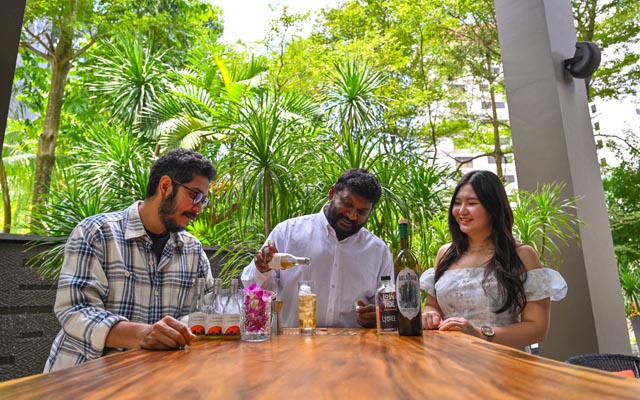
Upon arrival, guests will be treated with a welcome ice cream, and are invited to join Sachi’s Cocktail Making Workshop at 17.00 where they will be introduced to the world of soy wine, which are low in calories and high in antioxidants, and create their very own Quincy cocktail.

Guests can create their very own Quincy cocktail during the Sachi’s Cocktail Making Workshop

Guests will also have the opportunity to create their very own chocolate slab at Mr. Bucket Chocolaterie, a Singapore-based chocolate lifestyle brand that specialises in artisanal chocolate bonbons and treats from cacao, sourced only within Asia.

The Qool Weekend package is priced at S$528 (US$384) for two and can be booked from now to March 26, 2024 for stays till March 31, 2024.

For more information, visit Quincy Hotel Singapore.

Train travel on the rise in Europe and Asia

0

Train bookings on Trip.com Group, have skyrocketed not only for travel in Europe – where the European Union is targeting climate-neutrality by 2050 – but also in Asia where more travellers want “to pursue the perfect trip for a sustainable future”.

Dennis Li, CEO of International Train Ticket, Trip.com Group, told TTG Asia: “We have a global customer profile and 50 per cent of them are under 35.”

Li: we have encouraged more than five million travellers to travel by train

Li added that sustainable travel as a concept and practice across the globe “had moved from the back of travellers’ minds to a dominant position in the decision-making process”.

“More than 16 million people have chosen sustainable travel options, with Gen Z exhibiting the highest preference for sustainable products, including travelling by trains compared to other age groups.

“We launched PalGreen Energy on Trainpal at the end of 2021. This feature allows users to view the carbon emissions they reduce when travelling by rail on our platforms. Since the launch, we have encouraged more than five million travellers to travel by train, collectively reducing over 60,000 tonnes of CO2 emissions.”

Li shared that Trip.com recently joined the Science Based Targets initiative and is the first travel company in Asia-Pacific to commit to an ambitious corporate climate action.

One year since green tourism goals were launched at Trip.com, sustainable travel products have been incorporated into multiple business lines, including trains, flights, car rentals and business travel.

Meanwhile, “split ticketing” in the UK has become one of the “best-received features”, Li noted.

“We are the first company to launch this feature in Europe,” he continued, which allows passengers to save money by splitting their train journey into two or more tickets without the need to change trains.

“Alternatively, it can create new transfer routes to reach the intended destination for even higher savings for budget travellers. In practice, the feature can help a user save up to 95 per cent of the ticket costs, with an average saving of 20 per cent.”

He said: “It is very popular among our users, and 39 per cent of all tickets we issue are split tickets. We plan to further optimise this feature by covering more routes, improving split ticket monitoring. We are also going to be the first platform extending split ticketing to UK seasonal tickets.”

Launched in 2017, Trip.com Group’s “ticket snapping” service is another innovation for passengers using Ctrip’s WeChat mini programme to greatly improve their chances of getting a ticket by placing them on a prioritised waiting list to “snap” a ticket as soon as any inventory becomes available again.

Puy du Fou to debut in Shanghai

0

French-based theme park operator Puy du Fou will make its foray into Asia with the opening of its immersive theatre in Shanghai next year.

Transformed from an existing building, the 250,000m² SAGA City of Light is located at Cao Bao Road in the south-western part of the city and will boast a creative entertainment model rooted in local Chinese history, legends and heritage.

Puy du Fou will launch its immersive theatre in Shanghai next year

According to president and artistic director, Nicolas de Villiers – who was recently a speaker during the panel session of the Global Tourism Economy Forum 2023 held in Macau – the game plan in China is to build a big live show first, before constructing theme parks in other cities.

He said: “China’s huge population makes it the (ideal) first market for us and its 5,000-year civilisation along with numerous beautiful cities means no shortage of great locations.

de Villiers shared that the shows in Shanghai will be Chinese versions of various re-enactment shows “inspired by history and heroes of different historical times”. The duration for each show is 30 minutes, and includes a short interval so the audience can enjoy F&B options.

The venue will feature different shows similar to the 20 different shows in France, which plays several times a day.

“Targeting local Shanghainese residents, like families, we believe the brand can bring our own storytelling know-how in the immersive experience, which can create something unique, like an adventurous walk-through show,” he added.

Rather than a traditional setting with a stage and seats, the audience will be ushered to a room by performers or comedians where after listening to a story, they will then decide which door to exit so as to “become part of the story”.

The theatre will feature a unique concept in China, spiced up with numerous technologies, such as the use of artificial intelligence for backstage, holograms, video effects, water effects, among others.

With a maximum capacity of 900 pax, the complex’s traffic is estimated to hit 5,000 visitors per day on weekends.

Presently still looking for private and public partners for the development, the SAGA will debut after Chinese New Year next year. The group has also expressed interest to collaborate with Thailand, Vietnam, Cambodia, and Singapore.

PwC study highlights Traveloka’s contribution to Indonesia’s tourism ecosystem

0

A socio-economic impact study released by PwC Indonesia revealed that Traveloka is making significant social, environmental, and economic contributions to Indonesia, Malaysia, Singapore, Thailand and Vietnam.

While Traveloka’s primary economic contribution is within the tourism sector, its activities also extend to other sectors such as agriculture and energy, indicating a broader economic involvement.

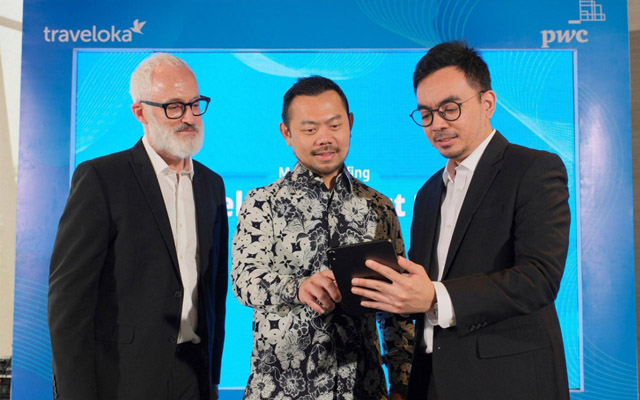
From left: PwC Indonesia’s Julian Smith, Traveloka’s Caesar Indra, and PwC Indonesia’s Radhiyan Irwansyah

The study highlights Traveloka’s role in stimulating an increase in Indonesia’s Gross Value Added across a four-year period, accounting for approximately US$10 billion between 2019 and 2022. Of this amount, the tourism sector accounted for more than US$4.5 billion, contributing 2.7 per cent to the sector’s GDP. This contribution played an important role in aiding the post-lockdown recovery of the travel and tourism sector in the region.

The study by PwC Indonesia highlights Traveloka’s impact as the platform enables its partners in Indonesia to unlock access to new global audiences and innovate to diversify revenue streams. 86 per cent of businesses who participated in the study agreed that Traveloka has helped to accelerate their business growth in the Travel & Tourism, Food & Beverages and Lifestyle sectors. Respondents reported an average of 50 to 75 per cent growth in sales after partnering with Traveloka.

Furthermore, 67 per cent of businesses based in off-the-beaten-track destinations reported experiencing positive trends in visits to their businesses after partnering with Traveloka, with 77 per cent agreeing that Traveloka has helped them promote domestic tourism. In addition, 62 per cent agreed that Traveloka has helped increase their competitiveness against businesses in other destinations. Among women-owned businesses, 85 per cent agreed that Traveloka has helped them promote their products and services, reach more customers, and obtain higher revenue from online sales.

PwC Indonesia’s director Julian Smith commented: “This study measures the ripple effect that Traveloka’s operations have on various sectors in the region. It is encouraging to witness a tech unicorn not only thrive but also catalyse positive change in the South-east Asia region.”

Traveloka not only established more direct, sustainable partnerships with suppliers in South-east Asia and fostered more profound relationships with travel partners, but is also committed to conducting its business responsibly and ethically to reduce its direct and indirect environmental footprint, both internally and externally. In fact, Traveloka has incorporated a filtering option labelled “Sustainable Tourism” within the app, allowing users to select the Carbon Offset Checkout on their flights and accommodation options certified by the GSTC.

Caesar Indra, president of Traveloka, shared: “We engage with millions of travellers daily, and this PwC Indonesia study quantifies for the first time our sizeable contribution to Indonesia’s economy through powering innovation, driving growth for local businesses, and job creation.

“As we continue to grow our presence around the region and the world, we remain committed to serving our customers, and delivering positive and sustainable impact in Indonesia for the long-term.”

WATG reveals five trends shaping the hospitality landscape in 2024

0

With the return of travel, consumer preferences and expectations have evolved as indicated by the increased demand for all things responsible yet purposeful. This heightened sense of self-awareness and personal lifestyle has triggered changes in the way hospitality stakeholders personify their brand promise.

Integrated luxury hospitality designer WATG reveals five emerging trends that will shape Asia-Pacific’s hospitality industry in shape the hospitality industry in the months ahead.

Rissai Valley, a Ritz-Carlton Reserve nestled in Jiuzhaigou, China, was the host venue for a high jewellery exhibition curated for high-net-worth travellers

Luxury brand collaborations fuelled by the experience economy
WATG observed a growing prominence of luxury fashion and lifestyle brands within the hospitality space as they seek to capture growth in the ‘experience’ economy by aligning their brands with aspirational High-Net-Worth Individuals’ (HNWIs) recreation and way of life. Some examples include the emergence of pop-up beach clubs like Fendi Puente Romano and Dior Bali, exclusive suites within famed hotels such as the Bentley Suite and Dior Suite at St Regis NYC, entire luxury hotels like Bulgari, Armani, and Baccarat, and the proliferation of branded residences by such brands.

WATG’s collaborations with Bulgari and the newly-opened JW Marriott Jeju Hotel & Resort in Jeju, South Korea, showcase the timeless glamour and heritage of the renowned Italian watch and jewellery maker, as well as the Louis Vuitton Deep Time luxury jewellery exhibition held at Rissai Valley, a Ritz-Carlton Reserve nestled in Jiuzhaigou, China – Ritz-Carlton’s first all-villa resort.

Private members clubs targeting daycations sector
Growth in concept with the line blurring between hotel and club is observed as hotels now turn to the local community for patronage. An array of amenities is activated to create club-like concepts for these daycations. The subscription model these clubs are based on offers hotels more diversified and stable revenue streams than from transient trade. Rosewood, Six Senses and Aman are all opening private clubs for local residents integrated within urban hotels. At the same time, there is growth and innovation from the traditional private members club space targeting specific market segments with increasingly curated offering comprising a guestroom component or offering retreat concepts away from the city.

Branded ecosystems
Hotel operators are extending their services and brands beyond traditional hotels into other adjacent lifestyle concepts. This includes the branding and operation of a range of synergistic components within an urban mixed-use development including residences, wellness hubs, serviced offices and private members clubs. Accor, for example, has launched a dedicated service line Accor One Living to focus on the development, operation and branding of these mixed-use spaces with a focus on creating complementary experiences under a single brand for a range of users from guests, onsite residents to the local population. Hotel operators are also continuing to expand their presence into non-hotel leisure experiences through the branding and management of standalone vacation rentals, superyachts and private jets.

Scaled-up accommodation
The post-lockdown trend for multi-generational and blended travel is having a demonstrable impact on the demand and supply for larger accommodation typologies within a resort setting. Hotels are being designed today with a greater consideration for this market. Larger villas are making up a greater proportion of total inventory. Family-friendly in-villa amenity is being bolstered while flexibility to cater to the different needs of a travel group is being designed into the product. This growing transient multi-generational demand dovetails neatly with the growth of branded residences, creating an all-round beneficial scenario from a cashflow and end user demand perspective.

Amenity innovation to go against the conventional
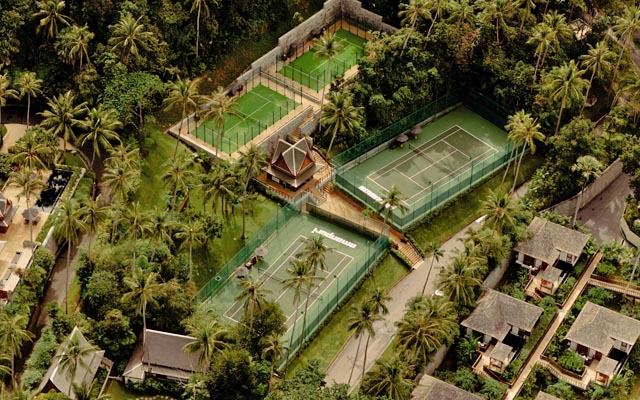
As the experience economy enters a new phase, there is an arms race underway in the hospitality sector for amenity programming that helps destinations to stand out from the crowd. Developers are going to extra lengths, investing in wow-factor concepts that capture the imagination and place the destination on the map. Leveraging the unique context of each destination, including natural assets and local cultural themes, is central to anchoring amenities and providing one-of-a-kind experiences that cater to growing expectations for authenticity. Partnerships with third party specialist operators, brands and celebrity endorsed concepts are also adding a new dynamic and visibility to the destination offering that speaks directly to the targeted guests. Be it kids’ clubs, sports and fitness facilities, wellness programming, cultural experiences and translating through into the F&B offering and poolside experience, each new resort requires a new layer of thinking in terms of experience curation through the guest stay.

“As the hospitality landscape evolves in Asia-Pacific, we must rethink what this means to us, to our clients, their guests and to the planet. It is imperative that we continue to innovate as we strive to respond quickly to market needs, to elevate guest experiences and recapture revenue to optimise returns for our clients. Backed by a thorough research-led framework, our deep understanding of what today’s travellers seek allows us to set new standards for what guests can expect in a new era. We believe that these trends don’t just guide our clients to build a more resilient business model but also shape our industry to ensure we can keep on thriving in 2023 and beyond,” said Guy Cooke, associate principal and studio director of advisory services, WATG Singapore.

Collinson, Visa to ease flight delay woes with airport lounge access across Asia-Pacific

0

Collinson has teamed up with Visa to offer eligible Visa cardholders in Asia-Pacific instant access to premium airport lounges in the event of flight delays or cancellations.

Collinson’s SmartDelay will provide customers with instant benefits without the need to complete a claim form. It will allow travellers to enjoy lounge access, including complimentary food and beverages, once notified of the delay or cancellation.

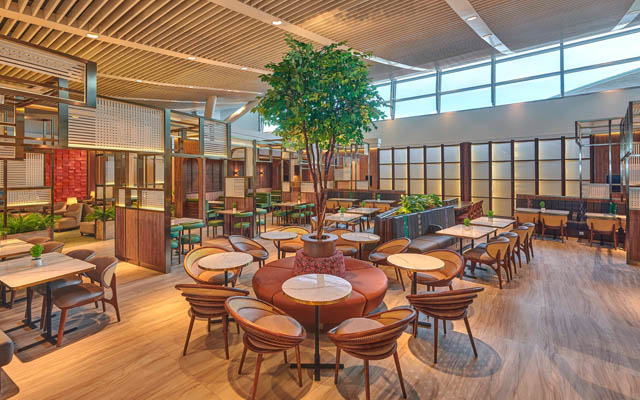
Eligible Visa cardholders in Asia-Pacific will get instant access to premium airport lounges in the event of flight delays or cancellations; Plaza Premium Lounge at Kuala Lumpur International Airport, pictured

Insights from Collinson’s recent Asia-Pacific customer engagement and loyalty research report, The New Rules of Engagement: Customer Expectations Revealed, found that travellers regard lounge access as the number one most desirable travel benefit at the airport.

By equipping travellers with SmartDelay, it automatically addresses a pressing pain-point and improves cardholder service by immediately easing the pain of flight delays or cancellations.

Todd Handcock, global chief commercial officer and Asia-Pacific president at Collinson, shared: “With travel across Asia finally open, there’s no better time than now to ensure that your customers are fully covered when they choose to travel. We know that flight delays and cancellations are extremely stressful, and through SmartDelay, we aim to provide an easy solution to alleviate some of the stress and give travellers a place to relax and enjoy the benefits of the airport lounge.”

Conor Lynch, head of consumer solutions, Asia-Pacific, Visa, said: “Flight delays and cancellations are often an inevitable and frustrating aspect of travel for many consumers – our collaboration will offer eligible Visa cardholders with the assurance that they will be well taken care of if they face flight delays or cancellations before the start of any trip.”