


Sendai Airport-Yamagata bus service resumes for sakura season

The Yamagata Prefectural Government will resume direct bus services between Sendai Airport and Yamagata Prefecture for the upcoming cherry blossom season, allowing greater ease of access to famed sakura-viewing spots.
Services will be operated by Yamako Bus Co. and Shonai Kotsu Co., of which the latter will also resume direct bus services between Sendai Airport and Shonai (Sakata city) in the north-eastern Japanese prefecture of Yamagata.

The direct bus services will allow travellers entering Japan through Sendai Airport to enjoy trips to Yamagata Prefecture, which is home to many famous cherry blossom-viewing spots, during the cherry blossom season from early to late April. Popular spots include Kajo Park, Eboshiyama Park, and Hiyoriyama Park.
More information can be found on the Yamagata Prefecture website.
Hong Kong Airlines to resume Hong Kong-Saipan flights
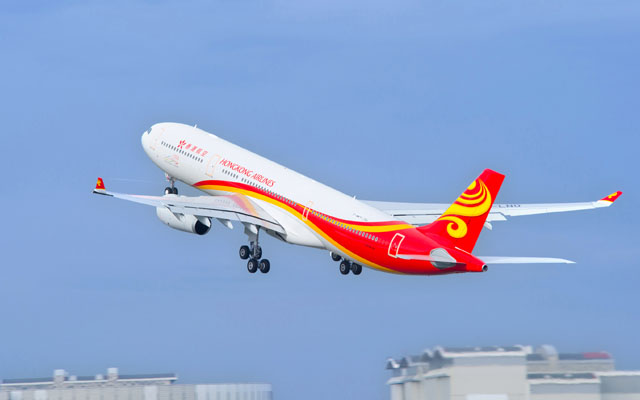
Hong Kong Airlines is reinstating its direct service to Saipan, which will fly twice weekly between Hong Kong and Saipan International Airports.
Operated on the Airbus A330 aircraft, the airline will fly from Hong Kong to Saipan every Thursday and Sunday, with the return services on every Monday and Friday.
TUI Blue Hotels & Resorts announces new commercial team members

TUI Blue Hotels & Resorts has appointed three professionals to their Commercial Team in the Asia region – Stefan Wolf as the head of commercial Asia, Wook Sung as regional sales & marketing director for South-east Asia, and Janny Tu as regional director sales & marketing for Greater China.
Wolf brings a wealth of expertise in revenue management and hospitality operations to his new role, having worked with renowned hotel brands, and successfully implementing revenue management strategies across various regions.
Wook has held key positions in leading hotel brands, and his experience in sales and marketing will be instrumental in expanding TUI Blue’s presence and customer base in the South-east Asia region.
Tu’s experience in business, distribution connectivity, revenue management, and operations, as well as her extensive knowledge of both domestic and international markets, will help drive customer acquisition and enhance brand awareness in Greater China.
Ready to welcome all
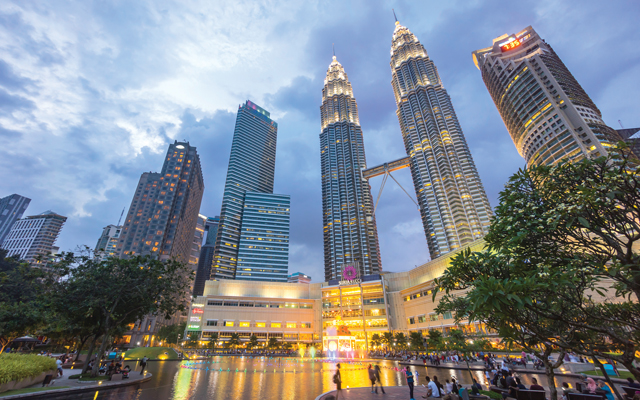
Tourist arrivals to Malaysia are expected to surpass pre-pandemic levels this year, buoyed by enhanced air connectivity and a simplified entry process for tourists from the top two medium-haul markets in terms of arrivals, China and India.
Musa Yusof, the deputy director-general (promotion) of Tourism Malaysia, shared this optimistic outlook during a tourism forum in Kuala Lumpur in December 2023. He anticipates that tourist arrivals for the current year will exceed the previous record of 26.1 million set in 2019.
In celebration of the 50th anniversary of diplomatic relations with China, the Malaysian government has implemented a 30-day visa-free entry for Chinese nationals.
This initiative has been extended to Indian nationals as well, with the aim of fostering increased tourism and economic development within the country. The visa-free entry for both Chinese and Indian nationals will be in effect until December 31, 2024.
Tiong King Sing, Malaysia’s minister of tourism, arts, and culture, emphasised the importance of the visa exemption for Chinese and Indian tourists, the top two medium-haul markets for Malaysia, in stimulating industry growth and recovery.
He said: “Indirectly, this will be able to boost the economy of tourism-related industries such as hospitality, retail, transport, tours and so forth.”
Airlines connecting Malaysia with China and India have also announced increased services – China Eastern Airlines will commence new services between Nanjing and Kuching from June 24 with three weekly flights, and introduce daily flights from Shanghai to Penang from July 24.
Tourism Malaysia’s director-general, Ammar Abd Ghapar, revealed in January that the board is engaged in discussions with various Chinese airlines to institute direct flights linking smaller provinces or “second-tier cities” in both China and Malaysia.
This initiative aims to enable travellers from less prominent regions in China to easily visit Malaysia, eliminating the necessity to journey to major airports and consequently reducing travel time.
AirAsia will also increase capacity on its flights between China-Malaysia and India-Malaysia to 230 weekly flights starting from 1Q2024, with up to 5.2 million seats per year.
AirAsia Malaysia recently inaugurated a new service between Kuala Lumpur and Thiruvananthapuram on February 21 with four weekly flights and it will soon launch new services from Kuala Lumpur to Jaipur from April 21 with four weekly departures.
On May 1, AirAsia will launch a new direct route connecting Kuala Lumpur with Ahmedabad with four weekly flights, which will serve as AirAsia’s first step into the state of Gujarat from Malaysia, further cementing its foothold in South Asia.
Additionally, the airline has outlined plans to progressively enhance the frequency of its current services linking Kuala Lumpur with Chennai, Tiruchirappalli, Kochi, Hyderabad, Bengaluru, and Kolkata.
Wong Hon Wai, Penang state minister for tourism and creative economy at the seventh edition of the Penang Roadshow to India 2024 that was held in Chennai in January, said that discussions were in progress between the state government and an Indian airline for direct flights between Chennai and Penang.
AirAsia Aviation Group CEO, Tharumalingam Kanagalingam, shared: “India has always been one of our biggest markets and we are thrilled to enhance our connectivity to the country at this opportune time following the government’s recent announcement of visa-free entry for Indian nationals to Malaysia.”
As air travel continues to rebound, two major international airports are gearing up for the anticipated increase in passenger arrivals in the coming years.
The expansion of the Penang International Airport terminal building is set to commence this September. The project is expected to take 48 months to complete. Upon its conclusion, the expanded terminal will have the capacity to accommodate 12 million passengers per annum from the current maximum capacity of 6.5 million.
In addition, Kuala Lumpur International Airport Terminal 1, the country’s primary gateway, is set to undergo a comprehensive three-year renovation starting next year when the terminal capacity reaches 90 per cent.
This initiative aims to address operational challenges and enhance facilities. Iskandar Mizal Mahmood, the managing director of Malaysia Airports Holdings, has outlined areas in need of improvements and these include self-baggage drop-offs, a redesign of check-in counters, implementation of new aerotrain and baggage handling systems, and the introduction of new F&B outlets and lounges.
Digital transformation at every stage with STB’s Tcube

Brought to you by Singapore Tourism Board
As travellers become more discerning and savvy, they seek more authentic experiences. Technology has also changed how people search for and consume information, making efficiency and immediacy a norm.
As such, the tourism sector needs to evolve to meet these changing expectations. Recognising the needs of tourism businesses, the Singapore Tourism Board launched Tcube in 2021 to support end-to-end digital transformation of the sector.
Tcube, or the Tourism Technology Transformation Cube, is an all-in-one platform for tourism businesses looking to accelerate their digital transformation efforts.
From businesses in the initial stages of their digitalisation journey to seasoned players looking to supercharge their digital capabilities, Tcube serves as a dedicated platform for fostering experimentation, pilot programmes, and innovative projects for end-to-end tech transformations.
Operating a Learn-Test-Build framework, Tcube offers a wealth of resources and digital initiatives to support businesses at different stages of their digital transformation. Among these resources are data analytics tools, thought leadership content, marketing resources, and multimedia content.
Learn: Assess the state of business
The Learn pillar is designed to provide businesses with insights into cross-industry trends so they can identify gaps and embark on their digital transformation journey. Think of it as getting a health check for the business.
Initiatives like the Tourism Transformation Index (TXI) serve as a starting point.
Businesses onboarded to TXI will receive customised recommendations on areas of priority as well as improvement programmes to explore with support from STB’s account managers. Those that have completed their TXI assessment may be invited to STB exclusive programmes such as Data Analytics Shift (DASH), Tcube Innovation Programme and Singapore Tourism Accelerator.
Test: Bringing ideas to life
The Test pillar is where businesses are empowered to bring their boldest visions to fruition with Tcube pilot programmes such as the Tcube Innovation Programme and the Singapore Tourism Accelerator. Consultancy services, design-thinking workshops, and innovative projects further complement this pillar, enabling businesses to de-risk while testing new concepts.
Take the Singapore Flyer for instance. General manager Ringo Leung shared that, in 2020, it implemented a customer relationship management system, which helped it better manage email marketing and reputation management.
In 2023, the company once again participated in the accelerator programme to add more interactive features to the tablets in its capsules. Together, both solutions allowed the company to enhance the pre- to post-experience for guests and improve engagement. It is currently working with a tech company to incorporate more augmented reality and virtual reality features, as well as data analytics.
Another programme, DASH, offers companies basic data skills training so they can put what they’ve learned into action.
Corporate travel agency Citystate Travel improved its decision-making process by more than 70 per cent after the programme.
“The data analytics course was a game changing experience for us. Since then, we’ve begun to embrace a culture around data in our company. Efforts are ongoing to build a good integrated single dashboard that has thus far improved the quality of our decision making as it is backed by data that is timely, complete, easy-to-view and interpret,” said Albert Ho, executive director, Citystate Travel.
Build: Growing the business
In the journey of digital transformation, businesses may refine their digital solutions by identifying and adopting suitable new technologies.
Under the Build pillar is the Tourism Information & Services Hub (TIH), a digital resource hub, offers up-to-date information on Singapore’s tourism offerings, ready-to use multimedia content, business contact information in the business directory, and plug-and-play travel software services.
Businesses can promote their product listings on TIH for greater visibility, and list their contact details in the business directory to grow their network. There are also more than 100 Application Programming Interfaces (APIs) that businesses can integrate to enhance their own websites, offering visitors services such as a recommendation engine or a smart itinerary planner.
Another service, Singapore Tourism Analytics Network (Stan), offers tourism-related information to the tourism industry through aggregated data, visualisations, APIs and more. They can use Stan to augment their own data analysis, perform data benchmarking against the industry and derive more actionable insights on Singapore visitors. Stan’s data domains include Visitor Arrivals, Hotel Performance and Landscape, Tourism Receipts and more.
Companies looking for specific technologies with proven tourism use cases can explore the Tcube Tech Directory, which provides a quality repository of tech vendors and solutions with a streamlined search process.

Keen to adopt new technologies to take your business to the next level? Explore how Tcube can help you identify the right partners, develop a technology roadmap, and launch successful pilots. Register your interest on this form.
Thomas Hoeborn joins Conrad Maldives Rangali Island as GM
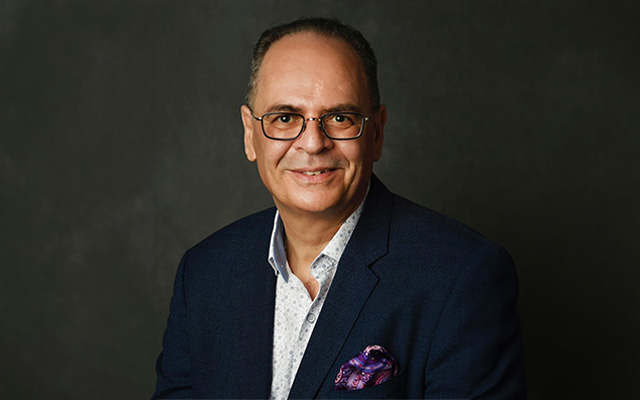
Conrad Maldives Rangali Island has named Thomas Hoeborn as its new general manager.
A hospitality veteran with close to 40 years in the industry, Hoeborn’s new role will see him lead the team in all aspects of hotel operations and performance.
 He most recently served as area general manager in Central China, where he oversaw the operations and performance of eight Hilton and Conrad hotels.
Agoda, GSTC, USAID lead sustainability education for Asia hotels
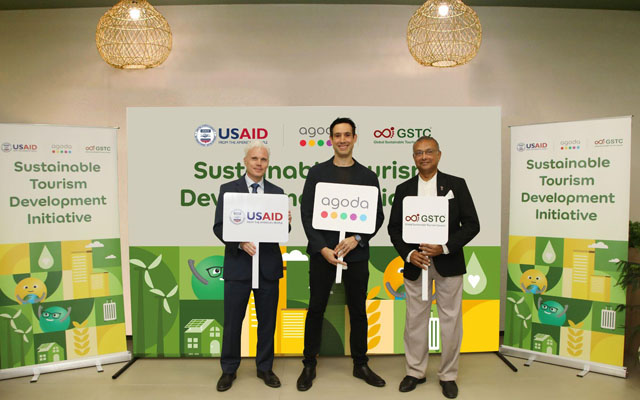
Agoda, the Global Sustainable Tourism Council (GSTC), and the United States Agency for International Development (USAID) have partnered to provide sustainability training for hoteliers across Asia, with programmes set up for Indonesia, Laos, Nepal, and the Philippines.
The Sustainable Tourism Development Initiative builds on the success of Agoda’s ongoing partnership with the GSTC, which has provided sustainability education for hundreds of hoteliers to date across India, Singapore, Taiwan, and Thailand to support the industry to meet the rising consumer demand for more sustainable accommodation options. Support from USAID comes the US-Supporting Economic Growth in Asia activity.
The self-paced training course offers localised, interactive learning modules, supplementary study materials, and quizzes that address the distinct sustainability challenges across the region.
Covering different aspects of the GSTC Hotel Criteria, the global standard for sustainability in travel and tourism, the platform will provide an introduction to sustainability and sustainable tourism, insights into global trends and industry best practices, and practical tools on applying these learnings. The learning materials on the platform will be available in English and regional languages.
Furthermore, a sustainability scholarship fund has been established to support select hotels across the region, particularly those that are small, medium, and women-owned enterprises. Financial aid will go towards further training and third-party sustainability certifications recognised by GSTC.
Omri Morgenshtern, CEO of Agoda, said: “It is our responsibility to raise awareness about sustainability among both our consumers and accommodation partners, and are thrilled to support the industry in developing the knowledge and working towards third-party certifications.”
USAID India Mission Director Veena Reddy, stated: “USAID believes it is critical to work in collaboration with the private sector to drive sustainable development progress, including mitigating climate change. Tourism, when sustainable, provides an important pathway for inclusive economic growth and preservation of cultural heritage, and can be a valuable tool for environmental conservation.”
Randy Durband, CEO of GSTC, said paricipants in the training programme will earn the “opportunity to enhance their professional credentials and marketability in the hospitality industry, opening doors to career advancement opportunities in the future”.
Korean Air goes on shopping spree with Airbus

Korean Air is discussing with Airbus to procure 33 A350 family aircraft, which includes 27 A350-1000s and six A350-900s, valued at US$13.7 billion.
The order will supplement the airline’s long-term fleet operations as it gradually retires its older aircraft. The procurement of the next-generation, eco-friendly A350 is not only aligned with the airlines’ sustainability efforts, but is seen also as preparation for the integration of Asiana Airlines.
The A350-1000 is the largest in the A350 family, and can accommodate from 350 to 410 passengers in a standard three-class configuration. The aircraft makes use of advanced composite materials, resulting in reduction in fuel consumption and carbon emissions of up to 25 per cent, in comparison to similarly sized previous generation aircraft models.
With the longest flight range among existing passenger aircraft, the A350-1000 can operate up to 16,000km with full payload.
The A350-900 variant is about seven metres shorter than the A350-1000 with a range of 15,370km and typically seats 300-350 passengers in a three class layout. The airline can deploy the aircraft on its longhaul routes such as Seoul Incheon-New York, where the airline currently operates two daily flights.
Korean Air continues to prioritise fleet modernisation and reduction of carbon emissions through the operation of new aircraft and other sustainability activities. It has plans to introduce 50 Airbus A321neos, 10 Boeing 787-9s, 20 Boeing 787-10s, and 30 Boeing 737-8s.
Acceleration in eSIM adoption opens new doors for the travel trade
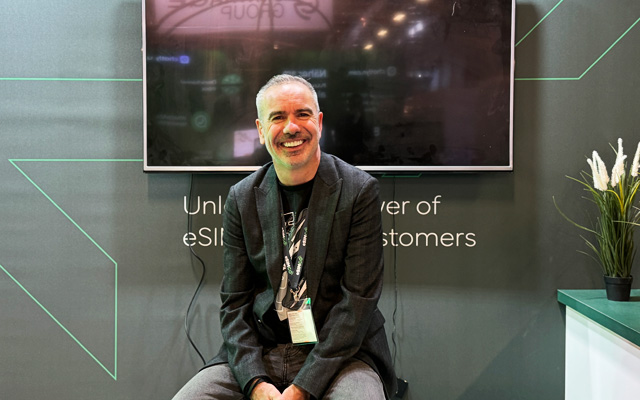
Aside from helping travellers stay connected while on the move, eSIMs – which provide travellers with data connectivity without exorbitant roaming charges – can also be a new revenue stream for the travel trade.
UK-based eSIM Go, vice president of business development, Bill McKimm, told TTG Asia: “Younger travellers want to be connected, and the need for connectivity is much greater. We’re also finding that airlines, airports, and OTAs are looking for a way to stay connected with customers. With connectivity, companies can also upsell and cross sell other ancillary services in destination.”
For example, their partnership with Wizz Air – a Hungarian low-cost carrier group with 60 million passengers yearly – offers eSIM Go as an add-on service on their app, which customers can purchase during the checkout process. Other partners currently include travel booking and payment platform WeTravel, Swiss International Airlines, and Sydney Airport.
“In Asia-Pacific, we have a big partner in Sydney Airport. They have their own data product, Tripsim, which is powered by us. Strategic partnerships like this will help us grow in the different regions,” he explained.
McKimm pointed out that eSIM Go will have “some very big OTAs coming onboard soon”, and the tech firm is currently in the process of developing a platform for them.
There are three ways that eSIM Go works with their travel partners – one where the API (Application Programming Interface) is integrated, another that is a white-label solution built according to brand guidelines, like Wizz Air, and a third that operates as an affiliate model.
The B2B tech company is also in talks with “large airports, and big airlines in North America”. North America is next on the cards for expansion, as eSIM Go’s footprint is currently strongest in Europe. Asia-Pacific will come soon after, with McKimm sharing he was recently in Singapore to meet with interested parties.
When asked if eSIM Go currently works with TMCs (travel management companies) to capture corporate travellers, McKimm stated that it is on their to-do list. His future plan for eSIM Go is to work with travel insurance companies, hotels, as well as car rentals, or basically “any company which has an end consumer who is travelling”.
For now, although McKimm states that the process to install an eSIM is relatively easy, there is still “apprehension” among travellers, and “a lot of customer education is needed”. As eSIM Go relies heavily on distribution from its partners, the company also provides educational content which talks about the ease of usage, and the benefits of using eSIMs.








Ennismore has joined forces with Dubai Holding to bring its Delano brand to the UAE, with Delano Dubai opening later this year at the waterfront destination Bluewaters Dubai.
The new luxury resort will feature 251 guestrooms, including 84 suites, some with private pools, culinary and mixology experiences, an ocean-front swimming pool, and four distinctive F&B concepts.
First launched in 1995 in Miami, the US, Ennismore has partnered with Cain International to drive forward the global expansion of the Delano brand and reopen Delano Miami Beach.
Sharan Pasricha, founder and co-CEO of Ennismore, shared: “We are thrilled to be bringing the iconic Delano to the forefront of global hospitality again, with a new home in Dubai – marking a major milestone in the brand’s journey.
“From its origins in Miami, a bustling social hub, to the new global hub of extraordinary experiences, Dubai, Delano is set to introduce a new level of luxury, discernment and vibrant energy to the city as our debut property in the region. We look forward to sharing more exciting details about Delano Dubai over the coming months.”
Amit Kaushal, group CEO, Dubai Holding, said: “Together with the recent opening of Banyan Tree Dubai, we are proud to mark another milestone in the evolution of Bluewaters Dubai as a luxury lifestyle destination. Our collaboration with market leaders like Ennismore and Banyan Group will continue to focus on welcoming new brands to Dubai and further enrich the city’s vibrant hospitality landscape.”