

Tourism Malaysia takes destination marketing into North-east China
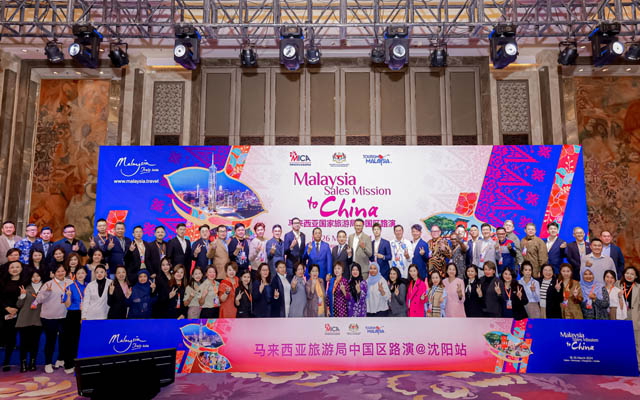
Tourism Malaysia, together with state tourism bodies and the Malaysia Inbound Chinese Association, embarked on a sales mission to explore second-tier cities in China from March 18 to 25, starting from Dalian, Shenyang, Changchun and ending with Harbin.
Through this mission, Tourism Malaysia hopes to strengthen its marketing efforts in China by penetrating the secondary cities through business sessions, seminars, networking, and emphasising promotions on the leisure market and niche segments, such as education tourism, Muslim-friendly tourism, and Malaysia My Second Home programme.
“We hope that this sales mission provides a platform for the Malaysia tourism industry players to foster new relationships with its China counterpart and encourage more Chinese tourists to visit Malaysia, especially with the 30-day visa-free travel to Malaysia (which started December 1, 2023),” said Lee Tai Hung, Tourism Malaysia’s deputy director general (Promotion II), who led the delegation.
Tourism Malaysia’s sales mission to China is among the promotional activities planned for the Chinese market in 2024. The 1st Series of Malaysia Sales Mission to China in April 2023 accumulated a total sale of 42.1 million ringgit (US$8.9 million) and 3.8 million ringgit in publicity value, while the 2nd Series in September 2023 recorded 13 million ringgit in total sales and a publicity value of 3.5 million ringgit.
China remains one of the top market sources for Malaysia and contributed 1,474,114 arrivals to the country last year, a positive growth of 593.4 per cent in comparison to the same period in 2022 with 212,603 arrivals. In 2024, Malaysia is aiming to receive 27.3 million international tourist arrivals with 102.7 billion ringgit in tourism receipts, with five million arrivals targeted to be from the Chinese market.
Through its overseas offices in Beijing, Shanghai and Guangzhou, Tourism Malaysia continues to intensify promotions alongside travel agents and airlines in gearing up for the next Visit Malaysia Year set in 2026. With the resumption and announcement of new routes from Malaysia-based airlines and China-based airlines such as Air China, China Eastern Airlines, China Southern Airlines, Xiamen Air, Loong Air, and Spring Airlines, there are currently 327 flights per week between China and Malaysia.
Malaysia Airlines signs on as Manchester United’s official airline
Malaysia Airlines had signed a strategic, multi-year partnership with the Manchester United football club as its Official Commercial Airline on March 22 in a move to enhance its global reach.
Through this partnership, Malaysia Airlines is poised to extend its renowned Malaysian Hospitality to Manchester United’s vast community of over 1.1 billion fans and followers worldwide by leveraging co-branded marketing initiatives to boost brand recognition to a diverse global audience, while delivering quality service and immersive experiences associated with both brands.
Group managing director of Malaysia Aviation Group, Izham Ismai, said the partnership will boost brand recognition for the airline, especially in Europe and South-east Asia where there is a big fan base.
Brand recognition in Europe is also very important for Malaysia Airlines and the partnership is part of a strategic move as the airline plans to further expand its network in Europe in the near future. Currently, the airline flies only to London.
The airline will also launch flights to three new destinations from its main hub in Kuala Lumpur – Malé, Danang and Chiang Mai.
Malaysia Airlines will commence daily flights to Male beginning August 1, daily flights to Danang from September 24, and five times weekly flights to Chiang Mai from August 15.
This will mark the airline’s 13th destination in South Asia and 16th in South-east Asia.
Sharing at a press conference, Izham commented that Malaysia Airlines will seek more second- and third-tier city routes to fly to in the future due to the growth potential of these routes for both leisure and business segments.
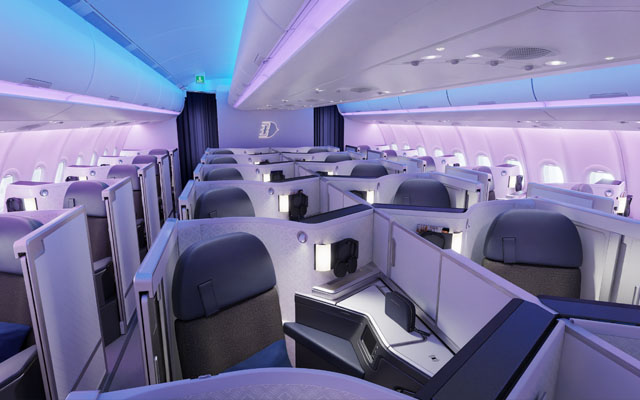
At the same event, held in tandem with MATTA Fair 2024, Malaysia Airlines also unveiled its new A330neo Business Class and Economy Class seats as part of its fleet modernisation plan, ahead of the first aircraft’s scheduled delivery in 3Q2024.
The airline had ordered 12 A330neo aircraft and will take delivery of four aircraft this year and the rest in the coming years.
The new A330neo cabin will feature many ‘firsts’ for the airline and historically in its fleet. Among these is the introduction of the Collins Aerospace Elevation Business Class seats, featuring an all-suite cabin with individual privacy doors, as well as wireless charging pods available at all 28 of the Business Class seats.
The Recaro CL3810 Economy Class seats feature an ergonomic design and enhanced support, coupled with amenities such as coat hooks, cup holder and ample stowage for added cabin comfort and practicality.
The A330neo will be used for the Kuala Lumpur-Melbourne route, as well as to North and South Asia.
Sands Lifestyle launches Asia-wide roadshow series

Sands Resorts Macao has launched its Asia-wide roadshow series, an exclusive fine dining and entertainment extravaganza that highlights Sands Lifestyle’s unique experiences, with two exclusive VIP events held in Beijing and Shanghai on March 19 and 21 respectively.
The Fabric of Macao is an imaginative Sands Lifestyle experience aimed to captivate travel industry representatives, meeting organisers and media partners in the two cities.
The destination showcase shone a spotlight on Sands Lifestyle and its deep connection with the city of Macau with each of its seven pillars: art and culture; destination; connection of people, places and experiences; fashion scene; health and wellness; gastronomy; and entertainment.
The roadshow was an interactive experience which began with guests walking through a tunnel of fabrics featuring different prints that make up The Fabric of Macao, accompanied by a curated mix from Macau DJ Ziyang and an instrumentalist from the applicable host city. Guests enjoyed fine dining and entertainment acts throughout the night; there were also photo opportunities, live artistry in motion with Macanese artist Ada Zhang, and Dragon’s Beard Candy sampling at the Yau Kei Candy Live Demonstration Station.
Stephanie Tanpure, vice president of sales, Sands China, said: “We feel very passionately about elevating Macau on the world stage through lifestyle experiences. Being able to extend that stage to some of our unique artists from Macau, not only amplifies the uniqueness of Macau, but also provides that international platform for our lifestyle partners which continues to be very rewarding.”
The Fabric of Macao will next head to South Korea and Japan in May and June.
Les Roches, Silversea establish cruise line management postgraduate programme
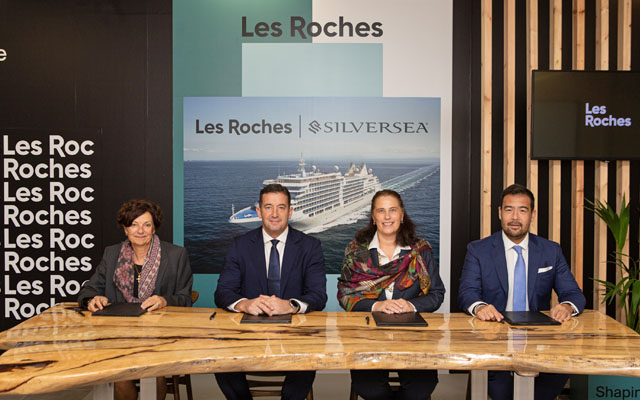
Les Roches and Silversea have partnered to launch a new training course for those interested in pursuing a career onboard cruises.
This innovative programme will offer learning that is highly focused on practical and managerial aspects along with immersion guided by Silversea, which will contribute its invaluable insight into the cruise travel landscape.
To be conducted at Les Roches’ campus in Marbella, Spain, the Postgraduate Diploma in Cruise Line Management will provide students with the necessary knowledge and skills to manage and oversee various onboard areas of cruise vessels, in addition to aspects of marketing, revenue management, and other commercial functions pertaining to the cruise industry.
Additionally, students are guaranteed to benefit from a scholarship agreement between both entities, along with the opportunity to gain employment aboard Silversea’s fleet upon completion of the programme.
During the first semester, students will follow a curriculum focusing on cruise operations, developing luxury experiences for guests, learning about luxury accommodation and F&B management on board, sales and revenue, and maritime law.
Within this period, Les Roches will also offer a business trip to Monaco and Miami, home of the world’s largest passenger port. Upon completion of this first part of the programme, students can choose to further engage in the industry practically with an immersion period in the cruise industry with Silversea.
“The luxury cruise sector is an area yet to be fully explored academically, and promoting this diploma positions us at the forefront, once again, of a specialisation that continues to grow year after year,” said Carlos Díez de la Lastra, CEO of Les Roches.
Silversea president Barbara Muckermann added: “Education and training are key in this service-oriented industry, which is growing fast. Since becoming part of Royal Caribbean Group, Silversea has welcomed six ships to its fleet in just three years, making attracting talented professionals more important than ever. We are delighted to partner with Les Roches, a leading academic institution, to ensure our service remains the best in the industry.”
Malaysia Airlines, KidZania Singapore to inspire future aviation enthusiasts
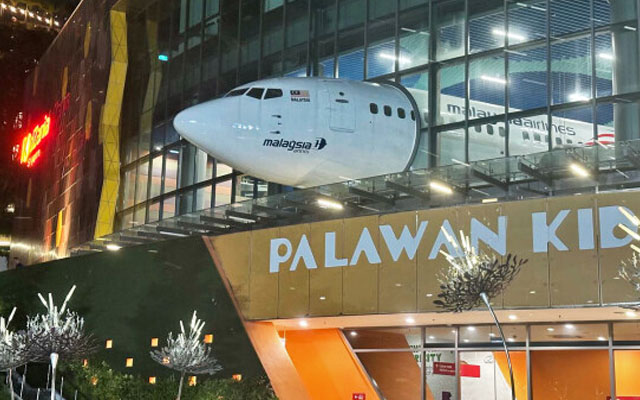
Malaysia Airlines has teamed up with KidZania Singapore, an interactive children’s edutainment park that combines inspiration, fun and learning through ultra-realistic role-playing experiences, for a three-year-long collaboration as the official airline partner for the educational entertainment hotspot.
The partnership will enable Malaysia Airlines to reach out to the next generation of aviation enthusiasts in a unique and immersive setting, with programmes that will introduce children to various aspects of aviation, such as piloting, cabin crew responsibilities, and ground handling.
KidZania Singapore, which fully reopens in early 2Q2024, is a part of the global edutainment brand, KidZania, that provides a safe, unique, and interactive environment where children can explore and learn essential life skills through over 100 role-playing activities.
Malaysia Airlines will also extend its loyalty programme, Enrich, to children aged two to 12 years old via Enrich Junior, allowing them to enjoy a myriad of travel benefits and lifestyle privileges.
Commenting on the partnership, founder and executive chairman of Sim Leisure Group, Sim Choo Kheng, said: “This alliance complements our commitment to offering children holistic, engaging and experiential learning sessions. The integration of Malaysia Airlines into our Eduplay city will offer children insights into the aviation world, shaping their understanding of the industry and nurturing their interests.”
“By sharing insights and empowering children to pursue their passions, we are committed to challenging stereotypes within the aviation industry and encouraging exploration of diverse job roles, fostering inclusivity and diversity from an early age,” shared Ahmad Luqman Mohd Azmi, CEO, airlines, Malaysia Aviation Group.
Philippine’s Bohol takes action to protect natural heritage

A small resort within Bohol’s Chocolate Hills, a protected area and a UNESCO Global Geopark, has become a national issue exposing the disconnect between preserving national treasures and the complications of local adherence to governance.
Captain’s Peak Resort, which caused a public outcry after it was featured by vlogger Renmark Nisnisan, is now temporarily closed while under investigation on why it is able to build and operate in the unique geological formation. Other resorts within Chocolate Hills are also facing investigation.
Before the resort was closed, it ignored the temporary closure order of the Department of Environment and Natural Resources in September 2023, and in January this year for not having the environmental compliance certification. It has land ownership documents and has complied with other requirements of the local government.
Lourdes Sultan, president, Bohol Alliance of Travel and Tour Operators (BATTO), commented that Captain’s Peak resort is small and patronised by local Boholanos, and is “not a place where the regular tourists, foreign or domestic, go”.
BATTO’s position amid the furore, Sultan noted, is that it “gets to take a look into similar developments putting emphasis on conservation and sustainability”. She also remarked that “local government units and national government agencies need to be consistent in implementing laws and regulations”.
“We have a bigger responsibility not just bringing quality tourism service but also to ensure that tourism developments that we allow are consistent (with) our vision,” stressed Sultan, adding that BATTO will prioritise sustainability over big developments.
The Department of Tourism, in a statement on March 13, said it “agrees with the Bohol Provincial Government’s position that developments within the Chocolate Hills area are not consistent with its long-term sustainability and should be disallowed”.
“While development is essential for growth and progress, it must be conducted in harmony with environmental and cultural preservation. We urge all parties involved, including government agencies, private sector entities, and local communities, to work together towards sustainable and responsible tourism practices that uphold the integrity of our natural heritage.”
C9 Hotelworks managing director, Bill Barnett, who knows the Philippines like the back of his hands, opined: “Corruption remains a key issue in local municipalities across the country and there is no recognition by the Manila government of a country-wide tourism master plan.
“While the private sector is racing ahead building new hotels, the point is there is no preservation of the areas that will bring tourists to the destinations, so eventually this issue must be addressed at a national level.”
How the issue is being handled and resolved will impact the future of rustic Bohol, currently top on the list for tourists and investors alike, as international tourism shifts to local experiences and authentic places to visit.
Skyscanner reveals travel insights for 3Q2024

Skyscanner’s latest Horizons report shared insights into booking windows, destination choices, and trending destinations across the Asia-Pacific region for the period June to August 2024.
The analysis is based on its Skyscanner Travel Insight Data, which compares traveller behaviour and search trends year-on-year.
Booking windows reflect confidence to plan ahead
At the start of 2024, Skyscanner saw record travel demand, outperforming the global flights market and was the fastest growing metasearch in 2023.
Across the board, travellers are planning further ahead compared to the previous year, marking a return to traditional seasonality in 2024.
Among Asia-Pacific travellers, there is a greater distribution of booking windows compared to other regions but an overall increase in bookings over 30 days (including a 2% jump in the 90+ day segment). Booking windows of two months or more now represent over a third of demand in this region.
Destination choices highlight regional preferences
Asia-Pacific travellers are turning their focus towards intra-regional destinations, with a notable decrease in trips to Europe compared to last year. Seat capacity is returning to the region and many travellers are indicating a desire to swap longhaul trips with short or medium ones, or even domestic trips with an eye on their budget to help keep costs down.
Shorter trip lengths to top destinations
Across all regions, average trip lengths are slightly down or flat year-on-year for many popular destinations.
Well-known European and US destinations are most popular among Asia-Pacific travellers, with Athens experiencing the biggest increase in trip length. “Everywhere” also ranks highly, and Tokyo is the only destination with a single-digit trip length.
Trending destinations
Destinations with the biggest year-on-year increases in search volumes reflect a mix of wanting to explore new places, as well as those with new route connections.
New Delhi, India and China’s Shanghai are experiencing the biggest growth among Asia-Pacific travellers, while Jeddah, Saudi Arabia; Dubrovnik, Croatia; and Victoria, Canada are also trending. Pangkalan Bun in Borneo, Indonesia is the only trending destination with an increase in average trip length.
Zeynep Mutlu Bigalı, head of destination partnerships: “Our latest Horizon insights reveal a travel landscape that is both familiar and evolving. While traditional seasonality is returning and popular destinations remain in demand, travellers are also seeking value and exploring options closer-to-home. Across Skyscanner’s platforms we have seen incredible demand at the start of the year, and we expect this to continue as we head into the summer, especially in regions such as North Asia.”
New travel app to enhance experience for travellers to South Korea
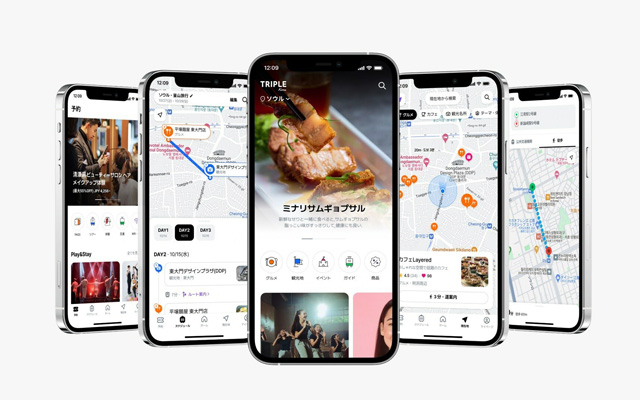
InterparkTriple has unveiled Triple Korea, a mobile app that makes travel around South Korea both easier and more fun for visitors by providing free-of-charge information and features right from the preparation stage through to the actual visit.
To encourage independent travel, the app offers real-time support for personalised travel and cultural experiences when visiting South Korea. It recommends personalised travel itineraries and shares useful travel information such as major tourist attractions, restaurants, and events. When users add a location to their itinerary, the app provides guidance on travel routes, travel times, and fare information. Moreover, users can also easily purchase tours, tickets, transportation, and activities within the app.
Other app highlights include the real-time ‘Attractions Near Me’ feature, which makes suggestions on nearby tourist spots, restaurants, cafés, and events based on the user’s location. With real-time updates, users can explore suitable activity suggestions that adapt to unexpected changes such as the weather.
Triple Korea also has a navigation function that offers directions for both public transportation use as well as walking routes, and even provides optimised routes for various modes of transportation.
InterparkTriple offers a vast array of products ranging from flights, accommodations, and packages to performance arts and tickets. Through its platform tailored for international travellers, Interpark Global, InterparkTriple has been offering booking services for Korean concert tickets as well as Play&Stay packages that combine concert tickets with accommodation, contributing to expanding global interest in Korean cultural content.
The Ozone Group Phuket, Wyndham unveil new Bang Tao property in Thailand
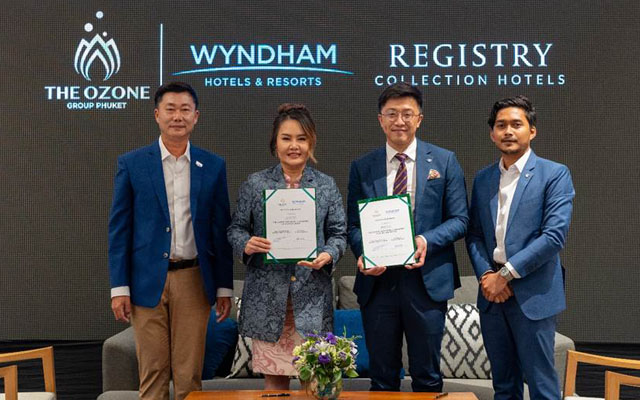
The Ozone Group Phuket and Wyndham Hotels & Resorts are set to introduce The Ozone Signature, A Registry Collection Hotel in Bang Tao – Cherngtalay, in Phuket, Thailand come March 2027.
The project, which encompasses both a luxury condominium and a luxury hotel, is a joint effort between the two companies through a strategic franchise agreement signed on March 15, 2024. It also marks the debut of Wyndham’s 16th brand in the Asia-Pacific region.
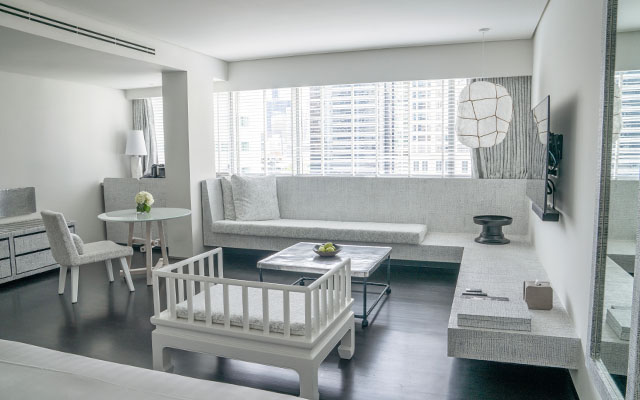
The Ozone Signature, A Registry Collection Hotel will offer 118 rooms ranging from deluxe rooms to presidential suites, with amenities such as a swimming pool, pool bar, spa, fitness centre, meeting rooms, and dining options. The property is a five-minute journey from Bang Tao Beach and in close proximity to premier golf courses and community malls like Boat Avenue and Central Porto De Phuket.
Juta Theansukont and Atthithan Theansukont, board of directors of The Ozone Group Phuket, commented: “This collaboration signifies our joint effort to enhance hospitality standards and, importantly, to generate valuable job opportunities and support the economic advancement of Phuket. Together, our focus remains on providing exceptional experiences for our guests while also nurturing sustainable prosperity within the local community.”
“Thailand has been and will continue to serve as a vital growth catalyst for Wyndham in the years ahead, particularly with the ongoing resurgence of its tourism sector. We are extremely proud to have entered this significant partnership with The Ozone Group Phuket, marking the debut of the distinctive Registry Collection brand in the Asia Pacific region,” said Eudo Chan, senior director of development, Wyndham Hotels & Resorts Asia-Pacific.






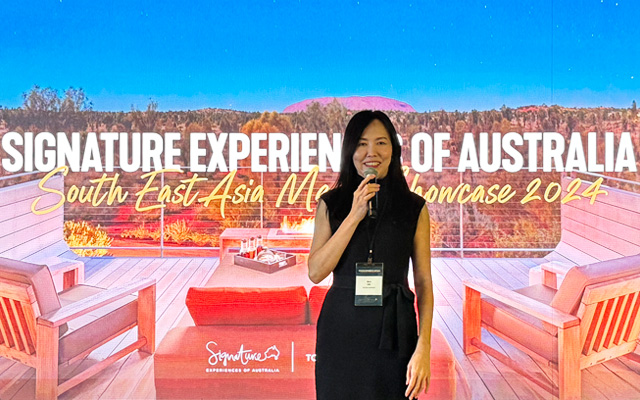
Tourism Australia’s Signature Experiences of Australia – a programme which supports industry collaboration across a variety of special interest sectors – made its debut in South-east Asia at a media showcase in Singapore on March 21.
Currently, the eight special interest sectors are golf holidays, guided walks, premium wineries, luxury lodges, fishing adventures, wildlife journeys, cultural attractions, and Aboriginal-guided experiences.
Karen Fitzgerald, general manager experiences, Tourism Australia, explained: “Each of these collectives represent a number of operators that specialise in their particular sector. What we have through (Signature Experiences of Australia) is access to over 190 businesses that altogether offer 750 experiences.
“The powerful thing about this programme is it is not just these businesses in the programme that benefit, but these (operators) collaborate and partner with another 8,000 businesses across Australia (especially in the regional areas), so the halo effect of this is really broad.”
There are plans to launch a new agri-tourism collective, focused on farmers and producers, in about a year’s time.
Fitzgerald elaborated: “One of the things that came out of our post-lockdown research was the desire for wellness and well-being, and understanding the provenance of our food. (We found that) travellers wanted to know what they were putting into their bodies, where was it from, and the food miles (it travels), as sustainability is important to all the collectives.”
Luxury travellers these days, Fitzgerald added, are not just looking to align their passion points, but also have transformational experiences. “I think it will be enticing for travellers to Australia to meet with the producers and farmers, and learn more about the broad range of local products available,” she opined.
When asked how could businesses apply to be part of their respective collectives, Tori Somerville, general manager of Luxury Lodges of Australia, said access was usually by invitation only.
In the case of the luxury lodges collective, a set of criteria must be met.
“For example, they need to have guided experiences, a restaurant onsite, and be trade-ready. We’re not about quantity. In fact, we only recently added the Odalisque III (an expedition-style cruise based in Tasmania), our newest member in nine years,” said Somerville.