TTG Asia
Asia/Singapore Tuesday, 20th January 2026
Page 2524

Wholesome wholesale

0

An expansion of B2B players in Asia is making the wholesale market more wholesome, providing OTAs and brick-and-mortars greater service, product, availability and pricing than ever before. Raini Hamdi and Gracia Chiang take a look at the competitive strategies of four such players
2012-nov16-travel-distribution1-1

TAcentre
WHO Owned by Asiatravel.com Holdings Singapore, a pioneer in B2C in Asia and the only public-listed travel agency on the Singapore Stock Exchange.

PLANS Launched recently in Singapore, the Philippines and Hong Kong, TAcentre will be rolled out to Malaysia, Indonesia and China next. Plans are afoot to offer local language versions in-market and to offer agencies white-label marketing later on.

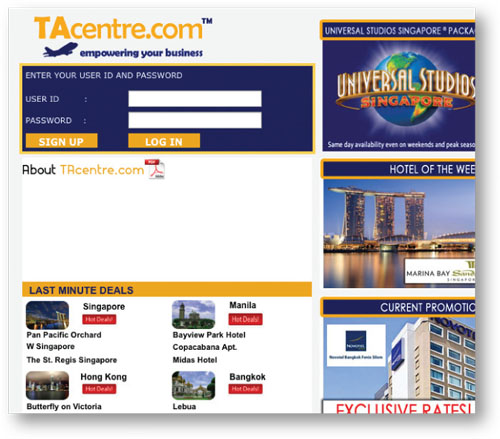
USP/INVENTORY TAcentre bills itself as Asia’s first online wholesale system that offers not just hotels but FHTs (flight/hotel/tours) that can be booked with instant confirmation. TAcentre banks on “best rates” and “widest inventory”, thanks to 17 years of local presence throughout Asia that helps it seal “real” relationships with suppliers, said vice president marketing Fred Seow. The inventory now comprises 100,000 products (including packages, hotels, flights and tours) and the aim is to boost this to one million products by 2013. There are 44 FHT packages for Singapore to Hong Kong alone. Consultants can also buy tickets to popular theme parks in Asia directly on TAcentre, with the barcoded vouchers serving as tickets.

THUMBS UP Agencies see the instant confirmation promise as its greatest advantage. They also give the inventory,  convenience, service and flexibility the thumbs up. Plus, it’s free to use.

FEEDBACK Some agencies were concerned about clients’ data confidentiality. As well, “instant confirmation” still depends on availability, they pointed out. Addressing the former concern, Seow said: “Transactions and communication on TAcentre.com are between the travel agency and TAcentre.com strictly. E-tickets and vouchers are emailed to the travel agency and not their customers…protecting the integrity of the wholesale system is of utmost importance, or else TAcentre will not be sustainable in the marketplace.”
2012-nov16travel-distribution1-2

Hotelbeds
WHO Part of the Accommodation & Destinations Sector of TUI Travel, Hotelbeds is now in its 10th year of operations as accommodation provider.

PLANS The Middle East and Asia-Pacific (MEAPAC) region is where it is betting its dollars on next, having established a firm footing in Europe and the Americas.It has set a target of 40 per cent growth for MEAPAC by 2015, compared with 20 per cent growth for the Americas by 2015.

It aims to increase its workforce in MEAPAC by 25 per cent by 2015, from 750 employees and 21 offices throughout the region now.

It also aims to double the hotel portfolio in the next five years, with particular focus on Singapore, Thailand, Indonesia, Malaysia, Hong Kong and Japan, and develop its distribution coverage and further expand source markets across the region, particularly in Singapore, South Korea, Japan, Saudi Arabia, Malaysia, Indonesia, Thailand, China and the Philippines.

USP/INVENTORY An online accommodation database of over 45,000 hotels from over 1,500 hotel chains and independent hotels in 147 countries.

“We invest in people, IT platforms and distribution channels. This is why we have been able to outperform the market with double-digit growths every year since the last 10 years.

“There may be more competition now in the region, but our core strengths and our continued investment will ensure we achieve our targeted growth of 40 per cent by 2015. With 21 offices now, you can imagine how this gives us more opportunities to have preferential rates and treatment with key partners,” said Pablo Aycart, MEAPAC managing director.

He also revealed that Hotelbeds was starting to develop special services such as ticketing and excursions for Real Madrid and Barcelona team matches. In Europe, the trade can already buy such inventory with Hotelbeds, and Aycart expects that within 12 months, agencies worldwide would also be able to do so.
2012-nov16travel-distribution1-3

JacTravel
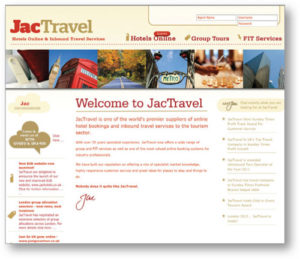
WHO An independent, privately-owned company based in the UK specialising in providing hotels online and inbound services to the travel trade.

JacTravel has local operations in London, Edinburgh, Vancouver, Dubai, Barcelona, Paris, Prague, Rome and Sao Paulo. Last year, it claims to have handled operations for more than 3,000 groups and 1.5 million FIT passengers on behalf of its trade partners.

PLANS With a growing client base in Asia and the growth potential of Asia, JacTravel aims to open an office in the region by the end of the year, employing people with local knowledge. It recently appointed a head of sales for South-east Asia, Ali Jones. She will be selling JacTravel’s B2B booking system and XML links to its hotel inventory, which the trade can access on a net rate basis.

Since expanding to Asia in 2009, sales in the region have increased 319 per cent to £8.3 million (US$13.3 million), with over 20 new clients. Inventory has grown to over 350 directly contracted hotels in Asia in the past three years.

USP/INVENTORY It “handpicks” its own hotels rather contracting all hotels. Said CEO Mario Bodini: “These are boutique, independent hotels in a wide range of categories and styles, with large allocations on short releases and the best deals.  JacTravel’s API/XML system is one of the best in the industry, being fast and reliable.”

Its inventory includes over 10,000 properties in more than 550 cities.

Aside from zeroing in on boutique, independent hotels, Bodini said excellent customer service, and rigorous health and safety criteria for its hotels, were “potent differentiators” in the B2B market.

“The strategy is listening to clients and trying to ensure we have all the hotels that they require with great availability and at great prices.

“The market is tough – with lots of barriers for new players such as having the technology, working capital and the correct product range,” said Bodini.
2012-nov16travel-distribution1-4

AdventureLink
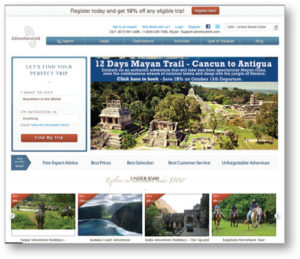
WHO US-based adventure travel aggregator AdventureLink was established in 2006. Ninety per cent of its business is from B2B partners, which includes OTAs, leisure travel agencies and even consumer publications that want to feature adventure travel products. The company recently established a partnership with Orbitz and is in talks with Travelport to distribute its content.

PLANS Wants to enter the Asian market with a new agent interface that will be launched in the region next year, offering access to around 12,000 trips across 130 countries. It is seeking distribution partners who will allow it to gain access to the agency community in Asia, with markets of interest being Thailand, Singapore and Japan.

USP/INVENTORY Calling it the “largest system in the world for booking adventure travel”, founder and CEO, Kelly Tompkins, said his “well-rounded” inventory consists of land packages ranging from African safaris to cycling wine tours in France, contracted with major tour operators such as G Adventures and Intrepid Travel, as well as family-run boutique outfits. Air content will also be available soon, with at least one airline already onboard.

Tompkins said: “The adventure travel market is estimated to be growing at 17 per cent a year by the Adventure Travel Trade Association. That’s higher growth than most other travel products.

“This is a US$89 billion market, and it’s being fuelled by ageing baby boomers who are looking for these types of experiential travel opportunities. However, (the market is) very fragmented…so we’re trying to put all the information into one place.”

THUMBS UP Dangling commissions of 10-15 per cent, Tompkins said: “It’s the largest commission opportunity available today. Our average booking is US$5,000…We’re proponents of (travel consultants), and we’re giving them the tool set to become specialists in adventure travel.”

Additional reporting from Gracia Chiang

Balancing, juggling

0

Globally, only two females head international hotel chains as CEO – Trudy Rautio of Carlson and Kathleen Taylor of Four Seasons Hotels & Resorts. Raini Hamdi speaks to Rautio, the new CEO of Carlson, about smashing the glass ceiling and how she intends to make Carlson a smashing company

2012-nov16-top1


“I feel I have some fingerprints on the strategy, the people, the structure.” 

Trudy Rautio
President & CEO
Carlson


How do you feel being in a club of capable, but virtually all men?
I’m old enough to have been a pioneer of that in my entire career. I got an undergraduate degree in accounting – only 10 per cent in the graduating class were women and I kind of had to make my way through that profession as the only woman. Now it is more than 50 per cent graduates in accounting that are women.

But the hospitality industry is particularly difficult for women and I consider it one of my goals to work on that. In an entry level capacity, we bring in equal numbers of women and men, but the industry is difficult for women because there is a lot of shift work and mobility requirements. So when women want to start a family, it becomes a difficult career to stay in. We have to figure out more creative ways to make it possible for women to stay in the industry and to advance because women are naturally hospitable. It’s a perfect industry for them.

What do you hope to do?
The American Hotel & Lodging Association is headed this year by Nancy Johnson, who is an EVP at Carlson. She has created a forum for younger women leaders and is doing a lot with the industry on that and we are both going to continue to work on this together. We are of about the same age and we really believe strongly in this.

You are two months into the CEO role, while Kurt Ritter is retiring at year-end as Rezidor president & CEO. These are big changes.
Yes. In some ways, it is an enormous change to step into the CEO role but having been the CFO of the organisation and worked closely with both of the last two CEOs through their tenures, I feel I have some fingerprints on the strategy, the people and the structure. Our organisation as a global one is diverse and has a lot of relationships, whether JVs or partnerships, and at least I have a familiarity with them. That’s also helpful.

With Kurt stepping down – he’s an icon in the industry and built the business from nothing (Editor’s note: Rezidor covers EMEA exclusively) – that’s a loss to Rezidor, but it’s been well-planned with Wolfgang (Neumann, currently Rezidor COO) succeeding. He will stay on in advisory capacity for the first quarter to ensure the relationship with the owners are effectively transferred. I’m also pleased he’s staying on in advisory capacity to me: one of the things Simon Barlow (Carlson Rezidor Hotel Group president Asia-Pacific) and I talked about is having Kurt come out to emerging markets and provide us with his insights and his relationship-building skills, so we’ll be able to utilise him going forward and he won’t be totally losing the family.

From you, what can we expect?
It’s a balance, like everything in life. One is to make sure we attract, retain and develop the right people, so we continue to deliver what we at Carlson say is the ‘service heart’ in whatever it is that we do, whether it is restaurants, hotels or Carlson Wagonlit Travel (CWT). We need to make sure each of the businesses (Carlson Rezidor, CWT and TGI Friday’s) has its strategy around that.

As a private company, we don’t have quarterly earnings expectations, but we still have to perform. And as a private company, we can’t go to the capital market and get more funds, so we need to make sure we invest in the right project at the right time, so we can deliver the returns and reinvest in the business. So that’s the balance – women are used to balancing, right?

So balance is a strength of yours?
Yes, balance, not in the personal life though (laughs). But I’m good at juggling.

How do you motivate your leaders?
You have to set ambitious goals for people. We just recently set long-range plans for our businesses. The restaurant group (TGI Friday’s), for instance, is so aligned around its goals that we’ve actually created a long-term incentive plan for it that has cliff vesting  (i.e. benefits will be gained only if the goals were fully achieved at the end of the plan’s period).

People come to work everyday wanting to achieve. You have to provide the resources they need, from the HQ perspective and also in-market. Then give them the freedom to execute those goals to some extent. It’s pretty classic.

We’ve seen a rash of global players expanding in Asia. What advice would you give Asian owners on how they should choose their brands or chains to work with?
I don’t think I have to advise Asian owners of this, but I think if they utilise the normal tendency to think long term, they would pick the right chain.

It’s a long-term relationship you’re signing up for. Yes, you can switch brands, but you really want to be with the company that you can be with and grow with for a long time, so pick a company that has the right values system, right people and right capability, then grow together.

Most hotel chains profess these same things.
I think Carlson has unique values. Our credo was given to us by our founder. We’re an organisation that has unique capability when it comes to people and relationships. The relationships we form are very long-term. Look at London – we formed our relationship with the Edwardian Group in 1991, we still have that relationship today and they are still growing with us with a new development in London. Very few have those kinds of relationship, in my mind.

India is another great example. We signed our first strategic partnership (with financial investment) in India with Bestech (in April), a company we’ve hotels with. We think there’s a great demand, not just in India but in a lot of the emerging markets, for midscale properties, so we invest together. We believe having a local partner is important, as they know the local customs, have access to real estate, are able to develop the properties more effectively than we could coming in. So we’re looking at developing 49 hotels with them. That’s the way we look to grow in other parts of the world.

We have the right brands, upper upscale and midscale, for growth in this region – Radisson Blu, Radisson and Park Inn. Our Country Inns & Suites also has a strong presence in India, so we’re analysing if it has further use in Asia.

What about luxury – why does Regent keep coming back to you?*
(Laughs) We love that brand. In the downturn we felt we could not support it to the extent that it needed. So we sold that to Formosa, which wanted to bring it back to its Asian roots, and they are happy with it from my understanding.

Now they are saying that in order to grow, just like we’re doing in Asia-Pacific, perhaps it will be better off with an operator and management company in Europe. So he (Steven Pan, Formosa and Regent’s chairman, TTG Asia e-Daily, May 6, 2011) went back to Kurt Ritter. Now we can grow and develop Regent without having the capital investment in the leases and so on. I was asked by our general managers if  that means we can have it for Asia. Well, he’s not willing to give it up for Asia, he still believes he can handle his own in Asia.

But it’s an example of how these relationships come back. This was not an antagonistic sale in anyway. We supported each other as we did the transition and now we have the opportunity to continue with the brand. It does help us in building our portfolio in Europe because there are certain cities where that luxury brand will be effective.

*In September, Regent signed an alliance with Rezidor to develop new Regent hotels exclusively in Russia/CIS, Baltics, Middle East & Africa and jointly with Regent in the rest of Europe.

Read also Carlson in talks to bring Hotel Missoni to Asia.

The Residence Maldives dangles 25% discount

0

FIVE-STAR The Residence Maldives is marking its first anniversary with a 25 per cent discount on early bird bookings.

Available until December 31, the Early Bird Special is valid for advance reservations 60 days ahead of stays of at least three nights, on the island of Falhumaafushi on Gaafu Alifu Atoll.

Guests will also receive US$100 credit per person for F&B and/or spa spending, along with early check in and late check out allowing for domestic flight schedules. Other amenities include free ironing of two items per guest and free in-villa Wi-Fi.

New OTA taps Myanmar inbound and outbound

0

LAUNCHED last month, Oway.com.mm has broken new ground for Myanmar’s tourism industry, touting itself as the first major website allowing secure online credit card purchases in the otherwise cash-only economy.

Riding on the double-digit growths of tourists to Myanmar, Oway offers accommodation options for more than 40 per cent of hotels in Myanmar, as well as travel products such as airfares, car rentals and dining options.

Traditionally, travel to Myanmar had to be booked through travel consultants on the ground.

Oway is also looking for business partners in other Asian countries, such as Singapore, Thailand, Malaysia, Cambodia, Vietnam, Nepal and Indonesia, who can supply products including hotels, serviced apartments and car rentals.

Currently, more than 1,500 merchants in Myanmar and around the world are represented.

Myanmar consumers who do not have credit cards can purchase holidays online through prepaid Oway cards sold by retailers across the country. There are no additional surcharges or commission fees.

Said Oway’s founder, Nay Aung: “I always believe in the power of technology to break barriers and provide a level playing field, so that end users get access to better pricing and small businesses can directly participate in the marketplace.”

Major brands bring five-star hotels to Goa

0

INDIA’S beach destination Goa will see a doubling of its supply of five-star rooms by 2014, with major hotel groups adding 12 new properties, six each in north and south Goa.

InterContinental Hotels Group will build a hotel with a convention centre in Baga and a Marriott is under construction in Khobravado. DoubleTree by Hilton has also just opened in Arpora.

Meanwhile, Ronil Beach Resort Goa in Baga is being upgraded to a five-star property, while work in Cavelossim on three new hotels are also to begin immediately. Saipem near Candolim will get one hotel and two have been slated for Calangute, all by local hotel groups.

Goa currently has 25 five-star properties, totalling 3,465 rooms, though a number of luxury resorts and boutique properties have yet to receive a five-star rating from the authorities.

Arun Varma, managing director, Allways Marketing & Travel Services, said: “Goa needs this boost of high-end hospitality products to bring in the luxury clientele that has diminished in recent years. The new five-star hotels will reclaim Goa’s position as an exclusive year-round upscale resort destination.”

Ralph de Souza, spokesperson, Travel and Tourism Association of Goa, said in a statement to the media: “There is a need for rooms in the luxury segment in Goa, and efforts are being made to tap the luxury segments in key international tourism markets.”

Tussle for luxury trade show ILTM Asia

0

JAPAN is overtly courting Reed Travel Exhibitions, organiser of International Luxury Travel Market (ILTM) Asia, to move the annual show from Shanghai, which has hosted the event since it started seven years ago, to Kyoto.

Though Japan tourism authorities have managed to persuade Reed to launch an ILTM Japan edition next year in Kyoto from March 11-13, it is ILTM Asia they are after.

“Our final goal is for Reed to move ILTM Asia to Kyoto,” Yoshikazu Kuki, director, Kyoto City Tourism & MICE Office, told TTG Asia e-Daily, adding that Singapore is understood to have also expressed interest to Reed to host ILTM Asia.

Added Kyoto Convention Bureau (KCB) managing director conventions & tourism, Shubei Akahoshi: “We know it’ll be difficult to switch from Shanghai to Kyoto, as the show is established in Shanghai and it is perhaps more costly to hold it in Kyoto than Shanghai – but we’ll keep trying.”

Akahoshi was advisor to Japan tourism authorities for two years before joining KCB recently. “For two years, we had been trying to get ILTM Asia to Japan, and now Reed has decided to do a Japan version, which is a start,” he said.

A target of 50 luxury travel buyers and 50 luxury travel sellers has been set, according to Akahoshi. ILTM Japan will be held at the Kyoto International Conference Center, and Kyoto will be sponsoring the opening reception on March 11.

However, a spokesperson for ILTM Asia said “while it is true that ILTM Asia could be moved, Reed Travel Exhibitions has no plans to move it at this stage”.

In announcing ILTM Japan recently, ILTM exhibition director Alison Gilmore had said: “Whereas ILTM Asia has a seven-year proven track record in providing access to a range of buyers from over 20 countries across the burgeoning and diverse Asia-Pacific, ILTM Japan will venture further, providing a direct opportunity for a selection of the world’s elite travel products and experiences to reach the most discerning of Japanese luxury travel buyers and specialists.”

James Kent, KCB’s director international marketing, said KCB was putting all its support behind the show as it was eager to show that Kyoto could host such events. It is equally eager to show off the city to luxury travel buyers and sellers.

“When it comes to luxury in Japan, Kyoto is the destination. In fact, Japan overall is synonymous with luxury like no other. People say, just being in Japan is a luxury experience,” said Kent. “Though it may appear more expensive for the show to be held in Japan, the quality you get in return makes it a real value and we’re keen for Japan to show how high luxury levels can reach.”

Asked about the impact of Japan’s contracted economy on its luxury outbound market, Kent said: “The market is still very much alive. Japan’s economy has been contracting and expanding; it’s not large movements either way and ultimately nothing has changed. The fact that Four Seasons and Ritz-Carlton hotels are opening in Kyoto (in 2014) further proves the market is still growing as these hotels serve not just their global customers but domestic customers as well.”

China-Russia Tourism Year whips up Chinese interest

0

THE China-Russia Tourism Year, which was launched in March, has yielded positive results for Chinese inbound, according to Russian inbound tour operators attending CITM 2012.

Speaking at a product presentation, Olesya Aliferenko, advisor, international department, Russia’s Federal Agency for Tourism, revealed that Chinese tourist arrivals to Russia climbed 43 per cent to reach 113,000 in the first half of this year.

Svetlana Pyatikhatka, general director of World Without Borders (WWB), an association of Russian inbound tour operators appointed to organise Russian tourism tradeshows overseas, said: “This year sees the largest contingent of Russian operators represented at CITM, with 300 exhibitors across 24 regions of the country.

“To keep up the momentum, we will organise roadshows in Beijing, Shanghai and Guangzhou, in addition to participating in major tradeshows like GITF (Guangzhou International Travel Fair), BITE (Beijing International Travel Expo) and CITM.”

Meanwhile, long-standing relations between the two giants continue to keep Russian interest high among Chinese outbound tourists, according to Jiang Yanyan, manager of Soyuz Intour K’s Beijing office, which handled 70 per cent more business from China since the start of the year.

She said: “Our tours are particularly popular among Chinese aged above 50 who are more familiar with Russia’s history and culture, plus this segment also has more money and time at their disposal.”

Furthermore, Chinese tourists are now more inclined to visit destinations beyond Moscow and Saint Petersburg, noted several Russian tourism players.

Nina Kiseik, incoming department chief of Rus Tour, which recorded a 20 per cent increase in Chinese tourists, said: “We are offering new destinations such as Kazan, an old city with iconic mosques in Tatarstan, and the Baltic Republic.”

Encouraged by the 200 per cent surge in business from China since 2010, Oksana Trofimova-Nidentae, CEO of VisitUral.com, has partnered local tourism authorities to organise more fam trips to Ural for Chinese tour operators and media next year.

Sri Lanka goes on the offensive for Chinese tourists

0

NOW experiencing rapid tourism growth following the end of its civil war, Sri Lanka is pulling out all stops to woo Chinese tourists by intensifying its marketing and promotional efforts in 2013.

According to Ranjith Uyangoda, Sri Lankan ambassador to China, the Middle Kingdom has now become one of the country’s top source markets.

He said: “Chinese arrivals climbed 47 per cent from 2010 to 2011, while the figure is expected to rise another 52 per cent in 2012. China’s 77 million outbound travellers are a promising market. Earlier this year, the Sri Lankan government streamlined visa application processes for the Chinese, as well as other nationalities, through the introduction of an online (system).”

Among the slew of initiatives planned for 2013 is a destination advertising blitz across key Chinese cities of Beijing, Shanghai, Guangzhou and Chengdu. Advertisements on Sri Lanka will be placed on public buses and in subway elevators.

In addition, the NTO will also market Sri Lanka more aggressively to the Chinese travel trade by hosting roadshows across China.

China’s rising importance as a tourism source market for Sri Lanka is reflected in the embassy’s move to grow its tourism department in Beijing from two persons to seven. The Sri Lankan embassy, which is tasked with destination promotion, is likely to receive 30-40 per cent more marketing funding for 2013, said Uyangoda.

Meanwhile, national carrier SriLankan Airlines is set to launch flights from Colombo to Chengdu in mid-2013, expanding its Chinese flight network from Beijing, Guangzhou and Shanghai.

Chandima Senarath, executive of Aitken Spence Travels, which has seen a dramatic 60 per cent surge in Chinese inbound this year, said: “I’m definitely encouraged by the authorities’ efforts in China. Based on feedback, Chinese tourists are generally happy with Sri Lanka’s offerings, but the issue we need to tackle now is the lack of Chinese-speaking guides.”

According to Uyangoda, Chinese-speaking guides will be trained at the recently established Confucius Centres in Sri Lanka, while plans are being made to film a movie starring famous Chinese actors.

Gloria births new brands G-Luxe and Gtel

0

HONG KONG-registered Gloria Hotels & Resorts is set to launch two new brands, G-Luxe and Gtel, in China next year.

In an interview with TTG Asia e-Daily, Willie Ooi, executive vice president of Gloria Hotels & Resorts, said properties of the G-Luxe boutique brand would bear a “potpourri of South-east Asian (influences)”, unlike the European-style boutique properties in Shanghai today.

The 89-key G-Luxe Hongqiao Shanghai is set in a four-storey former clubhouse near the site of a future exhibition centre. Rooms and suites feature expansive interiors measuring upwards of 54m2. Facilities include two restaurants spotlighting Cantonese and Nanyang cuisines, a lobby bar, a basement spa and a 25m2 pool overlooking a large pond behind the hotel.

Gtel, positioned as a midscale business hotel brand, will debut with two properties in 2Q2013. Xiandai Gtel Changshao and Huatai Gtel Qingdao will feature free Wi-Fi, a café, small meeting rooms and complimentary shower facilities for guests checking out late.

The group is now in talks to launch G-Luxe in Nanjing and Dalian, while another three Gtel hotels have been earmarked for development in Anhui and Shanxi within the next two years.

STB stimulates Indian market with second phase of campaign

0

SINGAPORE Tourism Board (STB) has combined forces with four Indian travel companies – Thomas Cook India, Mercury Travels, MakeMyTrip and Kuoni India – to launch the second phase of its advertising campaign Singapore ­– The Holiday You Take Home With You in India.

First launched in March, Chang Chee Pey, executive director, South Asia, Middle East and Africa, STB, said the second phase of the campaign would focus on promoting fun with the family and romantic getaways, focusing primarily on digital media to reach second-tier cities.

This time, the campaign will highlight new attractions in Singapore like Gardens by the Bay, Marine Life Park and Marina Bay Cruise Centre Singapore, as well as old favourites such as Universal Studios Singapore and Little India, Chang said.

Manoj Saraf, managing director, Gainwell Travel & Leisure Kolkata, said: “The old attractions being showcased have been drawn up based on STB’s experience of what Indians really like. The new attractions will be mixed and matched to come up with a well-rounded bouquet of tourist experiences for the first-time and frequent Indian traveller.”

Veneeta Rawat, director, Amazing Vacations Mumbai, said: “(The) high prices of Singapore hotels have led to a decline in growth of Indian tourists to Singapore. (STB’s) promotions will bring back the well-heeled Indian traveller. So it’s a win-win for all.”

India is Singapore’s fifth-largest inbound source market. Last year, 869,000 Indians visited, spending S$1.1 billion (US$675 million).