Hotels, theme parks and other tourism hardware are mushrooming in Dubai, which is positioning itself as ideal for family travel
There is a building fever across Dubai. Cars on spacious highways inevitably whizz past construction sites of upcoming malls, hotels or attractions, evident of the huge infrastructure development aimed at creating a showpiece city.
In fact, Dubai is trying to position itself as the “ultimate family destination in the world”, thus it is pulling out all the stops to develop its tourism hardware towards its visitor arrival target of 20 million in 2020, doubled from 10 million in 2010.
Supporting this ambitious pursuit are 15,000 to 20,000 new rooms in the pipeline, many in the mid-range category and due to be ready by 2015-2016.
“Five-star hotels don’t appeal to couples while families would rather spend more money on shopping or entertainment than on a hotel room. Hence we know there will continue to be growth in the three- to four-star segment,” said Issam Kazim, CEO, Dubai Corporation of Tourism & Commerce Marketing (DCTCM).
Highlighting Dubai’s strengths in the family tourism segment, Kazim cited the results of a family travel study released by YouGov, the UK’s Internet-based marker research firm, at the May 4-7 Arabian Travel Market held in Dubai. According to the study, 64 per cent of the 2,000-plus Middle East and North Africa-based survey respondents had travelled with their children in the last 12 months. Families also take an average of two trips per year, and those with younger children (0-12 years old) tend to travel more often than those with 13 to 18-year-olds.
But Dubai is looking at the entire spectrum of family travel. Kazim told TTG Asia: “We are talking about different types of families coming to Dubai – couples and honeymooners, couples with kids, families with grandparents etc.”
To lure leisure and family visitors, three upcoming theme parks await – Legoland Dubai, Bollywood Parks Dubai and Motiongate Dubai. These three parks are located at the same site between Dubai Airport and Abu Dhabi Airport, with Phase 1 opening planned for October 2016. Alongside this mega entertainment site will be the Marriott-managed four-star Lapita hotel with 503 keys. Riverland, a posh retail, dining and entertainment walkway can also be expected in the vicinity.
Also opening in 2015-2016 is the IMG Worlds of Adventure, expected to be the world’s largest indoor theme park, which will offer four zones – Marvel, Lost Valley – Dinosaur Adventure and Cartoon Network.
Meanwhile, Dubai’s cruise industry has also contributed to tourism growth following the opening of the emirate’s third cruise terminal. This year, 425,000 cruise passengers are expected, a 30 per cent increase over the previous year, according to DCTCM.
In terms of air connectivity, already the emirate boasts two international airports, which connect hundreds of destinations across six continents. It is also planning to allow multiple-entry visas, especially for Asians seeking to make several visits.
Amorntheep Bhatia, managing director of Bangkok-based Orient Travels, said the multiple-entry visas would definitely encourage more visits and boost business for Dubai.
Shujaat Yyar, deputy general manager at the Le Meridien Dubai Hotel and Conference Centre, noted that Dubai’s vision to welcome 20 million visitors by 2020 is significantly accelerating the infrastructural development of the city.
He added: “The number of flights to and from Asia, the extensive choice and quality of hotels, event venues, indoor and outdoor incentive activities as well as the reassuring fact that Dubai is virtually crime-free, make this emirate a preferred choice for Asian travellers.”
As part of its strategy towards achieving the 2020 arrivals target, the city also strives to treat today’s business visitor as tomorrow’s leisure tourist.
“To achieve that goal, we need strong branding and marketing, which are in the works, while infrastructure is already in place,” opined Steen Jakobsen, director for Dubai Business Events, the city’s official convention bureau.
Perhaps branding has materialised in the form of performances, such as that delivered by Frenchman Luc Marin, who mesmerised an audience of travel consultants, hoteliers and travel writers with sand art and animation on a warm Monday evening at Atlantis, The Palm.
To the tune of haunting Arabian music, Marin used soft white sand to draw and depict the changing history of Dubai on a backlit, sand-covered box, while an overhead camera projected his work onto a giant screen. The perfect start to any family holiday earned a huge round of applause from the audience when it ended.
This article was first published in TTG Asia, July 17, 2015 issue, on page 19. To read more, please view our digital edition or click here to subscribe
Adventure travel companies are probably facing the biggest adventure of their lives as they handle the digital disruption and are forced to be transformers and disruptors
The adventure travel sector is being shaken to its core by successive waves of digital disruption and transformations in the way people want to travel and share their experiences.
Not only has digital marketing become key for promoting services and engaging with customers at every stage from research and booking and returning home, digital media, GoPros and social networks have become essential channels for documenting adventures in real time.
As with other parts of the travel trade, adventure specialists are now finding themselves being placed into one of three camps: traditionalist, transformer and disrupter. Specialists described the concepts in broad terms:
• Traditionalists: anything from mainstream travel companies to full service adventure specialists drawing on the skills and experiences of a range of consultants to service clients.
• Transformers: companies using technology to improve the efficiency of the traditional businesses or those which alter the entire travel landscape.
• Disrupters: those who completely change a business using technology or do new things but fail to change the industry at large.
Given the subjective nature, the boundaries between some of the categories are blurred. “The difference between disruptors and transformers is extremely subtle,” said Carolyn Childs, head of travel research at MyTravelResearch.com. “Disruptors are those who do new things but do not change the whole travel landscape. Virgin Galactic would be a good example of this. They’ve brought the ultimate adventure experience within the budget of the mass affluent.”
“In the adventure space G Adventures and Intrepid are among those who have changed the experience (as transformers), using local transport for example, aiming to avoid experiences like elephant-riding and providing options to live locally.”
A company’s position can change over time too, observed Robert Basiuk, managing director of Borneo Adventure, who believes this is fundamental to the evolution of adventure travel.
“When we started our tour business, we were the disruptors, as we were offering something new to the market – ecotourism and responsible tourism,” he said. “We were part of the transformation of the industry shifting from the usual package tours to something more active and interactive.
“I guess having been doing this for some 28 years, we are now considered traditionalists. That said, we definitely see the need to continue to change and adapt as new media has disrupted many of the traditional supply chains and clients are now coming direct through many new portals.”
The industry still faces the usual concerns relating to safety, security, insurance and liability, and more contemporary challenges such as providing Wi-Fi, mobile connectivity and charging points for electronic equipment when on a trip.
“GoPros, digital media, Internet and social media have everyone recording and reporting everything,” said Basiuk. “The good part is that your products are reaching a far wider audience and reaching it now. The challenge is that the expectations are very high – pressure lamps do not quite cut it anymore.”
Technology is becoming increasingly important for adventure travel operators, and companies that fail to deploy it effectively to market their services and connect with clients will pay a heavy price. However, many specialists believe that focusing on the fundamentals of content and quality are still the best methods for building a competitive advantage in the market.
“You need to do many things well,” said Natasha Martin, a tourism consultant with Solimar International who also counsels the Adventure Travel Trade Association, “but perhaps the top three issues for companies entering this business are: one, provide a unique and delightful experience for your guests; two, provide your service in an environmentally and culturally sustainable manner; and three, build and maintain relationships with customers and trade partners.”
Anthony Hill, managing director of Adventure Travel, takes a harder line by saying companies must become transformers if they are serious about transforming the adventure travel space. Technological innovation is also essential for protecting margins in an increasingly competitive market, he added.
“Adventure travel companies around the world are run by owners that are passionate about the activities they offer and the regions they travel through, but few embrace technologies that would make them a disruptor.
“To differentiate yourself and be considered a leader in the field, you need to become a transformer.”
While there will always be competition among players, Hai Ho, principal at Triip.me, which he described as a transformer in the tour booking segment, said this does not mean relationships have to be adversarial; in fact, he advocates much greater collaboration and co-operation between operators.
“The cake in travel is big enough for everyone,” he said. “Stop fighting. Start working together. Otherwise Google or some other big tech company may kill us all.”
The South-east Asia kick Greg Lowe compiles 10 adventures in ASEAN worthy of retailers’ attention
Bali | Bali Family Adventure
Tailored to families, this 10-night guided tour takes clients on an action-packed adventure across the Indonesian island. Key highlights include surfing in Kuta, taking in the volcanic terrain of Mount Batur and rafting down Ayung River. Food is also a focus and Balinese cuisine is served in various settings throughout the trip. Stay in a host of boutique properties. Cultural activities include jewellery making in Sanur, temple tours, a farm trip in Ubud and a visit to the indigenous Aga community. www.backyardtravel.com
Bhutan | Motorbike tours
Travelling around Bhutan in an SUV, pretty much the only option for most tourists, can be an arduous experience at best with many trips taking up to eight hours. Travelling by motorbike, however, transforms the hard task into an unforgettable experience. A number of day trips are on offer, but Bhutan TUSK Motorcycle also offers a 15-day Around the Dragon tour which travels from Paro through Thimphu to Punakha, Bumthang, Mongar and Tashigang, taking in Ura and Gangtey valleys. A number of side trips, including a trek to the iconic Taktsang Monastery and the option of enjoying colourful Bhutanese festivals are also included. www.bhutantuskmotorcycle.com
Borneo | Ulu Ai experience
Groups are picked up in Kuching, stop at Lachau Bazaar on the way to Batang Ai Lake, where they depart for Nanga Sumpa lodge by longboat. Action starts the next day with a breakfast along riverside jungle trails. The journey continues upriver to Le Enseluai waterfall, with a short stop to watch Iban-style net fishing. Accommodation is at Jambu longhouse, located in the furthermost and most isolated community on the Delok River (with just eight families). The journey then continues to the waterfall, where the group has time to relax, swim and enjoy a riverside BBQ prepared by the Iban hosts. Return to Kuching the next day after overnighting at the lodge. www.borneoadventure.com
Cambodia | Chi Phat, community based tourism
This jungle adventure in Cambodia’s Cardamon Mountains combines natural beauty and community-based tourism. Many of the guides from the traditional Cambodian village who lead groups on excursions were former poachers. There is plenty of wildlife to see. Soft adventure options include early morning bird-watching excursions on traditional boats and staking out. More challenging trips including treks and mountain bike rides deep into the forest. www.chi-phat.org
Laos |Nam Nern Night Safari
Head into the Nam Et-Phou Louey National Protected Area in northern Laos for this 24-hour boat excursion into the area’s interior. Night-time nature watching is a highlight: groups are able to track and observe wild and endangered animals from their longtail boats before overnighting in traditional Lao bungalows at the ecolodge built and managed by the local community.
The adventure also supports the villagers and features programmes to conserve tigers and other wildlife. Activities include bird watching, wildlife tracking, night treks and an introduction to local medicinal plants. www.namet.org
Myanmar | Inle Lake bike ride
Rather than taking a minibus transfer to their hotels, clients arriving at Heho airport en route to Myanmar’s iconic Inle Lake instead mount bicycles for the two-hour descent to Inle. Along the way they stop off at a local workshop in Heho to see how Shan paper is made, walk across the old railway bridge, then ride on to Nyaung Shwe before finally reaching the hotel. www.khiri.com
Philippines | Mayon Volcano
The Philippines most famous volcano rises 2,462m above Luzon Island and is renowned for its almost perfect conical form and frequent eruptions. (While the volcano is now a core attraction for tourists, an eruption in 1814 killed more than 1,200 islanders.) Groups can explore the mountain and its surrounds on an ATV tour which takes them through gullies and to the Lava Wall, a towering pile of volcanic rock from a recent eruption, which rises to a height of hundreds of metres. www.mayonatvtour.com
Vietnam | Son Doong Cave
Despite vying for the title of being the world’s biggest cave, Son Doong Cave, which stretches some 9km and is tall enough to fit a 40-storey building, was only discovered in 1991 by a Vietnamese man. British cavers were the first to mount an expedition into its interior in 2009.
Oxalis has exclusive rights for running tours into the cave, which is so large it has its own weather system, complete with mist clouds. Given the limited access, groups may need to book as far as a year in advance for the four-night 50km trek. www.oxalis.com.vn
Vietnam | Hanoi to Luang Prabang cycle ride
This13-day tour of two countries, Vietnam and Laos, is not for the faint-hearted. Starting from Hanoi the ride ventures through the diverse landscape, rice paddies and mountains of northwestern Vietnam, including a stop at a hill station in Sapa, a former French colonial retreat. It includes experiences with Montagnards, a mountainous ethnic group, and the Hmong, Dai and Tsao. The group crosses into Laos at the historic Vietnamese city of Dien Bien Phu, after which the tour winds its way through the mountains to the ancient capital of Luang Prabang. www.spiceroads.com
Thailand | Cave adventure
The area surrounding Mae Hong Son in northern Thailand is home to a diverse range of cave networks, some of which are several kilometres long. Ban Tham Lot offers some of the most spectacular and easily accessible caves, and groups can travel on a bamboo raft along the Nam Lang stream through parts of the network. The main cave features three chambers: Tham Sao Hin, which has columns reaching up to 20m in height; Tham Tukkata, known for its doll-like stalagmites and stalactites; and Tham Phi Maen, where teakwood coffins and other artefacts dating back as many as 2,000 years were discovered.
Tham Nam Lot Nature and Wildlife
Education Centre, tel: (66) 0-53-617-218
This article was first published in TTG Asia, July 17, 2015 issue, on page 14. To read more, please view our digital edition or click here to subscribe.
Anthony Ross
Executive vice president Asia-Pacific,
Middle East & Africa
Preferred Hotels & Resorts
Changing customer behaviour and new competition drive established players to revamp their game in order to stay fit. Raini Hamdi interviews Preferred, Design and Worldhotels
Preferred revamps entire portfolio
Anthony Ross Executive vice president Asia-Pacific, Middle East & Africa Preferred Hotels & Resorts
Background In the biggest change since the Ueberroth family bought the company 10 years ago, the then Preferred Hotel Group retired its established brands Summit Hotels & Resorts and Sterling Hotels in March and moved all 650 member hotels to just one master brand, Preferred Hotels & Resorts (PHR), under five collections: Legend, LVX (luxury), Lifestyle, Connect and Preferred Residences.
What drove the change? Lindsey (Ueberroth, PHR president & CEO) in particular felt that the way people were buying travel were changing, thus (we had to assess) the importance of social media, OTAs, the direct relationship between hotels and consumers, between representation companies like us and consumers, etc. As a former hotelier myself, I can say Preferred is a strong B2B brand but in the current times it needs to be a stronger B2C brand. Plus when you have to nurture three brands, Preferred, Summit, Sterling, it has some kind of a diluting effect. So we’ve consolidated everything around Preferred Hotels & Resorts and the five collections.
The upside for the hotels is our direct-to-consumer website, and a new emphasis on social media. This early, bookings in Asia-Pacific have doubled (since the relaunch).
Should your travel agency partners be worried then? No, it’s a big world and there is enough business for everyone. As I said, we’ve always been a good B2B with TMCs and agencies, particularly the Virtuoso’s and the Signature’s (of the industry). There is always going to be a role for travel agencies, particularly the TMCs and consultants who can craft itineraries. If anything, it is the OTAs for whom we’re going to give a run for their money.
Take me through the collections briefly. While Preferred Residences is clear-cut, what’s the difference between Legend and LVX (luxury) and between Lifestyle and Connect?Legend is ultra luxury, smaller, more personalised, has significant architecture (ie, less to do with age, as its name implies) and is in a great location. Typically it commands one of the top two RevPARs in the city. LVX comprises the more traditional luxury hotels, is larger, is in the top 10 in terms of RevPAR and has a more mixed market – MICE, corporate, leisure – because it is larger.
Lifestyle is also luxury but it’s more about the style of service and decor. Connect is a casual collection – clean, neat and good but not over-the-top service.
How is the change deeper than just redistributing 650 members into five collections?We’ve completely redone our mystery shopping audits. We used to have some 750 points – if the bed was bad, the hotel didn’t get a point; same if the doorman didn’t have his badge on. But clearly the bed is more important than the doorman not wearing a night badge. So we’ve weighted more heavily on things like service, sleep experience, cleanliness, etc, and more on the overall feel of the hotel.
The audit is also far more contemporary now. For example, who says a restaurant today must have tablecloths? Some restaurants today look cool and have high average checks without them.
Aside from the revamped audits, we have other criteria in terms of the hotel’s market positioning, awards they’ve won, etc. So it’s broader than just the fulfilment of standards, although standards are important.
How do you feel about chains going into your turf? They try to get into our space but they are still going to tell the hotels to do this or that. Whereas we understand and love independent hotels; we let them keep their own brand and personality. We provide a platform for them to compete for business in a reasonable cost structure compared with the chains.
Royal Plaza on Scotts, Singapore: in the Lifestyle collection of PHR
Design steps up engagement
What are you doing differently? We recently launched the Design Hotels Brand Lab at our Berlin headquarters. Home to our in-house creative team – a rarity among hospitality brands – the Brand Lab is a seedbed for innovative and experimental ideas to be shaped and shared.
The space also operates as a base for member hotels and hospitality partners to meet and engage in creative discourse with influencers and innovators from the worlds of art, design and commerce. Since 2007, Design Hotels has been creating platforms for cross-industry gatherings.
We have increased both online and offline engagement with the community through events at our own Brand Lab as well as with partners. We also launched Design Hotels Pro, a new booking and information platform specially designed for travel professionals. The sales exchange event formats were also revamped in order to create a more engaging and educational setting. In total, we have 29 exchanges in 25 cities worldwide.
Macalister Mansion, Penang Malaysia, a Design Hotel
How does Design Hotels Pro benefit consultants? The launch of the portal is meant to help travel professionals gain direct access to rates and benefits, and reduce their waiting time to receive a proposal, making the entire experience more seamless and convenient. Membership comes with numerous benefits including travel industry rates of up to 50 per cent off, commission paid in local currencies, and added value extras such as welcome drinks and discounted spa treatments for travel agencies and their clients. All travel professionals with a valid travel agency ID are eligible to register. Serdar Kutucu
Vice president brand, marketing & communications
Design Hotels
Worldhotels: Dream, Dare, Do
Roland Jegge Executive vice president Asia-Pacific Worldhotels
Background In 2014, Worldhotels embarked on a new journey, Dream, Dare, Do, which it charted with the help of IFH and its ‘Reverse Thinking’ approach. In summary, the strategy is designed to put the dreams and experiences of its guests and hotels at the core of everything it does as an organisation.
Why the new direction? The hospitality industry has moved from a standardised to an experiential model. Millennials, who now comprise a significant percentage of our customers, have different expectations on booking and travel experiences. Technology allows for new booking possibilities and needs.
What’s being done this year about it? This year, we are taking the approach to the next phase. We are not only evaluating what the Worldhotels story means to our clients, but are also helping our hotels to define and create their own stories.
We will relaunch our worldhotels.com brand website this year, which will visualise our Dream, Dare, Do approach and allow our customers to book our hotels based on their story and the experiences they provide. This will help us increase guest loyalty. Speaking of loyalty, we have also introduced two exciting new features to Worldhotels’ loyalty programme Peakpoints this year. They are: Peakpoints Bag Tag, which allows guests to track their luggage back in case it’s lost during travel, and Peakpoints TravelSure, which provides travellers with emergency support during their travels, be it with transport in case of illness or translation services.
How do these changes benefit agencies? Our experiential approach meets the demand for more authentic and extraordinary travel experiences – and will equip agencies with the information they need to create one-of-a-kind travel experiences for their clients. Our added services, the Bag Tag and TravelSure, give travel agencies additional tools to sell a trip or a vacation – if they have a client who is apprehensive about travelling to a new destination, they can ease their worries with TravelSure’s emergency services. Selling hotel rooms is mostly about details – anything extra you can offer a client might just close the deal.
This article was first published in TTG Asia, July 17, 2015 issue, on page 18. To read more, please view our digital edition or click here to subscribe.
Suddenly, everyone wants to represent independent hotels. Raini Hamdi asks them why and guides you to a few new names. The traditional players meanwhile are restructuring themselves to stay relevant
BW PREMIER COLLECTION
What it is Best Western International (BWI) debuted the BW Premier Collection last March which comprises independent upscale and luxury hotels in major markets.
It describes the collection as a ‘soft brand’, as opposed to the existing Best Western Premier, which is its most upscale hotel offering and is a ‘hard brand’.
To decode, the collection is a distribution agreement, allowing independent hotels to participate in BWI reservation system and rewards programme. All other services that a hard brand enjoys, such as sales and revenue management support, training programmes, etc, can be had a la carte for a fee. Collection hotels must be upscale or luxury properties and are not required to complete a Property Improvement Plan (PIP) to meet BWI inspection standards.
Best Western Premier hotels, on the other hand, receive all the benefits a global brand has to offer and pay annual fees based on hotel size. “We expect some collection hotels will join Best Western once they see the strength and success the brand has to offer,” said Ron Pohl, BWI senior vice president of brand management.
Target Pohl estimates five hotels in Asia-Pacific to be members of BW Premier Collection in the next 12 months.
Why it’s needed It’s a “compelling” proposition to independent hotel owners to reduce reliance on OTAs, with no longterm commitment to the collection, according to BWI president & CEO David Kong.
Pohl added: “We are the only brand to offer a pay for performance model in the soft branding market and have a short-term agreement of only four years. We believe hotel owners should not pay for business they generate on their own and if we don’t perform, which is highly unlikely, they are not required to continue with the collection.”
Fee structure for owners Pay for performance only (see above).
Why it’s better than players that focus solely on independent hotels Pohl believed that while those players are respected brands, they do not offer the distribution, systems or support offered by BWI.
CURIO – A COLLECTION BY HILTON
Martin Rinck President, Asia-Pacific Hilton Worldwide
What it is Curio is Hilton Worldwide’s 11th brand, competing
only at the top end of upper upscale and luxury segments and, as its name implies, comprises ‘something of interest, unique or even rare’, with the hotels embodying the distinct culture/spirit of their local communities.
Since its launch in June last year, there are five Curio hotels in the Americas and another 11 in the pipeline, including in Germany, Jamaica and the US. In Asia-Pacific, the chain is in discussions with various potential owners.
Target Asked about its progress in Asia-Pacific, Martin Rinck, Hilton Worldwide president, Asia-Pacific, did not go into numbers, saying: “Our growth strategy is to establish the right product in the right market.” There is “great potential” as independent hotel owners will appreciate the association to Hilton Worldwide, which has been operating in the region for over 50 years, he said.
Why it’s needed Travellers are increasingly looking for a hotel that meets their desire for local discovery and authentic local experiences, said Rinck. Owners have access to Hilton’s global infrastructure, from sales and revenue support to marketing, public relations and a database of 45 million Hilton HHonors loyalty members.
Fee structure for owners Similar to Hilton Worldwide’s other brands’ management and franchising agreements.
Why it’s better than players that focus solely on independent hotels Rinck said a 95-year hospitality legacy, with a global portfolio of over 4,350 hotels, speaks for itself. The chain has invested in its brands and people, established an effective global infrastructure that delivers success to its hotels and, because of its global scale, can tap into hotel management expertise and experience worldwide to deliver best-in-class products and services.
Royal Palm South Beach Miami, part of Tribute Portfolio
Martin Rinck President, Asia-Pacific Hilton Worldwide
TRIBUTE PORTFOLIO
What it is Tribute Portfolio debuted last April as Starwood Hotels & Resorts Worldwide’s 10th brand, promising owners and guests the ability to ‘Stay Independent’. It has a firm focus on upper upscale independent hotels.
To the question on whether Tribute will dilute The Luxury Collection, Stephen Ho, president, Starwood Asia Pacific Hotels & Resorts, gave a firm no. The Luxury Collection clearly offers a five-star experience and product, he said, while Tribute fits into the four- to five-star/upper upscale independent hotel segment globally, where over 60 per cent of these hotels are unaffiliated with any brand.
He added: “We are building a brand that is driven by storytelling around our individual properties and that makes our launch and ongoing marketing strategy a bit different than that of our other nine brands. We’re focused on building out the ‘Stay Independent’ stories that exist at each of our properties and showcasing those stories to our members and guests in interesting ways.”
Target Globally, the target is for 100 hotels under Tribute in the next couple of years. Asia-Pacific, which accounts for about 60 per cent of Starwood’s future pipeline by number of rooms, will occupy a fair share of this target.
Why it’s needed It gives Starwood the opportunity to expand into locations where it has little or no representation, provides Starwood Preferred Guest (SPG) members with more access to great destinations, and owners the chance to tap into the chain’s loyalty programmes and centralised systems while staying independent, said Ho.
Fee structure for owners A centralised service fee bundle around seven to eight per cent of gross room revenue.
Why it’s better than players that focus solely on independent hotels Ho singled out a few key factors: (a) Starwood’s strong knowledge base that is heavily weighted in the upper upscale and luxury segments (b) strong track record in delivering returns to owners (c) long history in creating and marketing the hospitality’s original collection brand with The Luxury Collection and (d) its powerful loyalty platforms, distribution channels and global sales network.
CHIC COLLECTION
Nigel Bolding Founder/CEO Chic Collection
What it is It started in 2002 with the launch of a book on mexicochic
by founder/CEO Nigel Bolding. Forty editions of chic books later, the collection has become an online travel club aimed at connecting chic independent hotels to chic independent travellers.
Asked how different it is to OTAs, Bolding said while OTAs are now a dominant way of life, they are in essence an e-commerce platform that lists every available type of accommodation. “Chic Collection has to remain niche and distinctive, fun yet attractive,” he said. “We still see consumers coming to us offline to benefit from our property and destination knowledge. Sending our partner hotels bookings is crucial but it’s not the only objective; we are also storytellers and brand-builders for our partner hotels.”
Target Bolding is targeting at least 30 additional members by yearend as Asia-Pacific is booming, with a lot of great new hotel concepts being developed across the region, he said. Chic is opening an office in Hong Kong and is also launching the first online edition of newzealandchic later this year, with the participation of 25 chic hotels and lodges in New Zealand.
“This is a way of re-connecting with our publishing past as we endeavour to provide consumers with valuable travel information, great imagery and useful tips,” said Bolding.
Why it’s needed With the global financial crisis in 2008 and higher broadband speeds, Bolding realised “an urgent need” by small hotels for global marketing support and by discerning travellers whose information needs are rapidly expanding.
Said Bolding: “We are focusing on attracting the ‘right type’ of traveller and connecting them with the ‘right type’ of hotel, in much the same way that 30 years ago Leading Hotels of the World (LHW) was right for its time, and Small Luxury Hotels 20 years ago.
“The next generation of travellers over the coming 20 years is looking for experiences, differences, personality, character. Hotels are not an isolated commodity but part of a greater movement. We only need to look to China, the fastest and largest growing market of them all to see the trend of Chinese moving away from larger hotel chains to smaller, chic hotels on their travels. It is now more prestigious to come back from a trip having stayed in an undiscovered gem rather than a seven-star hotel.”
Fee structure for owners Flexible fee structure based on a menu of options, from technology to travel shows to provision of content.
Why it’s better than competitors All the services and distribution of chains and the LHW’s of the industry “but with greater flexibility, better value for money and a menu of additional marketing support services”, said Bolding. When said they have established distribution and loyalty programmes, he said: “We offer agencies fantastic content resources through our travel guides and special insights into different destinations. Our member hotels can be booked on the GDS under our private label code FF with competitive commissions. We are developing a loyalty programme and our customers, based on their travel habits, will divided into three different tiers: Ultra Chic, Tres Chic and C’est Chic members.”
DESTINATIONELITE
Mark Greedy Founder/CEO DestinationElite
What it is Founded five years ago by former Leading Hotels of the World (LHW) Asia-Pacific CEO, Mark Greedy, DestinationElite (DE) showcases, distributes and sells “the finest, together”, B2C and selective B2B. It now boasts more than 200 hotels, resorts, cruises and travel experiences in 200 destinations in 82 countries.
In 3Q, it will introduce even more specialised luxury segments, including AdventureElite, SuiteElite, CruiseElite, RetreatsElite and AirElite, and an enhanced EliteLiving-Real Estate and a more defined EliteLuxury. It recently introduced DestinationElite Quality Assurance (customised service audits and consultation) and DestinationElite Events.
Target DE is forecasting a 45 per cent increase in revenue this year over 2014 with its hotels/resorts averaging just over US$750 per night. It claims some 200,000 ‘Friends of Elite’ currently.
Why it is needed According to Greedy, experienced connoisseurs and aficionados couldn’t care less for independence – they simply want the best and DE has evolved to be that platform and includes “true” luxury hotel brands including Peninsula, Mandarin Oriental, Oberoi, Banyan Tree , Silversea Cruises, etc.
“Independence is a nice editorial label, but has no real merit,” said Greedy. “I also sense that the focus on ‘independent hotels’ by some (of the hotel chains) is neither due to consumer demand nor an outstanding segmentation strategy but primarily as a consequence of commercial circumstances,.”
Fee structure for owners “I would not pay anyone 10 per cent of my hotel’s room revenue,” said Greedy. “Our approach is to provide true luxury B2C marketing expertise and customised support and strategy to achieve the defined objectives of the owner and/or management of luxury products no matter the channel or global region focus.”
Why it’s better than competitors Greedy said proven excellence, and the value of associating with the elites.
Capella Singapore, an Elite member
This article was first published in TTG Asia, July 17, 2015 issue, on page 16. To read more, please view our digital edition or click here to subscribe.
PRESIDENT of Marco Polo Hotels, Eric Waldburger, has today announced his retirement, along with the appointment of his successor, Jennifer Cronin.
As president, Waldburger has led the company for the past three years through one of its most active periods, with the openings of Marco Polo Ortigas Manila and Marco Polo Changzhou in the past year, as well as the launch of new luxury brand Niccolo by Marco Polo in Chengdu, China.
His retirement will be effective on January 31, 2016.
Cronin is currently vice president sales & marketing of the hotel group. She has an extensive career throughout Asia and Australia in senior marketing and operational roles, including Hyatt Hotels, The Ritz-Carlton and Dusit Thani Group.
She will commence as president-designate on August 1 and assume the role of president on February 1, 2016.
PETER C Draminsky has been appointed general manager of Regent Singapore, the position formerly occupied by Martin Sinclair, who has since taken up a new role as general manager of Four Seasons Vancouver.
The 21-year hospitality industry veteran was most recently general manager at Four Seasons Hangzhou, and was previously also in the same role at Four Seasons Nevis.
Before that, the Danish national mostly occupied F&B positions in hotels around the world, including the role of director of F&B at Four Seasons Hong Kong in 2005. He was subsequently promoted to hotel manager of the property in 2008.
SAUJANA Golf & Country Club in Shah Alam, Malaysia, is now officially part of European Tour Destinations, a selection of prestigious golf venues listed by the exclusive European Tour Properties network.
It is the network’s 15th member, and the third venue outside of Europe to gain European Tour Destinations status.
Located approximately 15km outside Kuala Lumpur, Saujana Golf & Country Club boasts two courses – The Palm Course and Bunga Raya. The club is also directly linked to two five-star hotels, The Saujana Hotel Kuala Lumpur and The Club Saujana Resort.
As the newest listing in European Tour Destinations, Saujana Golf & Country Club will benefit from the network’s year-round sales, marketing and operational support, joining the 14 existing members in the European Tour Properties’ portfolio of world-class venues.
David MacLaren, director of property and venue development at The European Tour, said: “We have a long-standing relationship with the owners of Saujana Golf & Country Club and one which is very important to The European Tour. Announcing Saujana as our official European Tour Destination in Malaysia is a natural extension of this association and will allow us to further develop our partnership into many new spheres.”
Arokia Das, senior manager at Luxury Tours Malaysia, said: “Being named in the Tour programme puts Malaysia on the world golf map. It will attract more foreign golfers to visit Malaysia and other golf courses in the country will also benefit because golfers tend to want different experiences on different courses.”
CHINA’S largest OTA, Ctrip.com International, officially launched its brand in Singapore today, in a bid to penetrate into the South-east Asian market.
The new Singapore office, which currently comprises seven staff, will serve as Ctrip.com’s South-east Asia’s headquarters, following the launch of the company’s localised websites in Singapore, Indonesia, Malaysia and Thailand earlier this April in their respective native languages.
Speaking to TTG Asia e-Daily at the brand launch today, June Zhu, managing director of APAC, international business, Ctrip International, said: “We are the biggest player in China but then we know we are still not that big in South-east Asia so there is a lot of work to do.”
Benjamin Chua, head of marketing, South-east Asia, Ctrip Singapore, said: “We want to expand our market share aggressively across Asia Pacific and Singapore, being a tech-savvy gateway to South-east Asia, makes it a natural choice for us to launch our headquarters here.
“For example, out of the 8.6 million Singapore-based travellers who went on a trip last year, 89 per cent of them booked a flight online and 83 per cent of them booked a hotel online,” Chua added, highlighting the potential of the Singapore market.
According to Zhu, there is a misperception that Ctrip only provides Chinese products. She said: “A lot of people outside China do not know that Ctrip also provides hotels and flights to worldwide destinations like London, Paris and Italy.”
To boost Ctrip.com’s brand across South-east Asia, Zhu said they will be engaging in partnerships with banks and retail malls to conduct joint promotions in Singapore, Malaysia, Indonesia and Thailand.
Earlier this May, the Priceline Group upped its stake in Ctrip by injecting US$250 million in the company via a convertible bond and currently owns roughly 10.5 per cent of Ctrip’s shares.
NATAS has unveiled its plan to continue adopting a programme-rich travel fair showcasing cultural performances from various exhibitors, in a move to maintain visitor numbers.
During a media event held today to promote their upcoming travel fair, Steven Lek, executive director of NATAS, said: “We had an estimated 50,000 visitors for the first travel fair in March and are hoping to achieve the same numbers this time. But at the end of the day, numbers and physical sizes (of the exhibition halls) don’t make a good travel fair.”
To attract more visitors, there will be new exhibitors, lucky draws, cultural performances and play areas for children. “We hope to create a carnival-like experience for the whole family to come down and enjoy themselves,” added Lek.
NATAS’ 13 new exhibitors include Tan Tock Seng Hospital (TTSH), which is part of a broader initiative by both organisations to raise traveller’s awareness about travel-related health matters and concerns.
When quizzed about the rivalry between NATAS Travel Fair and Travel Revolution and the chances of a reconciliation, Lek emphasised that the exhibitors who did not participate in the last travel fair are still part of NATAS.
“We hope for a reconciliation, yes, but you need two hands to clap,” he said.
Lek also highlighted that both travel fairs should not be competing with each other but instead focus on how to combine efforts to encourage travellers who use the Internet to book their travel itineraries to use travel agencies instead.
Meanwhile, NATAS is looking towards social media to tackle the supposed lack of advertising and publicity that caused top outbound travel agencies to jump ship.
“The fact is, we are putting a foothold in social media such as on Facebook and TripAdvisor,” said Lek.
The NATAS travel fair will be held on July 31 until August 2 at the Singapore Expo.






 Royal Plaza on Scotts, Singapore: in the Lifestyle collection of PHR
 Macalister Mansion, Penang Malaysia, a Design Hotel
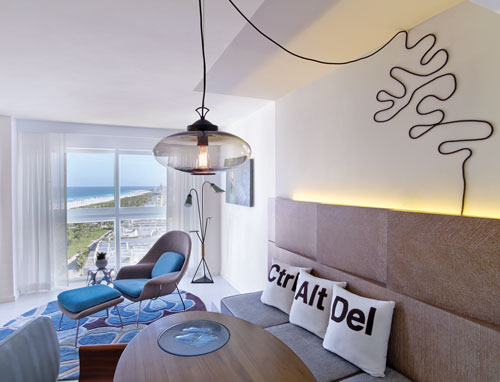
 Royal Palm South Beach Miami, part of Tribute Portfolio

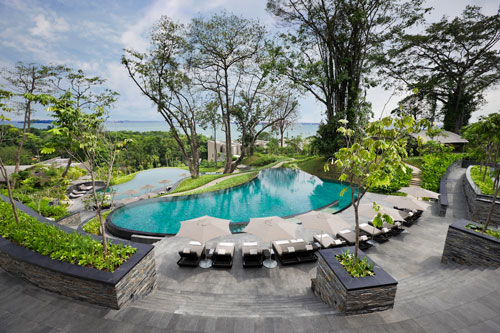 Capella Singapore, an Elite member