TTG Asia
Asia/Singapore Saturday, 17th January 2026
Page 1778

Accor completes FRHI takeover, names CEO of luxury brands

0

chris-cahill
Chris Cahill has been appointed CEO, luxury brands, AccorHotels

ACCORHOTELS Group has officially acquired FRHI Hotels & Resorts (FRHI) following shareholders’ approval yesterday.

The transaction sees Accor paying US$840 million in cash and issue 46.7 million shares to Qatar Investment Authority and Kingdom Holding Company of Saudi Arabia, giving them respective stakes of 10.4 per cent and 5.8 per cent in Accor’s share capital.

This acquisition will add three luxury hotel brands – Fairmont, Raffles and Swissôtel – into Accor’s stable, giving the French hospitality giant an even greater footprint in the luxury segment and FRHI benefits from Accor’s global distribution platform. Accor also bought home rental site onefinestay earlier this year.

“The acquisition of these three emblematic luxury hotel brands is a historical milestone for AccorHotels. It will open up amazing growth prospects, lift our international presence to unprecedented heights, and build value over the long term,” said Sébastien Bazin, chairman and CEO of AccorHotels.

“By leveraging the operational synergies between FRHI and AccorHotels, we are well-positioned to accelerate the growth of our luxury brands and offer guests even more exciting hotel choices and destinations to explore.”

AccorHotels plans to generate approximately 65 million euros (US$72 million) in “revenue and cost synergies” with the integration, the company said in a statement.

Chris Cahill has been named the group’s CEO of luxury brands to lead the FRHI integration and oversee the strategy and global operations of AccorHotels Luxury Brands. In this newly created role, Cahill will also become a member of AccorHotels’ executive committee. He was most recently executive vice president global operations at Las Vegas Sands Corp.

Industry extends helping hand to quake-hit Kyushu

0

kumamoto-castle-in-japanKumamoto Castle in Kyushu, Japan

THE domestic industry is rallying to restore confidence to southern Japan, with travel agencies and airlines dropping prices to encourage visitors to Kyushu after the region was rocked by a series of violent earthquakes in April.

“Many Japanese companies, including ourselves, want to do everything that we can to support local businesses, local authorities and the people of Kyushu,” Wataru Yoshioka, a spokesman for All Nippon Airways (ANA), told TTG Asia.

The airline has cut the price of a one-way flight from Tokyo to Kyushu throughout September to 9,700 yen (US$96.30), down from an average of 12,000 yen.

ANA Holdings president Shinya Katanozaka said he hoped the airline’s efforts would “attract 100,000 tourists in the July-September period”.

Meanwhile, a number of domestic travel agencies have been pushing Kyushu as a destination, with both Kinki Nippon Tourist Co and Nippon Travel Agency reporting strong interest in discounted travel and accommodation packages to the region during the summer.

Last week, the Quantum of the Seas‘ call at Kumamoto for the first time following the April earthquakes also delivered a welcome boost to the local tourism industry. The 4,000-pax ship had sailed from Shanghai and was scheduled to stay in Kyushu’s waters for two further days.

Steady growth for global business travel until 2020: GBTA

0

A NEW report by the Global Business Travel Association (GBTA) has forecasted that global business travel spending will be US$1.3 trillion in 2016, and grow 5.8 per cent on average in the next five years to reach US$1.6 trillion in 2020.

In 2015, global business travel spend was US$1.2 trillion, a five per cent growth year-on-year.

global_bti_next_5_years_market_expectations-1Michael McCormick, GBTA executive director and COO, commented: “Business travel has demonstrated a tremendous resiliency as it continues slow and steady progress even in the face of global uncertainty, a weakened global economy, terrorist attacks, world health issues and other obstacles. Companies across the globe clearly understand the return on investment business travel delivers for their bottom line.”

Notably, China surpassed the US as the largest business travel market in 2015 with a US$291 billion market. However, GBTA expects China’s business travel market to become the fifth fastest-growing major market in the next five years as the country’s economic growth moderates.

Elsewhere in Asia, GBTA predicts that India and Indonesia will average double-digit growth in business travel spending over the next five years.

global_bti_top_15-1

While this forecast was compiled before the UK voted for Brexit, the report further stated that the uncertainty of the country’s economy may cause the postponement or cancellation of business trips. Should the UK enter a recession, domestic and outbound business travel will suffer, although a much weaker pound would attract more leisure and business travel to the country.

GBTA forecasts US business travel spending to grow only 0.9 per cent this year (US$292.5 billion) before advancing 4.2 per cent in 2017 (US$304.9 billion), owing to increasing risks in the domestic and global economies, uncertainty leading up to the US presidential election, Brexit and continued signs of a weakening global economy.

“The slow growth environment of the US and global economies has taken a toll on many fronts leading to this ‘new normal’ of slow, but steady one to two per cent progress,” said McCormick.

Major events put shine on Jordan for Asian travellers

0

amman-jordan
A 2nd-century Roman Theatre in Amman, Jordan

A SERIES of high-profile events will enable Jordan to train its sights on youth, faith and wellness travel segments and enhance its appeal to Asian visitors, according to the mayor of capital city Amman, Akel Biltaji, who was in Singapore earlier this week for the World Cities Summit.

The World Economic Forum on the Middle East and North Africa, which will be held in Jordan in May 2017, “will demonstrate how peace-loving and safe the country is”.

“The event will also serve to raise Jordan’s profile as an attractive tourist destination in the minds of global travellers, including Asians,” Akel stated, citing Asia as an important source market due to its rising disposable income.

The FIFA U-17 Women’s World Cup, which will take place in Amman, Irbid and Zarqa from September 30 to October 21 this year, is particularly “significant” as it not only positions the country as a supporter of youth events but also marks Jordan’s promotion for women activities.

Meanwhile, the annual Jerash Festival for Culture and Arts this month attracts “waves of people from the Gulf and Europe”.

Jordan will continue to leverage its ancient culture and abundant religious sites, as well as easy access to Jerusalem to attract religious travellers.

The mayor also touted the country’s advanced medical offerings as a drawcard for Europeans seeking more affordable treatments overseas.

“We have the world’s biggest natural spa – the Red Sea – which has health-giving benefits”, he said.

Accessibility between the Middle Eastern country and Asia has been enhanced through Royal Jordanian’s April first China route, a thrice-weekly service linking Guangzhou and Amman. It was launched in April this year.

Royal Jordanian’s network in Asia also includes Hong Kong (four-times weekly), Bangkok (daily), Jakarta (thrice weekly), and Kuala Lumpur (thrice weekly).

TripAdvisor’s airline reviews platform takes off

0

tripadvisor-sg_ar

TRIPADVISOR has launched a new airline reviews platform covering all major global airlines, expanding its massive base of 350 million traveller reviews and opinions.

It has also rolled out a newly redesigned Flights search service and beta launch of its “flyscore” that rates the quality of each air travel itinerary based on the power of qualitative traveller reviews, the quality of the aircraft, inflight amenities and the duration of the itinerary on a scale of one to 10.

Travellers now have a go-to resource for making more informed air travel decisions based not only on the price of the flight, but the total experience with the airline as viewed by TripAdvisor’s community of more than 340 million monthly unique visitors, the company said in a statement.

“The time has come for a better way to research, compare and shop for flights. TripAdvisor is excited to innovate and lead with the launch of airline reviews in 48 markets in 29 languages,” said Bryan Saltzburg, senior vice president and general manager, global flights business.

“Additionally, we’ve introduced a set of new features within our search experience to help consumers better understand the true value of air travel beyond price,” he added.

The revamped platform will showcase more comprehensive information about inflight amenities, such as power ports and the type of in-flight Wi-Fi available to flyers.

Additional enhancements to flight search are expected to follow later this year.

CWT appoints GM to oversee SEA

0

CARLSON Wagonlit Travel (CWT) has appointed Sim Kian Peng as its general manager, South-east Asia.

Based in Singapore, Sim is part of CWT’s leadership team in the region and will report to Asia-Pacific president Kai Chan. He will be responsible for the growth and continued strategic alignment of CWT’s business in South-east Asia, with the company’s country leaders in Indonesia and Thailand reporting directly to him.

sim-kian-peng-portrait

Sim was most recently Panalpina Group’s senior vice president and regional head of industry vertical technology, Asia-Pacific. Prior to this, the veteran businessman has spent 10 years in the airline sector with Singapore Airlines and Silkair, and 15 years in the logistics and freight sectors with Danzas and DHL.

A whole sale of the market

0

The wholesale accommodation market is ripe for another round of consolidation. Raini Hamdi, Paige Lee Pei Qi, S Puvaneswary and Mimi Hudoyo explain why

jul-08_bedbank

The hotel wholesale business, which has been unravelled by online technology, is ripe for yet another round of consolidation as big players become more acquisitive while small and/or traditional players struggle to make it in a highly competitive industry.

The latest trigger is the sale of Hotelbeds to UK private equity firm Cinven Capital Management and Canada Pension Plan Investment Board, and that of Kuoni Group – which owns GTA – to Swedish private equity firm EQT

With new ownership flushed with funds, both Hotelbeds and GTA have made no bones of their intention to expand market share through further investment in IT, tapping growth in Asia and other markets, and consolidation in the wholesale accommodation sector.

The accommodation industry itself, on the other hand, is being rocked by the consolidation of global hotel chains, the dominance of the sharing economy and the increasing size of Priceline and Expedia, all of which promise a good round of marry-making in both the hotel and intermediary sectors in the months to come.

Marry-making
So how will the hotel wholesale business be further remade?

Once upon a time, hotels worked with specialist wholesalers who gave them access to markets they cannot reach directly. Wholesaler contracts also enabled hotels to forecast occupancy patterns and generate volume business, especially for those with high inventory.

However, this system has been challenged by both B2B online distribution channels with cheaper cloud-based technology and B2C digital platforms. The former include the likes of Hotelbeds, GTA, Bedsonline, Travco, MetGlobal and JacTravel, while the usual suspects in the latter include Agoda, Expedia, Hotels.com, Trivago, Booking.com and, for good measure, throw in sharing economy giant such as Airbnb and B2B2C players like Asiatravel.com, which has added transfers and sightseeing into its offerings.

As a result, the market has splintered in many directions.
B2B platforms have spun off many new white-label online wholesale or online retail operators − for example, MetGlobal powers HotelsPro.

Some of the new players are started by people in technology, not travel, in the hope of being acquired in three to five years after operation, observed Judy Lum, group vice president sales & marketing of Tour East.

“Their objective to start a travel distribution channel is different from people who want to provide enjoyable holiday experiences; nevertheless, they seem successful,” she said.

Some traditional wholesalers have blurred the lines by building their own bedbanks, creating another variant in the sector.

For example, within Indonesia’s Antavaya Group is the AntaVaya Hotel Reservation System, a bedbank for its retail agent partners and corporate clients. It is for “convenience”, said director Bagus Priatna, as clients have their own login and password to book a hotel from their own office. It is also attractive as they have credit terms instead of instant payments when booking through an OTA.

Other traditional wholesalers remain indigenous and compete by packaging more complicated products comprising flights, accommodation, transfers and day tours. These are usually small players with loyal clients.

Niklas Andreen, Travelport’s senior vice president & managing director for hospitality, car and partner marketing, observed: “Their historic model of allotments and prepaid dedicated inventory is becoming replaced by models such as dynamic discounts of BAR. Many of them are becoming specialists or consolidating to have global coverage by plugging in other companies. In summary, they now compete in a new bedbank landscape.”

But fragmentation is not necessarily as negative as the word connotes. Said Lee Choon Loong, president and CEO of DiscoveryMICE, Malaysia: “The wholesale market is indeed fragmented but in a positive way, as each wholesaler finds its own specialisation in reaching out to and integrating with tour operators.

“There are online wholesalers who offer a large inventory of hotels worldwide with instant confirmation; wholesalers with XML connection to partner hotels inventory to which tour operators can access last-minute distressed inventory and discounted dynamic rates; and last but not least, traditional wholesalers with room allotments who package hotels usually with airport transfers.“The market is equally (splintered). The wholesale industry merely seeks to deploy different strategies and approaches in meeting tour operators’ requirements,” said Lee.

Yet, it is this very shaken-and-stirred market that opens opportunities for consolidation.

Ivan Walter, CEO, GTA, told TTG Asia:“The market is so huge. There are a lot of small players out there that are involved in intermediary accommodation and destination services distribution. They can be small bedbanks or DMCs that have no differentiated value proposition – purely selling hotel rooms, which we think is not sustainable.

“So the market today is not dominated by a couple of bedbanks. In fact, it is very fragmented and is in the hands of hundreds if not thousands of small individual players. Thus, there are lots of opportunities for consolidation.”

Why consolidate?
Said Walter: “It’s crucial today for any B2B or B2C player to have relevance, and that relevance has to do with a certain size, negotiating power with suppliers and clients, global footprint and scale.”

There are also other forces at play. Observed Manuel Ferrer, chairman & founder of Olea Consultancy Asia, who previously headed Hotelbeds in the region: “What is really changing in this industry is the growth and size of Priceline and Expedia. They are already entering the B2B business and I have no doubt they will grab a part of the business of current B2B players.”

Ferrer also foresees a transformation of the hospitality sector. “This industry has changed minimally over the past decades, much less than any other industries. But now it will change fundamentally because many clients want products that they don’t offer and, whether fair or not, the competition from the likes of Airbnb or Zizaike.com is forcing them to change,” said Ferrer.

Chains too, have stepped up efforts to get more direct bookings of late, while M&As in the sector, such as Marriott International buying Starwood Hotels & Resorts, are being done partly to fend off dominance of OTAs and to harness more direct bookings from loyal guests.

“Towards this end, the large hotel chains backed by strong management companies will continue to sell direct to end-consumers. This will ultimately result in stagnant growth of the B2B market segment,” pointed out John Chan, business development director of Kris International Traveltours, Malaysia.

DiscoveryMICE’s Lee added: “While the total number of tourist arrivals have exceeded over one billion worldwide, the number of OTAs has not increased (proportionately). In the future, I envision that large hotels chains with similar brand character would consolidate than compete.”

There’s a place for everyone, say hoteliers

jul-15-andy-khenAndy Khen, executive director, L Hotels & Resorts and The Shanti Collection Bali
My discussions with conventional wholesalers showed they were feeling the pressure from online players. However, hotels like us still deal with both conventional wholesalers and bedbanks. We need offline wholesalers to boost occupancy as online booking is usually last-minute – three days or even less lead time.

There are so many channels of distribution. Each has its own strength and we need to be in many channels to capture the business.

To compete with regional and global players, homegrown bedbanks must not only grow their inventory, but invest in the latest technology all the time, do a lot of promotions and also invest in people: dedicated account managers that work (with the hotels to find ways to) generate roomnights.


jul-15-bernold-schroeder

Bernold Schroeder, CEO, Pan Pacific Hotels Group
We work with many different business partners from corporate travel agents and MICE businesses with large incentive houses to OTAs and bedbanks. As a hotelier, I don’t just depend on one segment, as I have to manage my risks.


jul-15-vivi-herlambang

Vivi Herlambang, director – sales marketing and business development, Sahid International
The conventional hotel wholesalers still survive despite the competition from bedbanks and OTAs. Each offers a different business proposition that we need, besides our own brand website. We cannot rely only on one or the other. That is how fragmented the market is.

One of the reasons we still deal with traditional wholesalers is because the rooms are bought in advance. This gives us certainty on room sales at a flat rate. The online players, on the other hand, gives us the liberty to make changes on room allotments and prices according to the dynamism of the market at any given time.


jul-15-patrick-fiatPatrick Fiat, general manager, Royal Plaza on Scotts, Singapore
Traditional hotel wholesalers are still in business and they have expanded their business to keep up with the competition by focusing on online distribution channels with dynamic systems.

The distribution landscape is ever-changing, thus there is no hard and fast rule as it is largely dependent on the strategies of the brands. The key for hotels is to gain an in-depth understanding in order to use these booking funnels to influence conversions.


This article was first published in TTG Asia, July 8, 2016 issue, on page 18. To read more, please view our digital edition or click here to subscribe

Cybercrime has its eyes on the hotel industry

0

David Topolewski, CEO of Qooco, which provides mobile language learning and vocational training solutions for the hospitality and service industries, shares the importance of cyber security in the hotel sector

jul-12-david-topolewsk

There is no question that technology has brought great convenience and benefits to our everyday lives, and has had far-reaching influence in every industry you can think of. Amongst hoteliers, technology has helped streamline everything from managing guest relations to organising the day-to-day operations of restaurants.

Hotels are a veritable treasure trove of customer data – personal information, credit card details, addresses, allergy information, etc, all of which allows hotels to provide an extremely smooth experience for their guests. This mass of data is highly sensitive, and also highly attractive to cyber criminals.

The hotel industry is a ripe target because the majority of hoteliers do not seem to place enough emphasis on cyber security. In 2015, Trump Hotels in the US and Canada admitted that a virus had been lurking in their computer systems for over a year and is believed to have stolen thousands of guests’ credit card data. Most crimes involve the criminals hacking into point-of-sale terminals using malware that disguised itself as a legitimate programme.

In this instance, credit card data was stolen. Now imagine if a celebrity or well-known world leader had his or her sensitive personal information nabbed, and then splashed across the front page of the tabloid papers. Embarrassing for the celebrity, potentially destructive for the hotel brand.

Hoteliers would be ill-advised to have a laissez-faire attitude towards cyber security, because cybercrime has numerous consequences which go beyond the business of losing some lawsuits or handling fines or compensation to guests. A public security debacle has the potential to destroy your brand, and the trust between your business and your customers – and trust once lost, is almost impossible to regain.

The tried-and-tested adage – prevention is better than cure – works well when it comes to cyber security. Hoteliers should start to look into ways to prepare for, and mitigate against, cyber-attacks. Five simple ways include: (1) educating staff members on basic cyber security knowledge; (2) reviewing and changing protocols to include steps on dealing with cyber security breaches; (3) developing sound cyber security processes e.g. regularly changing passwords or having a clear chain-of-command for dealing with cyber-related incidences; (4) purchasing a reputable security system/software for your business; and (5) ensuring that staff training includes modules on cyber security.

Ultimately, cyber basics need to be incorporated into staff training. No one wants a repeat of the 2014 Sony Pictures incident – a breach was facilitated by the fact that employees had named a file that contained many relevant user passwords within the Sony system, “Password”. And even more incredulous, the password to access this file was “password”.

Hotels are uniquely vulnerable to hackers, given the sheer number of guests staying in a hotel who willingly giving up their personal information in return for a smoother stay and better service. This, mixed with a hotel workforce that is young and often transient, presents numerous opportunities for criminals to digitally steal information and money. Staff training and protocols should reflect this, otherwise it is only a matter of time before the trust a hotel brand has spent decades building, is shattered by a person with a computer.

Contributed by David Topolewski

Not just a surfer’s paradise

0

Major malls in the Gold Coast are undergoing extensive renovations to show tourists that the destination offers more than just the sun, sand and sea. By Paige Lee Pei Qi

jul-15-aust-1

Already renowned as a holiday haven with sandy beaches, the Gold Coast now wants to establish itself as Australia’s biggest shopping mecca with extensive upgrading and redevelopment of major malls, which will place the destination in good stead in its pursuit of Asian travellers.

Pacific Fair Shopping Centre is set to become the fourth largest shopping centre in the country when its A$670 million (US$482 million) expansion is completed this year. The expansion will also transform the property from a regular shopping mall into a designer destination debuting brands like Givenchy, Gucci, Hermes, Louis Vuitton and Prada.

Meanwhile, this year, the Australia Fair Shopping Centre will brandish a fresh look after a A$15 million revitalisation, while Robina Town Centre’s A$160 million expansion is expected to complete by the end this year.

Harbour Town Gold Coast, which is Australia’s largest outlet shopping centre with more than 220 stores, is also currently undergoing a A$20 million expansion. New stores include brands like Coach, Hugo Boss, Calvin Klein, Ralph Lauren, and Australia’s first Victoria’s Secret Outlet store.

Commenting on the rejuvenation of the Gold Coast’s retail landscape, Tourism Australia’s managing director, John O’Sullivan, said: “The unique thing about the Gold Coast is that you’ve got an amazing beachfront and coastline and good (shopping) products. The important thing is that the Gold Coast can now provide a concentrated premium shopping experience.”

The Gold Coast trade is also positive that the city’s improved shopping offers will make the destination more attractive to international visitors, particularly those from China.

The latest statistics from the Gold Coast Tourism Corporation showed that China was key to international growth in recent years, with the number of Chinese travellers reaching 242,000 in 2015, a 20 per cent increase from the previous year.

Last year, China was the Gold Coast’s largest inbound market for visitor arrivals, and also Australia’s largest market for total spend and visitor nights.

George Liu, general manager of Gold Coast-based Conrad Travel, said: “Asian travellers, and the Chinese especially, like to have at least one free and easy day for shopping because they are always looking to bring something home (from their travels).

“The Gold Coast has never been known as a shopping destination. But with these new shopping malls it will be possible for us to include them as new products for free and easy days in our itineraries,” Liu added.

Similarly, Adeline Yeo, operation manager of Perfect Tours Australia, said the revamped shopping malls would attract Asians.

“Previously, shopping in the Gold Coast was more about the factory outlets. But with premium brands entering the market, we will be able to get a good mix of budget and luxury shopping,” Yeo said.

She added: “The main complaint that tourists give is the limited shopping hours, since late-night shopping is only available on Thursdays.”

Apart from shiny new malls, Jupiters Hotel and Casino is also transforming under a A$345 million refurbishment. One of Gold Coast’s most significant hotel refurbishments, the property will soon welcome a new six-star 700-key hotel tower rising 17 storeys in front of its existing 592-key hotel. The new tower is touted to feature some of Australia’s most luxurious accommodations, and is slated to be completed ahead of the 2018 Commonwealth Games.

Meanwhile, the ongoing A$1.4 billion Ruby development – an integrated residential and resort precinct in Surfers Paradise – has also been hailed as another game changer on the coastline. It will also be ready to welcome guests in 2018.

Andy Indra, senior sales manager of Experience Tours Australia, commented: “These new infrastructure and shopping attractions show that the destination is doing a lot to improve itself and these will definitely make it more attractive for us to promote the Gold Coast beyond its sand and sea.”

This article was first published in TTG Asia, July 8, 2016 issue, on page 27. To read more, please view our digital edition or click here to subscribe

Photo of the Day: Sabre Travel Network marks a year of growth in APAC

0

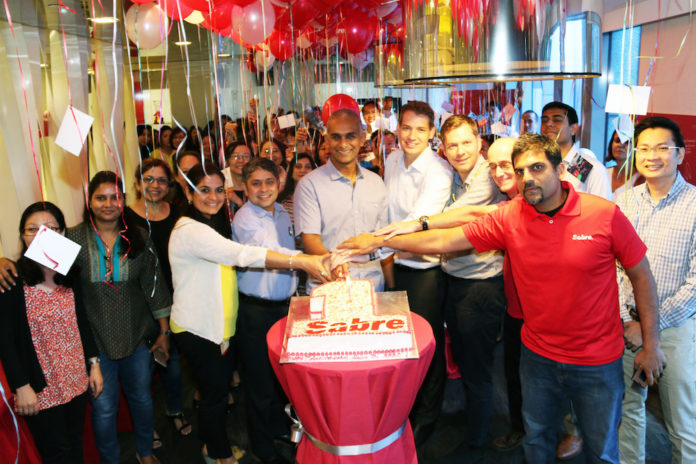
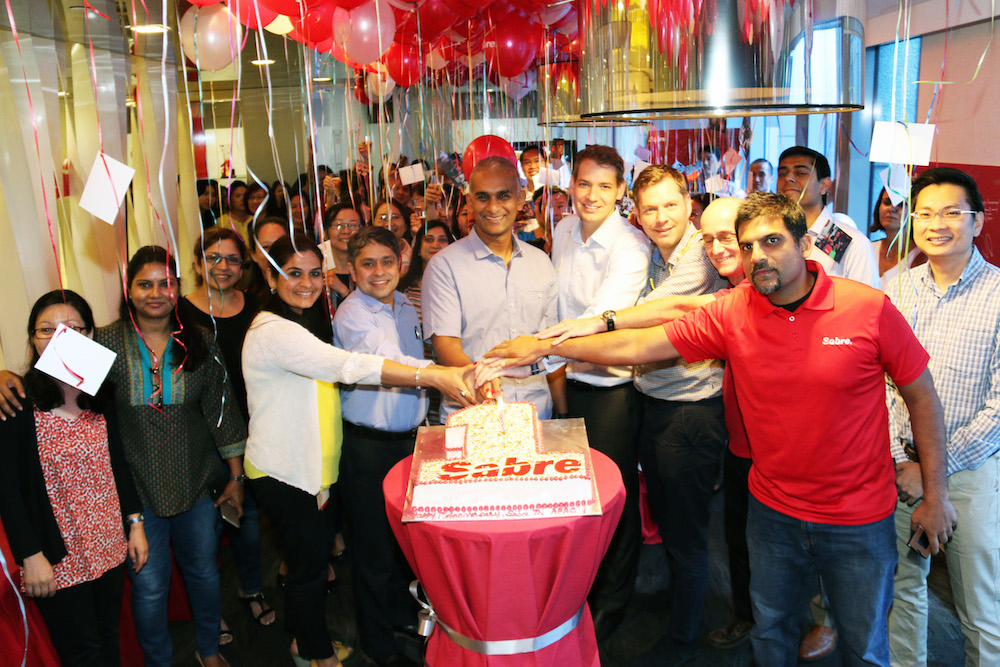
sabre_apac_one_year_anniversary_-_cake_cutting_singapore

Sabre Travel Network’s senior vice president for Asia-Pacific Roshan Mendis (centre), together with staff at its Singapore regional headquarters, celebrated the one year anniversary of Sabre’s expansion into Asia-Pacific and acquisition of Abacus International in July 2015.