TTG Asia
Asia/Singapore Saturday, 17th January 2026
Page 1779

Air China flies to San Jose from Shanghai

0

air-china

AIR China will begin thrice-weekly flights between Shanghai and San Jose from September 1, 2016 to become the first Chinese carrier to operate this route.

Utilising an Airbus A330-200, flights will depart Shanghai at 13.00 on Tuesdays, Thursdays and Saturdays, and arrive in San Jose at 10.10 on the same day. Return flights will depart San Jose at 12.00 and arrive in Shanghai at 16.40 the following day.

Currently, Air China operates about 140 weekly flights between the two countries, covering six major cities in the US.

To celebrate the launch of the route, Air China is offering special round-trip fares for economy and business classes at RMB 1,500 (US$224) and RMB 13,000 respectively, excluding taxes. Tickets are available for booking from now until August 31.

SriLankan Airlines axes flights to Paris, Frankfurt

0

sri_lankan_airlines

IN A reversal of an earlier decision to continue flights to Paris and Frankfurt, SriLankan Airlines has announced plans to suspend both sectors this winter.

Ajith Dias, chairman of the national carrier, told TTG Asia e-Daily: “The two destinations, Paris and Frankfurt, have been under evaluation for awhile. The decision to pull out from both stations is not sudden. Deteriorating yields in both markets compelled the airline to take this decision.”

SriLankan Airlines will continue flying to London, its gateway to Europe and North America, said Dias.

The national carrier’s withdrawal from Germany, Sri Lanka’s fourth largest source market, had prompted some travellers to change carriers while others had cancelled their bookings, revealed Sri Lanka Association of Inbound Tour Operators’ president, Devendra Senaratne.

Ahintha Amerasinghe, managing director at Worldlink Travels, foresees a short-term fallout from SriLankan Airlines’ pull-out but expects a recovery in the long term, adding that KLM’s twice-weekly flights from October will also cushion the impact.

Industry sources said that Austrian Airlines, which began winter flights to Colombo last October, had helped to boost the European market.

In the meantime, Dias indicated that restructuring plans is underway for SriLankan Airlines, which is still struggling to recover from a US$3.5 billion debt and seeking a foreign partner to pull it out of the woods.

Seoul, Singapore join hands for tourism memorandum

0

seoul-sg-moc
(From left) Park Won-soon, mayor of Seoul; Lynette Pang, assistant chief executive, marketing, STB; Kim Eui Seung, director-general, Tourism & Sports Bureau, SMG; Low Yen Ling, parliamentary secretary, Ministry of Education & Ministry of Trade and Industry, Singapore. Image credit: Hunsoo Kim

THE Seoul Metropolitan Government (SMG) and the Singapore Tourism Board (STB) have inked a Memorandum of Cooperation (MOC) to drive two-way tourism traffic and exchanges between the two destinations.

This is the first such MOC between both organisations, and the general framework of cooperation will be in three main areas: tourism exchanges to share knowledge and experiences, marketing and promotion to drive awareness, and regional integration which encourage the participation of business communities and tourism enterprises.

“The MOC between SMG and STB will help unlock new opportunities for both destinations through tourism exchanges and cross-marketing efforts,” said Lynette Pang, STB’s assistant chief executive, marketing.

“Last year, Singapore received about 580,000 South Koreans, a 7.5 per cent increase over 2014. We look forward to welcoming more visitors from South Korea, an important source market, with this collaboration,” she added.

Kim Eui Seung, director-general, SMG’s Tourism & Sports Bureau, added: “I am positive that this (MOC) will strengthen ties between the two cities with the increase in tourism traffic, as well as exchanges in business and culture.”

In addition, a gala dinner was held last weekend for over 300 invited guests and foreign dignitaries at the Flower Dome in Gardens by the Bay to commemorate the signing.

Asian stopover tourists wanted for Finland

0

finnish-lapland
Snowmobiling in Finland

VISIT Finland is stepping up its attention on North Asia to offset the significant decrease in Russian visitors, traditionally a key market, having launched the Stopover Finland campaign in Asia to stay in the country for a few hours or days.

The Finnish NTO has seen encouraging growth from North Asia, according to Visit Finland’s head of global sales promotion, Heli Mende.

“Travel from China to Finland keeps growing and we see a lot of potential there in the coming years. In fact, overnights from Asia grew from 591,342 to 728,806 last year. Japan is a mature market while South Korea is a new market for us,” she said.

“We are also looking into ways to strengthen Finland’s position as mono-destination,” said Mende, adding that Visit Finland wants Asian visitors to venture beyond Helsinki and Lapland to lesser-known areas like the Lakeland district and coastal archipelago.

Finnair, head of travel products for product development and ancillary business, Anssi Partanen, said: “Finland in summer is a hidden jewel and needed to be explored by Asians. Our traffic from Asia increased by 6.9 per cent to 10.3 million in 2015 and (Finnair) just added Fukuoka and Guangzhou this summer season.”

For Tallink Silja Line, which has recorded double-digit growth from Asia, getting Asians to cruise the Baltic Sea in winter is what the luxury cruise line hopes to achieve.

Said its international sales director, Nina Tähtinen: “In winter (Asians) might visit Lapland as a mono-destination (to view the Aurora Borealis) without cruise, so we want them to try our Helsinki-Tallinn or Helsinki-Stockholm cruises before they fly back home from Helsinki.”

Thailand rethinks its value strategy for 2017

0

yuthasak-supasorn1
TAT governor Yuthasak Supasorn speaking at the event

THAILAND wants to change its tourism marketing position from a value-for-money destination to a value-for-experience destination as the country seeks to become a quality leisure destination, announced Tourism Authority of Thailand (TAT) governor Yuthasak Supasorn at a market briefing yesterday to unveil its marketing directions in 2017.

The new strategic policy is designed to bring tourism, now recognised by the country’s leaders and policymakers as of one of Thailand’s most successful economic pillars, in line with the 20-year reform programme Thailand 4.0 that is being charted by the government under prime minister Prayut Chan-o-cha.

“We will still promote Thainess but through deeper, more nuanced ways, using unique local experience as a selling point,” said Yuthasak. Such experiences are not just restricted to community-based or rural experiences but will draw on the strengths or identity of a destination, he elaborated.

Even big cities like Bangkok have unique local experiences to offer, the governor added, citing the Wat Traimit enclave in the capital’s Yaowarat district as a hidden repository of Chinese culture and lifestyle.

Both Yuthasak as well as minister of tourism and sports Kobkarn Wattanavrangkul, who was also present at the media briefing, acknowledge that it will no longer be a numbers game for Thailand under the new strategic policy. Instead, emphasis will be given to driving traveller expenditure through longer length of stay of visitors and better quality of traveller experience.

In 2017, TAT aims to raise revenue earnings from domestic and international visitors by 10 per cent to 950 billion baht (US$27 billion) and 1.9 trillion baht respectively.

As well, Yuthasak wants to encourage Thais across all sectors of the society to travel more extensively in the country to drive domestic tourism.

“This will enable Thais to see the value of tourism and foster a stronger sense of belonging, thus leading to stronger foundation for the development of unique local experiences,” he said.

“We want to ensure that Thailand is seen as a preferred destination in the minds of international visitors. At the same time, visitor arrivals will have to be managed by greater focus on sustainability and management of the natural resources.”

TAT will also develop a broad range of marketing communications materials aligned with the objectives to give greater prominence to the unique local experiences of Thailand on the world stage. At the same time, the Amazing Thailand slogan will remain in place, supported by Discover Amazing Stories in Amazing Thailand narratives.

Roomorama names new MD

0

VACATION and short-term rental accommodation aggregator Roomorama.com has appointed Nina Kubik-Cheng as managing director. She was most recently vice president – partnerships at the company.

In December 2014, Kubik-Cheng was appointed senior vice president – business development – of Beijing-based Dragon Trail Interactive. Prior to this, she was vice president, sales at Daodao.com and Qunar.com.

nina-kubik-cheng

Her appointment comes just as Roomorama is strengthening its foothold in the B2B space through partnerships with Tujia and HomeAway in April and with the launch of its new B2B identity, Bridge Rentals, an aggregator and supplier of non-hotel inventory worldwide.

Jordan qualifies as a MICE destination: Amman mayor

0

mayor-daniel-sim
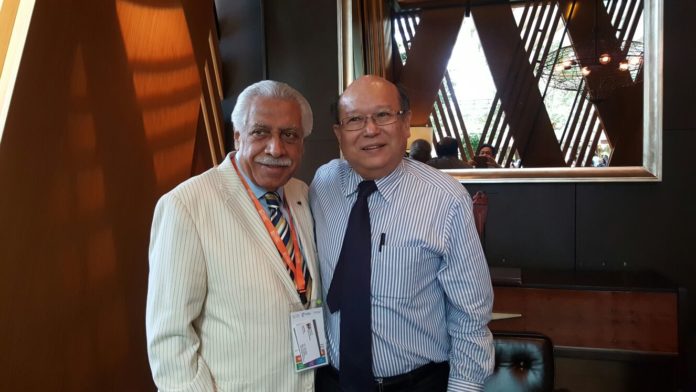
(From left) Akel Biltaji, mayor of Amman; and Daniel Sin, CEO Deks Air (Singapore)

JORDAN’S available tourism infrastructure, the business-oriented mindset of its people and country leaders, safe environment, and location in the heart of the Middle East, are the qualities that make the country ready to capture more international business events, opined capital city mayor, Akel Biltaji.

Speaking to TTGmice e-Weekly during his one-day visit to Singapore, Akel said the country is keen on growing the business events sector.

He said: “Jordan is business-oriented and sees itself as the launch pad for advancements into the Middle East. Our country’s high-level leadership is frequently overseas, engaging peers in talks for possible business opportunities. As we speak, His Majesty King Abdullah II bin Al-Hussein is in Sun Valley (the US) on a business mission. Our people are always looking to bring international business investments into the country.

“Because of (all that and) Jordan’s tranquillity, security and the swell of intellectual capital, the country is home to many international organisations with humanitarian and commercial interests in the Middle East.”

In terms of infrastructure, Akel pointed out that the country has “almost all the big hotel brands you can think of – The St Regis, Kempinski, Le Meridien, etc – and a Ritz-Carlton is now being built”, in addition to the King Hussein Conference Centre at the Dead Sea, and the Zara Conference Centre and King Hussein Business Park in Amman.

Jordan will host the World Economic Forum on the Middle East and North Africa come May 2017, an event that Akel said would “demonstrate how much a peace-loving people we are and how safe the country is” and “serve to raise Jordan’s profile as an attractive tourist destination in the minds of global travellers”.

Another high-profile business event in Jordan is the Pan Arab Construction Forum, which Akel said would be attended by delegates from the Middle East, South Africa and Europe.

At present, China is regarded as an important source market for both leisure and business traffic.

“The Chinese government has earmarked US$50 billion for investments in the Middle East, and Jordan’s portion will be about US$10 billion to US$15 billion over the coming decade. His Majesty visits China every year for trade talks, and the Chinese view Jordan as a launch pad for further investments in the Middle East,” Akel shared.

“My city Amman is looking to engage Chinese companies to build our underground metro and possibly a railway system that may extend across the country and then region,” he added.

Akel pointed out that “trade follows travel and tourism”, and Jordan’s tourism industry can expect to benefit from both out of China.

To enable traffic from China, Royal Jordanian inaugurated its first service in China in April. The airline flies thrice weekly between Amman and Guangzhou Baiyun International Airport.

Daniel Sin, group CEO of Deks Air (Singapore), GSA for Royal Jordanian, said the demand for the service has been strong because it attracts passengers from Shanghai too. The service enjoys an average load factor of 80 per cent.

Royal Jordanian’s network in Asia also includes Hong Kong (four times weekly), Bangkok (daily), Jakarta (thrice weekly), and Kuala Lumpur (thrice weekly).

Is GDS still the ticket?

0

The value of the GDS came into question after the formation of a pan-regional alliance by eight Asian LCCs. Dannon Har finds out if there is any merit to the naysaying

jul-08_gds

Surprise was felt across the travel sector after the announcement of the Value Alliance (VA) in May, not from the collective fleet size of 176 aircraft in Asia-Pacific or the total passenger load of 47 million (in 2015), but from the first-of-its-kind distribution technology adopted by the alliance.

The LCC alliance, comprising Cebu Pacific, Jeju Air, Nok Air, NokScoot, Scoot, Tigerair Singapore, Tigerair Australia and Vanilla Air, formed the partnership to enable interline ticket and ancillary sales among member airlines in one booking.

Unlike other airline pacts the likes of Oneworld or U-Fly Alliance, the technology VA uses − developed by Air Black Box − fundamentally changes the distribution game by allowing airlines to cross-sell and upsell across markets effectively without going through a GDS.

Having observed growing cooperation among budget carriers in the last couple of years, Damian Hickey, vice president Asia-Pacific and global sales strategy, air commerce at Travelport, deems the VA as “the next logical step” by LCCs to bring in other airlines within the periphery of their networks.

“The surprise is in the distribution model, but it is still an open question as it is still early days (for VA). Members like Tigerair, Scoot and Jeju Air are still distributing through Travelport.”

Hickey does not foresee LCCs dropping out of GDSs anytime soon though. He said: “LCCs have a bias to go direct but they still want to reach every possible customer, and they know they can’t do that if they only have a single distribution path. Even if it accounts for one per cent of their sales, it’s still incremental.

“The industry has gotten to a point where you can’t say airlines want to sell direct to bypass travel agents or that GDSs don’t like airlines to sell on their own websites,” opined Hickey.

“Consumers want choice. There is realisation, from all sides, that we need to support that flexibility,” he added.

jul-08_gds-2

Reflecting similar sentiments, Hervé Couturier, Amadeus’ executive vice president of R&D, remarked: “What airlines want today is multichannel capability. They want to be able to distribute their products through the GDS, and also through mobile, websites, OTAs, metasearch engines, and they want (the content) to be consistent and personalised.”

But LCCs are not putting their best foot forward with GDSs, according to Bertrand Salliet, general manager South-east Asia at FCM Travel Solutions.

“LCCs are usually not well distributed on GDSs. We have some content but we can’t compare the fares because the budget carriers are giving GDSs their high fares while distributing low fares directly on their own website,” he explained. “We still need to make some bookings on the LCC’s website instead of the GDS.”

However, this does not hark the end of GDSs, assures Salliet. “If you see what happened in Europe with the LCCs created in the 1990s, such as Ryanair and EasyJet, those airlines have the same direct model to bypass GDSs and agencies.

“They then realised that without travel agents they can’t access the corporate world. Agencies bring a lot of value for corporates in terms of payment facilities and data consolidation. Those airlines then decided to create a portal for travel agents to book direct from them. But they realised they lose out when agents do fare comparisons on GDSs, hence they are now back to GDS distribution.

“In Asia, some LCCs are starting to see that and are distributing on GDSs to access corporate customers, who are high-yield because they tend to book better seat classes and more ancillaries,” Salliet said.

Whether the VA will head down that path remains to be seen, but budget carriers need to be able to sell more ancillaries as it accounts for a significant portion – one-fifth on average – of their revenue.

That explains why GDSs have in recent years gone all out to upgrade rich content and merchandising capabilities on their platforms, with the most recent instance being the Sabre Red Workspace 3.0, which enables suppliers to push rich-format ancillary products into the agent’s workflow.

The greatest value GDSs offer, explains Roshan Mendis, senior vice president, Sabre Travel Network Asia-Pacific, is the ability to provide the most relevant product at the right time to the right customer. And that is only possible, not just through behavioural data accrual, but smart usage of that data.

That remains the main selling point of GDSs, which, as far as the technology used by the VA is groundbreaking, does not address, nor does it need to.

Said Salliet: “The great thing about GDSs is that you can compare fares based on the availability of flights, which is still unique as there is no technology in the market now that can do the same thing.”

This article was first published in TTG Asia, July 8, 2016 issue, on page 6. To read more, please view our digital edition or click here to subscribe

Photo of the Day: Norwegian Cruise Line sets up HK office

0

hktb
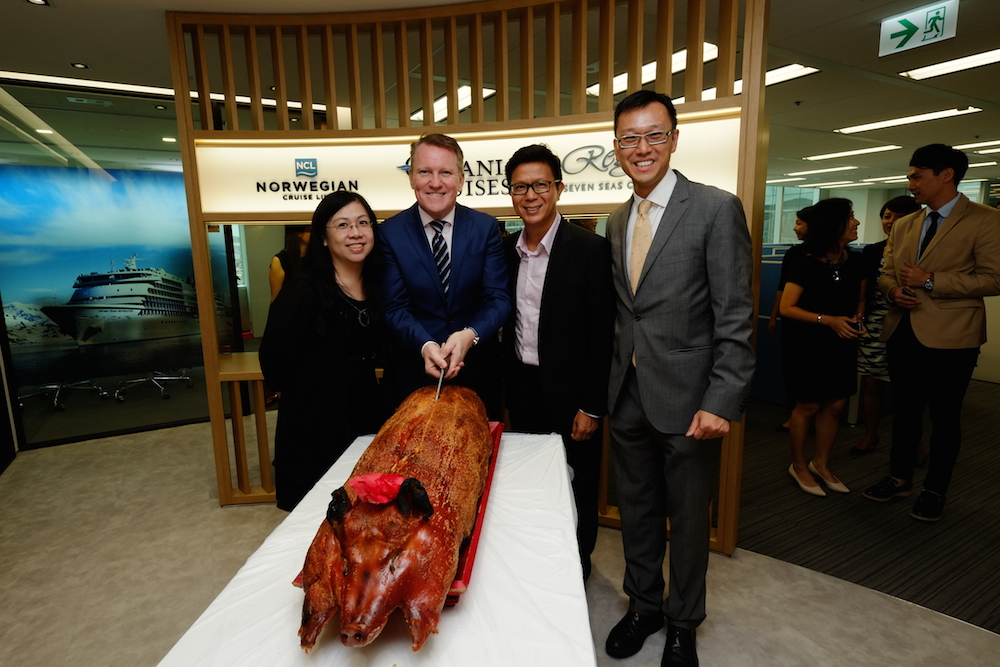
(From left) Patricia Yuen, manager cruise Hong Kong Tourism Board; Steve Odell, regional vice president Norwegian Cruise Line Holdings (NCLH); Kenneth Wong, general manager MICE and Cruise Hong Kong Tourism Board; and Felix Chan, vice president sales Asia NCLH

In a traditional Chinese ceremony to bring good fortune and prosperity, Steve Odell, regional vice president of Norwegian Cruise Line Holdings, officially opened the company’s new Hong Kong office as the latest in its Asia-Pacific expansion, which includes a new headquarters in Sydney and sales offices in Tokyo, New Delhi, Mumbai and Singapore.

E-licence for tourism industry kicks off in Myanmar

0

myanmar-license-portal

MYANMAR’S Ministry of Hotels and Tourism has, from July 1, launched an online registration portal (http://elicence.tourism.gov.mm) to facilitate permit applications and renewals for the travel and hospitality industry.

At present, the Ministry of Hotels and Tourism issues four kinds of licences: a hotel licence costs between 200,000 kyat (US$170) and 1.9 million kyat, based on the number of rooms; a tour company licence costs 400,000 kyat; a tour guide licence costs 50,000 kyat; and a licence to provide transportation for tourists costs between 50,000 kyat and 500,000 kyat, depending on the vehicle type.

Licence holders must renew every two years, according to Thint Thwin, director general of the ministry’s Directorate of Hotels and Tourism.

Welcoming the time and hassle saved with the introduction of the online system, Kaung Minn Khant, managing director of Yangon-based Asia Central Link Travel and Tour Company, said: “Previously, we had to apply at related departments both in Yangon and Nay Pyi Taw. It was extremely time-consuming with lots of paperwork that caused delay in issuing licences.”

He also urged the ministry to focus on the flexibility of issuing e-visa for visitors, developing more products in secondary destinations in the country and providing accurate statistics for the travel trade.

Meanwhile, Thint Thwin revealed that information cards for tourists will be rolled out soon, as the Ministry of Hotels and Tourism is currently negotiating with Myanmar Posts and Telecommunications, and telco operators Ooredoo, Telenor and Viettel to provide the system electronically.

These cards will provide visitors with data about Myanmar’s tourism industry such as airline schedules, bus and transportation options, restaurants plus other travel advices.