TTG Asia
Asia/Singapore Tuesday, 7th April 2026
Page 1749

New chief commercial officer for Sabre Travel Network

0

alfred-de-cardenas-sabre

Sabre has appointed Alfred de Cárdenas as chief commercial officer for its Travel Network organisation, which spans the GDS travel marketplace and Traveler Experience businesses.

Based in Southlake, Texas, de Cárdenas, with 28 years of experience under his belt, will lead a team of senior executives accountable for commercial efforts and customer engagement across geographies, including global strategic accounts and sales operations.

Prior to joining Sabre, he was president of global sales and customer service for Syniverse Technologies, a cloud-based/SaaS mobility services company. He also led a number of strategic roles as COO and general manager across the Americas region.

Hainan boosts medical offerings to lure more foreign arrivals

0

sanya-city-and-dadonghai-bay-from-luhuitou-park-hainan
Aerial view of Sanya city and Dadonghai bay from Luhuitou Park, Hainan

Hainan is looking to build up its medical tourism offerings as a way to lure more international visitors to the Chinese island.

It will be one of the spearheads, along with increasing the number of cruise ship visits, for growing a foreign visitor market which only accounts for around 2 per cent of total arrival numbers, according to Chen Tiejun, deputy director of the province’s tourism development commission.

Speaking in Madrid at the end of a three-country European visit to present the island’s Discover Hainan campaign, Chen revealed that the domestic market will come first. “But within five years we should be ready to open up to foreigners,” he said.

“By then we should have the quality and standards of service in place to meet established international standards.”

Chen expects the approach to appeal especially to North American and European visitors looking for traditional treatments, who will be able to combine a health stay with the attractions a tropical island with beaches and a rainforest can provide.

As well, two new ports are due to open in the next few years. One will be sited at the northern end of the island, near Haikou, and should be ready by 2018.

The other, at Hong Tan Bay, serving the main southern resort city of Sanya, is scheduled for opening in 2020, coinciding with the launch of a new airport there.

Amadeus distributes hotels online with DerbySoft partnership

0

Amadeus and hotel technology provider DerbySoft have partnered to distribute the GDS’ inventory on OTAs and travel metasearch engines.

Besides the increased reach, DerbySoft’s solution also allows hotels to optimise budgets with programmatic targeting. This can be done either manually or automatically using algorithms that dynamically decide the most effective channel of distribution.

“This partnership does not only allow Amadeus hotel customers to instantly amplify their distribution reach, but also provides the largest online players with critical new room offerings,” said Peter Waters, director of hotel distribution at Amadeus.

Traditionally, connecting to metasearch engines is a challenge for smaller hotel chains due to technical constraints and market fragmentation as well as due to the high costs of implementing and maintaining multiple connections.

Hyatt to introduce more attainable, varied loyalty rewards

0

hyatt

Hyatt Hotels has unveiled a new global loyalty programme, World of Hyatt, set to launch on March 1, 2017.

The existing loyalty programme, Hyatt Gold Passport, will remain in effect through February 28, 2017. Qualifying activity beginning January 1, 2017 will count towards earning status in World of Hyatt.

New to the programme will be three elite tiers – Discoverist, based on 10 qualifying nights or 25,000 base points; Explorist, 30 qualifying nights or 50,000 base points; and Globalist, 60 qualifying nights or 100,000 base points.

“The programme will deliver on exactly what our members want – a broader range of benefits and more attainable rewards,” said Jeff Zidell, senior vice president at Hyatt.

Benefits include free nights at five different Hyatt brands and suite upgrades. Beyond offering traditional perks, World of Hyatt will also allow members to use their points to “make a difference in someone else’s life”, with more details set to be announced in the near future.

Ramada returns to Japan after 2013 exit

0

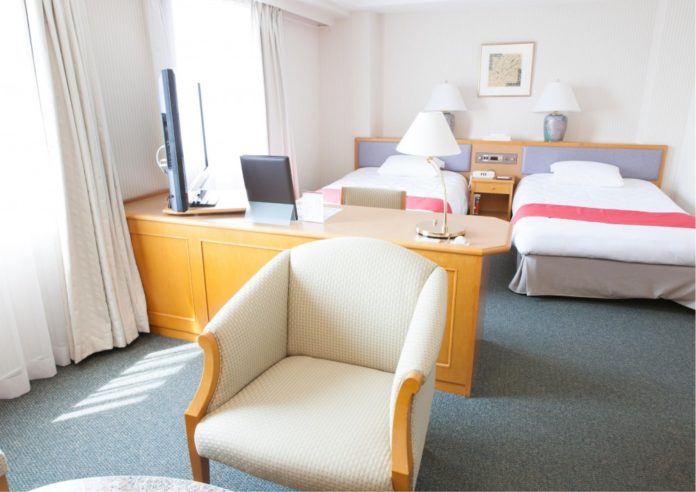
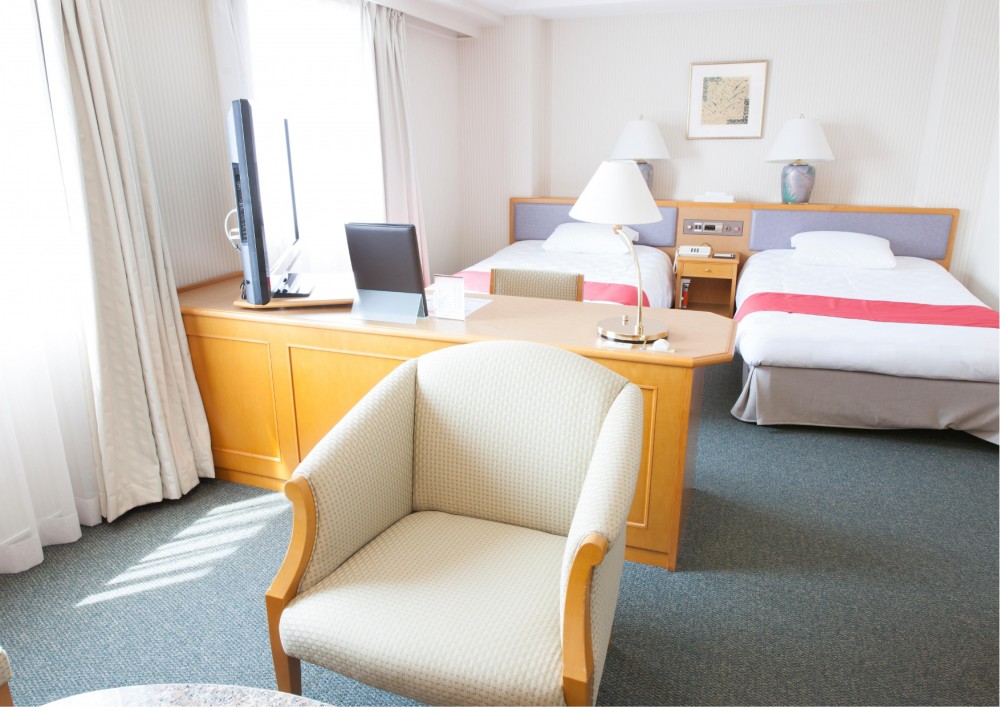
ramada-hotel-niigata

Wyndham Hotel Group’s Ramada brand has returned to Japan with the opening of 300-key Ramada Hotel Niigata in the peninsula’s west coast.

It takes over the site of former Niigata Tokyu REI Hotel after having undergone a year-long refurbishment. Franchise operator Benten Plaza Co. expects to open more Ramada properties in Japan in the future.

“We had two franchised hotels in Japan and exited the country in late 2013,” said Barry Robinson, president and managing director for Wyndham in South-east Asia and the Pacific Rim.

“There were a couple of unfortunate factors which severely impacted the tourism sector and prompted the property owners to cease operations, such as the global financial crisis in 2008-2009, followed by the Tohoku earthquake in 2011.

“Ramada’s return to Japan strengthens our foothold in Asia and furthers our global agenda to transform travel by making it more accessible for the masses,” he added.

Arrivals in Japan have experienced rapid growth in recent years, including nearly 50 per cent year-on-year growth from 2014 to 2015. Benten aims to tap into that growing demand.

Said Robinson: “Our Ramada brand, in particular, is a familiar and well-loved brand in the neighbouring regions of China as well as South Korea, where we will be the largest international hotel operator.

“We were approached by the owners of the hotel and it was the international strength of our brand that made it a clear choice for them to work with Wyndham, under the Ramada brand.”

Events: Tazaungdaing, Festival of Lights

0

tazaungdaing

From November 8-15, over a hundred traditionally-made paper balloons will be launched into the sky above Shan state, eastern Myanmar, in celebration of Tazaungdaing, or festival of lights.

This annual celebration will see large papier-mâché hot air balloons of different shapes and sizes launched in the afternoon from the festival grounds near Taunggyi, the capital of Shan state.

In addition, after sunset at 20.00, fire balloons will be launched. Once these fire balloons reach the height of 20m, fireworks attached to the balloons will explode into the night sky.

There will be specially-marked areas for foreign tourists to enjoy the launching of balloons from a safe distance. Moreover, the festival field will be filled with locals milling about for food, drinks and games. In a country where 84 per cent of households have no electricity, rides at the festival, such as the ferris wheel, are run without electricity.

Next year’s edition will be held from October 29-November 3, 2017.

More turboprop air links a boon for secondary destinations

0

cebu_pacific_atr_aircraft_at_naia
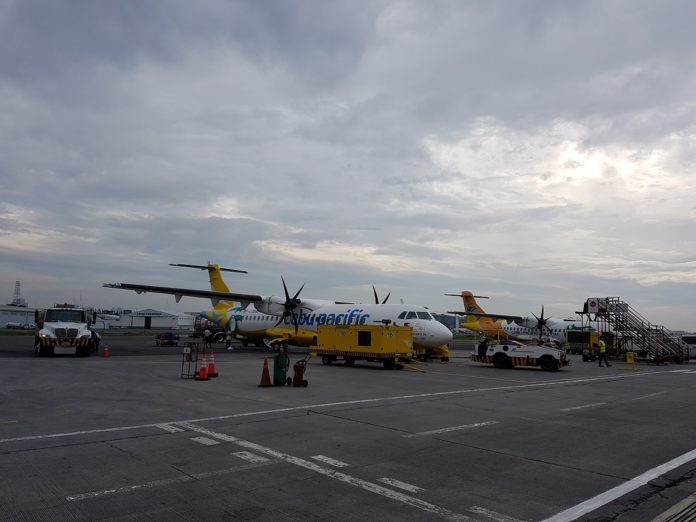
Cebu Pacific ATR aircraft at Ninoy Aquino International Airport

Turboprop aircraft manufacturer ATR foresees a spike in demand for smaller aircraft in Asia-Pacific, fuelled by regional airlines’ quests to increase connectivity, develop secondary markets and provide affordable transport.

Its studies showed that regional traffic demand in emerging countries would grow eight times faster than in more mature economies, with demand for new turboprops expected to reach 750 units over the next 20 years.

ATR currently corners over 90 per cent of small aircraft sales in South-east Asia with 337 ATRs in use by 60 airlines. It also opened an office in Beijing last year, already delivered 36 out of 100 aircraft ordered by Indonesia’s Lion Air, and delivered to Cebu Pacific (CEB) this month its first ever 78-seater ATR 72-600.

Two more ATR 72-600 will be delivered to CEB over the next few months as part of a 16-aircraft order for delivery running up to 2020 with the option to order 10 more, according to ATR global sales head John Moore.

The 78-seater aircrafts will all be used by CEB subsidiary Cebgo, progressively replacing its fleet of ATR 72-500s configured with 72 seats, to expand its domestic route network and frequencies, said Alexander Lao, CEB vice president commercial and Cebgo president.

Moore added that apart from six additional seats, the new ATR 72-600 series needs almost 50 per cent less fuel than bigger aircraft, feature advanced avionics and increased legroom and cabin space. It is suitable in the Philippines where only 30 of the over 100 airports can handle bigger aircraft.

Lorie Mandilag, senior reservations and sales officer at Adam’s Express Travel, said the additional ATRs are great for accessing and developing tourist attractions otherwise reachable only by land and boat. It will mean mounting more flights which will make air travel more affordable to more people.

“Sometimes Hong Kong and Bangkok are more reasonably priced than some Philippine destinations which have limited air service,” Mandilag pointed out.

Concurring, Grand Holidays reservations agent Matt Suzara said more aircraft for Boracay would mean competitive prices as the island resort is quite expensive due to strong demand yet limited air seats.

Suzara added that the Philippines has many hidden tourist spots that can now be reached by tourists with the availability of more aircraft.

Natural advantage

0

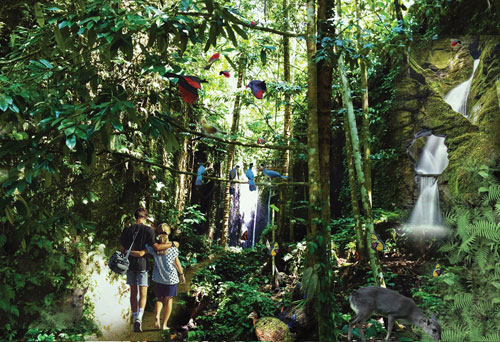
The Mandai precinct is poised to undergo a massive makeover to become an ecotourism hub with five wildlife parks and eco-lodges.

oct-21-tropical-valley

Ecotourism is set to be the newest feather on Singapore’s tourism cap when a 126ha wildlife and nature precinct dedicated to ecotourism comes online in 2023, giving optimism to the trade on new ways to package tours and attract tourists to the city-state.

Currently home to the Singapore Zoo, River Safari and Night Safari, Mandai will from 2020 onwards be joined by two new attractions – the Bird Park, which will be relocated from Jurong; and the all-new Rainforest Park.

Mike Barclay, group chief executive of Mandai Safari Park Holdings (MSPH), said: “We want to give visitors a nature and wildlife destination that they can call their own. Visitors have asked for more novel, engaging and immersive experiences. We hope the new Mandai nature precinct will provide all that and more.”

He added: “Our vision is to create an integrated nature and wildlife destination, nestled within our bustling city for all Singaporeans and tourists to enjoy. Generations of Singaporeans have grown up with the Jurong Bird Park and the (existing) wildlife parks in Mandai.

“This project provides an opportunity for renewal, and to deepen our collective affinity with the nature and wildlife of our region.”

When completed, visitors will be able to stroll on aerial walkways at the 12.5ha Rainforest Park, or relax in pods and watch birds take flight in nine aviaries that feature different landscapes – such as a wetland or bamboo forest – at the 17ha Bird Park. The Bird Park will also hold a breeding and research facility, which aims to increase the populations of critically endangered species such as the Bali mynah, black-winged starling and blue-crowned laughing thrush.

As well, the Mandai nature precinct will also boast nature trails, boardwalks, gardens, waterways and playgrounds in its surrounds.

According to MSPH, the hub is designed to be in harmony with nature. The two new parks will be developed on previously occupied land and measures will be taken to minimise impact on the flora and fauna in the area.

Meanwhile, the main hub area will feature an indoor nature-themed education centre, and hold exhibitions aimed at raising awareness and appreciation for the region’s biodiversity and natural heritage.

Moreover, an eco-link bridge spanning Mandai Lake Road will also be built. This bridge will allow animals to move between the central and northern reaches of the Central Catchment Nature Reserve.

Sleeping under the stars could become viable for visitors who intend to spend a night or two in Mandai, as eco-friendly accommodation options such as tents, camps and family rooms are now on the drawing board.

Applauding Singapore’s ecotourism ambitions, GTMC Travel’s CEO Samson Tan, said: “This new hub will help capture tourists because it become a one-stop wildlife attraction hub. It will help tourists stay for a full day or (even spend a) night there.”

Tour East’s senior vice president sales & marketing international market, Judy Lum, expects wildlife attractions to be popular with the family segment, as the existing Night Safari is already a big draw especially for visitors from India, China and Japan.

“I am excited about this impending project. It will be a wonderful place for visitors to explore and cultivate care for nature, and it is educational for both children and adults alike,” Lum enthused.

Currently, MSPH is also exploring a range of options with the Singapore government to improve accessibility to Mandai. These include introducing shuttle buses from the upcoming Springleaf MRT station and direct bus services from areas that are not well-connected to Mandai.

This article was first published in TTG Asia October 2016 issue. To read more, please view our digital edition or click here to subscribe.

Growing access opens Pandora’s box

0

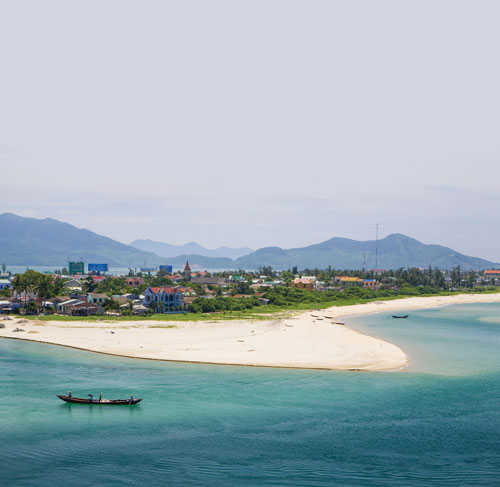
Improved accessibility has brought greater visibility to Vietnam’s central coast alongside other issues.

oct-21-vietnam

An increase in international flights into Danang is allowing Vietnam’s central coast to better hold its own alongside Hanoi and Ho Chi Minh City, but the strengthening appeal is also bringing a new set of challenges for the Vietnamese trade.

In May, Bangkok Airways began four-times-weekly Bangkok-Danang service and Vietnam Airlines followed quickly on its heels with the launch of the same route.

Travellers responded so well to this that Bangkok Airways – barely three months into the launch – was already in discussion with Danang International Airport about potentially increasing the frequency of the service, a source told TTG Asia.

Jetstar Pacific in August started plying between Osaka and Danang, while Jetstar Asia chose Danang as the second Vietnamese gateway to fly to (after HCMC) in November 2015.

On how the prior lack of international flights placed limits on the region’s viability as a single destination for tourists on traditional package holidays, Alexander Leven, director of product development of Asia DMC, commented: “Not many group tours have (central Vietnam stays) in their itineraries. But (those that do) offer mostly Hoi An, and mostly for roundtrips.”

But this is looking set to change. Jess Yap, general manager at Country Holidays in Singapore, noted that the agency was “getting more interest these days from clients visiting central Vietnam as a mono destination”.

“We have welcomed an increasingly diverse guest profile (and) seen an increase in guests from neighbouring countries who enjoy the direct flights into Danang,” observed Michal Zitek, area general manager, Banyan Tree Banyan Tree Lang Co and Angsana Lang Co.

Amid this picture of change, several other developments in the region are hard to miss, such as the establishment of regional tourism promotion body Central Coast Vietnam, Leven shared, and the explosion of international-branded hotel chains onto the scene, particularly in Danang.

“Of course, many reasons (to visit the) region also (run) the risk of attracting the masses. While many like to market the destination as an upmarket golfer paradise, many smaller businesses want quick money and (go after other) target markets,” Leven remarked, echoing the industry’s prevailing dilemma about the influx of new visitors.

In recent months, several local agents in Danang have gone public with their concerns on the behaviour of tourists and how Chinese-run businesses have encroached on their profits.

The tourist influx is also straining the region’s capacity, Leven added. “The rise in arrivals from China is so fast this year that supply of transport, restaurants and tour guides are being put to the Another trade-off of the region’s enhanced mainstream appeal, he continued, was the building of high-rise beachfront hotels, which could compromise the luxury sell-points of the region’s tranquil coasts.

Yap also expressed similar regret over once-quaint attractions. “The increase in direct flights have allowed better accessibility… Sadly, (this also means) the old town of Hoi An will get more crowded.”

This article was first published in TTG Asia October 2016 issue. To read more, please view our digital edition or click here to subscribe.

Call of the wild

0

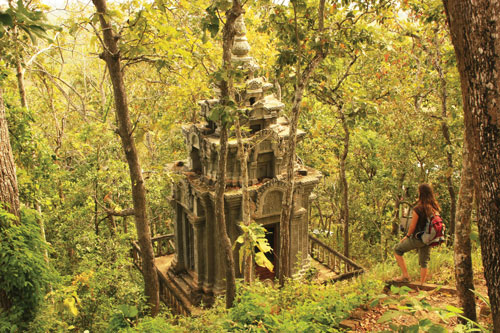
Cambodia’s least-explored territories are starting to find interest among tour operators and intrepid travellers seeking authentic experiences.
oct-21-cambodia

Home to ethnic minorities and an abundance of sprawling jungle and pristine wildlife, Cambodia’s wild frontiers are quickly becoming hotspots for the booming ecotourism trade as tourists step off the well-trodden tracks of Siem Reap, Phnom Penh and Sihanoukville coastal area.

Somborath Dy, operations manager at Cambodian Rural Development (CRD) Tours, which promotes ecotourism in north-east Cambodia, said: “Cambodia has the potential to develop ecotourism because it not only has rich cultural but also diverse natural resources.”

In the Tourism Development Strategic Plan 2012-2020, the Cambodian Ministry of Tourism highlighted ecotourism as a market for development. And with recent research revealing millennial travellers are seeking more authentic experiences, industry players observed that this is an area with the potential to thrive in Cambodia.

Speaking at this year’s Mekong Tourism Forum in Sihanoukville, James Dion, National Geographic Society’s sustainable tourism programme manager, said: “Cultural experiences reign over partying. Authenticity sells and can bring benefits to people and a place. When people come to a place like Cambodia, they’re experiencing a culture you will find nowhere else.”

Jo Crisp, general manager of Peak DMC, said: “More people are keen to see the country at the pace of a bicycle, kayak or through trekking, and want to venture out into more remote areas where they can see people and sights that are relatively untouched by tourism.”

Koh Kong’s Cardamom Mountains has become a community-based ecotourism (CBET) hotspot, with trekking, kayaking, mountain biking and camping in the wild offered. Home to some of the last remaining Siamese crocodiles, the biodiverse area also boasts about 30 other endangered species such as hornbills, dragonfish and slow lorises.

Tour operators have started rolling out a range of authentic experiences centred on CBET in the area.

The Wild KK Project is one example. Started as a tool to provide an alternative source of income to the area’s 1,300 indigenous people, the tours also raise awareness of the threats the region faces such as illegal logging and hunting.

Wildlife Alliance, an NGO, also runs a successful CBET project in nearby Chi Phat. The community-run initiative sees visitors trek and bike through dense jungle terrains, where elephants and wild boars live. Guests can explore traditional burial sites and caves, and sleep in hammocks in the wild or at village homestays.

The country’s rural north-eastern provinces have also proven popular, with intrepid travellers flocking to Mondulkiri’s rolling hills where elephants are a huge draw. Several initiatives provide visitors with the opportunity to get up close and personal with endangered Asian elephants in their natural habitat.

In Kratie, tour operators such as CRD Tours offer trips to view endangered Irrawaddy dolphins in the Mekong River, where they learn about the mammals’ conservation and history. Ibises and Cantor’s softshell turtles can also be spotted.

Despite the growth potential, Dy thinks more needs to do done to market ecotourism on both national and international levels. “Tour operators need to be encouraged to not just focus on the temples or city tours but more on nature and ecotourism,” he said.

In addition, ecotourism players have to grapple with other challenges such as a lack of infrastructure and environmental issues such as illegal logging and hunting, which is rampant across Cambodia.

“It’s true there are some real opportunities (in ecotourism), but on the other hand, deforestation and plastic pollution are growing issues,” said Pierre-Andre Romano, general manager of Exo Travel Cambodia.

This article was first published in TTG Asia October 2016 issue. To read more, please view our digital edition or click here to subscribe.