Business travel stakeholders discuss how recent political events are affecting the global landscape and share their outlook on Asia’s business travel sector. By Xinyi Liang-Pholsena and Paige Lee Pei Qi

From left:
Olivier Jager, CEO, ForwardKeys
Benson Tang, regional director, Asia Association of Corporate Travel Executives
Choe Peng Sum, CEO, Frasers Hospitality
Kevin Croley, senior vice president, marketing, Pan Pacific Hotels Group
Kiran Vinchhi, regional managing director, India, ATPI Group
Michael McCormick, executive director and COO, Global Business Travel Association
Suyin Lee, managing director, Flight Centre Travel Group Singapore
What impacts do you see the Brexit vote and the new Trump administration having on business travel?
Jager ForwardKeys’ data already shows a significant global reaction to Trump’s travel ban, but whether it’s detrimental overall is still evolving.
Business bookings from the Middle East to the US were down 31 per cent for the week of January 28 to February 3, 2017 (the travel ban was announced on January 27), compared with the same week last year, with Egypt (-29 per cent), Saudi Arabia (-37 per cent), Qatar (-53 per cent), the UAE (-33 per cent) and Iraq (-87 per cent).
Also, US border control is requiring travellers to declare all trips made to Iran, Iraq and Syria since 2011 when applying for visas or entry permits under the visa waiver programme.
McCormick The longer-term impact of Brexit still remains to be seen. Specific impacts on business travel include new waves of uncertainty, and the end of open skies for European carriers may result in fewer flights and higher fares, among other issues.
Tang It is too early to tell… but we are cautiously optimistic about their impact on corporate travel. Trump has just become US president with no real policy formalised yet; the timeline for UK official triggering of Lisbon Treaty article 50 is yet to be determined; and France’s election is still in the early stages.
(That said), the highly-probable reinstatement of “US Protectionism” by Trump could impact the import and export industry (and hit business travel).
Croley 2016 was undoubtedly a tough year for corporate travel, and the geopolitical situation around the world looks to continue in 2017. Expectations for the greenback to appreciate further will impact travel to the US, while Britain’s exit from the EU poses uncertainties to the pound as the UK government negotiates access to the European aviation market, travel within the EU, etc.
There’s a general cautiousness across most sectors, with businesses managing their budgets more carefully. Banking is one sector affected by political events, e.g. London’s status as the financial capital of the world will be impacted because of Brexit. The oil and gas sector has also been affected, although the outlook may become more positive with recent gains in petroleum prices. Overall, managed travel is under greater pressure.
Lee Global trade has fuelled growth for the past decades. (With events that disrupt global trade relations), economies and corporates may take some time to adapt to a new normal, including through the possible development of new free trade agreements and regionalisation of economies. It is still too early to see any impact on corporate travel.
Choe Despite global uncertainties in the geopolitical and economic environment, the MICE industry has been a key driver of growth in business travel in recent years and there is no indication of a slowdown on that front.
Have these uncertainties affected your business?
Kiran India is feeling the effects of a global slowdown and the coming year may prove to be a particularly challenging one. We have been impacted by reduced demand in the energy sector plus the broader implications of security threats and political uncertainties.
Safety and security is of crucial importance to any travel programme as compounding geopolitical disturbances across the globe and travel managers understand that no location is immune to
risk.
Tang We are not seeing any impact yet. However, senior leaders of firms are closely monitoring the global economic and political situation. (Having experienced shocks before), e.g. Asia financial crisis, close-down of Lehman Brothers, etc, firms are more ready to levy any travel policy changes if need be.
Choe Our properties in certain countries such as the UK were affected by short-term market jitters and uncertainty in 2016. When we decided to enter Europe, we selected specific cities for their long-term investment prospects. In Barcelona, we managed to secure our property at a 25 per cent discount of what it is today. We also entered Frankfurt as it is emerging as a global financial hub, and are seeing occupancy at around 90 per cent, 20 per cent higher than forecasted.
Croley With the bulk of our portfolio across Asia-Pacific, we expect to benefit from intra-regional travel; especially as key source markets for both our brands are from within Asia.
Lee Overall, business remains very resilient. Some industries including banking, oil and gas, and marine have rationalised their travel spend. However, we are seeing a significant growth in travel spend from companies investing in Asia.
How do you perceive Asia’s business travel prospects?
McCormick Sustained economic uncertainty and mixed results among major business travel markets will drive continued moderate growth, but as GBTA expects drastic differences in the relative performance of business travel markets around the globe.
Both India and Indonesia will average double-digit growth in business travel spending over the next five years. China’s economic growth continues to moderate and GBTA forecasts its business travel market will be the fifth fastest-growing major market in the world over the next five years – a vast departure from their first average ranking over the last 15 years.
Despite declines in growth, China remains the largest single market opportunity for travel suppliers and marketers as their US$291 billion market size coupled with 8.4 per cent average growth will lead to the largest gains in spending of any major market by far.
Croley Intra- and inter-Asia travel are looking more optimistic, as China is working with the EU to facilitate travel, and destinations such as Japan
and Thailand are relaxing their visa policies.
Corporate travel spending in Asia is expected to grow four times as fast as the US and more than twice the rate in Europe in the next decade, while China will continue to be one of our most important source markets. To deepen our engagement with Chinese consumers, we launched a Pan Pacific online storefront on Alitrip and invested in new digital marketing resources in Shanghai.
Choe Business travel to and within Asia-Pacific will get a boost from two key factors. Firstly, the region is home to some of the world’s fastest-growing and most populous economies like China, India and Indonesia. As growth in developed markets in the West slows, companies are turning their attention to these markets resulting in a jump in business travel to the region.
These are key growth markets for us. We have a portfolio of 25 properties including those in the pipeline. Secondly, the rapid growth of budget carriers has made travel more affordable. That has helped boost travel and will continue to do so, especially as airlines open up new routes.
Lee Asia has become the largest business travel region in the world by volume (China alone has overtaken the US) and intra-region traffic is very high. Airlines are opening new routes and launching more flights, giving travellers more options. Also, most new hotels opening in Asia are targeting business travellers.
Politics aside, what factors will have a bearing on business travel this year?
Lee Technology will remain a big driver for optimisation of travel programmes this year. We see a big jump in the adoption of online booking tools across the region (which usually drive higher compliance and cheaper fares booked). Innovative mobile apps are increasingly helping travellers throughout the trip duration, acting more like a personal concierge. Consolidation is also a growing trend for corporations in Asia.
McCormick The sharing economy will continue to impact managed travel. A recent GBTA global study reveals that half of travel programmes now allow ride-sharing and 30 percent now allow home-sharing within their policies. We also expect a blurring of lines as we see traditional companies expand to offer sharing-type services.
Other areas include innovation in travel programmes with the rise of personal incentive programmes, which will challenge companies to decide whether or not to adopt incentive programmes within their travel policies.
Croley “Bleisure” will be an increasingly important segment, with four in 10 business travellers having extended their business trip in the past 12 months.
Mobile will become increasingly prevalent as an information and booking channel, as millennials in particular have have emerged as a new breed of business travellers who are more flexible and last minute with their travel plans than other groups.
Choe The hospitality industry is facing stiff competition from the growth of aggressive disruptors like Airbnb. While they haven’t affected business travel in a big way, serviced apartment providers like us need to be nimble and adapt to ensure we continue to retain our loyal client base.
The changing profile of the business traveller will also have an impact. While historically business travellers put a lot of emphasis on brand promise, the new generation is attracted more by engagement and relevance.
Kiran Fragmentation and personalisation of travel programmes are major issues. Fragmentation impacts areas such as travel costs, accuracy of reporting, as well as travel risk and duty of care. Unlike non-compliant bookings – in which travellers purchase airfares directly – content fragmentation involves purchases from suppliers that may not be fully available through a company’s preferred booking technology.
The Indian economy is slowly coming to terms with the recent demonetisation move, which will impact GDP growth for at least two quarters. However, most analysts see this as a normal trend and are confident that the economy will grow after this temporary setback.
Jager One to watch: China’s “One Belt, One Road” policy promises more business travellers to China.
This article was first published in TTG Asia March 2017 issue. To read more, please view our digital edition or click here to subscribe.


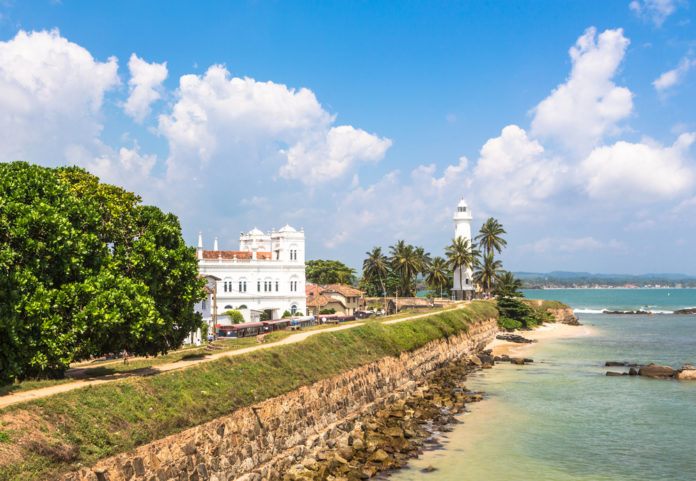



 Gili Trawangan, one of the islands north-west of Lombok, has successfully transformed itself from a backpacker paradise into an upscale tourist destination, spurring neighbouring Gili Air and Gili Meno (the trio makes up the three Gilis) to play catch up in infrastructure development and attract more tourist footfalls.


 Welcome back to Singapore, Adam.
 With your windows rolled down, you’ll be able to experience some of the most spectacular routes in the northern hemisphere. In March and April, the flowers are in full bloom – promising a visual treat no matter where your Avis trip takes you.
 If you thought that Japanese Sakura couldn’t get any more beautiful, think again! In Spring, European cities are tinged with the oriental cherry trees. Take an Avis road trip across France to see cherry blossom growing under the Eiffel Tower, or
  The season is also perfect for discovering Normandy, where the apple trees are in full bloom, and a visit to Claude Monet’s Garden in Giverny will literally have you feeling as though you’ve stepped into a painting.
 The English countryside offers some simply beautiful drives when a car is essential, with wild woods of bluebells and snowdrops, or tour the more formal spring gardens of the
  With so much to see, it’s important that the car rental company offers the best choice and service. With unlimited mileage, Avis 360° offers all-inclusive rental, without excess. Whether you need a car for a few days, a weekend or 2 weeks, you won’t have to worry.
 As a
As a