TTG Asia
Asia/Singapore Monday, 12th January 2026
Page 1727

Destination-Commune merger births new hospitality company

0

alila-villas-uluwatuAlila Villas Uluwatu

TWO Roads Hospitality, the outcome of a merger between Destination Hotels and Commune Hotels & Resorts, was unveiled today featuring a collection of independent, boutique and lifestyle hotels.

Comprising independent names such as Joie de Vivre Hotels, Thompson Hotels, Destination Hotels, tommie and Alila Hotels & Resorts, the new company has a portfolio of over 95 properties in eight countries, and approximately US$2 billion in total property revenues under management.

With its positioning as a hospitality company, Two Roads will go beyond hotels and resorts and highlight its restaurants and bars, vacation residences, golf courses, and spa and wellness offerings.

Jamie Sabatier, former CEO of Destination Hotels, and Niki Leondakis, former CEO of Commune, will lead the newly established entity as CEO of Two Roads Hospitality and CEO of Commune Hotels and Resorts respectively, focusing on the financial, operational and cultural aspects of the new company’s performance.

Sabatier will oversee the company’s operating and financial performance, global development and growth strategy, human resources and technology; while Leondakis will be responsible for hotel property financial performance, sales and marketing, operations including guest experience, food & beverage programming, and interior design strategy, with a focus on elevating the overall portfolio’s lifestyle experiences.

On the merger, Sabatier said: “We have already witnessed the numerous benefits of our merger from an operational and financial standpoint, and we only anticipate continued success ahead.

“Together, we have expanded and strengthened opportunities for our owners, driving profitability while still providing new and distinctive offerings to travellers across our collection of independent hotels, resorts and restaurants.”

Pre merger, Destination and Commune had over 40 years of combined expertise exclusively dedicated to the boutique and lifestyle space, sharing similar philosophies and complementary property locations.

Cruises taking bigger chunks of global MICE revenue

0

cruise-at-sunset

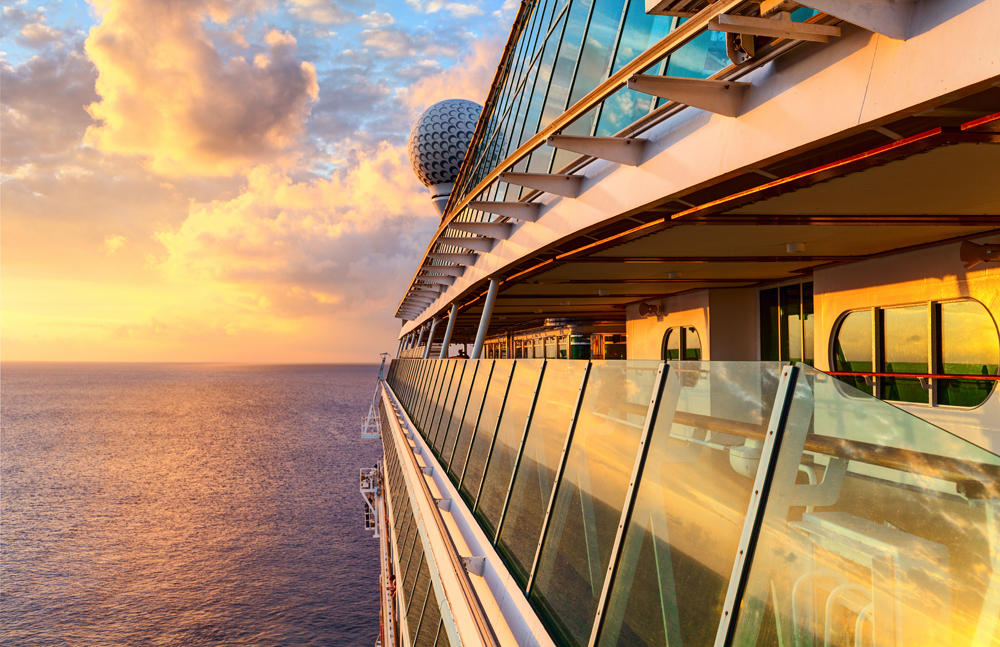
CRUISING is increasingly accounting for a greater proportion of global MICE revenue as cruise lines continually upgrade their offerings to cater to the diverse needs of groups big and small.

Diana Bloss, director of operations at Worldwide Cruise Associates, a specialist in organising cruise products for incentive buyers and meeting planners, said the segment is “very definitely” taking up a larger portion of the MICE pie.

She has seen healthy year-on-year sales growth of “approximately five per cent, keeping in mind it is a contested election year in the US, which always has an effect”.

Affirming Bloss’ observation, Celebrity Cruises associate vice president, corporate incentives & charter sales, Lisa Vogt, said: “MICE has been picking up momentum in recent years and is continually gaining more share of our overall business year-over-year.”

MICE business is also a growth area for Royal Caribbean Cruises, taking up roughly 30 to 40 per cent of total sales in markets like Thailand and Indonesia, according to Sean Treacy, managing director Singapore and South-east Asia.

But it differs from market to market as sailings out of Singapore sees MICE account for a more modest five to 10 per cent of bookings, he added.

Better telecommunications is one essential enhancement that is propping up MICE demand for cruises, Bloss pointed out, especially as Norwegian Cruise Line, Carnival Cruises, Costa Cruises and Royal Caribbean had this year rolled out upgraded Wi-Fi facilities powerful enough for Skype teleconferences.

“Our MICE groups really appreciated it when we introduced our super high-speed internet, called Xcelerate, across our entire fleet,” remarked Vogt.

Another major draw for MICE groups is the all-inclusive nature and flexibility of cruise products, explained Vogt, who sees uptake from across various sectors including pharmaceutical, insurance, franchises and direct selling companies.

“It is growing as a popular choice for incentive travel and corporate meetings and events,” she said.

Bloss concurred: “Our sales are pretty equal between whole ship charters and groups..It depends on (cruises ships’) availability and location.”

Indonesia eyes US meetings after aviation ban lifts

0

garuda-indonesia-2

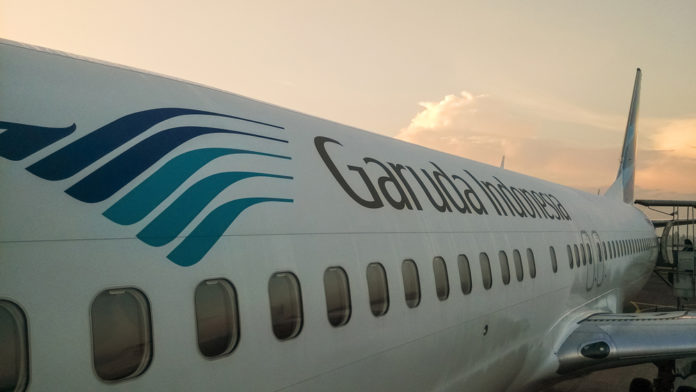
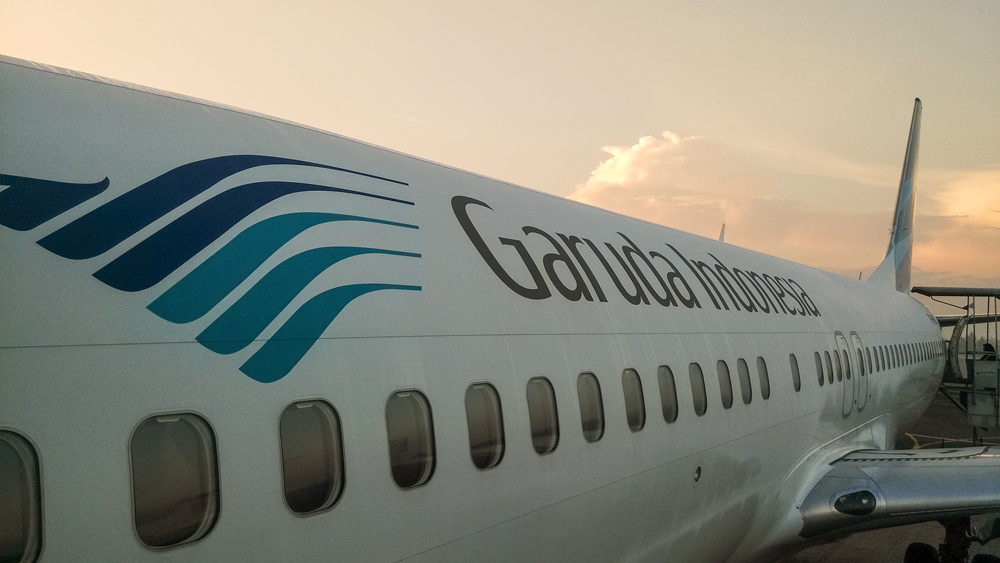
THE lifting of the ban on Indonesia carriers by the US Federal Aviation Administration (FAA) has Garuda Indonesia eager to restart services to the US, and the MICE trade expects this to rekindle interest in Indonesia as an incentive destination.

Following FAA’s upgrade of the country’s aviation status to Category One on August 16, a move that opens the way for Indonesia airlines to initiate flights to the US, Garuda Indonesian has stated its intentions to fly to the US next year.

“The plan to fly to the US is part of Garuda’s business expansion to strengthen its position as a global (airline) player. With the FAA rating upgrade, we are trying to materialise our plan even sooner,” said Benny Butarbutar, vice president corporate communications for Garuda Indonesia.

Benny said the current plan was to operate a wide-body Boeing 777-300ER aircraft via Tokyo Narita for the US service, leveraging the fifth freedom rights enjoyed by Indonesian carriers with Japan.

Based on its projection of 400,000 passengers a year for the US sector, Garuda plans to fly to either Los Angeles or New York. The airline used to operate the Jakarta-Honolulu-Los Angeles route in the early 1990s but the service was terminated during the Asian financial crisis in 1997.

Awaiting the potential new connection is Mario Scozia, executive director A&A Incentives, Meetings & Conferences, US. He said: “With proper time and marketing efforts as well as support to dedicated loyal suppliers such as ourselves, I believe that (Garuda’s planned US flight) will do well and gain a solid share of the business, especially on the Los Angeles-Denpasar route. Bali would be the primary destination.

“We are using other airlines now with connections but losing the in-flight Indonesian experience (without an Indonesian national carrier),” remarked Scozia, adding that Garuda’s flights from the US to Indonesia and Bali in the early 1990s helped the industry to grow its Indonesia business.

Susilowani Daud, president director of PACTO Convex, agreed that having a national carrier with good air connections worldwide would definitely “help in promoting a country” on the global MICE stage, and comes especially vital at a time when security and accessibility are “top considerations” in securing bids.

Garuda’s prospective service to the US next year is also opportune, added Susilowani, as Indonesia will host the World Bank Conference in Bali in 2018 with 15,000 participants expected.

Iqbal Alan Abdullah, chairman of the Indonesia Congress and Convention Association, said: “Incentives from the US are a big market. Indonesia has received some groups from the US-affiliated companies, but improved accessibility will definitely help.”

But he also questioned Garuda’s commitment to its services, as he opined the carrier had in the past abruptly plugged services on routes that did not return quick yields.

“Marketing and preparing for MICE (groups) takes time, and we want to make sure that by the time the group travels the service is still there,” Iqbal said, urging the national carrier to do a thorough assessment of the market before initiating the service.

Meanwhile, Scozia expects Indonesia to start building awareness of the country. “Open a tourism office even if it is staffed by one person, (rather than) a representation company,” he remarked.

Other ways Indonesia could step up promotion includes hosting workshops and inviting incentives planners and their main corporate clients to experience Garuda’s services.

FCM launches new travel management suite

0

FCM Travel Solutions has launched a new product suite providing end-to-end solutions for corporate travel management.

Global general manager for FCM Travel Solutions Marcus Eklund said the new suite, named FCM 360, demonstrates a holistic approach to developing and managing client travel programmes.

“Within FCM 360, we offer a wide range of specialist travel services and technology solutions which drives transformation of our clients’ business travel programmes,” said Eklund.

One product category in the suite is FCM 360 Technology, which provides a range of reporting, analytics, and travel booking tools as well as mobility, expense and travel management solutions.

Another part of the suite, FCM 360 Travel, covers products that caters to requirements from ground transport, contracted hotels and airfares, global fare access, sharing economy options, industry specialist offers and exclusive value-add stays.

Finally, FCM 360 Services includes account and travel management services, dedicated offsite or onsite flexibility, consulting, dedicated industry specialists, premium and VIP services, groups and meeting solutions.

“When combined, FCM 360 offers our clients a complete and customised travel management solution that is available globally to meet the needs of our multinational customers,” said Eklund.

The suite was launched across all 92 countries within the TMC’s global network yesterday.

Thailand embarks on destination wedding love affair

0

thailand-wedding

THE Tourism Authority of Thailand (TAT) is stepping up efforts to tap the destination wedding market.

Last week, TAT and the Ministry of Tourism and Sports invited 80 local agents to a briefing on the opportunities in the wedding market.

The global weddings industry has an estimated value of around US$298 billion, of which foreign country weddings form about US$80 billion.

Thailand is a very popular wedding destination for couples from India and Hong Kong. More than 400 Indian weddings have taken place here with spending per event ranging from 5 million (US$143,597) to 20 million baht, according to Juthaporn Rerngronasa, TAT’s deputy governor for international marketing in Europe, Africa, the Middle East and Americas.

As well, Thailand will be hosting the 4th Annual Destination Wedding Planners Congress 2017 after TAT’s won the bid from QNA International.

Meanwhile, the first Thai Indian Wedding Association (TIWA) was set up last year, further pointing to the growing importance of the market.

Scoot begins Sapporo service from October

0

dreamliner-787

LCC Scoot’s inaugural Hokkaido service will begin this Saturday, October 1, with a thrice-weekly service that transits at Taiwan Taoyuan International Airport.

This marks the first scheduled flight, operated using two-class Boeing 787 Dreamliners, to take place between Singapore and Sapporo.

Flights depart Singapore on Tuesdays, Thursdays and Saturdays at various timings while returns flights depart on the same days but on Wednesdays, Fridays and Sundays on the Taipei-Singapore leg of the journey.

With this, the number flights from Singapore to Japan rises to 23 weekly for the budget carrier, including to other Japanese destinations such as Tokyo and Osaka.

Japan’s luxury hotels losing occupancy to mid-range properties

0

shinagawa-prince-hotelShinagawa Prince Hotel

OCCUPANCY rates for the majority of Tokyo’s top-ranked hotels fell for a sixth consecutive month in July as both domestic and foreign travellers in Japan show increased preference for mid-range accommodation.

Average occupancy fell 3 percentage points in July to 83.2 percent, according to research by The Nikkei. The figure remained above the all-important 80 per cent occupancy level but is expected to continue its fall.

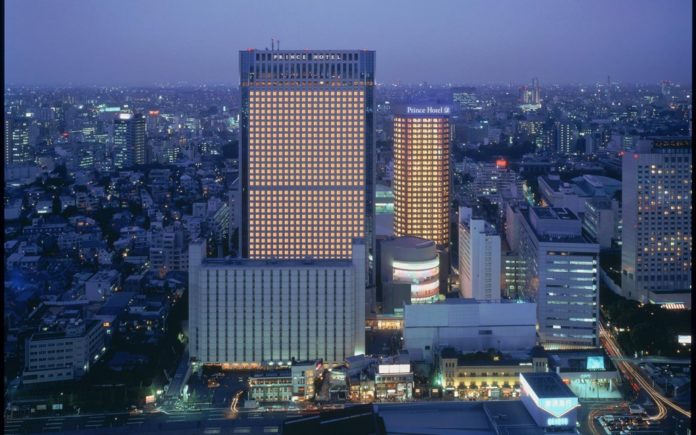
Fifteen of the 18 key hotels in Tokyo experienced lower occupancy rates in July. The Shinagawa Prince Hotel, for example, saw its rate decline 1.7 percentage points, with the fall blamed on a 6 per cent increase in room rates.

More foreign visitors are becoming increasingly cautious about their spending since the yen remains relatively strong, which translates to more modest spending habits.

Meanwhile, Yoko Shukunobe, of the business performance management team at Mystays Hotel Management, which is not a luxury operator, is seeing good performance across the company’s more than 50 properties in Japan.

“Our occupancy rate has been around the 85 per cent level throughout the summer and we have been seeing more demand from overseas visitors,” she said.

“We have seen some of the big hotels increasing their charges and that has perhaps been effective while the yen was weaker and visitors were willing to spend more, but that has changed,” explained Shukunobe.

“For us, we believe it is better to have a higher occupancy than a bigger profit. We will not be raising our prices as we do not believe it is good for our customers.”

Signs are currently pointing to high-end properties reversing their price positions soon, with some hotels already reducing room rates in July in anticipation of increased competition.

Virtual selling power

0

sept30-travel-technology

With virtual reality (VR) technology changing fast and devices like the Oculus Rift and Samsung VR Headset becoming commonplace, it is no wonder that the gaming, entertainment and medical training fields have been revolutionised.

The technology is also poised to transform travel. Many tourism players have begun offering VR as part of their business strategy, incorporating the technology as a regular sales and marketing tool to stir up interest and drive engagement with clients.

In October 2015, Shangri-La Hotels and Resorts was one of the first in the hospitality sector to deploy VR-enabled headsets at its global sales office, and has since expanded the VR availability worldwide and rolled out 360-degree video content for devices.

“Agents tell me that they like VR (as it helps them) get a better sense of the hotel. For example, if a hotel claims to be on the beach, it really helps them understand the reality of what that means, and they can better articulate it to their clients, enabling them to sell more,” said Sam McDiarmid, director of business development, agency sales, Shangri-La Hotels and Resorts.

As well, Tourism Australia has made good use of VR to make sights and sounds more palpable by incorporating the technology in its 2016 campaign. According to the NTO, VR helps as an inspirational tool to nudge potential travellers into making a booking decision.

Travel agencies have also embraced VR, with Flight Centre Singapore being the first in South-east Asia to do so in November 2015. The introduction of VR is part of the TMC’s plan to provide customers with an end-to-end travel experience that begins in-store, explained its marketing manager Liat Peled.

She said: “We are currently utilising VR to educate, excite and inspire customers to travel, sometimes to a destination they may never have considered before. The idea is to bring our customers closer to the decision making and booking stage, while assuring them of the destination.”

More recently, Carlson Rezidor Hotel Group unveiled the first phase of its VR offering in April this year. Besides seeking to build up its content base to cover all the hotel brands under its umbrella, the group also sees great potential in the corporate and MICE segment, for instance, by providing visualisations of a wedding set-up in their ballroom on VR.

Ariel Talbi, Asia-Pacific managing director of VR production company TaKanto Virtual Reality, whose clients include airlines, NTOs and agencies, opines that the tourism sector is seeing a proliferation of VR adopters due to its “natural fit”.

He said: “Travel and tourism have the greatest potential to leverage VR technology as an actual business tool. (For example), VR has introduced a new angle and a unique way to differentiate itself as an advertising platform by offering a sense of ‘presence’ that classic pictures or videos cannot do.”

But investing in VR on a business level is an expensive endeavour, a move that only larger companies can afford for now.

Like other VR adopters, Carlson Rezidor Hotel Group’s Asia-Pacific president, Thorsten Kirschke, hopes to get a “positive ROI” out of the company’s VR initiative, but acknowledges that can only be achieved in the long-term.

“(By using VR), we remain nimble and flexible in our drive to stay ahead of changing guest expectations and capture new audiences to ensure stronger returns for owners and investors,” said Kirschke.

“All signals are strongly indicative that VR is here to stay in the hospitality and travel market.”

This article was first published in TTG Asia September 2016 issue. To read more, please view our digital edition or click here to subscribe.

Chinese leisure, MICE arrivals spike for Faber Peak after two-year promotions

0

the-lookout-faber-peak
View from The Lookout at Faber Peak

FABER Peak Singapore’s move to offer full venue hire for private events have earned it the favour of several leisure and corporate groups from China and along with in-market promotions in China since 2014, the hilltop attraction has seen a 200 per cent hike in Chinese arrivals this year.

Speaking to TTGmice e-Weekly, Jacqueline Low, deputy director, sales & business development with Mount Faber Leisure Group, said: “We have discovered what pleases the Chinese, and it is having bragging rights (acquired from their travels). They like being able to return home and say, hey, we had an entire hill to ourselves.”

“They also enjoy greenery and nice scenery, and we have both in abundance here,” Low added, pointing to the hill’s lush landscape and the cityscape that can be seen from the hilltop.”

At the time of the interview, a Chinese tour group had held a lunch party at Faber Peak’s Spuds & Aprons restaurant, and participants were free to explore the many open spaces for photo opportunities.

As Mount Faber Leisure Group owns and manages a variety of event venues and F&B outlets at Faber Peak and does the same with Singapore Cable Car, event planners are offered “great flexibility when holding events with us” as well as numerous branding opportunities, such as covering cable cars in corporate livery.

“All our spaces can be used and we can support creative ideas. For instance, our cable cars have been used as breakout rooms and for competing teams on a teambuilding challenge to come together and complete a task. The ride back and forth takes 30 minutes, just enough time for such activities,” said Low.

Low’s team has been taking these messages to China as part of Singapore Tourism Board’s destination showcases since 2014, as well as work Faber Peak’s various leisure appeal into a micromovie that was broadcasted on Youku in 2014 and Qunar in 2015. It also held a campaign with Ctrip in end-2015, and is now finalising another with Alitrip.

Low said: “China is a very important arrival market for Singapore, and as one of the key attractions here, we must feature it strongly in our own plans. We are proud to see a 200 per cent increase in Chinese leisure and corporate group arrivals since we started our promotions in China two years ago.”

Marriott-Starwood merger brings greater convenience to agents

0

jw-marriott-hotel-shenzhen-baoan
JW Marriott Hotel Shenzhen Bao’an

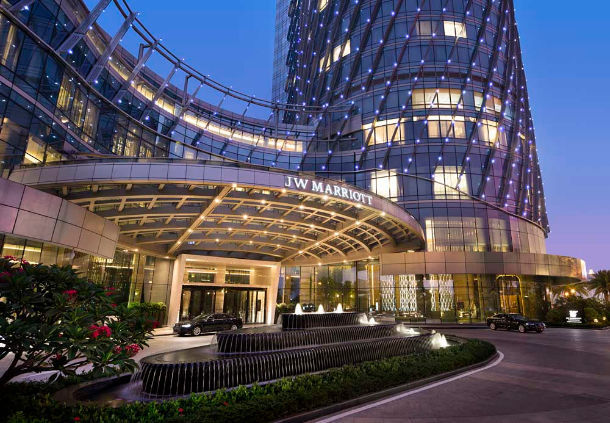
MARRIOTT International completed its US$13 billion acquisition of Starwood Hotels & Resorts last Friday, making it the largest hotel company in the world with 5,700 properties and 1.1 million rooms in more than 110 countries.

The new combined entity now have 30 brands under its umbrella, although only 20 of which currently have presence in Asia.

Regarding bringing the other brands to Asia, Marriott’s CFO for APAC, Ken Rehmann, toldTTG Asia e-Daily: “There are ten brands between the two companies that can be added in Asia and that’s a good opportunity for us. However, we have to look at whether they are appropriate. Even though it may be a good American brand in the US, it may not work well elsewhere. That’s why we don’t have every brand here today.

“Brands like Fairfield by Marriott in Australia are very new to the region and there are only a few properties in Asia. We just signed the deal with Eastern Crown in China so that is huge growth opportunity.”

Still, there are massive growth plans in the pipeline for the already enormous conglomerate, added Marriott’s APAC president and managing director Craig Smith. “We will be able to double the number in the next five years. Having this comprehensive footprint means having the right brand in the right place. It also represents synergies for better sale.”

Expounding on the expansion plans, Rehmann said: “What I have seen is that we can achieve a lot of growth in leisure destinations around Asia. What would be great about the merging of these two brands is being able to cover more destinations.

“We see the focus on leisure destinations. For instance, we have started projects in Vietnam, the Maldives and Philippines. However, the first step is to understand what we have in the pipeline.”

Asking how the consolidation impacts MICE and corporate bookings, Marriott’s chief sales and marketing officer for APAC, Peggy Fang Roe, said: “Everything will stay the same in terms of corporate booking and MICE planners. Over time obviously we will bring contracts and other aspects together, but for now, things will operate no differently. With the merger, we will certainly have more choice and opportunity for more places to stage meetings and events.”

The travel trade in Hong Kong welcomed the move. Westminster Travel CEO Larry Lo said: “The merger means more convenience for us as we now deal with only one company. With a greater volume of traffic, this enhances agents’ negotiation power with more choices. I hope they can refresh the marketing products for agents given this new portfolio.”

Jetour Holdings chairman Ronnie Ho said: “This becomes one big deluxe brand with stronger positioning. It really broadens our offering and image when selling to our clients. Location-wise, it’s better coverage as both Starwood and Marriott complement each other.

“My only concern is whether they will merge the team after consolidation. Then the group will have to brief the trade about the differences amongst those 30 brands.”

Meanwhile, China Travel Services International Science-Technology & Culture Exchange director Ng Hi-on noted that the two hotel groups have different clientele. “It’s not a big surprise to me and I don’t see that there will be any difference after the merger. My key concern is whether the sales teams will be combined or not.”