TTG Asia
Asia/Singapore Friday, 2nd January 2026
Page 1708

Sabre rolls out integrated corporate travel platform

0

Sabre has introduced the Traveler Experience Platform, a suite of its existing business travel products that now combined, provides a “consumer-grade mobile experience”.

The platform combines the online booking capabilities of GetThere for air and hotel, and the itinerary management and messaging features of TripCase. Sabre has also introduced a travel risk management solution to the platform, SafePoint, which helps travellers to check-in with their employer via a GPS location and request assistance if an emergency arises.

Early next year, the Traveler Experience Platform will also offer e-payment solutions via Sabre Virtual Payments to corporations in Asia-Pacific.

Available to travellers through their employer’s travel programme, the platform provides corporations a single mobile application for their travellers and greater flexibility in expense integration.

The solution also ensures corporate policies are automatically adhered to when business travellers book or rebook trips, and expenses are automatically captured and stored with a detailed expense report automatically generated when the trip is complete.

According to The Digital Business Traveler survey published by Sabre Corporation and the GBTA Foundation, 77 per cent of business travellers in some of the largest corporations around the world prefer using self-service technology to manage their travel – but on average use nine different apps to manage their business travel with the most popular apps being airline, hotel, booking, car and restaurant apps.

Iconic Thai parties unlikely to bring in the domestic crowd

0

halfmoon-festival
Halfmoon Festival

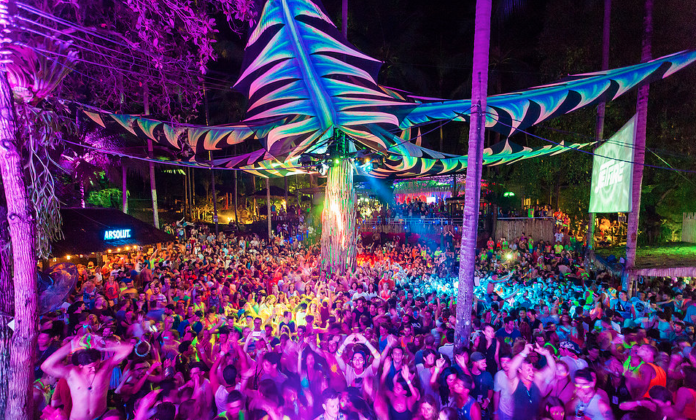
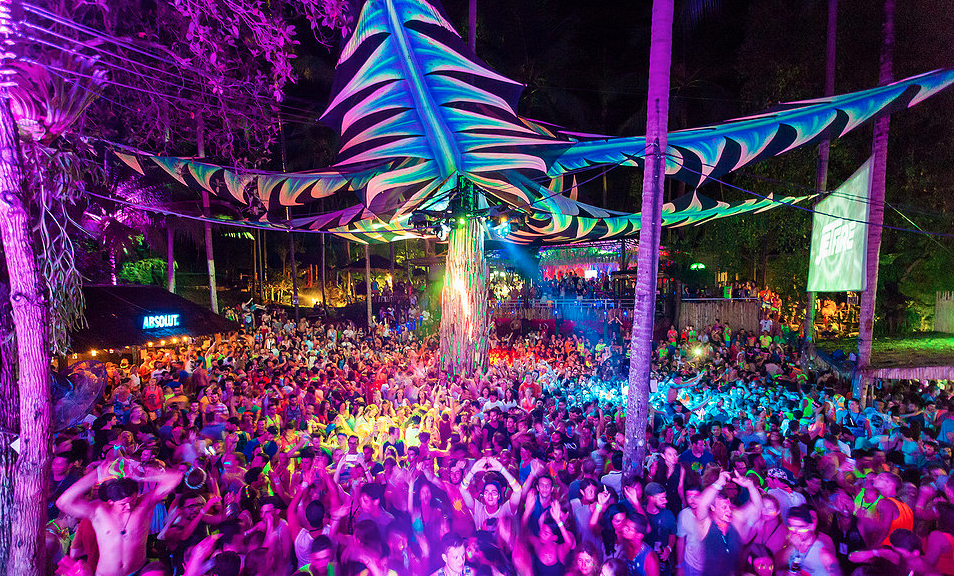
Although Thailand’s Full Moon Party and Halfmoon Festival will return next month, to be held on November 14 and 22 respectively, the atmosphere is unlikely to bounce back in time, according to the president of Phangan Hotels Association (PHA).

Thanyah Phoolsawad said that foreign travellers will still come but domestic tourists, which account for 30 per cent of total visitors to the events, won’t be in a party mood.

Each year, the number of visitors to the Full Moon Party was estimated at around 200,000 and 60,000 for the Halfmoon Festival. That generated tourism income of more than one billion baht (US$28.4 million) yearly for businesses in Koh Phangan.

Pi Pattanasiri, director of Newmoon Phangan Co, which organises the Halfmoon Festival, said tourism operators and local people on Koh Phangan and Koh Samui would lose tourism receipts amounting 80 million baht due to booking cancellations during the 30-day mourning period.

“We want the government to clarify what we can do and what we cannot. They should promote the events overseas. For the Thai market, I think it must take a longer time for it to recover from the sorrow,” said Pi.

Yas Island to get new attraction Clymb in 2018

0

clymb

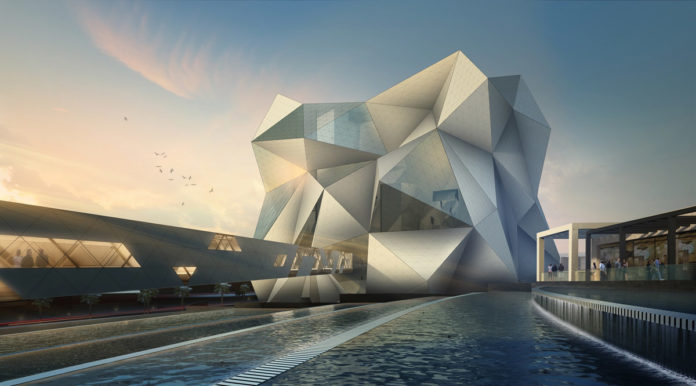
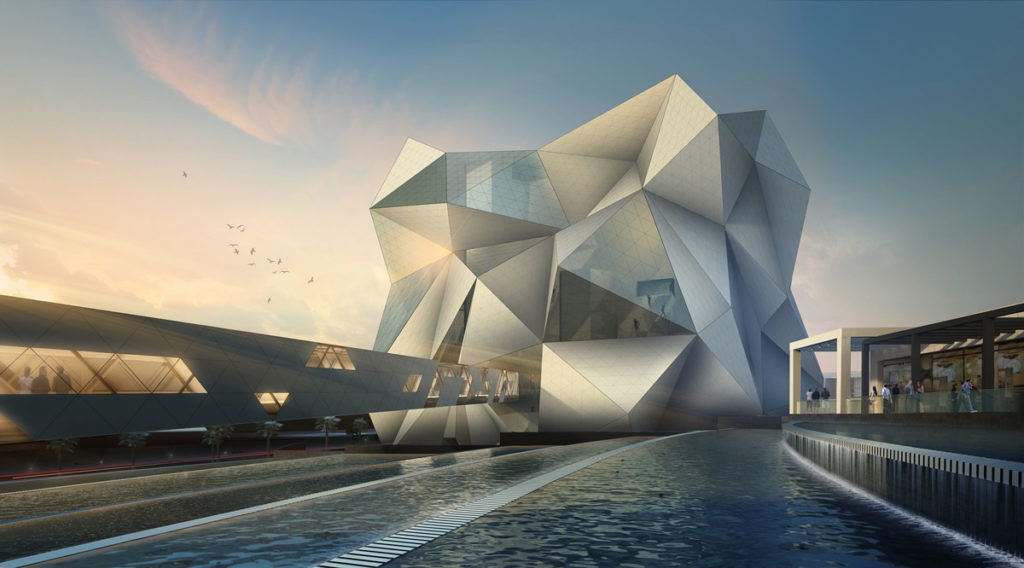
Yas Island, Abu Dhabi, will be home to a new US$100 million attraction, Clymb, developed by asset management company Miral, come 2018.

Clymb will feature the world’s widest flight chamber at 9.75m-wide, and the tallest indoor climbing wall at 43m-high. Guests to the flight chamber will be able to mimic the experience of skydiving while the climbing walls have four different walls of varying difficulty.

Clymb will also feature retailers, F&B outlets as well as an event space, and is linked to the nearby Yas Mall.

Mohammed Abdullah Al Zaabi, CEO of Miral, said: “With the world’s widest flight chamber and tallest indoor climbing wall coming to Abu Dhabi, we will offer visitors the opportunity to enjoy exceptional experiences that combine excitement and adventure together. This (will) contribute to the development of the tourism sector in Abu Dhabi, and the UAE as a whole.”

Construction work has begun since the start of October.

Developer Miral aims to make Yas Island one of the world’s top destinations for families and has its sights set on reaching 48 million arrivals annually by 2022.

Tujia acquires homestay businesses of Ctrip, Qunar

0

tujia-homepage

China’s leading sharing economy provider of private accommodations, Tujia, has acquired the homestay business divisions of Chinese OTA Ctrip and its subsidiary metasearch engine Qunar.

With this, the homestay channels of both Ctrip’s and Qunar’s websites and apps, along with their operation teams and the entire business unit, will be merged into Tujia.

Justin Luo, CEO of Tujia said that the acquisition was executed mainly out of the sustained optimism of all stakeholders towards the market and that the objective is to deliver a better user experience. He adds that this acquisition basically enables Tujia to integrate the short-term rental space in China.

Tujia, known as the Airbnb of China, had also recently purchased Mayi.com in June, a short-term rental platform.

Alongside the acquisition, Luo also made known Tujia’s plans for the next five years – to continue building the private accommodations ecosystem and to better differentiate Tujia’s online and offline businesses.

Cebu Pacific wants new Philippine airport located near Manila

0

cebu-pacific-atr

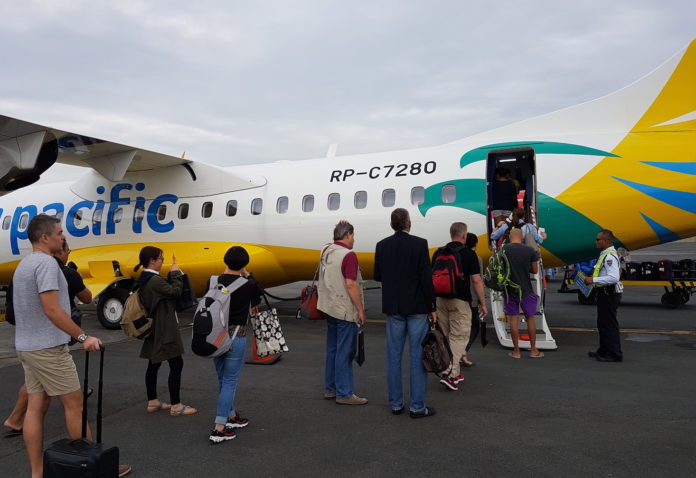
Cebu Pacific (CEB) has voiced its preference for either Sangley Point in Cavite or the Manila Bay area as the location of Manila’s new international airport, which the Philippines authorities are expected to reveal by end-2016.

“We don’t mind where the airport will be located as long as it is near Manila,” said Alexander Lao, CEB’s vice president commercial sales, explaining that Clark in Pampanga, which is also being considered by the government, is too far even if it were linked by train.

The new airport has become imperative as the existing Ninoy Aquino International Airport (NAIA) is at overcapacity and has no space to expand its single runway.

Lao, who is also president of subsidiary Cebgo, said the “capacity constraints in NAIA” is one of the key challenges in expanding CEB’s services. The carrier, Philippine’s largest airline in terms of passengers flown, started its first operations in Guam this year and will continue to study the possibility of flying to Honolulu, he added.

He further revealed plans to open services from Manila to Delhi, Perth and Hokkaido, as well as utilising other airports as hubs besides NAIA.

Cebgo will develop “inter-island services to meet the growing demand for local air travel” using the 16 78-seater ATR 72-600 aircraft, said Lao. For instance, Cebu may be used as a hub to Roxas City in Capiz, Calbayog in Samar, Ormoc in Leyte, Masbate province and Marinduque island.

[SPONSORED POST] Incredible India!

0

Incredible India


There is a ring in the name of India. The sounds of bells, conch shells, religious chanting, put you on a transcendental high. The roar of the tiger, song of the nightingale and dance of the peacock are part of a truly mesmerizing ambience. The humming of industrial activity and futuristic development reveal a buoyant economy. Add to this the call of vibrant and colorful costumes, decorations, festivities, lilting music, folklore renditions, handcrafted artefacts, puppetry, and you have an incredible wonderland that is India.
India covers an area of 32,87,263 sq. km, extending from the snow-covered Himalayan heights to the tropical rain forests of the south. Bounded by the Great Himalayas in the north, it stretches southwards and at the Tropic of Cancer, tapers off into the Indian Ocean between the Bay of Bengal on the east and the Arabian Sea on the west. The total length of coastline of the mainland, Lakshadweep Islands, and the Andaman and Nicobar Islands is 7,516.6 kms.
Its geographical features give it a seasonal quality quite different from what one may have witnessed any where else. In fact the monsoons, or the rainy seasons, summer and winter are on of a kind.
Visit India and feel its symphony in diversity; strike the right cords for a perfect sojourn.
Learn more at incredibleindia.org or email contactus@incredibleindia.org today!

[SPONSORED POST] Malaysia gaining momentum with enticing post meetings offerings

0


Malaysia has now become one of the top choice destinations in Asia-Pacific for event and meeting planners. Besides the state-of-the-art venues and facilities, internationally-renowned accommodations, and world class infrastructures, delegates can also enjoy the many variety of enticing and experiential post meeting offerings that have won the hearts of many corporate groups.


Blessed with tropical climate all year long, the country is full of geographical splendours such as 130 million-year-old rainforests and ecological wonderland, blissful tropical islands as well as several UNESCO World Heritage sites.


Kuala Lumpur, the nexus of Malaysia offers unique venues for a truly memorable gastronomical experience, engross yourself in the scrumptious local cuisines while savouring the electrifying urban ambience. Popular as a shopping haven, the city boasts three of the top ten largest shopping malls in the world.


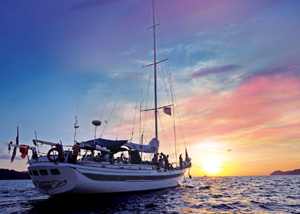
Moving further north, Langkawi offers plenty of exciting activities suitable for small to large incentive groups. From cable cars to hiking trails, enjoy BBQ dining on sunset cruise or embark on an island-hopping adventure amidst its archipelago of 99 islands.


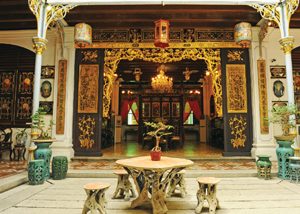
Next to Langkawi, Penang prides itself as a UNESCO World Heritage site, as well as a gourmand heaven. Experience the splendour of Penang’s preserved heritage buildings and architecture as you dine from sumptuous food to mouth-watering street food of Penang.


West Malaysia, also known as Borneo, is made up of two states, Sabah and Sarawak. Sabah offers incentive groups bountiful natural diversity, unique cultures, adventurous activities, beautiful beaches and delectable cuisine. From the world-renowned Danum Valley Conservation Area – Sabah’s largest wildlife reserve, to memorable diving experience in Mabul – reputable for the best ‘muck’ diving, Sabah offers excitement in abundance for adventurous groups.


Rich in history and heritage, experience Sarawak via a journey of relentless natural discovery. Visit the Sarawak Cultural Village to watch a 45-minutes cultural performance that offers incentive groups in-depth knowledge of Sarawak. The land of Hornbills is famed for its national parks such as Bako Park and Gunung Gading Lundu, offering business groups the chance to explore the wilderness. Sarawak is also well-known for unique offsite venues such as Semadang, the perfect spot for groups to enjoy kayaking.


Uncover more about Malaysia at www.likeneverbefore.my


Plan your next business events here,


For enquiries, please contact:


Malaysia Convention & Exhibition Bureau


T: +603 2034 2090


F: +603 2034 2091


E: sales@myceb.com.my


www.myceb.com.my

Google’s travel push forces change in online space

0

eric_zimmerman_online
 Eric Zimmerman, director for Google Travel

As Google expands its ever-increasing suite of travel products, the prospects of the Internet giant encroaching deeper into the online travel space has become a growing area of concern for industry players.

Google already boasts a bevy of travel products including metasearch tools Google Flights and Google Hotels, and most recently launched itinerary planning app Google Trips. It is now rolling out Google Assistant on Allo, its own chat app, and on its Google Pixel smartphones released earlier this week.

Observers think that the rising travel ambitions of Google will put it in direct competition with metasearch engines, which will be forced to transform in order to survive. OTAs, on the other hand, having spent billions of advertising dollars annually with Google and sell travel products, are less likely to have their positions jeopardised.

When asked what the near future holds for travel metasearchers during the WIT 2016 roundtable earlier this week, HotelsCombined CEO Hichame Assi said he would be watching Google closely to decide the next course of action while Qunar co-founder Fritz Demopoulos said he expects more vertical integration to happen until OTAs and metas become indistinguishable from each other.

This echoes the findings from a recent Amadeus-commissioned study by the London School of Economics and Political Science that cites this as the nascent beginning of the “mega meta-OTAs”.

These entities will come into existence as they are allowed greater negotiating power in relation with suppliers even as Google gains greater foothold in the industry.

Already, most major metasearchers are owned by OTA conglomerates such as Kayak under The Priceline Group, Qunar under Ctrip and Trivago under Expedia.

Holger Taubmann, senior vice president distribution at Amadeus, is expecting “rapid and large-scale changes” to take place in the mega meta-OTA scene, as the consumer expectations of a younger tech-savvy generation spill over into the travel distribution space.

This doesn’t mean Google is overtaking the entire travel booking chain. Guillaume de Marcillac, co-CEO of Fastbooking, which provides hotel channel management solutions, is convinced Google will come out a winner but will not become an OTA.

“What Google doesn’t have is the ability to source for suppliers in a highly fragmented market such as with independent hotels, which accounts for two-thirds of all hotel rooms,” he said. “What they love is to work with big OTA partners to simplify the connectivity.”

Fastbooking, which uses Google as one of its distribution partners, is seeing growth of Google Flights and Hotels “exploding” in the past 18 months, added Marcillac. “I can confirm Google is the fastest growing, but they also start from a lower base. Internationally, the biggest metasearcher for hotels in terms of absolute volume is still TripAdvisor.”

Google is currently in full product innovation mode, said Eric Zimmerman, director for Google Travel, during a Q&A session at WIT. He points to artificial intelligence technologies as trends that travel industry stakeholders should keep watch on and that will become a reality in a significant way in the near future.

Speaking to TTG Asia on the sidelines of ITB Asia, Jenn Villalobos, head of travel & hospitality Asia-Pacific at Google, states that it is not Google’s plan to become an online booking portal but a travel search player aimed at “levelling the playing field”.

Zimmerman also assuages worries brought up by OTAs, adding that Google is “very focused on a wide gamut of travel problems (but) we don’t want to be in the OTA business. There are many great OTAs and suppliers out there and we are not the right entity (to do that)”.

He reiterated that Google is only interested in the experience of consumers and will not bother about the backend of travel, the only caveat being “it’s very hard to predict the future”.


ASEAN@50 partners reveal golden jubilee gameplan

0

darren_ngttg_006_cmykonline
Managing director of TTG Travel Trade Publishing, Darren Ng

With just months to ASEAN’s 50th founding anniversary in 2017, the 10 member states have joined hands to promote South-east Asia as a single yet diverse destination with a year-long campaign to commemorate the bloc’s golden jubilee.

Set to be officially launched at the upcoming ASEAN Tourism Forum in Singapore in January 2017, the Visit ASEAN@50 campaign aims to raise awareness through ASEAN brand building and drive travel multi-destination bookings in South-east Asia and boost tourist arrivals to 121 million and tourism receipts to US$83 billion by end-2017.

Strategic partners including TTG Travel Trade Publishing, AirAsia, Mastercard, Go ASEAN, ASEANTA, and the ASEAN Centres in China, Japan and South Korea have come on board to support the campaign with their own initiatives.

For example, TTG Travel Trade Publishing on its part is backing the campaign through ASEAN 50th Anniversary special editions to inspire and promote tourism business in the region, said managing director Darren Ng.

AirAsia’s head of commercial, Spencer Lee, commented: “We will aggressively promote the ASEAN Pass next year and will come out with special promotions and a livery to promote the campaign.”

Muhamad Daud, culture and tourism unit head at ASEAN-Korea Centre, said the centre will promote ASEAN at the Busan International Tourism Fair next year and introduce digital promotions.

Meanwhile, Go ASEAN, a multi-award winning content provider, will produce promotional videos including a new show showcasing the hidden gems of South-east Asia, to be launched in January 2017, said Zefny Idris, vice president, brand at Go ASEAN.

Thailand’s crowded DMC scene no cause for worry

0

antoine_noens_cmykonline
Managing director of Easy Tours Belgium, Antoine Noens

The constant addition of new players entering into Thailand’s established DMC scene has many questioning if the market is facing saturation, but players in the field are contending that the pie is growing bigger – and has a slice for everyone.

A newcomer is HG Travel Thailand, launched this April as a joint venture led by managing director Andre van der Marck. Thailand forms part of HG Travel’s wider expansion strategy into the region, adding to the Hanoi-based DMC’s presence in Vietnam, Laos, Cambodia and Myanmar.

Van der Marck sees a gap still in the small- to medium-sized grounds for bespoke operators like HG Travel Thailand, whose focus on the high-end, tailor-made sector will put it in a better position to customise “complicated itineraries spanning two to three weeks for demanding customers” than counterparts going after the mass market.

“Established DMCs in Thailand are either the small mom-and-pop variety or the big boys on the other spectrum,” said van der Marck. “We are not going up against the big boys like Diethelm or Destination Asia; we don’t want to fight against Goliath.”

Exo Travel group managing director Hamish Keith perceives it as a “very normal” development for operators that have been successful in neighbouring countries to set up in Thailand, owing to growing interconnectedness and cross-border travel in the region.

“Moreover, a client expects consistent service and usually prefers to deal with one DMC for each file rather than handle several relationships. This leads to more regional DMCs or satellite operations, which of course increases competition and can lead to some saturation in the marketplace,” said Keith.

Noting that competition is inevitable with a more crowded marketplace, Destination Asia (Thailand)’s managing director Pornthip Hirunkate also thinks that new DMCs will keep the incumbents “on their toes” and push them to “think out of the box and engage clients at even more creative levels”.

Keith agreed: “We believe that good operators who develop interesting products and are ready to invest in resources to promote the destination will help attract additional interest and attention to the region, which in turn helps to increase the size of the cake and ultimately benefits everyone, especially the destination.”

While new DMCs in South-east Asia have come knocking on the doors of Easy Tours Belgium with the lure of lower fees, managing director Antoine Noens argues that it’s not a simple price proposition when it comes to partnerships. “We don’t often change DMCs. Good times, bad times, we don’t change DMCs just for five dollars less,” he commented.

But if new players are able to “bring something new to the market” and “add value to relationships”, Karen Sales, senior event producer at Xyhyr Brand Experiences Australia, would consider switching partners in markets where existing ones have become complacent and lack product ingenuity.

It seems like the trade generally thinks the Thai DMC playing field is wide enough to accommodate newcomers.

“Arrivals are always rising in Thailand, with over 20 million real visitors each year. There is still room for niche players (like us),” van der Marck stated.

“Thailand is a stepping stone for anyone visiting South-east Asia, especially for emerging markets like Poland which is starting to explore this region. (More DMCs in Thailand) will (benefit) both buyers and sellers alike,” said Noens.

On the contrary, he suggests that Indochina is seeing a saturated DMC sector as emerging destinations like Laos and Cambodia do not have (sufficient) visitor volume yet to justify an expanding pool of DMC players.