CLIA will hold a river cruise conference in Asia for the first time next year.
The inaugural event in Asia will take place in Ho Chi Minh City on April 10, 2018, followed by a sailing on the Mekong River for travel agents on April 12.
Ho Chi Minh City
The announcement was made at the CLIA Conference. Further details will be announced when registration opens this summer.
CLIA member travel agents will be able to take advantage of a trade fair and conference sessions, which will focus on identifying potential river cruise customers and learning more about the wide variety of experiences offered on a river cruise holiday, and particularly around the cruise holiday choices in Asia.
In a move that parallels Lufthansa’s surcharge levy introduced in 2015, British Airways and Iberia will soon impose a fee of eight pounds (US$10) on bookings made through GDSs.
The surcharge will be effective from November 1 this year, covering fares across all cabins and classes, announced both airlines – owned by International Airline Group (IAG) – in a letter to the UK agents.
The fee is expected to recover “the additional costs applied” on existing distribution channels, namely GDSs like Amadeus, Travelport and Sabre.
Bookings made through channels such as the airlines’ websites, sales offices and call offices, as well as NDC channels, NDC via an IT service provider/aggregator or self-booking tools connected to both carriers via NDC, will be exempted from the booking fee.
Finnair, the flag carrier for Finland, has joined PATA as its aviation member, the first Nordic airline to do so in recent years.
“Finnair’s growth strategy is strongly linked to the Asia & Pacific region. Serving 18 Asian destinations non-stop from Helsinki… it is a natural step for us to join this leading association,” said Juha Jarvinen, the airline’s chief commercial officer and executive board member.
“We want to further develop our business and intensify the ties (with) important local tourism authorities, associations and regional/local companies,” he added.
As a PATA member, Finnair will have access to the organisation’s extensive network and in-depth research and insights provided by the PATA Strategic Intelligence Centre, according to PATA CEO Mario Hardy.
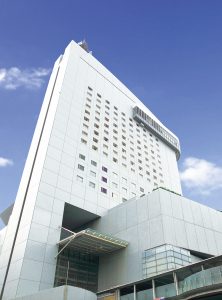
A homely feel, roomy interiors and dazzling views of Kuala Lumpur’s downtown are what it takes for this new serviced residence to put a smile on S Puvaneswary‘s face
Location
The Face Suites is located on prime land in the Golden Triangle, considered the heart of Kuala Lumpur’s CBD. It is within walking distance to the Bukit Nanas monorail station, Quill City Mall and KL Life Centre, a contemporary dining and entertainment hub. Nearby attractions include Petronas Twin Towers, Aquaria KLCC, KL Tower and Pavilion Kuala Lumpur.
Room
I immediately felt very welcome when I stepped into the living room of my one-bedroom suite and saw a plate of Christmas cookies laid out for me – my stay coincided with the Christmas season. Next to it was a welcome letter from the general manager, Sunny Tan.
The place was homely, with potted plants in the living room and TV area, as well as an assortment of books on the living room shelf and private study room. At 100m2, the suite was certainly expansive by city standards.
The living room space also included a full-sized refrigerator, a washing machine with dryer facilities, and a modern kitchenette equipped with a kitchen hood and microwave oven.
I loved that the work area was separated from the living space by a sliding door. For those wanting to work, the TV was located at the far end of the living room, well away from the work desk.
I noticed that all the different spaces of my suite had individually controlled air-conditioning, which is both practical and economical.
Facilities
The rooftop on level 51 offered a spectacular panoramic view of the city. Solely for recreation and dining purposes, level 51 also had a fully equipped gym, a reading room and best of all, a large, open air infinity pool, which also happens to be heated. It was an especially nice feeling to swim at night against a backdrop of a million lights shimmering from the high-rise buildings all around.
The semi-fine dining restaurant offering Western fusion dishes, Tangerine, and the Deepblue Bar, both located on the rooftop, will open soon.
Service
The staff were helpful, friendly and took care of my every need.
Verdict
I had a great experience staying in such a fantastic location in the city.
Barely a month after Thomas Cook India announced its purchase of Kuoni Global Travel Services’ DMC network in Asia, Australia, the Middle East, Africa and the Americas, JTB Corporation today announced its acquisition of all shares of Kuoni Global Travel Services for an undisclosed price.
The Kuoni Global Travel Services acquisition is a move to bolster JTB Corporation’s ambitions to become a top global DMC, as the partnership is expected to strengthen the inbound business services and increase the market share in Europe.
It will also support the expansion and strengthening of the global MICE services in Europe and the US markets, which is complementary to existing JTB MICE business, the company said in a statement.
Thomas Cook’s acquisition does not include Kuoni Destination Management Europe and Kuoni Destination Management US, which remain in the portfolio of Kuoni Global Travel Services.
Reto Wilhelm, CEO of Kuoni Global Travel Services, said: “JTB is one of the biggest and most respected market players in our industry. Joining JTB provides our company with the best positioned owner, which will help us realise the full potential of Kuoni Global Travel Services.”
Eijiro Yamakita, president & CEO of the European regional headquarters of JTB, said: “Kuoni Global Travel Services is one of the world’s leading travel companies with an important presence especially in Asian leisure and corporate groups visiting Europe. The acquisition offers an excellent opportunity to be a unique operator by gathering the network and knowledge. It enables the provision of detailed services to meet each customer’s needs with high added-value and the expansion of the inbound business.”
In the past few years, JTB has been expanding the inbound travel business to Europe, a major destination for travellers. By 2020, it is forecasted that foreign visitors to Europe will reach approximately 620 million (a 150 million increase from 2010), driven especially by China and Asian markets.
In addition to the Japan market, JTB has enhanced the outbound travel business from growing markets. In February, JTB also bought a 40 per cent share of Panorama Tours Indonesia to grow its Indonesian outbound business and inbound business into Japan.
The acquisition is subject to approval by the relevant competition a1uthorities and compliance with any other local legal requirements.
Kuoni Global Travel Services in a statement says it will continue efforts to be a neutral land operator to work with many companies other than JTB, paying full attention on the protection of any sensitive information.
Beginning June 1, Malaysia’s Ministry of Tourism and Culture will introduce a new hotel classification and rating system, which trade players generally believe is fairer and more representative than the existing star-rating system.
The new classification houses categories of city hotels, highland hotels, island/beach/lake/river resorts, innovative hotels and boutique hotels. Further details of the new rating system are not available at press time.
Brinchang town, Cameron Highlands
Shaharuddin M Saaid, executive director, Malaysian Association of Hotel Owners, who was on the committee to review the classification criteria, said the old rating system – in basing its requirements on city hotels – put island and hill resorts at a disadvantage.
Citing examples, Shaharuddin said: “Based on the old system, a hotel needed an executive floor and lounge to be rated five stars. This was alright for a city hotel which received business travellers, but not necessarily for island and hill resorts where guests were holidaymakers.”
Hotels also needed to have a swimming pool to be rated four stars and up, although the criteria was not as important in beachfront hotels or hill resorts, he added.
The Frangipani Langkawi Resort & Spa’s managing director, Anthony Wong, said: “In the past, hotels must have two restaurants to be classified as a four-star property. We only had one and were classified as three-star under the local rating, although TripAdvisor and travel agents rated us as a four-star.
“We didn’t see a need to have more than one restaurant as there were many restaurants outside our hotel, giving visitors plenty of choices.”
Ganneesh Ramaa, manager at Luxury Tours Malaysia, similarly opined that the new classification will provide a more accurate picture to agents and partners.
“Based on the old system, Cameron Highlands only has two properties that fit the five-star category, when (in reality) there are many more hotels that provide the services of a five-star. The old system of one-shoe-fits-all simply cannot be applied.”
Having recently acquired India-based Track Holidays for over RM1 million (US$234,239) with share swaps, Malaysia-based online travel portal Travee.travel is seeking expansion through more M&A moves in the coming months.
Ankur Jakhwal, co-founder & group CEO of Travee.travel, said: “(Buying Track Holidays) is a strategic acquisition, as it gives us strong base in India to further grow Indian outbound business to other Asian markets, particularly to Malaysia, Thailand, Indonesia, Singapore and upcoming markets like Japan and South Korea.”
Track Holidays has over 40 staff across five Indian cities (Delhi, Kolkatta, Bangalore, Hyderabad & Kochi) offering B2B services in ticketing, inbound and outbound holiday packages, and MICE business, among others. It represents airlines such as AirAsia, Air Arabia and Druk Airways and is the channel partner for Expedia B2B in India.
By end-2017, Travee.travel hopes to also have a physical presence in Indonesia, the Philippines, Singapore and Nepal. “We plan to achieve this mostly through mergers and acquisitions. We will be creating a lot of ‘noise’ in the market in the coming months,” Ankur said.
Headquartered in Kuala Lumpur, Travee.travel is a travel management and travel technology company established in 2012 by Pardip Kumar Kukreja.
The average spend of Chinese shoppers, at 330 euros (US$360), may just be half of that of the Middle Easterners (600 euros), but the former’s prolific numbers and sheer growth certainly makes both markets, in addition to Russia, key ones for Value Retail, the creator and operator of Chic Outlet Shopping Villages in Europe and China.
The Chinese market, in fact, has been nothing short of “fantastic”, registering double-digit growth in gross sales each year, according to Desirée Bollier, chair, Value Retail Management, who spoke to TTG Asia on the sidelines of the recent WTTC Global Summit in Bangkok.
“(Growth for) England and Italy are skyrocketing, while others are seeing good double-digit growth,” she remarked. England is always “a success” with Chinese consumers while in Italy, a relatively new destination for this market, growth has soared to “triple digits”.
Bollier: Italy saw triple-digit growth from the market
Value Retail has no intention to open new Villages in Europe but will expand and upgrade its current nine outlets in the continent. “We change 25 per cent of our retail space each year to give customers reasons to come back,” said Bollier.
The flagship Bicester Village in the UK last year welcomed its own train station, with direct services from London, and will soon see 30 additional boutiques, while Fidenza Village, just outside Milan, recently underwent a 30 million euros expansion.
But opportunities to tap the lucrative Chinese market doesn’t lie just on European shores.
Within China, Suzhou Village – its first outside Europe and launched in 2014 – is undergoing a second phase of expansion, as part of a government-sponsored masterplan that also features luxury hotels and resorts including a Banyan Tree, a film studio themed park by the Huayi Brothers, among other facilities.
Shanghai Village opened its doors in May 2016, and now a third location in China is expected to be confirmed within this year, according to Bollier.
Value Retail also has many partnerships inked with Chinese companies, including Air China, China Eastern Airlines, Ctrip and UnionPay, to offer exclusive privileges for its Chinese clients.
The combined presence in Europe and China helps to reinforce the awareness of Chic Outlet among Chinese consumers. “The Chinese discover us in Shanghai and Suzhou and then visit us in Europe or vice versa – there’s cross fertilisation.”
While one tier of Chinese shoppers is relatively immature in expenditure and seeks just traditional luxury brands to satisfy cravings, Bollier notes on the other hand the rise of the sophisticated set who has been to Europe several times and looks towards novel experiences and undiscovered brands.
“The Chinese learn and adapt very fast, and are disruptors in many ways,” she observed, citing key opinion leaders that the company engages as marketing ambassadors – “basically rainmakers” who can influence the Chinese masses.
And even as FITs increasingly make up a bigger share of its Chinese market than tour groups, Value Retail still sees the importance of travel agents by dangling benefits such as private sales and gift vouchers for them.
“Seeing the need for education (among agents and operators on Chic Outlet), we have 70 tourism officers educating agents and working closely with NTOs for promotion,” Bollier said.
Hit by a spell of uncertainty following recent events, the Philippine Department of Tourism (DoT) has signed an agreement with the Federal Agency of Tourism of Russia outlining intentions to monitor situations and exchange information relating to the safety of tourists, among other goals.
The Joint Action Program of Tourism Cooperation, one of nine bilateral agreements inked by the two countries, is aimed at spurring tourism exchange on education and training, in addition to information and expertise.
Tulfo-Teo at the signing in Moscow (photo credit: DoT)
The agreement is a follow through of the two countries’ first agreement signed 11 years ago also in Moscow, and is likewise expected to expand tourist flows between the Philippines and Russia with both parties agreeing to assist each other in establishing contacts between their respective NTOs.
DoT secretary Wanda Tulfo-Teo further disclosed that the Russian government is exploring the possibility of organising a Russian language training programme for Filipino tourism industry workers.
Teo commented: “The Russians are coming though – they are very particular about safety and security in any prospective destination. The agreement signifies Moscow’s confidence in the Philippine government’s capability to resolve peace and order issues.”
She noted that Russia is among the destination’s “high growth markets” posting 9,152 arrivals in January-February period this year, a 29.2 per cent increase from last year.
The proprietor of a Russian travel and tour agency VAND International, Svetlana Muromskaya, observed that the country has a growing Russian clientele. “Fifty per cent of Russians who go to the Philippines become repeat clients. They come back after a year or two.”
Thai Airways International (THAI) revealed the decision by its board of directors to not increase capital in Nok Air, which lacks liquidity and requires additional funding to continue operations.
Although this would imply a reduction of THAI’s equity, the board came to the decision based on suitability and value considerations as well as the ongoing nature of the LCC’s transformation.
THAI will continue to contribute as a shareholder and support Nok Air’s recovery. A THAI representative who is a member of Nok Air’s board of directors has been assigned to oversee and assist Nok Air through to completion of its transformation plan.