With new technology proliferating and business traveller needs and expectations evolving, travel managers are struggling to manage complex, multi-layered travel programmes. According to new research from the Association of Corporate Travel Executives (ACTE), underwritten by HRS, travel managers recognize this challenge and understand that simplifying their programmes could yield benefits—but simplification initiatives face competing priorities.
The new study, Simplifying Managed Travel, finds that traveller safety trumps the agenda: Most buyers (94 per cent) say duty of care is a key priority; 82 per cent say it is their top priority. With 72 per cent rating it is a key priority for their managed travel program, simplification follows behind cost reduction (88 per cent), data security (84 per cent) and improving traveller satisfaction (75 per cent).
However, travel managers recognize that simplification initiatives can support their other strategic priorities. For example, 47 per cent of travel managers say that simplification will improve duty of care, and 39 per cent believe it will reduce the overall cost of their travel policy.
Travel Managers Struggle to Translate Priority into Action
Despite recognizing the importance of simplification, travel managers see a gap between intention and execution. Reflecting the strategic importance placed on traveller safety, duty of care is the travel buyer’s top priority for simplification: A majority (83 per cent) say duty of care requires immediate action (62 per cent). Data security appears second on buyers’ list of simplification targets.
Disconnects between buyers’ simplification priorities and their actual behaviour, however, indicate barriers to pursuing strategic goals. The execution gaps for duty of care and data security are large relative to other priorities, with more than one-in-five buyers saying they are not currently translating their traveller safety (23 per cent) and data security (24 per cent) concerns into action.
Suppliers and Internal Stakeholders Must Become Partners in Simplification
Today’s complex travel programmes encompass multiple partners and stakeholders—internally and externally. To be effective, simplification initiatives often require support from these parties. While nearly one-in-five buyers do not get support from peers in other departments, most report that internal stakeholders are on board with simplification initiatives:
Procurement is most often regarded as a partner in simplification (57 per cent);
Internal risk/security and communications staff follow (40 per cent);
IT support (36 per cent) and human resources (28 per cent) lag other departments.
Third parties can supply relevant tools and expertise, providing support to travel buyers’ simplification initiatives. Buyers welcome this assistance: More than half of buyers not currently receiving help from travel providers say they want it. Internally and externally, the data suggests that the travel buyers who say simplification is a top strategic priority are better at collaborating to reach their simplification goals.
“The value travel management provides to a company is increasingly measured in optimised processes and cross-department collaboration,” explained HRS CEO Tobias Ragge. “The study shows this close collaboration is vital and that leading companies build on their internal stakeholder network, but they also rely on the data, advice and support of external partners to reach their strategic goals.”
Driving Effective Simplification
Simplification is a key route for travel managers to achieve their business objectives. However, facing the hurdles of limited resources and differing levels of support from internal and external stakeholders, buyers must ramp up communication with suppliers, other departments within the organization and with the travellers themselves.
With new technology proliferating and business traveller needs and expectations evolving, travel managers are struggling to manage complex, multi-layered travel programmes. According to new research from the Association of Corporate Travel Executives (ACTE), underwritten by HRS, travel managers recognize this challenge and understand that simplifying their programmes could yield benefits—but simplification initiatives face competing priorities.
The new study, Simplifying Managed Travel, finds that traveller safety trumps the agenda: Most buyers (94 per cent) say duty of care is a key priority; 82 per cent say it is their top priority. With 72 per cent rating it is a key priority for their managed travel program, simplification follows behind cost reduction (88 per cent), data security (84 per cent) and improving traveller satisfaction (75 per cent).
However, travel managers recognize that simplification initiatives can support their other strategic priorities. For example, 47 per cent of travel managers say that simplification will improve duty of care, and 39 per cent believe it will reduce the overall cost of their travel policy.
Travel Managers Struggle to Translate Priority into Action
Despite recognizing the importance of simplification, travel managers see a gap between intention and execution. Reflecting the strategic importance placed on traveller safety, duty of care is the travel buyer’s top priority for simplification: A majority (83 per cent) say duty of care requires immediate action (62 per cent). Data security appears second on buyers’ list of simplification targets.
Disconnects between buyers’ simplification priorities and their actual behaviour, however, indicate barriers to pursuing strategic goals. The execution gaps for duty of care and data security are large relative to other priorities, with more than one-in-five buyers saying they are not currently translating their traveller safety (23 per cent) and data security (24 per cent) concerns into action.
Suppliers and Internal Stakeholders Must Become Partners in Simplification
Today’s complex travel programmes encompass multiple partners and stakeholders—internally and externally. To be effective, simplification initiatives often require support from these parties. While nearly one-in-five buyers do not get support from peers in other departments, most report that internal stakeholders are on board with simplification initiatives:
Procurement is most often regarded as a partner in simplification (57 per cent);
Internal risk/security and communications staff follow (40 per cent);
IT support (36 per cent) and human resources (28 per cent) lag other departments.
Third parties can supply relevant tools and expertise, providing support to travel buyers’ simplification initiatives. Buyers welcome this assistance: More than half of buyers not currently receiving help from travel providers say they want it. Internally and externally, the data suggests that the travel buyers who say simplification is a top strategic priority are better at collaborating to reach their simplification goals.
“The value travel management provides to a company is increasingly measured in optimised processes and cross-department collaboration,” explained HRS CEO Tobias Ragge. “The study shows this close collaboration is vital and that leading companies build on their internal stakeholder network, but they also rely on the data, advice and support of external partners to reach their strategic goals.”
Driving Effective Simplification
Simplification is a key route for travel managers to achieve their business objectives. However, facing the hurdles of limited resources and differing levels of support from internal and external stakeholders, buyers must ramp up communication with suppliers, other departments within the organization and with the travellers themselves.
How is a single shareholding of the Capella Hotel Group by the Kwee family members an enabler to move the Capella, Solis and Auriga Spa brands forward?
What it allows for is a single view of how the brands should be positioned. We control the destiny whereas before, it was more collaborative, which is fine too, but with a single shareholding, decision-making can be quicker and more nimble.
And with our HQ being based here (Singapore), we can have an Asia-first viewpoint, which of course does not mean we exclude the rest of the world. It means we are operating from a place in the world that is most attractive for hotel development and operation.
Nicholas Clayton
There is no doubt that certain parts of the world, say Europe, are in some degree of saturation, and the barrier to new development is high. In Asia, in contrast, new destinations are being created. This is distinctively Asia – look at Indonesia, China, India, Sri Lanka; or Laos, Cambodia, Myanmar which are almost untouched by mainstream hotel business, and therefore offer years of opportunities for new hotels.
Asia is where we feel the hotel business can be profitable.
The Capella brand has Horst Schulze’s fingerprints all over it. But he’s no longer in control. Will that affect owners’ view of the brand?
No, it’s very helpful that he remains part of our strategy (as chairman emeritus). We have not seen evidence at all, that anyone is taking the view we’re less than worthy, because of the change. He’s available, is a tremendous supporter of ours; he would want to see this company successful, it’s a legacy issue for him, one would assume.
Schulze launched the Capella brand more than 10 years ago. How has it evolved and what would you like to do?
The essence of the brand remains relevant. Its hotels are of the smaller size, 120 keys, 150 keys – the point is to have a manageable number of guestrooms that allows us to curate the customer stay.
Although we do operate in urban centres and we do handle corporate business, our real focus is on luxury leisure travellers – individuals, couples, families – people who are going on holiday, so it’s their funds they are using and their expectations are higher. If I go on a holiday, I want it to be a ‘wow’; if I am on business, it’s more functional.
What we want to do is to enhance is the innovation around wellness and F&B, because these areas complement the accommodation experience for our guests. A room has limits to its impact. What then? Programming is key and, separately, it can be linked to wellness and F&B. May be a complimentary GM wine and cheese tasting, or rum tasting as we do here (Capella Hotel Singapore); what we are trying to do is enrich the experience, surprise our guests with something memorable that goes beyond breakfast, lunch and dinner.
It’s harder to be successful in leisure, but that’s where the premium pricing lies.
What’s your goal for the hotel group?
A milestone goal for us is focused around the year 2020 and specifically for the Capella brand growth in Asia.
We will have, at the minimum, a Capella hotel in Bangkok, the Maldives, Ubud and Sydney, on top of the ones now open in Singapore and Shanghai, and each one of them unique and successful.
Look at Shanghai (distinctive shikumen buildings that first appeared in the 1860s), or Ubud (Capella camp luxury accommodation). It is important to open those hotels successfully, and when we have six interesting hotels in the biggest population centre of the world, Asia, that will be a step change in our history.
By the time we achieve that, we will have a better view on life after that. It does not mean we don’t think longterm. Clearly we want to proliferate the brand, and build up brand equity in the longterm.
I would like to make Capella Hotel Group a famous company of course, but you have to have steps in that process. The Ritz-Carlton Hotel Company started with one hotel, it wasn’t until there were more that they were successful.
So we need to get to a bit of critical mass, and with nine Capella hotels by 2020 (including three outside Asia in operation) we would have established ourselves clearly enough in the key destinations to be known and respected. And I’m not counting the others, only those that are certain to open – Bangkok, a year from now. Ubud, probably April, it’s three-quarters built. The Maldives, the developer is Pontiac (Land, owned by the Kwees), I don’t concern myself whether it’s going to open! And when it does, it’s going to be as spectacular as this (Capella Singapore, owned by Pontiac).
Schulze once told me jokingly, poignantly, he was ‘jealous’ of you running the company going forward.
(Laughs) He did something with Ritz-Carlton (where he was CEO for many years). He is core to the Ritz-Carlton story. There were no other American luxury hotel companies at the time than the Ritz-Carlton and Four Seasons, that everyone wanted to be whatever they were and the success enabled them to pivot outside the Americas.
Ritz-Carlton is getting into cruises now; Horst talked about doing cruises 25 years ago. He had the vision, they are realising it a lot later. Horst’s quintessential contribution to the industry is hard to beat.
Aren’t you lucky he laid the foundation for Capella?
There are some principles that are hard to ignore. I’ve worked for a few companies over a long career and from what I can tell, most great companies in our industry want to achieve similar things: satisfy customers and owners, take good care of colleagues, be well followed in the trade, and be economically successful.
We are our own unique selves. I see in our company a bit of Mandarin Oriental Hotel Group (MOHG), Four Seasons, Ritz-Carlton, etc, as we want to take the best of the best. In other words, what is it that MOHG does that I admire and think is relevant for us, but that doesn’t mean I’m going to steal their playbook. We take principles from our past and apply them to the present and future and that’s what Horst did, and that’s what we’re doing now. It’s hard not to have some degree of association, but too much is not helpful.
You worked with Ritz-Carlton during Horst’s tenure for 13 years. What’s the one thing you got from him?
The one thing I admire and try to emulate is, when this man talks to a group of people, be it in an internal meeting to open hotels or during his visit at the hotels, he is extremely motivating. He makes things clear to me. The consistency and the passion with which he communicated his business, our industry, a particular hotel, profoundly impacted me for 13 years.
I used to think he’s only talking to me in a group, because he’s so mesmerising. And he’s always concerned that people get it. He does not want them to be the same; he wants them to go back and be better.
Because of that relationship, coming into this role made this exciting. I understand what he is trying to achieve.
How do you differ from him?
We’re all shaped by our past experiences. I joined Four Seasons and it gave me my first view of quality hotels. Then I joined Ritz-Carlton and later, MOHG based in Hong Kong, as I wanted to be in corporate and was in a senior position looking at spa, fitness, restaurants in Asia/Europe. My time with Viceroy also shaped me; it’s a bit more hip and its orientation was lifestyle. I was CEO of operations at Jumeirah Group before joining Capella.
How we might differ is probably I have a bit of a different view about our hotels – what they should look and feel like, the experience of our customers – because I’m simply younger than he is. Someone who is 20 years my junior would be able to understand and interpret the new wealth in the traveller and what he/she wants better than I can because he/she is more of that generation.
So having a more rounded view, being of a different age group, having gotten different exposures, I differ in that I might be a bit more avant-garde than he.
What’s your management style(s)?
Collaboration is important, but not to the detriment of process. I value the perspectives of, and feedback, from talented people, but it has to be decisive and moving forward.
I definitely am a person who believes talented people are very challenging to find and those are the people that make a company successful. We have a long-term relationship that started may years ago with TalentPlus and I’d like to increase that and be more dogmatic about it.
I believe owners are important and valuable and I always tell our owners, please know that in our company, we respect you as the owner and we mean that. It’s your hotel. Sometimes operators like to act like it’s their hotel. They should from a responsibility standpoint, but they have to have the ultimate respect for the owners who are putting their capital at risk and putting them in charge of the development. Many of the brands we talked about today were built on the back of other people’s money.
Shockwaves are still reverberating across the Hong Kong travel industry over the hacking of WWPKG’s (Package Tours Hong Kong) customer database on November 6, with the cybercriminals brazenly demanding a seven-digit ransom to unlock the group’s system.
This is the first known case of its kind to smite the local travel industry, with the company estimating that personal information regarding about 200,000 clients was stolen, 10 per cent involving credit card information. The case was reported to the police and is being handled by the Cyber Security and Technology Crime Bureau. WWPKG also shut down all four of its branches for an urgent security upgrade that was expected to be completed by noon on November 8.
Agents remind of importance of cyber security
Its parent company WWPKG Holdings held a press conference on Wednesday. According to local newspaper reports, CEO Yuen Chun-ning shared that information exposed included name, identity card and passport number, telephone number, email address, postal addresses, credit card and purchasing record.
The group was locked out of company system on Monday morning (November 6) and then received a ransom email demanding money. The management decided to report the case to the police and later to the Travel Industry Council. On the same night they appointed two information technology security companies to assess and enhance security.
Founded in June 1979, the group offers outbound package tours with particular focus on Japan-bound tours. It went public in January.
In response to the hacking incident, local travel industry players reiterated the importance of securing client databases.
Miramar Travel general manager Alex Lee said: “We agents must always be on the alert at all times because these email viruses evolve (over time). That is why we have appointed a professional company to monitor our online system and give advice from time to time. Apart from backing up data daily, passwords and systems are changed and upgraded on a regular basis.”
Morning Star Travel Service general manager Dannia Cheung added: “This was a rare attack that had never happened before in our industry. In response we had our in-house information technology team check our system carefully to ensure it remains under tight security and gets a daily backup.”
Travel Industry Council chairman Jason Wong believed that this was an isolated case, adding: “We don’t see any developing trend of travel agencies being a target of hacking.
“However, the Council is always reminding agents about the importance of protecting consumers’ (information). In fact, experts were invited to our seminars in recent months to promote online security and if necessary, members may approach us for contact details of these experts.”
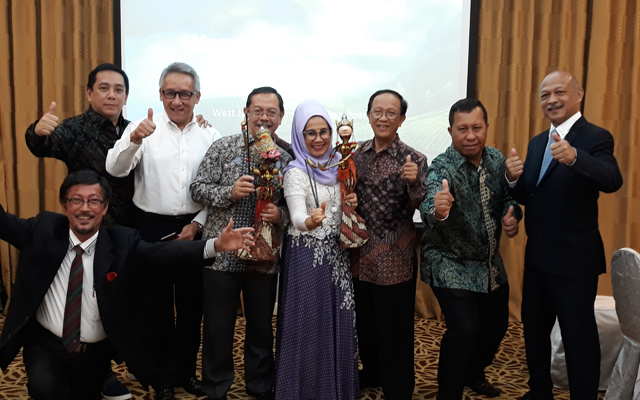
Spirits high at launch, West Java Government Tourism Office's Ida Hernida (in purple), WJTPB's Cecep Rukmana (to Ida's left), Life Style.Travellers Services Singapore's Mohamad Tahir Awi (second from right) and the rest of WJTPB board members
The West Java Tourism Promotion Board has opened a representative office in Singapore in a bid to attract more arrivals to Bandung and surrounding areas.
West Java TPB had a representative office in Kuala Lumpur, before deciding to set up in Singapore.
Spirits high at launch, West Java Government Tourism Office’s Ida Hernida (in purple), WJTPB’s Cecep Rukmana (to Ida’s left), Life Style.Travellers Services Singapore’s Mohamad Tahir Awi (second from right) and the rest of WJTPB board members
With the new office, the board targets not only Singaporeans and expatriates living in the city, but also international visitors.
Cecep Rukmana, chairman of the West Java TPB, said at the opening of the office in Bugis: “Singapore is a hub for the region. A lot of travellers are coming here, so we need to capture that and attract these travellers to come to West Java.”
“It is especially important for us to start promoting here now as we are expecting a new airport to open in Majalengka (about 90 km from Bandung) next year, and we are expecting more direct services,” he said.
The Kertajati International Airport is built to complement the limited capacity of Husein Sastranegara Airport in Bandung, and ease traffic at the Soekarno-Hatta International Airport Jakarta.
The new airport will enjoy links to the Light Rapid Transit between Jakarta and Cikampek, currently under construction, and the fast train between Jakarta and Bandung.
Speaking on the importance of funding for West Java TPB, Ida Hernida, head of the West Java Provincial Tourism Office, said: “West Java has a lot of tourist attractions and we need to get the message across to travellers.”
Herman Rukmanadi, a board member of the West Java TPB, added: “We assign our representative in Singapore to develop cooperation with the Singapore travel companies to create (extension) products, not only to Bandung but other parts of West Java.”
Mohamad Tahir Awi, director of Lifestyle Travellers Services, Singapore, who has been bringing golfers and other lifestyle travellers to West Java, opined that the office needs to come up with new products beyond Bandung and golfing, such as family-friendly experiences.
While uncertainty around Brexit and the impact of terrorism is expected to put pressure on London’s tourism sector in 2017, WTTC data suggests that the city is well placed to withstand these challenges.
Encouraging signs are also coming from Tourico, a travel booking company with contracts with nearly 2,000 UK hotels, which reported a 29 per cent increase year-on-year increase in UK hotel bookings in 2017.
Hopes for tourism sector resilience
The growth in UK bookings can in part be attributed to UK’s most consistent source markets, Tourico stated. Based on the company’s latest hotel booking report, the US increased its year-over-year bookings to the UK by 11 per cent, and Canada 35 per cent. South America increased its bookings by 38 per cent in 2017 and the Middle East by 22 per cent.
Asia-Pacific travellers continue to seek out UK travel products as well, increasing bookings by 31 per cent overall – with China up 69 per cent and Australia up 28 per cent.
Moreover, as the pound remains relatively weak, Europeans, in particular, are flooding to the UK, with an increase of 52 per cent. Specifically, Scandinavia has increased its hotel demand by 17 per cent, while Spain jumped 49 per cent. Tourico’s data also revealed that domestic hotel bookings or “staycations” within the UK have risen by 21 per cent year-over-year.
Offering further signs of healthy tourism performance, WTTC stated that London generates more spend from international visitors than any other city in Europe.
A new report launched by WTTC shows that international visitors in 2016 spent around £11.2billion (US$14.7 billion) in London, and domestic UK visitors contribute a further £1.74 billion. In terms of travel & tourism GDP contribution, London accounts for nearly 19 per cent of the UK’s total, according to WTTC.
The tourism body’s president and CEO Gloira Guevara expects international tourism spend to increase by seven per cent every year over the next 10 years.
Optimistic that London will show resilience in the face of Brexit uncertainty and terror concerns, she said: “London is a truly international city and the London is Open campaign has given a very strong message of welcome to tourists from abroad, which, with a great offering and unique experiences for tourists, means the UK’s capital has gained the top spot when it comes to international tourism to cities in Europe.”
Construction on Greater China's first Kimpton began last year
China’s leading electrical appliance retail giant, GOME, has ventured into the hotel business and appointed InterContinental Hotels Group to manage its first hotel in China.
Scheduled to open in 2020 along a southeast bay on Hainan island, construction on the RMB$2 billion (US$300 million), 13.6ha Kimpton Resort Sanya Haitang Bay kicked off last year.
Construction on Greater China’s first Kimpton began last year
When completed, the project is expected to offer 251 guestrooms, an outdoor swimming pool, restaurants and bars, and private beach access.
GOME Real Estate Group president, Long Xing told TTG Asia that a “huge space” will be set aside for F&B due to the destination being hot for weddings and MICE activities.
As the group makes its foray into hotel investments, Long disclosed: “We plan to open three to six hotels in China within the next five years. Most of them will be upscale properties located in first-tier cities. Negotiations are still on so we can’t disclose any locations at the moment. For sure, we opt for international management with InterContinental Hotels Group as priority.”
On the choice of the Kimpton brand for its first hotel venture, Long said: “The creative hotel and restaurant concept has been so successful in the US and Europe so its unprecedented entry to Asia (signals) a new level of standard.”
Airbnb announced at the APEC CEO Summit in Danang yesterday that it would invest US$2 million until 2020 to promote and support innovative tourism projects throughout Asia-Pacific.
The commitment is part of Airbnb’s vision to strengthen communities through “healthy tourism” and to empower hospitality entrepreneurs across the region.
Putting money into worthy tourism projects
An Airbnb statement defines healthy travel as authentic, affordable experiences that distribute the economic benefits to more people and more places, and that occur through use of people’s existing resources.
The fund will be available to organisations—including DMOs, NGOs, non- profit agencies and community social groups—in need of financial support for innovative tourism projects.
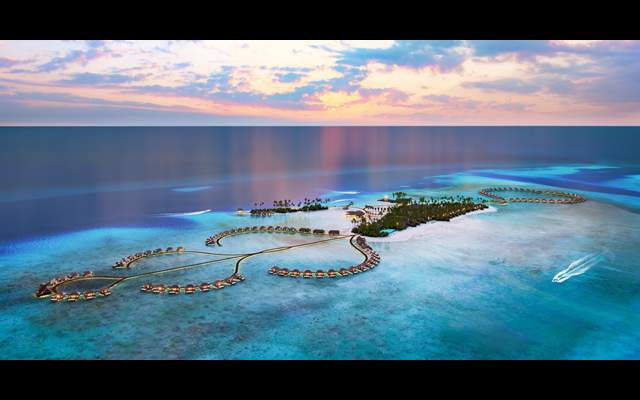
Carlson Rezidor Hotel Group is scheduled to launch the Maldives’ first Radisson Blu resort in 1Q2019, after recently signing a management agreement with Singapore-incorporated developer Chang Hua Holdings.
Located on the southern part of Maldives’ Alifu Dhaalu Atoll, Radisson Blu Resort Maldives is situated 105km from Male International Airport, and is accessible by a 30-minute seaplane journey or by a domestic flight from the Maamigili Airport, followed by a 15-minute speedboat ride to the resort.
The resort scheduled for opening in 2019
The resort will feature 128 villas including family villas, and a premium overwater villa; a sea sports and dive centre; a yoga pavilion and spa.
Carlson Rezidor’s Asia-Pacific portfolio includes 117 hotels in operation, including 51 Radisson Blu hotels.
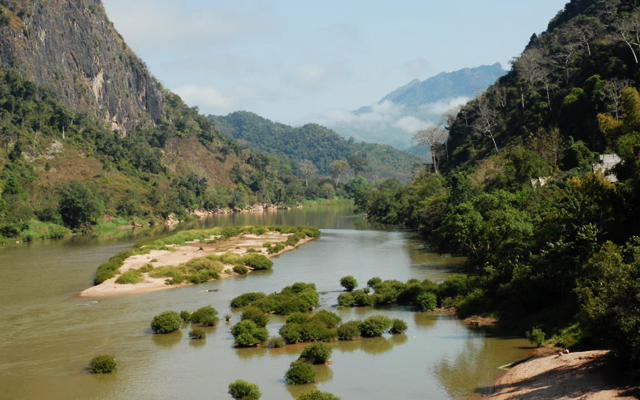
Inspiring product managers and tour operators with lesser travelled destinations
Khiri Travel has announced its Asia Creative Series – eight new travel routes in South-east Asia with an emphasis on people and locations that are largely untouched by tourism.
Willem Niemeijer, the founder of Khiri Travel, said the new Asia Creative Series varies from 10 to 21 days and immerses guests in travel experiences, often cross-border, in Thailand, Myanmar, Indonesia, Vietnam, Sri Lanka, Laos and Cambodia.
Inspiring product managers and tour operators with lesser travelled destinations
For example, there is a 10-day trip through lesser-seen Sri Lanka, starting in Anamaduwa, ending in Kotugoda; or see the best of remote Indochina on a 16-day discovery trip from Luang Prabang to Hanoi.
The biggest trip is a 21-day odyssey around the Lesser Sunda Islands of Indonesia, starting in Bali and ending in Gili Meno.
The series also delivers in-depth experiences on circular trips starting and finishing in Bangkok and Yangon. Vietnam, Bali and Myanmar are fully represented too.
‘Overtourism’ is a vexing issue, said Niemeijer. “As tourism is booming in Asia, pressure is mounting on sustainability and capacity at certain places. Khiri wants to encourage visitor dispersal to where tourism visitation is limited.”
He added: “While these tours go very local, almost all overnights are possible in comfortable, or even luxury accommodations, making these tours accessible for a broad selection of travellers.”