TTG Asia
Asia/Singapore Tuesday, 23rd December 2025
Page 1578

Marketing US as a friendly place

0

A new president throws a spanner in the works for Brand USA, which has been hard at work promoting the US as a welcoming and friendly destination to outsiders. The task has become even more important. Raini Hamdi talks to Chris Thompson, Brand USA president & CEO, about it*

Given that this is the first administration change since Brand USA started operations in 2011, how is it good and bad for you?
(President Trump) having convinced enough people in the country to elect him as president, then going into office against the established ways the government has run in the past, makes this election a little bit unique. As well, every president contemplates changes in policies. This president is focusing on policies that in many ways could have an impact on travel & tourism but what we’re dealing with is a perception issue vs the reality.

How so?
There has been a lot of conversations by the president and the members of his administration on proposed changes. But the reality is everything that has made the US an aspirational destination all these years – nothing of that has changed. As a matter of fact, the brands that deliver the product – the hotels, retail attractions and experiences – are finding new ways to innovate themselves; the people who deliver the experiences, i.e. the US citizens, open their arms to visitors. None of that has changed.

As you and I are talking today, nothing legally has changed about how anybody in the world has to acquire visas to visit the US. The only thing that has changed as it relates to entry policy, legally, is the electronics that you can carry onboard, i.e. the laptop travel policy which affects 10 countries in the Middle East. While the number of visitors from those countries is small, the countries are gateways for many visitors, from Asia or (elsewhere), to the US, and we do know that there has been an impact. But that’s the only thing that has legally changed.

What is the impact?
Based on indicators such as paid search, travel to the US has softened (since the election and new administration). Advanced bookings in some situations are down. Actual (figures) from the Department of Commerce are five to six months behind so until those actual numbers come in, what we have is anecdotal.

My colleagues and the industry were at ITB Berlin and many of the conversations they had with the leading operators and the travel trade in Germany showed that they were holding par to the prior year or were having a record year. Now that’s just one market, one indication. We also hear from partners. Arne (Sorenson, CEO of Marriott International), who is on our board, said they have not yet seen actual effect.

But no matter how any market is reacting to the political sentiments, the thing that has most affected our ability to attract year over year numbers from a lot of markets is currency exchange. The strong dollar has had a major impact on many of our major markets – Canada, Mexico and some of the European markets.

What can you do?
We’re planning to affect leisure travel as we’re at the front of the summer season which for many of our major destinations is a significant time for travel. Our newest campaign has been launched in 11 markets – Canada, Mexico, Brazil, Germany, France, the UK, Japan, South Korea, India, China and Australia.

When wallets are challenged, we need to show the value proposition.

How?
The campaign shows value proposition through 3Ps: possibilities, persona and proximity.

The first is about the US having awesome possibilities for our visitors. I’d say even with our mature markets, there is much they do not know than they do know.

Then we’re segmenting the market by persona, in three ways. One is through excitement, things that get your blood flowing, participatory or as a spectator. The second is living like a local; when I travel to a destination, I want to get to know the people, what makes them live there, what keeps them there. Then comes escape, that the US has the alternatives for whatever it is that you want to escape from, say, the day-to-day routine of your job.

The beauty of the US is the diversity, not just geographically, but in the experiences that you can enjoy. People can find alternative ways to enjoy the US and, historically, this has allowed us to overcome the strong dollar. This is why a big portion of the campaign is about proximity, showcasing what’s available within five hours of the gateway visitors arrive at, which in many cases many are not even familiar with.

Our campaign is social first, mostly digital, i.e. through online videos, paid search, etc, and it’s social centric – for instance, we’re inviting our friends from around the world to photograph themselves  in the middle of their US experiences and share that.

Is this one of your bigger campaigns, to address the perception vs reality issue?
It was already in the works prior to election, not designed at all to address the election, rather it’s our attempt to promote the nature of the destination, i.e. its diversity, the people who deliver the experiences and the US people as a whole. The whole foundation is a welcoming message, which does help to offset some of the uncertainties people may have on whether or not they are welcomed.

That, and what we’re doing in corporate communications, which is communicating accurate and timely policy changes to visa and entry policies, making sure people understand what has actually changed vs what has been talked about or contemplated, are both going to help us.

Is there a role for travel agent?
Absolutely. The way we market is direct to consumer, such as this campaign. The second way is through the relationships we have with the travel trade. Even in mature markets like Japan, there’s still a very active travel trade network that helps us facilitate travel to the US. We’ve been enjoying many visitors from Japan for years. A lot of those traditional visitors learn about the US through the travel trade and even though the Internet has enabled them to get first-hand information on their fingertips, a lot of them still use the travel trade.

The younger generation is probably slanting towards the Internet but many of them still use travel agents particularly if it’s the first time they are visiting the US, to guarantee the quality of the visit. They might do their own research but call the agents to facilitate the travel.

So the travel trade still plays a critical role. We have 13 offices worldwide and it is those offices on the ground that help us facilitate the relationships with the trade.

You talked about the friendly message. But the first impression people tend to get, i.e. at customs, is unfriendliness.

Hospitality and security aren’t mutually exclusive. How do you introduce hospitality into a process-oriented (patrol)? We’ve had those conversations. I’d say though it’s gotten better than five, 10 years ago.

A wish for president Trump?
Keep travel & tourism as a high priority, based on its contribution both economically and diplomatically. We know security is a real threat and the decisions they make are the ones we have to trust. And when policy is changed to protect our borders, it also makes for a more secure place for our visitors. But while we are against terrorism, we are all for legitimate travel too.

“It is important to note that the budget any administration presents is a statement of priorities – not a budget that is presented to Congress to vote on. The administration’s proposal serves as a way to outline the priorities of the administration, but it is ultimately up to the Congress to formalise and vote on a final budget,” Thompson said in an email to TTG Asia (http://bit.ly/2tQotey).

Brand USA was approved by Congress in 2010 and began operation in 2011.

* Editor’s Note:This interview was conducted in April during the WTTC Global Summit in Bangkok and before president Trump’s proposed fiscal budget for 2018 was issued. The budget called for the elimination of Brand USA, with its revenue made available to the US Customs and Border Protection. The matter is still uncertain.


This article was first published in TTG Asia July 2017 issue. To read more, please view our digital edition or click here to subscribe.

Data’s the new black for travel

0

It has been 15 years since Minority Report hit the big screens and while some of the dystopian ideas put forth in the 2002 Tom Cruise movie could possibly exist in the future, the practical use of big data, predictive analytics and artificial intelligence (AI) are already in play today, albeit in less insidious but equally interesting forms.

Just look at Netflix, a successful example of a data-driven company and how analytics helps it to revolutionise the TV and film industry. By leveraging extensive data to track the habits of its 100 million (and counting) users, the popular streaming site can see what you’re watching and what you like; it also knows what you’ll watch in future; its sophisticated algorithms and big data analysis also enable it to become an original content creator with highly acclaimed shows like House of Cards and Orange Is The New Black.

Netflix is a good illustration that data is a potent ingredient in the quest for competitive differentiation and personalisation – and the application of data in the travel industry can be just as immense and powerful.

But big data also begets a big question: how can travel organisations tap the current data bonanza to power their strategy?

The plethora of data and its effective use still present considerable obstacles for travel companies, many of which admit that they lack the expertise or resources to successfully extract this vast, largely untapped resource and turn it into critical insights.

The key lies not in the volume of data but how it is harnessed, industry watchers pointed out.

Data needs to be combined with the human touch to deliver the best of the man-machine symbiosis…

However, many organisations are still steeped in the descriptive stage in analytics, i.e. using data to reveal the past. But the next stage of analytics evolution promises to change that, as AI and machine learning come together to “learn” how to deliver more nuanced and personalised insights for business through proactive – instead of retroactive – use of data.

With the right technology and skills, aided by constant refinement and context placement of data, travel players will be better equipped to maximise the valuable resource that is data in order to become more insightful, efficient and productive.

We’ve entered an age of analytics. Like how automation and the Internet have not displaced travel agents, data needs to be combined with the human touch to deliver the best of the man-machine symbiosis, unlock new revenue opportunities for travel players, and create compelling travel experiences that connect emotionally with the consumer.

Will the availability of more accurate data see more travel marketeers undergo a creative renaissance and introduce powerful campaigns? Will travel business, like Netflix, use data to guide all its strategies and decisions?

Watch this space.


This article was first published in TTG Asia July 2017 issue. To read more, please view our digital edition or click here to subscribe.

Emirates, Turkish Airlines get off US laptop ban

0

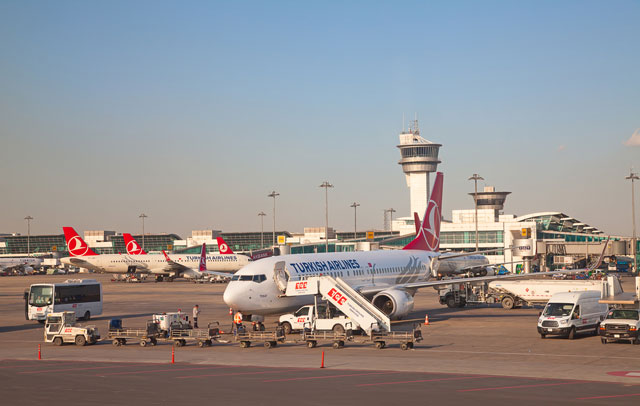
Following the lifting of the laptop ban on Etihad Airways’ flights from Abu Dhabi International Airport earlier this week, Emirates and Turkish Airlines have now joined the list.


Emirates said it worked with the US authorities to meet the requirements for lifting the ban on its flights, while Turkish Airlines is now allowing passengers on US-bound flights to take their laptops and electronic devices with them.

The latest announcement leaves Qatar, Morocco, Jordan, Egypt, Saudi Arabia and Kuwait waiting to have the ban lifted.

Update: Qatar Airways was removed from the list of airlines subject to the ban shortly after press time

Thai outbound growth drives launch of CNTA’s Bangkok office

0

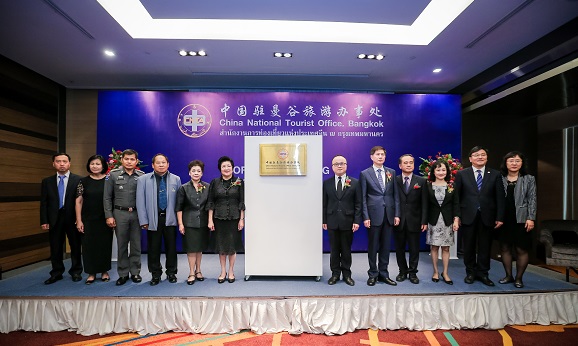
The China National Tourism Administration (CNTA) has opened an office in Bangkok, its second outpost in South-east Asia after Singapore.

A main driver for the decision is the growth potential of Thailand as a source market, Zhang Xinhong, director of China National Tourist Office, Bangkok, told TTG Asia.


In 2016, Thai arrivals into China increased to 800,000 from 640,000 in 2015. Zhang expects there will be continued growth now with greater tourism promotion in Thailand from China’s provincial bureaus and CNTA.

“The Bangkok office will promote our bilateral tourism exchange, build up China’s popularity as a destination and serve Chinese tourists in Thailand,” said CNTA vice chairman Wang Xiaofeng at the opening ceremony last month, reiterating that the two countries will continue to deepen tourism cooperation under the Belt and Road Initiative.

In particular, the Bangkok office will network with the local travel trade, media and airlines as well as facilitate cooperation with Thai governmental offices and travel associations, Zhang said.

She added: “Our office is collaborating with travel agent associations to (conduct) workshops on China tourism or fam trips. We shall target travel agents in big cities of Thailand.”

CNTA has 22 overseas offices, two of which are in South-east Asia. It first established a base in the region through its Singapore office to cover Thailand, Myanmar, Laos, Cambodia and Vietnam.


Hopes for Cambodia tourism soar on new flights from Dubai

0
Traditional dancers greet passengers arriving on the inaugural flight

Tourism bosses are optimistic that Emirates’ inaugural daily services between Dubai and Phnom Penh via Yangon, which commenced on July 1, could bring new opportunities for Cambodia’s inbound and outbound tourism.

Cambodia’s secretary of state for Civil Aviation Mao Havanall commented that the new route “increases Cambodia’s connectivity with the world’s main hubs of Europe and the US and brings a wealth of opportunities”.

Traditional dancers greet passengers arriving on the inaugural flight

The new route offers more choices to passengers travelling between Phnom Penh to Dubai and beyond. Pierre-Andre Romano, general manager of Exo Travel Cambodia, expects the flight to lure more longhaul travellers from the Middle East, Africa and South America, specifically Brazil and Argentina.

Visitors from southern France can now fly directly from Nice to Dubai, instead of connecting in Paris, he added.

The service also opens opportunities to market the destination and its products, according to Emirates’ senior vice president of commercial operations for the Far East, Badr Abbas.

“Even in destinations where Cambodia is not popular, we will carry out a lot of marketing and actively sell this as a new destination,” said Abbas.

Socheata Ham, manager of Global Adventures, predicts the move will also contribute to Cambodia’s growing outbound market – which increased by 20 per cent in 2016 to 1.4 million – with France, the US and Canada likely to be popular choices.

Operated on a Boeing 777 aircraft, EK388 departs daily from Dubai International Airport at 09.15, arriving in Yangon at 17.25. It then departs Yangon at 18.55 to arrive at Phnom Penh International Airport at 21.25.

The return flight EK389 departs Phnom Penh at 23.10 and arrives in Yangon at 00.40. It will then set off to Dubai‎ at 02.10, arriving at 05.40.

Chinese deities ride above clouds in business class

0
Photo credit: Persatuan Hainan Selangor & W.P

Three statues of Chinese deities travelled in business class on a Xiamen Airways flight to Malaysia last Saturday.

The idols of heavenly goddess Mazu (the historical form of Fujianese shamaness Lin Mo), accompanied by her guardians Qianliyan (Thousand-Mile Eye) and Shunfeng’er (Wind-Following Ear), had made the journey from a sea temple in Fujian province as part of the China-Malaysia Mazu Cultural Exchange programme.

Photo credit: Persatuan Hainan Selangor & W.P

Organiser Thean Hou Temple in Kuala Lumpur was said to have paid RMB2,091 (US$307) per ticket for their sacred VIPs.

According to reports, the three deities joined a procession in Kuala Lumpur on Sunday. They then made stops in Malacca and Singapore before heading back to China, which leaves us wondering: did they return home as luxuriously as they arrived?

Mantra to manage suburban property in Melbourne’s north

0

Australia’s Mantra Group will operate a new-build hotel in Melbourne’s booming northern suburbs, slated for opening in mid-2019.

Epping, in the City of Whittlesea, one of the largest municipalities in metropolitan Melbourne, will be the location of the four-star, two-wing development valued at A$70 million (US$53 million).


Mantra Epping Hotel

Mantra Epping Hotel will feature 214 rooms and apartments, a café/restaurant, brewhouse, conference and meeting facilities, gymnasium, and an open car park containing 143 marked bays and secure bicycle storage.

The hotel will open within the Northpoint Enterprise Park – said to be Melbourne’s fastest growing expansion corridor – and be surrounded by retail shops, showrooms, business and industrial premises, as well as a hospital and the newly-relocated Melbourne Market.

Mantra Group CEO, Bob East, said: “This acquisition comes at an opportune time in the Australian hotel market, with hotels in Melbourne and surrounds experiencing substantial uplift in demand in recent years.

“This strong performance is set to continue with further domestic and international visitation uplift forecasted for the greater Melbourne market.”

Aviation roundup: Virgin Australia, SriLankan Airlines and more

0

Here’s our weekly roundup of new air routes.

Virgin Australia expands footprint into Greater China
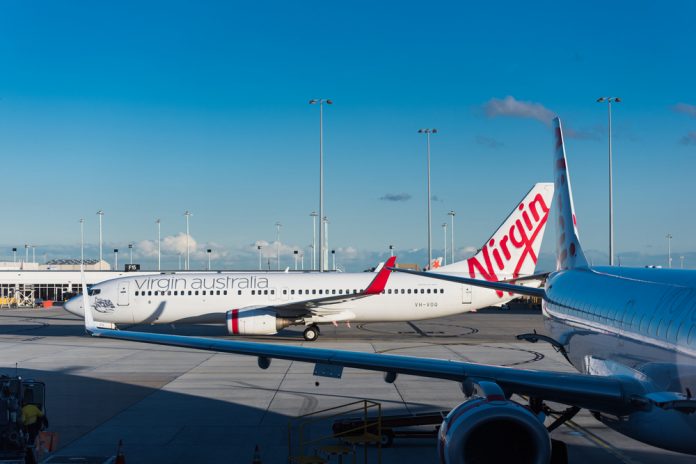
Virgin Australia has commenced five-times weekly flights between Melbourne and Hong Kong, utilising an Airbus A330-200 with 255 economy seats in a 2-4-2 configuration.

On Tuesdays, Thursdays and Saturdays, flights will depart Melbourne at 00.35 and arrive in Hong Kong at 08.15. Flights on Monday and Wednesday will depart Melbourne at 10.25 and 09.40 respectively, and arrive in Hong Kong at 18.05 and 17.20.

The return leg on Mondays, Tuesdays, Wednesdays, Thursdays and Saturdays will see the aircraft depart Hong Kong at 19.50, and arrive back in Melbourne at 07.20 the following day.

Sri Lanka’s national carrier begins flights to Hong Kong
SriLankan Airlines will begin five-times weekly flights between Hong Kong and Colombo on July 15.

On Thursdays and Saturdays, there are two flights daily. The first flight will depart Hong Kong at 02.00 and arrive in Colombo at 04.50, while the second flight will depart at 18.15 and arrive in Colombo at 21.05. On Mondays, only the second flight will be in operation.

AirAsia adds Nha Trang to network
Beginning September 14, AirAsia will commence daily flights to Nha Trang from Kuala Lumpur, the airline’s fourth route to Vietnam.

AK204 will depart Kuala Lumpur at 10.30 and arrive in Nha Trang at 11.35. The return flight will depart Nha Trang at 12.00 and land in Kuala Lumpur at 15.15.

Emirates flies direct to Hanoi
Emirates has launched daily direct flights from Dubai to Hanoi, shaving about 2.5 hours of travel time as it no longer stops in Yangon.

Flights will depart Dubai at 03.30 and arrive in Hanoi at 13.05, while the return flight will depart Hanoi at 01.30 and arrive in Dubai at 05.05. The new service is operated with a two-class Boeing 777-300ER, which offers 42 seats in business and 386 seats in economy.

Cebu Pacific commences night flights to Boracay
Cebu Pacific has begun evening flights between Manila and Caticlan with an ATR aircraft, adding two additional daily flights between the two cities.

Currently, the last flight between Manila to Caticlan leaves at 15.30 with the return flight 17.10. With the new night operations, the last flight will leave Manila at 18.55 and will return from Caticlan at 20.45.

Campbell returns to Outrigger Resorts, this time as area DOSM

0

Outrigger Enterprises Group has appointed Rory Campbell as the area director of sales and marketing.

The Australian national is responsible for two Thailand properties – Outrigger Laguna Phuket Beach Resort and Outrigger Koh Samui Beach Resort. He will report to the general managers of each resort, respectively Tony Pedroni and Marc Landgraf, and to Andrew Gee, the company’s regional director of sales and marketing for Australia and New Zealand.

This appointment is Campbell’s second stint with Outrigger. He was previously with the company as director of sales and marketing for Outrigger Laguna Phuket Beach Resort (2013-2015), and general manager of Outrigger Koh Samui Beach Resort (2015-2016).

Prior to joining Outrigger in 2013, Campbell had worked in senior sales and marketing roles for Hilton in Spain, Anantara Hotels and Resorts in Thailand, and the Eaton Hotel in Hong Kong.

Tourism hopes high with Thailand’s Eastern Seaboard under development

0

With tourism identified as a key driver of the transformation of Thailand’s Eastern Economic Corridor (EEC) into a leading South-east Asian economic zone, infrastructure development is underway to beef up sea, rail and air access to the Eastern Seaboard.

This would include adding a new commercial seaport, developing existing ports of Laem Chabang and Map Ta Phut as well as expanding the Chuk Samet Pier.

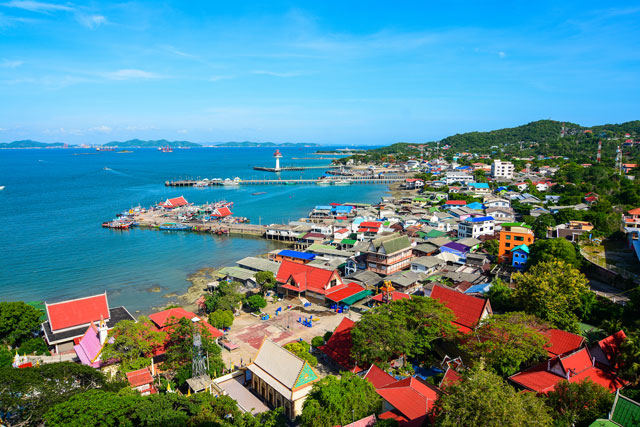
Koh Si Chang

Yuthasak Supasorn, Tourism Authority of Thailand governor, said: “These developments will allow the EEC area to be more accessible to cruise liners and luxury yachts bringing high-quality tourists into the region and further boost regional transport links.”

Rail transport infrastructure will also be improved such as through the addition of a high-speed, double-track railway connecting the Don Mueang, Suvarnabhumi and U-Tapao Rayong-Pattaya international airports to facilitate business and tourism in the area.

Also in talks is the building of more comprehensive rail routes linking airports, ports, industrial and urban zones.

In addition, the U-Tapao Rayong-Pattaya International Airport is being converted into a commercial airport with the construction of a second runway and new passenger terminal.

The infrastructural developments come amid a diversification and upgrading of attractions in Pattaya, Rayong and Chachoengsao to cater to family demand.

“Transportation and easy access for everyone can only boost tourism in the EEC area and will benefit local people and businesses. By prioritising tourism in the EEC, we are also helping local communities benefit with investment, jobs and income,” Yuthasak commented.