TTG Asia
Asia/Singapore Monday, 22nd December 2025
Page 1570

New hotel openings: Hotel Indigo Bali Seminyak Beach, Amari Galle and more

0

The latest hotel openings and announcements made this week.

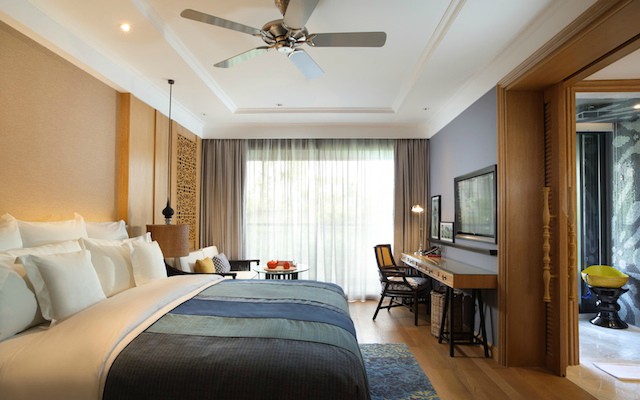
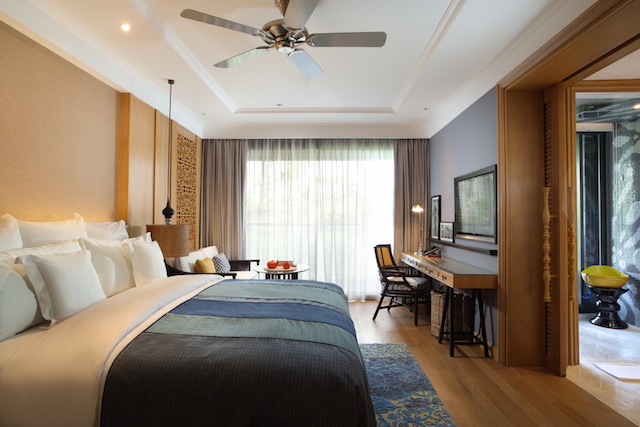
Hotel Indigo Bali Seminyak Beach
Situated across 4.7ha on the Balinese beachfront is the Hotel Indigo Bali Seminyak Beach. The design-led property offers 270 rooms and suites, all of which come with daybeds and spa-inspired bathrooms. The resort is also home to 19 villas, each featuring a private outdoor swimming pool, whirlpool and marble bathrooms. Facilities on-site include seven F&B options, four outdoor swimming pools, the Sava Spa with 10 treatment rooms, and a fitness centre. There are several meeting spaces as well, the largest of which can hold 100 guests.

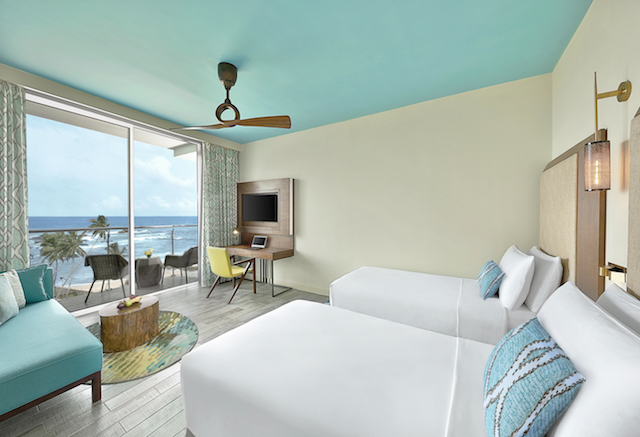
Amari Galle
Onyx Hospitality Group has opened its latest property, the beachfront Amari Galle, in Sri Lanka. All 172 rooms across five categories boast private balconies and direct sea views. Facilities include three dining locations, the Voyager Lounge, an outdoor swimming pool, fitness centre, Breeze Spa, and family-friendly services such as a kids’ pool, and Kids Club. For events and meetings, Amari Galle offers three Idea rooms, as well as a ballroom that can accommodate 250 people banquet-style.

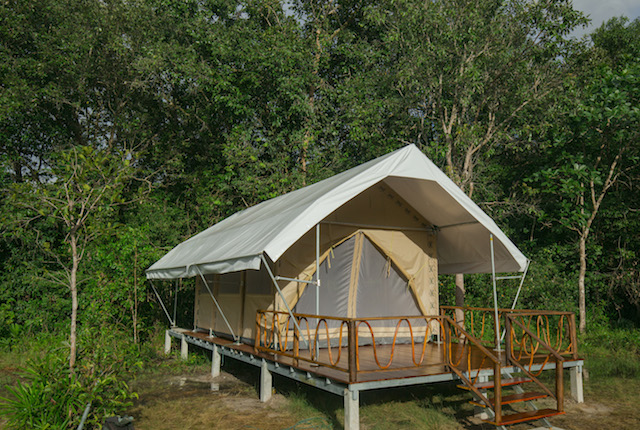
Cardamom Tented Camp
This tented camp in Cambodia’s Cardamom Mountains feature nine furnished, tented accommodations, each with an ensuite and a patio area. The solar-powered camp stands in Botum Sakor National Park, part of a vital elephant migration corridor, and can be reached via road from Phnom Penh. A riverside restaurant is its sole facility, but guests can go on guided day hikes and river trips with local rangers to learn about the surrounding flora and fauna. Visitors can also replant indigenous trees, kayak or engage in other conservation activities.

Citadines Millennium Ortigas Manila
Ascott has opened its seventh serviced residence in Ortigas Center within Metro Manila’s CBD. The property offers 293 units ranging from studio to one-, two- and three-bedroom apartments. Facilities such as a residents’ lounge overlooking the city, a swimming pool, fitness centre, restaurants, function rooms and garden deck are available. Citadines Millennium Ortigas Manila is a 10-minute walk to the Ortigas MRT Station, and about a 50 minute-drive to Ninoy Aquino International Airport.

Mantra Hotel at Sydney Airport
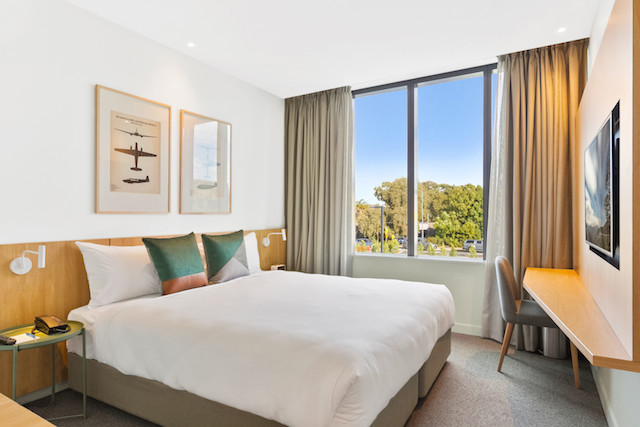
The eight-storey Mantra Hotel at Sydney Airport, located a short distance from Sydney Airport’s T2 and T3 domestic terminals, offers 136 studio rooms. Airport-facing rooms located on the fourth floor and above boast views of the domestic and international airport runways, as well as the arrivals section of the airport where all VIP charter jets park. Amenities include a restaurant and bar, an Internet kiosk, as well as an integrated lobby and reception space.

The business of protection

0

With insolvencies and bankruptcy filings on the uptick among travel businesses in recent years, is the trade seeing enough protection against such risks from insurance providers? TTG Asia reporters find out

As the middleman in the travel business, running a travel agency in the current challenging economic climate is not without its perils, as risks ranging from bankruptcy and sudden cessation of services from partners could affect their operations and cause financial loss.

However, a check with agencies across the region reveals that there is currently no insurance or scheme in place that offer a hedge against such specific business risks.

“Travel agencies are the weakest part of the entire travel distribution (chain), but there is no insurance protecting our business,” lamented Royanto Handayam, CEO of Panorama JTB Tours Indonesia.

Travel agents are also vulnerable as there is no insurance protection against defaulters or scams, some common risks that agencies face, especially as the threshold for entry into the travel agency business is relatively low in certain markets.

Fe Abling-Yu, second vice president of Philippine Tour Operators Association, welcomes the tackling of such issues. “It is easier to apply for a business permit to open travel agencies unlike before when licensing is with the Department of Tourism, and there are cases of consumers getting scammed. If something happens to consumers, the bottom line is we need to take care of them more than anyone else.”

“There is no insurance policy in existence as it is difficult to prove to an insurance company that you have not been paid by your client whose business is still in operation,” said Ally Bhoonee, executive director of World Avenues Malaysia. “If they default, there is also nothing much we can do. If we decide to take them to court, it will have to be in their home country and getting a hearing may take years.”

Limited insurance coverage
Earlier this year, the collapse of Tokyo-based discount travel agency Tellmeclub, which affected as many as 90,000 corporate and leisure travellers, has forced the Japanese trade to reappraise its existing regulations on insurance, which were last revised around 20 years ago.

“The bankruptcy of Tellmeclub has the potential to damage the image of the travel industry,” admitted Yoshinori Ochi, director of the board and secretary general at Japan Association of Travel Agents.

“For this reason, the Japan Tourism Agency has set up a working group to look into ways to conduct management governance in the industry so that the involved parties can act accordingly, and in a timely manner, in the event of travel agency bankruptcies in the future.”

He added: “Consumers are protected from bankrupted agencies – if they are JATA members – under our Compensation Security System, but neither consumers nor the agencies buy insurance against bankruptcy from insurance companies. JATA’s system does not cover agents dealing with errant clients or partners, although they are eligible for protection through other channels not related to JATA compensation.”

Current insurance protection in the travel agency community is typically limited to IATA’s default insurance scheme or selected programmes signed up based on their own needs, Elly Hutabarat, chairman of the Association of the Air Ticketing Companies in Indonesia (ASTINDO), told TTG Asia.

She said: “As IATA agents, it is mandatory for us to take the Default Insurance Programme as well as the bank guarantee payable to banks appointed by IATA.

“If an agency defaults, the insurance company will settle the payment to IATA. But it does not mean that the default agent is free from any debt. Instead of paying to IATA, it will need to pay back the debt to the insurance company. In this case, the insurance that we are paying is to protect the airlines and not the agents. On the other hand, if an airline collapses, agents will be impacted.

“ASTINDO once worked on finding an insurance company who would protect agents from a default airline. This move was (initiated) when a number of Indonesian airlines like Sempati Air, Adam Air and Mandala Airlines collapsed, leaving agents in limbo and forcing some to close shops.”

Elly added that Raya Insurance had rolled out a scheme to protect agents’ deposits with domestic non-IATA airlines, so that if an airline ceases operation agents can get back their deposits. However, few took up the insurance. Furthermore, following the improved regulation in Indonesia’s transportation sector, there has not been no more airline defaults.

ASTINDO is currently working with airlines to agree on transactions using credit cards only, starting with Garuda Indonesia, according to Elly. “With credit card payment, liability will lie with the credit card operators, not with us,” she said.

Elsewhere in the region, Hong Kong Association of Travel Agents’ (HATA) chairman, Jason Shum, said: “For inbound travel agents, it’s not mandatory to insure for professional indemnity, but agents handling group tours tend to have their protection in place if clients (make claims in event of accidents). Therefore, some operators handling inbound groups would buy insurance.”

HATA, as an example, also insured its annual overseas convention from AIA to ensure a safe trip for delegates, said Shum.

Other Hong Kong agents like Swire Travel, which uses Aon, also takes up insurance separately for its cruise business, according to managing director, Gloria Slethaug.

Worth paying a premium?
Intensifying competition from OTAs, discounts on direct flights and hotel bookings, and higher merchant fees for credit card companies are some key reasons why more agencies are “struggling to stay afloat”, remarked Kay Swee Pin, president of Singapore Outbound Travel Agents Association (SOTAA).

The industry is seeing more agencies shuttering, with the most recent case of the Singapore Tourism Board revoking MISA Travel’s agency licence. As a result, the sudden closure of high-profile agencies makes it “increasingly harder” for the surviving operators to acquire financing from banks, explained Kay.

And even if insurance was available to travel agents to protect themselves against bankruptcy, the premiums are likely to be exorbitant, several agents pointed out. Most players, big and small alike, hence do not see the urgency of taking up such insurance.

Pauline Suharno, managing director of Indonesia’s Elok Tour, said: “There are a lot of small- and middle-sized agents who feel that paying the premium means cutting their slim profit margins even thinner.”

World Avenues’ Bhoonee shares similar sentiments: “It is good to have bankruptcy protection coverage, but the premiums will be high. How can we cover premiums when profit margins are so thin? If we increase the profit margin, it will be ideal.

“However, to do this, we have to educate our clients (both local and overseas agents) who buy from us that they are protected. This way they will accept higher rates knowing that they are covered in the event that my company goes bankrupt,” he added.

The Philippine Travel Agencies Association (PTAA) had earlier tried to push for industry-wide coverage for its members, said Jojo Clemente, president of Rajah Tours, during his term as PTAA president from 2005-2007. “But it didn’t push through because of the big amount involved and not all agencies wanted to be a part of it,” he explained.

Exercising own diligence, checks
In the absence of  insurance coverage against partners’ insolvency and defaulting clients, it all boils down to having their own checks and schemes in place to protect their business, said travel agency bosses.

“We will study how bona fide the client or business partners are,” said Panorama JTB Tours’ Royanto, who added that it is still “easier” to monitor a partnership than with a company contracted through a sub agent.

To minimise business risks and potential losses from bad business dealings, Abdul Rahman Mohamed, general manager at Mayflower Holidays, said: “We have a set of internal criteria for procurement dealing with agents. Our partners must be the top three players in their respective markets. We also ask for documentation such as the last three years of audited accounts to check their credit worthiness. We check our partners on a yearly basis to check their financial health.

“It is the same with clients who engage our services. They too will do their due diligence and check our financials. If our shareholder fund is in a negative position, they will reduce their risks by giving us small projects or not appoint us as well.”

World Avenues’ Bhoonee shared: “We protect ourselves when dealing with a new client by asking them to pay a bank guarantee. On the other hand, regular clients expect us to give them limited credit so they are not inconvenienced and they don’t have to pay bank charges for every booking they make.”

As well, Chan Brothers Travel in Singapore has cast its own safety net with more than “S$200 million (US$144.6 million) of asset backing in local and overseas properties… (spanning) Singapore, China, Hong Kong and Australia”, said spokesperson Justine Koh.

The agency is also selective in choosing only “longstanding partners” and establishing “a wide network of operators worldwide”, said Koh, in order to“circumvent such circumstances and minimise its liabilities”. – Reporting by Mimi Hudoyo, S Puvaneswary, Julian Ryall, Pamela Chow, Prudence Lui and Rosa Ocampo

Viewpoints What kind of insurance coverage do travel agents want?

Ally Bhoonee, executive director, World Avenues, Malaysia
Insurance companies could look at devising policies to protect agencies from going insolvent in the event of civil unrest, war and continuous acts of terrorism in a particular destination. Banks may close so how are agents to transfer money to their partners’ overseas? Agents may also face cash flow problems due to weak business at the time.

Raaj Navaratnaa, general manager, New Asia Holiday Tours & Travel, Malaysia
The umbrella bodies of the travel associations in ASEAN should spearhead a group insurance coverage to cover its members against potential bankruptcy and other forms of business losses. By having a centralised insurance policy, the coverage can be wider and premiums made more affordable. The minimum requirement of premiums can be met based on an individual company’s turnover.

Jojo Clemente, president, Rajah Tours, Philippines
It would be helpful if there’s an insurance policy that will cover all incidents that occur against our clients. Travel agencies going bankrupt have happened before, and sad to say you are only covered by how much the Philippine Deposit Insurance Corp covers you – there’s no protection. The most you can do is to be accredited by the Department of Tourism if you’re an inbound (agency) but if you’re outbound, you don’t need to be accredited.


Rise of the Chinese explorer

0

More Chinese travellers are now enabled and emboldened to seek out Australia’s regional gems, a far cry from how the market was when the tourist boom from China first took off in 2007. By Adelaine Ng


Uluru-Kata Tjuta National Park, Northern Territory

Chinese travellers are growing more confident about exploring Australia independently, and regional parts of Down Under are readily embracing them.

At 1.3 million entries in the year to March 2017, China is on the cusp of overtaking New Zealand’s long-held spot as top source market.

But the profile of today’s Chinese visitor is a far cry from their counterparts at the start of Australia’s Chinese tourist boom in 2007.

“The traditional stereotype of the Chinese visitor as someone who just comes to visit their relatives, eats at Chinese restaurants and shops a lot is changing,” said David Beirman, a destination marketing specialist and senior tourism lecturer at University Technology Sydney.

“Many of them are second- or third-time visitors so they want to have a more authentic Australian experience – to see the koala in the great outdoors and visit regional places, especially those with connections to Chinese history, e.g. where coal was discovered in Ballarat and Bendigo in Victoria or the mining gold fields in New South Wales and Queensland.”

David Tang, marketing manager at Grand City Tours, observed Chinese demand grow 20 or 30 per cent from the year before, for places like Uluru in the heart of the Australian outback.“This market doesn’t care about hotels or access to Chinese food,” he said. “They only want to see the beautiful views.”

Two key reasons underpin the confidence of the modern Chinese traveller, according to Andy Jiang, Tourism Australia’s country manager for China.

“One of the biggest enablers is the mobile phone and the ability to get information and stay connected,” he said.

“The second is the enormous progress China has made over the past 20 to 30 years as a global power. China’s confidence on the global stage is being reflected and embraced by Chinese consumers, allowing them to venture further, see more and do more.”

Moreover, Chinese travellers are less inhibited of not speaking perfect English, and they no longer crave for traditional tourism products. “They want to experience something unique that reflects their lifestyle, or aspirations of doing not just what everyone else is doing,” Jiang said.

The Chinese experiential trend is also driven in part by social media. Visits to Tasmania, for example, saw a spike after Chinese model Zhang Xinyu posted photos of herself clutching a lavender plushie bear that she and other celebrities acquired from Bridestowe Lavender Estate during a fam courtesy of Tourism Australia.

Zhang’s post garnered massive attention in China, driving many of her young FIT followers to emulate her journey in Tasmania and the lavender farm in particular, remarked Jiang.

As well, regional Australia is now better prepared to take on the cultural challenges that large groups of Chinese tourists might bring. Added Jiang: “A lot of the experiences in regional Australia are run by small- to medium-sized businesses who are very passionate about the market and what they do.”

They are also using the latest technologies that are changing consumer behaviour in China such as WeChat Pay and UnionPay, he observed.

However the farther travellers venture into the outback, the more they must be prepared to have less access to familiar comforts, in terms of language or otherwise, Bierman pointed out.


Hailey Shin, founder and CEO, Funtastic Korea

0

If I had my way, I would increase flight connectivity into South Korea. This would be the most important priority for the industry. We are effectively an island, and we need more routes. Flying has become much more affordable in the region, so we just need to provide the flights for people to get here.

If I had my way, I would improve English signage in South Korea. The biggest problem travellers face in the country is the language barrier, so we need more signs and information in English. Shops and restaurants that attract a lot of overseas visitors should make an effort to use English for their menus and signage, for example. This would make things easier for tourists.

If I had my way, I would promote the country in a more efficient and effective way. Too often, there is a duplication of efforts as the travel authorities focus too much on Seoul, Busan and Jeju Island for foreign visitors. There needs to be an effort to get tourists to visit other parts of the country that offer great things to see and do too. We are not making the most of our fantastic tourism resources.
I also believe that South Korea needs to promote its culture and content better through social media outlets such as YouTube and bloggers. Those play an important part in reaching out to today’s international travellers. That includes people in their 40s and 50s, who make up our main customer target.

Seizing a ‘mobile-first’ mindset critical for travel players

0

Discussions on the importance of adopting mobile solutions dominated the Travelport Live in Sydney conference, which concluded yesterday, with panellists in agreement that the travel industry must shed its traditional mindset and shift into a mobile-first thinking despite the challenges.

Caesar Indra, senior vice president of business development for Traveloka, stresses the importance of mobile solutions, especially as bookings made on the Traveloka app account for 70 per cent of its online transactions.

But mobile has to go “beyond the transactional”, and agencies must be engaged with the customer throughout their journey, he noted.

One example, Indra shared, was introducing a feature for users to reschedule or refund their purchases on their mobile phones. This cut the processing time from 30 minutes – when done through a call centre or physical store – to just five minutes.

But an agency’s mobile communication should extend beyond the agency and customers to also include ground staff such as tour providers and suppliers, advised Robin Yap, president, Asia, The Travel Corporation.

In what he called “a total communication” via mobile, the company launched an app for its trip directors to interact with customers before their trip. This allows the guides to learn the customers’ interests, feedback and requests, in order to provide more personalised service.

“This mobile app is really critical to delivering a great customer experience,” observed Yap.

Josephine Lim, managing director South-east Asia of Preferred Hotels & Resorts, chimed in to advise that as much as having a “mobile app is a must”, it should also have “an element of fun” and geared not only to millennial customers.

She observed that “older people are posting photos as much, if not even more, than teenagers”.

Indra added that the social aspect is especially important in Asian countries like Indonesia. When Traveloka incorporated WhatsApp into its mobile app for users to share their itineraries on the popular messaging service, it created a “network effect” among its clients and their friends, he shared.

50-year-old Indonesian agency finds new gear in multichannel strategy

0

For established Indonesian tour company Dwidayatour, adopting an online-offline approach is now key to its growth plan for the future.

Speaking to TTG Asia at its 50th founding anniversary press conference earlier this week, Dwidayatour’s vice president commercial Hendriyapto said the company’s survey of 1,000 respondents early this year showed that most customers are using multichannels for trip planning, either seeking information online and booking offline or vice versa.

“The interesting finding is that while 83 per cent of customers perceived that online prices were cheaper, 76 per cent said they still bought tickets through a travel agent.”

Hendriyapto also noted the rapid growth of online business, mostly driven by customers aged between 20 and 30 years old. “Last year we saw a 100 per cent growth of online transactions compared to 2015.”

“Although the volume still represents less than five per cent of our total business, the potential growth is big in the coming year,” he said, further necessitating the use of multiple channels.

The Hybrid Channel, which was launched last year to integrate offline and online channels alongside a 24-hour hotline, is a distribution strategy Hendriyapto is positive would give Dwidayatour a competitive edge.

By enhancing its technological capabilities, offline products can now be sold through both web and mobile channels.

At the same time, Dwidayatour is also growing its physical presence from its current 92 branches in Indonesia to 10 more outlets this year. The agency targets to achieve 30 per cent growth this year.

Philippine trade joins forces to beat cancellations

0

To make up for recent booking cancellations owing to safety and security concerns, a newly formed private sector-led working committee in the Philippines is firming up a programme of fresh and viable tour products.

Cesar Cruz, president of the Philippine Tour Operators Association (Philtoa), which is part of the committee, said the plan is for all Philippine sellers to promote the same packages for bookings between 4Q2017 and end-2018.

Banaue rice terraces

Key criteria influencing the choice of destinations include safety, accessibility, tourism infrastructure and sought-after tour products, including the stretch beginning from Ilocos to Cordillera and upland to Banaue and Sagada; Bicol; Pampanga; Batangas and Quezon, among others in Luzon and destinations in central Visayas.

Destinations included in ongoing travel advisories – Palawan, Cebu, Bohol and Boracay – will also feature in some packages.

Cruz told TTG Asia that the working committee will meet this month and have the mechanics ready by August for submission to the Department of Tourism and its marketing arm the Tourism Promotions Board, which will then help with in-market advertising through their overseas offices.

The packages will also be sold to global buyers during the Philippine Tourism Exchange in September.

Hong Kongers, Russians most forward-planning travellers: Agoda

0

An analysis of Agoda data from 2016 revealed that Hong Kongers book the furthest in advance and Saudi Arabians the most last minute, as the trend on the OTA shifts towards in-advance bookings.

Contrary to the perception of being in an age of ‘instant gratification’, lead-time for Agoda bookings on average increased by two days compared to 2015, said Andy Edwards, Agoda’s global director brand and communications.

“Price and choice play a driving factor when booking travel… Popular culture portrays this image of the adventurous, last-minute traveller, but in reality consumers are investing more time preparing for their holiday to get the most out of their well-deserved break,” he explained.

In Agoda’s ranking of forward planners by nationality, Hong Kongers took top spot for the second year running, on average booking 49.4 days prior to travel. In second place are Russians, who have moved up two rungs from fourth position in 2015, with a booking lead-time of 46 days.

Australia follows in third place (44.3 days), then Taiwan (43.3 days) and the UK (37.2 days) respectively.

In the bottom five spots are Malaysia (24.4 days), India (21.7 days), Vietnam (18.7 days), Indonesia (18 days) and Saudi Arabia (16.9 days).

Meanwhile, when it comes to booking accommodation overseas versus domestic travel, Singapore and Hong Kong took joint lead due to the city size, with nearly all bookings (99 per cent) being outbound. The UK came in third, with 38 per cent of hotel bookings outbound and 62 per cent booked domestically.

On the other hand, findings from the powerhouse markets of the US and China go in the other direction. In the US, just eight per cent of all hotel bookings support international travel and 92 per cent support domestic travel, while some 98 per cent of China’s bookings are placed domestically.

Self-drive a tuk tuk in Thailand’s rural north

0

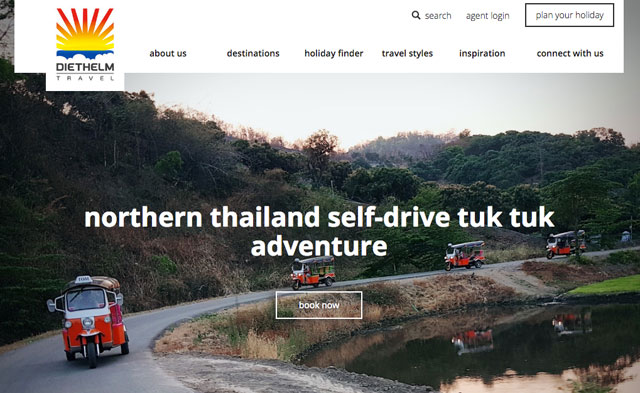
Diethelm Travel Group has launched the industry’s first tuk tuk self-drive tours to discover the rural outskirts of Chiang Mai.

The one-day Northern Thailand Self-Drive Tuk Tuk Adventure programme takes travellers on the three-seater rickshaws through the heart of northern Thailand’s jungle-covered hills and rice fields, with stops in rural villages and an ethical elephant sanctuary, a traditional Thai lunch and bamboo river rafting.

In addition to visiting the elephants and driving around the outskirts of Chiang Mai, the five-day Northern Thailand Self-Drive Tuk Tuk Adventure experience also takes travellers up to the top of Doi Inthanon, Thailand’s highest peak, with overnights in homestays and a day spent trekking.

The 11-day Northern Thailand Self-Drive Tuk Tuk Adventure itinerary builds on the five-day option by giving travellers more opportunities to drive through the mountainous north, plus plenty of time to explore at leisure, lounge by hotel pools and spend time in the town of Pai.

Drivers are required to be 18 years old or older and hold a valid manual driving licence from their home country, as well as attend a safety briefing and tuk tuk driving lesson.

Marriott announces new execs, reporting structure in Pacific

0

Marriott International has introduced new roles and reporting structures in its executive leadership team for the Pacific, in line with its goal to more than double its presence by 2020 and add 50 new hotels to the region.

Based at Marriott International’s Sydney head office at Sheraton on the Park, the team is led by Sean Hunt, area vice president Australia, New Zealand and Pacific. Reporting to Rajeev Menon, COO, Marriott International, APEC (Asia Pacific excluding Greater China), Hunt will oversee and drive the operations and financial performance of the property portfolio.

(Left to right from top) Hunt, Hansen, Aimo and Crawford

The hotel giant is also restructuring its regional sales and marketing team. Ashley Hansen, previously regional director for sales & marketing and sales organisation in the Pacific, has been appointed to area director of sales & distribution.

Florencia Aimo has been promoted from director of digital marketing for Marriott Australia to area director of marketing, and be tasked with delivering marketing initiatives to increase brand awareness and drive brand preference.

And to achieve its development target of 50 hotels for the region, Marriott International has appointed Richard Crawford senior director, development, Australia, New Zealand and Pacific, previously the development manager – acquisitions for Mantra Group.

Crawford will be supported in Australia by Maria Verner, formerly with Starwood’s Pacific development and acquisitions team and recently promoted to the role of manager, development for Marriott International.

Currently, Marriott International has 26 properties operating in the Pacific plus 22 in the pipeline. Beyond Australia, Marriott also has a presence in the wider Pacific region, with hotels operating in Fiji and Samoa.