With their preference for round-trips and more activity-filled tour programmes, Chinese travellers are moving up the wishlist of Sri Lankan tour operators.
Arjuna, Exotic Holiday International spokesperson, told TTG Asia that Russia is its top source of business, but China, in second place, is set to overtake the once darling market both in terms of numbers and upselling opportunity.
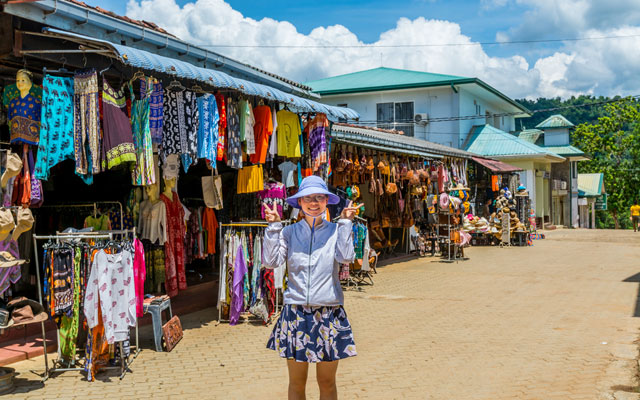
A female Chinese tourist in Rambukkana, Sri Lanka
While Russian travellers tend to opt for beach holidays, Chinese on the other hand have a preference for round-trip or multi-city tours, he explained.
“Yes, we get more Russian travellers, but the Chinese want more out of their holidays (with us). We want more Chinese travellers and expect that (the market would outperform) Russia,” he shared.
A popular programme for the Chinese, he continued, covers Colombo, Kandy, Sigriyar, and more.
On a typical month, the company receives 800 Chinese travellers. Moreover, for special programmes catering to Chinese companies a single group be as large as 250 pax, he said, citing the example of a New Year corporate event last December.
And these numbers are not just coming from first-tier Chinese cities.
Earlier this year in March, Exotic Holiday International welcomed over 150 women from an organisation in Kunming who attended a special Sri Lanka programme tailored for them in celebration of International Women’s Day.
Kunming also represents an important market for Lahiru Weerawardana, managing director of Sri Lankan DMC Travel Trends Leisure.
He shared that with thrice-weekly flights now connecting the Chinese city and Sri Lanka, the opportunities are hard to deny.
The Sri Lankan tourism bureau is also bringing more promotional activities to Kunming now, he said.
The Marianas Visitors Authority (MVA) was at the recently concluded CITM 2017 to position the Northern Mariana Islands as a multi-faceted destination, with activities and attractions appealing not only to the beach-loving crowd, but also to culture vultures and sports fanatics.
MVA’s deputy managing director Judy Torres said in FY2017 (October 1, 2016 to September 30, 2017), the destination saw an 11 per cent year-on-year increase in Chinese arrivals to 229,000.
Torres: spotlighting sports events
“We did not expect to see such results at the beginning of the financial year, but we gained additional air services through the year, which helped,” she remarked.
Now, Saipan enjoys connections from Hangzhou (Beijing Capital Airlines), Shanghai and Guangzhou (Sichuan Airlines) and Beijing (China Eastern Airlines).
Encouraged by the success it has seen in China, MVA is intensifying efforts in the marketplace. And here at CITM 2017, it will play up on a series of sports events coming up in Saipan, namely the Hell of the Marianas, Saipan Marathon, Ironman 70.3 Saipan and so on.
Other events MVA is hoping to bring attention to include the Annual Tinian Hot Paper Festival, Taste of the Marianas International Food Festival and Beer Garden and Saipan International Fishing Tournament.
More than just hotels and sightseeing, MVA officers told TTG Asia that the destination offers opportunities for tourists to discover the local culture, for example at the night market in downtown Garapan.
“There are local food, drinks, handicraft and even local cultural performances,” Torres shared.
With December 12 (a day that sees massive shopping discounts being offered across China) round the corner, MVA is hoping to cooperate with its partners in China to push out special packages for honeymooners and families.
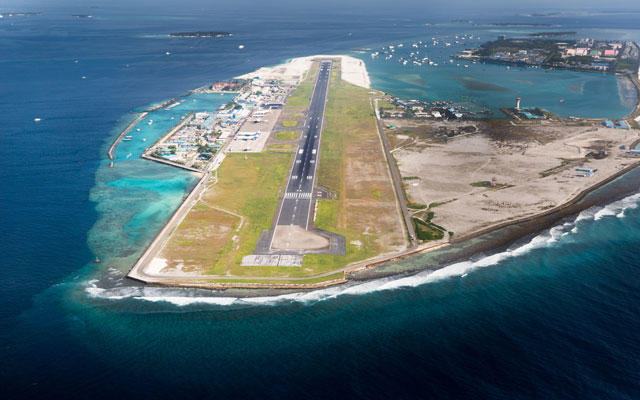
The Maldives’ Velana International Airport, renamed from Male International Airport earlier this year, has now deployed Amadeus’ airport management solutions in anticipation of an increase in number of travellers and to future-proof its business.
The changes come after years of growth that anchored tourism as the Maldives’ main economic contributor, with the airport today serving 2.6 million passengers and over 35 scheduled and chartered carriers annually.
Velena International Airport in the Maldives Velana rolls out Amadeus airport management solutions
Adil Moosa, managing director, Maldives Airports Company Limited, said: “The recent change in our name to Velana International Airport signifies new beginnings, with new infrastructure developments for the future and we’ve started by transforming our technology and processes with Amadeus.
“With the increasing flow of visitors to the Maldives, it was becoming a strain to maintain efficiency and deliver quality experiences due to numerous manual processes.”
Through the partnership, Velana has deployed Amadeus Airport Operational Database (AODB), to host, manage, and disseminate complex flight-related information. Amadeus AODB provides complete visibility of flight schedules up to 365 days ahead to forecast passenger and baggage demand. Velana has also implemented Amadeus Airport Fixed Resource Management Solution which allows the airport to determine the best resource allocation against its flight schedule.
Together, the two solutions enable the airport to accurately plan an optimised management of its resources far in advance. Velana will be able to make data-driven decisions for precise resource allocation, resulting in better slot adherence and increased on-time performance, according to a press release.
Moosa commented that since implementing the solutions, the airport is already seeing cost savings, reduced delays, and healthier profit margins.
Silver Whisper, one of the four ships deployed to Asia
For the 2017/18 winter season, Silversea Cruises is deploying to Asia four ships across its classic and expedition fleets.
The Silver Shadow will sail across the South China Sea to/from Hong Kong and Singapore on January 21, 2018, February 2 and 22, 2018, and March 3 and 25, 2018; while the Silver Whisper will also be sailing from Hong Kong to Singapore on March 20, 2018.
Silver Whisper, one of the four ships deployed by the company to Asia
Launched in the spring of 2017, Silversea’s new ultra-luxury ship and latest flagship, Silver Muse, will bring guests from Singapore to Vietnam, Hong Kong, the Philippines, Indonesia, Thailand, and Myanmar. The itineraries include the limestone structures of Halong Bay, the Philippines’ coral reefs and beaches, Myanmar’s Shwedagon Paya, and so on.
Part of Silverseas’s expedition fleet, the Silver Discoverer will sail on eight expedition cruises from November 2017 to March 2018 offering guests bespoke Asian adventures as they sail across the Java Sea from Bali to Singapore, the Andaman Sea to Phuket, the Bay of Bengal to Colombo, Sri Lanka, the South China Sea to Ho Chi Minh City and Hong Kong, and across the East China Sea to Nagasaki and Niigata in Japan.
The cruises include a privately escorted excursion by Biruté Mary Galdikas, the world’s foremost authority on orangutans, visits to a UNESCO-protected national park, searching for birds and leopards on the Andaman Islands, cruising through the Tian River by Zodiac and more.
Destination DC (DDC), the official marketing organisation for Washington, DC, has expanded its partnership with WeChat with the launch of a City Experience Mini Program app to guide Chinese travellers visiting the city, a first in the US.
Through its partnership with WeChat, DDC is expecting to enhance the visitor experience for the 304,000 Chinese travellers who visit Washington, DC every year, with a focus on growing Chinese visitation, said Elliott Ferguson II, president and CEO of DDC.
Chinese audio guides for top attractions
The new DDC City Experience Mini Program is an interactive guide with a “map driven layout” of the top attractions and places to eat and shop. Apart from providing walking directions and details such as opening and closing times, the app has audio tours in Mandarin for top city attractions.
Over the past year, DDC has been building a following on its WeChat Official Service account (account ID: visitdc), on which it achieved the highest traffic growth among US cities on the platform in 2016.
With the Tencent expanded partnership, DDC continues to grow Welcome China (the organisation’s certification program for its members) by catering to Chinese travellers before, during and after they arrive in Washington, DC.
To manage the Service Account and build the WeChat Mini Program, DDC had partnered The Momentum Group, a WeChat marketing and solutions provider.
Chen: leveraging growing appeal of lesser-known destinations
Rural villages in China are reporting unprecedented growth spurred by a nationwide initiative of poverty alleviation through rural tourism, with footfalls in remote attractions last year accounting for almost half the country’s total domestic movement.
Of China’s 4.4 billion-strong domestic tourism market in 2016, 2.1 billion participated in rural tourism. These travellers generated a total of RMB570 billion (US$86 billion) in revenue, which in turn benefited 6.72 million villagers.
Chen: leveraging growing appeal of lesser-known destinations
“The rapid development that Hefei City has seen is unbelievable,” remarked Chen Wei, director of Hefei City Tourism Bureau. “Because tourists now like to visit less-frequented places, lesser-known areas like Hefei are becoming more popular.”
He told TTG Asia that after promoting the city’s “three melons commune” as a brand, Hefei is gearing to open up its more remote villages with a focus on accessibility and hospitality.
Similarly in the Jiangbei district of Ningbo, Zhejiang, rural tourism has brought a spike in visitor volume and business to remote villages that had previously fallen by the wayside.
Last year, receipts from produce at farming communities “multiplied several times”, said Chen Zhi Xiao, section staff of Jiangbei District Tourism Bureau.
He added that the bureau has been working with local tour operators to promote specialty products of each village and offer farming experiences for visitors.
Such rural tours have helped place these previously inaccessible farming villages on the tourist map, observed Jiangbei’s Chen.
A string of new airlines is set to fly to Cambodia in the near future, paving the way for more regional traffic, particularly Chinese, in the destination.
At the inaugural Cambodia Travel Mart in Siem Reap, Nuno Costa, marketing and sales director for Cambodia Airports, said Chinese airline Ruili Airlines will soon announce that it will be landing in Phnom Penh in the coming weeks.
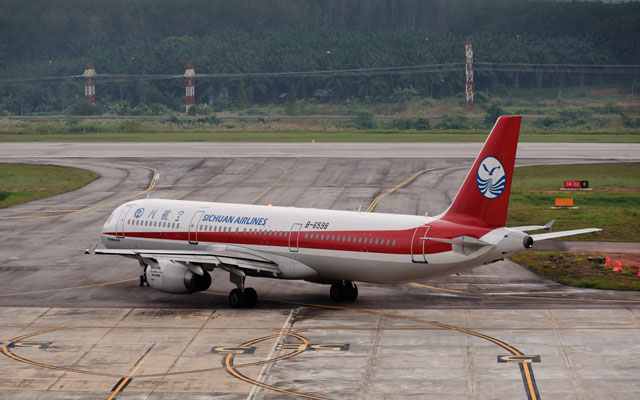
Sichuan Airlines is one of the airlines expected to launch new routes between China and Cambodia
Malaysian airline Malindo Air, and two Chinese airlines Sichuan Airlines and Shenzhen Airlines, are also expected to launch by the beginning of next year. This comes off the back of JC International Airlines and Lanmei Airlines starting operations in Cambodia earlier this year.
In addition, Lithuanian-based Small Planet Airlines was recently issued an air operator’s certificate, with KC International Airline, Air Siem Reap, Prince International Airlines and Cambodia Airways also applying for licences.
Costa said: “We will finalise some deals with other airlines next year, so there will not be a lack of airlines in Cambodia; the market here is really booming.”
Ton Phearom, Charming Cambodia Tours’ inbound tour operator, welcomed the move.
She said: “Increased connectivity is good for Cambodia’s tourism industry. It makes it easier for visitors to get to the country and makes it more competitive.”
However, Coralie Romano, EXO Cambodia’s product manager, said many of the ventures are targeted at the Chinese – a market Cambodia has firmly set its sights on, with the goal of attracting two million Chinese by 2020.
“It would be more beneficial to have more direct longhaul flights to Europe or America,” she added.
In an effort to position Sri Lanka as a wedding destination, local authorities are preparing to hitch 75 to 100 couples from China saying “I do” at a mass wedding ceremony in Colombo on December 17.
Harendra Rodrigo, chairman of Green Leaves Leisure, the main organiser of the event, told TTG Asia that 700 to 800 guests from China, made up of the couples and their relatives, would be flying down for the event and staying in Sri Lanka from December 16-23. The couples and their families, who hail from three provinces in China, will be flown down by SriLankan Airlines.
The Sri Lankan government hope that this event will help boost the country’s wedding profile
On the actual day, the wedding entourage will be ceremonially escorted to the venue from a nearby hotel by riders on horseback. Doing the honours at the mass wedding on the grounds of the Colombo Townhall will be president Maithripala Sirisena and prime minister Ranil Wickremesinghe.
Weddings are among a series of ideas that Sri Lanka hopes to entice potential travellers with, and industry stakeholders are also chipping in. At last month’s World Travel Market in London, local hotel chain Cinnamon launched its Cinnamon Island Weddings package, with an opportunity to win an all-expenses paid dream wedding in Sri Lanka.
As such, the Ministry of Tourism, other government agencies, the Chinese embassy in Sri Lanka, and the Sri Lankan Embassy in China, are all involved in the event.
China is Sri Lanka’s second largest tourism source market. The country received 230,481 Chinese visitors from January-October 2017, a decrease of 1.4 per cent year-on-year.
To promote tourism to Tohoku, a region of Japan’s Honshu Island, Japan’s Reconstruction Agency has launched a Muslim-friendly Tohoku campaign.
The campaign is aimed at establishing the infrastructure necessary to receive Muslim inbound traffic in six prefectures of the Tohoku district. In addition, educational workshops were held at major hotels in Tohoku to deepen the understanding of the concept in order to create, and extend omotenashi (Japanese-style hospitality) to Muslim travellers.
Establishing Muslim friendly infrastructure
For instance, the region has now introduced facilities such as prayer rooms, with more restaurants being able to provide Muslim-friendly meals, as well as created model tours featuring the region’s history and nature.
This campaign is a work in progress, and the Muslim-friendly Tohoku PR Japan office is hoping to further increase the number of facilities taking part in the campaign, in order to enhance Muslim tourists’ experiences.
Behind the development of the project is an increase in the number of Muslim people visiting Japan, and that number is expected to continue to increase as the Olympics loom.
For example, the number of tourists to Japan from two Muslim-majority Asian countries Indonesia and from Malaysia grew nearly threefold over four years from 2012 to 2016.
IATA has called on the Philippine government to tackle the more pressing issue of airport infrastructure, and abandon proposals to increase aviation taxes in the form of a tourism tax and Green Fee.
“Aviation is vital to the Philippines. It supports 1.2 million jobs and US$9.2 billion in GDP…But the social and economic benefits of air transport are at risk if the key issues of airport infrastructure, excessive regulation and taxation are not addressed,” said Alexandre de Juniac, IATA’s director general and CEO, at the recent Philippine Aviation Day in Manila.
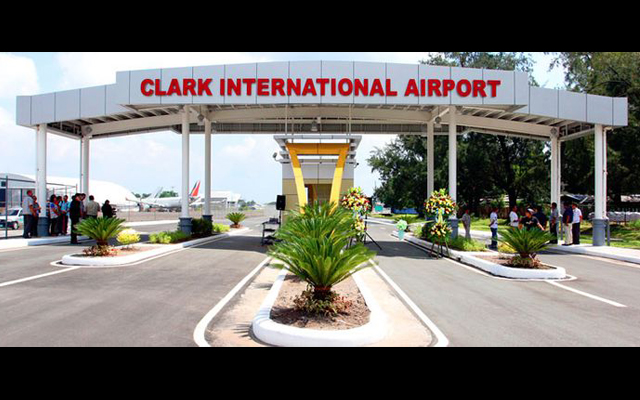
De Juniac: Clark International Airport should be a secondary airport for Manila
Ninoy Aquino International Airport (NAIA) was built to handle 30 million passengers but is handling nearly 40 million passengers currently. “There is an urgent need for an airport masterplan to accommodate the growing demand for connectivity,” said de Juniac.
Top priorities, hence, should be to implement proposals to enhance the runway and terminal capacities at NAIA; further developing Clark International Airport as a secondary, not primary, airport for Manila; decide on a site within reasonable proximity of metropolitan Manila area where a two-runway airport could be built and expanded.
“There is no time to lose – every landing that cannot be accommodated is lost money and opportunity for the Philippine economy. Siting, designing, building and financing a new airport and the connecting infrastructure can easily be a 10-year project. Even the most aggressive possible incremental capacity expansion plan of NAIA will not be able to adequately cope with the growing demand,” said de Juniac.
Excessive regulation also needs addressing, with de Juniac citing new consumer protection legislation in the Philippines that would cap air fares, prohibit overbooking and impose onerous consumer protections extra-territorially.
“Aviation is competitive. Airlines offer a wide variety of fares at different price points to satisfy consumer needs. Introducing government imposed fare caps would likely have the unintended consequence of reducing deeply discounted fares,” said de Juniac.
IATA stressed that while the industry supports consumer protection in line with global standards and smarter regulation principles, what is being proposed in the Philippines is misaligned and oversteps the national boundary. The Montreal Convention and ICAO’s principles for consumer protection are the model to follow, IATA recommended.
And on the Philippines’ proposed tourism tax, de Juniac said: “Short-term budget gains quickly disappear when tourist arrivals drop. The government should focus on making wise investments in the tourism infrastructure that will encourage people to visit. The extra tourist dollars you attract will pay for the investments and make a greater economic contribution.”
The proposed Green Fee is also misguided. Governments through the ICAO have agreed to a global approach to climate change based on improvements in technology, infrastructure and operations, while there is already an agreed Carbon Offsetting and Reduction Scheme for International Aviation (CORSIA).
“The cause of sustainability is best served by the Philippines supporting this global approach and volunteering to participate in CORSIA,” said de Juniac.
De Juniac reiterated that the authorities should adopt smarter regulation principles when developing the regulatory framework. These include respecting global standards where they exist, focusing on solving real problems, being able to pass rigorous cost-benefit analysis and being transparent without distorting competition.