

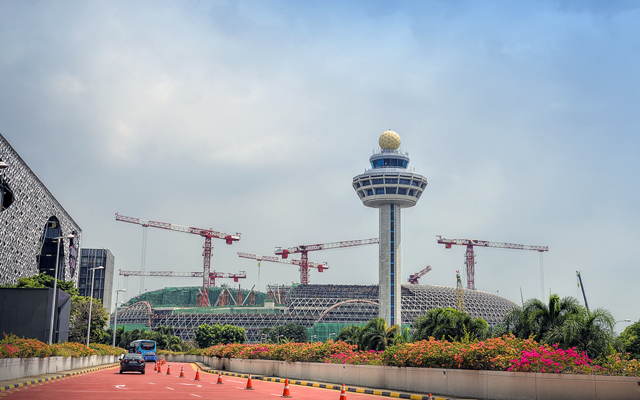
In 2017, Singapore Changi Airport handled a record 62.2 million passenger movements, up six per cent year-on-year, with landings and take-offs growing 3.5 per cent to reach 373,200.
Traffic across all regions saw positive growth, led by China and India which saw increases of 12 and 16 per cent respectively. South-east and North-east Asia contributed to about 70 per cent of total traffic.
Connections to Kuala Lumpur grew seven per cent, replacing Jakarta as Changi’s top city link for 2017. Among Changi Airport’s top 20 destinations, Guangzhou was the fastest growing (+15 per cent), while Brisbane, Penang and Phuket recorded growth of at least six per cent.
December was once again the busiest month of the year, with nearly 5.9 million passenger movements (+3.3 per cent) and 32,960 aircraft movements (+3.1 per cent). The busiest day of the year was December 22, 2017 with 208,043 passengers passing through Changi’s terminals – a record for the airport.
During the year, Changi Airport welcomed three passenger airlines – Hebei Airlines, Norwegian and US-Bangla Airlines, joining over 100 airlines. Ten new passenger city links were also established, to China (Harbin, Shijiazhuang, Yantai), Greece (Athens), India (Madurai), Japan (Hiroshima, Okinawa), Malaysia (Bintulu), Sweden (Stockholm) and the US (Honolulu).
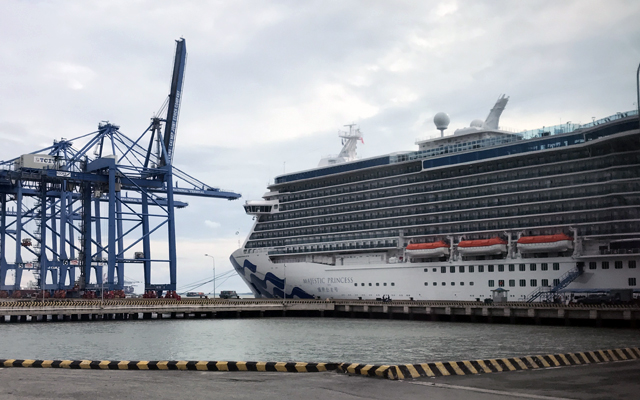
Also notable were the airport’s efforts to cater to the fly-cruise and fly-ferry markets, on top of continuing its courtship of MICE and transit segments. A new shuttle service was introduced last year to facilitate transfers between Changi Airport and Tanah Merah Ferry Terminal, and this has seen a ridership of close to 10,000 passengers in its seven months of operations.
To grow the fly-cruise market, the Changi Airport Group (CAG) has also signed various collaborations with cruise companies – which are expected to bring in more than 600,000 visitors over a four-year period.
“Looking ahead in 2018, we expect to see more developments in the longhaul segments to Europe. This includes Scoot’s non-stop service to Berlin, and LOT Polish Airlines’ service connecting Singapore and Warsaw. We will also welcome the return of Qantas’ Singapore-London route and an overall increase in seat capacity between Singapore and Australia, as well as Lufthansa’s resumption of its service to Munich,” said Lim Ching Kiat, CAG’s managing director, air hub development.
CAG will also continue efforts to strengthen connectivity to secondary cities in China and India – its fastest growing markets in 2017, Lim added.
Demand for air travel in Asia-Pacific is expected to triple in the next two decades. With the opening of Jewel Changi Airport and the completion of Changi’s Terminal 1 expansion in 2019, Changi Airport’s total handling capacity will increase to 85 million passengers per annum.








The HSBC World Singapore Rugby Sevens is pushing beyond its sporting roots to become a family-friendly festival that hopes to pull in travellers from around Asia.
Supported by the Singapore Tourism Board (STB) and government agency Sport Singapore, event organiser Rugby Singapore has been increasing outreach efforts to tie up with attractions and travel agents.
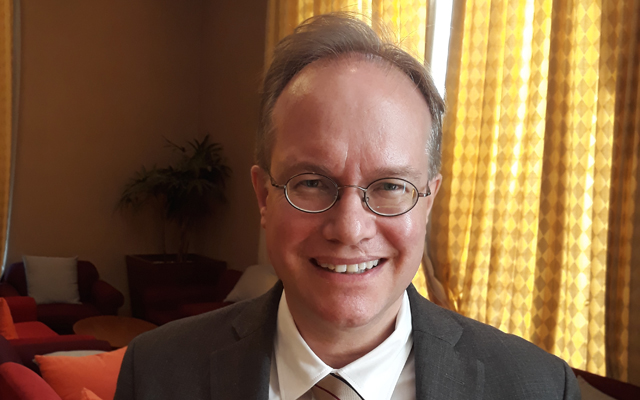
“We see the Singapore Sevens as one of the tentpole events that can bring fans and people from around the world to Singapore. We are currently in talks with agents, family-friendly attractions and retail options for partnerships”, shared David Lim, chairman of the board, Rugby Singapore.
He added that there has been a “rise in popularity” for rugby in Asia, particularly driven by Japan’s recent victories in the sport. Last year, 24 per cent of Singapore Sevens attendees were foreign visitors, and the event generated a total economic impact of S$23.5 million (US$18 million).
As the only South-east Asian host in the HSBC World Rugby Sevens Series, Singapore aims to “draw more visitors from proximity markets such as Malaysia and Indonesia”, by delivering a memorable fan experience that differs yearly, STB’s sports director Jean Ng told TTG Asia.
For the third edition this year, Rugby Singapore is stepping up the programme with the Singapore Rugby Carnival, an event with activities such as face painting, themed challenges, inflatable stations, photo booths, local bands and food.
“We want that diverse variety of activities – not just sports – that will engage and bring people (together) here. This is something we want to use to distinguish ourselves from every other stop in the World Series,” explained Lim.
The Singapore Sevens is the eighth leg – out of 10 – in the Series, and is one stop after the sell-out Hong Kong Sevens.
Agents feel that having the event as a destination lure is a plus for Singapore. General manager of Diethelm Travel, Judy Lum, described the initiative as “good news”. She said: “The organiser should consider having a dialogue with local DMCs. I am sure there are some of us who can help to promote it to overseas tour operators.”
Samson Tan, founder/CEO of GTMC Travel, suggested maximising marketing distribution by using the National Association of Travel Agents Singapore as a communication platform with agents.