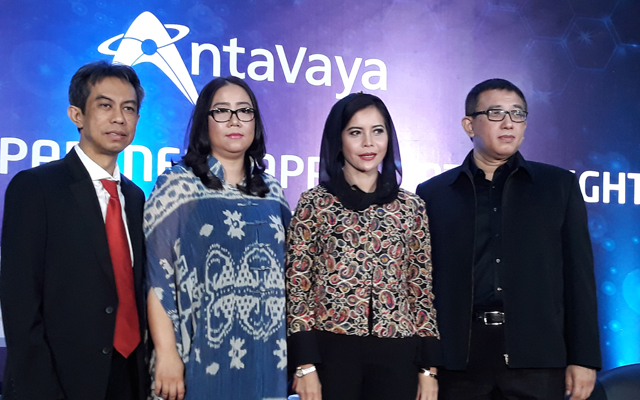
Bagus Priatna, Ida Wijanty, Ratih Prabandari and Andrreas Sulaiman at the launch of the AntaVaya CBT
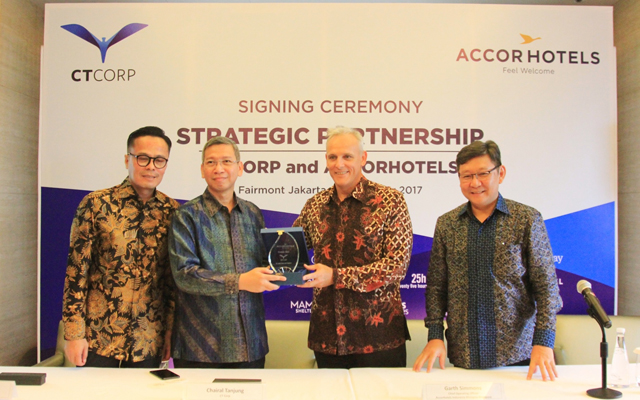
Indonesia’s CT Corp has signed an MoU with AccorHotels for the addition of 30 hotels and 6,000 rooms across Indonesia, amid intensified efforts to bolster the holding company’s travel subsidiary, AntaVaya Group.
AccorHotels had begun its partnership with CT Corp with the management of the 568-room ibis Bandung Trans Studio, located at the first integrated Trans Studio Bandung complex, adjacent to a shopping mall and indoor theme park.
Under the new strategic agreement, both parties will work together on similar integrated complex of hotels and lifestyle properties, one of which will be in Cibubur, east of Jakarta.
(From left) Bagus Priatna, Ida Wijanty, Ratih Prabandari and Andrreas Sulaiman at the launch of the AntaVaya CBT
Garth Simmons, COO, AccorHotels for Indonesia, Malaysia and Singapore, said: “Today’s partnership agreement marks another milestone in accelerating of AccorHotels’ robust expansion in strengthening its position as the leader of hospitality industry in Indonesia.”
Chairal Tanjung, president and CEO of CT Corp, said: “Our longterm partnership with AccorHotels shows our commitment to develop integrated theme park hotels in strategic locations to provide more entertainment options for travellers and families.”
The collaboration will also pave the way for CT Corp to access AccorHotels’ distribution network, digital platform, loyalty management and brand portfolio.
Simmons (third from left) shaking on the deal with CT Corp
The deal comes in the midst of big changes at CT Corp’s AntaVaya Group, which last weekend soft launched Antavaya CBT, a corporate booking tool, and its leisure online channel Antago.com.
Bagus Priatna, corporate service director of AntaVaya, said: “A few years ago we lost some key accounts to move to OTAs, due to the convenience of self-booking with instant confirmation.
“However, what the OTA could not do was the compliance to corporate policy and at the end of year, companies found that spending was higher than expected.”
He expects that adoption by corporate clients will reach 30 per cent in the first two to three years, before accelerating to 70 per cent thereafter.
Speaking on the online travel booking tool, Andreas Sulaiman, vice president business development and marketing of AntaVaya, said the soon-to-launch Antago.com is to respond to the booming online travel trend, especially among the Gen Y and Gen Z.
“While we will sell air tickets, hotels, and the combination of the two, we will be more focused on selling tour programmes.
“What will also distinguish us from the existing OTA is that while others offer seasonal discounts, we will offer discounted prices all year round, thanks to our sister (Bank Mega),” he touted.
On whether AntaVaya would one day become a fully online business, Ratih Prabandari, director of the company, said: “We have a business events division, which will always need the human touch to create and prepare tailor made products. However, we will basically follow what the market want. If and when the market demands totally online, we will (make the transition).”
AntaVaya’s Bali-based inbound business is also undergoing a revamp.
Recommended for the JV, a 51 per cent stake to the Sri Lanka government and a 49 per cent stake to AirAsia
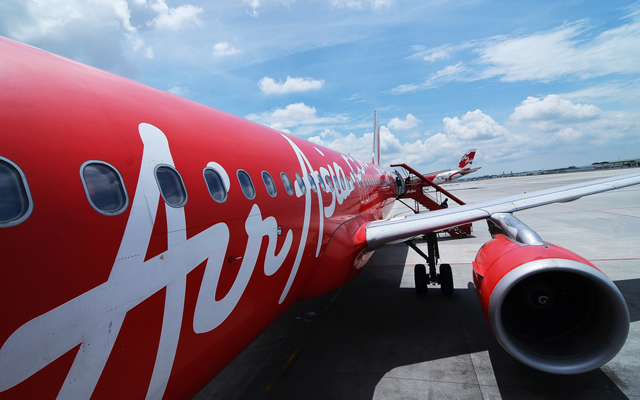
Malaysia’s LCC AirAsia is keen to set up a budget airline in Sri Lanka and last week made a pitch to a high-powered, official Sri Lankan committee.
A report in the local Sunday Times on Sunday said a team from AirAsia had presented the proposal to the Cabinet Committee on Economic Management (CCEM) chaired by prime minister Ranil Wickremesinghe on Wednesday recommending a 51 per cent stake to the Sri Lanka government and a 49 per cent stake to the Malaysian carrier. An official present at the meeting, but declined to be quoted, confirmed that such a proposal was made.
Recommended for the JV, a 51 per cent stake to the Sri Lanka government and a 49 per cent stake to AirAsia
The budget carrier currently operates daily flights to Colombo from Kuala Lumpur.
Industry analysts, who declined to be named, said the entry of a new airline competing with the heavy-losses SriLankan Airlines will create a major dent in the national carrier. According to the 2016-2107 annual report of SriLankan Airlines, the carrier’s accumulated losses was nearly US$200 million, from US$85 million the previous year. The airline has cut routes in Europe and focused mostly on Asia.
The newspaper report said AirAsia’s one-hour presentation involved bringing in five aircraft in the first year, and 25 in five years. It is learnt that SriLankan Airlines officials present at the briefing had raised objections to the proposal.
The national carrier has been seeking a management-cum-investment partner for the past two years without any success. Discussions have been held with Emirates, which earlier operated as a management partner of SriLankan, and Qatar Airways.
Analysts said AirAsia’s entry would entice more Sri Lankans to travel abroad with low fares and also encourage tourists on shoe-string budgets from across Asia.
The senior director of a foreign airline agent said 15 years ago the government called for bids to operate a second airline and at least five offers were made but no decisions taken. “At the end of the day, the market is too small for two airlines in Sri Lanka,” he said.
Local budget carrier, Mihin Air, a subsidiary of SriLankan Airlines, also failed and was recently shut down.
Airline profits more than doubled year-on-year in the first half
In 1H2017, Emirates saw profits soar 111 per cent to AED 1.7 billion (US$ 452 million), a dramatic rebound from the 82 per cent nosedive in profits for 2016.
Passengers volumes rose four per cent to 29.2 million and overall capacity expanded two per cent, with Emirates attributing the improved results to capacity optimisation and efficiency initiatives,the easing of a strong US dollar and steady business growth.
Overall, the Emirates Group, parent company of the gulf airline, reported a 77 per cent increase in profit of US$631 million for the period.
Airline profits more than doubled year-on-year in the first half
The group’s revenue increased six per cent, reaching US$13.5 billion, up from US$12.7 billion during the same period last year.
Emirates’ operating costs grew four per cent against the overall capacity increase of two per cent. On average, fuel costs were 14 per cent higher compared to the same period last year, largely due to an increase in oil prices by 11 per cent, as well as an increase in fuel uplift of three per cent due to Emirates’ expanding fleet operations.
Fuel remained the largest component of the airline’s cost, accounting for 26 per cent of operating costs over the 24 per cent seen in the first six months of last year.
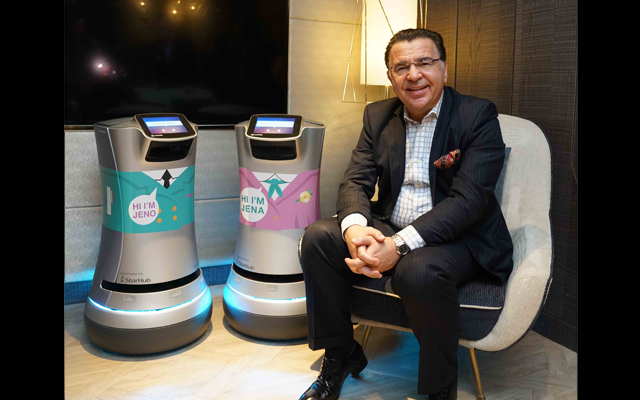
Sekercioglu: technology key part of hospitality in Singapore
Hotel Jen in Singapore has launched two autonomous Savioke Relay robots to aid in room service, marking the Shangri-La group’s first use of robotics.
Named Jeno and Jena, the service robots will be deployed to Hotel Jen Orchardgateway and Tanglin Singapore respectively, and is programmed to deliver amenities and local favourites from in-room dining menus to guests who place an order for them.
Sekercioglu: technology key part of hospitality in Singapore
The robots measure almost one-metre in height and move unmanned at a speed of 2.5 km per hour. They can ride the elevators, make phone calls to rooms upon arrival and are equipped with sensors that aid in avoiding obstacles.
“In Singapore, technology has become an integral part of hospitality. It is essential,” said Cetin Sekercioglu, executive vice president of Shangri-La Hotels and Resorts.
He explained that Hotel Jen’s younger target audience is driving the demand for hotel technology, and may spur on the adoption of robotics by Shangri-La group’s other brands.
Jena, Hotel Jen’s new room service help
Sekercioglu told TTG Asia: “We are also talking to Savioke about developing back-of-house technology to help with housekeeping, delivery and laundry… I think that will be our phase two.”
The development and use of such technology is supported by the Singapore Tourism Board, he shared, and this has encouraged the group to extend the service to other Hotel Jen properties in South-east Asia in the coming year.
Amadeus Ventures has made an investment in Avuxi, a start-up that ranks places to visit at the point of hotel and flight bookings.
“Whenever we talk about travelling, location is essential. What we tried to do with Amadeus is to help people save time and have a… more personalised experience by having the bookings and the information on the same site,” says Alexis Batlle, CEO of Avuxi.
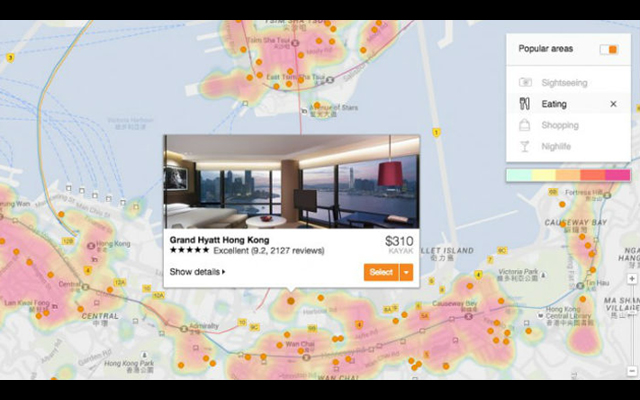
Displaying popular areas around hotels
Avuxi’s TopPlace technology shows the most popular areas within a city through heat map overlays, so travellers searching for a hotel on an OTA or metasearch site can be shown the most popular places in the city they are about to visit.
In addition, Avuxi’s ranking scores assign location ranking to each hotel and vacation rental, and travellers can even search for popular places by category, such as eating, shopping, nightlife and sightseeing.
Amadeus said in a statement that for OTAs, metasearch sites, and hotels, Avuxi’s platform can help improve conversion and increase revenues.
Avuxi’s platform analyses and ranks geolocated data, including comments, photos and reviews from millions of users through more than 60 sources, including Instagram, Facebook, Twitter, Google, Wikipedia and more.
Proudputh: pushing Hua Hin beyond beach town offerings
An integrated resort development in Hua Hin is shaping up with the addition of the beach town’s tallest hotel, joining the Vana Nava Water Jungle waterpark launched three years ago.
Proud Real Estate had invested 1.8 billion baht (US$54.4 million) into building the Holiday Inn Vana Nava Hua Hin, while also adding an observation deck, bar and restaurant; and introducing a new children’s zone in the waterpark.
Commented Proudputh Liptapanlop, executive director, Proud Real Estate: “With the tourist demographics to Hua Hin moving from more traditional European senior couples to younger Asian families, guests are looking for a more adventurous and playful experience while on vacation.
Proudputh: pushing Hua Hin beyond beach town offerings
“On top of beaches and local culture, more and more customers are also in search of fun activities they can share with their loved ones,” she said.
Holiday Inn Vana Nava Hua Hin marks the second phase of the almost four billion baht development, which sits on 5.6ha of land, said a press release. The third and final phase will be premium residences expected to launch within 2018.
The hotel, soft opening later this month, will feature 300 rooms, over 1,500m2 of meeting spaces, a 24-hour 300m2 fitness centre, infinity pools on the 26th floor, a lobby bar, a spa, a kids club and dedicated kids suites.
All customers will be given an RFID wristband upon arrival, which not only provides them entry into the waterpark, but also unlocks their hotel room and pays for all their food and other purchases.
Proudputh said: “We expect ADR to be at least 20 per cent higher than the competitive set and occupancy to run between 60 and 70 per cent once stabilised. With this model, we should also be adding at least 100,000 (people) in yearly attendance to the waterpark, bringing the visitation up to at least 350,000 a year.”
Proud Real Estate has plans to recreate the “playcation” concept elsewhere in Thailand. On top of recently acquiring a piece of land in Phuket, it also launched a joint venture with Whitewater West Canada to form WhiteWater Southeast Asia last year, with the aim of providing turnkey solutions for developers looking to create waterparks around the region. The joint venture is already involved in six projects in four different countries within the first year of operations, a press release claims.
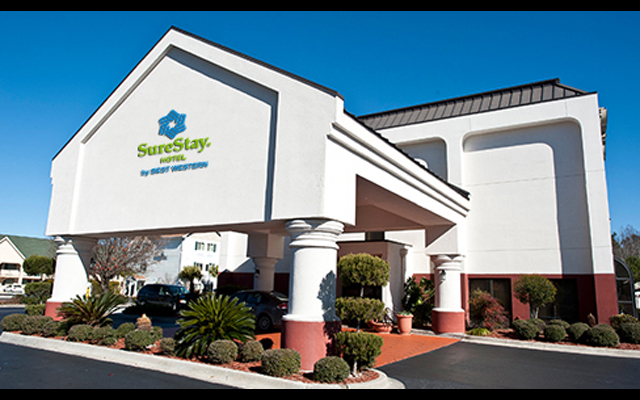
SureStay now in three countries, including Thailand
A year since the launch of its new franchise model, SureStay Hotel Group, Best Western Hotels & Resorts says the brand has eclipsed 33 properties worldwide with a robust pipeline of 44 additional hotels.
Comprising three distinctive brands – SureStay Hotel by Best Western (classic economy), SureStay Plus Hotel by Best Western (premium economy) and SureStay CollectionSM by Best Western (lower-midscale soft brand) – SureStay provides a migration path to hoteliers who are committed to delivering trust when it comes to quality of guest experience, but wish to avoid the high costs that can come with a redesign programme.
SureStay now in three countries, including Thailand
According to Best Western, SureStay’s benefits have attracted economy hotels from around the world, with the majority of applicants migrating to the brand as a means of repositioning and strengthening their hotels, often as a result of new ownership or major renovations. Best Western conversions also make up a portion of the applicants.
David Kong, president and CEO of Best Western Hotels & Resorts, said: “SureStay was launched to take the leadership position in the economy segment; and with the growing momentum the brand is experiencing, it is evident SureStay’s future is bright.”
Ron Pohl, senior vice president and COO for Best Western Hotels & Resorts said SureStay is already in 20 states and three countries one year onwards from its launch.
The SureStay Plus Hotel by Best Western Sukhumvit 2 opened earlier this month, in the heart of downtown Bangkok. The brand has also taken off in Sweden, with seven properties already active, and another four in the pipeline.
With new technology proliferating and business traveller needs and expectations evolving, travel managers are struggling to manage complex, multi-layered travel programmes. According to new research from the Association of Corporate Travel Executives (ACTE), underwritten by HRS, travel managers recognize this challenge and understand that simplifying their programmes could yield benefits—but simplification initiatives face competing priorities.
The new study, Simplifying Managed Travel, finds that traveller safety trumps the agenda: Most buyers (94 per cent) say duty of care is a key priority; 82 per cent say it is their top priority. With 72 per cent rating it is a key priority for their managed travel program, simplification follows behind cost reduction (88 per cent), data security (84 per cent) and improving traveller satisfaction (75 per cent).
However, travel managers recognize that simplification initiatives can support their other strategic priorities. For example, 47 per cent of travel managers say that simplification will improve duty of care, and 39 per cent believe it will reduce the overall cost of their travel policy.
Travel Managers Struggle to Translate Priority into Action
Despite recognizing the importance of simplification, travel managers see a gap between intention and execution. Reflecting the strategic importance placed on traveller safety, duty of care is the travel buyer’s top priority for simplification: A majority (83 per cent) say duty of care requires immediate action (62 per cent). Data security appears second on buyers’ list of simplification targets.
Disconnects between buyers’ simplification priorities and their actual behaviour, however, indicate barriers to pursuing strategic goals. The execution gaps for duty of care and data security are large relative to other priorities, with more than one-in-five buyers saying they are not currently translating their traveller safety (23 per cent) and data security (24 per cent) concerns into action.
Suppliers and Internal Stakeholders Must Become Partners in Simplification
Today’s complex travel programmes encompass multiple partners and stakeholders—internally and externally. To be effective, simplification initiatives often require support from these parties. While nearly one-in-five buyers do not get support from peers in other departments, most report that internal stakeholders are on board with simplification initiatives:
Procurement is most often regarded as a partner in simplification (57 per cent);
Internal risk/security and communications staff follow (40 per cent);
IT support (36 per cent) and human resources (28 per cent) lag other departments.
Third parties can supply relevant tools and expertise, providing support to travel buyers’ simplification initiatives. Buyers welcome this assistance: More than half of buyers not currently receiving help from travel providers say they want it. Internally and externally, the data suggests that the travel buyers who say simplification is a top strategic priority are better at collaborating to reach their simplification goals.
“The value travel management provides to a company is increasingly measured in optimised processes and cross-department collaboration,” explained HRS CEO Tobias Ragge. “The study shows this close collaboration is vital and that leading companies build on their internal stakeholder network, but they also rely on the data, advice and support of external partners to reach their strategic goals.”
Driving Effective Simplification
Simplification is a key route for travel managers to achieve their business objectives. However, facing the hurdles of limited resources and differing levels of support from internal and external stakeholders, buyers must ramp up communication with suppliers, other departments within the organization and with the travellers themselves.
With new technology proliferating and business traveller needs and expectations evolving, travel managers are struggling to manage complex, multi-layered travel programmes. According to new research from the Association of Corporate Travel Executives (ACTE), underwritten by HRS, travel managers recognize this challenge and understand that simplifying their programmes could yield benefits—but simplification initiatives face competing priorities.
The new study, Simplifying Managed Travel, finds that traveller safety trumps the agenda: Most buyers (94 per cent) say duty of care is a key priority; 82 per cent say it is their top priority. With 72 per cent rating it is a key priority for their managed travel program, simplification follows behind cost reduction (88 per cent), data security (84 per cent) and improving traveller satisfaction (75 per cent).
However, travel managers recognize that simplification initiatives can support their other strategic priorities. For example, 47 per cent of travel managers say that simplification will improve duty of care, and 39 per cent believe it will reduce the overall cost of their travel policy.
Travel Managers Struggle to Translate Priority into Action
Despite recognizing the importance of simplification, travel managers see a gap between intention and execution. Reflecting the strategic importance placed on traveller safety, duty of care is the travel buyer’s top priority for simplification: A majority (83 per cent) say duty of care requires immediate action (62 per cent). Data security appears second on buyers’ list of simplification targets.
Disconnects between buyers’ simplification priorities and their actual behaviour, however, indicate barriers to pursuing strategic goals. The execution gaps for duty of care and data security are large relative to other priorities, with more than one-in-five buyers saying they are not currently translating their traveller safety (23 per cent) and data security (24 per cent) concerns into action.
Suppliers and Internal Stakeholders Must Become Partners in Simplification
Today’s complex travel programmes encompass multiple partners and stakeholders—internally and externally. To be effective, simplification initiatives often require support from these parties. While nearly one-in-five buyers do not get support from peers in other departments, most report that internal stakeholders are on board with simplification initiatives:
Procurement is most often regarded as a partner in simplification (57 per cent);
Internal risk/security and communications staff follow (40 per cent);
IT support (36 per cent) and human resources (28 per cent) lag other departments.
Third parties can supply relevant tools and expertise, providing support to travel buyers’ simplification initiatives. Buyers welcome this assistance: More than half of buyers not currently receiving help from travel providers say they want it. Internally and externally, the data suggests that the travel buyers who say simplification is a top strategic priority are better at collaborating to reach their simplification goals.
“The value travel management provides to a company is increasingly measured in optimised processes and cross-department collaboration,” explained HRS CEO Tobias Ragge. “The study shows this close collaboration is vital and that leading companies build on their internal stakeholder network, but they also rely on the data, advice and support of external partners to reach their strategic goals.”
Driving Effective Simplification
Simplification is a key route for travel managers to achieve their business objectives. However, facing the hurdles of limited resources and differing levels of support from internal and external stakeholders, buyers must ramp up communication with suppliers, other departments within the organization and with the travellers themselves.
How is a single shareholding of the Capella Hotel Group by the Kwee family members an enabler to move the Capella, Solis and Auriga Spa brands forward?
What it allows for is a single view of how the brands should be positioned. We control the destiny whereas before, it was more collaborative, which is fine too, but with a single shareholding, decision-making can be quicker and more nimble.
And with our HQ being based here (Singapore), we can have an Asia-first viewpoint, which of course does not mean we exclude the rest of the world. It means we are operating from a place in the world that is most attractive for hotel development and operation.
Nicholas Clayton
There is no doubt that certain parts of the world, say Europe, are in some degree of saturation, and the barrier to new development is high. In Asia, in contrast, new destinations are being created. This is distinctively Asia – look at Indonesia, China, India, Sri Lanka; or Laos, Cambodia, Myanmar which are almost untouched by mainstream hotel business, and therefore offer years of opportunities for new hotels.
Asia is where we feel the hotel business can be profitable.
The Capella brand has Horst Schulze’s fingerprints all over it. But he’s no longer in control. Will that affect owners’ view of the brand?
No, it’s very helpful that he remains part of our strategy (as chairman emeritus). We have not seen evidence at all, that anyone is taking the view we’re less than worthy, because of the change. He’s available, is a tremendous supporter of ours; he would want to see this company successful, it’s a legacy issue for him, one would assume.
Schulze launched the Capella brand more than 10 years ago. How has it evolved and what would you like to do?
The essence of the brand remains relevant. Its hotels are of the smaller size, 120 keys, 150 keys – the point is to have a manageable number of guestrooms that allows us to curate the customer stay.
Although we do operate in urban centres and we do handle corporate business, our real focus is on luxury leisure travellers – individuals, couples, families – people who are going on holiday, so it’s their funds they are using and their expectations are higher. If I go on a holiday, I want it to be a ‘wow’; if I am on business, it’s more functional.
What we want to do is to enhance is the innovation around wellness and F&B, because these areas complement the accommodation experience for our guests. A room has limits to its impact. What then? Programming is key and, separately, it can be linked to wellness and F&B. May be a complimentary GM wine and cheese tasting, or rum tasting as we do here (Capella Hotel Singapore); what we are trying to do is enrich the experience, surprise our guests with something memorable that goes beyond breakfast, lunch and dinner.
It’s harder to be successful in leisure, but that’s where the premium pricing lies.
What’s your goal for the hotel group?
A milestone goal for us is focused around the year 2020 and specifically for the Capella brand growth in Asia.
We will have, at the minimum, a Capella hotel in Bangkok, the Maldives, Ubud and Sydney, on top of the ones now open in Singapore and Shanghai, and each one of them unique and successful.
Look at Shanghai (distinctive shikumen buildings that first appeared in the 1860s), or Ubud (Capella camp luxury accommodation). It is important to open those hotels successfully, and when we have six interesting hotels in the biggest population centre of the world, Asia, that will be a step change in our history.
By the time we achieve that, we will have a better view on life after that. It does not mean we don’t think longterm. Clearly we want to proliferate the brand, and build up brand equity in the longterm.
I would like to make Capella Hotel Group a famous company of course, but you have to have steps in that process. The Ritz-Carlton Hotel Company started with one hotel, it wasn’t until there were more that they were successful.
So we need to get to a bit of critical mass, and with nine Capella hotels by 2020 (including three outside Asia in operation) we would have established ourselves clearly enough in the key destinations to be known and respected. And I’m not counting the others, only those that are certain to open – Bangkok, a year from now. Ubud, probably April, it’s three-quarters built. The Maldives, the developer is Pontiac (Land, owned by the Kwees), I don’t concern myself whether it’s going to open! And when it does, it’s going to be as spectacular as this (Capella Singapore, owned by Pontiac).
Schulze once told me jokingly, poignantly, he was ‘jealous’ of you running the company going forward.
(Laughs) He did something with Ritz-Carlton (where he was CEO for many years). He is core to the Ritz-Carlton story. There were no other American luxury hotel companies at the time than the Ritz-Carlton and Four Seasons, that everyone wanted to be whatever they were and the success enabled them to pivot outside the Americas.
Ritz-Carlton is getting into cruises now; Horst talked about doing cruises 25 years ago. He had the vision, they are realising it a lot later. Horst’s quintessential contribution to the industry is hard to beat.
Aren’t you lucky he laid the foundation for Capella?
There are some principles that are hard to ignore. I’ve worked for a few companies over a long career and from what I can tell, most great companies in our industry want to achieve similar things: satisfy customers and owners, take good care of colleagues, be well followed in the trade, and be economically successful.
We are our own unique selves. I see in our company a bit of Mandarin Oriental Hotel Group (MOHG), Four Seasons, Ritz-Carlton, etc, as we want to take the best of the best. In other words, what is it that MOHG does that I admire and think is relevant for us, but that doesn’t mean I’m going to steal their playbook. We take principles from our past and apply them to the present and future and that’s what Horst did, and that’s what we’re doing now. It’s hard not to have some degree of association, but too much is not helpful.
You worked with Ritz-Carlton during Horst’s tenure for 13 years. What’s the one thing you got from him?
The one thing I admire and try to emulate is, when this man talks to a group of people, be it in an internal meeting to open hotels or during his visit at the hotels, he is extremely motivating. He makes things clear to me. The consistency and the passion with which he communicated his business, our industry, a particular hotel, profoundly impacted me for 13 years.
I used to think he’s only talking to me in a group, because he’s so mesmerising. And he’s always concerned that people get it. He does not want them to be the same; he wants them to go back and be better.
Because of that relationship, coming into this role made this exciting. I understand what he is trying to achieve.
How do you differ from him?
We’re all shaped by our past experiences. I joined Four Seasons and it gave me my first view of quality hotels. Then I joined Ritz-Carlton and later, MOHG based in Hong Kong, as I wanted to be in corporate and was in a senior position looking at spa, fitness, restaurants in Asia/Europe. My time with Viceroy also shaped me; it’s a bit more hip and its orientation was lifestyle. I was CEO of operations at Jumeirah Group before joining Capella.
How we might differ is probably I have a bit of a different view about our hotels – what they should look and feel like, the experience of our customers – because I’m simply younger than he is. Someone who is 20 years my junior would be able to understand and interpret the new wealth in the traveller and what he/she wants better than I can because he/she is more of that generation.
So having a more rounded view, being of a different age group, having gotten different exposures, I differ in that I might be a bit more avant-garde than he.
What’s your management style(s)?
Collaboration is important, but not to the detriment of process. I value the perspectives of, and feedback, from talented people, but it has to be decisive and moving forward.
I definitely am a person who believes talented people are very challenging to find and those are the people that make a company successful. We have a long-term relationship that started may years ago with TalentPlus and I’d like to increase that and be more dogmatic about it.
I believe owners are important and valuable and I always tell our owners, please know that in our company, we respect you as the owner and we mean that. It’s your hotel. Sometimes operators like to act like it’s their hotel. They should from a responsibility standpoint, but they have to have the ultimate respect for the owners who are putting their capital at risk and putting them in charge of the development. Many of the brands we talked about today were built on the back of other people’s money.