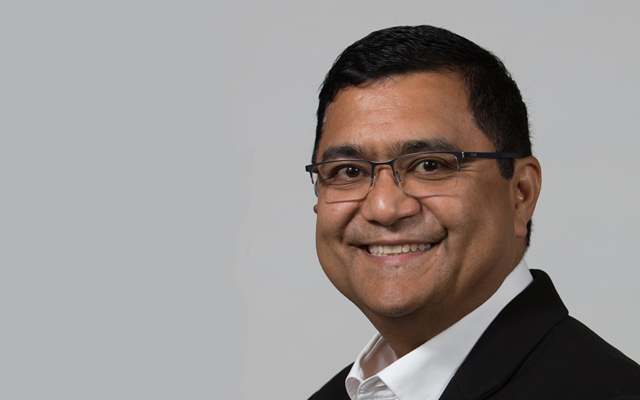
Sabre Corporation has appointed Sandeep Shastri as regional director, South Asia, within its Travel Network team in Asia-Pacific.
In this role, Sandeep will lead Sabre’s Travel Network business in South Asia and be responsible for its sales performance, customer engagement and overall growth across the region.
Sandeep brings with him over 15 years of career experience in the travel and financial services sectors, including with American Express, Standard Chartered and Egencia, where he held the position of managing director, responsible for the development and implementation of strategies for operational transformation.
More recently from 2016 to 2018, Sandeep was senior national agency manager – key partnerships with Qantas Airways, based out of its headquarters in Mascot, Sydney, where he led the OTA strategy for the group.
“Sabre Travel Network has a strong track record and an impressive customer footprint in Asia-Pacific, and we see significant opportunity to broaden our customer base by introducing our solutions to more agencies across the South Asian market,” said Todd Arthur, vice president of Sabre Travel Network, Asia Pacific.
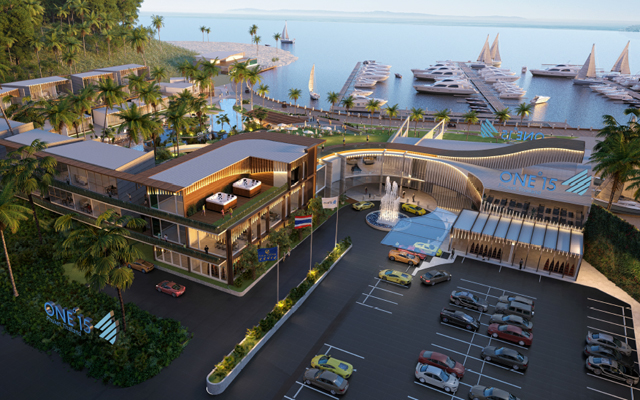
The integrated club concept will be a berthing spot for yachts complete with a range of club facilities
The One°15 brand, best known for its upscale yacht club in Singapore, will soon make its way to Phuket, as the brand’s owner SUTL Enterprise enters into a conditional sale and purchase agreement with Thailand’s Makham Bay Marina (MBM) for S$5.6 million (US$4.2 million).
MBM has construction permits and development rights for a proposed marina to be located at Phuket’s Makham Bay, for which it holds the land side and accompanying water area body for a 30-year leasehold period.
The integrated club concept will be a berthing spot for yachts, complete with a range of club facilities
As part of the agreement, SUTL will be involved in the design, construction, development, operation, and maintenance of the integrated marina club and its facilities.
The integrated marina club is positioned as a nautical lifestyle resort equipped with yacht chartering for nautical sports and recreation programmes, a spa and wellness area and hotel room facilities to cater to both members and the general public.
The project, which will bear the One°15 brand, will have a total land area of approximately 38,400m2, and feature a 171-berth marina, which can accommodate super-yachts up to 200 feet and 25 hard-stand spaces with 80 dry-stack storage.
The hospitality component will include 66 hotel rooms including four three-bedroom villas, a spa, a gym, a lifestyle pool, meeting rooms, banquet hall and multiple F&B outlets. Other facilities such as boat brokers’ offices, dive operators, yacht charter companies, retail shops and other nautical lifestyle related outlets are also part of the development.
SUTL Enterprise executive director and CEO, Arthur Tay, said after looking for a location in Thailand for a long time, Phuket has proven ideal, being adjacent to the only deep seaport in Phuket. Moreover, being naturally sheltered, it will offer 24-hour access to yachts with no tidal restrictions.
Tay added: “Phuket’s marine industry has grown rapidly in the past decade such that the existing marinas are struggling to cope with the demand. The Thai government recognises this burgeoning tourism sector and is keen to develop and promote Phuket as a premium yachting destination by encouraging more investment in infrastructure to support this industry.”
One°15 Marina Sentosa Cove, Singapore was the first marina built by SUTL. The Phuket project will be the seventh to bear the One°15 brand, adding to locations including Brooklyn, Jakarta, Guishan (Zhuhai), Taihu Lake (Suzhou) and Puteri Harbour (Johor Bahru).
Funds set aside for infrastructure development, SME loans, medical tourism promotion give trade many reasons to cheer
After seeing a double-digit decline in visitor arrivals from its high-spending source markets of Saudi Arabia and the UAE, Malaysia will this year ramp up promotions to reestablish its presence in the Middle East.
Arrivals from Saudi Arabia had declined 16.6 per cent to 92,789 tourists for the first 10 months of 2017, whereas arrivals from the UAE were down 38.9 per cent to 7,255.
Tourism Malaysia’s reduced promotional budgets in 2016 and 2017, which resulted in a weaker presence in the UAE compared to competing destinations such as Thailand and Indonesia, was part of the reason for the decline, said a source from the NTO.
Malaysia concerned about the decline of some of its top spending source markets
The source added: “There is also increased competition from other countries to attract Middle Eastern travellers. Turkey, Georgia and Azerbaijan have become hot destinations for Middle Eastern travellers due to affordable airfares offered by LCCs and short flight time of between three to four hours.
“Also, the decline in tourist arrivals from Saudi Arabia was partly due to the austerity measures taken by the Saudi Arabian government to save money after tumbling oil prices. This included cutting minister’ salaries by 20 per cent and scaling back perks for public sector employees from September 2016 until March 2017. The uncertainty in the economy led some travellers to hold back on their longhaul holiday plans.”
The Ministry of Tourism and Culture Malaysia and its promotional arm, Tourism Malaysia, are understandably concerned as Middle Eastern travellers are the top spenders in Malaysia and spend between seven to 10 nights, depending on their country of origin.
A tourist from Kuwait spends an average of RM1,185 (US$303) per day, while UAE tourists spend RM1,046 per day and Saudis RM943.
In comparison, Singaporeans, who make up close to half of total arrivals to Malaysia, spend an average of RM720 per day with an average length of stay of four nights.
From this year, Tourism Malaysia is ramping up international promotions to all major markets, including the GCC countries in a lead up to Visit Malaysia Year 2020. It will, for example, promote the campaign at the Arabian Travel Mart this year.
At the same time, Tourism Malaysia will work with various partners including airlines and travel agents in the UAE on targeted marketing campaigns, which will use traditional media as well as social media such as Facebook, Twitter and Snapchat.
“We also maintain constant engagement with frontliners by updating them with new products and destinations such as Ipoh and Desaru Coast to attract repeat visitors and avoid product fatigue,” said the Tourism Malaysia source.
In Saudi Arabia, Tourism Malaysia will participate in major tourism fairs such as Jeddah International Travel and Tourism Exhibition (February 28 to March 2) and Riyadh Travel Fair (April 10 to 13), and emphasise more on e-marketing and social media to target millennials and independent travellers.
Malaysia’s mid-year mega sales period has been specially timed to coincide with the summer holidays, which is also the peak arrival period of Middle Eastern travellers to Malaysia. Known as Carnival Mega Sale, it will run from June 15 to August 31 as part of the government’s efforts to promote Malaysia as a shopping paradise to the Middle Eastern traveller.
Trial will begin with Qantas passengers flying in and out of Sydney Airport's international terminal
Passengers travelling out of Sydney Airport’s international terminal may soon go passport-free as the country’s biggest airport begins its biometric trial in May, The Sydney Morning Herald reports.
“Your face will be your passport and boarding pass. There will be no fumbling for passports,” Sydney Airport’s new chief executive, Geoff Culbert, was reported as saying.
Trial will begin with Qantas passengers flying in and out of Sydney Airport’s international terminal
Biometric processing is expected to revolutionise the check-in process, allowing passengers to use their face instead of their passports.
By this year-end, Qantas passengers wanting to be part of the trial will be able to use their face to pass through the six steps of check in, bag drop, border processing, security screening, airport lounge and boarding gate after showing their passport only once for verification.
If successful, the trial will be extended to other airlines.
Passengers who wish to be part of the trial will need to register with the Australian Border Force once the testing begins in May. No details have been announced about exactly what information, such as photographs that passengers will need to provide.
International visitor numbers hit record high of 1.6 million
Hong Kong Disneyland’s (HKDL) loss-making streak continues after it netted a loss of HK$345 million (US$44.1 million) in FY2017, double that of FY2016.
The park attributes the loss to rising costs associated with the launch of Iron Man Experience and Disney Explorers Lodge, as well as depreciation associated with the park expansion project.
International visitor numbers hit record high of 1.6 million
There were some positive numbers for HKDL despite the deficit. For the fiscal year that ended on September 30, 2017, the park generated revenues of HK$5.1 billion, representing an eight per cent increase from the prior year. EBITDA were up 28 per cent, reaching HK$914 million.
HKDL says a contributing factor is the record high per capita spending – marking eight consecutive years of spending growth – driven by the launch of new attractions and entertainment offerings, including the new Iron Man Experience, Disney Parks’ first Marvel-themed ride, and Disney Explorers Lodge, the resort’s third hotel.
The park further attributes revenue gains to an increase in room nights sold at the resort hotels, cost management efforts and sales and marketing strategies.
At the resort hotels, room nights sold increased by 16 per cent. Given the additional inventory created by Disney Explorers Lodge however, occupancy was down to 70 per cent from approximately 80 per cent over the last two years.
The park also saw a record number of international visitors last fiscal year, after international attendance increased five per cent to reach approximately 1.6 million.
Overall, HKDL welcomed 6.2 million guests, up three per cent from the prior year.
The growth trend continued into 1Q2018 with a double-digit increase in guests, which the park attributed to limited-time offerings during the quarter including Halloween and Christmas events.
With a slew of attractions and events scheduled for the year, HKDL expects to see continued growth in attendance.
Following Chinese New Year and its inaugural night market, the park will debut the ‘We Love Mickey!’ Main Street Projection show in mid-March, and the Karibuni Marketplace at Adventureland on March 30. The bazaar will feature textiles and crafts, games, food and Disney characters including Moana, Nick and Judy from Zootopia, Jasmine, Pocahontas and Marvel’s Black Panther.
And in May, a new entertainment venue in Adventureland will open with a stage show titled Moana: A Homecoming Celebration, marking the first completed project under the latest phase of expansion. The park will also launch a new Disney‧Pixar-themed Water Play Street Party! along Main Street, U.S.A. where characters from Disney‧Pixar productions such as The Incredibles and Toy Story will join more than 30 performers for the summer celebration.
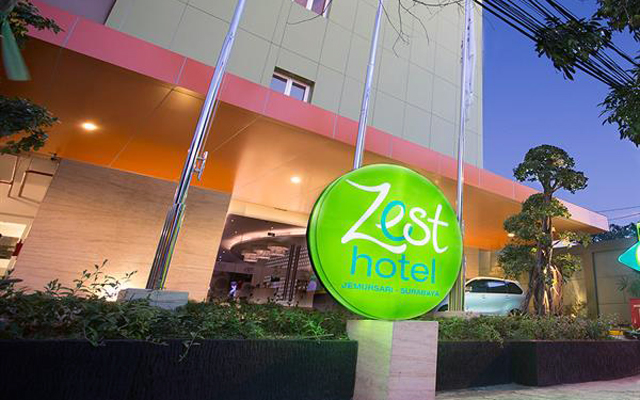
Swiss-Belhotel International is embarking on an expansion of its budget brand, Zest Hotels, with plans to triple its portfolio of properties in Indonesia within three years.
At present, seven Zest Hotels are operating in the country, located in Jakarta, Surabaya, Yogyakarta, Bandung, Batam, Bogor and Bali.
Zest planning hotels in Ambon, Solo, Timika, Manado and Jailolo
The expansion will see the addition of at least seven new hotels, which have already been signed, adding 768 rooms to nearly double the brand’s total nationwide inventory.
Zest Hotels is also targeting approximately six additional signings, potentially taking the brand’s total portfolio size to 20 hotels by 2020. This will include properties in popular destinations like Jakarta and Bali and emerging regions like Sulawesi, Kalimantan, Sumatera and North Maluku.
In line with the government’s efforts to spread tourism benefits to more parts of the country, Zest Hotel’s development drive will see more hotels added in key cities like Jakarta, while also reaching towns and cities including Ambon, Solo, Timika, Manado and Jailolo.
“We see strong potential for the expansion of Zest Hotels across Indonesia,” commented Emmanuel Guillard, CEO of Zest Hotel International and Swiss-Belhotel International’s senior vice president of operations & development for Indonesia, Malaysia and Vietnam, citing “Indonesia’s large and youthful population, the rapid growth of second and third tier cities, and enhanced low-cost air connectivity”.
Zest Hotels all feature an array of guest-friendly offerings, such as 24-hour room use, Wi-Fi connectivity and other 24-7 services.
The expansion is also being driven by healthy operating performance. Total revenues surged 18.8 per cent in 2017, compared to the previous year, and the group’s operating profit jumped 21.3 per cent, according to a statement from the group.
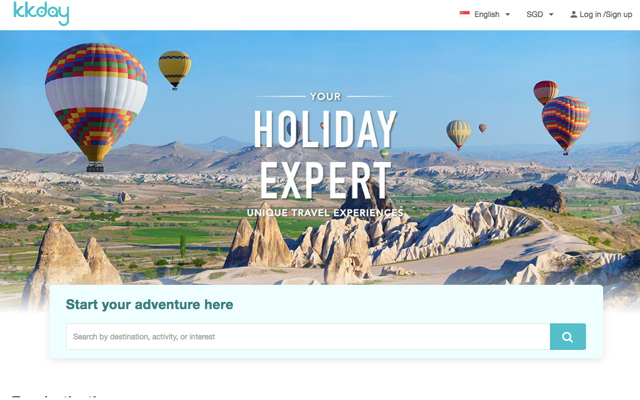
Taiwanese travel e-commerce platform KKday has raised a US$10.5 million Series B funding round led by Japanese travel giant H.I.S.
The funds will go towards growing KKday’s Asian operations, reaching into US and European consumer markets, as well as enhancing product offerings and customer experience.
Fresh investment to drive growth
Commenting on the deal, founder and CEO of KKday, Ming Ming Chen, said: “In the market of travel experience platform globally, there are no giants yet like Expedia and Agoda for hotel reservation platforms. KKday decided to partner with Japan’s travel giant H.I.S. to strengthen its market positioning as the leading company in the market of travel experiences platform in Asia.”
Existing KKday investor, MindWorks Ventures, also participated in this funding round.
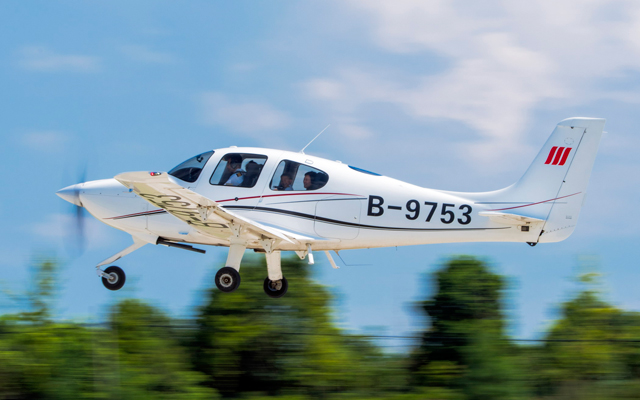
Alila Anji has launched the Aerial Tapestry package to give guests an opportunity to appreciate the beauty of Anji, in China’s north-western Zhejiang province, from above.
Guests can take to the skies with a choice of two aircrafts: a Cirrus SR-20 airplane or a Robinson R44 helicopter.
Scenic tour of Anji from up high
The Cirrus SR-20 is a piston-engine, four- or- five-seater composite monoplane, and the experience offers a choice of two 15-minute routes, flying over Tianzi Lake and Zhangwu Town, or over Tianzi Lake and Xianshan Lake. Those who dare can even have a go at co-piloting the aircraft.
The R44 is a single-engine helicopter that can accommodate the pilot and three passengers, and offers an eight-minute tour following the same routes but at a lower altitude of 300m.
The two-night package is priced from RMB6,760++ (US$1,062++) for two, and valid from now until October 31, 2018. The price includes a two-night stay in a Hill View Villa or Lake View Villa, daily breakfast for two, flying experience for two in either aircraft, one dinner and one lunch box.
The tour is organised in collaboration with Tianzi Lake Airport, Anji’s only airport, located one hour north of Alila Anji.
Airbnb Plus homes verified based on criteria including cleanliness, comfort and design; Plus listing in Shanghai
For a startup that began in 2007 with just two air beds, Airbnb has gone a long way – and a lot more ambitious – as it marks its 10th year of founding with plans to go “Plus”.
Airbnb yesterday unveiled additions to its home-booking system, including new tiers targeted at luxury travellers, as guests and properties become increasingly varied in the past decade since its founding.
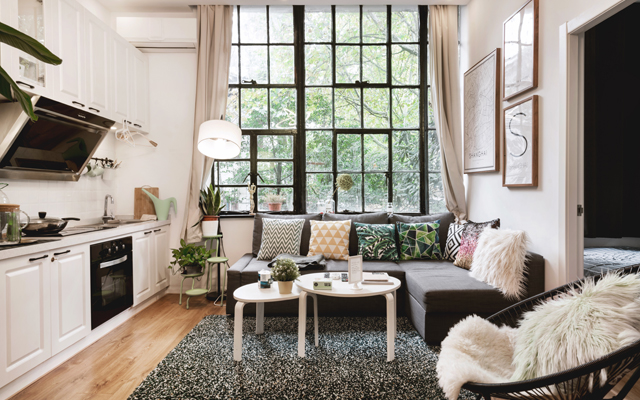
Airbnb Plus homes verified based on criteria including cleanliness, comfort and design; Plus listing in Shanghai pictured
Launching to guests this summer are four new property types – Vacation Home, Unique, B&B and Boutiques. The four will join the existing three categories of Entire Home, Private Room and Shared Space. Airbnb said the seven core property types will provide greater transparency and easier search by guests over the types of accommodation available.
Airbnb also rolled out the new Airbnb Plus tier. Airbnb Plus homes have been inspected and verified in person against a 100+ point checklist covering cleanliness, comfort and design. Hosts in this tier would benefit from top placement, in-home services such as design consultation and expert photography, and premium support.
Airbnb Plus is available for booking, beginning with 2,000 homes in 13 cities.
Another new tier is Beyond by Airbnb, which launches this spring. Beyond by Airbnb will offer custom designed trips, including “the world’s finest homes, custom experiences and world-class hospitality”.
To cater to different travel purposes and occasions, Airbnb has launched Airbnb for Family and Airbnb for Work. Four more categories rolling out later this year, namely, Collections for Social stays, Weddings, Honeymoons, Group getaways and Dinner parties.
Airbnb has also revamped its Superhost programme and will launch a new guest membership programme later this year.
The enhancements outlined in its new roadmap, Airbnb said in a statement, is expected to put it on a path to more than one billion annual guests by 2028. Over the last 10 years, guests have checked into an Airbnb more than 300 million times.
“Ten years ago we never dreamed of what Airbnb could become. In fact, people thought the idea that strangers would stay in each other’s homes was crazy. Today, millions of people every night do just that. But we want to go further by supporting and expanding our community so that in 10 years time, more than one billion people per year will experience the benefits of Airbnb,” said Airbnb co-founder, CEO and head of community, Brian Chesky.
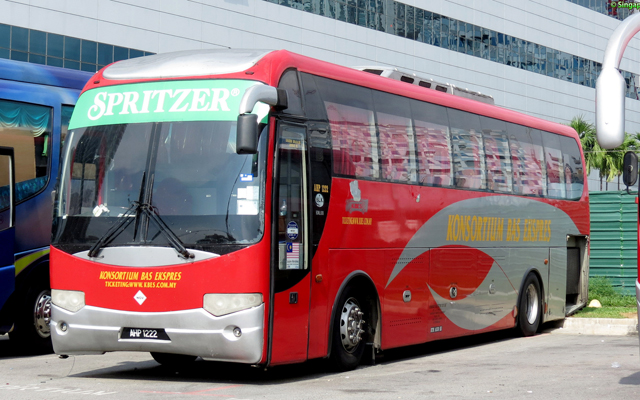
The company specialised in coach trips to Malaysia (photo credit: Singapore Buses/CC)
Konsortium Express & Tours, an agency in Singapore specialising in bus trips to Malaysia, has abruptly closed down and ceased all its services.
In a notice on its website, Konsortium stated that a “financial crisis” led to the shutdown.
Konsortium’s license has been revoked, said the Singapore Tourism Board (STB).
The company specialised in coach trips to Malaysia (photo credit: Singapore Buses/CC)
Customers with unfulfilled trips were advised in the notice from Konsortium to claim on travel insurance or apply for a refund with Singapore’s small claims tribunal.
NATAS’s Surface Transport Committee is rallying local transport operators to take over affected bookings if necessary, according to STB.
Meanwhile, a major agency in the country has stepped in to offer affected customers some help. In a statement, Chan Brothers Travel said it will extend a goodwill discount of 10 per cent off package tours, based on group departure for bookings made from now till March 4.
Chan Brothers also advised customers to “exercise vigilance”. Tell-tale signs of companies in financial trouble, the agency said, include requests for more deposit payment than the industry practice or dangling incentives for full payment upfront.
As well, STB urged consumers to take measures to protect themselves, such as paying by instalments and purchasing travel insurance that provides coverage for unforeseen events such as agent insolvency.