TTG Asia
Asia/Singapore Tuesday, 16th December 2025
Page 1526

LCC wand on Mindanao

0
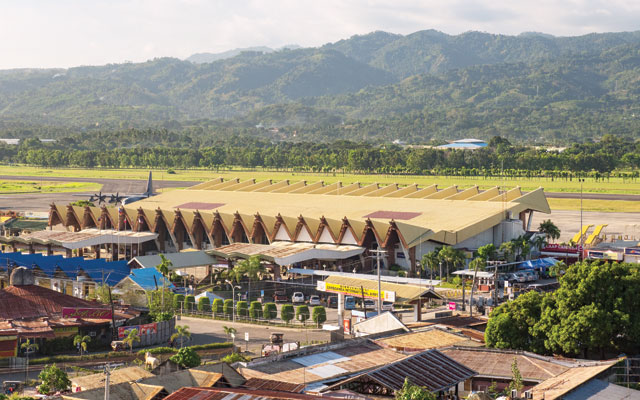
Zamboanga airport

Mindanao’s isolation may soon be a thing of the past, giving hope for tourism –and peace – to bloom in this bountiful yet troubled land in southern Philippines.

From just a single ASEAN route (Davao-Singapore via SilkAir), Mindanao will have two more: in October with Cebu Pacific’s Zamboanga City-Sandakan and in December with Air Asia’s Davao-Kuala Lumpur, a starting point for connecting Davao to the rest of the East Asia Growth Area of Brunei, Indonesia, Malaysia and the Philippines (BIMP EAGA).
Much hope is pinned on these air routes to Mindanao, which while being one of the country’s loveliest and unspoiled destinations, has been suffering from limited access, bad image, and poverty – a major contributor to insurgency and unrest in certain areas.
Zamboanga airport

The routes gain more significance as their launch is amid the ongoing war between government forces and militants in the Islamic City of Marawi that caused the declaration of martial law over the entire Mindanao in May.

But will these air services be sustainable given that past efforts floundered due to thin traffic?

Among airlines that have quit the EAGA routes are Mindanao Express (Zamboanga-Sabah), Philippine Airlines (PAL) with its Cebu-Bandar Seri Begawan, Cebu-Kota Kinabalu and Zamboanga-Lauban routes, and South East Asia Airlines (Seair) with its Manila-Puerto Princesa-Kota Kinabalu.

Someone has to try it again
Perhaps AirAsia Group CEO Tony Fernandes can make it happen. A risk-taker, he foresees that opening new routes in underserved areas with low fares would create the demand, including in Mindanao which has a huge population. After all, Fernandes has opened new routes nobody dreamed of doing – to Macau, Bandung, Langkawi and, in the Philippines, Clark and Kalibo.

AirAsia Philippines president and CEO Dexter Comendador said that with the Philippine government’s emphasis on improving infrastructure in Mindanao, the Davao-Kuala Lumpur flight is a start, and there are plans to pioneer more routes from Davao to Miri, Kota Kinabalu, Brunei and other EAGA and non-EAGA destinations.

Indeed, there is a market waiting to be tapped. Several areas in Mindanao have enjoyed centuries of economic and cultural ties with EAGA regions, their shared heritage resulting in strong trade relations and family ties. But the main mode of transport remains by sea.

As Cebu Pacific director of corporate communications, Charo Lagamon, said: “Today, hundreds of passengers brave a 14-hour boat ride between Zamboanga and Sandakan. That indicates that there is a market for a 40-minute plane ride.”

What AirAsia asked for
Laying down the groundwork for flights from Mindanao, Fernandes sent a position paper to the Philippine government requesting for concessions in airports that are not yet fully developed. This includes waiving the passenger departure tax of P1,620 (a little over US$3) and airport fees such as landing and takeoff charges and aeronautical charges for a period of five years until the passenger traffic is developed.

The paper pointed out that what the Philippine government will lose in waived fees would be more than compensated for by huge increases in passenger traffic, which will in turn attract hotels and other tourism investments.

Departure fees are many times more expensive than the air fares, a disincentive to travellers, it said.

AirAsia’s Comendador said: “Davao is amenable to the proposal. This is big deal for developing regional routes from Davao, as it will result in lower fares.”
He said Malaysia does not charge airport fees.

Aviation veteran Avelino Zapanta, who used to helm PAL and Seair and is now a professor at WCC Aeronautical and Technological College in Pangasinan, concurred that granting the airlines highly discounted charges, if not free, will “help them survive in their pioneering effort”.

“The Malaysian airport authorities are much more liberal in this. They automatically give these benefits to new entrants in the EAGA routes. Our authorities should be equally supportive,” he said.

Other issues
Opening the EAGA corridors from Mindanao will also require the strengthening of immigration. Airlines will have to do their part in profiling their passengers which Air Asia is doing in Malaysia, said Comendador, cum laude graduate of the Philippine Military Academy and for years a pilot and strategist of combat missions as member of the Philippine Air Force’s elite Strike Wing.

“In Malaysia, we have a direct access with Interpol and we are trying to adopt that in the Philippines,” he said.

Comendador also pointed out that as part of its CSR, Air Asia through Air Asia Foundation has teamed up with US-based Airline Ambassadors International to train all its frontline staff and cabin crew, including those in the Philippines, to fight human trafficking.

What comes first?
What comes first: Tourism creates peace, or peace creates tourism?
Much rests on the success of the flights to prove that the former can come first.
Zapanta said: “The industry will owe Cebu Pacific and Air Asia much if they get to develop the traffic on the routes.”

He said as traffic and flight frequencies increase, the benefits to the communities involved will be great and should help bring about peace and order as more jobs are created.

Agreeing, Dottie Cronin, who hails from Mindanao and is general manager of Marco Polo Hotel Davao – the only foreign-brand in Mindanao for a long time – said pioneering air routes will open up other destinations in Mindanao and beef up tourism development.

Proving that tourism helps pump the economy, Cebu Pacific’s Lagamon  pointed out how it created opportunities and positive socio-economic change in Siargao and Camiguin, two of the most popular destinations in Mindanao.

Butch Blanco, tourism director of Region IX in western Mindanao including Zamboanga, believes peace comes before tourism. However there are instances when tourism is honed even before peace settles in.

For instance, Blanco shared that the region will embark on a community-based tourism project next year, either in Zamboanga del Norte, Zamboanga del Sur or Zamboanga Sibugay, that will encourage  former insurgents to join so they can realise what benefits tourism can bring.

“We can be a tourism template (of how to develop a certain area that has issues with insurgency and poverty, into a tourism draw),” he said.

The road to peace, progress and prosperity is long and necessitates participation from all stakeholders, be they the public and private sectors and local residents.

But connecting Mindanao to its Asian neighbours now is a good start in making tourism a creator of peace.


This article was updated on November 10, 2017

Why are DMCs so hot now?

1
Raini Hamdi

It is raining DMCs at our newsdesk. Who would have thought that it’s the smaller guy who would take the wheel at the larger player? That’s the story of Stephan Roemer, who founded Tourasia in 1992 and grew it to be a reputable Swiss tour operator specialising in travel to Asia, with just 50 staff in Europe (including operations in Germany and Poland). He’s now a “substantial” shareholder of Bangkok-based Diethelm Travel Group (DTG) – established in 1957, 450 staff, 12 Asian countries – substantial enough to put him in the driver’s seat to shape Diethelm’s future.
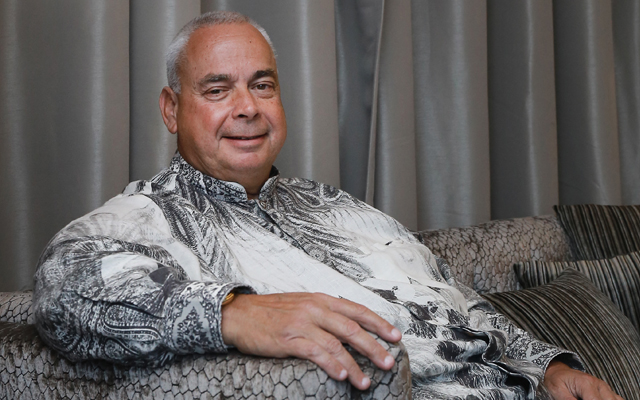
Over at Bangkok-based Destination Asia, there’s also a new CEO, Monique Arnoux, replacing Jim Reed, co-founder of the company who has been elevated as executive chairman. You recall that in June last year, DNATA bought an undisclosed share of Destination Asia. And let’s not forget that Kuoni Group went to pieces; Thomas Cook India vultured its network of DMCs – Allied TPro US, Asian Trails, Australian Tours Management, Desert Adventures/Gulf Dunes Middle East and Private Safaris Africa – while JTB Corporation swooped in on Kuoni Global Travel Services, which handles a growing volume of Asian leisure and corporate business into Europe.

What’s exciting for me is this criss-crossing of DMC acquisitions – India into Asia, Japan into Europe, Middle East into Asia. More of this will happen. Intrepid Group, which owns 20 adventure travel DMCs throughout Asia, South America, Africa and Europe, is on the prowl for more DMCs to buy. Executive chairman Darrell Wade told me they collectively contribute half of the group’s revenues. He aims to buy five DMCS this year, in Japan, Mexico, Costa Rica, Panama and Iceland, and another five next year in Indonesia, Brazil and three others.

So why are DMCs so hot now? The major reason is  they are profitable, and benefit from continued rise in travel. For companies like Intrepid, it’s the rise in new adventure travel markets in China, Japan and everywhere else. And if you look at ‘adventure’ in the broader sense of the word, i.e. not necessarily jumping off a cliff, but going off-the-beaten path, engaging with locals, etc – well, there’s a whole lot of passengers wanting that today. Which is why DMCs thrive; they are after all ‘Destination Management Companies’ (although I find the word pretentious, not to say confusing, when ‘specialists’ alone will do, but that’s another story).

For organisations like JTB, it’s the rise in Asians travelling longhaul, while for companies like Thomas Cook India and Tourasia, it’s the re-emergence of Europe and the US for Asia. As Thomas Cook India’s CEO Madhavan Menon told me: “As Singapore Airlines, Qantas and other carriers start operating longhaul aircraft – nonstop from Asia to North America, from Australia to Europe – these tourists will find it easier to come to Asia, unlike today where it involves a stop through say Emirates or Qatar in the Middle East.”

Economies of scale and vertical integration (Tourasia’s DMCs, for instance, are now into DTG) will enable DMCs to invest more on technology and resources to be more personalised, knowledgeable and speedier in responding to clients’ needs.

Expect them to be ‘hotter’.

Conquering Archipelago

0

Archipelago was founded in 1997 as Aston International. What was your vision for it then?
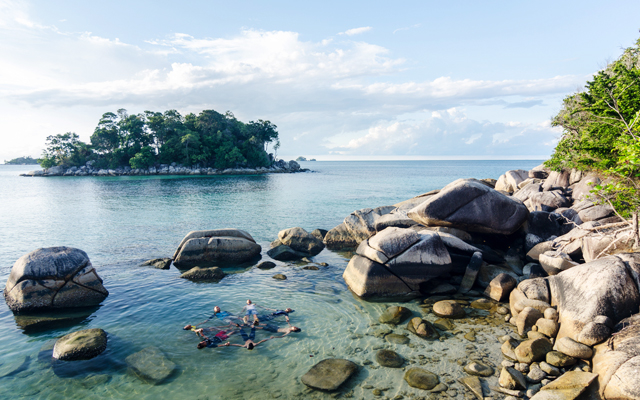
Aston, where I worked as executive vice president, was a well-known hotel brand in Hawaii with around 30 properties. The company was looking to expand outside the US. I was looking at Asia-Pacific for countries whose economy would boom in the next 10 to 20 years and I targeted Indonesia and the Philippines originally.

The hotel developments were mostly four and five stars categories, which gave prestige to the conglomerate developers then. My idea then was to get four- and five-star properties in all the capital cities in South-east Asia and in major resorts such as Phuket, Boracay and Bali.

What happened when the economic crisis hit Asia in 1997-1998?
At that time we had opened offices in Jakarta and Manila.

When the economic crisis hit Asia, Indonesia did not only experience an economic crash but a political overturn; however the Philippines seemed more negatively affected than Indonesia.

A number of hotel projects and everything else on the way in the Philippines were all frozen. The only way to get a project in the Philippines was if you also brought to the table US$4-US$5  million as some sort of investment capital to go with getting a management contract.

As a small company, there was no way I had the personal capital to do that. So I had to close the office in the Philippines and came to Indonesia and focused my attention here. Here, at least we had the Aston Rasuna Jakarta and Aston Benoa Bali running.

That, however, was not enough to survive as a management company, especially when the management fee was very modest in the beginning. We did not even have enough income to support an office.

Indonesia’s political situation made the business environment bleak many years after. What kept you believing?
Indonesia’s economy and political unrest were really difficult. I could go back to the US, but if I did that I felt I was going backward. I have a little bit of a donkey attitude to keep battling, and believed that things would eventually succeed.

For almost 10 years the company grew very little. I had a hard time surviving as an individual to keep the company alive. If I had taken my salary in the first six to seven years, the company would have been bankrupt.

During that period, my son Jules, who still lived in Hawaii then, kept asking me year over year, ‘Dad, when are things going to get better for you there?’ I kept responding, ‘Let us see in a couple of years.’

Really inside I always believed that we just needed one of two good breaks. It took 10 years before the company really took off.

Ten years is a long time to keep a business afloat. Where did that positive attitude come from?
The good thing in my life is that I have a humble beginning. I grew up in an orphanage, but was fortunate to get scholarships to high school and Boston college. Then I got a good job and got promoted almost every year. The same thing happened when I went to Hawaii to join a management company. I got promoted to bigger properties, bigger projects.

So my entire adult working life for more than 20 years was successful.

What was the turning point?
It was when John (Flood, now president and CEO of the company) and I discussed what we were going to do to make the company more successful. Then the idea of getting away from four and five stars, to budget and mid-market, came and with it, the idea for the Fave (budget) brand.

The reason behind it was that the greatest growth in Indonesia was coming from the budget sector. Domestic travel was increasing but on budget airlines. That meant people were travelling on probably a more limited budget. So if they needed to stay in a hotel, they needed to stay in a more affordable hotel – clean, everything works but very affordable.

We then decided to hire our own architect, design our own hotels and present it to developers.
We developed Fave and included financial projections that showed developers great return on investment. That eventually became the turning point. Today we have 52 Fave hotels opened (plus 22 on projects), and around 25 Neos, a brand a bit higher than Fave.

So of the 134 hotels we have opened now, about 75 of them are Faves and Neos.

We then came up with different brands (from budget to upper upscale) to suit the different needs of investors and guests.

As Aston was only one of the seven brands we were operating, we decided to change the (holding) company’s name to Archipelago International in 2013.

(In Indonesia), we do not only operate hotels in the major cities and resort destinations the way we originally planned but in secondary cities as well. We also operate hotels in the Philippines and Thailand, and soon will be in Cuba!

Was the regional and international expansion planned or by chance?
We were able to convince a developer in Langkawi to develop Fave. That same owner wanted to do another hotel in Langkawi, a Neo. (Later) we signed a contract for Royal Kamuela Villas. So we are finally getting higher brand contracts.

Similarly in the Philippines, our partner wanted to build different brands and even created its own five star brand, the Crimson. They are even committed to build more Crimsons.

In the Philippines we have four hotels already; two more will be open this year and at least one every year for the next six or seven years, with the same developer.

How did you get business in Cuba?
It was really an unexpected contact. It was surprising that they picked us when they sent representatives to meet us in Jakarta.

We have signed a project for Aston but are also negotiating for the other brands across the board. As a country the government is really interested to have as many brands there as possible to appeal to consumers.

They want to have more employment for the people. They believe especially with the recent reduction in travel restrictions between America and Cuba that Americans will travel and tourism will boom.

But the brands were developed to suit the Indonesian market. How do you convince overseas developers that the brands fit their clients?
Fave and Neo are mostly domestic products. But the Malaysian domestic market, for example, is similar in many ways to that in Indonesia.

I tell the developers to look at what we have done and how we have done it. I show them the cost structure. How we control and do things here we believe will work in Malaysia as well.

So it is a matter of saying in your country, no matter what country that may be, is the domestic market growing enough? Is there enough budget airline travel, is the economic profile of the country similar to Indonesia? I think in many cases it is. In many countries in South-east Asia, the middle class is growing and travel is up, be it for business, schooling or leisure. So it is a matter of matching the economic profile of the country (with the brand).

What is your plan going forward? More hotels in Indonesia or more overseas expansion?
We have full efforts on both local development and overseas development.

We have one expatriate looking for overseas expansion, and another expatriate looking after overseas and local business development.

So we have actually put more resources into looking overseas than we have before.

Any thoughts on going public in the future?
We have been approached to sell some shares. In fact, a Chinese company wanted to buy the whole company.

With 134 hotels operating, and over 100 projects on the pipeline, what I would like to see is (my children) Jules (now vice president of technology & integration) and Tenaiya (vice president of sales & marketing) be responsible for the company to grow, so that someday they can take over, run the company and take it to a greater height.

The only way I would actively be thinking about selling anything is if Jules and Tenaiya say, ‘Dad, in five or 10 years we would rather start our own business or do our own things.’

If the family does not want to run the company, then why not sell and take that money and invest in other things. But I really like the idea of the company growing and becoming something more.

Having said that, Gabriella (Brookfield’s other daughter, 13 years old) has talked to me of what college she needs to take to be able to join the company. The fact that she is already thinking about it at her eighth grade is surprising to me.

To sum up, how do you view your “baby” growing in the past 20 years?
If ever I write a story of my life and the whole dream of coming to Asia, it turned out that the first 10 years was worse than what I imagined. The last 10 years, however, was a success story.

With the contracts we signed and the projects and developments on hand, there’s a good chance that in a few years we will manage up to 200 hotels.

When I first came to Asia, managing 20 or 30 hotels would have been a dream.

Sitting here today after 20 years looking at the possibility that we will have 200 hotels, it is hard to believe it is happening.

New tie-up buoys expectations for Riau Islands, S’pore tourism

0
More tourists expected, but cruising facilities need upgrading

Industry players are hoping that a new marketing partnership between Singapore Cruise Centre and Nongsa Terminal Bahari would not only pull in millennial tourists from around Asia, but also spur improvements in cruising facilities for both countries.

With the goal of boosting tourism in Batam and the Riau Islands, both parties will collaborate to promote recent developments and ongoing projects in the Nongsa area, such as Infinite Studios, Nongsa Digital Park and condotel The Scene Movie Town.

More tourists expected, but cruising facilities need upgrading

“The joint-destination development will not only help boost traffic from Singapore to Bintan and Batam; it will also raise awareness to provide conveniences for travellers (in) new destinations,” said Max Tan, managing director of Majestic Fast Ferry.

Cruising facilities in the region need to be updated, opined Tan, who suggested improvements such as “newer ferries with safer and faster technology”, “maintaining and upgrading of existing cruise terminals (that) is needed to help ease congestion” and opening of more terminals in new destinations.

He added: “With such accessibility and ease of booking, more millennials and younger generations (may become more) open to travelling on short notice.”

Majestic Fast Ferry is preparing a fleet of new vessels and will consider launching new routes to Nongsa, said Tan.

Mandy Goh, senior manager – sales & business development for Bintan Resort Ferries, agreed that Singapore and Bintan can benefit from upgraded ferry terminals with more shops and restaurants, round-the-clock operations, greater accessibility and seamless check-in processes integrated with the airport.

She added: “Visitors to Bintan can be encouraged to do day trips to Singapore for a different holiday experience that Bintan does not offer, such as shopping.”

Iris Kok, manager, marketing communications of Bintan Resorts International, told TTG Asia that Bintan has been seeing “an increase in millennials as well as young families and working adults”, and is hopeful that upcoming developments “such as better and more efficient infrastructure (and) promoting joint destinations” will lead to higher visitor numbers.

On top of upcoming developments, Bintan Resorts International has also increased ferry frequencies, especially during major event periods for Bintan and long weekends, and continues to monitor travel trends, said Kok.

Japan’s Hyogo launches Golden Route of its own

0
Himeji Castle, with Mount Fuji in the background

Hyogo Prefecture, in the Kansai region of Japan’s Honshu Island, began promoting its own Golden Route covering Kinosaki, Himeji and Kobe earlier this year, in hopes of boosting arrival numbers.

The original Golden Route refers to a week-long tour popular with first-time visitors to the country, covering Tokyo, Hakone, Kyoto, Nara and Osaka.

A new Golden Route for new tastes; Himeji Castle, with Mount Fuji in the background

As travel styles and preferences evolve, Hyogo Prefecture is hoping to seize the opportunity to cater to more diverse demands with its own Golden Route.

Akimitsu Mori, a senior officer from the Tourism Division of Industry and Labour Department at Hyogo Prefectural Government, told TTG Asia: “We established these places as the core to promote Hyogo, (with the aim) of increasing the number of visitors to Hyogo, as well as encouraging them to travel around the prefecture.”

Attractions in the area – which is well-connected by trains and buses – include world-renowned Kobe beef, the sake breweries of Nada, UNESCO-listed Himeji Castle, and onsens in Kinosaki.

According to government statistics, in 2016 about 1.5 million foreign visitors visited Hyogo, where Asians made up the bulk of 85.4 per cent, followed by Europe at 4.2 per cent, North America at 4.2 per cent, and Oceania at 1.4 per cent.

Mori indicated that while they have not set particular regional goals, the government hopes to increase overall visitor footfalls to three million by 2020.

Haruka Toyoizumi, a spokesperson from the tourism department from the Kobe Convention & Visitors Association, added: “Our main target are FITs. To lure more, the area has placed information desks in these destinations, and is also providing travellers with free Wi-Fi.”

Aside from FITs, the area – which has hosted incentive groups of up to 1,000 people previously – is also hoping to welcome more tour groups.

Amadeus reveals biggest barriers to accessible travel

0
Accessibility conditions at various points of the travel journey still have some way to go

Accommodation, search/booking channels and airports are aspects of travel perceived to have the most satisfactory accessibility conditions, while train stations and trains lie at the other end of the spectrum, based on the Voyage of discovery: Working towards inclusive and accessible travel for all report released by Amadeus and conducted by consulting firm Ilunion.

When it comes to trains (scoring 5.07 out of 10) and railway stations (4.99), respondents indicated that the biggest barriers are signage, digital panels and screens, coordination problems between stations in origin and destination points and a lack inconsistency in accessibility requirements across the system (such as different meanings of ‘wheelchair accessible’ at different stations).

Accessibility conditions at various points of the travel journey still have some way to go: Amadeus

And while accommodation got a score of 6.24, the highest among other trip areas, barriers remain – mainly in toilets for people with mobility issues and a mismatch between accessible conditions advertised and what is delivered.

The report further revealed that at airports (5.71), the largest accessibility challenges include inadequate provision of assistance service, inadequate signage in terminals and difficulties in movement through terminals.

Overall, the report found that one of the biggest barriers to accessible travel is inaccurate or incomplete information being available, coupled with a lack of skilled customer service. The report also shows that travellers with accessibility needs increasingly expect these to be met as part of the mainstream service and at no extra cost.

The role of technology in accessible travel is becoming more important, the report stated, with specific developments such as voice recognition starting to be seen as commonplace.

One in every six people in Asia has some form of disability, which translates to 650 million men, women and children, according to Amadeus, adding that the number is expected to rise over the next few decades due to population ageing, natural disasters, poor working conditions and other factors.

Discover the World ups the game in Thailand

0
Changing times at Discover The World (Thailand)

Having recently undergone a change in management and refreshing its stable of brands represented, GSA company Discover the World is looking to intensify sales efforts and further grow its portfolio in Thailand.

Discover the World (Thailand) has also just moved to a new address in the Vorawat Building at 849 Silom Road.

Changing times at Discover The World (Thailand)

New territory director Brian Sinclair-Thompson shared: “Starting in Bangkok in October, we aim to host sales seminars across the country with in-depth presentations of all our products to ensure our industry partners are up to date with the latest innovations and promotional offers available.

“The seminars will be augmented by traditional print, online and social media marketing and advertising campaigns designed to stimulate public interest in the product range and capitalise on the growing national discretionary income spend on travel and leisure.”

The Discover the World (Thailand) product range currently includes Expedia TAAP; Hertz, Thrifty, Dollar Ace & Firefly Car Rentals; Caesars Entertainment; Alitalia, BMI Regional & Ukraine International Airlines; Traveltek; Azamara, Celebrity, Celestyal & Royal Caribbean Cruises.

SIA partners Grab for bookings and rewards

0
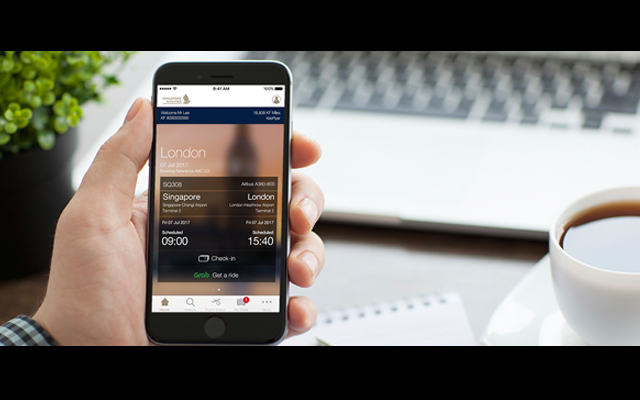
Grab rides now bookable on SIA app

Singapore Airlines (SIA) and Grab have struck a partnership which will see the integration of their mobile apps to offer convenience to customers travelling to the airport in six South-east Asian countries – Indonesia, Malaysia, the Philippines, Singapore, Thailand and Vietnam.

Grab rides now bookable on SIA app

SIA customers can now book Grab rides through the SingaporeAir mobile app. Customers using the app will see an option to book a Grab ride to the airport seven days before their scheduled flight. Selecting this option will direct customers to the Grab app, where they can choose to order a Grab ride to the airport on demand or in advance. The airport will be automatically listed as the destination, so the user simply fills in the pick-up point and desired time.

Members of SIA’s KrisFlyer and Grab’s GrabRewards programmes will enjoy additional benefits under the partnership, where GrabRewards members have the option to convert their GrabRewards points into KrisFlyer miles.

Traveltek feeds SE Asia tech hunger with S’pore office

0
Tan: cruise selling still a largely manual process

UK-based travel technology provider Traveltek is continuing its global expansion with the opening of a new office in Singapore, marking its foray into the “tech-hungry” South-east Asia region.

This follows the company’s debut in North Asia and the Middle East over the past two months with openings in Hong Kong and Dubai respectively. Further expansion into other growth markets worldwide will soon be announced.

Tan: cruise selling still a largely manual process

With the opening in Singapore, Traveltek says it is targeting OTAs, retail agents, cruise bookers and tour operators seeking technology solutions to keep pace with customer demand for leisure travel, particularly in cruising.

Cruise and IT industry professional Javine Tan is heading up Traveltek’s South-east Asia operation, responsible for developing commercial opportunities in Singapore, Malaysia, Indonesia, Thailand, Vietnam and Myanmar.

Tan, who has worked in business development and marketing roles for Star Cruises and Royal Caribbean, has already forged deals with large local travel companies.

“Travel businesses in the region are very keen to know how Traveltek’s technology can help them maximise distribution channels and sales,” explained Tan. “Selling travel, particularly cruise, is largely a manual process in Asia and so Traveltek fills a huge void in the market, providing a platform that ticks every box, from dynamic packaging to live access to more than 300 suppliers, including 190 cruise lines, via our API.”

Traveltek’s cruise solutions are new to the market too, empowering agents to package together pre- and post-cruise itineraries using a unified, web-based platform.

Traveltek offers multi-channel distribution options – B2B, B2C, call centre, mobile, etc – while its portfolio includes a back-office system that produces bookings reports and client documentation; a CRM that manages clients and enquiries; and a tour operating platform that controls pricing and distributes contracts.

Aviation roundup: Scoot, SIA-Lufthansa, and more

0

Scoot says Aloha to Honolulu
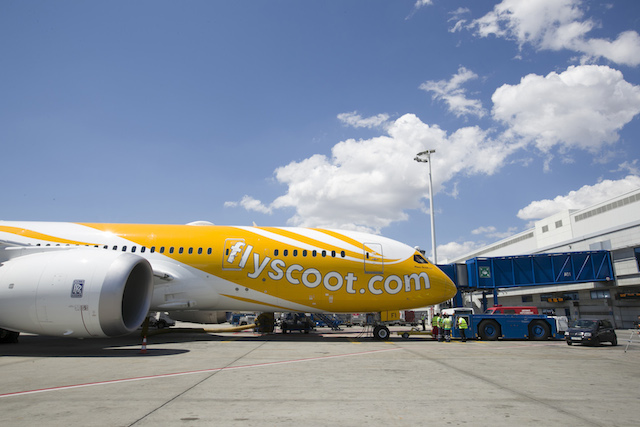
Scoot has started ticket sales for Singapore-Osaka-Honolulu flights, the airline’s second longhaul service after Athens, which debuted in June this year.

Marking Scoot’s maiden entry in to the US, the four-times-weekly flight serviced by the Boeing 787 Dreamliner is slated to commence on December 19, 2017.

With the route’s launch, Scoot will operate non-stop Singapore–Osaka service, in addition to its existing thrice-weekly services to Osaka via Bangkok and Kaohsiung. The total frequency to Osaka from Singapore will therefore increase from six-times-weekly to 10-times-weekly.


SIA, Lufthansa partnership set for launch
Singapore Airlines (SIA) and Lufthansa Group will launch their joint venture cooperation on October 1, 2017 – covering flights between Singapore, Australia and Germany, Switzerland, Austria and Belgium.

On the same date, flights operated by SIA, Lufthansa and SWISS between Singapore and Dusseldorf, Frankfurt, Munich and Zurich will be included in a revenue-sharing agreement between the two airline groups.

Since both airline groups signed the joint venture in November 2015, they have expanded capacity between Singapore and both Germany and Switzerland. This includes the introduction of SIA-operated flights between Singapore and Dusseldorf in July 2016. In March 2017, SWISS deployed its new Boeing 777-300ER aircraft on daily flights between Singapore and Zurich. Lufthansa has also announced plans to re-introduce services between Singapore and Munich from March 2018.


Cathay Pacific ups frequencies
Cathay Pacific will be increasing its services to Madrid, Barcelona, Tel Aviv and Fukuoka.

The airline’s seasonal operation to Barcelona during the summer peak will become a year-round service beginning April 15, 2018. It will start with thrice weekly flights from Hong Kong, before increasing it to four from July 1, 2018.

The new flights will be operated by Airbus A350-900.

In addition, the airline’s existing four-times weekly service to Madrid will be increased to five a week from October 29, 2017.

As well, Cathay will fly more frequently to Tel Aviv, from the current four a week to six from March 25, 2018, increasing to daily throughout October and November.

Meanwhile, Cathay Pacific’s regional carrier Cathay Dragon will be increasing the frequency of its services between Hong Kong and Fukuoka from December 18, 2017.

The airline will initially operate an additional weekly flight to Japan’s fifth largest city, bringing the total number of flights per week to eight, increasing to 11 flights per week between January 14 and March 24, 2018.


PAL links Clark to Basco; adds domestic routes
Philippine Airlines (PAL) has begun flights from Clark International Airport to Basco in Batanes.

The four-times-weekly service is operated by PAL Express, and departs Clark at 11.45 every Monday, Wednesday, Friday, Sunday. The return flight leaves Basco at 14.00 on the same days.

The new route is part of PAL’s development of Clark as a third hub of operations, following Manila and Cebu.

In addition, PAL will open three new domestic routes out of Davao – to Zamboanga, Tagbilaran and Cagayan de Oro – on November 1.


AirAsia begins Bangkok-Tiruchirappalli flights
AirAsia has launched four weekly flights between Bangkok and the Indian city of Tiruchirappalli.

Flight FD110 will depart from Bangkok’s Don Mueang international airport at 22.05 on Mondays, Tuesdays, Thursdays and Saturdays, and arrive at Trichy at 23.55. The return flight, FD111, will depart Trichy at 00.50 on Tuesdays, Wednesdays, Fridays and Sundays and reach Bangkok at 06.10.