Since naming Scenic Travel its GSA in Singapore in July, Norway-based Hurtigruten has gone on to launch its 2018/ 2019 cruise programmes in the lion city.
It is offering sailings that depart from Norway, Iceland, Greenland, Svalbard, Arctic Canada and the Northwest Passage, as well as to Antarctica and along both coasts of South America.
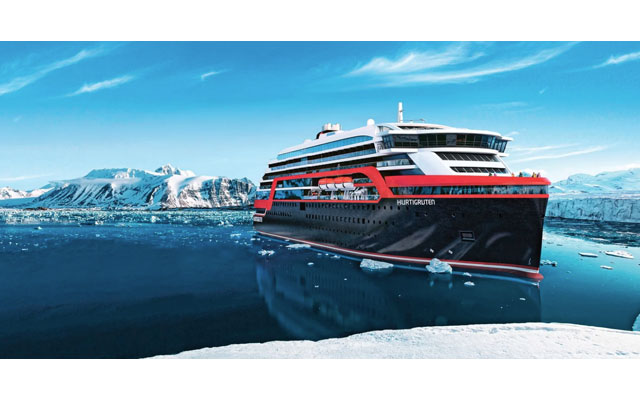
MS Amundsen is the first of two hybrid ships Hurtigruten will add to its fleet over the next few years
William Harber, Hurtigruten’s president for China & Asia-Pacific, noted: “Expedition cruising is one of the fastest growing segments in travel and Singaporeans are increasingly interested in adventures to new, breathtaking destinations.”
Travellers from South-east Asia have by now visited many of the must-see destinations in Asia, Europe, and North America and are looking for new places to explore, both as a status symbol and as a fresh and exciting experience, according to a Hurtigruten statement.
Hurtigruten has a fleet of 14 ships, while two new expedition vessels, MS Amundsen and MS Nansen, are set to be delivered in 2018 and 2019 . The two additions are said to be the world’s first expedition ships able to sail fully electric with sustainable hybrid technology.
Cebu Pacific (CEB) is set to roll-out disabled passenger lifts (DPLs) in key airports in the Philippines, which would ease the boarding experience for persons with reduced mobility (PRMs) on the airline’s flights.
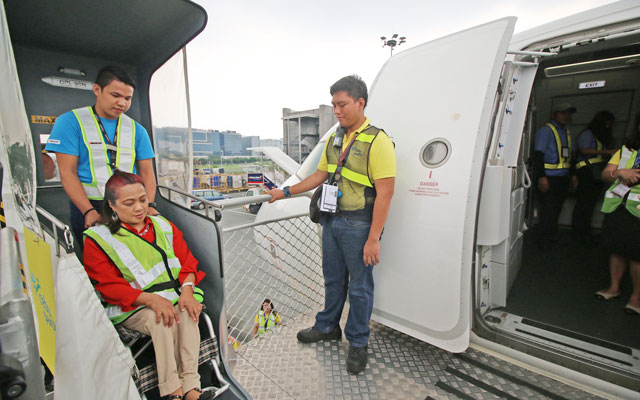
CEB says it is the first airline to invest in its own DPLs, which will be free of charge for Cebu Pacific passengers with reduced mobility, who need only the tick the box indicating their need for wheelchair assistance upon booking flights.
DPLs will be progressively installed in all of CEB’s hubs in the Philippines
The airline has invested over 100 million pesos (US$1.95 million) for the procurement and installation of 35 DPLs, the first of which was installed in the Ninoy Aquino International Airport Terminal 3 in March for testing and evaluation and used to lift PRMs on some CEB flights since July.
Michael Ivan Shau, vice president for airport services of Cebu Pacific, said the remaining DPL units would be installed starting 2018. Six more would be placed at the NAIA Terminal 3, with the rest deployed to other CEB hubs across the country – namely, Clark, Kalibo, Iloilo, Cebu and Davao; as well as high-traffic airports across the country with CEB flights using Airbus aircraft. The airline targets completion by June 2018.
PRMs include pregnant and elderly passengers, in addition to persons with disabilities (PWDs).
In 2016 alone, over 43,000 passengers availed of wheelchair assistance from the check-in counter. Of this number, more than 14,000 were wheeled from the check-in counter and carried to their seats in the aircraft, according to a CEB statement.
The DPL was introduced in 1998 by international aircraft service provider Airport Maintenance Services–Ground Service Equipment to give airports a safe, comfortable and dignified way to get PRMs on and off aircraft. The DPL allows PRMs, as well as their companions or service agents, to board the aircraft or deplane via the aircraft door designated by the airlines. To date, there have been at least 500 DPLs used worldwide.
Meanwhile, the airline also recently implemented the 20 per cent discount on base fares and 12 per cent value-added tax (VAT) exemption for all domestic flights for PWDs and senior citizens across all its booking channels.
Research shows that more consumers are using messaging apps compared to social networks, and this trend is fast extending to the travel industry where we are seeing chatbots as messenger apps being rolled out as a new and immediate interface of customer interaction.
According to a report from BI Intelligence in 2016, for the first time ever, messaging apps have now caught up with social networks in terms of users. In fact, messaging apps are now even more popular than social networks.
White: How and why chatbots are transforming the travel industry
The combined global monthly active users of Facebook, Instagram, Twitter, and LinkedIn are between three and 3.5 billion, which lags behind that of messenger apps including WhatsApp, Messenger, WeChat, and Viber at around 3.7 billion.
This is how chatbots can transform the travel industry.
Chatbots can serve as 24/7 front-end customer care specialists. Gone are the days of responding manually to comments and enquiries in your blog, website and social media channel.
Chatbots are capable of totally transforming visitor servicing in destinations after hours. Frequently asked questions and enquiries can be answered any time of the day or night, including when travellers are arriving at a destination and the visitor information centre/welcome centre is closed.
Chatbots meet the “instant” in instant messaging. Responses can be automated using intelligent chatbots that can efficiently carry out basic requests for information. Customers can be served quickly as time spent on hold waiting for enquiries to be answered is reduced/removed.
Chatbots drastically reduce overheads and promote relationship management. As counter-intuitive as it sounds, bots are great at managing relationships with human beings. With thoughtful pre-programming, chatbots can supplement the entire travel experience, beginning with automated pre-arrival reminders, to suggesting nearby entertainment spots and transportation facilities at destination.
Humans are open to using chatbots. In a recent study by Retale, when asked whether or not they had ever used a chatbot, almost 60 per cent of respondents answered “yes”. And of those who hadn’t tried a chatbot, 53 per cent said they were interested.
It is market research as you go. From a research perspective, imagine the rich qualitative data you will collect concerning your customers. You can refine, change and develop travel products as you see trends emerging.
Chatbots are multilingual. Imagine the diverse markets you can reach!
Post-trip, bots may send out feedback forms that can solicit valuable information on how your business could further improve a guest’s travel experience.
Crown and Champa Resorts has appointed Brad Calder as general manager of Hurawalhi Island Resort Maldives and Kudadoo Private Island, opening February 18, 2018.
Calder has over 20 years of industry experience, having spent time at a number of top hotels and restaurants across the globe, including Home House Private Members Club & Hotel (London), Stamford Hotel (New Zealand), HPL Hotels (Bali), Gili Lankanfushi (Maldives) and Warwick International Hotels (Fiji).
General Hotel Management (GHM) has named Deasy Swandarini general manager of The Chedi Club Tanah Gajah, Ubud, Bali.
Balinese by birth, Swandarini joins the GHM family after having spent a large part of her hospitality career in several of Bali’s resorts including Kayumanis Nusa Dua, The Royal Santrian Luxury Beach Villas, The Mulia and The Ritz-Carlton Bali.
She was most recently general manager of Kamandalu Ubud.
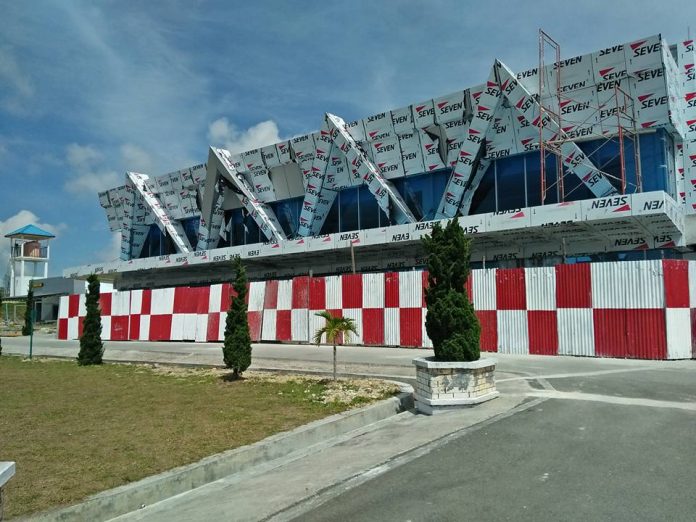
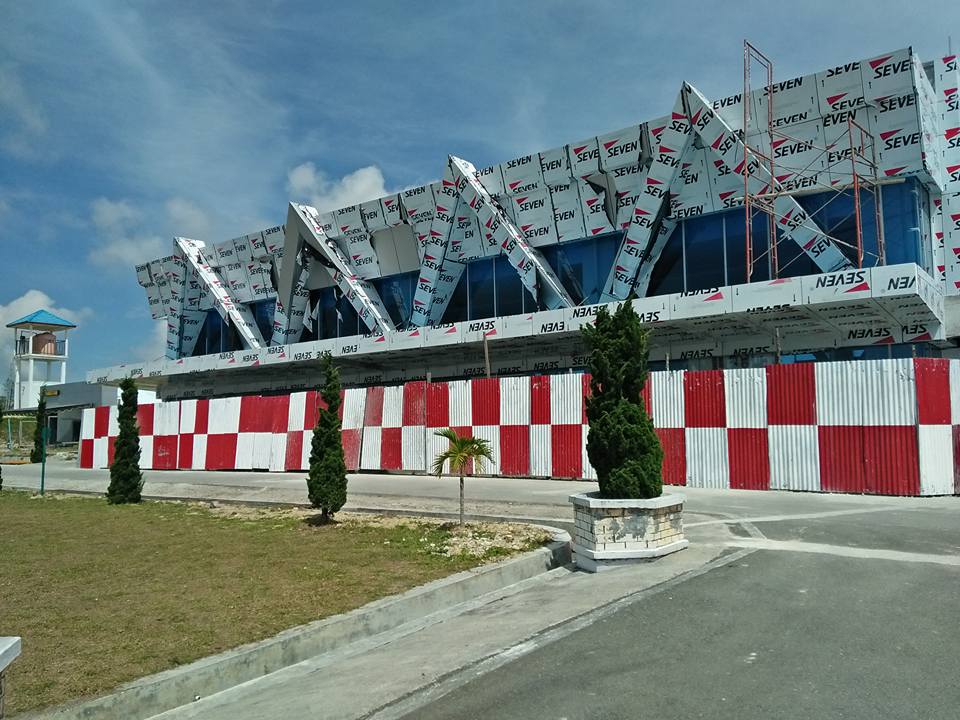
Silangit Airport is currently undergoing upgrading. Credit: silangit-airport.co.id/
The Indonesia Ministry of Tourism is offering cash as incentive for charter operators to open new routes to the archipelago.
A decree issued by the ministry in August stipulated that the incentive, available until December 31, is given to the airline or travel company (charterer) who bring tourists either from a new original city in other countries or to a new destination in Indonesia.
Silangit Airport is currently undergoing upgrading. Credit: silangit-airport.co.id
Each charter flight must stay a minimum of three nights for travellers from ASEAN countries and Asia, and 11 nights for travellers from Europe and the US.
The incentive amount ranges from US$15 to US$25 per passenger depending on the origin of the flight and the length of stay.
I Gde Pitana, deputy minister for international marketing development, Ministry of Tourism, said: “For the first time ever, the Ministry of Finance has approved (our) proposal to give incentives to the (private sector) in the form of cash.”
Usually government agencies only support the programmes of the private sector, for example, by doing joint marketing.
“Our aim is to widen the market origins and (open new) destinations in Indonesia,” he said.
As part of the development of 10 ‘New Bali’s’, the government has been developing and upgrading airports in various cities in the country.
Some airports are being upgraded to international gateway status. They include H.A.S. Hanandjoeddin International Airport in Tanjung Pandan, Belitung, and Silangit in North Sumatra, which is targeted for launch on October 28. Both destinations are among the 10 New Bali’s.
While charter flights are expected to fly to these new destinations, the minister’s decree does not limit the incentives to only the 10 destinations.
HK Express has fired its CEO Andrew Cowen and put in place Zhong Guosong from sister carrier Hong Kong Airlines as executive chairman and acting CEO.
The LCC cancelled 18 Golden Week (October 1-8) flights to Seoul, Osaka and Nagoya just two days before the holidays, leaving about 2,070 passengers stranded. Its image got a bruising, although sources suggested refunds and alternative flight arrangements via Sunflowers Travel and Hong Thai Travel Service were made.
Cowen no longer with HK Express
Zhong’s first order of business is to “work on understanding what has transpired in the airline recently, in order to implement any necessary improvements to ensure HK Express continues to serve the Hong Kong public in its unique role as the sole low-cost carrier”, said a statement.
Zhong is working with the airline’s board and leadership team to develop strategies and policies. He is planning to meet with the company’s management and employees, and to liaise with the relevant local authorities, including the Civil Aviation Department, to establish a more efficient communications channel and implementation mechanism.
Tommy Tam, managing director, Arrow Travel Agency, believed the impact to the airline’s reputation would be short term. “I don’t believe this incident would deter people from flying HK Express as its prices are so attractive and many clientele are not bound by time constraints. In fact, the LCC trend prevails in the Hong Kong market so travellers have really adapted to the business model.”
Worldwide Package Travel Service CEO, Yuen Chun Ning, added: “According to the airline, the cancellations accounted for only three per cent of total weekly flights. It was blamed because of the late announcement, hotspot destinations chosen, as well as the Golden Week holiday effect. If they cancelled connections to secondary cities, it might not have stirred up such immense criticisms.”
Update [October 6, 18.09]: SilkAir has clarified that it is not the first Asian airline to operate the aircraft.
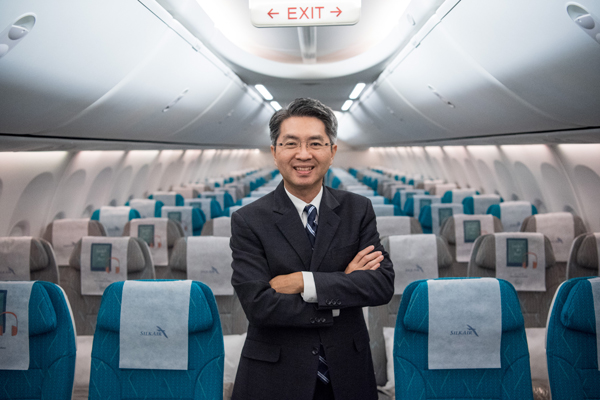
SilkAir has introduced the Boeing 737 Max 8 into its fleet, putting it alongside Malindo Air as one of the first Asian airlines to operate the aircraft.
The carrier will have two of the aircraft by end-October. The first flight using the aircraft will be from Singapore to Hiroshima on October 30. The only non-stop route between the two cities will run thrice weekly.
Foo: growing interest in Japan travel brings SilkAir to Hiroshima
“Hiroshima was one of the stops in our evaluation that showed a very compelling business case,” said Foo Chai Woo, chief executive of SilkAir. “There’s been growing interest in travel into Japan, and Japan has always been very strong in outbound (traffic).”
With 14 per cent fuel savings compared to the Boeing 737 NG, the Max 8 allows the airline to operate flights up to six-and-a-half to seven hours, giving it the opportunity to look at introducing more routes beyond the South-east Asia region, said Captain John Lee, chief pilot Boeing.
The 156-seat Max 8 aircraft will feature an enhanced business class cabin, and refinements such as a 25 per cent increase in seat pitch to 49 inches and additional seat recline from eight to 12 inches.
The economy class seats will feature tablet and phone holders on the seat back and in-seat USB ports.
The inflight entertainment service, SilkAir Studio, has also been upgraded to offer more than 100 international movies.
The cabin is newly furnished with Sky Interior highlights, sculpted sidewalls and LED lighting.
SilkAir expects to operate three Max 8 aircraft by the end of 2017, with another 34 on order. Aside from Hiroshima, the fleet will be deployed on other existing longer-haul destinations such as Cairns, Kathmandu and Bangalore.
CEO Sean Menke (pictured) led the company through a restructuring which reportedly saw 900 jobs cut
Sabre’s president and CEO Sean Menke wants to leverage IATA’s NDC but is quick to point out that this won’t be at the expense of the company’s historical technology leadership role.
Speaking at The Beat Live in Dallas recently, Menke said that the development of NDC standards was just the first step in a series of changes that would impact the way airlines market their services and how travel agencies retail those services to consumers.
Menke: value creation for airlines and agencies
But there are a host of other implications, he stressed, including airline revenue management, ticketing fulfilment and servicing and other back-office functions that travel agencies provide in support of airlines, especially TMCs that support business travellers.
“Sabre has a history of bringing together the interests of travel suppliers and travel retailers and finding ways for technology to move the industry forward. The conversations we have today with airlines and agencies are very different from our discussions even a few years ago. The forward-thinking people are focused on driving value creation for airlines and agencies alike. That’s how we will make NDC work,” said Menke.
He observed that while there is a perception of airline industry consolidation steering airline financial results, “the real impact on airline economics has been the explosive growth of LCCs, impressively moving beyond the leisure travel market and successfully driving pricing and competition across both the business and leisure travel segments”.
Such factors will require traditional carriers to differentiate their offerings and find new ways to drive revenue growth while still competing for the price-conscious traveller, he added.
He reiterated Sabre’s commitment to NDC standards, saying that the company is already Level 1 compliant with a roadmap to become Level 2 and Level 3 compliant in 2018.